Quick Answer
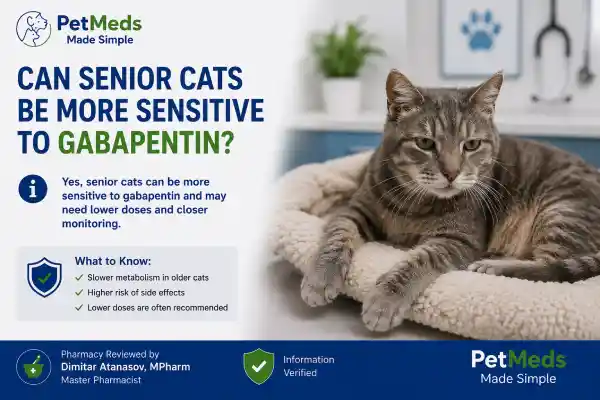
Can Senior Cats Be More Sensitive to Gabapentin? Yes, senior cats can be more sensitive to gabapentin than younger cats. Aging affects kidney function, muscle mass, metabolism, and the nervous system, all of which may make older cats experience stronger or longer-lasting effects from gabapentin. Increased sleepiness, wobbliness, and slower recovery after each dose are among the most common concerns. Most senior cats still tolerate gabapentin well, but they often require closer monitoring and individualized dosing.
Can Senior Cats Be More Sensitive to Gabapentin?
As cats grow older, their bodies process medications differently than they did during adulthood.
One of the most common questions veterinarians hear from owners of elderly cats is:
Can senior cats be more sensitive to gabapentin?
The answer is yes.
Although gabapentin remains one of the safest and most commonly prescribed medications for cats, older pets are often more likely to develop noticeable side effects.
This does not mean gabapentin becomes unsafe.
Instead, it means that senior cats may require:
- closer observation
- individualized dosing
- more frequent veterinary reassessment
- careful monitoring after dose adjustments
Understanding why older cats respond differently helps owners recognize which changes are expected and which require veterinary attention.
Table of Contents
Why Age Changes the Way Cats Respond to Gabapentin
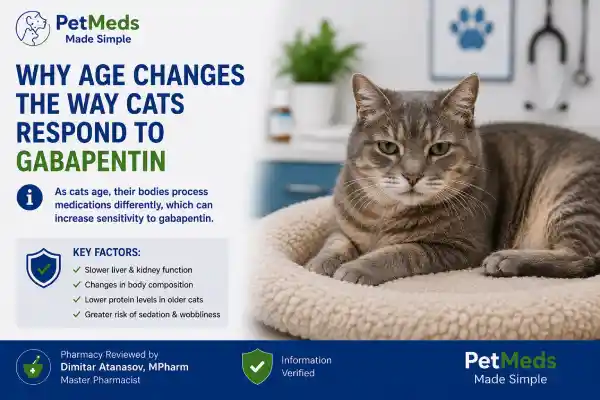
Growing older affects almost every organ system.
Even healthy senior cats undergo gradual physiological changes involving:
- the kidneys
- liver
- nervous system
- muscles
- metabolism
- body composition
These changes can influence how medications move through the body.
For gabapentin, the kidneys are particularly important because they are responsible for eliminating most of the drug.
If kidney function declines with age, gabapentin may remain in the body longer than expected.
As a result, some senior cats experience:
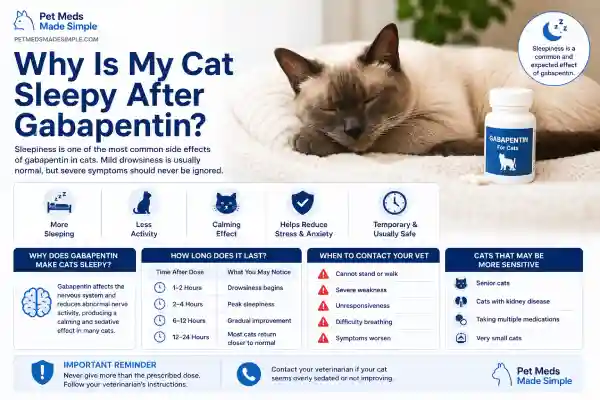
- longer-lasting sleepiness
- slower recovery after each dose
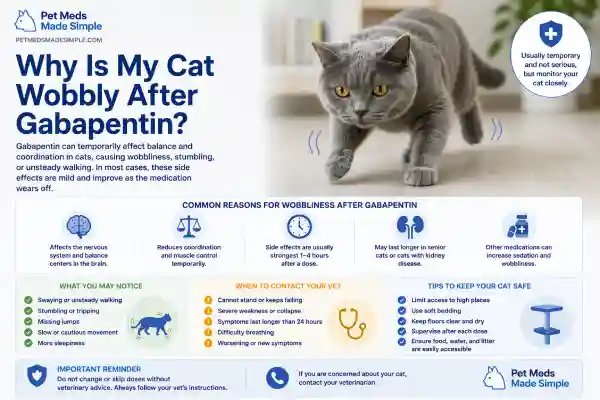
- more pronounced wobbliness
- increased sensitivity to neurological effects
This is one reason veterinarians sometimes adjust the dose or dosing interval for older cats rather than using the same treatment plan recommended for a young adult cat.
Why Kidney Function Matters in Senior Cats
Chronic kidney disease is one of the most common medical conditions affecting older cats.
Many owners are unaware their cat has reduced kidney function because the disease often develops gradually.
When the kidneys become less efficient, medications eliminated through the kidneys may stay in the bloodstream longer.
This can increase both:
- the duration of action
- the intensity of certain side effects
Fortunately, this does not mean every senior cat with kidney disease should avoid gabapentin.
Instead, veterinarians often prescribe the medication successfully by selecting an appropriate dose and monitoring the patient’s response.
Owners of older cats should never adjust the dose on their own simply because the cat seems sleepier than expected.
Can Senior Cats Be More Sensitive to Gabapentin Because of Reduced Muscle Mass?
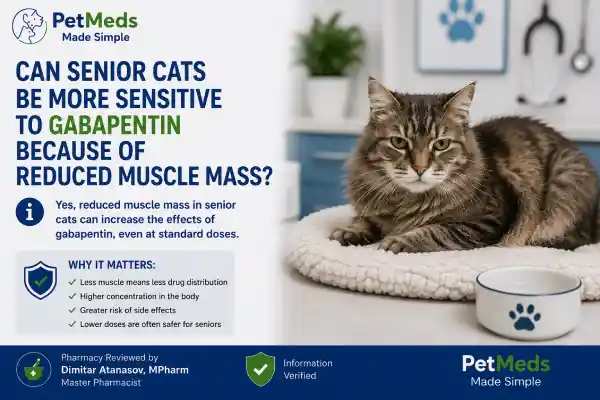
Yes.
Many elderly cats gradually lose muscle as they age.
Reduced muscle mass changes the way medications distribute throughout the body.
Combined with slower metabolism and decreased physical activity, this may make gabapentin’s effects appear stronger than they would in a younger, more muscular cat.
Owners may notice that an older cat:
- sleeps longer
- moves more slowly
- appears weaker after each dose
- takes longer to return to normal activity
These changes are not always caused entirely by gabapentin.
Age itself plays an important role.
Can Senior Cats Be More Sensitive to Gabapentin Because of Changes in the Nervous System?
Absolutely.
The aging brain and nervous system often become more sensitive to medications affecting neurological function.
Gabapentin works by altering communication between nerve cells.
Because of this mechanism, senior cats sometimes develop more noticeable neurological effects than younger cats receiving exactly the same dose.
These may include:
- increased sleepiness
- temporary wobbliness
- slower reactions
- decreased activity
- mild disorientation
If your cat appears unusually different after receiving gabapentin, our guide Why Is My Cat Acting Strange After Gabapentin? explains which behavioral changes are expected and which should prompt a veterinary examination.
Can Senior Cats Be More Sensitive to Gabapentin if They Already Have Arthritis?
Very often, yes.
Arthritis is extremely common in older cats.
Many senior cats receive gabapentin specifically because chronic joint pain reduces their quality of life.
Ironically, successful pain control may initially make the medication seem stronger.
Why?
Because an arthritic cat that has been living with constant pain may suddenly become:
- deeply relaxed
- willing to sleep comfortably
- less restless
- quieter than usual
Owners sometimes mistake this improvement for excessive sedation.
In reality, the cat may simply be experiencing comfort that has been absent for months.
Learning to distinguish between pain relief and excessive medication effects is one of the most important parts of monitoring senior cats during treatment.
Can Senior Cats Be More Sensitive to Gabapentin if They Take Other Medications?
Yes.
Older cats are far more likely than younger cats to receive multiple medications simultaneously.
Examples include medications for:
- kidney disease
- heart disease
- hyperthyroidism
- arthritis
- seizures
- high blood pressure
Although gabapentin is generally compatible with many medications, combining several drugs may increase:
- sleepiness
- reduced activity
- weakness
- slower coordination
For this reason, veterinarians always evaluate the entire medication list, not just gabapentin alone.
Owners should never stop one medication because another has been added without discussing the situation with their veterinarian.
What Side Effects Are More Common in Senior Cats?
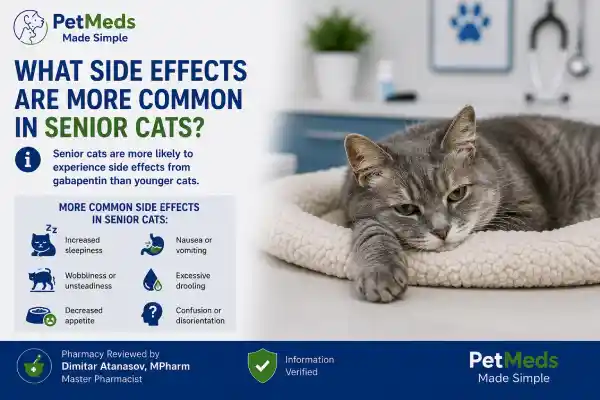
Older cats may experience the same side effects seen in younger cats, but they are sometimes more noticeable.
These include:
- sleepiness
- wobbliness
- weakness
- slower walking
- decreased jumping
- mild confusion
- reduced activity
Fortunately, these effects are usually temporary.
If your senior cat also develops difficulty walking, our article Why Is My Cat Wobbly After Gabapentin? explains when poor coordination is expected and when immediate veterinary evaluation becomes necessary.
Likewise, owners concerned about prolonged drowsiness should also read Why Is My Cat Sleeping All Day After Gabapentin?, since excessive sleep is one of the most frequently reported concerns in elderly patients.
Why Older Cats Often Recover More Slowly After Each Dose
One important difference between young and senior cats is recovery time.
A healthy young cat may receive gabapentin and return to normal activity within several hours.
An older cat may require considerably longer.
Recovery depends on factors such as:
- kidney function
- overall health
- hydration
- concurrent diseases
- other medications
- individual metabolism
Longer recovery does not automatically indicate that something is wrong.
However, owners should contact their veterinarian if recovery becomes progressively longer after each dose or if the cat appears increasingly weak over several days.
Can Senior Cats Be More Sensitive to Gabapentin Because of Chronic Kidney Disease?
Yes.
Chronic kidney disease (CKD) is one of the most important reasons veterinarians monitor senior cats more closely while they are taking gabapentin.
Unlike many medications that undergo extensive metabolism in the liver, gabapentin is eliminated primarily through the kidneys.
When kidney function declines, the medication may remain in the body longer.
This can lead to:
- longer-lasting sedation
- increased wobbliness
- slower recovery after each dose
- greater sensitivity to normal doses
- accumulation of the medication between doses in some cats
This does not mean gabapentin is unsafe for cats with kidney disease.
In fact, it is commonly prescribed in these patients.
However, veterinarians often adjust:
- the dose
- the dosing interval
- the frequency of monitoring
based on the severity of kidney disease and the individual cat’s response.
Can Senior Cats Be More Sensitive to Gabapentin Because of Dehydration?
Absolutely.
Older cats are naturally at greater risk of dehydration, especially if they have:
- chronic kidney disease
- hyperthyroidism
- diabetes mellitus
- reduced appetite
- vomiting
- diarrhea
Dehydration itself may worsen weakness and lethargy.
Owners sometimes assume gabapentin has suddenly become “too strong” when dehydration is actually making the cat appear much more tired.
Signs of dehydration include:
- dry gums
- sunken eyes
- poor skin elasticity
- reduced appetite
- weakness
- increased sleeping
Keeping senior cats well hydrated is an important part of safely managing long-term gabapentin therapy.
Can Senior Cats Be More Sensitive to Gabapentin During the First Few Doses?
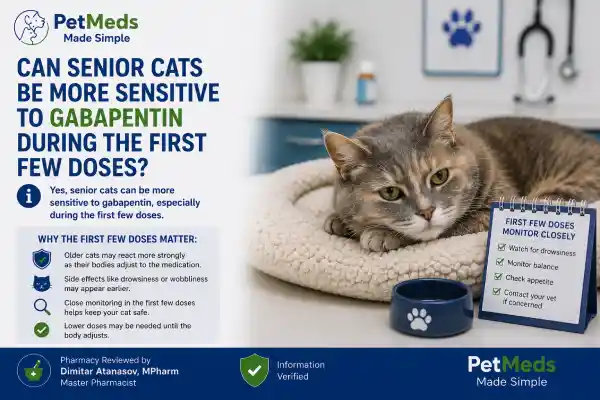
Yes.
The first several doses are often when side effects are most noticeable.
Many senior cats have never previously received medications that affect the central nervous system.
As a result, owners may observe:
- unusual sleepiness
- slower walking
- temporary wobbliness
- reduced interest in playing
- more time spent resting
Fortunately, many cats gradually adapt to these effects over several days as their bodies become accustomed to the medication.
Veterinarians often recommend observing older cats carefully during the first week of treatment before deciding whether dose adjustments are necessary.
Can Senior Cats Become Less Sensitive Over Time?
Sometimes.
Many owners notice that the initial sleepiness becomes much less obvious after several days or weeks.
This does not necessarily mean the medication has stopped working.
Instead, the nervous system often adapts to some of gabapentin’s sedative effects while pain control continues.
However, every cat responds differently.
Some senior cats continue to experience mild sleepiness throughout treatment, while others appear almost completely normal after the adjustment period.
Owners should never increase the dose simply because the cat seems more alert.
Only a veterinarian should decide whether treatment adjustments are appropriate.
Can Senior Cats Be More Sensitive to Gabapentin Before Veterinary Visits?
Yes.
Gabapentin is commonly prescribed before veterinary appointments because it helps reduce stress and makes examinations less frightening.
However, senior cats may remain sleepy for longer after returning home.
Owners sometimes become worried because their cat:
- sleeps through the evening
- walks more slowly
- appears quieter than usual
- shows less interest in food immediately after the appointment
In many cases, these effects gradually improve over the next several hours.
If your cat receives gabapentin before appointments, you may also find our article Can Cats Take Gabapentin Before Vet Visits? helpful.
How Veterinarians Decide on the Right Dose for Senior Cats
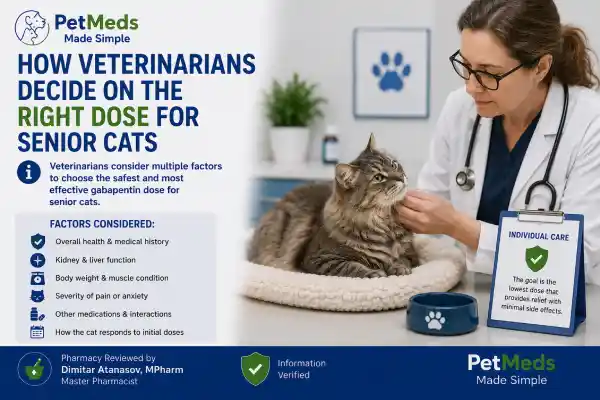
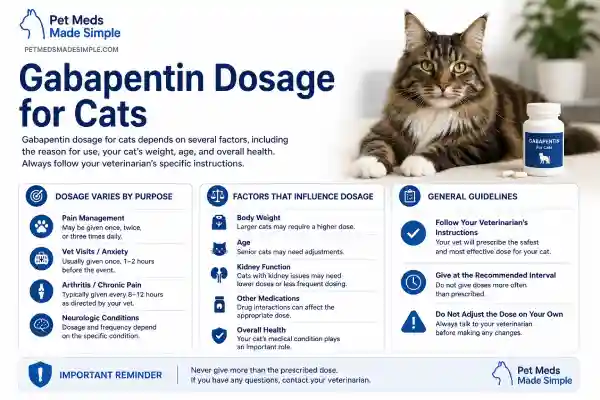
There is no single “senior cat dose.”
Instead, veterinarians consider several individual factors, including:
- age
- body weight
- kidney function
- underlying disease
- reason for treatment
- current medications
- previous response to gabapentin
Two cats of exactly the same age may require completely different treatment plans.
For this reason, owners should never compare doses with those used by friends, family members, or online discussion groups.
Every prescription is individualized for the patient’s specific medical condition.
Can Owners Reduce Side Effects at Home?
Owners should never change the prescribed dose without veterinary approval.
However, they can help minimize problems by:
- giving the medication exactly as prescribed
- maintaining a consistent schedule
- ensuring adequate hydration
- providing a quiet place to rest
- preventing falls from furniture
- helping the cat reach food, water, and the litter box if necessary
- monitoring appetite and activity each day
If the cat appears unusually sleepy or weak, documenting when the symptoms occur relative to each dose can provide valuable information for the veterinarian.
When Should Owners Contact Their Veterinarian?
Mild sleepiness and temporary wobbliness are expected in some senior cats.
However, veterinary advice should be sought immediately if your cat develops:
- inability to stand
- repeated falls
- collapse
- difficulty breathing
- seizures
- inability to wake normally
- complete refusal to eat or drink
- severe weakness lasting far longer than expected
These symptoms should never be dismissed as “just old age.”
Prompt evaluation helps determine whether the medication, the underlying disease, or another medical condition is responsible.
Can Senior Cats Be More Sensitive to Gabapentin Because of Chronic Kidney Disease?
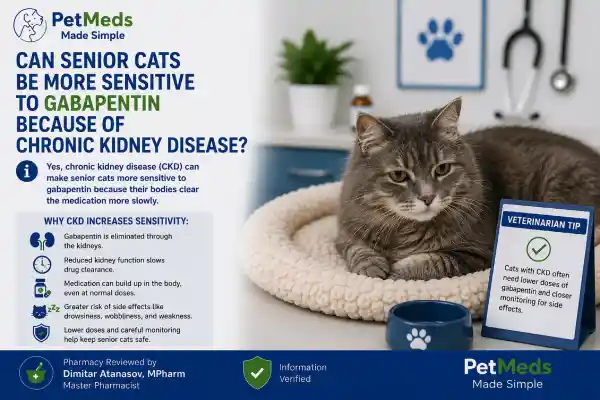
Yes.
Chronic kidney disease (CKD) is one of the most important reasons veterinarians monitor senior cats more closely while they are taking gabapentin.
Unlike many medications that undergo extensive metabolism in the liver, gabapentin is eliminated primarily through the kidneys.
When kidney function declines, the medication may remain in the body longer.
This can lead to:
- longer-lasting sedation
- increased wobbliness
- slower recovery after each dose
- greater sensitivity to normal doses
- accumulation of the medication between doses in some cats
This does not mean gabapentin is unsafe for cats with kidney disease.
In fact, it is commonly prescribed in these patients.
However, veterinarians often adjust:
- the dose
- the dosing interval
- the frequency of monitoring
based on the severity of kidney disease and the individual cat’s response.
Can Senior Cats Be More Sensitive to Gabapentin Because of Dehydration?
Absolutely.
Older cats are naturally at greater risk of dehydration, especially if they have:
- chronic kidney disease
- hyperthyroidism
- diabetes mellitus
- reduced appetite
- vomiting
- diarrhea
Dehydration itself may worsen weakness and lethargy.
Owners sometimes assume gabapentin has suddenly become “too strong” when dehydration is actually making the cat appear much more tired.
Signs of dehydration include:
- dry gums
- sunken eyes
- poor skin elasticity
- reduced appetite
- weakness
- increased sleeping
Keeping senior cats well hydrated is an important part of safely managing long-term gabapentin therapy.
Can Senior Cats Be More Sensitive to Gabapentin During the First Few Doses?
Yes.
The first several doses are often when side effects are most noticeable.
Many senior cats have never previously received medications that affect the central nervous system.
As a result, owners may observe:
- unusual sleepiness
- slower walking
- temporary wobbliness
- reduced interest in playing
- more time spent resting
Fortunately, many cats gradually adapt to these effects over several days as their bodies become accustomed to the medication.
Veterinarians often recommend observing older cats carefully during the first week of treatment before deciding whether dose adjustments are necessary.
Can Senior Cats Become Less Sensitive Over Time?
Sometimes.
Many owners notice that the initial sleepiness becomes much less obvious after several days or weeks.
This does not necessarily mean the medication has stopped working.
Instead, the nervous system often adapts to some of gabapentin’s sedative effects while pain control continues.
However, every cat responds differently.
Some senior cats continue to experience mild sleepiness throughout treatment, while others appear almost completely normal after the adjustment period.
Owners should never increase the dose simply because the cat seems more alert.
Only a veterinarian should decide whether treatment adjustments are appropriate.
Can Senior Cats Be More Sensitive to Gabapentin Before Veterinary Visits?
Yes.
Gabapentin is commonly prescribed before veterinary appointments because it helps reduce stress and makes examinations less frightening.
However, senior cats may remain sleepy for longer after returning home.
Owners sometimes become worried because their cat:
- sleeps through the evening
- walks more slowly
- appears quieter than usual
- shows less interest in food immediately after the appointment
In many cases, these effects gradually improve over the next several hours.
If your cat receives gabapentin before appointments, you may also find our article Can Cats Take Gabapentin Before Vet Visits? helpful.
How Veterinarians Decide on the Right Dose for Senior Cats
There is no single “senior cat dose.”
Instead, veterinarians consider several individual factors, including:
- age
- body weight
- kidney function
- underlying disease
- reason for treatment
- current medications
- previous response to gabapentin
Two cats of exactly the same age may require completely different treatment plans.
For this reason, owners should never compare doses with those used by friends, family members, or online discussion groups.
Every prescription is individualized for the patient’s specific medical condition.
Can Owners Reduce Side Effects at Home?
Owners should never change the prescribed dose without veterinary approval.
However, they can help minimize problems by:
- giving the medication exactly as prescribed
- maintaining a consistent schedule
- ensuring adequate hydration
- providing a quiet place to rest
- preventing falls from furniture
- helping the cat reach food, water, and the litter box if necessary
- monitoring appetite and activity each day
If the cat appears unusually sleepy or weak, documenting when the symptoms occur relative to each dose can provide valuable information for the veterinarian.
When Should Owners Contact Their Veterinarian?
Mild sleepiness and temporary wobbliness are expected in some senior cats.
However, veterinary advice should be sought immediately if your cat develops:
- inability to stand
- repeated falls
- collapse
- difficulty breathing
- seizures
- inability to wake normally
- complete refusal to eat or drink
- severe weakness lasting far longer than expected
These symptoms should never be dismissed as “just old age.”
Prompt evaluation helps determine whether the medication, the underlying disease, or another medical condition is responsible.
Can Senior Cats Be More Sensitive to Gabapentin if They Already Have Neurological Disease?
Yes.
Senior cats are more likely to develop neurological disorders than younger cats.
Examples include:
- cognitive dysfunction
- vestibular disease
- previous strokes
- brain tumors
- spinal disease
- peripheral neuropathy
These conditions may already affect:
- balance
- coordination
- awareness
- walking
- posture
When gabapentin is introduced, it may become difficult to determine whether new symptoms are caused by:
- the medication
- progression of the neurological disease
- another underlying medical problem
This is one reason veterinarians recommend careful monitoring whenever gabapentin is started in geriatric cats with pre-existing neurological disorders.
Can Senior Cats Be More Sensitive to Gabapentin if They Already Sleep More?
Very often.
Healthy senior cats naturally sleep much longer than young adult cats.
Many older cats sleep:
- 16–20 hours each day
- more deeply than younger cats
- for longer uninterrupted periods
After starting gabapentin, owners sometimes become worried because the cat appears to sleep almost continuously.
The important question is not:
“Is my cat sleeping?”
Instead, veterinarians ask:
- Can the cat be awakened normally?
- Does the cat respond to familiar voices?
- Will the cat eat when awake?
- Can the cat walk to the litter box?
- Does the cat recognize family members?
If these answers are yes, the increased sleep may simply reflect normal aging combined with the expected calming effects of gabapentin.
Owners noticing prolonged drowsiness should also review Why Is My Cat Sleeping All Day After Gabapentin?
Can Senior Cats Be More Sensitive to Gabapentin if They Have Poor Appetite?
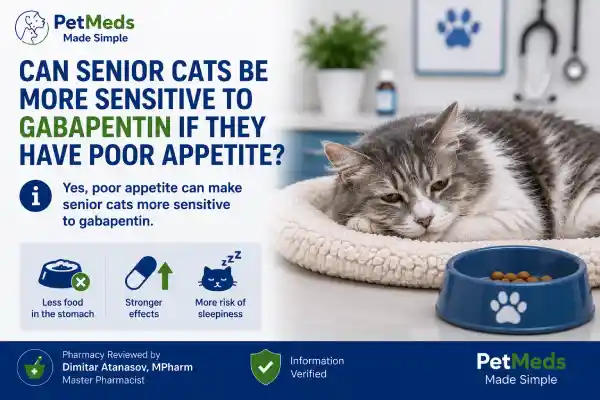
Yes.
Many senior cats already struggle with:
- chronic kidney disease
- dental disease
- arthritis
- gastrointestinal disease
- chronic pain
These conditions may reduce appetite before gabapentin is even prescribed.
If an older cat becomes sleepy after receiving gabapentin, it may temporarily show less interest in eating.
Veterinarians therefore evaluate:
- food intake
- water consumption
- body weight
- hydration
- overall energy level
rather than judging the medication based on appetite alone.
Owners should contact their veterinarian if reduced appetite persists beyond the expected period of sedation.
How Veterinarians Monitor Senior Cats Receiving Gabapentin Long-Term
Long-term treatment does not end after the prescription is written.
Veterinarians often recommend regular rechecks to evaluate:
- body weight
- muscle condition
- kidney function
- mobility
- pain control
- neurological status
- medication effectiveness
- possible side effects
Depending on the cat’s medical history, periodic blood and urine testing may also be recommended.
These examinations help ensure that gabapentin continues to provide more benefit than risk throughout treatment.
Frequently Asked Questions – Can Senior Cats Be More Sensitive to Gabapentin?
Can senior cats be more sensitive to gabapentin than younger cats?
Yes.
Age-related changes affecting the kidneys, nervous system, metabolism, and body composition often make older cats more sensitive to gabapentin’s sedative and neurological effects.
Why does my senior cat sleep longer after gabapentin?
Gabapentin commonly causes temporary sleepiness.
Because older cats naturally sleep more and may eliminate the medication more slowly, the drowsiness sometimes lasts longer than it would in younger cats.
Is gabapentin safe for senior cats with kidney disease?
In many cases, yes.
Veterinarians frequently prescribe gabapentin for cats with chronic kidney disease, but the dose or dosing interval may need adjustment depending on kidney function.
Owners should never change the prescribed dose without veterinary guidance.
Can senior cats become wobbly after gabapentin?
Yes.
Temporary wobbliness is one of the most commonly reported neurological side effects, particularly during the first few doses or after dose increases.
If your cat cannot stand or repeatedly falls, veterinary evaluation is recommended.
Should I reduce the dose because my senior cat seems sleepy?
No.
Never reduce or discontinue gabapentin without consulting your veterinarian.
Excessive sleepiness may require dose adjustment, but only after the underlying cause has been properly evaluated.
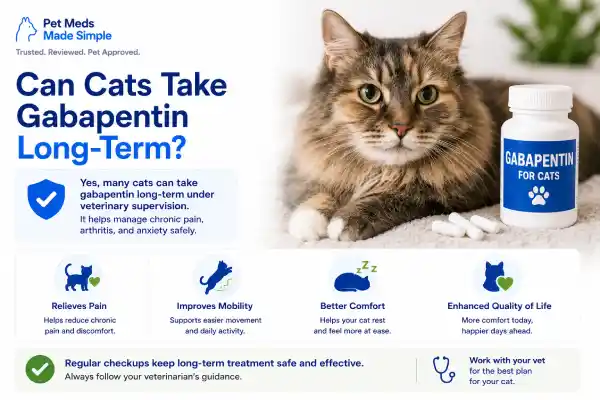
Can senior cats stay on gabapentin for months or years?
Many can.
Cats with chronic pain, arthritis, or neurological disease often receive gabapentin safely for extended periods under regular veterinary supervision.
Routine monitoring helps ensure that treatment remains both safe and effective.
Do all senior cats react the same way?
No.
Some older cats show almost no side effects, while others become much sleepier or more unsteady.
Individual health, kidney function, concurrent diseases, and other medications all influence how each cat responds.
When should I call my veterinarian?
Contact your veterinarian promptly if your senior cat develops:
collapse
inability to stand
repeated falls
breathing difficulty
seizures
inability to wake normally
persistent refusal to eat or drink
severe weakness
These symptoms require medical assessment and should not simply be attributed to old age.
Bottom Line
Can senior cats be more sensitive to gabapentin? Yes. Aging changes kidney function, metabolism, muscle mass, and the nervous system, making some older cats more likely to experience stronger or longer-lasting effects from gabapentin. Most senior cats still tolerate the medication very well, but they benefit from individualized dosing, careful monitoring, and regular veterinary reassessment. Temporary sleepiness and mild wobbliness are among the most common side effects, while severe weakness, collapse, or difficulty breathing should always prompt immediate veterinary attention.
Veterinarian Takeaway
Gabapentin remains one of the safest and most valuable medications for managing chronic pain, arthritis, anxiety, and certain neurological conditions in senior cats. Although older cats may be more sensitive to its sedative and neurological effects, this does not mean they should avoid treatment. Instead, veterinarians tailor the dose to each patient’s age, kidney function, medical conditions, and overall health. With appropriate monitoring and regular follow-up examinations, most senior cats benefit from gabapentin while maintaining an excellent quality of life.
Sources
- Plumb DC. Plumb’s Veterinary Drug Handbook.
- Papich MG. Saunders Handbook of Veterinary Drugs.
- Merck Veterinary Manual. Gabapentin Use in Small Animals.
- BSAVA Small Animal Formulary.
- International Society of Feline Medicine (ISFM) Consensus Guidelines.
- American Association of Feline Practitioners (AAFP) Feline Senior Care Guidelines.
- Veterinary Information Network (VIN). Clinical discussions on gabapentin use in geriatric cats.
- Frontiers in Veterinary Science. Reviews on feline pain management and gabapentin pharmacology.
- Peer-reviewed research evaluating gabapentin effects during neurological examinations in geriatric cats.
Medical Review Statement
Medical Review Statement
This article was written by Dimitar Georgiev Atanasov, MPharm, Master Pharmacist and Medication Safety Educator (Bulgarian Pharmaceutical Union, UIN: 0210000586).
The content has been pharmacy and scientific reviewed by Gergana Krasimirova Atanasova, MPharm (Bulgarian Pharmaceutical Union, UIN: 0210000587).
The veterinary information has been reviewed by Dr. Valcho Georgiev Valchev, DVM (Bulgarian Veterinary Union Registration No. 28000115).
This article is intended for educational purposes only and should never replace individualized veterinary diagnosis, examination, or treatment recommendations.
Image Disclosure
Image Disclosure: Some images used in this article may be AI-generated for educational illustration purposes. They are designed to explain veterinary concepts more clearly and should not replace professional veterinary examination or diagnosis.