Quick Answer
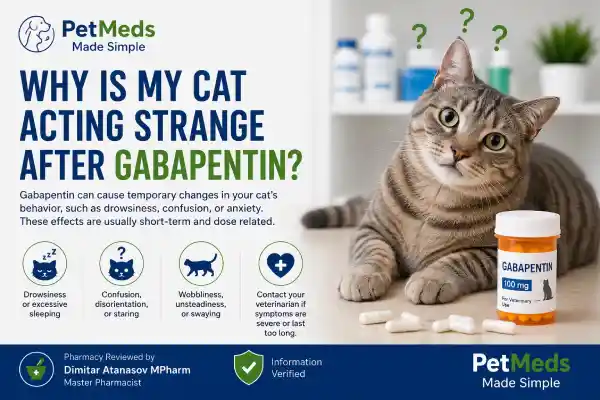
Why is my cat acting strange after gabapentin? Gabapentin can temporarily make some cats sleepy, unsteady, confused, unusually quiet, restless, vocal, or less socially responsive. These changes are often most noticeable during the first several hours after a dose and commonly improve as the medication wears off. However, collapse, inability to stand, repeated vomiting, breathing difficulty, seizures, or extreme unresponsiveness require prompt veterinary attention.
Why Gabapentin Can Make a Cat Seem Completely Different
Cats are highly predictable in their routines.
Owners quickly notice when a normally social cat suddenly hides under the bed, when an active cat sleeps through an entire afternoon, or when a quiet cat begins wandering and meowing repeatedly.
The timing may make the connection seem obvious:
- The cat receives gabapentin.
- Its behavior changes.
- The owner begins searching, “Why is my cat acting strange after gabapentin?”
Gabapentin acts on the nervous system and is commonly prescribed to help manage pain, reduce stress before veterinary appointments, and support treatment of selected neurological conditions. Our complete Gabapentin for Cats: Uses, Dosage, Side Effects & Safety Guide explains the medication’s major veterinary uses and the factors that influence how an individual cat responds.
Because gabapentin affects nervous-system signaling, its effects may appear as changes in:
- alertness
- balance
- movement
- social interaction
- vocalization
- appetite
- response to touch
- confidence while walking
Some cats become quiet and deeply relaxed. Others appear disoriented, unsteady, unusually active, irritable, or simply “not themselves.”
These responses do not all carry the same level of concern.
Why Is My Cat Acting Strange After Gabapentin?
What Does “Acting Strange” Actually Mean?
The phrase can describe many different behaviors.
One owner may use it because the cat is sleeping deeply. Another may mean that the cat is stumbling, staring into space, hiding, hissing, or walking through the home as though unfamiliar with its surroundings.
Common observations include:
- sleeping much more than usual
- appearing dazed or slow to respond
- walking with poor coordination
- hiding from family members
- staring or seeming visually inattentive
- meowing more frequently
- acting restless despite appearing tired
- becoming irritable when touched
- eating less
- drooling or foaming after a dose
Each behavior can have a different explanation.
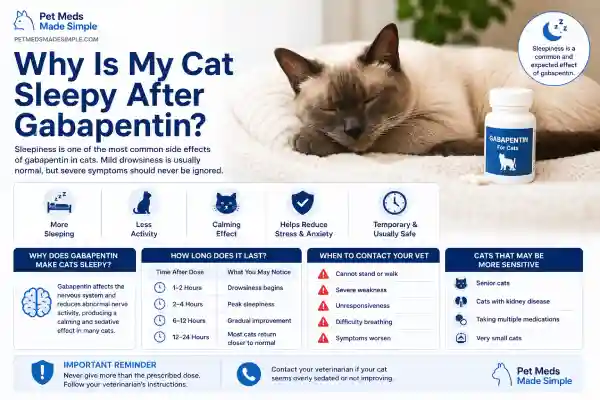
For example, a cat that becomes quiet and sleepy may be experiencing expected sedation. The detailed guide Why Is My Cat Sleepy After Gabapentin? explains how ordinary drowsiness differs from excessive sedation.
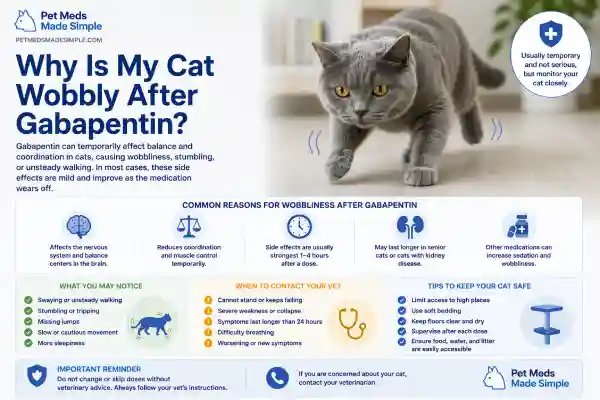
A cat that stumbles, walks with a wide stance, or appears “drunk” may be experiencing temporary incoordination. Owners seeing this specific pattern should also review Why Is My Cat Wobbly After Gabapentin?
Why Sleepiness Can Look Like Confusion
Gabapentin-related drowsiness does not always look like ordinary sleep.
Some cats remain partly awake but appear:
- mentally distant
- slow to recognize familiar sounds
- less interested in interaction
- hesitant before moving
- unusually still
- briefly disoriented after waking
This can make owners fear that the cat is confused or developing a serious neurological problem.
In many cases, the cat is simply heavily relaxed and responding more slowly than usual. The effect may be especially visible when gabapentin is being used before a stressful appointment. Our guide Can Cats Take Gabapentin Before Vet Visits? explains why veterinarians sometimes intentionally use the medication to reduce fear, resistance, and stress during travel and examination.
However, extreme unresponsiveness should not be dismissed as normal sleepiness. A cat that cannot be awakened normally, cannot hold its head up, or appears progressively less responsive needs veterinary advice.
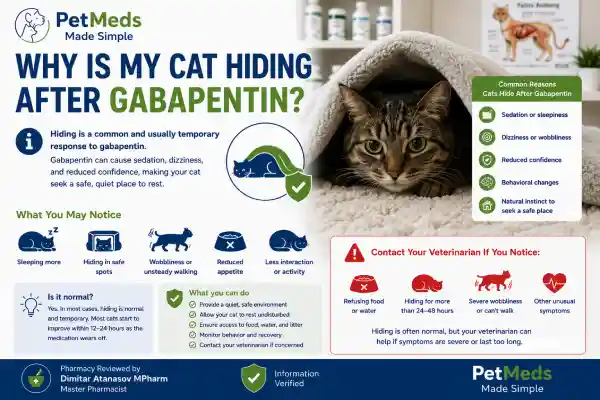
Why Some Cats Hide After Taking Gabapentin
Hiding is one of the most common behaviors owners describe when asking, “Why is my cat acting strange after gabapentin?”
A medicated cat may feel:
- sleepy
- physically unsteady
- less confident
- overwhelmed by noise
- uncertain about movement
- vulnerable around people or other pets
Cats instinctively seek quiet, protected spaces when they do not feel normal.
This does not always mean they are frightened or in severe pain. They may simply prefer to rest somewhere dark and undisturbed until the medication’s effects become less noticeable.
The article Why Is My Cat Hiding After Gabapentin? explores this behavior in greater detail, including when hiding is expected and when it may indicate pain, nausea, anxiety, or another medical problem.
Owners should provide a calm recovery area, but they should still be able to observe breathing, responsiveness, and general comfort.
Why Wobbliness Can Change a Cat’s Behavior
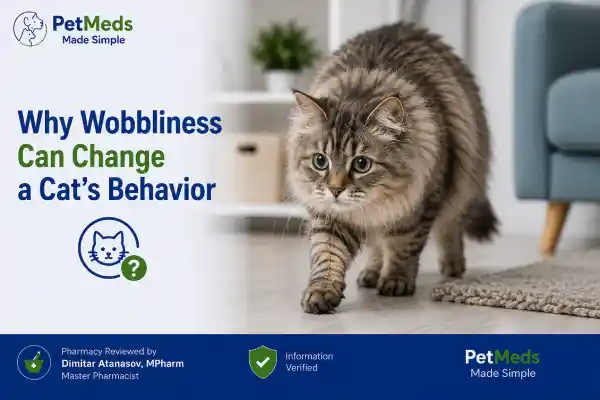
A cat that feels unsteady may behave very differently from one that is merely sleepy.
Gabapentin can temporarily affect coordination in some cats. This may cause:
- swaying
- stumbling
- misjudging jumps
- slipping on smooth floors
- walking close to walls
- reluctance to leave a hiding place
- hesitation before using stairs
A cat that normally jumps confidently onto furniture may suddenly remain on the floor. Another may move slowly and cautiously because its body does not feel fully coordinated.
Cats with more obvious hind-leg weakness may require additional support. Our guide Can Gabapentin Cause Weak Back Legs in Cats? explains why older cats, cats with kidney disease, and cats receiving other sedating medications may be more vulnerable to this effect.
Until coordination returns, access to stairs, high furniture, balconies, and other fall hazards should be limited.
Can Gabapentin Make a Cat Restless or Hyperactive Instead?
Yes, although this is less common than sedation.
A small number of cats develop a paradoxical response and become:
- restless
- unusually active
- difficult to settle
- increasingly vocal
- agitated
- more reactive to touch
- prone to pacing or repeated movement
This can be especially confusing because the owner expected the medication to make the cat calm.
Our dedicated article Can Gabapentin Cause Hyperactivity in Cats? explains why unusual excitement or “zoomies” may occasionally appear after treatment and how owners can distinguish mild temporary stimulation from a more concerning reaction.
Restlessness may also occur when the cat is still experiencing pain, nausea, fear, or environmental stress. The medication may not be the only factor involved.
Why Anxiety or Irritability May Appear After a Dose
Some cats seem frightened, defensive, or unusually sensitive after taking gabapentin.
Possible behaviors include:
- hissing
- growling
- avoiding touch
- swatting
- hiding
- reacting strongly to sounds
- appearing unable to settle
These reactions may occur because the cat feels unsteady or unfamiliar with its own body. A cat that cannot move with its usual confidence may become defensive when approached.
The behavior can also represent a paradoxical medication response. More specific guidance is available in Can Gabapentin Cause Anxiety in Cats? and Can Gabapentin Cause Aggression in Cats?
Aggression should never be punished. The safest response is usually to reduce stimulation, separate the cat from children and other pets, and allow quiet recovery while monitoring for additional symptoms.
Why Drooling Can Make the Reaction Look More Serious
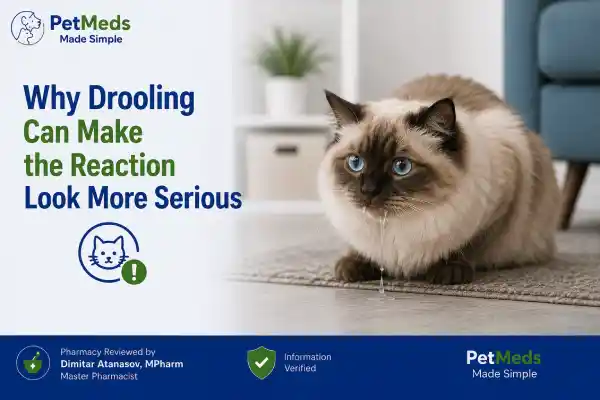
Cats may drool or foam after receiving liquid gabapentin or after tasting powder from a capsule.
The medication can taste intensely bitter.
A cat may respond by:
- drooling
- foaming at the mouth
- shaking its head
- licking repeatedly
- pawing at the mouth
- running away
- hiding immediately afterward
This can look dramatic, but it may reflect taste aversion rather than poisoning.
The distinction is explained fully in Why Is My Cat Drooling After Gabapentin?, including warning signs that suggest nausea, swallowing difficulty, or another problem rather than a simple bitter-taste reaction.
Drooling combined with breathing difficulty, collapse, severe weakness, or facial swelling should be treated much more seriously.
Can Appetite Changes Make a Cat Seem Unwell?
Some cats eat less after gabapentin because they are sleepy, mildly nauseated, stressed, or too unsteady to approach the food bowl normally.
Owners may notice that the cat:
- sleeps through a meal
- sniffs food but walks away
- eats more slowly
- refuses dry food
- shows less interest in treats
A single delayed meal may not be an emergency, but cats should not go prolonged periods without eating.
Our article Why Is My Cat Not Eating After Gabapentin? explains when reduced appetite can be monitored and when the risk of dehydration, worsening illness, or hepatic lipidosis makes veterinary assessment important.
Vomiting changes the situation further. Owners who see nausea or repeated vomiting should also read Can Gabapentin Cause Vomiting in Cats?
Why the First Few Doses Often Produce the Strongest Changes
Unusual behavior is commonly most noticeable:
- after the first dose
- after a dose increase
- after restarting treatment
- when another sedating medication is added
- when kidney function has changed
The cat has not yet adapted to the medication’s effects.
In many cases, mild sleepiness or wobbliness becomes less pronounced over the next several doses. That does not mean owners should ignore severe symptoms, but it explains why the first treatment day can look different from later days.
How long these effects persist varies considerably. How Long Does Gabapentin Last in Cats? provides a more detailed explanation of the expected duration and why some cats recover more slowly than others.
Why Senior Cats May Appear More Affected
Older cats commonly receive gabapentin for arthritis, chronic pain, or stressful veterinary visits.
They may also have:
- reduced kidney function
- muscle loss
- arthritis
- impaired vision
- lower body weight
- neurological disease
- multiple concurrent medications
These factors can make sedation, weakness, and incoordination more visible.
An older cat may therefore appear dramatically different after a dose even when a younger cat receiving the same medication remains relatively normal.
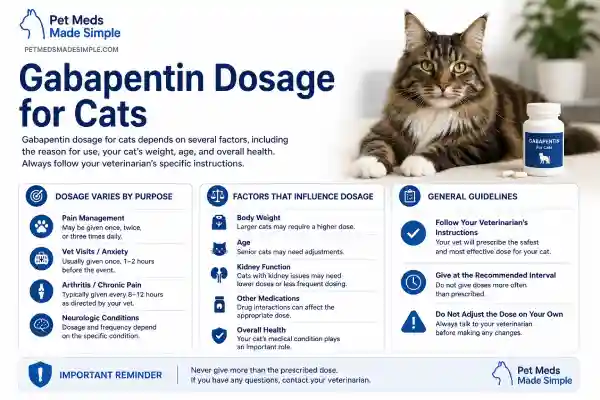
Why the Dose Is Not the Only Factor
Owners often assume an unusual reaction means the prescribed dose must be wrong.
Dose matters, but it is not the only factor.
Veterinarians also consider:
- body weight
- kidney function
- treatment purpose
- dosing interval
- other medications
- hydration
- age
- individual sensitivity
- whether an extra dose may have been given
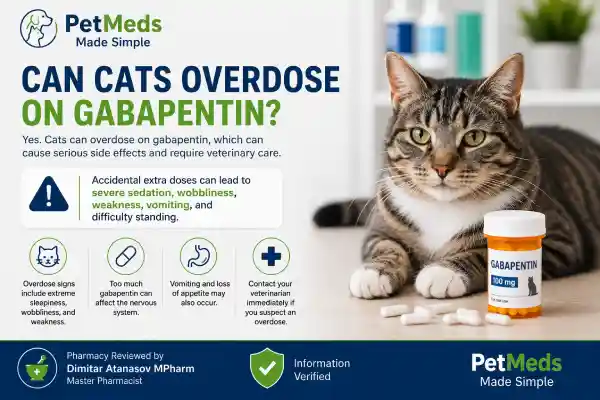
If there is any possibility that the cat received too much medication or two caregivers gave the same dose, consult Can Cats Overdose on Gabapentin? and contact a veterinarian promptly for individualized instructions.
Never attempt to correct the situation by withholding several future doses, doubling a later dose, or changing the schedule without professional guidance. Sudden treatment interruption may also create problems in cats receiving gabapentin regularly, as explained in What Happens If Cats Suddenly Stop Gabapentin?
When Strange Behavior Is Usually Monitored at Home
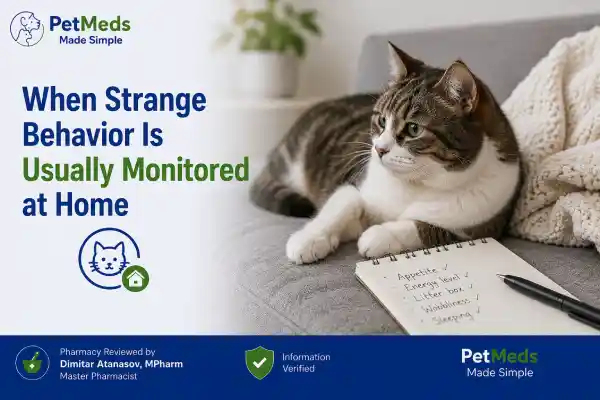
Mild changes may often be monitored when the cat:
- is breathing normally
- can be awakened and responds appropriately
- can stand and walk, even if mildly unsteady
- has no repeated vomiting
- is gradually improving
- remains comfortable
- received only the prescribed amount
Provide a quiet, warm, low-risk area with:
- water nearby
- a low-sided litter box
- food within easy reach
- no access to high surfaces
- limited contact with other animals
Do not force the cat to walk, play, eat, or interact.
When Unusual Behavior May Signal an Emergency
Contact a veterinarian or emergency clinic promptly if the cat develops:
- difficulty breathing
- collapse
- inability to stand
- repeated vomiting
- seizures
- extreme or worsening unresponsiveness
- pale or blue gums
- suspected double dosing
- severe tremors
- sudden paralysis
- facial swelling
Breathing changes deserve special attention because ordinary sedation should not produce severe respiratory distress. The guide Can Gabapentin Cause Breathing Changes in Cats? explains how to distinguish relaxed, slower breathing from potentially dangerous respiratory signs.
Shaking or tremor-like movement may also require closer assessment. Why Is My Cat Shaking After Gabapentin? discusses how mild trembling differs from seizures and other neurological emergencies.
Should Owners Stop Giving Gabapentin If Their Cat Acts Strange?
One of the biggest mistakes owners make is stopping gabapentin immediately after noticing unusual behavior.
Although this reaction is understandable, it is not always the safest decision.
The correct response depends on:
- how severe the behavior changes are
- why gabapentin was prescribed
- whether the cat received the correct dose
- whether additional medications are being used
- whether the cat is improving or worsening
For example, if gabapentin was prescribed before a veterinary visit and the cat simply appears sleepy for several hours, stopping future doses may not even be necessary. The veterinarian may instead recommend adjusting the timing or lowering the dose before the next appointment.
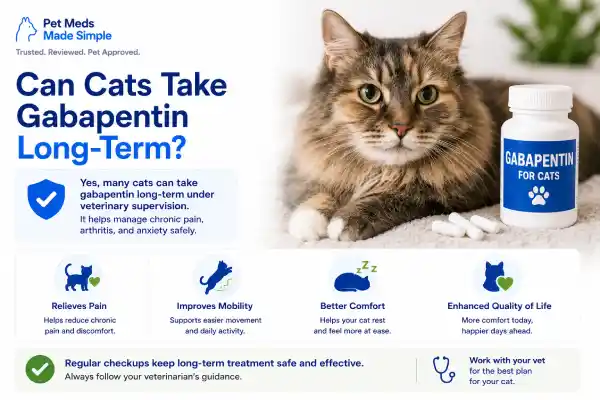
However, cats receiving gabapentin every day for chronic pain or neurological disease should not have their treatment changed without veterinary guidance.
Owners who are considering stopping treatment should also review What Happens If Cats Suddenly Stop Gabapentin?, which explains why abrupt discontinuation may not always be appropriate.
How Veterinarians Evaluate Strange Behavior After Gabapentin
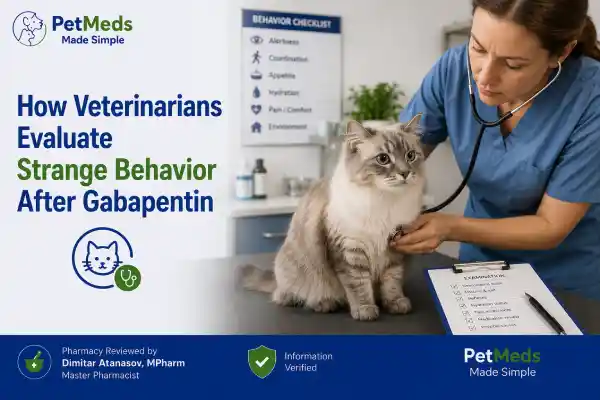
Veterinarians rarely ask only one question.
Instead, they try to understand the complete picture.
Common questions include:
- When did the behavior begin?
- How long after the dose did it appear?
- What dose was given?
- Was the medication given with food?
- Has the cat received gabapentin before?
- Is this the first dose?
- Has the dose recently changed?
- Has the cat accidentally received an extra dose?
- Is the cat taking other medications?
- Does the cat have kidney disease?
- Is the behavior improving or getting worse?
These answers help determine whether the behavior is likely to be:
- an expected side effect
- an excessive medication response
- progression of the underlying disease
- another unrelated medical condition
- a possible overdose
This is why owners should never rely on a single symptom when deciding whether the medication is safe.
Why Kidney Disease Can Increase Side Effects
Gabapentin is removed from the body primarily through the kidneys.
If kidney function is reduced, the medication may remain in the body longer than expected.
As a result, affected cats may experience:
- longer-lasting sleepiness
- prolonged weakness
- increased wobbliness
- slower recovery
- greater sensitivity to normal doses
This is one reason why older cats often require individualized dosing plans.
A veterinarian may recommend:
- reducing the dose
- increasing the interval between doses
- monitoring the response more closely
Owners should never make these adjustments on their own.
Can Other Medications Make the Behavior Worse?
Yes.
Gabapentin is often prescribed together with other medications.
Depending on the individual patient, combinations may increase sedation or alter behavior more than gabapentin alone.
Examples include medications used for:
- chronic pain
- anxiety
- seizures
- anesthesia
- sedation before procedures
The combination does not automatically mean something is wrong.
However, owners should tell their veterinarian about:
- prescription medications
- supplements
- calming products
- CBD products
- herbal remedies
Even products considered “natural” may influence how sedating medications affect some cats.
How Long Does Strange Behavior Usually Last?
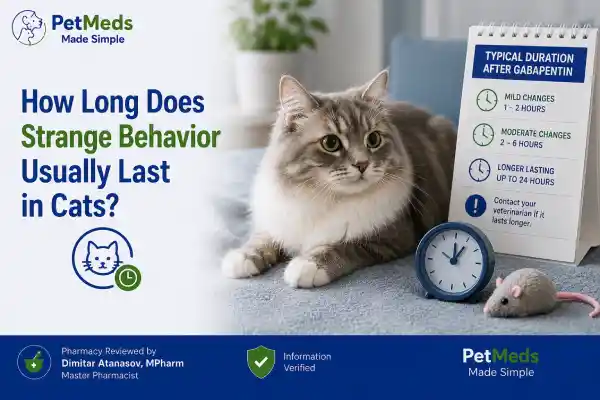
Most medication-related behavior changes occur within the first several hours after administration.
Many cats gradually become:
- more alert
- steadier
- more interactive
- interested in food again
- willing to move around normally
The exact recovery time varies according to:
- dose
- age
- kidney function
- treatment purpose
- individual sensitivity
If behavior continues far longer than expected or becomes progressively worse instead of improving, the prescribing veterinarian should be contacted.
Practical Tips for Owners
If your cat seems unusual after gabapentin:
- Stay calm.
- Keep your cat indoors.
- Limit access to stairs and high furniture.
- Allow quiet rest.
- Offer fresh water.
- Monitor breathing.
- Observe walking ability.
- Record when the dose was given.
- Write down any unusual behaviors.
- Contact your veterinarian if symptoms are severe or persistent.
Avoid:
- forcing food
- encouraging jumping
- giving extra doses
- skipping multiple future doses without advice
- administering human stimulants or other medications in an attempt to “wake up” the cat
Frequently Asked Questions – Why Is My Cat Acting Strange After Gabapentin?
Is it normal for my cat to act strange after gabapentin?
Yes. Mild sleepiness, temporary wobbliness, reduced activity, and slower responses are recognized effects of gabapentin in many cats. Severe weakness, breathing difficulty, collapse, or progressive neurological signs are not considered normal and require veterinary evaluation.
Why does my cat seem confused after gabapentin?
Many owners describe slowed responses as confusion. In reality, the cat may simply be deeply relaxed or sedated. However, marked disorientation, inability to recognize surroundings, or worsening neurological signs should be assessed by a veterinarian.
Can gabapentin make my cat hide?
Yes.
Cats that feel sleepy or slightly unsteady often seek quiet hiding places until they feel normal again.
Why is my cat walking strangely after gabapentin?
Temporary incoordination is a recognized side effect.
Owners should also read Why Is My Cat Wobbly After Gabapentin? if balance problems are the primary concern.
Can gabapentin change my cat’s personality?
Not permanently.
The medication may temporarily change behavior while it is active, but these effects usually improve as the drug leaves the body.
Should I skip the next dose?
Do not change the dosing schedule without speaking to the prescribing veterinarian unless you have been instructed to do so.
Can gabapentin cause aggression?
It is uncommon, but some cats may become irritable or defensive, especially if they feel disoriented or uncomfortable.
Read more: Can gabapentin cause aggression in cats?
How can I tell if my cat received too much gabapentin?
Signs such as extreme sedation, inability to stand, severe weakness, or prolonged unresponsiveness should prompt immediate veterinary advice. Owners concerned about accidental double dosing should review Can Cats Overdose on Gabapentin?
Bottom Line
If your cat is acting strange after gabapentin, the behavior is often related to the medication’s temporary effects on the nervous system. Sleepiness, hiding, slower responses, and mild wobbliness are among the most commonly reported changes and frequently improve as the medication wears off. However, severe neurological signs, breathing problems, collapse, repeated vomiting, or suspected overdose should never be ignored. Careful observation, a safe recovery environment, and timely communication with your veterinarian are the best ways to ensure your cat remains safe while benefiting from treatment.
Veterinarian Takeaway
Gabapentin is one of the most commonly prescribed medications in feline medicine because it can effectively reduce pain, improve comfort, and decrease stress during veterinary visits. Most unusual behavior reflects temporary sedation or altered coordination rather than permanent harm. The key is recognizing the difference between expected side effects and warning signs that require immediate veterinary attention. When owners monitor their cat carefully and follow dosing instructions closely, gabapentin remains a valuable and generally well-tolerated medication for many feline patients.
Sources
- Plumb DC. Plumb’s Veterinary Drug Handbook.
- Papich MG. Saunders Handbook of Veterinary Drugs.
- Merck Veterinary Manual. Gabapentin in Small Animals.
- BSAVA Small Animal Formulary.
- VIN (Veterinary Information Network). Clinical discussions on feline gabapentin use.
- WSAVA Global Pain Council Guidelines.
- AAFP Feline Friendly Handling Guidelines.
- Epstein ME, Rodan I, Griffenhagen G, et al. 2022 AAFP Pain Management Guidelines.
- Robertson SA, Gogolski SM, Pascoe PJ, et al. Pain management recommendations for cats.
- Journal of Feline Medicine and Surgery (JFMS) publications on feline analgesia and stress reduction.
- Frontiers in Veterinary Science. Publications regarding gabapentin use in companion animals.
Medical Review Statement
Medical Review Statement
This article was written by Dimitar Georgiev Atanasov, MPharm, Master Pharmacist and Medication Safety Educator (Bulgarian Pharmaceutical Union, UIN: 0210000586).
The content has been pharmacy and scientific reviewed by Gergana Krasimirova Atanasova, MPharm (Bulgarian Pharmaceutical Union, UIN: 0210000587).
The veterinary information has been reviewed by Dr. Valcho Georgiev Valchev, DVM (Bulgarian Veterinary Union Registration No. 28000115).
This article is intended for educational purposes only and should never replace individualized veterinary advice, diagnosis, or treatment.
Image Disclosure
Image Disclosure: Some illustrations used in this article may be AI-generated to help explain veterinary concepts more clearly. These images are intended for educational purposes and do not replace professional veterinary examination or diagnosis.