Quick Answer
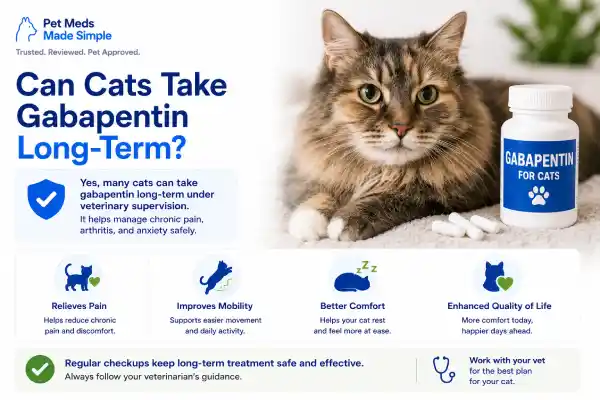
Can cats take gabapentin long-term? In many cases, yes. Veterinarians commonly prescribe gabapentin for long-term management of chronic pain, arthritis, nerve pain, and certain anxiety-related conditions in cats. Many cats tolerate long-term gabapentin well, but regular veterinary monitoring is important to evaluate effectiveness, adjust dosing when needed, and monitor for side effects such as sleepiness, wobbliness, or changes in kidney function.
Can cats take gabapentin long-term?
Yes. Many cats safely take gabapentin long-term under veterinary supervision. It is commonly used for chronic pain, arthritis, nerve pain, and anxiety-related conditions. Regular monitoring helps ensure the medication remains safe and effective while minimizing the risk of side effects.
When Owners Commonly Ask This
Most owners ask this question after their cat has been taking gabapentin for weeks or months.
Common situations include:
- Arthritis management
- Chronic pain treatment
- Senior cat care
- Mobility problems
- Long-term anxiety management
- Neurological conditions
Owners often wonder:
- Will gabapentin stop working?
- Can my cat stay on it for years?
- Is long-term use harmful?
- Are there long-term side effects?
These are reasonable questions and important topics to discuss with a veterinarian.
Can Cats Take Gabapentin Long-Term?
What Is Gabapentin?
Gabapentin is a medication that affects nerve signaling within the nervous system.
In cats, it is commonly used for:
- Chronic pain
- Arthritis
- Nerve pain
- Stress reduction
- Veterinary visit anxiety
- Certain neurological disorders
One reason gabapentin is so widely used is that many cats tolerate it well compared with some alternative medications.
Why Do Cats Take Gabapentin Long-Term?
Long-term treatment is usually considered when an ongoing medical condition requires continuous management.
Common Long-Term Uses
| Condition | Long-Term Use Common? |
|---|---|
| Arthritis | Yes |
| Chronic pain | Yes |
| Nerve pain | Yes |
| Mobility issues | Yes |
| Anxiety disorders | Sometimes |
| Neurological conditions | Yes |
Many senior cats receiving gabapentin fall into one of these categories.
Is Long-Term Gabapentin Use Common in Cats?
Yes.
Veterinarians frequently prescribe gabapentin for chronic conditions that require ongoing treatment.
Examples
- Senior cats with arthritis
- Cats with chronic nerve pain
- Cats recovering from long-term injuries
- Cats with persistent mobility problems
Frequency of Use
| Use Duration | Common? |
|---|---|
| Single dose | Yes |
| Several days | Yes |
| Several weeks | Yes |
| Several months | Yes |
| Years | Sometimes |
How Does Gabapentin Help Cats Long-Term?
The medication does not cure arthritis or chronic pain.
Instead, it helps manage symptoms.
Potential Benefits
| Benefit | Possible? |
|---|---|
| Improved comfort | Yes |
| Better mobility | Yes |
| Less pain | Yes |
| Reduced anxiety | Yes |
| Improved quality of life | Yes |
Many owners notice that their cats become more active and comfortable once pain is better controlled.
Can Cats Stay on Gabapentin for Years?
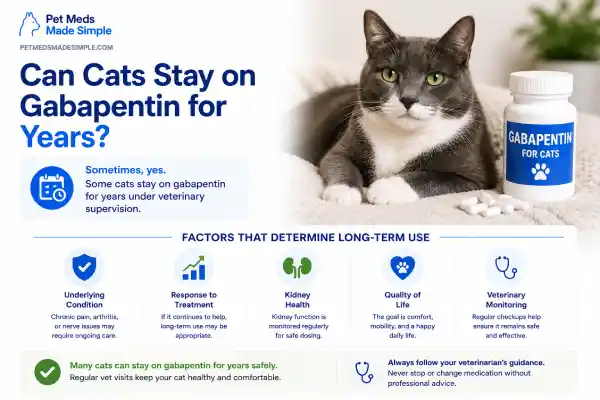
Sometimes.
Some cats remain on gabapentin for extended periods under veterinary supervision.
The decision depends on:
- Underlying condition
- Response to treatment
- Side effects
- Kidney health
- Overall quality of life
Long-Term Treatment Factors
| Factor | Important? |
|---|---|
| Comfort improvement | Yes |
| Side effects | Yes |
| Kidney function | Yes |
| Mobility | Yes |
| Veterinary monitoring | Yes |
What Are the Most Common Long-Term Side Effects?
Most long-term side effects are similar to short-term side effects.
Common Side Effects
| Side Effect | Possible? |
|---|---|
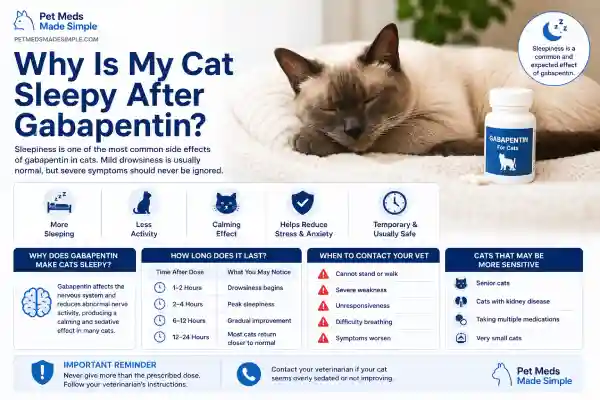
| Sleepiness | Yes |
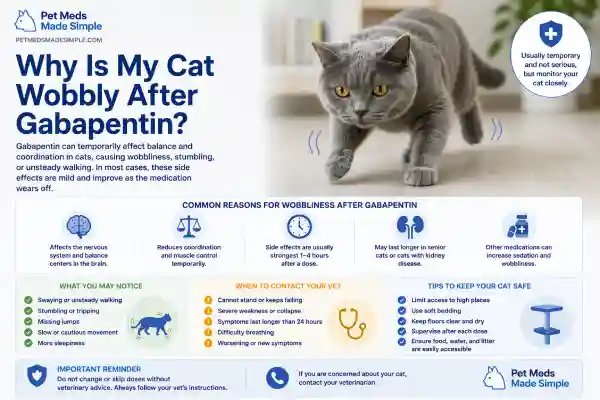
| Wobbliness | Yes |
| Reduced activity | Sometimes |
| Mild weakness | Sometimes |
| Increased sleeping | Sometimes |
Many cats experience mild side effects that improve as their body adapts.
Related reading:
Does Gabapentin Stop Working Over Time?
Usually not.
Many cats continue benefiting from treatment for months or years.
However, underlying diseases may progress.
Possible Reasons Owners Think It Stopped Working
| Reason | Possible? |
|---|---|
| Arthritis progression | Yes |
| Disease worsening | Yes |
| Dose adjustment needed | Yes |
| New medical condition | Yes |
Sometimes the medication remains effective, but the disease itself becomes more severe.
Are Senior Cats Good Candidates for Long-Term Gabapentin?
Often, yes.
Senior cats are among the most common long-term gabapentin users.
Why Older Cats Receive Gabapentin
- Arthritis
- Mobility issues
- Chronic pain
- Degenerative conditions
Senior Cat Benefits
| Benefit | Possible? |
|---|---|
| Better movement | Yes |
| Improved comfort | Yes |
| Less pain | Yes |
| Better daily activity | Yes |
Older cats often experience meaningful quality-of-life improvements.
Could Kidney Disease Affect Long-Term Use?
Yes.
This is one of the most important considerations.
Gabapentin is primarily eliminated through the kidneys.
Why Kidney Health Matters
| Kidney Function | Impact |
|---|---|
| Normal | Typical response |
| Mild disease | May require monitoring |
| Moderate disease | May require adjustment |
| Severe disease | Closer supervision needed |
Cats with kidney disease can often still receive gabapentin, but monitoring becomes especially important.
Can Cats Develop Dependence on Gabapentin?
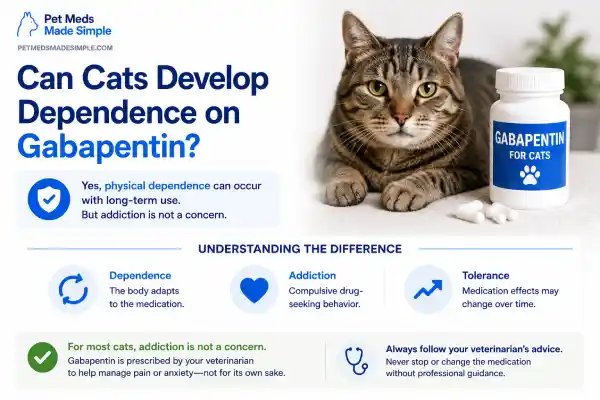
Physical dependence can occur with many medications that affect the nervous system when used long-term.
This does not mean addiction.
Cats do not take gabapentin because they crave it. However, the body may become accustomed to the medication over time.
Understanding the Difference
| Term | Meaning |
|---|---|
| Dependence | Body adapts to medication |
| Addiction | Compulsive drug-seeking behavior |
| Tolerance | Medication effects may change over time |
For most cats receiving gabapentin, addiction is not considered a concern.
Should Gabapentin Be Stopped Suddenly?
Usually not.
Owners should never stop long-term gabapentin therapy without veterinary guidance.
Why Sudden Discontinuation May Be Problematic
| Possible Issue | Risk |
|---|---|
| Return of pain | Yes |
| Increased discomfort | Yes |
| Anxiety recurrence | Yes |
| Neurological symptoms | Possible |
Veterinarians often recommend gradual dose adjustments when treatment changes are needed.
Related reading:
What Happens If Cats Suddenly Stop Gabapentin?
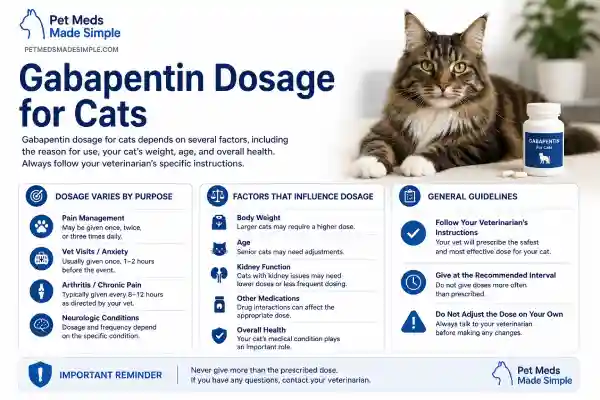
Could My Cat Need a Dose Adjustment?
Sometimes.
A dose that worked well six months ago may not be ideal today.
Situations That May Require Reassessment
- Worsening arthritis
- Increased pain
- Significant weight changes
- New medical conditions
- Kidney disease progression
- Excessive sleepiness
Signs a Review May Be Needed
| Observation | Veterinary Review? |
|---|---|
| Pain returning | Yes |
| Increased wobbliness | Yes |
| Excessive sleepiness | Yes |
| Reduced appetite | Yes |
| Weight loss | Yes |
How Veterinarians Monitor Long-Term Gabapentin Use
Long-term treatment is not simply a matter of refilling prescriptions.
Veterinarians regularly assess:
- Comfort level
- Mobility
- Quality of life
- Side effects
- Kidney health
- Overall health status
Common Monitoring Areas
| Area | Why It Matters |
|---|---|
| Pain control | Ensure effectiveness |
| Mobility | Measure improvement |
| Appetite | Detect side effects |
| Body weight | Monitor health |
| Kidney function | Support safe dosing |
| Behavior | Evaluate quality of life |
Monitoring helps ensure long-term gabapentin remains beneficial.
Could Long-Term Gabapentin Affect Quality of Life?
In many cats, quality of life actually improves.
Pain reduction often allows cats to:
- Move more comfortably
- Jump more easily
- Sleep better
- Interact more normally
- Enjoy daily activities
Quality of Life Benefits
| Potential Benefit | Possible? |
|---|---|
| Better comfort | Yes |
| Increased activity | Yes |
| Improved mobility | Yes |
| Reduced pain | Yes |
| Better overall wellbeing | Yes |
This is one reason veterinarians commonly use gabapentin for chronic conditions.
Can Cats Take Gabapentin Long-Term for Arthritis?
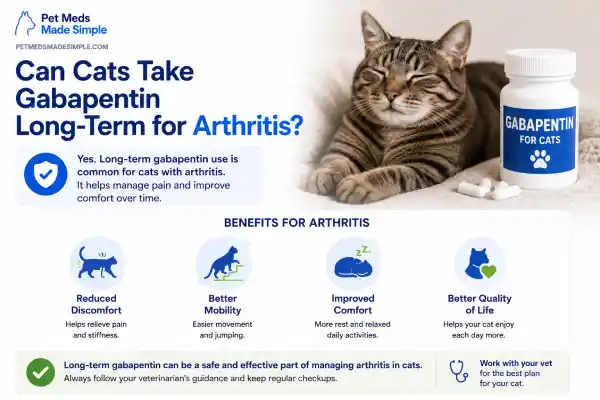
Yes.
This is one of the most common reasons for long-term treatment.
Arthritis and Long-Term Gabapentin
| Benefit | Common? |
|---|---|
| Reduced discomfort | Yes |
| Better mobility | Yes |
| Easier movement | Yes |
| Improved quality of life | Yes |
Because arthritis is a lifelong condition, many cats require ongoing management rather than short-term treatment.
Can Cats Take Gabapentin Long-Term With Kidney Disease?
Often yes, but additional monitoring is usually required.
Since gabapentin is cleared primarily through the kidneys, veterinarians may adjust treatment plans when kidney disease is present.
Kidney Disease Considerations
| Situation | Monitoring Needed? |
|---|---|
| Healthy kidneys | Routine |
| Mild kidney disease | Yes |
| Moderate kidney disease | Yes |
| Advanced kidney disease | Closer monitoring |
Many cats with kidney disease still receive gabapentin successfully.
Long-Term Gabapentin Safety Overview
Can Cats Take Gabapentin Long-Term? Safety Summary
| Question | Answer |
|---|---|
| Can cats take gabapentin long-term? | Often yes |
| Is veterinary monitoring important? | Yes |
| Can side effects occur? | Yes |
| Is long-term use common? | Yes |
| Should it be stopped suddenly? | Usually no |
| Can senior cats use it? | Often yes |
| Can kidney disease affect dosing? | Yes |
When Should Owners Contact Their Veterinarian?
Owners should contact their veterinarian if they notice:
- Increasing sleepiness
- Severe wobbliness
- Appetite changes
- Weight loss
- New symptoms
- Reduced mobility despite treatment
Contact Your Veterinarian If
| Symptom | Contact Vet? |
|---|---|
| Mild sleepiness | Monitor |
| Severe lethargy | Yes |
| Repeated falls | Yes |
| Appetite loss | Yes |
| New neurological signs | Yes |
| Worsening pain | Yes |
When Does Long-Term Gabapentin Use Become a Concern?
Most cats tolerate treatment well.
However, veterinary review is important when:
- Side effects worsen
- The medication appears less effective
- Kidney disease progresses
- Quality of life declines
Warning Signs
| Sign | Review Needed? |
|---|---|
| Stable improvement | Routine monitoring |
| Worsening pain | Yes |
| Severe sleepiness | Yes |
| Repeated falls | Yes |
| Significant behavior changes | Yes |
Gabapentin for Cats Series
This article is part of our Gabapentin for Cats content hub.
Related guides include:
- Gabapentin for Cats: Uses, Dosage, Side Effects & Safety Guide
- Why Is My Cat Sleepy After Gabapentin?
- Why Is My Cat Wobbly After Gabapentin?
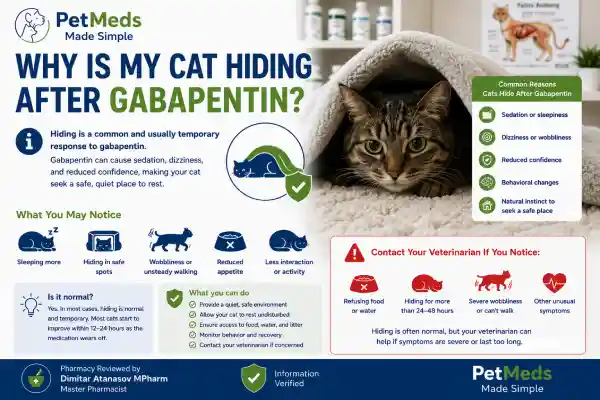
- Why Is My Cat Hiding After Gabapentin?
- Can Gabapentin Cause Vomiting in Cats?
- Can Gabapentin Cause Aggression in Cats?
- Can Gabapentin Cause Anxiety in Cats?
- What Happens If Cats Suddenly Stop Gabapentin?
- Can Cats Overdose on Gabapentin?
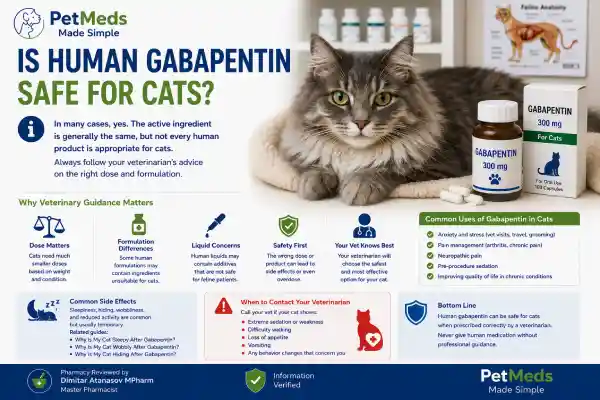
- Is Human Gabapentin Safe for Cats?
Bottom Line
Can cats take gabapentin long-term? In many cases, yes. Long-term gabapentin use is common in cats with arthritis, chronic pain, nerve pain, and certain neurological or anxiety-related conditions. Most cats tolerate treatment well when dosing and monitoring are managed appropriately by a veterinarian. Regular follow-up visits help ensure the medication remains both safe and effective.
Veterinarian Takeaway
Gabapentin has become one of the most widely used medications in feline medicine because of its versatility and generally favorable safety profile. Long-term treatment is common, particularly in senior cats with arthritis or chronic pain. Although side effects such as sleepiness and wobbliness may occur, many cats experience meaningful improvements in comfort and quality of life when treatment is carefully monitored.
Frequently Asked Questions – Can Cats Take Gabapentin Long-Term
Can cats take gabapentin long-term?
Yes. Many cats safely receive gabapentin for months or years under veterinary supervision.
Is long-term gabapentin safe for senior cats?
Often yes. Senior cats are among the most common long-term users.
Can gabapentin stop working over time?
Usually not, although underlying diseases may progress.
Can cats develop dependence on gabapentin?
Physical dependence may occur with long-term use, but addiction is not typically a concern.
Should gabapentin be stopped suddenly?
Generally no. Sudden discontinuation should only occur under veterinary guidance.
Can kidney disease affect long-term gabapentin use?
Yes. Kidney health may influence dosing and monitoring requirements.
What are the most common long-term side effects?
Sleepiness and wobbliness are among the most common.
Can gabapentin help cats with arthritis long-term?
Yes. Arthritis is one of the most common reasons for ongoing treatment.
How often should cats on long-term gabapentin be monitored?
Monitoring schedules vary depending on the individual cat and underlying condition.
When should I contact my veterinarian?
If your cat develops severe sleepiness, repeated falls, appetite loss, worsening pain, or new symptoms.
Reviewed By
Pharmacy Reviewed By
Dimitar Atanasov, MPharm
Master Pharmacist | Medication Safety Educator
Editorial Policy
At Pet Meds Made Simple, we are committed to providing accurate, evidence-based information about pet medications, veterinary treatments, medication safety, and common health concerns affecting dogs and cats.
For more information, see our Editorial Policy:
Sources
- Plumb’s Veterinary Drug Handbook
- Merck Veterinary Manual
- American Association of Feline Practitioners (AAFP)
- Veterinary Information Network (VIN)
- Journal of Feline Medicine and Surgery
- Small Animal Clinical Pharmacology
- Veterinary Pharmacology and Therapeutics
- JAVMA
- Frontiers in Veterinary Science
- Veterinary Anaesthesia and Analgesia
Medical Review Statement
This article was pharmacy-reviewed by Dimitar Atanasov, MPharm, Master Pharmacist, using current veterinary pharmacology references, feline pain-management guidelines, feline geriatric care references, and published veterinary literature available at the time of review.
Images created with AI – Can Cats Take Gabapentin Long-Term