

Quick Answer
Why is my dog restless at night despite pain medication? The most common reasons include inadequate pain control, medication wearing off before bedtime, arthritis discomfort, nerve pain that is not responding well to treatment, medication side effects, anxiety, cognitive dysfunction in senior dogs, or an underlying condition that has worsened. If your dog continues pacing, whining, changing positions frequently, panting, or struggling to settle at night despite medication, a veterinary reassessment is often needed.
Veterinarian Takeaway
If your dog is still restless at night while receiving pain medication, do not automatically assume the medication has failed. Nighttime restlessness can occur because pain is inadequately controlled, because the medication timing is no longer optimal, or because another medical or behavioral problem is contributing to the symptoms. Persistent nighttime discomfort should always be discussed with your veterinarian.
Why Nighttime Restlessness Happens More Often
Many owners notice that their dog appears relatively comfortable during the day but becomes restless after sunset.
This happens because nighttime conditions can make discomfort more noticeable:
- Fewer distractions
- Less activity around the home
- Stiffness after lying down
- Medication levels decreasing overnight
- Increased awareness of pain
- Anxiety triggered by darkness or isolation
Dogs that seem comfortable during daytime walks may still struggle significantly once they try to sleep.
Why Is My Dog Restless at Night Despite Pain Medication?
Signs That Pain May Still Be Present
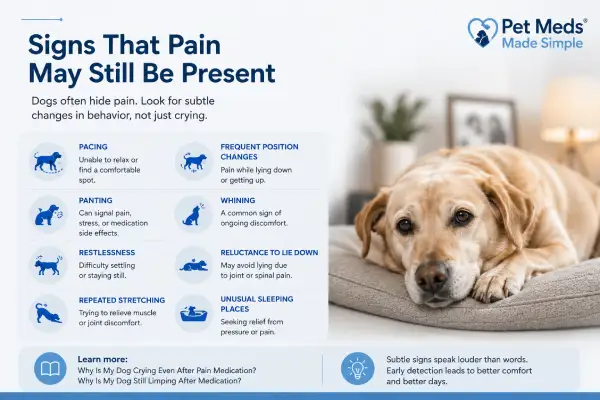
Many dogs do not cry loudly when they are uncomfortable.
Instead, they show subtle signs such as:
| Sign | What It May Mean |
|---|---|
| Pacing | Unable to find a comfortable position |
| Frequent position changes | Pain while lying down |
| Panting | Pain, stress, or medication effect |
| Whining | Ongoing discomfort |
| Restlessness | Pain not fully controlled |
| Reluctance to lie down | Joint or spinal pain |
| Repeated stretching | Musculoskeletal discomfort |
| Sleeping in unusual places | Trying to relieve pressure |
If these signs continue despite medication, the pain management plan may need adjustment.
7 Reasons Your Dog May Be Restless Despite Pain Medication
1. The Medication Is Not Fully Controlling the Pain
Pain medications reduce discomfort but do not always eliminate it.
Some conditions are especially challenging to manage:
- Severe arthritis
- Hip dysplasia
- Degenerative joint disease
- Cancer-related pain
- Advanced spinal disease
Dogs with these conditions may need:
- Dose adjustments
- Combination therapy
- Additional pain medications
- Physical rehabilitation
2. The Medication Is Wearing Off Overnight
One of the most common explanations is that the medication’s effects are fading before morning.
For example:
| Medication | Typical Duration |
|---|---|
| Gabapentin | 6–12 hours |
| Carprofen | Around 12–24 hours |
| Tramadol | Variable |
| Amantadine | Usually used with other drugs |
If the bedtime dose is given too early, discomfort may return during the night.
Owners commonly notice:
- Restlessness around 2–4 AM
- Pacing overnight
- Early morning whining
- Difficulty returning to sleep
Never adjust dosing schedules without veterinary guidance.
Related guides:
- Why Does Pain Medication Stop Working?
- Can Dogs Take Pain Medication Long-Term?
- Can Dogs Take Gabapentin and NSAIDs Together?
3. The Pain Type Is Not Being Treated Correctly
Different pain types respond differently to medications.
| Pain Type | Examples |
|---|---|
| Inflammatory pain | Arthritis, injuries |
| Neuropathic pain | Nerve damage |
| Cancer pain | Tumors |
| Post-surgical pain | Recovery after procedures |
A medication that works well for arthritis may be less effective for nerve pain.
For example, dogs with nerve-related pain often respond better when medications such as gabapentin are included in the treatment plan.
4. Arthritis Often Feels Worse at Night
Senior dogs frequently become stiffer after resting.
During the night:
- Joints cool down
- Muscles tighten
- Mobility decreases
- Arthritis discomfort becomes more noticeable
This is why many arthritic dogs:
- Pace before settling
- Frequently change sleeping spots
- Need assistance standing up in the morning
Senior dogs are particularly affected.
5. Anxiety Is Contributing to the Problem
Pain and anxiety often occur together.
A dog that has experienced chronic discomfort may begin anticipating pain, leading to:
- Hypervigilance
- Nighttime pacing
- Difficulty relaxing
- Increased sensitivity to noises
In these situations, treating pain alone may not completely resolve nighttime restlessness.
Related guides:
- Why Does My Dog Panic at Night?
- Why Is My Dog Suddenly Afraid of Everything?
- What Causes Rebound Anxiety in Dogs?
6. Medication Side Effects Can Mimic Restlessness
Sometimes the medication itself contributes to unusual behavior.
Possible medication-related effects include:
- Mild agitation
- Increased activity
- Panting
- Confusion
- Disorientation
Certain dogs may react unexpectedly to medications that usually cause sedation.
Owners sometimes notice:
- Pacing instead of sleeping
- Hyperactivity
- Increased vocalization
- Restlessness shortly after dosing
Related guides:
- Why Is My Dog Hyper After Gabapentin?
- Can Pain Medication Cause Anxiety in Dogs?
- Can Pain Medication Cause Aggression in Dogs?
7. Another Medical Condition Is Developing
Not all nighttime restlessness is caused by pain.
Other possible causes include:
- Cognitive dysfunction syndrome
- Heart disease
- Respiratory disease
- Gastrointestinal discomfort
- Urinary problems
- Endocrine disorders
If your dog’s symptoms have changed suddenly, a veterinary examination is especially important.
When Owners Commonly Ask This Question
Veterinarians commonly hear this question when:
- A senior dog starts pacing at night
- Arthritis medication no longer seems effective
- Gabapentin is helping during the day but not overnight
- A dog has recently undergone surgery
- A chronic pain condition is progressing
- Owners notice worsening sleep quality
In many cases, the issue is not medication failure but rather a need to reassess the overall pain management strategy.
Related Symptoms Owners Often Notice
Dogs that are restless at night despite pain medication may also show:
- Panting
- Shaking
- Whining
- Difficulty lying down
- Limping
- Weakness
- Reduced appetite
- Increased clinginess
- Frequent repositioning
- Sleeping during the day
These related symptoms often provide important clues about the underlying cause.
How Veterinarians Investigate Nighttime Restlessness
If a dog remains restless at night despite pain medication, veterinarians usually investigate several possible causes rather than assuming the medication has failed.
The goal is to determine whether the problem is:
- Poor pain control
- Disease progression
- Medication side effects
- Anxiety
- Cognitive dysfunction
- Another underlying medical condition
Common Veterinary Evaluations
| Assessment | Purpose |
|---|---|
| Physical examination | Assess overall health |
| Pain assessment | Evaluate pain severity |
| Orthopedic examination | Check joints and mobility |
| Neurological examination | Assess nerve and spinal function |
| Medication review | Identify treatment issues |
| Bloodwork | Screen for underlying disease |
| Urinalysis | Evaluate kidney and urinary health |
Many dogs that were comfortable six months ago may need a different treatment approach today.
Could My Dog Need a Medication Adjustment?
Yes.
Pain-management plans often need adjustments over time.
Veterinarians may recommend:
- Dose adjustments
- Different medication timing
- Combination therapy
- Physical rehabilitation
- Weight management
- Additional pain-control strategies
Situations That May Require Reassessment
| Situation | Veterinary Review Needed? |
|---|---|
| Increased nighttime pacing | Yes |
| More whining | Yes |
| New limping | Yes |
| Reduced mobility | Yes |
| Worsening arthritis | Yes |
| New symptoms | Yes |
Related articles:
- Why Does Pain Medication Stop Working?
- Can Dogs Take Pain Medication Long-Term?
- Why Is My Dog Still Limping After Medication?
Can Dogs Develop Tolerance to Pain Medication?

Sometimes.
Owners often describe this as the medication “stopping working.”
However, several explanations may exist:
- Arthritis progression
- Increased inflammation
- New injuries
- Nerve pain development
- Changes in body weight
- Medication no longer providing full coverage
Possible Reasons Medication Seems Less Effective
| Cause | Common? |
|---|---|
| Disease progression | Yes |
| New pain source | Yes |
| Inadequate dose | Sometimes |
| Medication timing issue | Sometimes |
| Tolerance | Possible |
Could My Dog Need More Than One Medication?
Possibly.
Many dogs with chronic pain benefit from multimodal pain management.
Examples of Combination Therapy
| Medication Type | Purpose |
|---|---|
| NSAIDs | Reduce inflammation |
| Gabapentin | Control nerve pain |
| Amantadine | Chronic pain support |
| Joint supplements | Support joint health |
| Physical therapy | Improve mobility |
Related articles:
- Can Dogs Take Gabapentin and NSAIDs Together?
- Can Dogs Take Aspirin Safely?
- Can Dogs Take Ibuprofen Accidentally?
- Can Dogs Take Human Gabapentin Capsules?
- Can Dogs Take Gabapentin Long-Term Safely?
Could Weight Gain Be Making Things Worse?
Yes.
Extra body weight places additional pressure on painful joints.
Weight and Arthritis
| Effect | Possible? |
|---|---|
| Increased joint stress | Yes |
| Reduced mobility | Yes |
| More discomfort | Yes |
| Greater nighttime stiffness | Yes |
Even modest weight loss can significantly improve comfort in arthritic dogs.
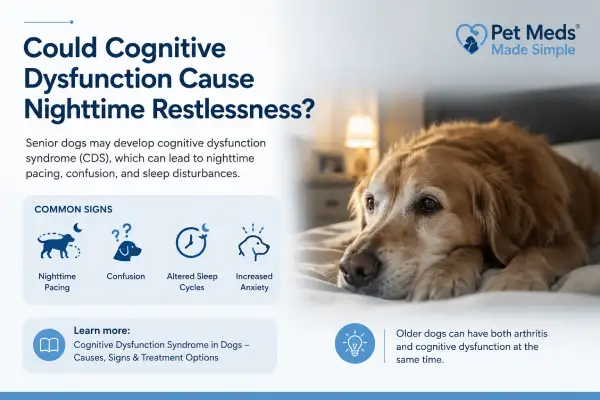
Could Cognitive Dysfunction Cause Nighttime Restlessness?
Absolutely.
Senior dogs may develop cognitive dysfunction syndrome (CDS), which shares similarities with dementia in humans.
Common Signs
- Nighttime pacing
- Confusion
- Wandering
- Altered sleep cycles
- Increased anxiety
- Staring into space
Cognitive Dysfunction Symptoms
| Symptom | Common? |
|---|---|
| Night pacing | Yes |
| Sleep disturbances | Yes |
| Confusion | Yes |
| Disorientation | Yes |
| Anxiety | Yes |
Many older dogs have both arthritis and cognitive dysfunction at the same time.
Could Gastrointestinal Discomfort Be Causing Restlessness?
Sometimes.
Certain pain medications can irritate the stomach or digestive tract.
Dogs experiencing nausea may:
- Pace
- Lick their lips
- Refuse food
- Change sleeping positions frequently
- Appear unable to settle
Related articles:
- Can Pain Medication Cause Stomach Bleeding in Dogs?
- Why Is My Dog Panting After Pain Medication?
- Why Is My Dog Hiding After Pain Medication?
When Should Owners Contact Their Veterinarian?
Owners should contact their veterinarian if:
- Restlessness lasts several days
- Symptoms worsen
- Medication seems less effective
- Appetite decreases
- New symptoms develop
- Sleep quality continues declining
Contact Your Veterinarian If
| Sign | Contact Vet? |
|---|---|
| Mild pacing | Monitor |
| Persistent pacing | Yes |
| Increased whining | Yes |
| Appetite loss | Yes |
| New weakness | Yes |
| Worsening limp | Yes |
Related articles:
- Why Is My Dog Weak After Pain Medication?
- Why Is My Dog Crying Even After Pain Medication?
- What Happens If Dogs Overdose on Pain Medication?
When Is Nighttime Restlessness an Emergency?
Most cases are not emergencies.
However, immediate veterinary care is recommended if restlessness occurs alongside:
- Collapse
- Difficulty breathing
- Pale gums
- Severe weakness
- Unresponsiveness
- Vomiting blood
- Black tarry stool
Emergency Warning Signs
| Symptom | Emergency? |
|---|---|
| Mild pacing | No |
| Restlessness | No |
| Persistent panting | Contact Vet |
| Collapse | Yes |
| Breathing difficulty | Yes |
| Pale gums | Yes |
| Unresponsiveness | Yes |
Related Symptoms Owners Often Notice
Dogs that are restless at night despite pain medication often also experience:
- Panting
- Whining
- Shaking
- Weakness
- Hiding
- Limping
- Difficulty standing
- Reduced appetite
- Clinginess
- Frequent repositioning
Related reading:
- Why Is My Dog Panting After Pain Medication?
- Why Is My Dog Weak After Pain Medication?
- Why Is My Dog Hiding After Pain Medication?
- Why Is My Dog Still Limping After Medication?
- Why Is My Dog Still Limping After Medication?
- Can Pain Medication Cause Anxiety in Dogs?
- Why Does My Dog Panic at Night?
- What Causes Rebound Anxiety in Dogs?
- Why Is My Dog Suddenly Afraid of Everything?
- Why Is My Dog Hyper After Gabapentin?
- Why Is My Dog Wobbly After Gabapentin?
- Can Gabapentin Cause Anxiety in Dogs?
Bottom Line
Why is my dog restless at night despite pain medication? The most common reasons include incomplete pain control, arthritis progression, medication effects wearing off before morning, anxiety, cognitive dysfunction, gastrointestinal discomfort, or another underlying medical condition. Persistent nighttime pacing, panting, whining, or inability to settle often indicates that your dog’s treatment plan should be reassessed by a veterinarian.
Veterinarian Takeaway
Nighttime restlessness is one of the clearest indicators that a dog’s comfort level may need reevaluation. While chronic pain is often the primary cause, medication timing, arthritis progression, anxiety, cognitive dysfunction, and other medical conditions frequently contribute. A thorough veterinary assessment can often identify the problem and improve both sleep quality and overall quality of life.
Frequently Asked Questions – Why Is My Dog Restless at Night Despite Pain Medication
Why is my dog restless at night despite pain medication?
Pain may not be fully controlled, medication may be wearing off, or another condition may be contributing.
Can arthritis cause nighttime pacing?
Yes. Arthritis discomfort often becomes more noticeable after periods of inactivity.
Can pain medication stop working?
Sometimes. Disease progression can make previously effective treatment less successful.
Can anxiety cause nighttime restlessness?
Yes. Anxiety commonly contributes to pacing and difficulty sleeping.
Can gabapentin wear off overnight?
Yes. Some dogs become restless as medication levels decline.
Can senior dogs become restless at night?
Yes. Arthritis and cognitive dysfunction are common causes.
Could my dog need a different medication?
Possibly. Some dogs respond better to different pain-management plans.
Is pacing always caused by pain?
No. Anxiety, cognitive dysfunction, heart disease, and other conditions can also cause pacing.
When should I call my veterinarian?
If restlessness persists, worsens, or occurs with new symptoms.
When should I call my veterinarian?
If restlessness persists, worsens, or occurs with new symptoms.
When is nighttime restlessness an emergency?
If it occurs with collapse, breathing difficulty, pale gums, severe weakness, or unresponsiveness.
Reviewed By
Pharmacy Reviewed By
Dimitar Atanasov, MPharm
Master Pharmacist | Medication Safety Educator
Medical Review Statement
This article was pharmacy-reviewed by Dimitar Atanasov, MPharm, Master Pharmacist, using current veterinary pharmacology references, canine pain-management guidelines, geriatric canine medicine references, and published veterinary literature available at the time of review.
Editorial Policy
This article follows the PetMedsMadeSimple editorial standards for accuracy, transparency, and medication safety. Content is researched using veterinary pharmacology references and reviewed for medical accuracy by a licensed pharmacist.
For more information, visit our Editorial Policy:
PetMedsMadeSimple Editorial Policy
Sources
- Plumb’s Veterinary Drug Handbook
- American Animal Hospital Association Canine Pain Management Guidelines
- American Veterinary Medical Association
- Merck Veterinary Manual
- Veterinary Pharmacology and Therapeutics
- Small Animal Clinical Pharmacology
- Journal of the American Veterinary Medical Association
- Frontiers in Veterinary Science
- Veterinary Anaesthesia and Analgesia
- Veterinary Information Network
Images created with AI – Why Is My Dog Restless at Night Despite Pain Medication