Quick Answer
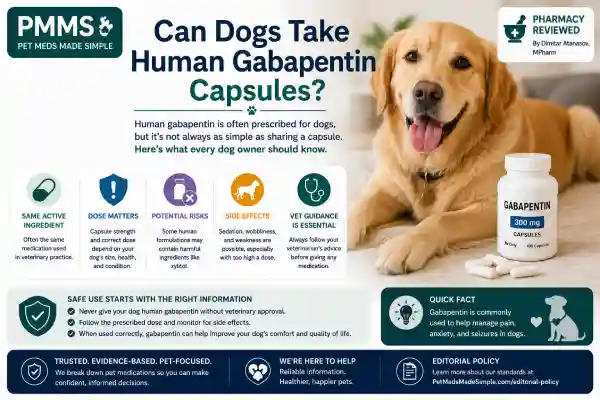
Yes, dogs can sometimes take human gabapentin capsules, but only if a veterinarian specifically prescribes the medication and determines the correct dose. Gabapentin used in human medicine and veterinary medicine often contains the same active ingredient. However, dosage differences, capsule strengths, flavored liquid formulations, and other ingredients can make some human products unsafe for dogs. Owners should never give their dog human gabapentin without veterinary guidance.
Can dogs take human gabapentin capsules?
Yes, dogs may be prescribed human gabapentin capsules because the active ingredient is often the same. However, the correct dose depends on the dog’s weight, medical condition, and other medications. Some human formulations may contain ingredients that are unsafe for dogs, so owners should always consult their veterinarian before administering any human medication.
When Owners Commonly Ask This
This question usually comes up in one of three situations.
Situation #1
A veterinarian prescribes gabapentin.
The owner goes to the pharmacy and notices the medication looks identical to the capsules already sitting in their medicine cabinet.
They wonder:
“Can I just use my own gabapentin capsules?”
Situation #2
The dog is in pain late at night.
The veterinary clinic is closed.
The owner finds an old prescription and asks:
“Can dogs take human gabapentin capsules until I can call the vet tomorrow?”
Situation #3
The owner wants to save money and wonders whether a human prescription could be used instead of a veterinary prescription.
These situations are extremely common and explain why Can Dogs Take Human Gabapentin Capsules? is becoming an increasingly popular search.
Can Dogs Take Human Gabapentin Capsules?
Is Human Gabapentin the Same as Dog Gabapentin?
In many cases, yes.
The active ingredient is typically identical.
Common Human Gabapentin Strengths
| Capsule Strength | Commonly Available |
|---|---|
| 100 mg | Yes |
| 300 mg | Yes |
| 400 mg | Yes |
| 600 mg tablets | Yes |
| 800 mg tablets | Yes |
Veterinarians frequently prescribe these same products for dogs.
This surprises many owners.
Unlike some medications that have separate veterinary versions, gabapentin is commonly prescribed using human formulations.
Why Veterinarians Use Human Gabapentin
Reasons include:
- Widely available
- Affordable
- Consistent quality
- Multiple strengths available
- Familiar dosing options
This is one reason owners often read our Complete Guide to Gabapentin for Dogs after receiving a prescription.
If It’s the Same Medication, Why Is There a Risk?
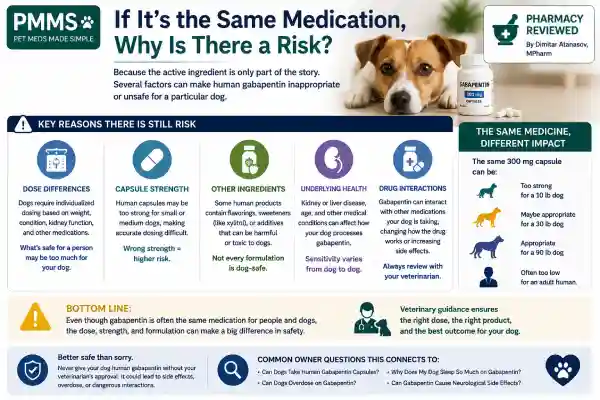
Because the active ingredient is only part of the story.
Several factors can make human gabapentin inappropriate or unsafe for a particular dog.
Dose Differences
The biggest risk is incorrect dosing.
Dogs require individualized dosing based on:
- Weight
- Age
- Medical condition
- Kidney function
- Other medications
A capsule prescribed for a person may be far too strong for a small dog.
Example
| Patient | Possible Dose Range |
|---|---|
| 10 lb dog | Much lower |
| 30 lb dog | Moderate |
| 90 lb dog | Higher |
| Adult human | Often much higher |
This is why owners should never assume their own prescription is appropriate for their pet.
Can the Capsule Strength Be Too High?
Absolutely.
One of the most common mistakes involves capsule strength.
Owners often have:
- 300 mg capsules
- 400 mg capsules
- 600 mg tablets
These strengths may be completely inappropriate for smaller dogs.
Potential Problems
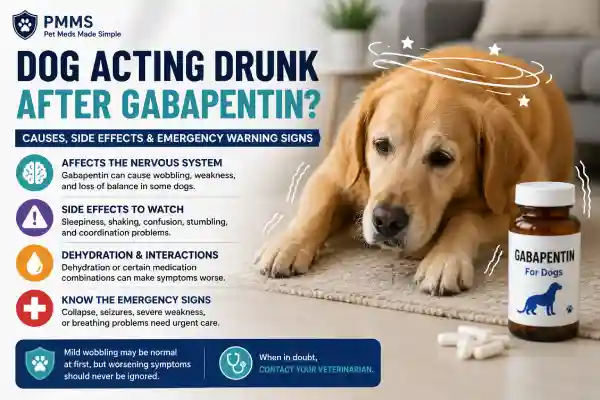
Giving too much gabapentin can increase the risk of:
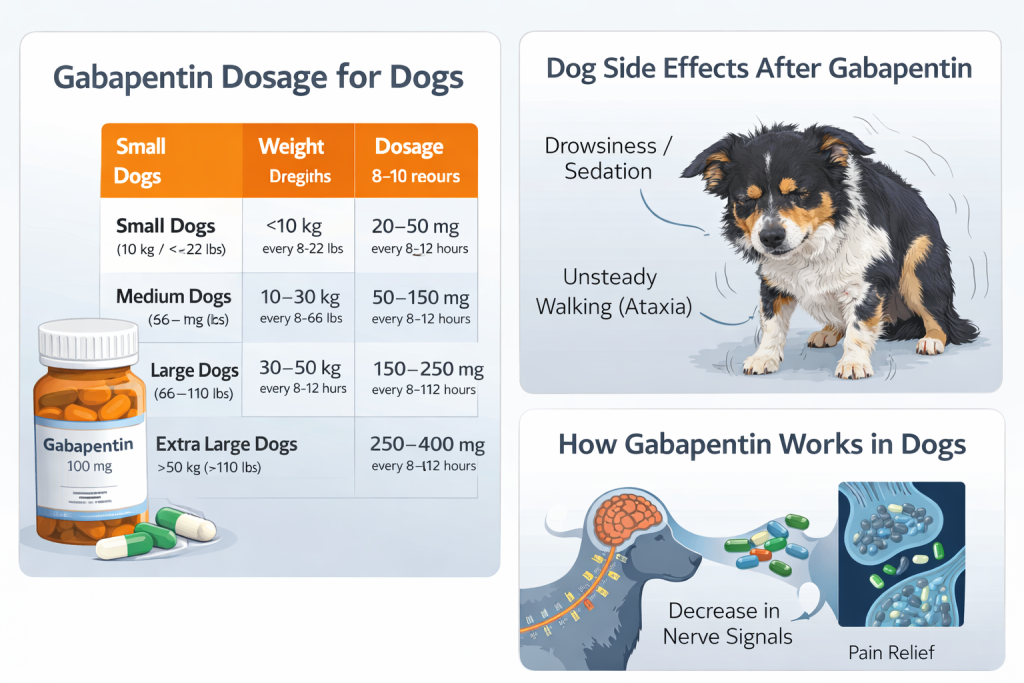
- Sedation
- Weakness
- Wobbliness
- Loss of balance
- Neurological side effects
Owners researching these issues often continue reading:
- Why Is My Dog Falling Over After Gabapentin?
- Can Gabapentin Cause Neurological Side Effects?
- Can Gabapentin Cause Weakness in Dogs?
Are Human Gabapentin Capsules Safer Than Human Gabapentin Liquids?
Often, yes.
This is an important point many owners miss.
Human Capsules
Most capsules contain:
- Gabapentin
- Inactive fillers
These products are often used safely when prescribed by veterinarians.
Human Liquid Formulations
Some human liquid products may contain ingredients that are dangerous for dogs.
The most important example is:
Xylitol
Xylitol is highly toxic to dogs.
Even small amounts may cause:
- Dangerous hypoglycemia
- Liver injury
- Seizures
- Death
Human Liquid vs Capsule
| Formulation | Potential Concern |
|---|---|
| Capsules | Usually fewer concerns |
| Tablets | Usually fewer concerns |
| Liquid formulations | May contain xylitol |
| Flavored products | May contain unsafe ingredients |
Owners should never assume liquid gabapentin is automatically safe.
Could Human Gabapentin Cause Side Effects in Dogs?
Yes.
Even when properly prescribed, side effects may occur.
Common Side Effects
| Side Effect | Common? |
|---|---|
| Sedation | Very Common |
| Sleepiness | Common |
| Ataxia | Common |
| Weakness | Common |
| Reduced activity | Common |
| Mild confusion | Less Common |
Owners frequently search:
- Why Does My Dog Sleep So Much on Gabapentin?
- How Long Does Gabapentin Sedation Last in Dogs?
- Why Is My Dog Confused After Gabapentin?
These side effects are usually temporary but should still be monitored carefully.
Could My Dog Take My Leftover Gabapentin?
This is where owners often get into trouble.
The answer is:
Not Without Veterinary Approval
Even if:
- The medication is identical
- The strength appears appropriate
- The dog has taken gabapentin before
A veterinarian should still determine whether the medication is appropriate.
Why?
The underlying condition may have changed.
For example:
- Arthritis flare-up
- IVDD
- Surgical recovery
- New medical condition
Each situation may require a different treatment approach.
Could Human Gabapentin Interact With Other Dog Medications?
Yes.
Drug interactions are another important consideration.
Common examples include:
- Trazodone
- Anxiety medications
- Seizure medications
- Pain medications
- Sedatives
Owners often ask:
Can Dogs Take Gabapentin and NSAIDs Together?
In many cases they can.
However, every medication combination should be reviewed by a veterinarian.
Is Human Gabapentin Ever Better Than Veterinary Compounded Gabapentin?
Sometimes.
Veterinarians may prescribe:
Commercial Human Capsules
Advantages:
- Consistent strength
- Widely available
- Lower cost
Compounded Formulations
Advantages:
- Custom doses
- Easier administration
- Special flavoring options
The best option depends on the individual patient.
Can Dogs Overdose on Human Gabapentin?
Yes.
Although gabapentin is generally considered a relatively safe medication when prescribed appropriately, dogs can overdose if they receive too much.
This is one of the biggest reasons owners should never guess a dose based on a human prescription.
A capsule that is appropriate for a person may be excessive for a small dog.
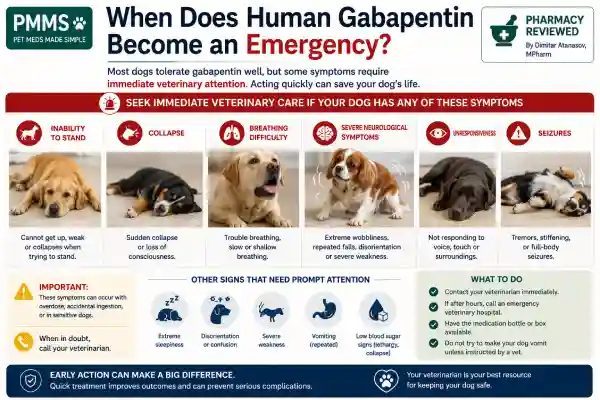
Possible Signs of Overdose
| Symptom | Severity |
|---|---|
| Extreme sleepiness | Common |
| Severe weakness | Common |
| Loss of coordination | Common |
| Inability to stand | Serious |
| Collapse | Serious |
| Unresponsiveness | Emergency |
| Breathing difficulties | Emergency |
Owners concerned about this issue often continue reading Can Dogs Overdose on Gabapentin? for a more detailed discussion of overdose symptoms and treatment.
What Happens If a Dog Accidentally Eats Human Gabapentin?
The outcome depends on several factors.
These include:
- Dog size
- Capsule strength
- Number of capsules consumed
- Other medical conditions
- Other medications
Example Scenarios
| Situation | Risk Level |
|---|---|
| Large dog eats one 100 mg capsule | Often lower |
| Small dog eats multiple 300 mg capsules | Higher |
| Senior dog with kidney disease eats multiple capsules | Higher |
| Dog consumes flavored liquid containing xylitol | Emergency |
What Should Owners Do?
If accidental ingestion occurs:
- Contact your veterinarian immediately.
- Contact an emergency veterinary hospital if needed.
- Keep the medication container available.
- Estimate how many capsules may have been consumed.
Quick action is always safest.
Could Senior Dogs Be More Sensitive to Human Gabapentin?
Absolutely.
Senior dogs are often more sensitive to medication effects.
This is particularly important because gabapentin is frequently prescribed for:
- Arthritis
- Chronic pain
- Mobility issues
all of which are common in older dogs.
Why Older Dogs May Be More Sensitive
Factors include:
- Reduced kidney function
- Slower drug clearance
- Multiple medications
- Existing neurological disease
- Muscle loss
Owners often wonder whether Can Senior Dogs Take Gabapentin Safely?
The answer is generally yes, but closer monitoring may be required.
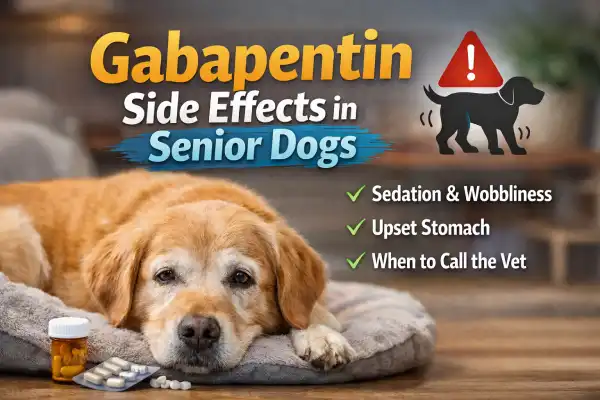
Common Side Effects in Older Dogs
| Side Effect | More Common in Seniors? |
|---|---|
| Sedation | Yes |
| Weakness | Yes |
| Wobbliness | Yes |
| Balance problems | Yes |
| Reduced activity | Yes |
How Veterinarians Decide Whether Human Gabapentin Is Appropriate
Veterinarians do not simply look at the medication bottle and say yes or no.
Several factors are considered.
Dog-Specific Factors
- Weight
- Age
- Medical condition
- Kidney function
- Current medications
- Previous response to gabapentin
Medication-Specific Factors
- Capsule strength
- Formulation type
- Presence of potentially harmful ingredients
- Availability of safer alternatives
Why Professional Guidance Matters
The same 300 mg capsule may be:
- Appropriate for one dog
- Too strong for another
- Completely inappropriate for a third
This is why veterinary guidance remains essential.
When Should Owners Contact Their Veterinarian?
Owners should contact their veterinarian if:
- They are unsure whether a human product is safe
- Side effects develop
- The dog receives the wrong dose
- Symptoms seem severe
- The dog accidentally consumes extra medication
It is always better to ask first than to guess.
When Does Human Gabapentin Become an Emergency?
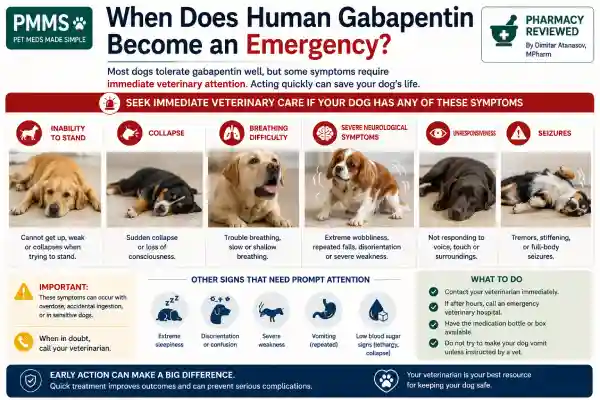
Most dogs prescribed gabapentin tolerate it well.
However, some situations require immediate veterinary attention.
Inability to Stand
A dog that cannot stand normally should be evaluated promptly.
Collapse
Any collapse should be treated as a medical emergency.
Breathing Problems
Breathing difficulties are never considered normal side effects.
Severe Neurological Symptoms
Examples include:
- Extreme wobbliness
- Repeated falling
- Severe weakness
- Loss of coordination
Owners noticing these symptoms often search:
Emergency Warning Signs
| Symptom | Emergency? |
|---|---|
| Mild sleepiness | Usually No |
| Mild wobbliness | Usually No |
| Excessive sedation | Contact Vet |
| Repeated falls | Yes |
| Collapse | Yes |
| Breathing difficulty | Yes |
| Unresponsiveness | Yes |
Related Symptoms Owners Often Search For
Owners researching Can Dogs Take Human Gabapentin Capsules? frequently search for related questions.
Excessive Sleepiness
Many owners wonder:
Why Does My Dog Sleep So Much on Gabapentin?
Wobbliness
Some dogs develop balance problems and owners search:
Why Is My Dog Falling Over After Gabapentin?
Weakness
Questions about:
Can Gabapentin Cause Weakness in Dogs?
are extremely common.
Neurological Side Effects
Owners may also research:
Can Gabapentin Cause Neurological Side Effects?
after noticing unusual behavior.
Pain Management
Many owners comparing treatment options eventually read:
- Dog Pain Medications Explained
- Safest Pain Medication for Dogs
- Best Pain Medication for Dogs with Arthritis
to better understand where gabapentin fits into a broader pain-management plan.
What Questions Should Owners Ask Their Veterinarian?
Helpful questions include:
- Is this human gabapentin product safe for my dog?
- Is the capsule strength appropriate?
- Does my dog need a different dose?
- Could there be drug interactions?
- What side effects should I monitor?
- What symptoms require emergency care?
- Is a compounded formulation available?
- How long should treatment continue?
These discussions can help prevent medication errors and improve safety.
Bottom Line
Dogs can sometimes take human gabapentin capsules because the active ingredient is often identical to the medication veterinarians prescribe. However, that does not mean every human gabapentin product is automatically safe. Dosage differences, capsule strengths, liquid formulations containing xylitol, and individual health factors can all affect safety.
Owners should never give their dog human gabapentin without veterinary guidance. When prescribed appropriately, gabapentin can be a valuable medication for managing pain and improving quality of life.
Veterinarian Takeaway
Human gabapentin capsules are commonly prescribed in veterinary medicine because the active ingredient is the same medication used in many canine treatment plans. However, safe use depends on proper dosing, appropriate formulation selection, and veterinary oversight. Owners should be particularly cautious with liquid formulations, accidental ingestions, and dogs with underlying health conditions that may increase sensitivity to the medication.
Frequently Asked Questions – Can Dogs Take Human Gabapentin Capsules?
Can dogs take human gabapentin capsules?
Yes, but only under veterinary guidance and with an appropriate dose.
Is human gabapentin the same as dog gabapentin?
Often yes. The active ingredient is usually identical.
Can I give my dog my 300 mg gabapentin capsule?
Not unless your veterinarian specifically recommends it.
Are human gabapentin capsules safe for dogs?
They can be, but safety depends on the dog, dose, and formulation.
Is liquid human gabapentin safe for dogs?
Not always. Some liquid products may contain xylitol, which is toxic to dogs.
What happens if my dog accidentally eats gabapentin?
Contact your veterinarian promptly for advice.
Can dogs overdose on gabapentin?
Yes. Overdoses can cause severe sedation, weakness, and neurological symptoms.
Are senior dogs more sensitive to gabapentin?
Often yes. Older dogs may experience stronger side effects.
Can human gabapentin interact with dog medications?
Yes. Drug interactions are possible and should be reviewed by a veterinarian.
When should I seek emergency care?
Seek immediate veterinary attention if your dog develops collapse, breathing difficulties, inability to stand, or becomes unresponsive.
Reviewed By
Pharmacy Reviewed By
Dimitar Atanasov, MPharm
Master Pharmacist | Medication Safety Educator
Editorial Policy
At Pet Meds Made Simple, we are committed to providing accurate, evidence-based information about pet medications, veterinary treatments, medication safety, and common health concerns affecting dogs and cats.
Our content is researched using veterinary reference texts, peer-reviewed veterinary literature, clinical guidelines, and trusted veterinary organizations. Every article is designed to help pet owners make informed decisions while supporting—not replacing—the advice of their veterinarian.
Sources
- Plumb’s Veterinary Drug Handbook
- American Animal Hospital Association (AAHA)
- American Veterinary Medical Association (AVMA)
- Merck Veterinary Manual
- Veterinary Pharmacology and Therapeutics
- Small Animal Clinical Pharmacology
- Journal of the American Veterinary Medical Association (JAVMA)
- Frontiers in Veterinary Science
- Veterinary Anaesthesia and Analgesia
- Veterinary Information Network (VIN)
Medical Review Statement
This article was pharmacy-reviewed by Dimitar Atanasov, MPharm, Master Pharmacist, using current veterinary pharmacology references, canine medication-safety guidelines, and published veterinary literature available at the time of review.
Images created with AI – Can Dogs Take Human Gabapentin Capsules?