
Quick Answer
If your dog is breathing fast while taking gabapentin, the medication may not necessarily be the cause. Rapid breathing can occur due to pain, anxiety, excitement, overheating, underlying illness, or—in rare cases—a reaction to medication. While gabapentin commonly causes sedation and sleepiness, fast breathing is not considered one of its most common side effects. If your dog’s breathing appears labored, unusually rapid, or is accompanied by weakness, collapse, pale gums, or distress, veterinary attention is recommended immediately.
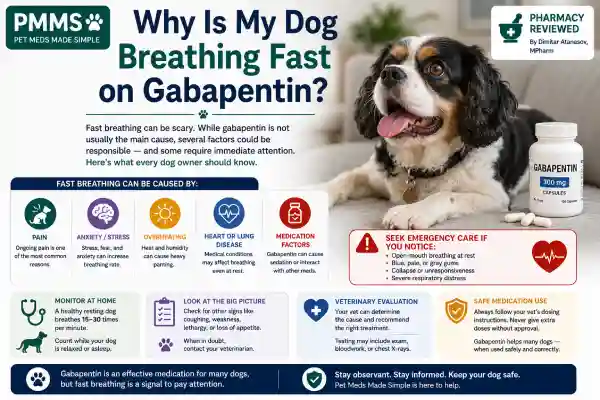
Why is my dog breathing fast on gabapentin?
A dog may breathe fast while taking gabapentin due to pain, anxiety, stress, overheating, or an underlying medical condition rather than the medication itself. Gabapentin most commonly causes sedation, weakness, and wobbliness. Rapid breathing that is severe, persistent, or accompanied by other concerning symptoms should be evaluated by a veterinarian.
Why Is My Dog Breathing Fast on Gabapentin?
When Owners Commonly Ask This
Most owners become concerned after noticing something like this:
Their dog receives gabapentin.
The dog lies down.
Everything seems normal.
Then suddenly they notice:
- Faster breathing
- Heavy panting
- Rapid chest movement
- Restlessness
- Sleeping while breathing quickly
Naturally, they start wondering:
“Is my dog’s breathing fast because of gabapentin?”
This is a very common concern because changes in breathing can be frightening.
Unlike sleepiness or mild wobbliness, breathing changes immediately catch an owner’s attention.
Fortunately, gabapentin itself is not usually the most common explanation.
Is Fast Breathing a Common Side Effect of Gabapentin?
Not typically.
The most commonly reported gabapentin side effects include:
| Common Side Effect | Frequency |
|---|---|
| Sedation | Common |
| Sleepiness | Common |
| Weakness | Common |
| Wobbliness | Common |
| Loss of coordination | Common |
| Mild confusion | Less Common |
Fast breathing is not usually listed among the most common side effects.
That doesn’t mean it cannot occur.
It simply means veterinarians often look for other explanations first.
What Counts as Fast Breathing in Dogs?
Many owners assume their dog is breathing too quickly when the breathing rate is actually normal.
Normal Resting Respiratory Rate
A healthy dog at rest generally takes:
15–30 breaths per minute
Some variation is normal.
When Breathing May Be Concerning
| Breaths Per Minute | Interpretation |
|---|---|
| 15–30 | Usually normal |
| 30–40 | Monitor closely |
| 40–50 | May warrant attention |
| Over 50 while resting | Veterinary evaluation recommended |
The key detail is whether the dog is:
- Relaxed
- Sleeping
- Exercising
- Excited
- Stressed
Breathing rates naturally increase during activity.
Could Pain Be Causing the Fast Breathing?
Yes.
In fact, pain is one of the most common causes of rapid breathing in dogs.
This is especially important because many dogs taking gabapentin already have painful conditions.
Examples include:
- Arthritis
- Hip dysplasia
- IVDD
- Surgical recovery
- Orthopedic injuries
Signs Pain May Be Contributing
- Panting while resting
- Reluctance to move
- Crying
- Restlessness
- Difficulty getting comfortable
- Reduced appetite
Owners reading Why Is My Dog Still Limping After Gabapentin? often discover that ongoing pain can continue even while medication is helping.
Why Pain Increases Breathing
Pain activates the body’s stress response.
This can increase:
- Heart rate
- Respiratory rate
- Muscle tension
- Alertness
As a result, breathing may appear faster than normal.
Could Anxiety or Stress Be Responsible?
Absolutely.
Gabapentin is sometimes prescribed specifically to help reduce anxiety.
However, anxious dogs may still experience stress-related panting.
Common Triggers
- Veterinary visits
- Thunderstorms
- Fireworks
- Travel
- Separation anxiety
- New environments
Dogs that remain anxious despite medication may continue breathing faster than usual.
Signs Anxiety Is Contributing
| Sign | Common? |
|---|---|
| Panting | Yes |
| Pacing | Yes |
| Trembling | Yes |
| Clinginess | Yes |
| Restlessness | Yes |
Owners who use gabapentin for anxiety often compare it with other medications in articles such as Can Dogs Take Melatonin With Anxiety Medication?
Could My Dog Be Overheating?
Yes.
Overheating is another extremely common cause of rapid breathing.
Many owners initially blame medication when environmental factors are actually responsible.
Factors That Increase Heat Stress
- Warm weather
- High humidity
- Thick coats
- Exercise
- Poor ventilation
Dogs regulate temperature primarily through panting.
As body temperature rises, breathing naturally becomes faster.
Could Gabapentin Be Making My Dog More Aware of Existing Problems?
Sometimes.
This sounds strange, but it happens.
Owners often focus on the medication because it is new.
Meanwhile, the actual cause may be:
- Heart disease
- Lung disease
- Pain
- Anxiety
- Infection
The timing makes gabapentin seem responsible even when another condition is causing the symptoms.
Could Fast Breathing Be Related to Sedation?
Indirectly, yes.
Owners often become worried when they see a dog:
- Sleeping heavily
- Breathing quickly
- Appearing unusually relaxed
This frequently leads to questions about whether the dog is receiving too much medication.
Many owners who notice these changes also read:
How Long Does Gabapentin Sedation Last in Dogs?
to better understand normal medication effects.
Could Certain Dogs Be More Sensitive to Gabapentin?
Yes.
Some dogs appear more sensitive than others.
Factors that may increase sensitivity include:
- Advanced age
- Kidney disease
- Multiple medications
- Neurological disease
- Underlying health conditions
Senior dogs in particular may experience stronger medication effects.
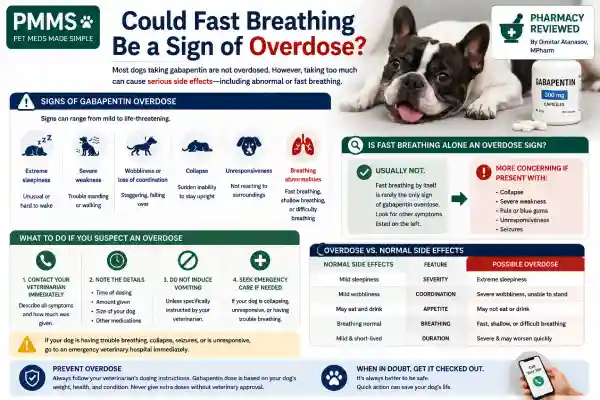
Could Fast Breathing Be a Sign of Overdose?
Sometimes, but not usually.
Most dogs experiencing rapid breathing while taking gabapentin are not suffering from an overdose.
However, overdose situations can occasionally affect breathing patterns and should always be taken seriously.
Possible Signs of Gabapentin Overdose
| Symptom | Common? |
|---|---|
| Extreme sleepiness | Yes |
| Severe weakness | Yes |
| Wobbliness | Yes |
| Loss of coordination | Yes |
| Collapse | Serious |
| Unresponsiveness | Emergency |
| Breathing abnormalities | Emergency |
Owners concerned about excessive dosing often read Can Dogs Overdose on Gabapentin? to better understand what overdose symptoms typically look like.
Is Fast Breathing Alone an Overdose Sign?
Usually not.
Veterinarians are generally more concerned when fast breathing occurs alongside:
- Collapse
- Severe weakness
- Pale gums
- Unresponsiveness
- Difficulty standing
Could Heart Disease Be Causing the Fast Breathing?
Absolutely.
One of the most important things owners should understand is that rapid breathing is not always medication-related.
Heart disease is actually one of the most common medical causes of increased resting respiratory rates.
Signs Heart Disease May Be Involved
- Fast breathing while sleeping
- Exercise intolerance
- Coughing
- Fatigue
- Reduced stamina
- Episodes of weakness
Why Heart Disease Causes Fast Breathing
When the heart cannot pump efficiently, fluid may accumulate in or around the lungs.
This forces the dog to breathe faster to compensate.
Heart Disease Warning Signs
| Symptom | Veterinary Evaluation Needed? |
|---|---|
| Occasional panting | Maybe |
| Resting breathing consistently above 30–40 breaths/minute | Yes |
| Coughing and rapid breathing | Yes |
| Collapse | Emergency |
Could Lung Disease Be Responsible?
Yes.
Lung disease is another major cause of rapid breathing.
Examples include:
- Pneumonia
- Chronic bronchitis
- Lung tumors
- Pulmonary edema
- Pulmonary hypertension
In these situations, the timing may make gabapentin seem responsible even when the underlying problem is respiratory.
Signs of Lung Disease
- Persistent coughing
- Increased respiratory effort
- Open-mouth breathing
- Reduced exercise tolerance
- Rapid breathing during sleep
Any of these signs warrant veterinary attention.
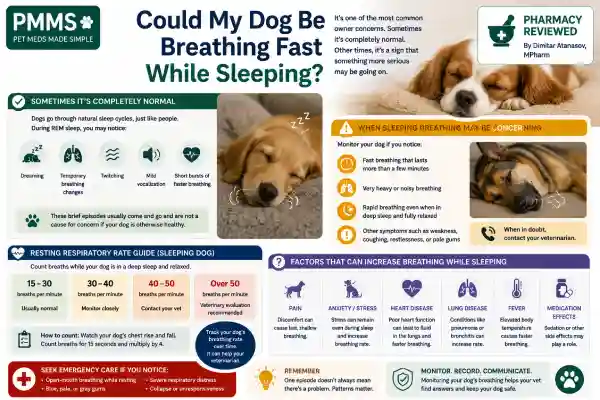
Could My Dog Be Breathing Fast While Sleeping?
This is one of the most common owner concerns.
Many people notice rapid breathing while their dog is asleep and immediately worry about the medication.
Sometimes It Is Completely Normal
Dogs can experience:
- Dreaming
- REM sleep
- Temporary breathing changes
- Twitching
- Mild vocalization
during normal sleep cycles.
When Sleeping Breathing May Be Concerning
Owners should monitor:
- Resting respiratory rate
- Gum color
- Overall behavior
- Activity level
Sleeping Respiratory Rate Guide
| Resting Breaths Per Minute | Interpretation |
|---|---|
| 15–30 | Usually normal |
| 30–40 | Monitor |
| Above 40 repeatedly | Contact veterinarian |
| Above 50 while resting | Veterinary evaluation recommended |
How Veterinarians Evaluate Rapid Breathing
When a dog develops fast breathing while taking gabapentin, veterinarians rarely assume the medication is automatically responsible.
Instead, they investigate multiple possibilities.
Questions Veterinarians Commonly Ask
- When did the breathing changes begin?
- Is the dog resting or active?
- Has the gabapentin dose changed recently?
- Are there other symptoms?
- Does the dog have heart disease?
- Does the dog have lung disease?
- Is pain still present?
Physical Examination
The veterinarian may evaluate:
- Heart rate
- Respiratory rate
- Lung sounds
- Gum color
- Hydration status
- Temperature
Additional Testing
Depending on the situation, testing may include:
| Test | Purpose |
|---|---|
| Chest X-rays | Evaluate lungs and heart |
| Bloodwork | Check overall health |
| Oxygen assessment | Evaluate oxygen levels |
| Cardiac testing | Assess heart function |
| Blood pressure testing | Evaluate circulation |
The goal is determining whether the issue is:
- Medication-related
- Pain-related
- Heart-related
- Lung-related
- A combination of factors
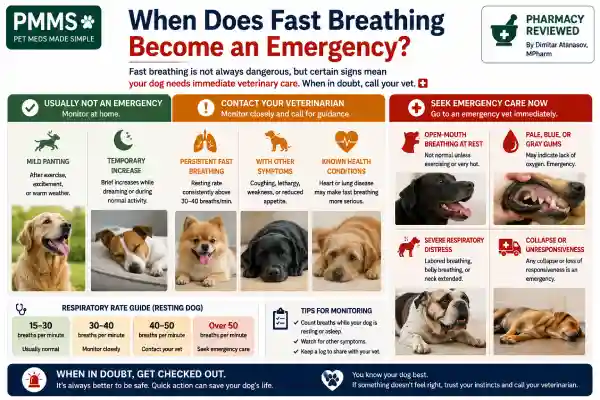
When Does Fast Breathing Become an Emergency?
This is the question most owners truly want answered.
Mild increases in respiratory rate are not always dangerous.
Certain symptoms, however, should never be ignored.
Open-Mouth Breathing
Dogs that are not exercising should not typically breathe with an open mouth for prolonged periods.
Blue or Gray Gums
This may indicate inadequate oxygenation and is always considered an emergency.
Severe Respiratory Effort
Signs include:
- Belly breathing
- Neck extension
- Visible respiratory distress
- Labored breathing
Collapse
Any collapse should be treated as an emergency.
Unresponsiveness
Loss of responsiveness requires immediate veterinary care.
Emergency Warning Signs
| Symptom | Emergency? |
|---|---|
| Mild panting | Usually No |
| Temporary increased breathing | Usually No |
| Persistent resting rapid breathing | Contact Vet |
| Open-mouth breathing at rest | Yes |
| Blue gums | Yes |
| Collapse | Yes |
| Severe respiratory distress | Yes |
| Unresponsiveness | Yes |
Related Symptoms Owners Often Search For
Owners searching Why Is My Dog Breathing Fast on Gabapentin? frequently search for other symptoms at the same time.
Excessive Sleepiness
Many owners also read:
Why Does My Dog Sleep So Much on Gabapentin?
because sedation and rapid breathing can occur together.
Wobbliness
Dogs experiencing weakness may lead owners to search:
Why Is My Dog Falling Over After Gabapentin?
Neurological Side Effects
Rapid breathing sometimes occurs alongside symptoms discussed in:
Can Gabapentin Cause Neurological Side Effects?
Weakness
Owners frequently wonder:
Can Gabapentin Cause Weakness in Dogs?
when they notice both breathing changes and reduced activity.
Human Medication Concerns
Owners who used a human prescription often ask:
Can Dogs Take Human Gabapentin Capsules?
especially if symptoms appear shortly after administration.
Pain Management Questions
Many readers continue exploring:
- Can Dogs Take Gabapentin and NSAIDs Together?
- Best Pain Medication for Dogs with Arthritis
- Dog Pain Medications Explained
- Safest Pain Medication for Dogs
to better understand their dog’s treatment options.
What Questions Should Owners Ask Their Veterinarian?
Helpful questions include:
- Is this breathing rate normal?
- Could pain be causing the problem?
- Could heart disease be involved?
- Should chest X-rays be performed?
- Is the gabapentin dose appropriate?
- Could another medication be contributing?
- What symptoms require emergency care?
- How should I monitor breathing at home?
Keeping a log of resting respiratory rates can be extremely useful.
Bottom Line
If your dog is breathing fast while taking gabapentin, the medication may not be the primary cause. Pain, anxiety, overheating, heart disease, lung disease, and underlying medical conditions are often more common explanations than gabapentin itself. While gabapentin can affect the nervous system and cause sedation, rapid breathing is not considered one of its most common side effects.
Any persistent increase in resting respiratory rate, especially when accompanied by coughing, weakness, collapse, pale gums, blue gums, or breathing difficulty, should be evaluated by a veterinarian.
Veterinarian Takeaway
Fast breathing in a dog taking gabapentin should never automatically be blamed on the medication. Veterinarians often investigate pain, anxiety, heart disease, lung disease, overheating, and other medical conditions before concluding that gabapentin is responsible. Monitoring resting respiratory rate at home can provide valuable information and help determine whether further evaluation is necessary.
Frequently Asked Questions – Why Is My Dog Breathing Fast on Gabapentin
Can gabapentin cause fast breathing in dogs?
It is not considered a common side effect, although indirect factors may sometimes contribute.
What is a normal breathing rate for a dog?
Most healthy resting dogs breathe between 15 and 30 times per minute.
Why is my dog breathing fast while sleeping?
Dreaming, REM sleep, pain, heart disease, or respiratory disease may contribute.
Should I stop gabapentin if my dog is breathing fast?
Never stop a prescribed medication without speaking to your veterinarian.
Can pain cause rapid breathing?
Yes. Pain is one of the most common causes of increased respiratory rate.
Can anxiety cause fast breathing?
Absolutely. Stress and anxiety frequently increase respiratory rate.
Is panting the same as fast breathing?
Not always. Panting is a specific cooling mechanism, while rapid breathing may occur for other reasons.
When should I call my veterinarian?
If fast breathing persists, worsens, or is accompanied by other symptoms.
When is fast breathing an emergency?
Seek immediate care if your dog develops severe respiratory distress, blue gums, collapse, or becomes unresponsive.
Can heart disease cause rapid breathing?
Yes. Heart disease is one of the most important medical causes of increased resting respiratory rates.
Reviewed By
Pharmacy Reviewed By
Dimitar Atanasov, MPharm
Master Pharmacist | Medication Safety Educator
Editorial Policy
At Pet Meds Made Simple, we are committed to providing accurate, evidence-based information about pet medications, veterinary treatments, medication safety, and common health concerns affecting dogs and cats.Why Is My Dog Breathing Fast on Gabapentin?
Our content is researched using veterinary pharmacology references, peer-reviewed veterinary literature, clinical guidelines, and trusted veterinary resources. Every article is designed to help pet owners make informed decisions while supporting—not replacing—the advice of their veterinarian.
Sources
- Plumb’s Veterinary Drug Handbook
- American Animal Hospital Association (AAHA)
- American Veterinary Medical Association (AVMA)
- Merck Veterinary Manual
- Veterinary Pharmacology and Therapeutics
- Small Animal Clinical Pharmacology
- Journal of the American Veterinary Medical Association (JAVMA)
- Frontiers in Veterinary Science
- Veterinary Anaesthesia and Analgesia
- Veterinary Information Network (VIN)
Medical Review Statement
This article was pharmacy-reviewed by Dimitar Atanasov, MPharm, Master Pharmacist, using current veterinary pharmacology references, canine medication-safety guidelines, and published veterinary literature available at the time of review.Why Is My Dog Breathing Fast on Gabapentin?
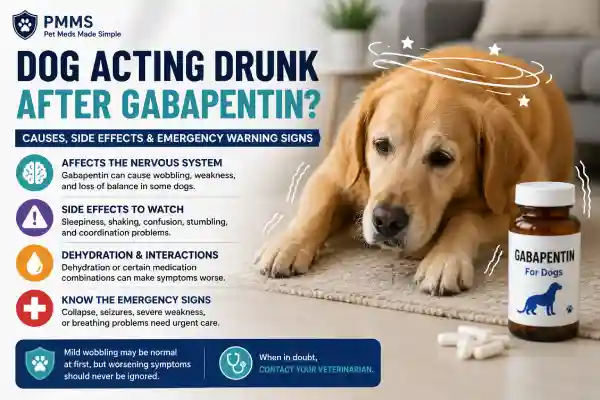
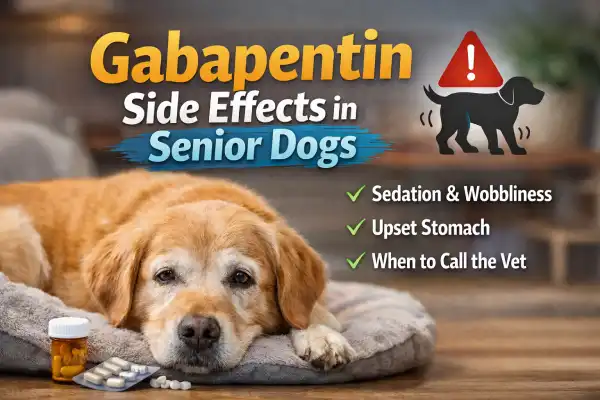
images created with AI – Why Is My Dog Breathing Fast on Gabapentin?
Hurrah! After all I got a website from where I be able to truly obtain useful data concerning my study
and knowledge.
Thank you so much for your kind words! We’re delighted to hear that you found the information helpful for your studies and learning. Our goal is to provide clear, accurate, and easy-to-understand educational content. We truly appreciate your support and wish you the very best with your studies. Feel free to visit again anytime!