Quick Answer
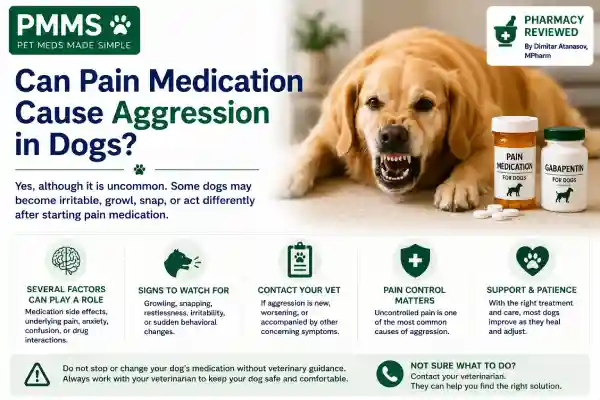
Can pain medication cause aggression in dogs? Yes, although it is relatively uncommon. Some dogs may become irritable, restless, confused, fearful, or reactive after starting certain pain medications. In many cases, the underlying pain, anxiety, confusion, or medication side effects contribute to the aggressive behavior rather than the medication directly causing aggression.
Can pain medication cause aggression in dogs?
Yes. Some dogs may show aggression, irritability, growling, snapping, or unusual behavioral changes after starting pain medication. This can occur because of medication side effects, underlying pain, anxiety, confusion, or drug interactions. Any sudden behavioral change should be discussed with a veterinarian.
When Owners Commonly Ask This
Many owners are surprised when a normally friendly dog suddenly becomes irritable after starting treatment.
A common scenario looks like this:
- The dog starts a new pain medication.
- Pain seems somewhat improved.
- The dog becomes withdrawn.
- The dog growls when approached.
- The dog snaps unexpectedly.
Naturally, owners begin wondering:
“Can pain medication cause aggression in dogs?”
The answer is sometimes yes, but the situation is usually more complicated than it appears.
Can Pain Medication Cause Aggression in Dogs?
Is Aggression a Common Side Effect?
No.
Aggression is generally considered an uncommon side effect compared to symptoms such as:
- Sleepiness
- Weakness
- Panting
- Reduced coordination
- Appetite changes
However, unusual behavioral changes do occasionally occur.
More Common Medication Effects
| Symptom | Common? |
|---|---|
| Sleepiness | Yes |
| Weakness | Yes |
| Panting | Sometimes |
| Restlessness | Sometimes |
| Aggression | Less Common |
Which Pain Medications May Be Associated With Aggression?
Several medications have occasionally been associated with behavioral changes.
Examples Include
- Gabapentin
- Tramadol
- Amantadine
- Combination medication protocols
Not every dog reacts the same way.
Many dogs take these medications without experiencing any behavioral issues.
Can Gabapentin Cause Aggression?
Occasionally.
Gabapentin more commonly causes:
- Sedation
- Weakness
- Wobbliness
However, some dogs may experience:
- Agitation
- Restlessness
- Irritability
- Behavioral changes
Related reading:
Can Gabapentin Cause Anxiety in Dogs?
Can Gabapentin Cause Neurological Side Effects?
Can Dog Medications Cause Behavior Changes?
Why Is My Dog Shaking After Gabapentin?
Can Tramadol Cause Behavioral Changes?
Yes.
Tramadol affects neurotransmitters within the brain.
Because of this, some dogs may develop:
- Agitation
- Restlessness
- Increased sensitivity
- Unusual reactions
Potential Signs
- Growling
- Snapping
- Avoidance behavior
- Increased vocalization
These effects remain relatively uncommon but are possible.
Could Pain Itself Cause Aggression?
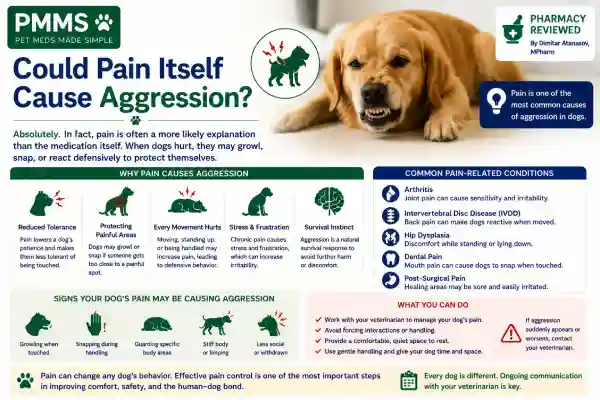
Absolutely.
In fact, pain is often a more likely explanation than the medication itself.
Why Pain Causes Aggression
Pain reduces a dog’s tolerance for handling.
A painful dog may:
- Growl when touched
- Snap when moved
- Protect certain body parts
- Become less social
Common Pain-Related Conditions
| Condition | May Cause Aggression? |
|---|---|
| Arthritis | Yes |
| Hip dysplasia | Yes |
| IVDD | Yes |
| Surgical pain | Yes |
| Dental pain | Yes |
Sometimes the medication is blamed when the underlying pain is actually responsible.
Could Fear Be Mistaken for Aggression?
Very often.
Fear and aggression frequently look similar.
A fearful dog may:
- Freeze
- Growl
- Show teeth
- Back away
- Snap defensively
Owners may interpret this as aggression when the dog is actually frightened or confused.
Could Sedation Cause Irritability?
Sometimes.
Dogs experiencing sedation may feel disoriented.
Possible Signs
- Confusion
- Startle responses
- Unusual reactions
- Increased sensitivity
This is particularly common when dogs are awakened suddenly.
Could Medication Combinations Increase Behavioral Changes?
Yes.
Certain combinations may increase the risk of unusual behavior.
Examples
- Gabapentin + Tramadol
- Gabapentin + Anxiety Medication
- Multiple sedating medications
The more medications affecting the nervous system, the greater the possibility of behavioral changes.
Related reading:
Can Dogs Take Gabapentin and NSAIDs Together?
Can Pain Medication Cause Anxiety in Dogs?
Can Anxiety Medication Cause Confusion in Dogs?
Could Aggression Be a Sign of an Overdose?
Occasionally.
Although sedation is more common, severe medication exposure can sometimes produce abnormal neurological signs.
Potential Warning Signs
- Extreme agitation
- Severe confusion
- Tremors
- Collapse
- Seizures
Related reading:
What Happens If Dogs Overdose on Pain Medication?
Could Older Dogs Be More Sensitive?
Yes.
Senior dogs often experience stronger medication effects.
Risk Factors
- Age-related brain changes
- Reduced drug metabolism
- Multiple medications
- Underlying medical conditions
This can increase the likelihood of unusual behavioral responses.
How Veterinarians Evaluate Aggression After Pain Medication
When a dog suddenly becomes aggressive after starting pain medication, veterinarians try to determine whether the behavior is caused by:
- The medication
- Ongoing pain
- Anxiety
- Confusion
- An unrelated medical problem
Aggression is often a symptom rather than a diagnosis.
Questions Veterinarians Commonly Ask
- When did the aggression start?
- What medication was prescribed?
- Was the dose recently changed?
- Is the aggression getting worse?
- Does it happen only when touched?
- Is the dog showing signs of pain?
These answers help identify the most likely cause.
Could Surgery Recovery Cause Aggression?
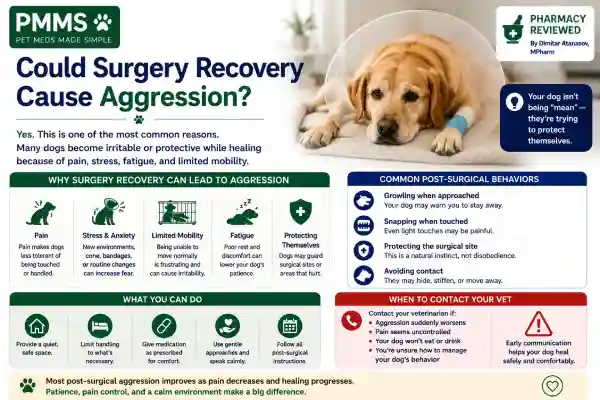
Yes.
This is actually one of the most common explanations.
Many dogs recovering from surgery experience:
- Pain
- Stress
- Sleep disruption
- Restricted movement
- Fear
Common Post-Surgical Behaviors
- Growling when approached
- Protecting the surgical site
- Snapping when handled
- Avoiding contact
In many cases, the dog’s discomfort is the primary cause rather than the medication itself.
Could Anxiety Be Contributing?
Absolutely.
Pain and anxiety often occur together.
A dog that feels:
- Vulnerable
- Uncomfortable
- Disoriented
may react defensively.
Signs Anxiety May Be Present
- Pacing
- Panting
- Trembling
- Restlessness
- Hiding
Related reading:
Can Pain Medication Cause Anxiety in Dogs?
Why Is My Dog Panting After Pain Medication?
Can Anxiety Medication Cause Confusion in Dogs?
Could Confusion Look Like Aggression?
Very often.
Confused dogs may not understand what is happening around them.
Examples
- Startling easily
- Snapping when awakened
- Reacting unexpectedly to familiar people
- Appearing frightened
Many owners interpret these reactions as aggression when confusion may actually be the driving factor.
When Should Owners Contact Their Veterinarian?
Owners should contact their veterinarian if:
- Aggression is new
- The behavior worsens
- Medication was recently started
- The dog becomes difficult to handle
- Other symptoms develop
Additional Warning Signs
- Weakness
- Tremors
- Excessive sedation
- Vomiting
- Appetite loss
Behavioral changes should never be ignored.
When Does Aggression Become an Emergency?
Most cases are not emergencies.
However, some situations require immediate veterinary attention.
Emergency Warning Signs
- Sudden severe aggression
- Extreme confusion
- Unresponsiveness
- Tremors
- Seizures
- Collapse
- Difficulty breathing
Emergency Symptoms Table
| Symptom | Emergency? |
|---|---|
| Mild irritability | Monitor |
| Occasional growling | Contact Vet |
| New aggression | Contact Vet |
| Severe aggression | Yes |
| Tremors | Yes |
| Seizures | Yes |
| Collapse | Yes |
| Difficulty breathing | Yes |
How Long Do Behavioral Changes Usually Last?
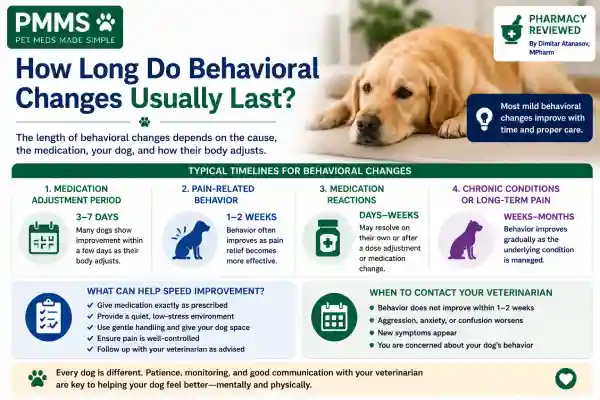
The answer depends on the cause.
Medication Adjustment Period
Many dogs improve within:
- Several days
- One to two weeks
as their bodies adjust to treatment.
Pain-Related Aggression
This often improves when pain control improves.
Medication Reactions
Some cases require:
- Dose adjustment
- Medication changes
- Additional evaluation
Could Changing the Medication Help?
Sometimes.
If a veterinarian determines the medication is contributing to behavioral changes, they may:
- Lower the dose
- Change the dosing schedule
- Switch medications
- Add supportive treatments
Owners should never stop prescription medications without veterinary guidance.
Related Symptoms Owners Often Search For
Owners searching Can Pain Medication Cause Aggression in Dogs? often search for related behavioral and medication concerns.
Anxiety and Behavior Changes
Related reading:
Can Pain Medication Cause Anxiety in Dogs?
Why Does Anxiety Medication Stop Working in Dogs?
Can Anxiety Medication Cause Weakness in Dogs?
Weakness and Sedation
Some dogs become weak or sleepy rather than aggressive.
Related reading:
Why Is My Dog Weak After Pain Medication?
Can Dogs Take Pain Medication Long-Term?
Ongoing Pain
Many owners wonder whether aggression means pain remains uncontrolled.
Related articles:
Why Is My Dog Crying Even After Pain Medication?
Why Does Pain Medication Stop Working?
Best Pain Medication for Dogs with Arthritis
Medication Emergencies
Related reading:
What Happens If Dogs Overdose on Pain Medication?
Can Dogs Take Ibuprofen Accidentally?
Gabapentin-Related Behavior Changes
Because gabapentin is commonly used for pain management, owners may also find useful:
Can Gabapentin Cause Anxiety in Dogs?
Can Gabapentin Cause Neurological Side Effects?
Why Is My Dog Shaking After Gabapentin?
Bottom Line
Can pain medication cause aggression in dogs? Yes, although it is relatively uncommon. Behavioral changes can occur because of medication effects, ongoing pain, anxiety, confusion, post-surgical stress, or drug interactions. In many cases, the underlying condition is contributing as much as the medication itself.
Any sudden or worsening aggression should be discussed with a veterinarian.
Veterinarian Takeaway
Aggression after starting pain medication is not among the most common side effects, but it can occur. Veterinarians evaluate whether the behavior is caused by medication effects, uncontrolled pain, anxiety, neurological changes, or other medical conditions. Because aggression can increase the risk of injury to both dogs and owners, any significant behavioral change deserves prompt veterinary attention.
Frequently Asked Questions – Can Pain Medication Cause Aggression in Dogs
Can pain medication make a dog aggressive?
Yes. Some dogs may develop irritability, agitation, or unusual behavioral changes after starting pain medication.
Is aggression a common side effect?
No. It is generally considered uncommon compared to sedation or weakness.
Can gabapentin cause aggression?
Occasionally. Behavioral changes have been reported in some dogs.
Can tramadol cause aggression?
Some dogs may experience agitation, restlessness, or unusual behavior while taking tramadol.
Could pain itself cause aggression?
Absolutely. Pain is one of the most common causes of defensive aggression in dogs.
Can anxiety look like aggression?
Yes. Fearful dogs often growl, snap, or avoid interaction.
Should I stop the medication?
No. Always consult your veterinarian before changing treatment.
How long do behavioral changes last?
Many improve within days to weeks depending on the cause.
When should I call my veterinarian?
Whenever new aggression develops after starting medication.
When is aggression an emergency?
Seek immediate veterinary care if aggression occurs alongside seizures, collapse, severe confusion, or difficulty breathing.
Reviewed By
Pharmacy Reviewed By
Dimitar Atanasov, MPharm
Master Pharmacist | Medication Safety Educator
Editorial Policy
At Pet Meds Made Simple, we are committed to providing accurate, evidence-based information about pet medications, veterinary treatments, medication safety, and common health concerns affecting dogs and cats.
For more information, see our Editorial Policy:
Sources
- Plumb’s Veterinary Drug Handbook
- Merck Veterinary Manual
- American Animal Hospital Association (AAHA)
- American Veterinary Medical Association (AVMA)
- Veterinary Pharmacology and Therapeutics
- Small Animal Clinical Pharmacology
- Veterinary Information Network (VIN)
- Journal of the American Veterinary Medical Association (JAVMA)
- Frontiers in Veterinary Science
- Veterinary Anaesthesia and Analgesia
Medical Review Statement
This article was pharmacy-reviewed by Dimitar Atanasov, MPharm, Master Pharmacist, using current veterinary pharmacology references, canine pain-management guidelines, behavioral medicine references, and published veterinary literature available at the time of review.
Images created with AI – Can Pain Medication Cause Aggression in Dogs