Quick Answer
Why is my dog panting after pain medication? In many cases, panting after pain medication does not mean something is wrong. Dogs may pant because of ongoing pain, anxiety, stress, recovery from surgery, excitement, or certain medication side effects. However, excessive panting, difficulty breathing, weakness, collapse, or worsening symptoms should always be evaluated by a veterinarian.
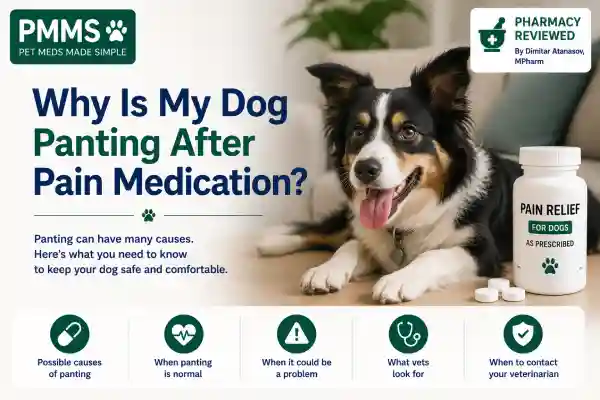
Why is my dog panting after pain medication?
Dogs may pant after pain medication because of ongoing pain, stress, anxiety, medication side effects, recovery from surgery, or underlying medical conditions. Mild panting can be normal in some situations, but persistent, worsening, or severe panting should be discussed with a veterinarian, especially if other symptoms develop.
When Owners Commonly Ask This
Few symptoms worry dog owners more than unexpected panting.
The situation often looks like this:
- Your dog receives pain medication.
- A few hours later, you notice heavy breathing.
- Your dog seems restless.
- The panting doesn’t stop.
Naturally, many owners wonder:
“Is the medication causing this?”
Sometimes it might be.
But surprisingly, medication itself is often not the main reason.
Why Is My Dog Panting After Pain Medication?
Does Panting Always Mean Something Is Wrong?
No.
Panting is one of the most common behaviors in dogs.
Dogs pant for many reasons:
- Cooling themselves
- Excitement
- Stress
- Anxiety
- Pain
- Illness
The challenge is determining whether the panting is normal or a warning sign.
Common Causes of Panting
| Cause | Common? |
|---|---|
| Pain | Very Common |
| Anxiety | Common |
| Stress | Common |
| Heat | Common |
| Medication side effect | Possible |
| Disease | Possible |
| Emergency condition | Rare |
Could My Dog Still Be in Pain?
Yes.
This is probably the most common explanation.
Many owners assume:
Medication = No Pain
But pain medications often reduce pain rather than eliminate it completely.
Signs Pain May Still Be Present
- Panting
- Restlessness
- Crying
- Pacing
- Trembling
- Difficulty sleeping
Dogs with ongoing discomfort frequently continue showing symptoms despite treatment.
Owners may also find these articles helpful:
Why Is My Dog Crying Even After Pain Medication?
Why Is My Dog Still in Pain After Medication?
What to Do If Dog Medication Is Not Working
Can Pain Itself Cause Panting?
Absolutely.
Pain activates the body’s stress response.
This can increase:
- Heart rate
- Respiratory rate
- Muscle tension
As a result, many painful dogs pant even when they are resting.
Conditions Commonly Associated With Panting
- Arthritis
- IVDD
- Orthopedic injuries
- Post-surgical recovery
- Cancer pain
This is one reason veterinarians consider panting an important pain indicator.
Can Pain Medication Cause Panting Directly?
Sometimes.
Although it is not among the most common side effects, certain medications may contribute to:
- Restlessness
- Increased alertness
- Behavioral changes
- Panting
Every dog responds differently.
Possible Medication-Related Panting
| Medication Type | Possible? |
|---|---|
| Tramadol | Yes |
| Opioids | Yes |
| Gabapentin | Occasionally |
| NSAIDs | Less Common |
| Combination therapy | Possible |
Most dogs tolerate pain medications well, but unusual reactions can occur.
Could Anxiety Be Causing the Panting?
Very often.
Anxiety and panting frequently go together.
Many dogs become anxious because of:
- Surgery
- Veterinary visits
- Restricted activity
- Injury
- Environmental changes
Anxiety-Related Signs
| Sign | Common? |
|---|---|
| Panting | Yes |
| Pacing | Yes |
| Whining | Yes |
| Clinginess | Yes |
| Restlessness | Yes |
Owners concerned about behavioral changes may also find useful:
Can Pain Medication Cause Anxiety in Dogs?
Why Is My Dog Confused After Gabapentin?
Could Surgery Recovery Cause Panting?
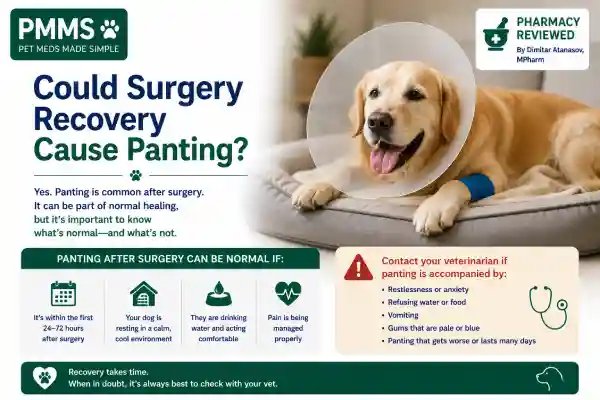
Very commonly.
Post-operative dogs often experience:
- Temporary discomfort
- Anxiety
- Medication effects
- Reduced mobility
These factors may lead to panting even when recovery is progressing normally.
Normal Post-Surgery Behaviors
- Mild panting
- Sleeping more
- Reduced activity
- Mild restlessness
However, worsening symptoms should always be discussed with a veterinarian.
Could the Medication Be Wearing Off?
Yes.
This is known as breakthrough pain.
Owners often notice a pattern:
- Dog receives medication.
- Symptoms improve.
- Several hours later panting returns.
Signs of Breakthrough Pain
| Sign | Possible? |
|---|---|
| Panting before next dose | Yes |
| Restlessness | Yes |
| Crying | Yes |
| Increased limping | Yes |
| Difficulty settling | Yes |
Veterinarians frequently investigate pain control when this pattern develops.
Which Dogs Are More Likely to Pant?
Some dogs naturally pant more than others.
Higher-Risk Groups
- Senior dogs
- Dogs with arthritis
- Anxious dogs
- Large breeds
- Dogs recovering from surgery
Breed and individual temperament can significantly influence panting behavior.
Could Heat Make the Situation Worse?
Absolutely.
Even mild warmth can increase panting.
This can make owners incorrectly assume medication is responsible.
Heat-Related Factors
- Warm rooms
- Summer temperatures
- Poor ventilation
- Exercise
Veterinarians always consider environmental factors when evaluating panting.
Could Panting Be a Sign of a Medication Reaction?
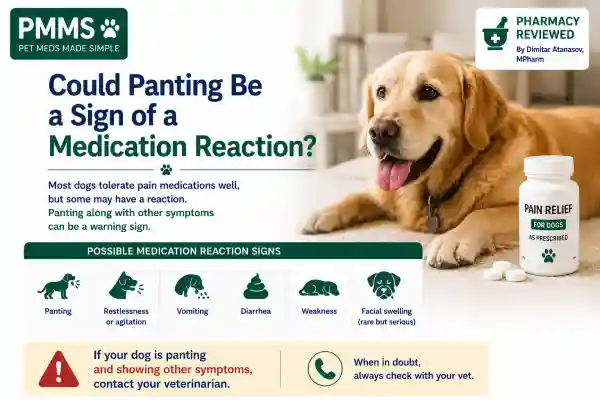
Sometimes.
While most dogs tolerate pain medications well, individual reactions can occur.
In rare situations, panting may develop shortly after starting a medication or increasing a dose.
Possible Medication Reaction Signs
- Excessive panting
- Restlessness
- Agitation
- Vomiting
- Diarrhea
- Weakness
Most cases are mild, but owners should monitor carefully for additional symptoms.
Signs More Consistent With a Medication Reaction
| Symptom | Possible? |
|---|---|
| Panting | Yes |
| Restlessness | Yes |
| Vomiting | Possible |
| Diarrhea | Possible |
| Weakness | Possible |
| Facial swelling | Rare but Serious |
If multiple symptoms appear together, veterinary advice is recommended.
Could My Dog Be Breathing Fast Instead of Panting?
Yes.
Owners sometimes use the terms interchangeably, but they are not always the same thing.
Panting
Usually involves:
- Open mouth
- Tongue visible
- Rapid shallow breaths
Fast Breathing
May involve:
- Closed mouth
- Increased respiratory rate
- Minimal movement
- Labored breathing
The distinction matters because rapid breathing can sometimes indicate a more serious problem.
Differences
| Feature | Panting | Rapid Breathing |
|---|---|---|
| Mouth Open | Usually | Not Always |
| Tongue Visible | Usually | Often No |
| Heat Regulation | Common | No |
| Respiratory Concern | Less Likely | More Possible |
Veterinarians pay close attention to this difference during evaluations.
Could Panting Signal an Overdose?
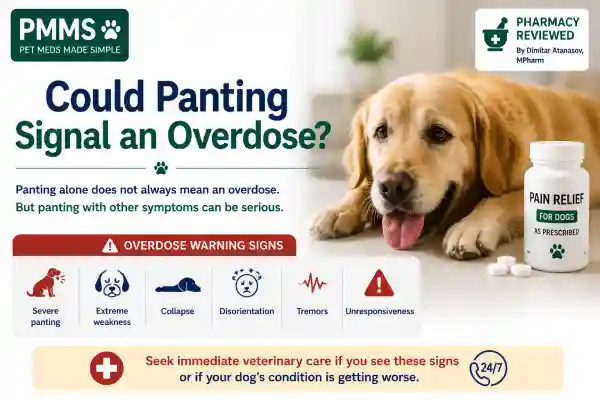
In some situations, yes.
Panting alone does not automatically indicate an overdose.
However, severe panting combined with other symptoms can be concerning.
Potential Overdose Signs
- Severe sedation
- Extreme weakness
- Collapse
- Disorientation
- Tremors
- Difficulty standing
Warning Signs
| Symptom | Concerning? |
|---|---|
| Mild panting | Usually No |
| Temporary panting | Usually No |
| Persistent panting | Possibly |
| Severe weakness | Yes |
| Collapse | Yes |
| Tremors | Yes |
| Unresponsiveness | Yes |
Immediate veterinary care is necessary if overdose is suspected.
Could Certain Pain Medications Cause More Panting Than Others?
Yes.
Different medications affect dogs differently.
Some drugs are more likely to contribute to restlessness or behavioral changes that may appear as increased panting.
Examples
- Tramadol
- Opioid medications
- Combination pain therapies
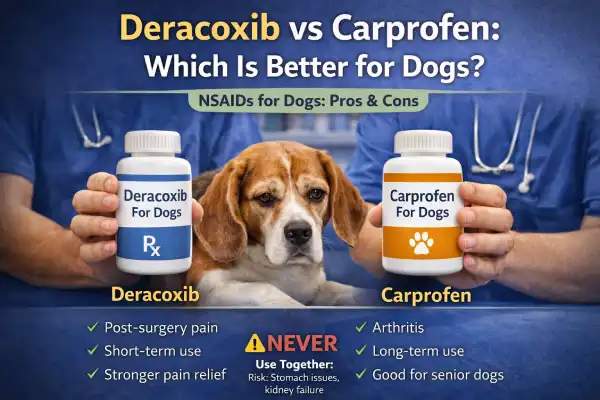
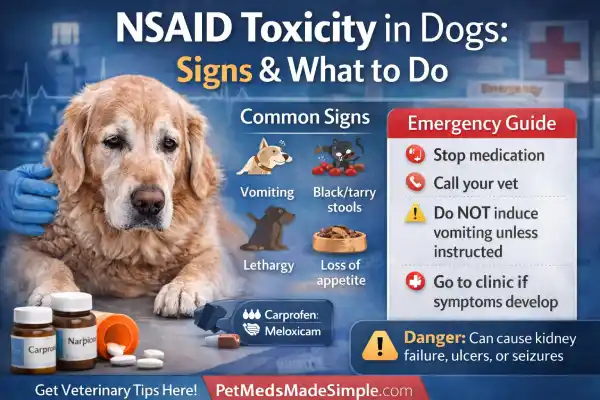
NSAIDs such as:
- Carprofen
- Meloxicam
- Deracoxib
- Galliprant
are generally less associated with panting as a direct side effect.
Owners comparing medications may also find these articles useful:
Carprofen vs Meloxicam for Dogs: Which NSAID Is Safer and More Effective?
Carprofen vs Gabapentin for Dogs: Which One Works Better?
Amantadine vs Gabapentin for Dogs: Which One Works Better?
NSAIDs vs Opioids for Dogs: What’s the Difference?
Could Underlying Disease Be Responsible?
Absolutely.
Sometimes the medication receives the blame when another medical condition is actually causing the panting.
Medical Conditions Associated With Panting
- Heart disease
- Lung disease
- Fever
- Cancer
- Hormonal disorders
- Severe pain
This is why veterinarians investigate more than the medication itself.
How Veterinarians Evaluate Panting After Pain Medication
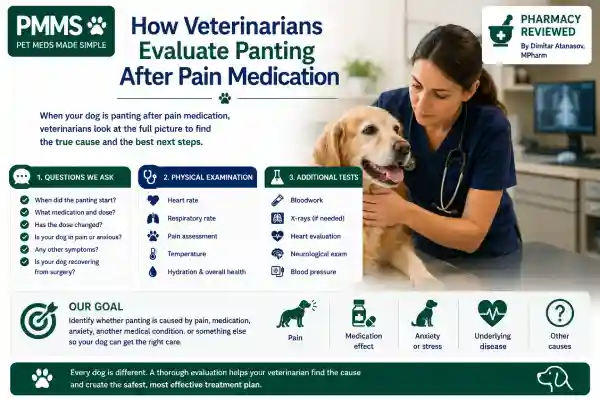
When owners report panting after treatment, veterinarians typically assess several factors.
Common Questions
- When did the panting begin?
- What medication was prescribed?
- Has the dose changed recently?
- Is the dog recovering from surgery?
- Are other symptoms present?
Physical Examination
The veterinarian may evaluate:
- Respiratory rate
- Heart rate
- Pain level
- Hydration status
- Temperature
- Mobility
Additional Testing
Depending on the situation:
| Test | Purpose |
|---|---|
| Bloodwork | Assess overall health |
| Chest X-rays | Evaluate lungs and heart |
| Blood pressure | Assess circulation |
| Neurological exam | Evaluate nervous system |
| Imaging | Investigate underlying disease |
The goal is identifying whether the panting is caused by:
- Pain
- Medication
- Anxiety
- Disease progression
- Another medical condition
When Should Owners Contact Their Veterinarian?
Owners should contact their veterinarian if:
- Panting persists for several hours
- Symptoms worsen
- New symptoms appear
- Appetite decreases
- Mobility declines
- The dog seems uncomfortable
It is always better to ask questions early than wait for a potentially serious problem to develop.
When Does Panting Become an Emergency?
Most panting episodes are not emergencies.
However, some situations require immediate veterinary attention.
Severe Breathing Difficulty
Seek emergency care if your dog appears unable to breathe normally.
Collapse
Any collapse should be treated as an emergency.
Blue or Pale Gums
Changes in gum color may indicate inadequate oxygenation.
Severe Weakness
A dog unable to stand normally requires urgent evaluation.
Emergency Warning Signs
| Symptom | Emergency? |
|---|---|
| Mild panting | Usually No |
| Temporary panting | Usually No |
| Persistent panting | Contact Vet |
| Severe breathing difficulty | Yes |
| Collapse | Yes |
| Blue gums | Yes |
| Severe weakness | Yes |
| Unresponsiveness | Yes |
Related Symptoms Owners Often Search For
Owners searching Why Is My Dog Panting After Pain Medication? often look for answers to several related concerns.
Crying
Panting and vocalization frequently occur together.
Related reading:
Why Is My Dog Crying Even After Pain Medication?
Anxiety
Restlessness often causes owners to wonder whether behavioral changes are medication-related.
Related reading:
Can Pain Medication Cause Anxiety in Dogs?
Ongoing Pain
Some dogs continue showing discomfort despite treatment.
Related reading:
Why Is My Dog Still in Pain After Medication?
Medication Effectiveness
Owners commonly ask:
What to Do If Dog Medication Is Not Working
Stronger Pain Control
Some dogs may eventually require treatment adjustments.
Related reading:
Warning Signs Your Dog Needs Stronger Pain Medication
Arthritis Management
Chronic pain remains one of the most common causes of panting.
Related reading:
Best Pain Medication for Dogs with Arthritis
Natural Pain Relief for Dogs: What Works & What Doesn’t
Bottom Line
Why is my dog panting after pain medication? In many cases, panting is caused by ongoing pain, anxiety, stress, recovery from surgery, or environmental factors rather than the medication itself. Some medications may contribute to panting in sensitive dogs, but persistent or worsening symptoms should never be ignored.
When panting is accompanied by weakness, collapse, breathing difficulty, or other concerning signs, immediate veterinary attention is warranted.
Veterinarian Takeaway
Panting is one of the most common symptoms owners notice after pain medication is started. While medication side effects can occasionally contribute, ongoing pain remains the most frequent explanation. Evaluating the timing, severity, associated symptoms, and overall clinical picture helps determine whether panting is expected, requires a medication adjustment, or signals a more serious problem.
Frequently Asked Questions – Why Is My Dog Panting After Pain Medication
Why is my dog panting after pain medication?
The most common causes include ongoing pain, anxiety, recovery from surgery, medication effects, and environmental factors.
Does panting mean the medication is not working?
Not necessarily. Some dogs continue panting despite receiving effective pain relief.
Can pain itself cause panting?
Yes. Pain is one of the most common causes of panting in dogs.
Can tramadol cause panting?
Yes. Some dogs may experience restlessness or behavioral changes while taking tramadol.
Can NSAIDs cause panting?
It is not considered a common side effect, although individual reactions can occur.
Is panting normal after surgery?
Mild panting can be common during recovery, especially during the first few days.
When should I call my veterinarian?
If panting persists, worsens, or is accompanied by other symptoms.
Can panting indicate an overdose?
Sometimes. Severe panting combined with weakness, collapse, or neurological symptoms is concerning.
What is the difference between panting and rapid breathing?
Panting usually involves an open mouth and tongue out, while rapid breathing may occur with the mouth closed.
When is panting an emergency?
Seek immediate care for severe breathing difficulty, collapse, blue gums, unresponsiveness, or severe weakness.
Reviewed By
Pharmacy Reviewed By
Dimitar Atanasov, MPharm
Master Pharmacist | Medication Safety Educator
Editorial Policy
At Pet Meds Made Simple, we are committed to providing accurate, evidence-based information about pet medications, veterinary treatments, medication safety, and common health concerns affecting dogs and cats.
For more information, see our Editorial Policy:
Sources
- Plumb’s Veterinary Drug Handbook
- American Animal Hospital Association (AAHA)
- American Veterinary Medical Association (AVMA)
- Merck Veterinary Manual
- Veterinary Pharmacology and Therapeutics
- Small Animal Clinical Pharmacology
- Journal of the American Veterinary Medical Association (JAVMA)
- Frontiers in Veterinary Science
- Veterinary Anaesthesia and Analgesia
- Veterinary Information Network (VIN)
Medical Review Statement
This article was pharmacy-reviewed by Dimitar Atanasov, MPharm, Master Pharmacist, using current veterinary pharmacology references, canine pain-management guidelines, and published veterinary literature available at the time of review.
Imagescreated with AI -Why Is My Dog Panting After Pain Medication