Quick Answer
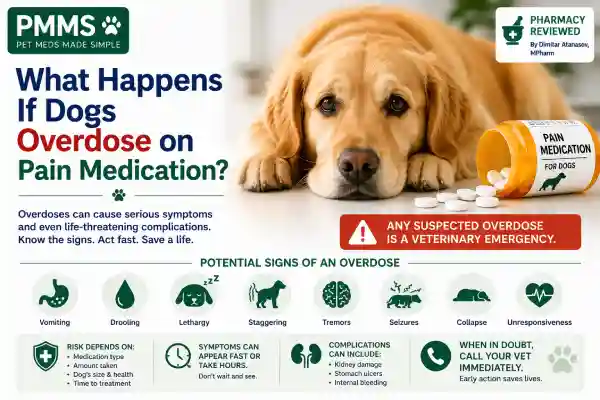
What happens if dogs overdose on pain medication? The effects depend on the medication involved, the amount taken, and the dog’s size and health status. An overdose may cause vomiting, diarrhea, weakness, excessive sedation, tremors, seizures, kidney injury, stomach ulcers, collapse, or even death in severe cases. Any suspected overdose should be treated as a veterinary emergency.
What happens if dogs overdose on pain medication?
A pain medication overdose in dogs can cause symptoms ranging from mild vomiting and lethargy to severe neurological signs, kidney damage, stomach ulcers, seizures, collapse, and life-threatening complications. Immediate veterinary evaluation is recommended whenever a dog receives an accidental overdose or consumes an unknown amount of medication.
When Owners Commonly Ask This
This situation happens more often than many people realize.
Common examples include:
- A family member accidentally gives a second dose.
- A dog chews through a medication bottle.
- Two people administer medication without realizing it.
- The owner misreads the label.
- A dog steals tablets from a counter.
The moment owners realize what happened, they often search:
“What happens if dogs overdose on pain medication?”
The answer depends on the medication involved, but every suspected overdose deserves immediate attention.
What Happens If Dogs Overdose on Pain Medication?
What Is Considered an Overdose?
An overdose occurs when a dog receives more medication than intended.
This may happen because:
- Too much medication is given at one time.
- Doses are given too close together.
- A dog consumes medication without supervision.
- A dosing error occurs.
Common Overdose Situations
| Situation | Common? |
|---|---|
| Double dose given accidentally | Yes |
| Dog chews medication bottle | Yes |
| Wrong strength administered | Possible |
| Human medication given by mistake | Possible |
Even medications that are normally safe can become dangerous when overdosed.
Which Pain Medications Cause the Most Concern?
Some medications have a wider safety margin than others.
Common Pain Medications in Dogs
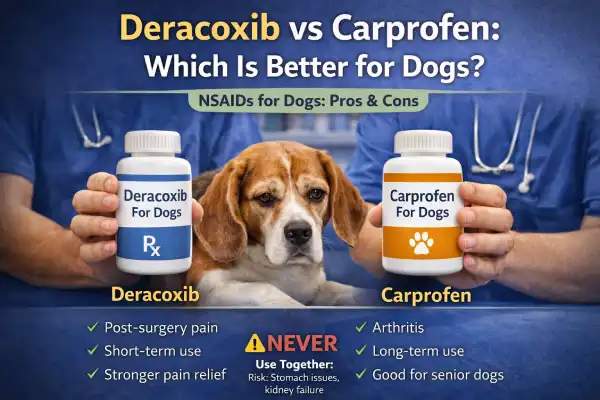
- Carprofen
- Meloxicam
- Deracoxib
- Galliprant
- Gabapentin
- Amantadine
- Tramadol
Each medication produces different overdose risks.
Examples
| Medication | Possible Overdose Concerns |
|---|---|
| Carprofen | Gastrointestinal injury, kidney damage |
| Meloxicam | Ulcers, kidney injury |
| Gabapentin | Sedation, weakness |
| Tramadol | Neurological symptoms |
| Human NSAIDs | Severe toxicity |
Owners interested in medication safety may also find useful:
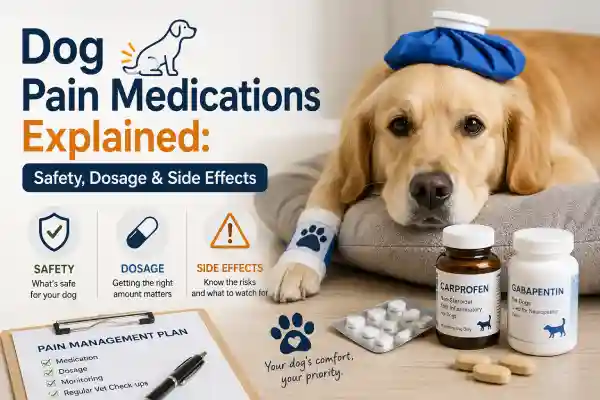
Dog Pain Medications Explained: Safety, Dosage & Side Effects
Can Dogs Take Ibuprofen Accidentally?
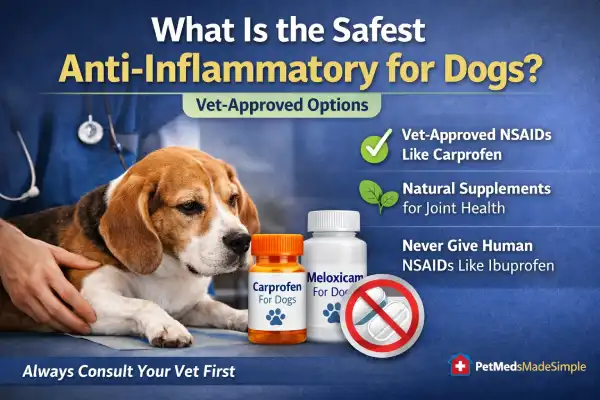
What Is the Safest Anti-Inflammatory for Dogs?
What Are the First Signs of an Overdose?
Symptoms vary depending on the medication.
However, several warning signs appear repeatedly.
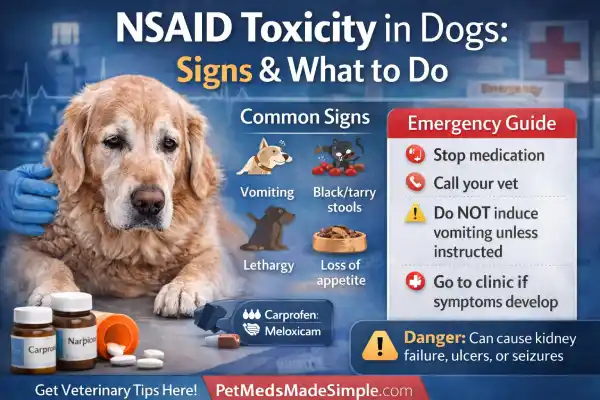
Early Symptoms
- Vomiting
- Drooling
- Loss of appetite
- Lethargy
- Weakness
- Excessive sleepiness
Moderate Symptoms
- Staggering
- Difficulty walking
- Confusion
- Panting
- Restlessness
Severe Symptoms
- Tremors
- Seizures
- Collapse
- Unresponsiveness
The sooner treatment begins, the better the outcome is likely to be.
Can Dogs Overdose on NSAIDs?
Yes.
NSAIDs are among the most common causes of medication-related toxicity in dogs.
Examples include:
- Carprofen
- Meloxicam
- Deracoxib
- Human ibuprofen products
Potential NSAID Overdose Effects
- Vomiting
- Stomach ulcers
- Bloody stool
- Kidney damage
- Severe gastrointestinal bleeding
Related reading:
Can Dogs Take Ibuprofen Accidentally?
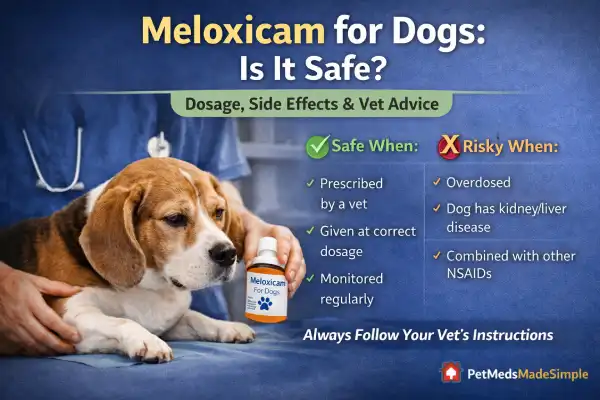
Can Meloxicam Cause Kidney Damage in Dogs?
Safest NSAID for Dogs Long-Term
Can Dogs Overdose on Gabapentin?
Yes.
Although gabapentin is generally considered relatively safe when prescribed appropriately, excessive doses can still cause significant symptoms.
Common Gabapentin Overdose Signs
- Severe sedation
- Wobbliness
- Weakness
- Loss of coordination
- Difficulty standing
Owners familiar with gabapentin may also find useful:
Can Gabapentin Cause Neurological Side Effects?
Why Is My Dog Falling Over After Gabapentin?
What Happens If Dogs Suddenly Stop Gabapentin?
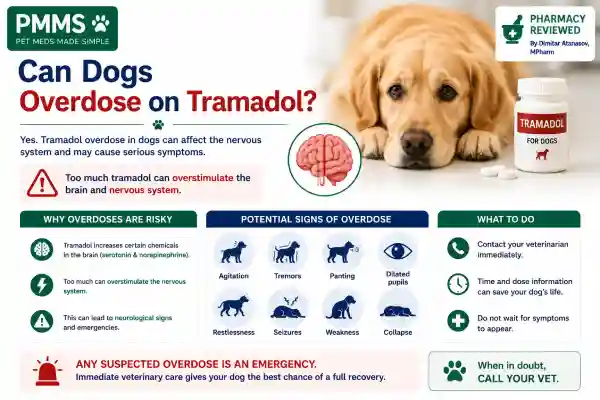
Can Dogs Overdose on Tramadol?
Yes.
Tramadol overdoses can sometimes affect the nervous system.
Potential Signs
- Agitation
- Tremors
- Panting
- Dilated pupils
- Seizures
The severity depends on the dose consumed.
What If My Dog Seems Fine?
This is one of the biggest mistakes owners make.
Many dogs initially appear completely normal.
Unfortunately, serious complications may develop hours later.
Why Waiting Can Be Dangerous
Some complications take time to develop:
- Kidney injury
- Gastrointestinal ulcers
- Internal bleeding
Veterinarians often prefer to intervene before symptoms become severe.
Could My Dog Die From a Pain Medication Overdose?
In severe cases, yes.
Most dogs recover well when treatment begins quickly.
However, large overdoses can become life-threatening.
Factors influencing prognosis include:
- Medication type
- Dose consumed
- Time to treatment
- Overall health
- Presence of underlying disease
Prompt veterinary care significantly improves outcomes.
What Will the Veterinarian Do?
Treatment depends on:
- The medication involved
- The estimated dose
- The dog’s size
- Time since exposure
- Current symptoms
The earlier treatment begins, the better the chances of preventing serious complications.
Common Veterinary Treatments
- Inducing vomiting (when appropriate)
- Activated charcoal
- Intravenous fluids
- Bloodwork
- Kidney monitoring
- Gastrointestinal protectants
- Hospitalization for severe cases
Every overdose situation is different, which is why veterinary assessment is so important.
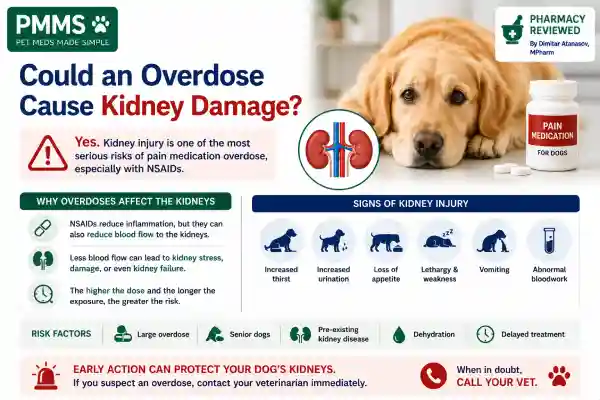
Could an Overdose Cause Kidney Damage?
Yes.
Kidney injury is one of the most serious complications of NSAID overdoses.
This is especially true with medications such as:
- Carprofen
- Meloxicam
- Deracoxib
- Ibuprofen
Signs of Kidney Injury
- Increased thirst
- Increased urination
- Vomiting
- Reduced appetite
- Weakness
- Lethargy
Kidney Damage Risk Factors
| Factor | Increased Risk? |
|---|---|
| Large overdose | Yes |
| Senior dog | Yes |
| Existing kidney disease | Yes |
| Delayed treatment | Yes |
Owners concerned about kidney safety may also find useful:
Can Meloxicam Cause Kidney Damage in Dogs?
Can Dogs Take Pain Medication Long-Term?
Could an Overdose Cause Stomach Ulcers?
Absolutely.
Many pain medications work by affecting inflammatory pathways.
Unfortunately, these same pathways help protect the stomach lining.
Possible Gastrointestinal Signs
- Vomiting
- Appetite loss
- Abdominal pain
- Black stools
- Bloody vomit
Why Ulcers Are Serious
Ulcers may lead to:
- Internal bleeding
- Severe pain
- Anemia
- Life-threatening complications
Veterinarians often start gastrointestinal protection immediately when significant NSAID overdoses occur.
Can a Double Dose Cause Problems?
Sometimes.
Many owners accidentally give:
- Two morning doses
- Two evening doses
- An extra dose by mistake
The risk depends on:
- The medication
- The amount given
- The dog’s size
Common Double-Dose Scenario
One extra dose is generally less dangerous than a dog consuming an entire bottle.
However, owners should still contact their veterinarian for guidance.
Never assume a double dose is harmless.
How Veterinarians Evaluate Pain Medication Overdoses
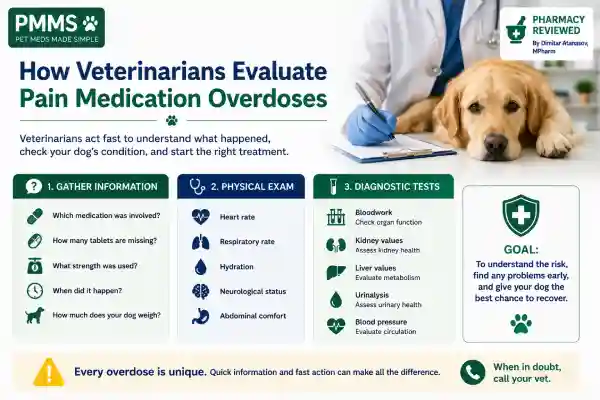
Veterinarians start by gathering critical information.
Common Questions
- Which medication was involved?
- How many tablets are missing?
- What strength was used?
- How much does the dog weigh?
- When did the exposure occur?
Physical Examination
The veterinarian may evaluate:
- Heart rate
- Respiratory rate
- Hydration
- Neurological status
- Abdominal discomfort
Diagnostic Testing
| Test | Purpose |
|---|---|
| Bloodwork | Assess organ function |
| Kidney values | Detect kidney injury |
| Liver values | Evaluate metabolism |
| Urinalysis | Assess urinary health |
| Blood pressure | Evaluate circulation |
These tests help determine the severity of the overdose.
When Should Owners Contact Their Veterinarian?
Immediately.
Unlike some medication side effects that can be monitored, overdoses should never be ignored.
Owners should call if:
- Too much medication was given
- A dog chewed a medication bottle
- The amount consumed is unknown
- Symptoms develop after dosing
When it comes to overdoses, early action is almost always the safest choice.
When Does an Overdose Become an Emergency?
Any suspected overdose deserves veterinary advice.
Certain symptoms require immediate emergency care.
Emergency Warning Signs
- Repeated vomiting
- Bloody vomit
- Black stools
- Severe weakness
- Collapse
- Tremors
- Seizures
- Difficulty breathing
- Unresponsiveness
Emergency Symptoms Table
| Symptom | Emergency? |
|---|---|
| Mild lethargy | Contact Vet |
| Single vomiting episode | Contact Vet |
| Repeated vomiting | Yes |
| Bloody vomit | Yes |
| Black stool | Yes |
| Collapse | Yes |
| Seizures | Yes |
| Difficulty breathing | Yes |
| Unresponsiveness | Yes |
Related Symptoms Owners Often Search For
Owners searching What Happens If Dogs Overdose on Pain Medication? often search for related medication emergencies.
Human Medication Exposure
Related reading:
Can Dogs Take Ibuprofen Accidentally?
Pain Medication Safety
Many owners continue with:
Safest Pain Medication for Dogs (Vet Comparison Guide)
Dog Pain Medications Explained
What Is the Safest Anti-Inflammatory for Dogs?
Long-Term Medication Use
Owners frequently ask:
Can Dogs Take Pain Medication Long-Term?
Why Does Pain Medication Stop Working?
Ongoing Symptoms
Some owners notice symptoms after dosing and search:
Why Is My Dog Panting After Pain Medication?
Why Is My Dog Crying Even After Pain Medication?
Can Pain Medication Cause Anxiety in Dogs?
Treatment Effectiveness
Related articles include:
What to Do If Dog Medication Is Not Working
Warning Signs Your Dog Needs Stronger Pain Medication
Bottom Line
What happens if dogs overdose on pain medication? The outcome depends on the medication involved, the dose consumed, and how quickly treatment begins. Mild overdoses may cause vomiting, lethargy, or temporary gastrointestinal upset, while severe overdoses can lead to stomach ulcers, kidney injury, seizures, collapse, and life-threatening complications.
Any suspected overdose should be treated as a medical emergency until a veterinarian determines otherwise.
Veterinarian Takeaway
Pain medication overdoses are among the most common medication emergencies seen in veterinary medicine. While many dogs recover fully with prompt treatment, delays can significantly increase the risk of serious complications. If an overdose is suspected, contacting a veterinarian immediately provides the best opportunity for a successful outcome.
Frequently Asked Questions – What Happens If Dogs Overdose on Pain Medication?
What happens if a dog gets too much pain medication?
Symptoms may include vomiting, lethargy, weakness, stomach ulcers, kidney injury, seizures, or collapse depending on the medication and dose.
Can a dog die from a pain medication overdose?
Yes. Severe overdoses can be life-threatening if not treated promptly.
Is a double dose always dangerous?
Not always, but veterinary advice should still be obtained immediately.
Can NSAID overdoses damage the kidneys?
Yes. Kidney injury is one of the most serious complications of NSAID toxicity.
Can overdoses cause stomach ulcers?
Absolutely. Gastrointestinal ulceration is a common concern with many NSAID overdoses.
Can dogs overdose on gabapentin?
Yes. Excessive doses can cause sedation, weakness, and loss of coordination.
Can dogs overdose on tramadol?
Yes. Neurological symptoms such as tremors and seizures may occur.
What should I do if my dog ate extra medication?
Contact your veterinarian immediately and provide as much information as possible.
How do veterinarians treat overdoses?
Treatment may include vomiting induction, activated charcoal, intravenous fluids, bloodwork, and supportive care.
When is an overdose an emergency?
Any suspected overdose warrants veterinary advice, while seizures, collapse, severe weakness, breathing difficulty, or bloody vomit require immediate emergency care.
Reviewed By
Pharmacy Reviewed By
Dimitar Atanasov, MPharm
Master Pharmacist | Medication Safety Educator
Editorial Policy
At Pet Meds Made Simple, we are committed to providing accurate, evidence-based information about pet medications, veterinary treatments, medication safety, and common health concerns affecting dogs and cats.
For more information, see our Editorial Policy:
Sources
- Plumb’s Veterinary Drug Handbook
- Merck Veterinary Manual
- American Animal Hospital Association (AAHA)
- American Veterinary Medical Association (AVMA)
- Veterinary Pharmacology and Therapeutics
- Small Animal Clinical Pharmacology
- Veterinary Information Network (VIN)
- Pet Poison Helpline Toxicology Resources
- Journal of the American Veterinary Medical Association (JAVMA)
- Frontiers in Veterinary Science
Medical Review Statement
This article was pharmacy-reviewed by Dimitar Atanasov, MPharm, Master Pharmacist, using current veterinary pharmacology references, veterinary toxicology resources, canine pain-management guidelines, and published veterinary literature available at the time of review.
Images create wth AI – What Happens If Dogs Overdose on Pain Medication?