Quick Answer
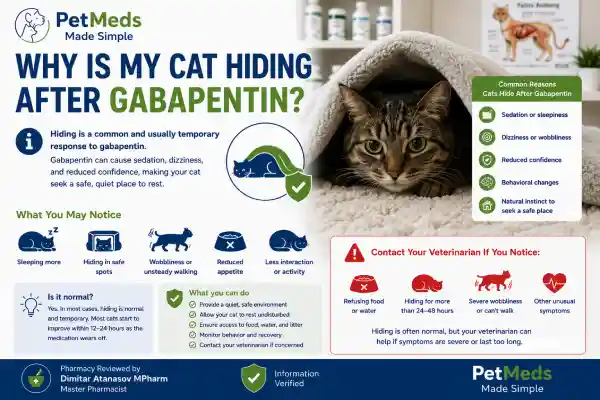
Why Is My Cat Hiding After Gabapentin? If your cat is hiding after gabapentin, the most common reason is that the medication is causing temporary sedation, dizziness, reduced confidence, or mild disorientation. Many cats become quieter and seek a safe place to rest while the medication is active. In most cases, hiding is temporary and improves as the effects wear off. However, severe lethargy, inability to walk, difficulty breathing, or failure to respond normally warrant immediate veterinary attention.
When Owners Commonly Ask This Question
Many cat owners receive gabapentin before:
- Veterinary visits
- Travel
- Grooming appointments
- Diagnostic procedures
- Pain management treatment
- Arthritis therapy
Then something unexpected happens.
The cat disappears.
Owners often find their cat:
- Under the bed
- Behind furniture
- In a closet
- Under blankets
- Inside a carrier
- In a rarely used room
Naturally, they start worrying.
Questions commonly include:
“Is my cat scared?”
“Did gabapentin make my cat feel sick?”
“Should I be worried?”
“Is hiding a side effect of gabapentin?”
Fortunately, hiding is one of the more common behaviors seen after gabapentin administration.
Why Is My Cat Hiding After Gabapentin?
What Is Gabapentin?
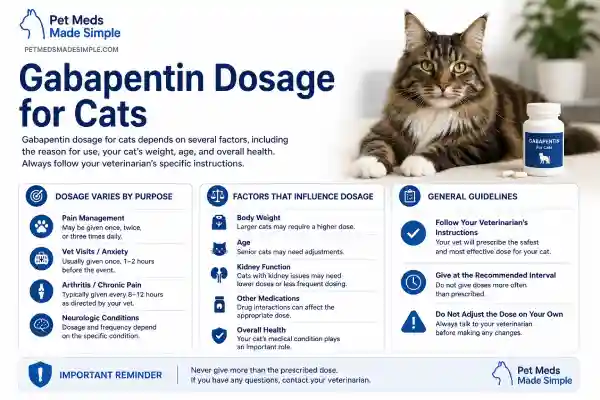
Gabapentin is a medication commonly used in cats for:
- Anxiety reduction
- Stress management
- Veterinary visits
- Pain control
- Chronic pain
- Arthritis
- Neuropathic pain
Veterinarians frequently prescribe it because many cats tolerate it well.
One of its biggest advantages is that it can make stressful experiences much easier for both cats and owners.
Why Do Cats Hide After Gabapentin?
The most common reason is simple:
The Cat Feels Different
Gabapentin can temporarily cause:
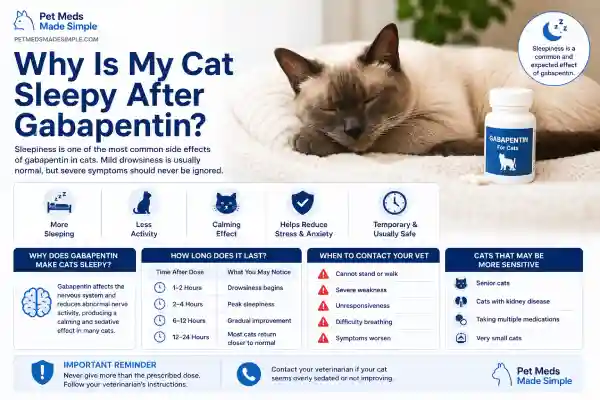
- Sleepiness
- Sedation
- Mild dizziness
- Reduced coordination
- Reduced confidence
Cats naturally seek safe places when they feel vulnerable.
Hiding is often a normal feline response.
How Common Is Hiding After Gabapentin?
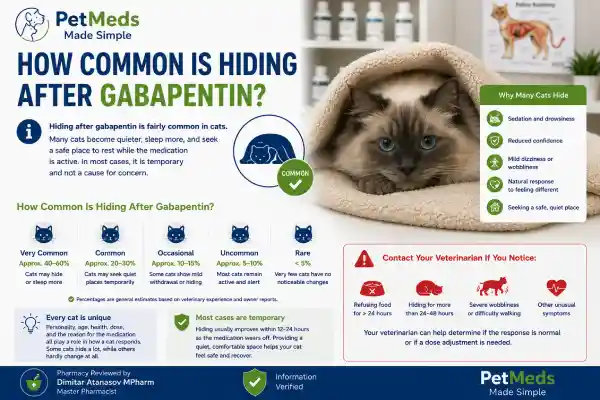
It is fairly common.
Many owners report their cats:
- Sleeping more
- Becoming less social
- Avoiding activity
- Hiding temporarily
Veterinarians generally consider this expected behavior when it occurs alongside mild sedation.
Common Post-Gabapentin Behaviors
| Behavior | Common? |
|---|---|
| Sleeping more | Very Common |
| Hiding | Common |
| Reduced activity | Common |
| Quiet behavior | Common |
| Wobbliness | Common |
| Temporary confusion | Occasionally |
Is Hiding a Sign That Gabapentin Is Working?
Sometimes, yes.
Gabapentin is often prescribed specifically because it helps reduce stress and anxiety.
A cat that normally reacts strongly to environmental stimuli may become:
- Calmer
- Less reactive
- More relaxed
- More likely to rest
However, hiding alone does not automatically mean the medication is working perfectly.
The overall behavior matters.
Why Do Cats Hide When They Feel Vulnerable?
Hiding is deeply rooted in feline behavior.
In the wild, showing weakness can increase danger.
Cats instinctively seek protected spaces when they:
- Feel ill
- Feel sleepy
- Feel uncertain
- Feel stressed
- Feel physically different
Gabapentin may temporarily trigger this natural response.
Common Hiding Locations
| Location | Common? |
|---|---|
| Under beds | Yes |
| Closets | Yes |
| Behind furniture | Yes |
| Carriers | Yes |
| Laundry rooms | Sometimes |
| Bathrooms | Sometimes |
This behavior is often temporary.
Could My Cat Be Dizzy?
Possibly.
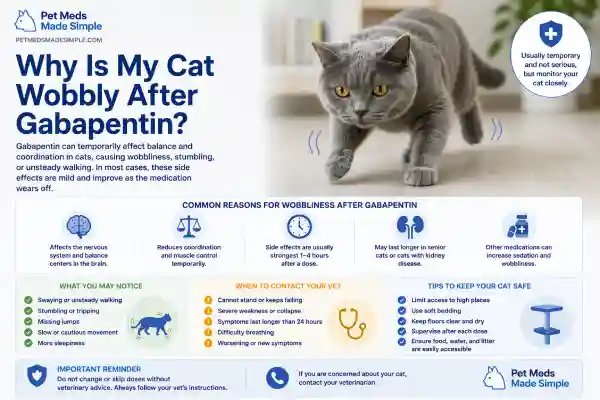
Gabapentin can sometimes affect coordination and balance.
Owners may notice:
- Wobbling
- Slow walking
- Hesitation when jumping
- Reduced confidence
Some cats hide because movement feels unusual.
This topic is discussed further in:
Could Gabapentin Make My Cat Feel Less Confident?
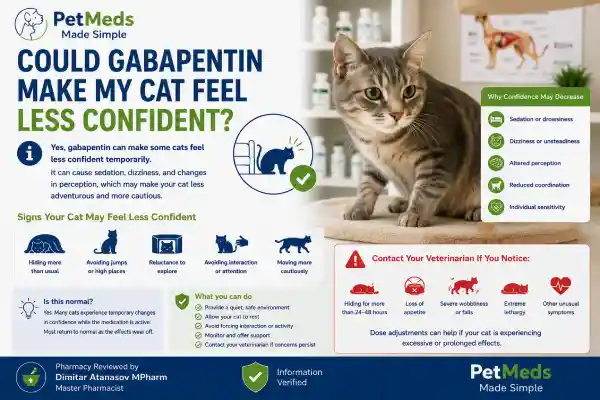
Absolutely.
Many cats become less adventurous while the medication is active.
Normally confident cats may suddenly:
- Avoid climbing
- Avoid jumping
- Avoid interaction
- Seek enclosed spaces
This often resolves as the medication wears off.
Are Some Cats More Likely to Hide Than Others?
Yes.
Individual personality plays a major role.
Cats More Likely to Hide
| Type of Cat | More Likely to Hide? |
|---|---|
| Naturally shy cats | Yes |
| Anxious cats | Yes |
| Senior cats | Yes |
| Indoor-only cats | Often |
| Sensitive cats | Yes |
Confident and highly social cats may continue interacting normally despite mild sedation.
How Long Does Hiding Usually Last?
The answer varies.
For most cats:
Typical Timeline
| Time After Dose | What Owners May Notice |
|---|---|
| 1–3 Hours | Sedation begins |
| 3–8 Hours | Hiding most likely |
| 8–12 Hours | Gradual improvement |
| 12–24 Hours | Most cats return to normal |
The exact duration depends on:
- Dose administered
- Individual sensitivity
- Age
- Health status
- Kidney function
Could My Cat Simply Want To Sleep?
Very often, yes.
Many cats hide because they want uninterrupted rest.
Owners frequently discover that their cat is:
- Sleeping comfortably
- Easily awakened
- Breathing normally
- Responding appropriately
These are generally reassuring signs.
Can Hiding Be More Common In Senior Cats?
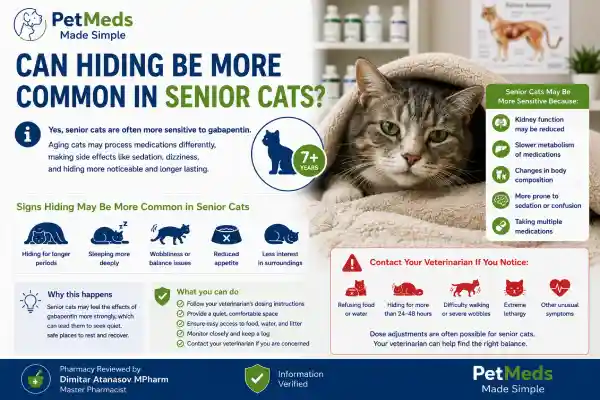
Yes.
Older cats may be more sensitive to gabapentin.
Senior cats often:
- Metabolize medications differently
- Have reduced kidney function
- Experience stronger sedation
Because of this, hiding may be more noticeable.
Could Kidney Disease Make Hiding Worse?
Potentially.
Cats with kidney disease may process medications differently.
Veterinarians often adjust dosing when kidney disease is present.
Monitoring is particularly important in:
- Senior cats
- Cats with chronic kidney disease
- Cats receiving multiple medications
Related Guides
Owners reading this article often also visit:
- Why Is My Cat Sleepy After Gabapentin?
- Why Is My Cat Wobbly After Gabapentin?
- Can Gabapentin Cause Vomiting in Cats?
- Can Gabapentin Cause Aggression in Cats?
- Can Gabapentin Cause Anxiety in Cats?
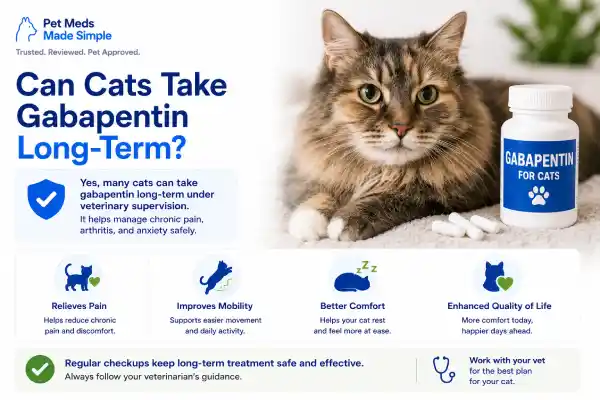
- Can Cats Take Gabapentin Long-Term?
- What Happens If Cats Suddenly Stop Gabapentin?
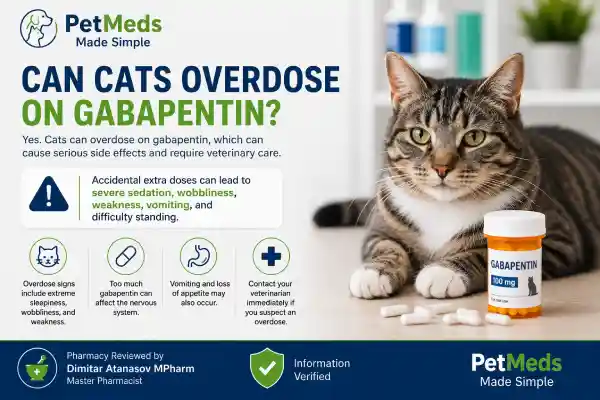
- Can Cats Overdose on Gabapentin?
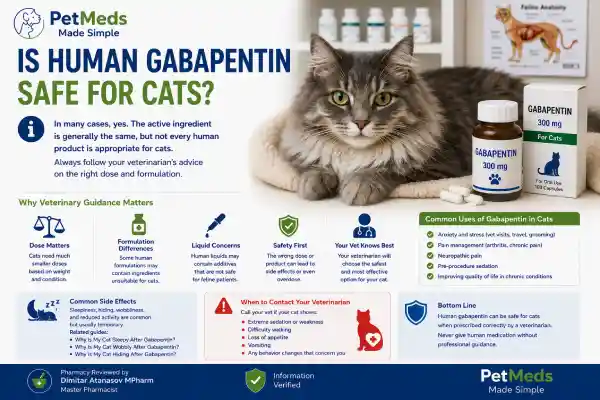
- Is Human Gabapentin Safe for Cats?
- Gabapentin for Cats
When Is Hiding After Gabapentin Not Normal?
Most cases of hiding after gabapentin are harmless and temporary.
However, there are situations where hiding may indicate something more serious.
Warning Signs
| Symptom | Concern Level |
|---|---|
| Mild hiding but responsive | Low |
| Sleeping more than usual | Low |
| Refusing all food for 24+ hours | Moderate |
| Unable to stand | High |
| Severe wobbliness | High |
| Difficulty breathing | Emergency |
| Non-responsive behavior | Emergency |
The key question is:
Is your cat simply hiding, or is your cat becoming progressively abnormal?
Could My Cat Be Experiencing an Overdose?
Although uncommon, accidental overdoses can happen.
This is especially true if:
- A second dose is given accidentally
- A dosing mistake occurs
- A cat accesses medication
Possible Overdose Signs
| Symptom | Possible? |
|---|---|
| Extreme sedation | Yes |
| Severe wobbliness | Yes |
| Difficulty walking | Yes |
| Extreme lethargy | Yes |
| Collapse | Rare |
| Breathing abnormalities | Rare but serious |
If overdose is suspected, veterinary attention should be sought immediately.
Related reading:
Could Hiding Mean My Cat Is Still Anxious?
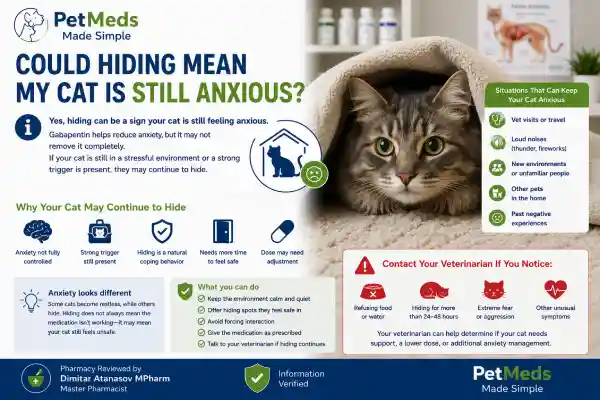
Sometimes.
Not every cat responds to gabapentin in exactly the same way.
Some cats may remain:
- Nervous
- Fearful
- Withdrawn
especially if the original trigger remains present.
Examples include:
- Veterinary clinics
- Travel
- Loud noises
- New environments
In these situations, hiding may reflect anxiety rather than sedation.
Can Gabapentin Cause Temporary Behavioral Changes?
Yes.
Behavioral changes are one of the reasons owners become concerned.
Common temporary changes include:
Behavioral Effects
| Behavior | Common? |
|---|---|
| Hiding | Yes |
| Sleeping more | Yes |
| Reduced interaction | Yes |
| Less vocalization | Yes |
| Appearing “different” | Yes |
Most of these changes improve as the medication leaves the body.
What Should Owners Do If Their Cat Is Hiding?
The best approach is usually simple.
Allow Your Cat To Rest
Avoid:
- Pulling the cat from hiding places
- Repeatedly disturbing them
- Forcing interaction
Instead:
- Provide water
- Provide access to a litter box
- Keep the environment calm
- Monitor breathing and responsiveness
Many cats simply need time.
Should I Try To Wake My Cat?
Occasionally checking on your cat is reasonable.
A reassuring response includes:
- Opening the eyes
- Responding to your voice
- Changing position
- Walking when encouraged
Reassuring Signs
| Sign | Good? |
|---|---|
| Wakes when called | Yes |
| Walks independently | Yes |
| Drinks water | Yes |
| Uses litter box | Yes |
| Breathing normally | Yes |
These signs suggest the medication is working as expected.
How Long Should Owners Wait Before Becoming Concerned?
Most cats improve significantly within 12–24 hours.
General Timeline
| Time Since Dose | Expected |
|---|---|
| 1–6 hours | Sedation common |
| 6–12 hours | Hiding often continues |
| 12–24 hours | Most cats improving |
| Beyond 24 hours | Veterinary advice recommended |
Individual responses vary.
Senior cats and cats with kidney disease may take longer to recover.
Could My Cat Need a Lower Dose?
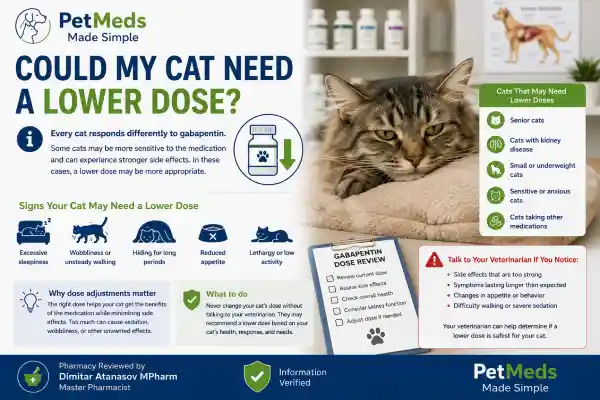
Possibly.
Some cats are more sensitive to gabapentin than others.
Veterinarians may adjust doses if owners consistently report:
- Excessive hiding
- Extreme sedation
- Severe wobbliness
- Prolonged recovery
Never change the dose without veterinary guidance.
When Should Owners Contact Their Veterinarian?
Contact your veterinarian if:
- Hiding lasts longer than expected
- Your cat refuses food
- Your cat refuses water
- Severe wobbliness develops
- Your cat cannot reach the litter box
- New symptoms appear
Contact Your Vet If You Notice
| Symptom | Contact Vet? |
|---|---|
| Mild hiding | Usually monitor |
| Sleeping more | Usually monitor |
| Refusing meals | Yes |
| Severe lethargy | Yes |
| Difficulty walking | Yes |
| Vomiting | Yes |
Early communication often prevents unnecessary worry.
What Symptoms Require Emergency Care?
Certain symptoms should never be ignored.
Seek Immediate Veterinary Care If Your Cat Develops
| Emergency Sign | Serious? |
|---|---|
| Difficulty breathing | Yes |
| Collapse | Yes |
| Unresponsiveness | Yes |
| Seizures | Yes |
| Severe weakness | Yes |
| Inability to stand | Yes |
| Suspected overdose | Yes |
Fortunately, these severe reactions are uncommon.
Can Cats Recover Completely?
In the vast majority of cases, yes.
Most cats:
- Return to normal behavior
- Resume eating normally
- Become active again
- Stop hiding completely
Once the medication wears off, owners often see their cat behaving exactly as before.
Recovery Outlook
| Situation | Prognosis |
|---|---|
| Mild sedation | Excellent |
| Temporary hiding | Excellent |
| Mild wobbliness | Excellent |
| Severe overdose | Variable |
| Underlying disease present | Depends on condition |
Most cats recover fully without long-term effects.
Related Guides
Owners researching hiding after gabapentin often also read:
- Why Is My Cat Sleepy After Gabapentin?
- Why Is My Cat Wobbly After Gabapentin?
- Can Gabapentin Cause Vomiting in Cats?
- Can Gabapentin Cause Aggression in Cats?
- Can Gabapentin Cause Anxiety in Cats?
- Can Cats Take Gabapentin Long-Term?
- What Happens If Cats Suddenly Stop Gabapentin?
- Can Cats Overdose on Gabapentin?
- Is Human Gabapentin Safe for Cats?
- Gabapentin for Cats
Bottom Line
Why is my cat hiding after gabapentin? In most cases, hiding occurs because gabapentin causes temporary sedation, dizziness, reduced confidence, or behavioral changes that make cats seek a quiet and secure place to rest. This response is often normal and improves as the medication wears off. However, owners should contact their veterinarian if hiding is accompanied by severe lethargy, inability to walk, refusal to eat, breathing difficulties, or other concerning symptoms.Why Is My Cat Hiding After Gabapentin?
Veterinarian Takeaway
Hiding is one of the more common behaviors veterinarians hear about after cats receive gabapentin. Most cats are simply experiencing temporary sedation and will recover normally within several hours to a day. Monitoring responsiveness, appetite, mobility, and breathing is usually more important than the hiding behavior itself. When in doubt, owners should contact their veterinarian for guidance.Why Is My Cat Hiding After Gabapentin?
Frequently Asked Questions – Why Is My Cat Hiding After Gabapentin
Why is my cat hiding after gabapentin?
The most common reason is temporary sedation or reduced confidence caused by the medication.
Is hiding after gabapentin normal?
Yes. Many cats seek quiet places to rest while the medication is active.
How long does hiding usually last?
Most cats improve within 12–24 hours.
Can gabapentin make cats sleepy?
Yes. Sleepiness is one of the most common side effects.
Can gabapentin make cats wobbly?
Yes. Mild coordination problems may occur temporarily.
Should I force my cat out of hiding?
No. Allow your cat to rest and recover in a safe environment.
Can gabapentin cause behavioral changes?
Yes. Temporary changes such as hiding, sleeping more, and reduced activity can occur.
When should I call my veterinarian?
Contact your veterinarian if symptoms become severe, persist unusually long, or interfere with eating, drinking, or mobility.
Could hiding indicate an overdose?
It can be one sign among many, especially if severe sedation or inability to walk occurs.
Do most cats recover completely?
Yes. Most cats recover fully once the medication wears off.
Reviewed By
Dimitar Atanasov, MPharm
Master Pharmacist | Medication Safety Educator
Dr. Valcho, DVM
Veterinary Consultant | 30+ Years of Clinical Experience
Editorial Policy
This article follows the PetMedsMadeSimple editorial standards for evidence-based veterinary medication education, medication safety, and responsible pet-owner guidance.
Sources
- Plumb’s Veterinary Drug Handbook, 10th Edition.
- Merck Veterinary Manual – Gabapentin Use in Cats.
- American Association of Feline Practitioners (AAFP) Guidelines.
- American Veterinary Medical Association (AVMA) Client Education Resources.
- Veterinary Pharmacology and Therapeutics, 11th Edition.
- Small Animal Clinical Pharmacology and Therapeutics.
- Veterinary Information Network (VIN).
- Journal of Feline Medicine and Surgery.
- Frontiers in Veterinary Science.
- JAVMA – Feline Pain Management and Sedation Literature.
Medical Review Statement
This article was pharmacy-reviewed by Dimitar Atanasov, MPharm, and veterinary-reviewed by Dr. Valcho, DVM, using current veterinary pharmacology references, feline pain-management guidelines, and published veterinary literature available at the time of review.
Images created wh AI – Why Is My Cat Hiding After Gabapentin