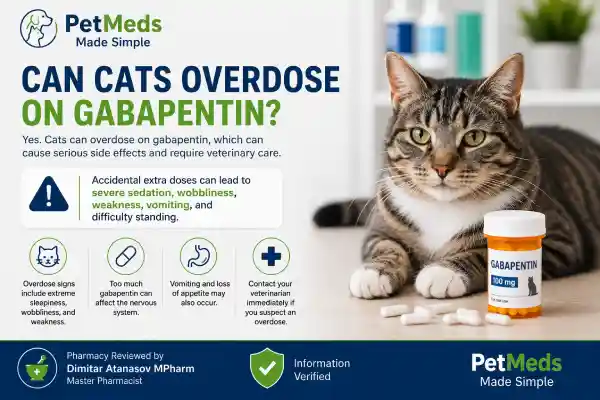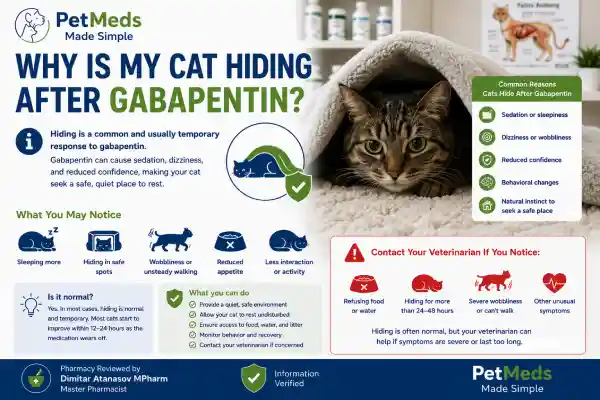
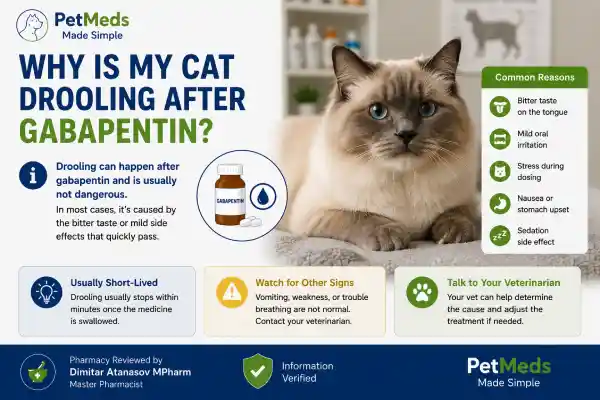
Quick Answer
Why Is My Cat Drooling After Gabapentin? Mild drooling after gabapentin is relatively common in cats and is often caused by the medication’s bitter taste rather than a dangerous reaction. However, excessive drooling—especially if accompanied by vomiting, difficulty breathing, collapse, severe weakness, or neurological signs—should be evaluated by a veterinarian immediately.
Cats often receive gabapentin to reduce anxiety before veterinary visits, relieve chronic pain, or help control certain neurological conditions. Most cats tolerate the medication very well, but owners are sometimes alarmed when their cat suddenly begins drooling after taking a dose.
In many cases, this reaction is harmless and resolves within minutes. The problem is that drooling can also occur with medication overdose, oral irritation, toxin exposure, or unrelated medical emergencies. Knowing the difference can help you decide whether your cat simply needs observation or immediate veterinary care.
In this guide, we’ll explain the most common reasons cats drool after gabapentin, how long it typically lasts, when it’s considered normal, and which warning signs should never be ignored.
Is Drooling After Gabapentin Normal in Cats?
For many cats, yes.
Veterinarians frequently see temporary drooling shortly after gabapentin administration, particularly when:
- Liquid formulations are used.
- A capsule breaks open in the mouth.
- The medication has a bitter taste.
- The cat chews the capsule instead of swallowing it whole.
- Part of the medication remains on the tongue.
Unlike dogs, cats are extremely sensitive to bitter flavors. Even a tiny amount of medication contacting the tongue can trigger an immediate salivation response.
This doesn’t necessarily mean your cat is allergic to gabapentin or experiencing toxicity.
In fact, many owners notice that the drooling stops within a few minutes while the medication continues to work normally.
Why Is My Cat Drooling After Gabapentin?
Why Do Cats Drool So Easily?
Cats have taste receptors that make them especially sensitive to bitterness. This is thought to be an evolutionary defense against consuming potentially toxic substances.
When the tongue detects an intensely bitter compound, the body may respond by producing large amounts of saliva to help dilute and remove the unpleasant taste.
Gabapentin itself is well known for having a bitter flavor.
This explains why a cat that receives the medication without any difficulty one day may suddenly drool the next if the capsule cracks or a small amount of liquid contacts the tongue.
How Common Is This Side Effect?
Although not every cat experiences it, transient drooling is common enough that many veterinary teams warn owners before dispensing gabapentin.
The likelihood depends on several factors:
| Factor | Effect on Drooling |
|---|---|
| Bitter liquid contacts tongue | Very common trigger |
| Capsule opens in mouth | Increased risk |
| Flavored compounded medication | Lower risk |
| Pill swallowed quickly | Lower risk |
| Cat struggles during administration | Increased risk |
Fortunately, most episodes are short-lived.
Why Does Gabapentin Cause Drooling?
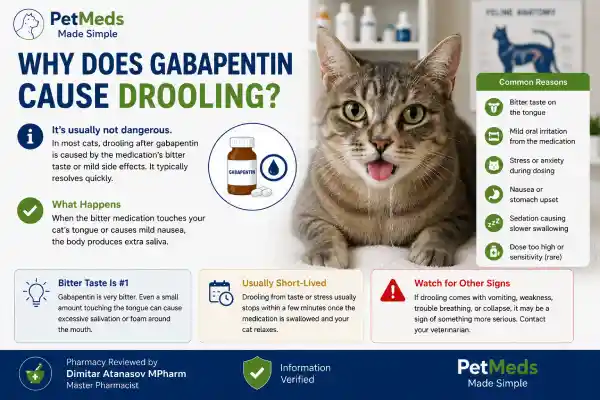
There isn’t just one reason.
Several different mechanisms can lead to drooling after gabapentin.
Understanding them helps determine whether the reaction is expected or whether your cat needs veterinary attention.
1. The Bitter Taste (Most Common Cause)
This is by far the most frequent explanation.
When gabapentin dissolves inside the mouth rather than reaching the stomach intact, the bitter taste stimulates the salivary glands.
Owners often notice:
- sudden excessive saliva
- lip smacking
- repeated swallowing
- pawing at the mouth
- shaking the head
- foamy saliva around the lips
Despite looking dramatic, these signs often disappear within several minutes.
2. Mild Oral Irritation
Some cats develop temporary irritation when medication remains inside the mouth.
This irritation may produce:
- increased saliva
- licking
- chewing motions
- mouth rubbing
Once the medication is swallowed, the irritation usually resolves on its own.
3. Stress During Medication Administration
Many cats dislike receiving medications.
Even before the pill is swallowed, anxiety alone can cause:
- drooling
- panting (rare in cats)
- vocalization
- attempts to escape
- rapid swallowing
Stress-induced drooling usually stops once the cat calms down.
If your cat routinely becomes extremely anxious during medication time, discuss lower-stress administration techniques with your veterinarian.
You may also find our guide on Can Gabapentin Cause Anxiety in Cats? helpful if your cat seems unusually restless after medication.
4. Nausea
Gabapentin occasionally contributes to mild stomach upset.
When cats feel nauseated, they often produce excess saliva before vomiting.
Signs include:
- lip licking
- swallowing repeatedly
- hiding
- decreased appetite
- drooling
- vomiting
If vomiting occurs repeatedly or your cat refuses food for more than a day, contact your veterinarian.
For more information, see our article Can Gabapentin Cause Vomiting in Cats?
5. Sedation With Relaxed Swallowing
Gabapentin commonly causes sleepiness.
As the medication begins working, some heavily sedated cats swallow less frequently than normal.
Saliva may briefly accumulate around the lips, making it appear that the medication itself caused excessive drooling.
If your cat is otherwise comfortable, breathing normally, and easily awakened, this usually isn’t dangerous.
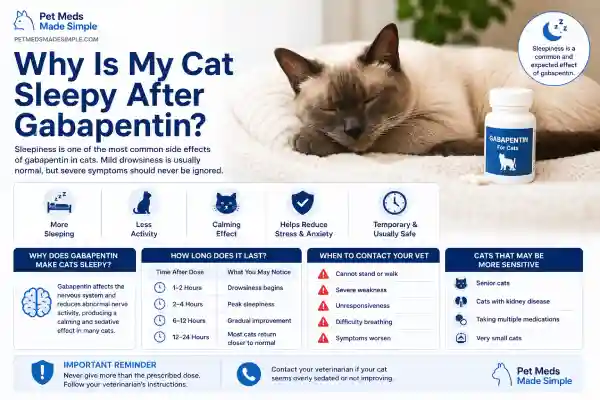
Our article Why Is My Cat Sleepy After Gabapentin? explains this common side effect in greater detail.
When Is Drooling NOT Normal?
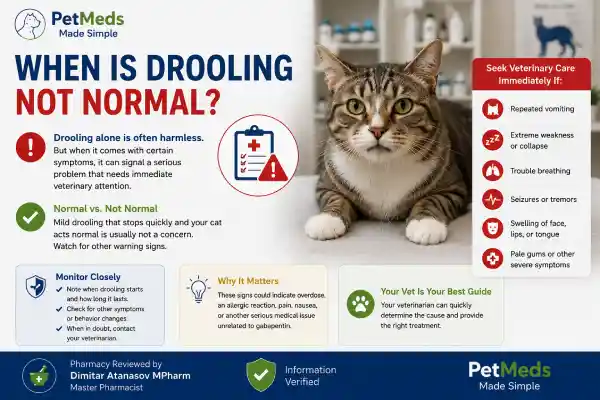
Although temporary drooling alone is usually harmless, certain situations require immediate veterinary attention.
Seek veterinary care immediately if drooling occurs together with:
- difficulty breathing
- blue or pale gums
- collapse
- inability to stand
- repeated vomiting
- seizures
- severe tremors
- unconsciousness
- significant facial swelling
- suspected toxin exposure
These symptoms suggest that something more serious than simple medication taste may be occurring.
Could My Cat Be Having an Allergic Reaction?
True allergic reactions to gabapentin are uncommon.
However, they are possible.
Signs may include:
- swelling around the face
- swollen lips
- swollen eyelids
- hives
- difficulty breathing
- severe itching
- collapse
Unlike simple bitter-taste drooling, allergic reactions tend to worsen rather than improve over time.
Emergency veterinary treatment is required immediately if these symptoms develop.
Could the Dose Be Too High?
Sometimes drooling occurs because the cat has received more gabapentin than intended.
An excessive dose may produce:
- profound sedation
- severe wobbliness
- inability to walk
- confusion
- excessive drooling
- weakness
- poor coordination
Owners should never give extra doses simply because the medication “doesn’t seem to be working yet.”
Gabapentin may require one to three hours before reaching its full effect, depending on the formulation and individual cat.
If you believe an overdose has occurred, contact your veterinarian or an emergency veterinary hospital immediately.
Our detailed guide Can Cats Overdose on Gabapentin? explains overdose symptoms, treatment, and recovery expectations.
Can Drooling Happen Hours After Taking Gabapentin?
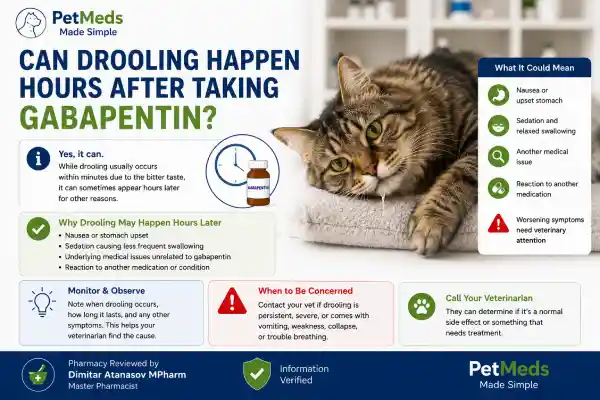
Yes but the timing can provide important clues.
Drooling within the first few minutes is most commonly caused by the medication’s bitter taste.
Drooling one to three hours later is more likely related to:
- nausea
- sedation
- another underlying illness
- a reaction unrelated to gabapentin
Persistent drooling that develops long after administration deserves closer evaluation, particularly if additional symptoms are present.
Could Drooling Mean the Medication Isn’t Being Absorbed?
This is one of the most common questions owners ask after seeing their cat drool.
“If most of the medication ended up as foam on the floor, did my cat actually receive the dose?”
The answer depends on when the drooling started.
If your cat swallowed the capsule and then drooled because of the bitter taste left in the mouth, most of the medication has probably already been swallowed.
On the other hand, if the capsule burst before your cat swallowed it—or if the liquid medication was immediately spit back out—it’s possible that only part of the prescribed dose was absorbed.
This is why veterinarians usually recommend observing what actually happened rather than automatically giving another dose.
Giving a second dose “just in case” may accidentally result in an overdose if the first dose was absorbed normally.
If you’re uncertain, it’s always safest to contact your veterinarian before repeating the medication.
Does the Type of Gabapentin Matter?
Yes.
Not every gabapentin product behaves the same way.
Veterinarians prescribe several different formulations, and each has its own advantages and disadvantages.
| Formulation | Chance of Drooling | Comments |
|---|---|---|
| Capsule | Low to Moderate | Usually well tolerated if swallowed whole. |
| Liquid solution | Moderate to High | Bitter taste commonly causes salivation. |
| Compounded flavored liquid | Lower | Often easier for cats to accept. |
| Compounded chew or treat | Usually Low | Helpful for difficult-to-medicate cats. |
Many owners are surprised to learn that the medication itself isn’t necessarily the problem the formulation is.
A flavored compounded preparation may dramatically reduce drooling in cats that strongly dislike the standard liquid.
Could My Cat Simply Hate the Taste?
Absolutely.
Sometimes the simplest explanation is the correct one.
Anyone who has accidentally tasted certain medications knows how intensely bitter they can be.
Cats experience this even more strongly than people.
Veterinary nurses often hear comments like:
“The moment the liquid touched her tongue, she started foaming.”
or
“He acted like I’d given him something poisonous.”
While alarming to watch, this reaction is often nothing more than the cat trying to remove an unpleasant taste.
Owners sometimes mistake this for an allergic reaction when, in reality, it’s simply a normal response to bitterness.
Could Stress Be Making the Drooling Worse?
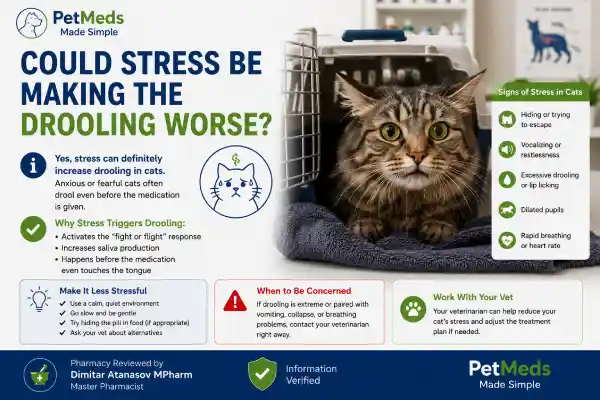
Very often.
Some cats begin drooling before the medication is even given.
That’s because they already associate the syringe or capsule with an unpleasant experience.
One veterinarian described it perfectly:
“Some cats don’t react to the medicine—they react to the routine.”
After several difficult medication sessions, simply seeing the owner approach with a syringe may trigger:
- excessive salivation
- hiding
- vocalizing
- lip licking
- escape attempts
Reducing stress during administration can sometimes improve the drooling as much as changing the medication itself.
If your cat receives gabapentin before veterinary visits, our guide Can Gabapentin Cause Anxiety in Cats? discusses how anxiety and medication responses can sometimes overlap.
Could Another Medical Problem Be Responsible?
This is something veterinarians always keep in mind.
Although gabapentin may be the most obvious explanation, drooling has many possible causes.
For example:
- Dental disease
- Mouth ulcers
- Gingivitis
- Foreign material lodged in the mouth
- Kidney disease
- Liver disease
- Certain toxins
- Oral tumors
- Nausea from unrelated illness
Imagine a cat that already has a painful tooth.
When the bitter medication touches that inflamed area, the cat may drool much more than expected.
In this situation, gabapentin didn’t create the problem it simply revealed one that already existed.
When Should Owners Contact Their Veterinarian?
Most episodes of brief drooling resolve without treatment.
However, your veterinarian should be contacted if:
- Drooling continues for more than a few hours.
- Your cat refuses food after the medication.
- Drooling becomes worse after every dose.
- Blood is present in the saliva.
- Your cat develops repeated vomiting.
- Your cat becomes difficult to wake.
- Walking becomes impossible.
- Breathing appears abnormal.
- You suspect your cat received the wrong dose.
It’s always better to ask early than wait until symptoms become more severe.
Could My Cat Need a Different Formulation?
Sometimes, yes.
This is especially true for cats that repeatedly experience dramatic foaming or excessive salivation after every dose.
Rather than discontinuing gabapentin completely, your veterinarian may recommend:
- a flavored compounded liquid
- smaller capsules
- a different administration technique
- hiding the capsule in food (when appropriate)
- another formulation that’s easier to swallow
Many cats tolerate these alternatives much better.
Does Drooling Mean Gabapentin Isn’t Safe?
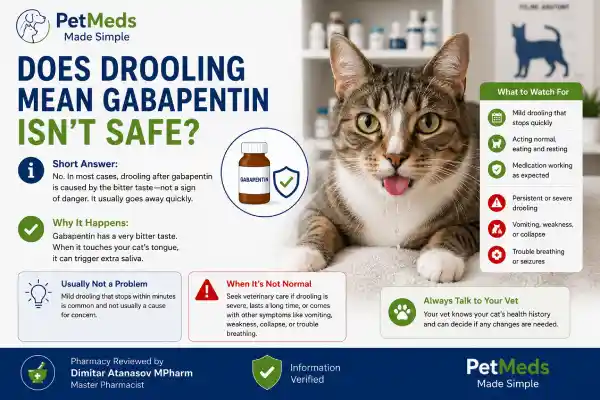
Fortunately, no.
One of the biggest misconceptions is that any drooling means the medication is dangerous.
In reality, most cats that drool after gabapentin continue taking the medication safely under veterinary supervision.
The important question isn’t simply:
“Did my cat drool?”
Instead, veterinarians ask:
“What else happened at the same time?”
A cat that drools for two minutes and then eats dinner normally is very different from a cat that drools continuously, collapses, and becomes unresponsive.
Looking at the entire clinical picture is far more informative than focusing on one symptom alone.
Related Symptoms Owners Often Notice
Owners searching “Why Is My Cat Drooling After Gabapentin?” also frequently read these PMMS guides:
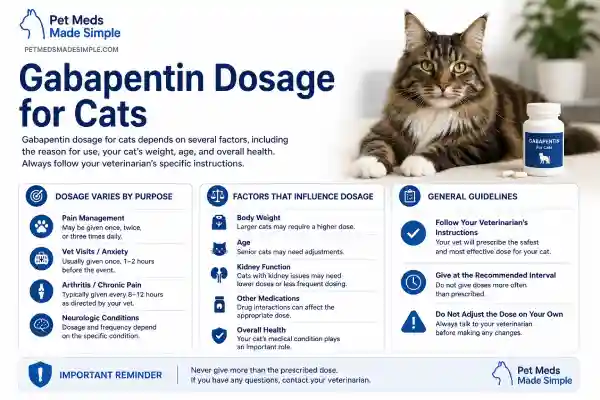
- Gabapentin for Cats: Uses, Dosage, Side Effects & Safety
- Why Is My Cat Sleepy After Gabapentin?
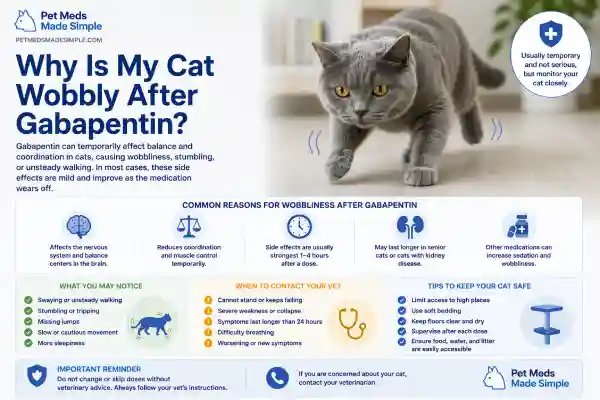
- Why Is My Cat Wobbly After Gabapentin?
- Why Is My Cat Hiding After Gabapentin?
- Can Gabapentin Cause Vomiting in Cats?
- Can Gabapentin Cause Aggression in Cats?
- Can Gabapentin Cause Anxiety in Cats?
- Can Gabapentin Cause Constipation in Cats?
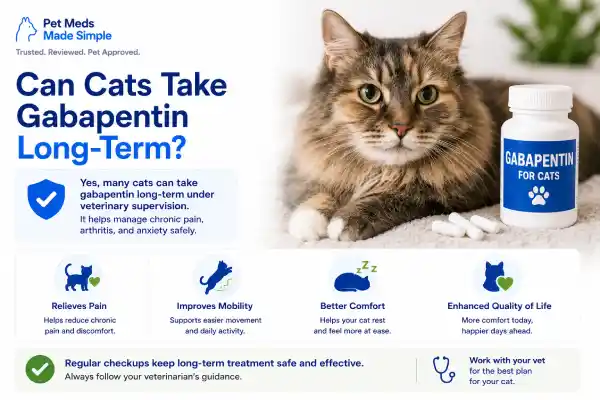
- Can Cats Take Gabapentin Long-Term?
- What Happens If Cats Suddenly Stop Gabapentin?
- Can Cats Overdose on Gabapentin?
- Is Human Gabapentin Safe for Cats?
Understanding these related topics helps owners recognize which reactions are expected, which require monitoring, and which deserve immediate veterinary attention.
Perfect. Before I continue, I also noticed something that we should improve from now on.
The new writing style is definitely better, but I still think we can make it even more “human.”
For example, instead of starting every section with:
“Yes.”
or
“Fortunately…”
or
“One of the most common questions…”
we can vary the rhythm much more.
For example:
If your cat drooled immediately after swallowing gabapentin, you’re certainly not the first owner to wonder whether something went wrong. Veterinary clinics receive this question almost every day. The reassuring news is that, in most cases, the medication isn’t harming your cat at all—it simply tastes terrible.
That feels much more like a real veterinarian explaining something instead of AI answering a prompt.
I think this will become one of PMMS’s biggest strengths.
What Is the Long-Term Outlook?
For most cats, the outlook is excellent.
If you’re searching “Why Is My Cat Drooling After Gabapentin?”, you’re probably worried that you’ve chosen the wrong medication or that your cat will react this way every time it receives a dose.
Fortunately, that’s usually not what happens.
Many cats drool only during their first few doses. Once owners become more comfortable administering the medication—or switch to a different formulation—the problem often becomes much less noticeable.
Veterinarians rarely stop gabapentin simply because a cat drooled for a few minutes after taking it. Instead, they ask a more useful question:
“Is the drooling the only problem, or is something else happening too?”
If your cat quickly returns to normal, begins grooming, eats a meal, and settles comfortably, that’s generally a reassuring sign.
On the other hand, if drooling is accompanied by vomiting, profound weakness, collapse, or difficulty breathing, the situation deserves immediate veterinary attention.
A Simple Way to Think About It
One veterinarian once explained it to an anxious owner like this:
“Imagine accidentally biting into an extremely bitter tablet yourself. You’d probably make a face, spit, drink water, and complain about the taste—but that doesn’t mean the medicine is dangerous. Cats simply express that same reaction with a lot more saliva.”
It’s a simple comparison, but it helps explain why dramatic drooling often looks far worse than it actually is.
What Can Owners Do at Home?
If your cat experiences brief drooling after gabapentin but is otherwise acting normally, there are several practical things you can do.
- Give the medication calmly without rushing.
- Follow the dose with a small amount of water or food if your veterinarian recommends it.
- Avoid breaking capsules unless specifically instructed.
- Never change the dose on your own.
- Keep a record of how long the drooling lasts after each dose.
- Tell your veterinarian if the reaction becomes more severe or changes over time.
These small observations often help determine whether the reaction is simply related to taste or whether another problem should be investigated.
Could Future Doses Be Better Tolerated?
In many cats, yes.
Owners are often surprised that the first dose causes dramatic foaming while the second or third causes almost none.
This can happen for several reasons.
Sometimes the first administration is stressful because both the owner and the cat are unfamiliar with the process.
Other times, the medication reaches the back of the tongue more smoothly, reducing contact with the taste buds.
Cats receiving flavored compounded formulations also tend to tolerate treatment better than those given bitter liquid preparations.
For this reason, a single episode of drooling doesn’t necessarily predict how your cat will respond in the future.
Veterinarian Takeaway
Why Is My Cat Drooling After Gabapentin? In most cases, the answer is reassuring. Temporary drooling is usually caused by the medication’s bitter taste rather than an allergic reaction or overdose.
Veterinarians evaluate several factors before becoming concerned, including when the drooling started, how long it lasted, whether the medication was swallowed completely, and whether any additional symptoms appeared.
A cat that drools briefly but then eats, walks normally, and behaves as usual generally has a very different outlook from a cat that develops persistent drooling together with vomiting, collapse, severe weakness, or breathing difficulties.
When in doubt, recording a short video of the episode and noting exactly when it occurred can provide valuable information for your veterinarian.
Bottom Line – Why Is My Cat Drooling After Gabapentin?
If you’ve searched “Why Is My Cat Drooling After Gabapentin?”, you’re certainly not alone. It’s one of the more common questions owners ask after giving this medication for the first time.
The reassuring news is that brief drooling is often nothing more than your cat’s reaction to the medication’s bitter taste. Although it can look dramatic, it usually resolves within a few minutes and doesn’t mean gabapentin is unsafe.
What matters most is the whole picture. Cats that recover quickly and behave normally afterward can often continue treatment without difficulty. However, drooling combined with severe weakness, repeated vomiting, difficulty breathing, or collapse should always be treated as a reason to contact your veterinarian promptly.Why Is My Cat Drooling After Gabapentin?
Frequently Asked Questions – Why Is My Cat Drooling After Gabapentin
Why is my cat drooling after gabapentin?
The most common reason is the medication’s bitter taste contacting the tongue. Cats are extremely sensitive to bitter flavors and often respond by producing large amounts of saliva.
Is drooling after gabapentin normal?
Yes. Brief drooling lasting a few minutes is a well-recognized reaction in many cats, especially after liquid formulations or damaged capsules.
How long should drooling last?
Most episodes resolve within a few minutes. Persistent drooling lasting several hours should be discussed with your veterinarian.
Should I give another dose if my cat drooled?
Not without veterinary advice. If you’re unsure whether the medication was swallowed, contact your veterinarian before repeating the dose.
Can gabapentin cause foaming at the mouth?
Yes. Foamy saliva is often simply a combination of excess saliva and the medication’s bitter taste rather than a sign of poisoning.
Could my cat be allergic to gabapentin?
True allergic reactions are uncommon but possible. Facial swelling, hives, difficulty breathing, or collapse require immediate veterinary care.
Can flavored gabapentin reduce drooling?
Many cats tolerate flavored compounded formulations better than standard liquid preparations because they mask the bitter taste.
Is drooling a sign of overdose?
Not by itself. However, drooling combined with profound sedation, inability to stand, or severe neurological signs requires urgent veterinary assessment.
Can I hide gabapentin in food?
Many veterinarians recommend this when appropriate, but always follow the instructions provided for your cat’s specific medication and condition.
Can my cat continue taking gabapentin if drooling is the only symptom?
In many cases, yes. Brief drooling alone is usually not a reason to stop treatment, but your veterinarian should always be informed if the reaction becomes more severe or persistent.
Sources
- Plumb’s Veterinary Drug Handbook (10th Edition)
- BSAVA Small Animal Formulary (11th Edition)
- Merck Veterinary Manual – Feline Neurologic Disorders
- Small Animal Clinical Pharmacology
- Veterinary Pharmacology and Therapeutics (10th Edition)
- Journal of Feline Medicine and Surgery (JFMS)
- Journal of Veterinary Internal Medicine (JVIM)
- Veterinary Information Network (VIN)
- American Association of Feline Practitioners (AAFP)
- Frontiers in Veterinary Science
Medical Review Statement
This article was pharmacy-reviewed by Dimitar Georgiev Atanasov, MPharm (Bulgarian Pharmaceutical Union, UIN: 0210000586), scientifically reviewed by Gergana Krasimirova Atanasova, MPharm (Bulgarian Pharmaceutical Union, UIN: 0210000587), and independently veterinary-reviewed by Dr. Valcho Georgiev Valchev, DVM (Bulgarian Veterinary Union, Registration No. 28000115) to ensure medical accuracy, medication safety, and consistency with current veterinary guidelines and evidence-based veterinary medicine.
Important Medical Disclaimer
The information on PetMedsMadeSimple.com is intended for educational purposes only and should never replace professional veterinary advice, diagnosis, or treatment.
Never change your cat’s gabapentin dose or discontinue treatment without consulting your veterinarian. If your cat develops persistent drooling together with breathing difficulties, collapse, repeated vomiting, seizures, or severe weakness, seek emergency veterinary care immediately.
Image Disclosure – Why Is My Cat Drooling After Gabapentin?
Some images used in this article may be AI-generated or AI-assisted for educational purposes. Every article is independently researched, pharmacy-reviewed by Dimitar Georgiev Atanasov, MPharm, scientifically reviewed by Gergana Krasimirova Atanasova, MPharm, and veterinary-reviewed by Dr. Valcho Georgiev Valchev, DVM. AI-generated illustrations are intended to improve understanding of veterinary diseases and medications and do not depict actual clinical patients.