Quick Answer
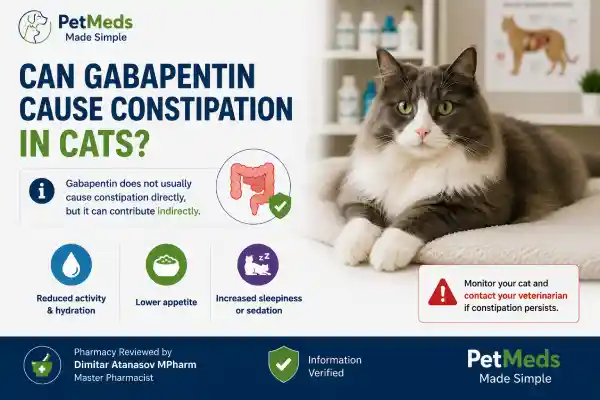
Can gabapentin cause constipation in cats? Gabapentin is not considered a common direct cause of constipation, but it may contribute to constipation in some cats indirectly. Because gabapentin often causes temporary sleepiness and reduced activity, some cats drink less water, eat less food, and move around less than usual. These changes can slow normal bowel movements and make constipation more likely, particularly in older cats or those with pre-existing digestive problems. If your cat has not passed stool for more than 48 hours, appears uncomfortable, strains in the litter box, or stops eating, a veterinary examination is recommended.
Can Gabapentin Cause Constipation in Cats?
You brought your cat home after a veterinary visit, gave the prescribed dose of gabapentin, and everything seemed to go as expected. Your cat became sleepy, rested quietly, and appeared much calmer than usual.
A day or two later, however, you notice something different.
The litter box hasn’t needed cleaning as often. Your cat visits the box but produces little or no stool, or perhaps hasn’t had a bowel movement at all since starting the medication.
It’s natural to wonder whether gabapentin is responsible.
The reassuring news is that gabapentin itself is not widely recognized as a medication that directly causes constipation in cats. However, the effects it has on appetite, activity level, hydration, and overall behavior can create conditions that make constipation more likely in some individuals.
Understanding this difference is important because the treatment may be very different depending on whether constipation is related to the medication, another illness, or an underlying gastrointestinal problem.
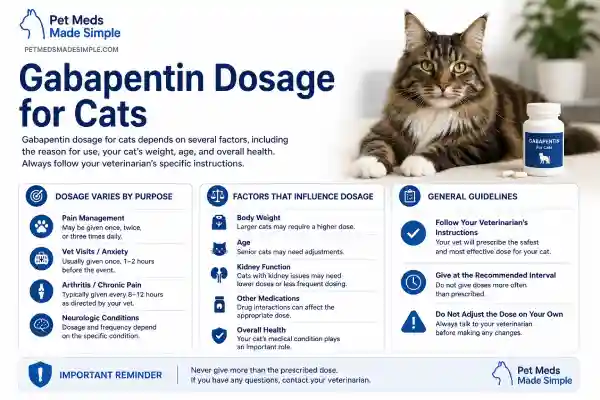
If you’re new to this medication, our guide Gabapentin for Cats: Uses, Dosage, Side Effects & Safety explains how gabapentin works, when veterinarians prescribe it, and the side effects owners should monitor.
Can Gabapentin Cause Constipation in Cats?
When Owners Commonly Ask This Question
Many cat owners begin searching “Can Gabapentin Cause Constipation in Cats?” after noticing situations such as:
- “My cat hasn’t pooped since taking gabapentin.”
- “My cat is sleeping all day and isn’t using the litter box.”
- “Is constipation a side effect of gabapentin?”
- “Should I stop giving gabapentin because my cat is constipated?”
- “Can gabapentin slow down digestion?”
- “Is this medication safe if my cat already has constipation?”
These are very reasonable concerns because constipation is a relatively common problem in cats, especially seniors. When it develops shortly after starting a new medication, it’s understandable to suspect the two are connected.
Is Constipation a Common Side Effect of Gabapentin?
One of the most important points to understand is that constipation is not considered one of gabapentin’s most common side effects in cats.
Veterinarians are much more likely to see:
- Sleepiness
- Mild incoordination
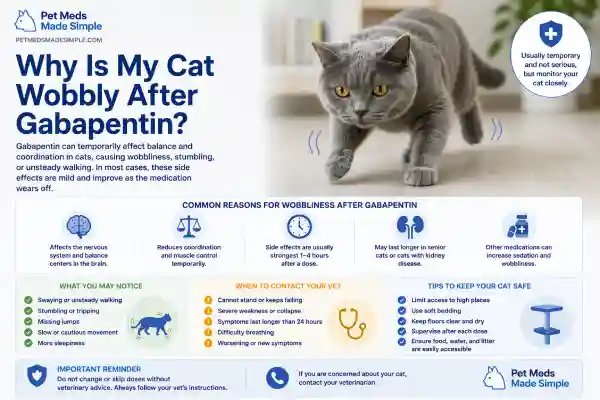
- Temporary wobbliness
- Reduced activity
- Less interest in food for several hours
Constipation can occur, but when it does, it is often the result of several contributing factors rather than the medication acting directly on the intestines.
This distinction helps explain why many cats take gabapentin repeatedly—for veterinary visits, pain management, or chronic conditions—without ever developing constipation.
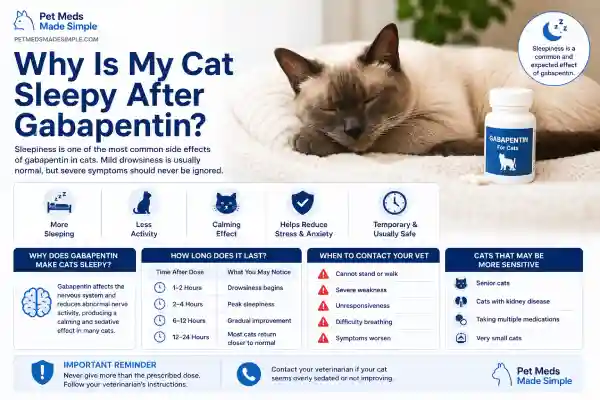
If your cat has recently become sleepy after treatment, our article Why Is My Cat Sleepy After Gabapentin? explains why this is one of the medication’s most expected effects.
Why Can Gabapentin Contribute to Constipation?
Although gabapentin does not usually slow the intestines in the same way that opioid pain medications can, it may create circumstances that make bowel movements less frequent.
Think of constipation as the result of several small changes happening at the same time rather than one single cause.
For example, after receiving gabapentin, a cat may:
- Sleep for much of the day.
- Walk around less.
- Drink less water.
- Eat smaller meals.
- Spend less time exploring the house.
Each of these changes can slightly reduce normal intestinal movement. Individually they may not cause constipation, but together they can increase the likelihood that stool becomes firmer and more difficult to pass.
This is why veterinarians often look beyond the medication itself before deciding that gabapentin is responsible.
Veterinary Perspective
One of the most common misconceptions is that if constipation appears after starting a medication, the medication must be the direct cause.
In reality, veterinarians usually take a broader view.
For example, a cat receiving gabapentin may also have:
- Arthritis that already limits movement.
- Chronic kidney disease causing dehydration.
- Dental pain leading to reduced food intake.
- Stress from a recent veterinary visit.
- An underlying gastrointestinal condition that had not yet been recognized.
Rather than blaming the medication immediately, veterinarians evaluate the entire clinical picture before deciding whether gabapentin truly contributed to the problem.
Which Cats Are More Likely to Develop Constipation?
Not every cat responds to gabapentin in the same way.
Certain cats are naturally more prone to constipation regardless of which medications they receive.
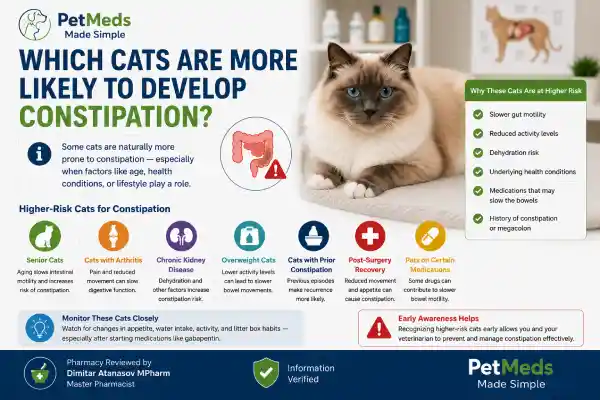
Higher-risk groups include:
| Cat | Why Risk Is Higher |
|---|---|
| Senior cats | Reduced intestinal motility and activity |
| Cats with arthritis | Less movement can slow bowel function |
| Cats with chronic kidney disease | Dehydration contributes to firmer stool |
| Overweight cats | Lower activity levels |
| Cats with previous constipation | More likely to experience recurrence |
| Cats recovering from surgery | Reduced movement and appetite |
For these cats, even mild sedation from gabapentin may be enough to contribute to slower bowel movements.
Could Reduced Appetite Also Play a Role?
Absolutely.
Many owners naturally focus on the litter box, but appetite is just as important.
If your cat eats significantly less than usual after taking gabapentin, there is simply less food moving through the digestive tract. Combined with reduced water intake and lower activity, bowel movements may become less frequent for a short period.
This is one reason we encourage owners to look at the whole picture rather than focusing on one symptom alone.
If your cat is also refusing food, our article Why Is My Cat Not Eating After Gabapentin? explains when appetite loss may be temporary and when it should be evaluated by a veterinarian.
How Can You Tell if Gabapentin Is Really the Cause?
This is often the most difficult question—and one that even veterinarians cannot answer based on timing alone.
Instead, they usually consider several factors:
| Question | Why It Matters |
|---|---|
| Did constipation begin before gabapentin? | Suggests another underlying cause |
| Is your cat eating normally? | Reduced food intake affects stool production |
| Is your cat drinking enough water? | Dehydration commonly contributes to constipation |
| Has your cat become much less active? | Reduced movement slows intestinal function |
| Has your cat experienced constipation before? | Previous history increases future risk |
Looking at the complete pattern often provides more useful information than considering the medication by itself.
How Long Can Constipation Last After Starting Gabapentin?
One of the first questions owners ask is whether constipation will resolve on its own once their cat adjusts to gabapentin.
In many cases, mild constipation is temporary if it is related to decreased activity, lower water intake, or a brief reduction in appetite. As these effects improve over the next day or two, bowel movements often return to normal without changing the medication.
However, constipation should not be ignored simply because your cat recently started gabapentin.
If your cat:
- Has not passed stool for more than 48 hours,
- Repeatedly strains in the litter box,
- Cries while attempting to defecate,
- Stops eating,
- Vomits, or
- Appears painful,
your veterinarian should evaluate the problem promptly.
The goal is to prevent mild constipation from progressing into obstipation, a much more serious condition in which stool becomes extremely difficult or impossible to pass.
Could Dehydration Be the Real Problem?
One factor that is frequently overlooked is hydration.
Gabapentin itself does not usually dehydrate cats. However, some sleepy cats spend much less time walking around the house, visiting their water bowl, or eating moist food.
Even a mild reduction in water intake can make stool:
- Firmer
- Drier
- Harder to pass
This is especially important in:
- Senior cats
- Cats with kidney disease
- Cats that primarily eat dry food
- Cats recovering from surgery
When veterinarians evaluate constipation, hydration status is often just as important as the medication list.
Could Stress Be Contributing to Constipation?
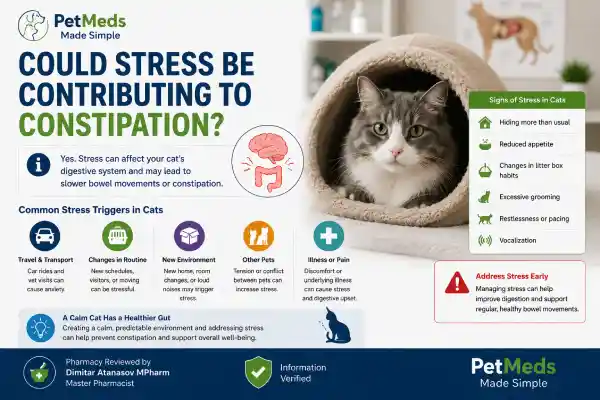
Surprisingly, yes.
Many cats receive gabapentin before veterinary visits because it helps reduce fear and anxiety during transportation and examinations.
The medication may not be the only recent change.
Your cat may also have experienced:
- Travel in a carrier
- A stressful clinic visit
- New smells
- Handling by unfamiliar people
- Changes in daily routine
Stress alone can temporarily alter normal bowel habits in some cats.
This is another reason veterinarians avoid assuming that gabapentin is the sole explanation whenever constipation develops.
Could Another Medical Condition Be Responsible?
Absolutely.
Constipation is one of the most common digestive problems seen in feline medicine, and it has many possible causes besides medication.
Your veterinarian may also consider:
- Arthritis that makes squatting painful
- Chronic kidney disease
- Dehydration
- Obesity
- Megacolon
- Pelvic injuries
- Neurological disease
- Intestinal obstruction
- Hairballs
- Dietary changes
This broader approach helps ensure that an important underlying disease is not overlooked.
Should You Stop Giving Gabapentin?
In most cases, no.
It is understandable to think that stopping the medication will solve the problem. However, gabapentin is often prescribed because your cat is experiencing pain, anxiety, or another condition that still requires treatment.
Instead of stopping the medication on your own:
- Monitor your cat closely.
- Record eating, drinking, and litter box habits.
- Contact your veterinarian if constipation develops or worsens.
- Follow any treatment recommendations provided by your veterinary team.
Your veterinarian may determine that the constipation is unrelated to gabapentin or recommend simple supportive care while continuing the medication safely.
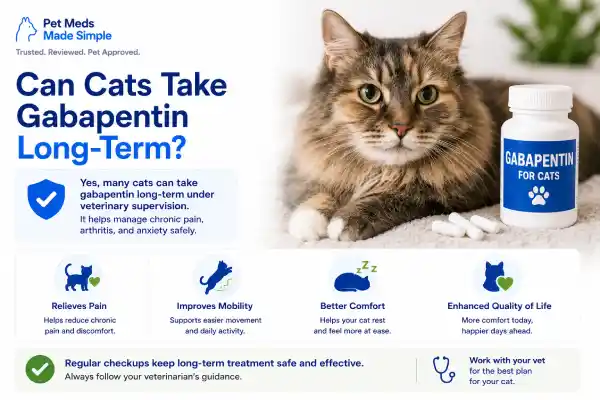
Cats receiving gabapentin for chronic conditions may also benefit from reading Can Cats Take Gabapentin Long-Term?, which explains how veterinarians monitor long-term treatment.
How Do Veterinarians Determine the Cause?
Rather than assuming the medication is responsible, veterinarians usually build a timeline.
Typical questions include:
- When was the first dose of gabapentin given?
- When was the last normal bowel movement?
- Has your cat’s appetite changed?
- Is your cat drinking normally?
- Has there been any vomiting?
- Does your cat strain without producing stool?
- Has constipation happened before?
- Are any other medications being given?
This systematic approach often reveals whether gabapentin is likely to have contributed or whether another explanation is more probable.
How Is Constipation Treated?
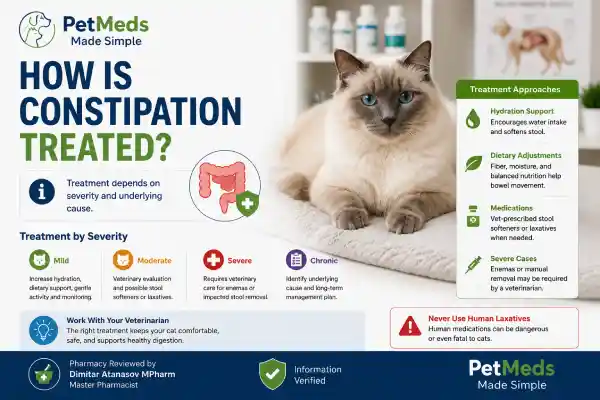
Treatment depends on the severity and underlying cause.
For mild cases, your veterinarian may recommend measures that improve hydration and help restore normal bowel function.
More severe cases may require additional treatment, especially if stool has become impacted or the cat is unable to defecate.
Possible veterinary treatments include:
| Situation | Possible Veterinary Approach |
|---|---|
| Mild constipation | Hydration support, dietary adjustments, monitoring |
| Moderate constipation | Veterinary-prescribed stool softeners or laxatives when appropriate |
| Severe constipation | Enemas or manual removal of impacted stool under veterinary supervision |
| Recurrent constipation | Investigation for chronic diseases such as megacolon or kidney disease |
Owners should never administer human laxatives, enemas, or home remedies unless specifically instructed by a veterinarian, as some products can be dangerous or even life-threatening for cats.
Can Constipation Be Prevented?
While not every case can be prevented, several simple measures may reduce the risk.
These include:
- Encouraging adequate water intake.
- Feeding a balanced diet appropriate for your cat’s health.
- Monitoring appetite after each gabapentin dose.
- Keeping litter boxes clean and easily accessible.
- Encouraging gentle movement once your cat is fully awake.
- Attending regular veterinary check-ups, particularly for senior cats.
Cats that already have a history of constipation should be monitored even more closely whenever any new medication is started.
Related Symptoms Owners Often Notice
Owners searching Can Gabapentin Cause Constipation in Cats? also commonly notice:
- Sleepiness after medication
- Reduced appetite
- Wobbliness while walking
- Hiding more than usual
- Less interest in playing
- Reduced water intake
- Vomiting
- Slower recovery after veterinary visits
Our related PMMS articles may also be helpful:
- Gabapentin for Cats: Uses, Dosage, Side Effects & Safety
- Why Is My Cat Sleepy After Gabapentin?
- Why Is My Cat Wobbly After Gabapentin?
- Why Is My Cat Hiding After Gabapentin?
- Why Is My Cat Not Eating After Gabapentin?
Veterinary Perspective
One of the most valuable lessons in feline medicine is that timing does not always prove causation.
If constipation develops shortly after starting gabapentin, it is reasonable to wonder whether the medication played a role. However, veterinarians rarely base that conclusion on timing alone.
Instead, they consider your cat’s age, hydration, appetite, activity level, previous bowel habits, concurrent diseases, and any additional medications before deciding whether gabapentin is truly contributing to the problem.
This careful approach helps avoid stopping an effective medication unnecessarily while ensuring that more serious causes of constipation are not missed.
When Does Constipation Become an Emergency?
Most cats that develop mild constipation after starting gabapentin do not require emergency treatment. In many cases, increasing hydration, returning to a normal routine, and following your veterinarian’s recommendations are enough for bowel movements to resume.
However, there comes a point where constipation is no longer a simple side effect or temporary inconvenience.
Seek veterinary care as soon as possible if your cat:
- Has not passed stool for more than 48 hours.
- Repeatedly enters the litter box and strains without producing stool.
- Cries or vocalizes while trying to defecate.
- Stops eating completely.
- Begins vomiting.
- Develops abdominal swelling or discomfort.
- Becomes extremely lethargic or difficult to wake.
- Has blood around the anus or in the stool.
These signs may indicate severe constipation, obstipation, or another medical condition requiring prompt treatment.
Could Constipation Lead to More Serious Problems?
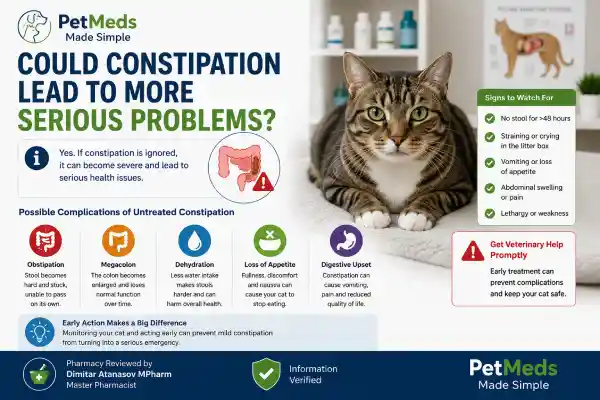
Yes particularly if it is ignored.
When stool remains in the colon for an extended period, more water is absorbed from it, making it increasingly dry and difficult to pass. As this cycle continues, the colon stretches and normal muscle contractions become less effective.
If left untreated, chronic constipation may contribute to conditions such as:
| Possible Complication | Why It Matters |
|---|---|
| Obstipation | Stool cannot be passed without veterinary treatment. |
| Megacolon | The colon becomes enlarged and loses normal function. |
| Dehydration | Reduced water intake may worsen constipation. |
| Loss of appetite | Fullness and discomfort reduce food intake. |
| Vomiting | Severe constipation may affect the digestive tract. |
Fortunately, these complications are uncommon when constipation is recognized and treated early.
What Is the Overall Prognosis?
The outlook is generally very good.
If constipation is related to temporary changes in appetite, hydration, or activity after receiving gabapentin, most cats recover without long-term digestive problems.
The prognosis is especially favorable when:
- Constipation is identified early.
- Hydration is maintained.
- The underlying cause is addressed.
- Veterinary advice is followed promptly.
Cats with chronic diseases such as kidney disease, arthritis, or megacolon may require ongoing management, but even these patients often respond well to individualized treatment plans.
Veterinarian Takeaway
Can Gabapentin Cause Constipation in Cats? The answer is yes but usually indirectly rather than directly.
Gabapentin itself is not considered one of the most common causes of constipation in cats. Instead, its calming and sedative effects may reduce activity, appetite, and water intake, creating conditions that make constipation more likely in susceptible cats.
Because constipation has many possible causes, veterinarians evaluate the entire clinical picture rather than assuming the medication is solely responsible.
If your cat is otherwise bright, comfortable, and passes stool after a short delay, careful monitoring may be all that is needed. However, persistent constipation, repeated straining, vomiting, loss of appetite, or severe lethargy should always prompt a veterinary examination.
Bottom Line
If you’re wondering Can Gabapentin Cause Constipation in Cats?, the good news is that this is not considered one of the medication’s most common side effects.
In many cases, constipation develops because gabapentin temporarily changes your cat’s daily routine. Sleeping more, moving less, eating smaller meals, and drinking less water can all contribute to slower bowel movements, especially in older cats or those with existing health conditions.
Rather than stopping gabapentin without guidance, monitor your cat’s appetite, water intake, and litter box habits, and contact your veterinarian if constipation persists or becomes severe. Early intervention usually leads to an excellent outcome while allowing your cat to continue receiving the benefits of treatment when appropriate.
Frequently Asked Questions – Can Gabapentin Cause Constipation in Cats
Can gabapentin directly cause constipation in cats?
Not usually. Gabapentin is not considered a common direct cause of constipation, although its sedative effects may indirectly contribute in some cats.
Is constipation a common side effect of gabapentin?
No. Sleepiness, mild wobbliness, and reduced activity are generally reported more frequently than constipation.
How long can a cat safely go without passing stool?
Many healthy cats pass stool once every 24 to 36 hours. If more than 48 hours pass without a bowel movement—especially if your cat is straining or uncomfortable—a veterinary examination is recommended.
Should I stop giving gabapentin if my cat becomes constipated?
No. Do not stop gabapentin without speaking to your veterinarian. The constipation may have another cause, and abruptly changing treatment may interfere with the reason the medication was prescribed.
Can dehydration make constipation worse?
Yes. Reduced water intake allows stool to become drier and harder to pass, increasing the likelihood of constipation.
Are senior cats at greater risk?
Yes. Older cats are generally more prone to constipation because of reduced intestinal motility, arthritis, chronic kidney disease, and lower activity levels.
Could my cat’s reduced appetite contribute to constipation?
Yes. Eating less means less material moves through the digestive tract, which may reduce the frequency of bowel movements.
Can stress after a veterinary visit affect bowel movements?
Yes. Travel, handling, unfamiliar environments, and temporary changes in routine may influence normal bowel habits in some cats.
Sources
- Plumb’s Veterinary Drug Handbook (10th Edition)
- Merck Veterinary Manual – Constipation and Obstipation in Cats
- BSAVA Small Animal Formulary (11th Edition)
- Small Animal Clinical Pharmacology
- Veterinary Pharmacology and Therapeutics (10th Edition)
- Journal of Feline Medicine and Surgery (JFMS)
- American Association of Feline Practitioners (AAFP) Clinical Resources
- Veterinary Information Network (VIN)
- Frontiers in Veterinary Science
- Journal of Veterinary Internal Medicine (JVIM)
Medical Review Statement
This article was pharmacy-reviewed by Dimitar Georgiev Atanasov, MPharm (Bulgarian Pharmaceutical Union, UIN: 0210000586), scientifically reviewed by Gergana Krasimirova Atanasova, MPharm (Bulgarian Pharmaceutical Union, UIN: 0210000587), and independently veterinary-reviewed by Dr. Valcho Georgiev Valchev, DVM (Bulgarian Veterinary Union, Registration No. 28000115) to ensure medical accuracy, medication safety, and consistency with current veterinary guidelines and evidence-based veterinary medicine.
Important Medical Disclaimer
The information provided on PetMedsMadeSimple.com is intended for educational purposes only and should not replace professional veterinary advice, diagnosis, or treatment.
Never stop, start, or change your cat’s medication without consulting your veterinarian. If your cat develops persistent constipation, repeated straining, vomiting, severe lethargy, abdominal pain, or is unable to urinate, seek immediate veterinary care.
Image Disclosure
Some images used in this article may be AI-generated or AI-assisted for educational purposes. Every article is independently researched, pharmacy-reviewed by Dimitar Georgiev Atanasov, MPharm, scientifically reviewed by Gergana Krasimirova Atanasova, MPharm, and veterinary-reviewed by Dr. Valcho Georgiev Valchev, DVM. AI-generated illustrations are intended to improve understanding of veterinary conditions and medications and do not depict actual clinical patients.