Quick Answer
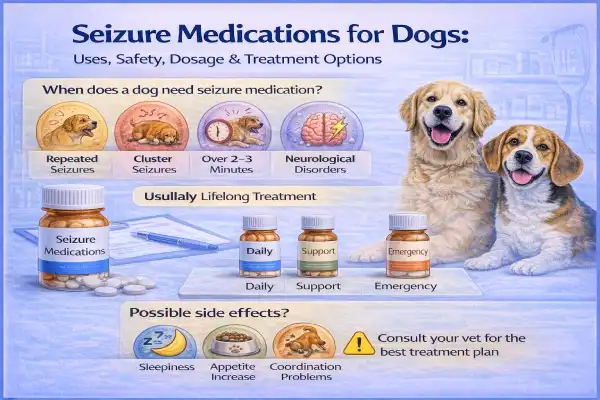
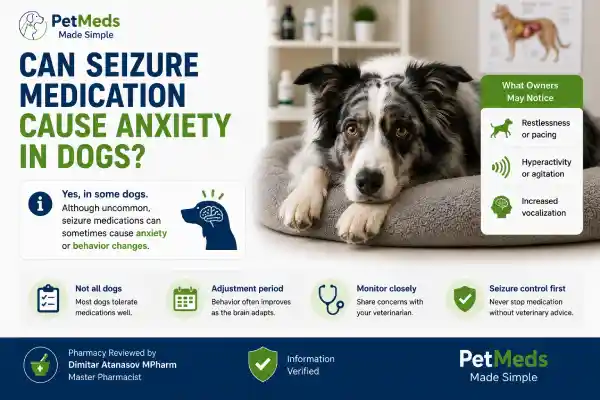
Can Seizure Medication Cause Anxiety in Dogs? Yes, seizure medication can sometimes appear to cause anxiety in dogs, although true medication-induced anxiety is relatively uncommon. Certain anticonvulsants may trigger restlessness, pacing, hyperactivity, or unusual behavior in a small number of dogs, while others may actually reduce anxiety by improving seizure control. In many cases, what owners interpret as anxiety is actually related to the seizure itself, the recovery period afterward (post-ictal phase), medication adjustments, or an underlying neurological condition rather than the medication alone.
If your dog becomes unusually anxious after starting or changing seizure medication, your veterinarian should evaluate the situation before any medication changes are made.
When Owners Commonly Ask This Question
Many owners begin searching “Can seizure medication cause anxiety?” after noticing changes such as:
- My dog suddenly paces around the house.
- My dog seems restless after starting seizure medication.
- My dog acts frightened for no obvious reason.
- My dog cannot settle down after taking Keppra.
- My dog became nervous after increasing phenobarbital.
- My dog seems more anxious between doses.
- My dog is acting differently after epilepsy treatment.
These behavioral changes are understandably concerning, but they do not always mean the medication itself is responsible.
Table of Contents
Can Seizure Medication Cause Anxiety?
Yes—but not every seizure medication affects behavior in the same way.
Most anticonvulsants used in veterinary medicine are designed to reduce abnormal electrical activity in the brain. Because these medications influence the central nervous system, some dogs may temporarily experience behavioral changes while their bodies adjust.
Possible changes include:
- Restlessness
- Increased pacing
- Nervousness
- Hypervigilance
- Vocalization
- Difficulty settling
- Temporary confusion
- Mild agitation
Fortunately, true anxiety caused directly by seizure medication appears to be uncommon.
More often, veterinarians investigate several other explanations before concluding that the medication itself is responsible.
Why Anxiety May Not Actually Be Caused by the Medication
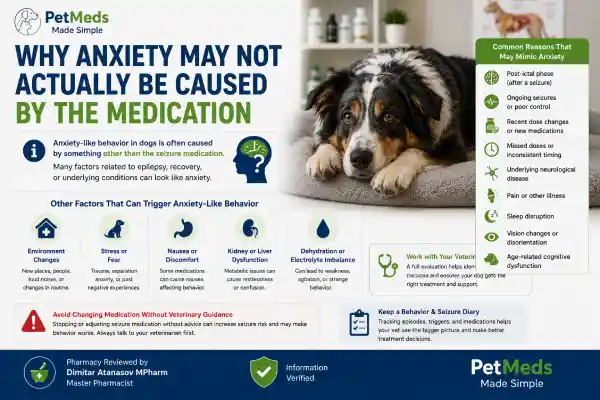
This is one of the most important concepts for dog owners to understand.
Several situations can closely resemble medication-induced anxiety.
These include:
- Recovery after a seizure
- Brain inflammation
- Underlying epilepsy
- Medication dose adjustments
- Missed doses
- Sleep disruption
- Hospital visits
- Pain
- Vision changes
- Age-related cognitive dysfunction
For this reason, veterinarians evaluate the entire clinical picture rather than assuming every behavioral change is a drug side effect.
Could the Seizure Itself Cause Anxiety?
Absolutely.
Many dogs become anxious after a seizure even when the medication is working exactly as intended.
This period is known as the post-ictal phase.
During recovery, dogs may experience:
- Confusion
- Disorientation
- Pacing
- Clinginess
- Temporary blindness
- Restlessness
- Vocalization
- Excessive thirst
- Difficulty recognizing familiar surroundings
Owners often notice these behaviors shortly after the seizure and mistakenly blame the medication that was recently administered.
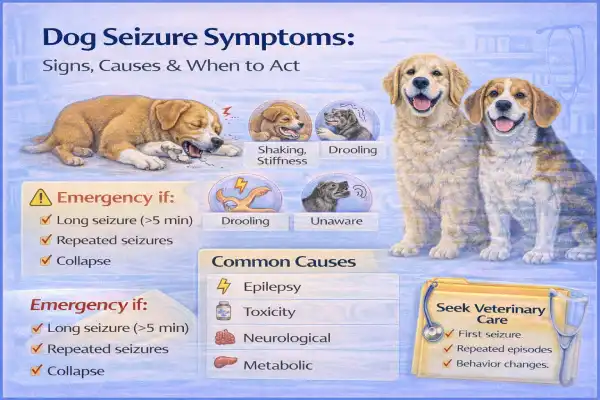
If you’re still learning to recognize seizures, our guide Dog Seizure Symptoms: Signs, Causes & When to Act explains what owners commonly observe before, during, and after an episode.
Which Seizure Medications Are Most Likely to Affect Behavior?
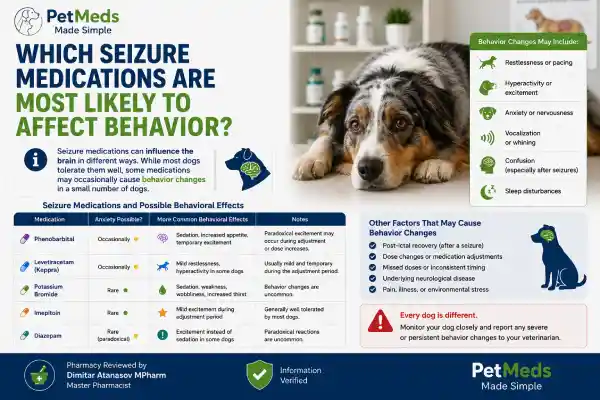
Different anticonvulsants have different side-effect profiles.
| Medication | Anxiety Possible? | More Common Behavioral Effects |
|---|---|---|
| Phenobarbital | Occasionally | Sedation, increased appetite, temporary excitement |
| Levetiracetam (Keppra) | Occasionally | Mild restlessness, hyperactivity in some dogs |
| Potassium Bromide | Rare | Sedation, weakness, wobbliness |
| Imepitoin | Rare | Mild excitement during adjustment period |
| Diazepam | Rare (paradoxical) | Excitement instead of sedation in a small number of dogs |
Most dogs tolerate these medications very well, especially after the first few weeks of treatment.
If you’re comparing different treatment options, our guide Best Seizure Medication for Dogs: Complete Comparison Guide explains how veterinarians choose between the most commonly prescribed anticonvulsants.
Can Phenobarbital Cause Anxiety?
Usually not.
Phenobarbital is far more likely to cause:
- Sleepiness
- Increased hunger
- Increased thirst
- Increased urination
- Temporary wobbliness
However, a small number of dogs may experience paradoxical excitement during the first days of treatment or after a dosage increase.
Signs may include:
- Pacing
- Inability to relax
- Increased activity
- Vocalization
- Mild agitation
These effects often improve as the dog’s brain adapts to the medication.
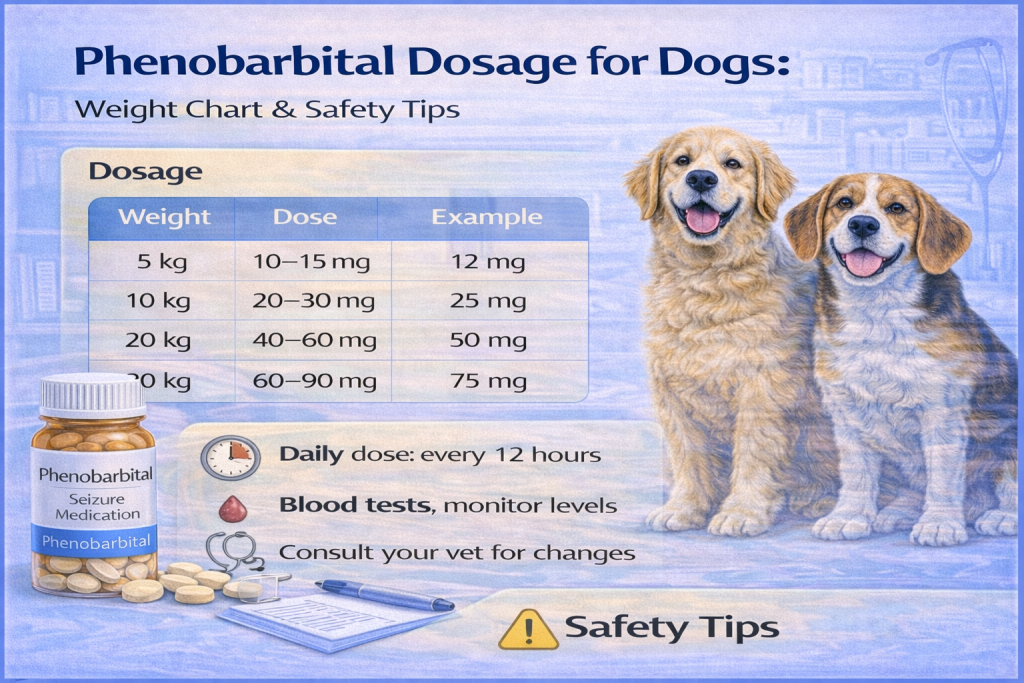
For a complete overview, see our guide Phenobarbital for Dogs: Uses, Dosage, Side Effects & Safety.
Can Keppra (Levetiracetam) Cause Anxiety?
Keppra (levetiracetam) generally has fewer behavioral side effects than many older anticonvulsants.
Even so, some owners report that their dogs become:
- Restless
- More active
- Easily startled
- Slightly hyperactive
- Less interested in sleeping
Most of these changes are mild and temporary.
Veterinarians often recommend monitoring the behavior for several days before concluding that levetiracetam is responsible.
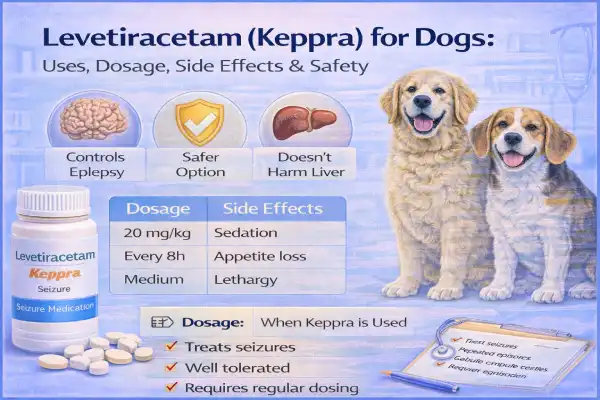
Our articles Levetiracetam (Keppra) for Dogs: Uses, Dosage, Side Effects & Safety and Keppra Side Effects in Dogs: What to Watch For explain these reactions in greater detail.
Could Anxiety Be Related to a Dose Change?
Yes.
Behavioral changes frequently occur after:
- Starting a new medication
- Increasing the dose
- Decreasing the dose
- Adding a second anticonvulsant
- Switching medications
The brain sometimes needs time to adjust to altered neurotransmitter activity.
During this transition period, temporary behavioral changes may occur without indicating that the medication is unsafe.
Owners should never increase, decrease, or stop seizure medication without veterinary guidance because sudden changes can increase seizure risk.
If your veterinarian is considering changing medications, our guide Phenobarbital vs Levetiracetam (Keppra) for Dogs: Which Seizure Medication Is Better? explains why treatment plans are individualized.
Could Anxiety Mean the Medication Is Not Working?
Not necessarily.
A dog that appears anxious may actually be experiencing:
- Poor seizure control
- Small focal seizures
- Cluster seizures
- Post-ictal confusion
- Medication adjustment
- Sleep disruption
- Brain disease progression
Behavior alone cannot determine whether a medication is effective.
Veterinarians evaluate:
- Seizure frequency
- Seizure severity
- Recovery time
- Medication blood levels (when appropriate)
- Overall neurological examination
before deciding whether treatment needs to change.
Can Potassium Bromide Cause Anxiety?
In most dogs, potassium bromide is actually more likely to cause sedation than anxiety.
Veterinarians commonly prescribe potassium bromide as either a primary anti-seizure medication or in combination with phenobarbital for dogs whose seizures remain difficult to control.
The most frequently reported side effects include:
- Sleepiness
- Weakness
- Wobbliness (ataxia)
- Increased appetite
- Increased thirst
True anxiety is uncommon.
However, if bromide blood levels become excessively high or the dosage is increased too quickly, some dogs may appear restless or behave abnormally because they are feeling disoriented rather than anxious.
If your dog is taking bromide, our guide Potassium Bromide for Dogs: Uses, Dosage, Side Effects & Safety (Vet-Backed Guide) explains what owners should monitor throughout treatment.
Can Diazepam Cause the Opposite Effect?
Yes.
Most people associate diazepam with relaxation because it belongs to the benzodiazepine family. However, like many medications acting on the brain, it can occasionally produce the opposite reaction.
This is known as a paradoxical reaction.
Instead of becoming calm, a dog may become:
- Restless
- Hyperactive
- More vocal
- Agitated
- Difficult to settle
Fortunately, paradoxical reactions are considered uncommon, but they are well recognized in both veterinary and human medicine.
If these changes occur shortly after diazepam administration, your veterinarian may recommend adjusting the treatment plan.
For more information, see Diazepam for Dogs: Uses, Dosage, Side Effects & Safety (Vet-Backed Guide).
Could Combination Therapy Increase Anxiety?
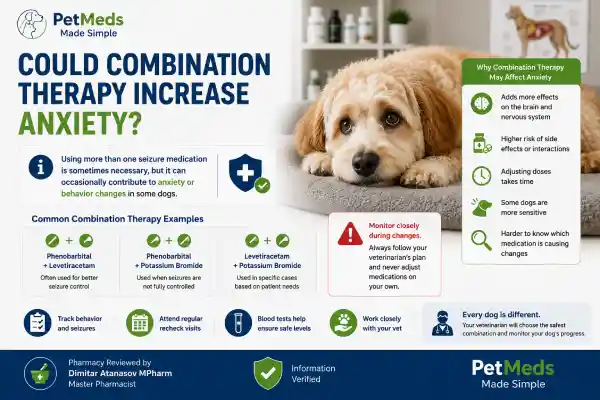
Possibly—but usually indirectly.
Dogs with epilepsy sometimes require more than one anticonvulsant to achieve adequate seizure control.
Common combinations include:
- Phenobarbital + Levetiracetam (Keppra)
- Phenobarbital + Potassium Bromide
- Levetiracetam + Potassium Bromide
Most dogs tolerate combination therapy well.
However, introducing multiple medications at the same time can make it more difficult to identify the true cause of a new behavioral change.
For example, a dog may become restless because:
- A medication was recently added.
- The dosage was increased.
- Another medication is interacting.
- The dog experienced a breakthrough seizure.
- Recovery from epilepsy is still ongoing.
Rather than blaming one specific medication immediately, veterinarians usually review the complete treatment history before making any changes.
Can Anxiety Improve After the Adjustment Period?
Yes.
One of the most reassuring aspects of epilepsy treatment is that many behavioral side effects improve during the first few weeks.
As the brain adapts to the medication, owners often notice gradual improvement in:
- Restlessness
- Mild agitation
- Sleep patterns
- Daily activity
- Overall comfort
This adjustment period varies between individual dogs and between medications.
For this reason, veterinarians often recommend careful observation before deciding that a medication is unsuitable—provided seizures remain controlled and the behavioral changes are not severe.
Could Anxiety Be a Sign of Poor Seizure Control?
Absolutely.
This is actually one of the most important questions to consider.
If a dog continues to have breakthrough seizures despite medication, episodes of anxiety may reflect ongoing neurological disease rather than a medication side effect.
Dogs with poorly controlled epilepsy may experience:
- Frequent post-ictal confusion
- Restlessness between seizures
- Increased clinginess
- Pacing
- Sleep disturbances
- Behavioral changes associated with recurrent seizures
Our article Why Is My Dog Still Having Seizures on Medication? explains why seizures may continue even when dogs receive appropriate treatment and why follow-up evaluations are sometimes necessary.
When Should You Contact Your Veterinarian?
Mild restlessness during the first few days of treatment is often temporary.
However, your veterinarian should be contacted if your dog:
- Develops sudden or severe anxiety.
- Cannot settle for several hours.
- Becomes aggressive.
- Experiences repeated seizures.
- Appears disoriented for an unusually long time.
- Stops eating or drinking.
- Shows rapidly worsening neurological signs.
Behavioral changes are often manageable, but they should always be evaluated in the context of your dog’s overall epilepsy treatment.
How Do Veterinarians Investigate Anxiety?
When owners report anxiety after starting seizure medication, veterinarians rarely assume the medication is the sole cause.
Instead, they typically consider several possibilities.
| Question | Why It Helps |
|---|---|
| When did the behavior begin? | Determines whether it coincides with medication changes. |
| Has your dog recently had a seizure? | Post-ictal behavior commonly resembles anxiety. |
| Has the dosage changed recently? | Dose adjustments may temporarily alter behavior. |
| Are additional medications being given? | Drug interactions may contribute. |
| Has seizure frequency changed? | Ongoing seizures may explain behavioral changes. |
| Are there signs of another illness? | Pain or systemic disease may increase anxiety. |
Looking at the complete history usually provides far more useful information than focusing on a single symptom.
Can Anxiety Be Managed Without Changing Medication?

Often, yes.
If seizures are well controlled and the anxiety is mild, your veterinarian may recommend monitoring your dog’s behavior before making major treatment changes.
Depending on the individual case, recommendations may include:
- Maintaining a consistent daily routine.
- Providing a quiet resting area.
- Avoiding unnecessary stressful situations during the adjustment period.
- Keeping medication times consistent each day.
- Recording episodes of anxiety in a diary to identify patterns.
The goal is always to maintain good seizure control while minimizing side effects whenever possible.
Related Symptoms Owners Often Notice
Owners searching Can Seizure Medication Cause Anxiety? also frequently ask about:
- Can Seizure Medication Change Dog Personality?
- Why Is My Dog Weak After Seizure Medication?
- Dog Seizure Symptoms: Signs, Causes & When to Act (Vet-Backed Guide)
- Phenobarbital Side Effects in Dogs: What to Watch For (Vet-Backed Guide)
- Keppra Side Effects in Dogs: What to Watch For (Vet-Backed Guide)
- Phenobarbital for Dogs: Uses, Dosage, Side Effects & Safety (Vet-Backed Guide)
- Levetiracetam (Keppra) for Dogs: Uses, Dosage, Side Effects & Safety (Vet-Backed Guide)
- Potassium Bromide for Dogs: Uses, Dosage, Side Effects & Safety (Vet-Backed Guide)
These guides provide more detailed information about individual medications and help explain how behavioral changes fit into the broader management of canine epilepsy.
Can Dogs Continue Taking Seizure Medication if Anxiety Occurs?
In many cases, yes.
If the anxiety is mild, temporary, and your dog’s seizures are well controlled, your veterinarian may recommend continuing the medication while monitoring your dog’s progress.
This is because abruptly stopping anticonvulsant medication can be far more dangerous than managing a temporary behavioral side effect.
Many dogs gradually improve as:
- Their brain adapts to the medication.
- Drug concentrations stabilize.
- The body adjusts to the new treatment routine.
The decision to continue or change medication should always balance seizure control, quality of life, and the severity of side effects.
Can Anxiety Be Prevented?
Not every case can be prevented, but several measures may reduce the likelihood of behavioral changes when starting seizure medication.
Veterinarians often recommend:
- Introducing medication exactly as prescribed.
- Giving doses at consistent times each day.
- Avoiding missed or double doses.
- Scheduling recommended follow-up appointments.
- Monitoring behavior during the first few weeks.
- Reporting significant changes early rather than waiting.
Good communication between owners and veterinarians often allows small problems to be addressed before they become larger ones.
What Is the Long-Term Outlook?
The prognosis is encouraging for most dogs.
Many behavioral changes that occur shortly after starting seizure medication improve as treatment continues.
The long-term outlook depends on several factors, including:
| Factor | Effect on Prognosis |
|---|---|
| Seizures are well controlled | Excellent outlook |
| Mild temporary anxiety | Usually improves |
| Severe medication reaction | May require treatment adjustment |
| Underlying brain disease | Depends on the specific diagnosis |
| Good owner compliance | Improves long-term seizure management |
Most dogs receiving seizure medication continue to enjoy an excellent quality of life and adapt well to long-term treatment.
Veterinarian Takeaway
Can Seizure Medication Cause Anxiety? Yes, but true medication-induced anxiety is relatively uncommon. While anticonvulsants such as phenobarbital, levetiracetam (Keppra), potassium bromide, imepitoin, and diazepam can occasionally contribute to behavioral changes, anxiety is often caused by other factors, including the post-ictal recovery period, ongoing seizure activity, medication adjustments, or underlying neurological disease.
Rather than assuming the medication is solely responsible, veterinarians evaluate your dog’s recent seizure history, medication schedule, physical examination, and overall neurological status before deciding whether treatment should be changed.
If your dog develops severe anxiety, aggression, repeated seizures, or other concerning neurological signs, prompt veterinary evaluation is recommended.
Bottom Line
If you’re asking Can Seizure Medication Cause Anxiety?, the answer is yes but it is not one of the most common side effects of epilepsy treatment.
Many dogs that appear anxious after starting seizure medication are actually recovering from recent seizures, adjusting to new drug levels, or responding to another medical condition rather than experiencing a direct medication reaction.
Careful observation, regular follow-up appointments, and close communication with your veterinarian usually allow these situations to be managed safely while maintaining good seizure control.
With appropriate monitoring, most dogs continue to live active, comfortable, and rewarding lives while receiving long-term epilepsy treatment.
Frequently Asked Questions – Can Seizure Medication Cause Anxiety in Dogs
Can seizure medication make dogs anxious?
Yes. Although uncommon, some dogs may become restless, agitated, or unusually nervous after starting or adjusting seizure medication.
Which seizure medication is most likely to affect behavior?
Behavioral changes have been reported with several anticonvulsants, but phenobarbital and levetiracetam (Keppra) are among the medications owners most commonly ask about.
Can Keppra cause anxiety in dogs?
Occasionally. Some dogs experience temporary restlessness or increased activity after starting levetiracetam, although most tolerate it very well.
Can phenobarbital make dogs nervous?
Most dogs become sleepy rather than anxious, but a small number may develop temporary excitement or agitation during the adjustment period.
Should I stop seizure medication if my dog becomes anxious?
No. Never stop anticonvulsant medication without veterinary guidance, as abrupt withdrawal can increase the risk of seizures.
Can seizures themselves cause anxiety?
Yes. Many dogs experience pacing, confusion, clinginess, and restlessness during the post-ictal recovery phase after a seizure.
How long does medication-related anxiety usually last?
If it is related to treatment adjustment, mild anxiety often improves over several days to a few weeks as the dog adapts.
When should I call my veterinarian?
Contact your veterinarian if anxiety becomes severe, persists, is accompanied by repeated seizures, aggression, collapse, or other neurological changes.
Can blood tests help determine the cause?
For certain medications, such as phenobarbital and potassium bromide, blood tests can help determine whether drug levels are within the therapeutic range and whether dosage adjustments may be needed.
Can dogs live normal lives while taking seizure medication?
Yes. With appropriate treatment and monitoring, most dogs with epilepsy enjoy an excellent long-term quality of life.
Sources
- Plumb’s Veterinary Drug Handbook (10th Edition)
- Merck Veterinary Manual – Seizure Disorders in Dogs
- BSAVA Small Animal Formulary (11th Edition)
- Veterinary Pharmacology and Therapeutics (10th Edition)
- Small Animal Clinical Pharmacology
- ACVIM Consensus Statement on Seizure Management in Dogs
- Journal of Veterinary Internal Medicine (JVIM)
- Veterinary Information Network (VIN)
- Frontiers in Veterinary Science
- Journal of the American Veterinary Medical Association (JAVMA)
Medical Review Statement
This article was pharmacy-reviewed by Dimitar Georgiev Atanasov, MPharm (Bulgarian Pharmaceutical Union, UIN: 0210000586), scientifically reviewed by Gergana Krasimirova Atanasova, MPharm (Bulgarian Pharmaceutical Union, UIN: 0210000587), and independently veterinary-reviewed by Dr. Valcho Georgiev Valchev, DVM (Bulgarian Veterinary Union, Registration No. 28000115) to ensure medical accuracy, medication safety, and consistency with current veterinary guidelines and evidence-based veterinary medicine.
Important Medical Disclaimer
The information provided on PetMedsMadeSimple.com is intended for educational purposes only and should not replace professional veterinary advice, diagnosis, or treatment.
Never start, stop, or adjust your dog’s seizure medication without consulting your veterinarian. If your dog develops severe anxiety, repeated seizures, collapse, aggression, difficulty breathing, or any other emergency signs, seek immediate veterinary care.
Image Disclosure – Can Seizure Medication Cause Anxiety in Dogs?
Some images used in this article may be AI-generated or AI-assisted for educational purposes. Every article is independently researched, pharmacy-reviewed by Dimitar Georgiev Atanasov, MPharm, scientifically reviewed by Gergana Krasimirova Atanasova, MPharm, and veterinary-reviewed by Dr. Valcho Georgiev Valchev, DVM. AI-generated illustrations are intended to improve understanding of veterinary conditions and medications and do not depict actual clinical patients.