
Quick Answer
Why is my dog pacing after seizure medication? Dogs may pace after seizure medication because they are recovering from a seizure, adjusting to a new anticonvulsant, experiencing anxiety-like behavior, feeling disoriented, or showing signs of poor seizure control. In some cases, pacing is not caused by the medication itself but by the post-ictal phase after a seizure. However, persistent pacing, circling, collapse, aggression, repeated seizures, severe weakness, or confusion that does not improve should be discussed with your veterinarian promptly.
Why Is My Dog Pacing After Seizure Medication?
Why is my dog pacing after seizure medication? This is one of the most stressful questions owners ask after starting epilepsy treatment.
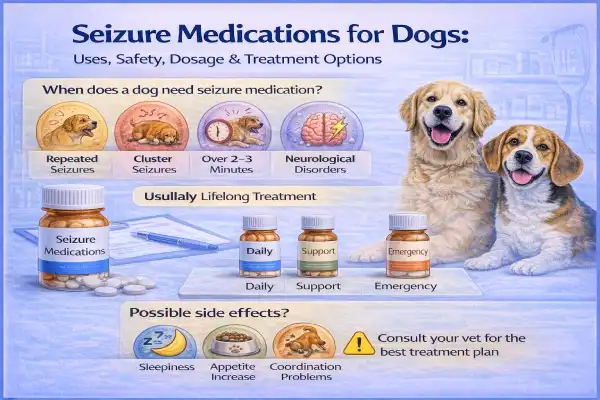
Your dog may have been prescribed phenobarbital, levetiracetam, potassium bromide, imepitoin, diazepam, or another seizure medication. You give the medication as directed, hoping things will finally become calmer. Instead, your dog starts walking around the room, pacing from wall to wall, circling, panting, whining, or acting unable to settle.
That can feel frightening, especially if your dog already had a seizure recently.
The important point is this: pacing after seizure medication does not always mean the medication is harming your dog. In many cases, the pacing is connected to the seizure itself, the recovery period afterward, or a temporary adjustment phase as the brain adapts to treatment.
If your dog is also showing broader behavior changes, our article Can Seizure Medication Cause Anxiety? explains how anxiety-like signs may appear during epilepsy treatment.
Why Is My Dog Pacing After Seizure Medication?
When Owners Commonly Ask This
Owners usually search “Why is my dog pacing after seizure medication?” when they notice signs such as:
- The dog walks around constantly after a dose.
- The dog cannot lie down or settle.
- The dog paces after a seizure and medication.
- The dog seems restless after phenobarbital.
- The dog acts hyper or unsettled after Keppra.
- The dog circles, whines, or follows the owner.
- The dog seems confused and keeps moving.
This question matters because pacing can be mild and temporary, but it can also be a sign that your dog needs veterinary reassessment.
Is Pacing a Common Side Effect of Seizure Medication?
Pacing can happen, but it is not always listed as a classic “main” side effect.
More common side effects of seizure medications in dogs include sleepiness, wobbliness, weakness, increased appetite, increased thirst, and changes in coordination. However, because these medications affect the nervous system, some dogs may appear restless, disoriented, agitated, or unable to relax.
This is why “Why is my dog pacing after seizure medication?” is not a simple yes-or-no question. The same behavior can have several different causes.
| Possible Cause | What Owners May Notice |
|---|---|
| Post-ictal recovery | Pacing, confusion, clinginess after a seizure |
| Medication adjustment | Restlessness during the first days or weeks |
| Anxiety-like reaction | Pacing, whining, hypervigilance |
| Poor seizure control | Continued episodes, confusion, breakthrough seizures |
| Drug level problem | Severe sedation, weakness, wobbliness, abnormal behavior |
| Another illness | Pain, nausea, cognitive dysfunction, discomfort |
If your dog also seems weak after treatment, Why Is My Dog Weak After Seizure Medication? may help you separate expected adjustment from more concerning signs.
Could the Seizure Itself Be Causing the Pacing?
Yes. This is often the most likely explanation.
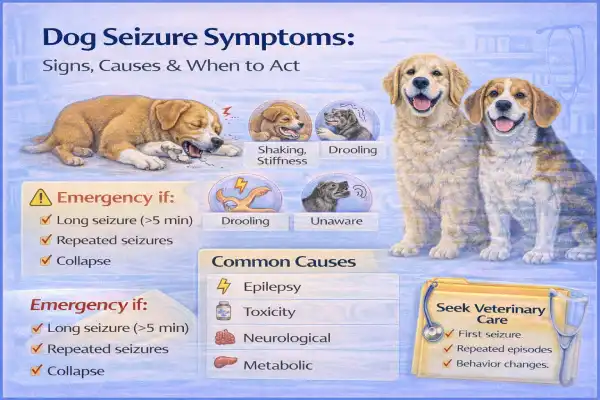
Many dogs pace during the post-ictal phase, which is the recovery period after a seizure. During this time, the brain is trying to return to normal after abnormal electrical activity. The dog may not fully understand what happened and may behave strangely for minutes to hours.
Post-ictal pacing can look like:
- Walking around the house without purpose
- Bumping into objects
- Acting clingy or frightened
- Panting
- Drinking more water
- Temporary blindness
- Restlessness
- Confusion
- Not recognizing familiar people for a short time
This is one reason owners may think the medication caused the pacing, when the real cause was the seizure that happened before the medication seemed to “take effect.”
If your dog recently had an episode and you are unsure whether the pacing is part of seizure recovery, our guide Dog Seizure Symptoms: Signs, Causes & When to Act explains what can happen before, during, and after seizures.
Could Seizure Medication Make Pacing Worse Temporarily?
Yes, in some dogs.
When seizure medication is started, increased, or combined with another drug, the brain may need time to adjust. During this adjustment period, some dogs seem more tired, while others seem unsettled or restless.
This can happen after:
- Starting phenobarbital
- Starting levetiracetam
- Adding potassium bromide
- Increasing the dose
- Switching from one seizure medication to another
- Giving rescue medication after a seizure
For many dogs, this improves as the body adapts. However, pacing that becomes severe, prolonged, or associated with other neurological signs should not be ignored.
Phenobarbital and Pacing After Seizure Medication

Phenobarbital is one of the most commonly used seizure medications in dogs. It is very effective for many patients, but it can cause noticeable changes during the early adjustment period.
Most dogs on phenobarbital are more likely to become sleepy or wobbly than anxious. Still, some dogs may appear restless, unsettled, or different during the first days of treatment.
Owners may notice:
- Pacing
- Increased hunger
- Increased thirst
- Increased urination
- Mild disorientation
- Temporary wobbliness
- Changes in sleep pattern
This does not automatically mean phenobarbital is the wrong medication. It does mean your veterinarian should know what you are seeing, especially if the pacing is intense or does not improve.
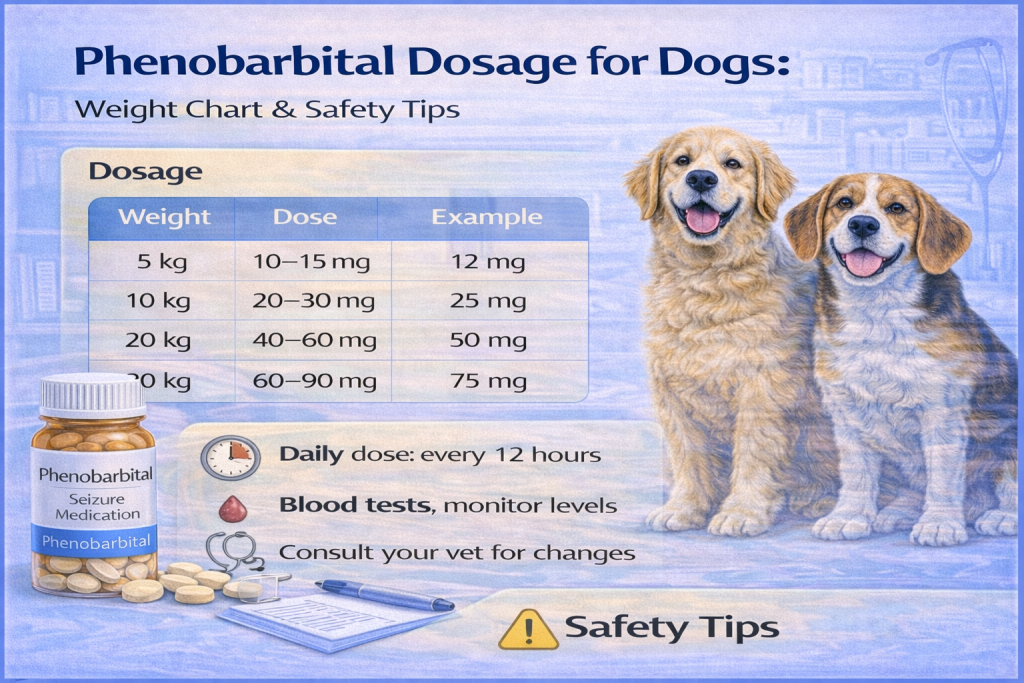
For more detail, see Phenobarbital for Dogs: Uses, Dosage, Side Effects & Safety and Phenobarbital Side Effects in Dogs: What to Watch For.
Keppra and Pacing After Seizure Medication
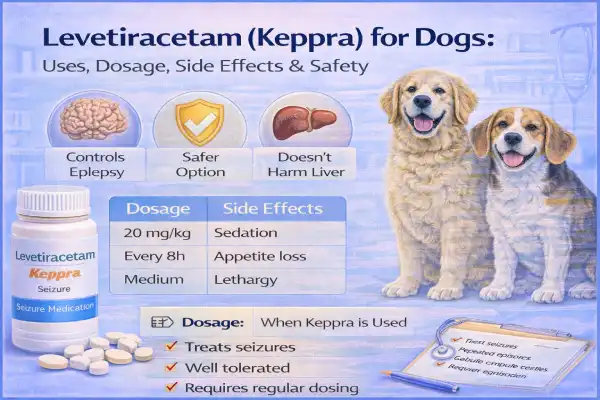
Levetiracetam, often known as Keppra, is commonly used for canine seizures because it is generally well tolerated. Compared with some older anticonvulsants, it often has a relatively mild side-effect profile.
However, some owners report restlessness, pacing, or increased activity after starting Keppra.
This can look like:
- The dog cannot settle.
- The dog walks around more than usual.
- The dog seems slightly hyperactive.
- The dog appears alert but uncomfortable.
- The dog acts different around dose times.
In many dogs, this is temporary. But if pacing after seizure medication happens repeatedly after each Keppra dose, your veterinarian may want to review the dose, timing, seizure diary, and whether another cause is involved.
Helpful related guides include Levetiracetam (Keppra) for Dogs: Uses, Dosage, Side Effects & Safety and Keppra Side Effects in Dogs: What to Watch For.
Could Potassium Bromide Cause Pacing?
Potassium bromide is usually more associated with sedation, weakness, wobbliness, and increased appetite than pacing. However, if bromide levels become too high, or if the dog is especially sensitive, behavior may look abnormal.
A dog with bromide-related problems may seem:
- Weak
- Uncoordinated
- Confused
- Excessively sleepy
- Restless because it feels disoriented
- Unsteady while walking
This is one of the reasons veterinarians monitor dogs carefully when potassium bromide is used long term.
If your dog takes bromide, see Potassium Bromide for Dogs: Uses, Dosage, Side Effects & Safety and Potassium Bromide Side Effects in Dogs: What to Watch For.
Could Pacing Mean the Seizures Are Not Controlled?
Yes. This is very important.
Sometimes pacing after seizure medication is not a side effect at all. It may mean the dog is still having seizure-related brain activity, breakthrough seizures, focal seizures, or prolonged post-ictal episodes.
Possible warning patterns include:
| Pattern | Why It Matters |
|---|---|
| Pacing before a seizure | May be part of a pre-ictal phase |
| Pacing after a seizure | May be post-ictal recovery |
| Pacing with staring or twitching | Could suggest focal seizure activity |
| Pacing with repeated seizures | Needs urgent veterinary attention |
| Pacing that worsens over time | May suggest poor control or another disease |
If your dog is still having episodes despite treatment, Why Is My Dog Still Having Seizures on Medication? is one of the most relevant internal guides to connect with this topic.
Could Anxiety Be Causing the Pacing?
Yes.
One of the most common reasons owners ask “Why is my dog pacing after seizure medication?” is because their dog’s behavior resembles anxiety.
The dog may:
- Pace from room to room.
- Follow family members constantly.
- Pant even when the room is cool.
- Be unable to settle.
- Seem unusually alert.
- React to every sound.
However, anxiety is not always caused by the medication itself.
A seizure is a significant neurological event. During recovery, many dogs temporarily become frightened, confused, or insecure. This can make them appear anxious even when the medication is working exactly as intended.
Our article Can Seizure Medication Cause Anxiety? explains how veterinarians distinguish medication-related anxiety from post-seizure behavioral changes.
Could the Pacing Be Part of a Focal Seizure?
Yes.
Not every seizure causes a dog to collapse or paddle its legs.
Some seizures are focal seizures, meaning only a small area of the brain is affected.
A focal seizure may cause behaviors such as:
- Repetitive pacing
- Walking in circles
- Staring into space
- Lip licking
- Facial twitching
- Fly-biting behavior
- Sudden fear
- Repetitive swallowing
Because these episodes can look subtle, owners sometimes assume the medication is causing unusual behavior when the dog is actually experiencing another seizure.
This is one reason veterinarians encourage owners to record unusual episodes whenever possible.
Could Pacing Mean the Dose Is Too High?

Occasionally.
Although excessive drug levels more commonly cause sedation and poor coordination, some dogs become restless because they feel disoriented rather than sleepy.
Your veterinarian may consider whether:
- The dose was recently increased.
- Multiple seizure medications are being used together.
- Drug levels have become higher than expected.
- Liver or kidney disease has affected medication metabolism.
For medications such as phenobarbital and potassium bromide, blood testing may help determine whether concentrations remain within the therapeutic range.
Could More Than One Medication Be Responsible?
Yes.
Many dogs with epilepsy require combination therapy to achieve good seizure control.
Examples include:
- Phenobarbital + Levetiracetam
- Phenobarbital + Potassium Bromide
- Levetiracetam + Potassium Bromide
When more than one anticonvulsant is started or adjusted, determining the exact cause of pacing becomes more challenging.
Rather than assuming one medication is responsible, veterinarians usually review:
- Which medication was started first.
- When the pacing began.
- Whether seizure frequency has changed.
- Whether any doses were missed.
- Whether other side effects are present.
This systematic approach often identifies the true cause more accurately than changing medication immediately.
Could Another Medical Problem Cause Pacing?

Absolutely.
One of the biggest mistakes owners can make is assuming that every new symptom must be caused by seizure medication.
Dogs may also pace because of:
- Pain
- Arthritis
- Abdominal discomfort
- Cognitive dysfunction syndrome
- Vision loss
- Hearing loss
- Nausea
- Urinary discomfort
- Heart disease
- Hormonal disorders
A complete veterinary examination helps determine whether pacing is neurological, behavioral, or related to another medical condition.
How Do Veterinarians Investigate Pacing?
Veterinarians usually begin by building a timeline rather than focusing on the medication alone.
Common questions include:
| Question | Why It Matters |
|---|---|
| When did the pacing begin? | Determines whether it coincides with medication changes. |
| Did a seizure occur beforehand? | Helps identify post-ictal behavior. |
| Is pacing constant or intermittent? | May suggest anxiety or focal seizures. |
| Have any doses recently changed? | Adjustment periods can temporarily alter behavior. |
| Are other neurological signs present? | Helps identify more serious complications. |
| Is your dog eating and drinking normally? | Evaluates overall health and medication tolerance. |
These answers often provide valuable clues before additional testing is considered.
Should Owners Keep a Seizure Diary?
Definitely.
One of the most useful tools in epilepsy management is a detailed seizure diary.
Recording the following information can help your veterinarian identify patterns:
- Medication name.
- Dose.
- Time each dose is given.
- Time pacing begins.
- Duration of pacing.
- Whether a seizure occurred beforehand.
- Appetite.
- Water intake.
- Sleep patterns.
- Videos of unusual behavior.
Over time, these records often reveal whether pacing occurs:
- After every dose.
- Only after seizures.
- During medication changes.
- At completely unrelated times.
That information can significantly improve treatment decisions.
Can Pacing Improve Without Changing Medication?

Yes.
This is reassuring for many owners.
If pacing is caused by temporary adjustment to seizure medication or by the normal recovery period following a seizure, many dogs gradually improve over several days or weeks.
Veterinarians may recommend:
- Maintaining a consistent medication schedule.
- Providing a quiet recovery area.
- Limiting stressful situations.
- Continuing to monitor seizure frequency.
- Returning for scheduled follow-up visits.
Changing medication immediately is not always necessary, especially if seizure control has improved and the pacing is becoming less frequent.
When Should You Contact Your Veterinarian?
Mild pacing immediately after a seizure or during the first few days of treatment is often temporary.
However, your veterinarian should be contacted promptly if your dog:
- Paces continuously for several hours.
- Cannot rest at all.
- Becomes aggressive.
- Has repeated seizures.
- Collapses.
- Appears severely confused.
- Cannot walk normally.
- Stops eating or drinking.
- Shows rapidly worsening neurological signs.
These situations may indicate that additional evaluation or treatment adjustments are needed.
Related Symptoms Owners Often Notice
Owners searching “Why Is My Dog Pacing After Seizure Medication?” also commonly read:
- Can Seizure Medication Cause Anxiety?
- Can Seizure Medication Change Dog Personality?
- Why Is My Dog Weak After Seizure Medication?
- Dog Seizure Symptoms: Signs, Causes & When to Act
- Phenobarbital Side Effects in Dogs: What to Watch For
- Keppra Side Effects in Dogs: What to Watch For
- Best Seizure Medication for Dogs: Complete Comparison Guide
- Phenobarbital vs Levetiracetam (Keppra) for Dogs: Which Seizure Medication Is Better?
These guides explain how pacing fits into the broader picture of epilepsy management and medication monitoring.
Can Dogs Continue Taking Seizure Medication if Pacing Occurs?
In many cases, yes.
One of the first concerns owners have after asking “Why is my dog pacing after seizure medication?” is whether they should stop giving the medication.
For most dogs, the answer is no.
Seizure medications are prescribed to reduce the frequency and severity of seizures. Stopping them suddenly—particularly phenobarbital or other long-term anticonvulsants—may increase the risk of breakthrough seizures or even life-threatening status epilepticus.
If the pacing is mild, your veterinarian may recommend continuing the medication while monitoring:
- The frequency of pacing.
- How long each episode lasts.
- Whether the pacing is improving.
- Whether seizures remain controlled.
- Whether additional side effects develop.
The decision to continue, adjust, or change medication should always be based on your dog’s overall clinical picture rather than on one symptom alone.
Can Pacing Be Prevented?
Not every case can be prevented, but careful management can reduce the likelihood of pacing after seizure medication.
Veterinarians commonly recommend:
- Giving medication at the same time every day.
- Never skipping doses.
- Avoiding sudden dosage changes unless instructed.
- Keeping follow-up appointments for blood monitoring when required.
- Maintaining a consistent daily routine.
- Reducing unnecessary stress during the first weeks of treatment.
- Recording unusual behaviors in a seizure diary.
Although these steps cannot eliminate every behavioral change, they often help dogs adjust more smoothly to long-term epilepsy treatment.
What Is the Long-Term Outlook?
The prognosis is generally very good.
Most dogs that experience temporary pacing after seizure medication gradually improve as their bodies adapt to treatment or as post-seizure recovery becomes shorter.
The overall outlook depends on several factors.
| Factor | Influence on Prognosis |
|---|---|
| Seizures are well controlled | Excellent long-term outlook |
| Pacing occurs only during adjustment | Usually resolves within days to weeks |
| Medication blood levels remain therapeutic | Reduces the risk of complications |
| Underlying brain disease progresses | Prognosis depends on the underlying diagnosis |
| Owners consistently administer medication | Improves seizure control and long-term success |
With appropriate treatment and regular monitoring, many epileptic dogs continue to live active, comfortable lives for many years.
Veterinarian Takeaway
Why is my dog pacing after seizure medication? The answer is not always straightforward.
Although seizure medication can occasionally contribute to restlessness or pacing, veterinarians know that the medication is only one possible explanation. Post-ictal recovery, focal seizures, medication adjustments, anxiety-like behavior, pain, and other medical conditions may all produce similar signs.
Rather than focusing on the medication alone, veterinarians evaluate:
- The timing of the pacing.
- Recent seizure activity.
- Medication history.
- Physical and neurological examination findings.
- Blood drug concentrations when appropriate.
- Overall response to treatment.
This comprehensive approach helps determine whether pacing represents a temporary adjustment or whether changes to the treatment plan are needed.
Bottom Line
If you’re asking “Why is my dog pacing after seizure medication?”, remember that pacing is a symptom—not a diagnosis.
For many dogs, pacing is a temporary part of recovering from a seizure or adjusting to a new anticonvulsant. In others, it may indicate anxiety, ongoing seizure activity, medication intolerance, or another medical problem that requires veterinary evaluation.
The most important step is to observe your dog’s behavior carefully, keep a seizure diary, administer medication exactly as prescribed, and contact your veterinarian if pacing becomes severe, persistent, or is accompanied by additional neurological signs.
With careful monitoring and individualized treatment, most dogs with epilepsy achieve good seizure control while maintaining an excellent quality of life.
Frequently Asked Questions – Why Is My Dog Pacing After Seizure Medication
Why is my dog pacing after seizure medication?
Pacing may occur because of post-ictal recovery, adjustment to seizure medication, anxiety-like behavior, focal seizures, or another medical condition. Your veterinarian can help determine the underlying cause.
Is pacing a normal side effect of seizure medication?
It is not one of the most common side effects, but some dogs may temporarily become restless while adjusting to anticonvulsant therapy.
Can phenobarbital cause pacing?
Occasionally. Most dogs become sleepy rather than restless, but a small number may experience temporary behavioral changes during the adjustment period.
Can Keppra make dogs restless?
Yes. Some dogs receiving levetiracetam (Keppra) may show mild restlessness or increased activity, although most tolerate the medication very well.
Could pacing mean my dog is having another seizure?
Yes. Some focal seizures present as repetitive pacing, circling, staring, or other subtle behaviors rather than generalized convulsions.
Should I stop seizure medication if my dog keeps pacing?
No. Never stop anticonvulsant medication without veterinary advice, as abrupt withdrawal can significantly increase seizure risk.
Can blood tests help identify the problem?
Yes. Blood monitoring is commonly used for medications such as phenobarbital and potassium bromide to ensure drug concentrations remain within the therapeutic range.
When should pacing be considered an emergency?
Seek immediate veterinary care if pacing is accompanied by repeated seizures, collapse, inability to walk, prolonged confusion, severe weakness, or loss of consciousness.
Can dogs live normal lives while taking seizure medication?
Yes. Most dogs with epilepsy enjoy an excellent quality of life when seizures are well controlled and treatment is monitored appropriately.
Sources
- Plumb’s Veterinary Drug Handbook (10th Edition)
- Merck Veterinary Manual – Seizure Disorders in Dogs
- ACVIM Consensus Statement on Seizure Management in Dogs
- BSAVA Small Animal Formulary (11th Edition)
- Veterinary Pharmacology and Therapeutics (10th Edition)
- Small Animal Clinical Pharmacology
- Journal of Veterinary Internal Medicine (JVIM)
- Journal of the American Veterinary Medical Association (JAVMA)
- Veterinary Information Network (VIN)
- Frontiers in Veterinary Science
Medical Review Statement
This article was pharmacy-reviewed by Dimitar Georgiev Atanasov, MPharm (Bulgarian Pharmaceutical Union, UIN: 0210000586), scientifically reviewed by Gergana Krasimirova Atanasova, MPharm (Bulgarian Pharmaceutical Union, UIN: 0210000587), and independently veterinary-reviewed by Dr. Valcho Georgiev Valchev, DVM (Bulgarian Veterinary Union, Registration No. 28000115) to ensure medical accuracy, medication safety, and consistency with current veterinary guidelines and evidence-based veterinary medicine.
Important Medical Disclaimer
The information provided on PetMedsMadeSimple.com is intended for educational purposes only and should not replace professional veterinary advice, diagnosis, or treatment.
Never start, stop, or change your dog’s seizure medication without first consulting your veterinarian. If your dog develops repeated seizures, collapse, severe confusion, inability to walk, difficulty breathing, or any other emergency signs, seek immediate veterinary care.
Image Disclosure
Some images used in this article may be AI-generated or AI-assisted for educational purposes. Every article is independently researched, pharmacy-reviewed by Dimitar Georgiev Atanasov, MPharm, scientifically reviewed by Gergana Krasimirova Atanasova, MPharm, and veterinary-reviewed by Dr. Valcho Georgiev Valchev, DVM. AI-generated illustrations are intended to improve understanding of veterinary diseases and medications and do not depict actual clinical patients.