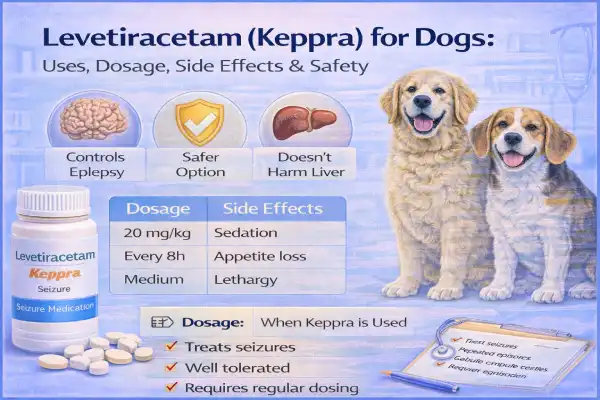

Quick Answer
Yes—but not always for the reason owners think. While some seizure medications can contribute to behavioral changes, true medication-induced aggression is relatively uncommon. In many cases, the aggression owners notice is actually related to recent seizures, temporary brain recovery (the postictal phase), fear, pain, underlying neurological disease, or changes in medication dosage rather than the medication itself.
The good news is that most dogs experiencing new aggression can be evaluated, and the underlying cause can often be identified and managed without abandoning seizure treatment altogether.
Imagine This…
Your dog has always been gentle.
Children could hug him.
You could reach into his food bowl without a problem.
Then, after starting seizure medication, something changes.
One evening you lean down to pet him, and he growls.
The next day he snaps when you try to put on his harness.
Now you’re scared.
“Is this medication changing my dog’s personality?”
It’s one of the most frightening questions a dog owner can ask.
Fortunately, the answer is usually more complicated—and often far less alarming—than it first appears.
The Short Answer Is: Sometimes, But It’s Rare
One of the biggest misconceptions is that seizure medications routinely make dogs aggressive.
In reality, most dogs taking seizure medications never become aggressive. Millions of doses of medications such as phenobarbital, levetiracetam (Keppra®), potassium bromide, zonisamide, and pregabalin are used successfully every year.
When aggression does occur, veterinarians usually step back and ask a much bigger question:
“Is the medication truly causing this behavior, or is something else happening at the same time?”
That question matters because stopping seizure medication suddenly can sometimes trigger life-threatening seizures.
Before assuming the medication is responsible, veterinarians look at the whole picture.
Can Seizure Medication Cause Aggression?
Why Aggression Isn’t Always Caused by the Medication
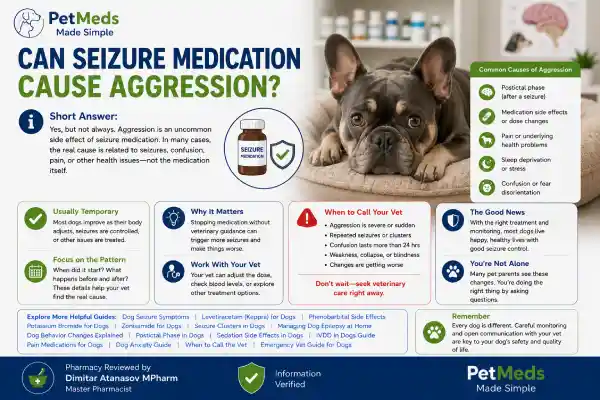
This is where many internet articles stop.
They simply list “aggression” as a possible side effect.
But behavior is rarely that simple.
Dogs recovering from epilepsy often experience several factors at once.
Your dog may actually be reacting to…
- confusion after a seizure
- temporary blindness
- anxiety
- fear
- disorientation
- headaches
- changes in brain activity
- liver disease
- chronic pain
- sleep disruption
- stress from repeated veterinary visits
Any one of these can make even the sweetest dog react differently.
Imagine waking up in a strange room without knowing where you are.
Someone suddenly reaches toward your face.
Even a calm person might instinctively push them away.
Dogs recovering from seizures can experience a similar kind of confusion.
The Postictal Phase: One of the Most Overlooked Causes of Aggression
Many owners notice aggression after starting medication, but the timing is often misleading.
What actually happened?
The dog had a seizure.
The medication was started.
Then the dog became aggressive.
It’s easy to blame the new medication.
However, veterinarians know another possibility is far more common.
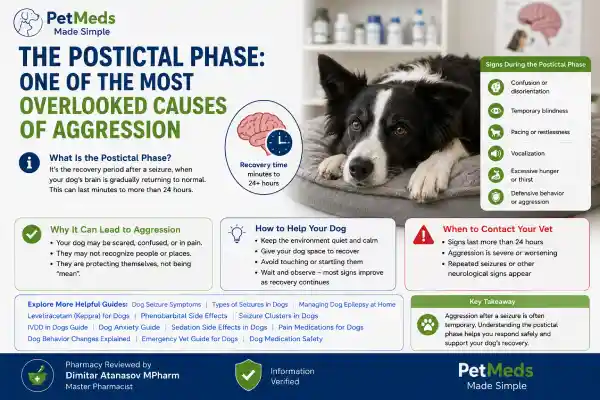
The postictal phase.
This is the recovery period after a seizure, when the brain is gradually returning to normal function.
Depending on the individual dog, this phase can last anywhere from several minutes to more than 24 hours.
During this time, dogs may experience:
- confusion
- pacing
- aimless wandering
- temporary blindness
- excessive hunger
- excessive thirst
- restlessness
- vocalization
- anxiety
- defensive behavior
Some dogs simply don’t recognize familiar people for a short period.
That can be terrifying—for both the dog and the owner.
What Owners Often Describe
One thing we’ve noticed is that owners rarely call the behavior “aggression.”
Instead, they describe what they see.
They’ll say things like:
“He looked right through me.”
“She stared at me like she didn’t know who I was.”
“He growled when I tried to help him.”
“She snapped when I touched her collar.”
“He has never done this before.”
These details are incredibly valuable because they often point toward temporary neurological confusion rather than a permanent personality change.
Which Seizure Medications Have Been Linked to Aggression?
The honest answer is that almost every seizure medication has isolated reports of behavioral changes, but the risk varies considerably.
Here’s a simplified comparison.
| Medication | Aggression Reported? | How Common? |
|---|---|---|
| Phenobarbital | Occasionally | Uncommon |
| Levetiracetam (Keppra®) | Rarely | Rare |
| Potassium Bromide | Occasionally | Uncommon |
| Zonisamide | Rare | Rare |
| Pregabalin | Very Rare | Very Rare |
| Gabapentin | Rare | Rare |
It’s important to remember that these medications affect the brain.
Any medication that changes brain activity has the potential to influence behavior in susceptible individuals.
That does not mean aggression is expected.
Phenobarbital: The Medication Owners Ask About Most
If there’s one seizure medication that generates the most questions about personality changes, it’s phenobarbital.
That’s partly because it’s one of the oldest and most widely prescribed anti-seizure medications in veterinary medicine.
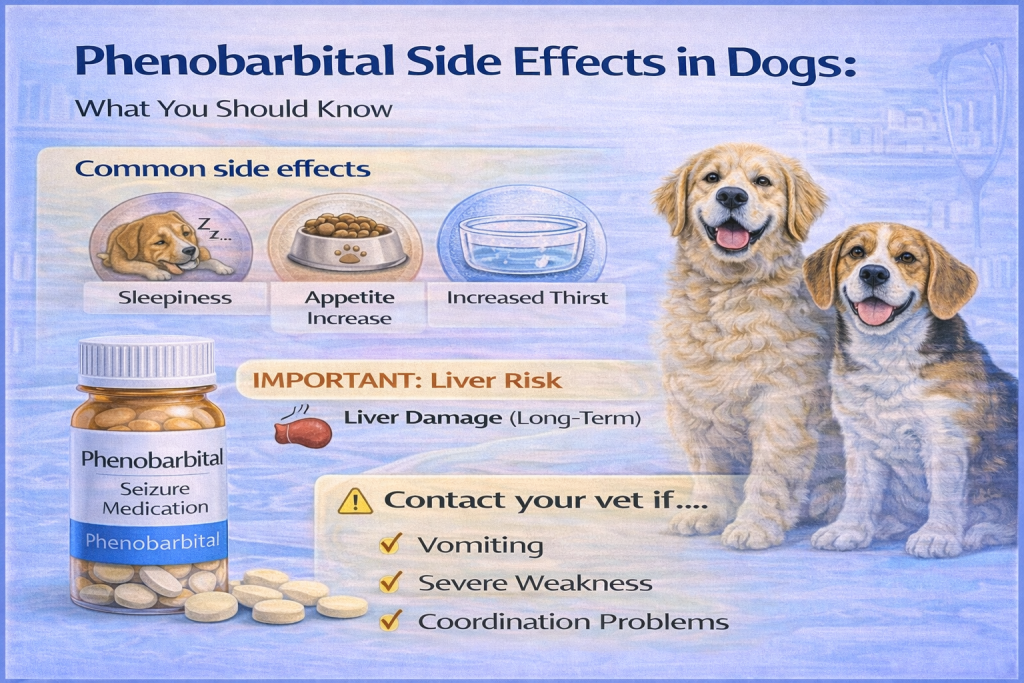
During the first few weeks of treatment, many dogs experience what’s called the adaptation period.
Owners may notice:
- excessive sleepiness
- wobbliness
- increased appetite
- increased thirst
- temporary irritability
- reduced tolerance for handling
These changes often improve as the dog’s body adjusts.
One mistake owners sometimes make is assuming every new behavior means the medication is “making their dog mean.”
In reality, a dog that feels dizzy, sleepy, or uncertain may simply become more defensive if startled.
There’s an important difference between a dog that becomes protective because it feels vulnerable and a dog experiencing true medication-induced aggression.
That distinction often determines whether treatment needs to change.
Could the Dose Be Too High?
Sometimes the medication itself isn’t the problem.
The dose is.
An overly high blood concentration can lead to excessive sedation, poor coordination, confusion, and altered behavior.
Think of it like wearing glasses with the wrong prescription.
The glasses aren’t bad.
They’re simply not the correct strength.
The same principle applies to seizure medications.
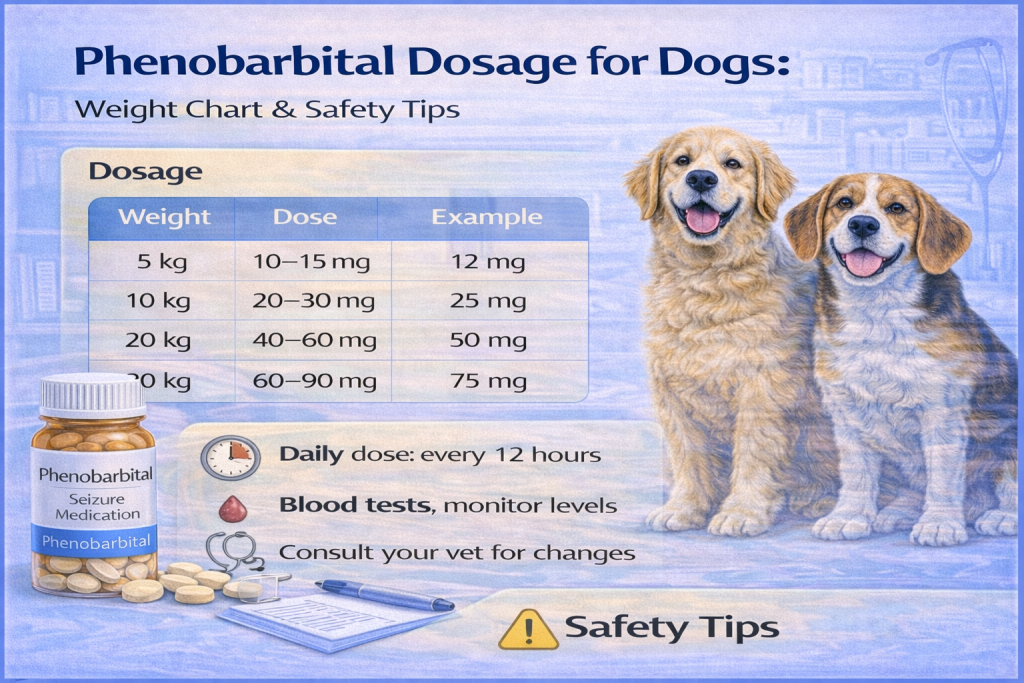
If a normally friendly dog suddenly becomes unusually withdrawn, confused, or reactive after a dose increase, your veterinarian may recommend blood testing before deciding to change medications.
Monitoring drug levels is especially important with medications such as phenobarbital and potassium bromide, where blood concentrations help guide safe long-term treatment.
Could Liver Problems Affect Behavior?
This is a possibility many owners have never heard about.
Phenobarbital is processed by the liver.
While most dogs tolerate it very well, long-term treatment can occasionally affect liver function.
If liver disease develops, toxins that would normally be removed from the bloodstream may begin affecting the brain.
This condition known as hepatic encephalopathy can sometimes cause:
- confusion
- staring into space
- pacing
- personality changes
- irritability
- disorientation
- unusual aggression
Fortunately, this is not a common side effect, and veterinarians monitor dogs on long-term phenobarbital with routine blood tests specifically to catch problems before they become serious.
That’s one reason follow-up appointments are just as important as giving the medication itself.
When Owners Commonly Ask This
Most owners don’t search this topic because they’re curious—they search because something upsetting has already happened.
Typical situations include:
- A normally affectionate dog suddenly growls when touched after starting seizure medication.
- A dog snaps at a family member during recovery from a seizure.
- Aggression appears shortly after a recent dose increase.
- The dog seems confused, restless, or “not like himself.”
- Multiple seizures have occurred within a short period, followed by unusual behavior.
These patterns help veterinarians decide whether the behavior is more likely related to the medication, the seizures themselves, or another medical problem that requires attention.
Can Epilepsy Itself Cause Aggression?
Yes—and this is one of the most important points owners need to understand.
When people search “Can seizure medication cause aggression?”, they naturally focus on the medication because it is the newest change. But veterinarians often ask a different question first:
“When did the last seizure happen?”
That question alone can completely change the investigation.
The brain doesn’t instantly return to normal after a seizure. Even after the visible shaking has stopped, many dogs enter what’s known as the postictal phase a recovery period during which brain activity gradually stabilizes again.
During this time, dogs may behave in ways that seem completely out of character.
One owner may describe their dog as unusually clingy.
Another says the dog won’t stop pacing.
Someone else notices the dog barking at walls or staring into corners.
Occasionally, a frightened or confused dog may growl or snap when approached.
The important point is that this behavior is not always intentional aggression. It may simply be a frightened brain trying to make sense of its surroundings after a major neurological event.
This is one reason veterinarians always ask about the timing of behavioral changes instead of assuming the medication is responsible.
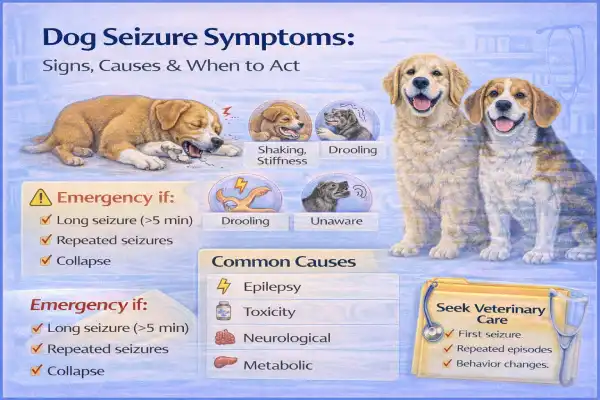
If you’re unsure what normally happens before, during, or after a seizure, our guide Dog Seizure Symptoms: Signs, Causes & When to Act explains each stage in greater detail.
Fear Aggression vs Medication Aggression
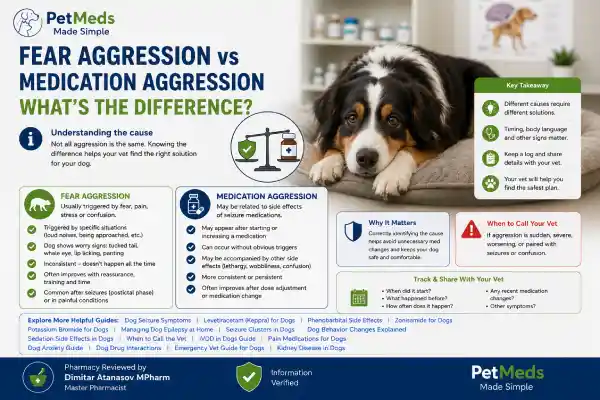
These two situations can look almost identical, but they usually have very different causes.
Imagine two different dogs.
The first dog has just recovered from a seizure.
He’s disoriented, can’t quite recognize his surroundings, and suddenly someone reaches toward his face.
He growls.
The second dog develops gradual behavioral changes over several weeks after starting medication without any recent seizures.
Both dogs growled.
The reasons may be completely different.
Veterinarians therefore try to determine what triggered the reaction, rather than focusing only on the reaction itself.
Fear-related behavior often includes:
- Backing away before growling
- Hiding behind furniture
- Avoiding eye contact
- Trembling
- Startling easily
- Returning to normal once calm
Medication-related behavioral changes may be more likely to:
- Occur consistently after dosing
- Develop after a dose increase
- Improve after veterinary dose adjustment
- Occur together with excessive sedation or neurological side effects
The distinction isn’t always obvious, which is why your veterinarian evaluates the entire medical history before changing seizure therapy.
Could Pain Be Making My Dog Aggressive?
Absolutely.
Pain is one of the most common—but most overlooked—causes of sudden aggression in dogs.
A dog recovering from seizures may also have:
- arthritis
- dental disease
- spinal pain
- muscle soreness after violent seizures
- injuries from falling during a seizure
Imagine having severe muscle cramps throughout your body after intense exercise.
Now imagine someone unexpectedly touching those sore muscles.
Your reaction would probably be different than usual.
Dogs respond similarly.
Sometimes what appears to be aggression is actually an attempt to protect a painful part of the body.
This is why a thorough physical examination is just as important as reviewing the medication list.
Could Sleep Deprivation Make Behavior Worse?
It certainly can.
Many dogs with poorly controlled epilepsy don’t sleep normally.
Nighttime seizures, repeated awakenings, anxiety, and frequent veterinary visits can leave both dogs and owners exhausted.
Sleep deprivation affects the brain in every species.
People become irritable.
Children become emotional.
Dogs may become less tolerant of handling and more reactive to situations that normally wouldn’t bother them.
Interestingly, some owners first notice personality changes before realizing how little restful sleep their dog has actually been getting.
Can Combination Therapy Increase the Risk?

Yes.
Many dogs eventually require more than one anticonvulsant to achieve good seizure control.
Common combinations include:
- Phenobarbital with Keppra
- Phenobarbital with potassium bromide
- Keppra with zonisamide
- Keppra with pregabalin
- Keppra with gabapentin
Combination therapy doesn’t automatically cause aggression.
However, using multiple medications that affect the central nervous system may increase the likelihood of:
- confusion
- excessive sedation
- poor coordination
- slower reactions
- temporary behavioral changes
This is one reason veterinarians usually introduce medication changes gradually whenever possible.
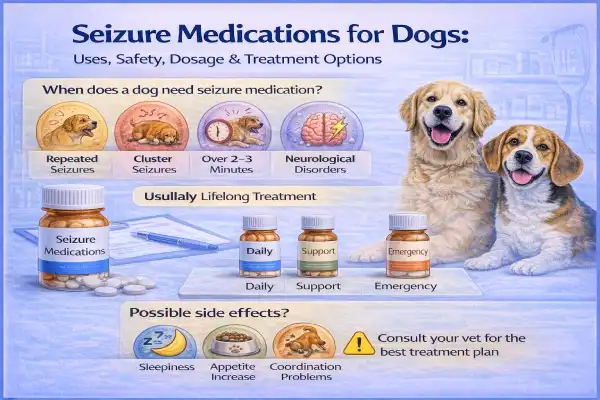
Our guides Levetiracetam (Keppra) for Dogs: Uses, Dosage, Side Effects & Safety and Phenobarbital Side Effects in Dogs: What to Watch For explain how these medications may influence behavior during the adjustment period.
What Should Owners Do If Their Dog Suddenly Becomes Aggressive?
One of the biggest mistakes is assuming the medication must be stopped immediately.
That decision can be dangerous.
Instead, try to become an observer.
Ask yourself questions such as:
- When did the behavior first appear?
- Did it happen immediately after a seizure?
- Was the medication dose recently increased?
- Is the aggression happening all day or only during certain periods?
- Does my dog seem frightened or confused?
- Is my dog also unusually sleepy or weak?
Writing these observations down often helps your veterinarian far more than simply saying, “My dog became aggressive.”
Small details frequently reveal patterns that would otherwise be missed.
What Should You Avoid Doing?
When a dog suddenly growls or snaps, the natural reaction is often to correct the behavior.
However, punishment is rarely appropriate when neurological disease may be involved.
Avoid:
- yelling
- physical punishment
- cornering the dog
- forcing interaction
- waking a sleeping dog abruptly
- allowing children to approach an obviously confused dog
Instead, provide your dog with a quiet place to recover while arranging veterinary advice as soon as practical.
Remember, your dog may be frightened rather than intentionally aggressive.
Are Some Dogs More Sensitive Than Others?
Definitely.
Veterinarians see enormous variation in how individual dogs respond to seizure medications.
Factors that may influence sensitivity include:
| Factor | Why It Matters |
|---|---|
| Age | Senior dogs may adapt more slowly. |
| Breed | Some breeds appear more sensitive to neurological medications. |
| Liver function | May influence metabolism of certain anticonvulsants. |
| Kidney function | Especially important for medications such as Keppra. |
| Number of medications | Combination therapy increases complexity. |
| Frequency of seizures | More frequent seizures may prolong recovery periods. |
This variability explains why one dog may experience almost no side effects while another needs closer monitoring during the first few weeks of treatment.
Could My Dog Ever Return to Normal?
This is probably the question that worries families most.
The encouraging news is that many dogs do.
If the behavioral change is related to:
- temporary medication adjustment,
- postictal recovery,
- sleep deprivation,
- or reversible side effects,
there is often gradual improvement over time.
Owners frequently tell veterinarians something like:
“For the first week, I thought I’d lost my old dog. Then little by little, he started playing again, greeting us at the door, and acting like himself.”
Those stories are reassuring because they remind us that many behavioral changes are temporary rather than permanent.
Of course, every dog is different, which is why regular follow-up appointments remain an essential part of long-term epilepsy management.
When Is Aggression a Veterinary Emergency?
Most cases of behavioral change are not emergencies, but there are situations where waiting until the next routine appointment isn’t the safest option.
One of the questions we often encourage owners to ask themselves is this:
“Does my dog still recognize me, or does he seem completely disconnected from his surroundings?”
That simple observation can provide valuable information.
If your dog growls once because you accidentally startled him while he was sleeping after a seizure, that’s very different from a dog that appears confused for hours, repeatedly attacks family members without warning, or cannot settle after multiple seizures.
Contact your veterinarian immediately if aggression is accompanied by:
- Repeated seizures or cluster seizures
- Continuous pacing that lasts for hours
- Inability to recognize familiar people
- Collapse or severe weakness
- Difficulty walking
- Sudden blindness
- Repeated attempts to bite without obvious provocation
- Extreme confusion that continues long after a seizure
- Difficulty breathing or other signs of severe illness
These signs do not automatically mean the medication is responsible, but they do mean your dog should be evaluated promptly.
A Practical Checklist for Owners
If you’re asking “Can seizure medication cause aggression?”, this checklist can help you organize your observations before calling your veterinarian.
| Question | Why It Matters |
|---|---|
| When did the aggression first appear? | Helps determine whether it followed a seizure or a medication change. |
| Was the medication dose recently increased? | Behavioral changes sometimes occur during dose adjustments. |
| Has your dog had a seizure within the past 24 hours? | Postictal behavior is a common explanation. |
| Does your dog seem frightened or confused? | Suggests neurological recovery rather than intentional aggression. |
| Is your dog eating, drinking, and walking normally? | Helps assess overall neurological function. |
| Is the aggression getting worse each day? | Progressive changes deserve prompt evaluation. |
Having these answers ready often makes the veterinary consultation much more productive.
What Will Your Veterinarian Do?
Many owners expect that the first recommendation will be to stop the medication.
In reality, that is usually not the first step.
Instead, your veterinarian will try to answer several important questions:
- Is the aggression truly new?
- Could this be part of postictal recovery?
- Is another illness causing the behavior?
- Is pain contributing?
- Has the medication dose changed recently?
- Are blood tests needed?
- Is combination therapy increasing side effects?
Depending on the findings, your veterinarian may recommend:
- Continued observation.
- A neurological examination.
- Blood tests.
- Therapeutic drug monitoring (particularly for phenobarbital).
- Adjusting the medication dose.
- Gradually changing to another anticonvulsant if necessary.
The decision is individualized because every epileptic dog responds differently.
Can Seizure Medication Cause Aggression Permanently?

Fortunately, permanent personality changes caused solely by seizure medication appear to be uncommon.
Most dogs that experience behavioral changes improve after one of the following occurs:
- The brain finishes recovering from recent seizures.
- The body adapts to the medication.
- The dose is adjusted appropriately.
- An underlying medical problem is identified and treated.
- Combination therapy is modified.
This is encouraging because many owners initially fear they’ve “lost” the dog they knew.
In practice, veterinarians frequently see dogs gradually regain their normal personality once the underlying cause has been addressed.
The Long-Term Outlook
The long-term prognosis depends far more on overall seizure control than on temporary behavioral side effects.
Dogs whose seizures are well managed often return to enjoying walks, playing with their families, and living active lives despite requiring lifelong medication.
Successful epilepsy management is rarely about finding a medication with zero side effects.
Instead, it’s about finding the treatment plan that provides the best seizure control while allowing the dog to maintain an excellent quality of life.
That balance sometimes requires patience during the first few weeks of treatment, particularly when medications are being introduced or adjusted.
Veterinarian Takeaway
Can seizure medication cause aggression? Yes—but it is not the first explanation veterinarians consider.
In clinical practice, sudden aggression is often linked to postictal confusion, fear, pain, sleep disruption, or progression of the underlying neurological disease rather than the medication itself. Certain anticonvulsants may contribute to behavioral changes in some dogs, particularly during the adjustment period or after dose increases, but true medication-induced aggression remains relatively uncommon.
The most helpful thing an owner can do is observe when the behavior occurs, what happened beforehand, and whether other neurological signs are present. Those details often provide the key to identifying the real cause.
Bottom Line
If you’ve been searching “Can seizure medication cause aggression?”, you’re probably worried because your dog has done something completely out of character.
That reaction is understandable.
Fortunately, aggression after starting seizure medication does not automatically mean your dog’s personality has permanently changed or that the medication has failed.
Many cases are temporary, manageable, and related to the brain’s recovery after seizures rather than the medication alone.
The safest approach is to avoid making medication changes on your own, carefully document what you’re seeing, and work closely with your veterinarian to determine the underlying cause.
With appropriate monitoring and individualized treatment, most dogs with epilepsy continue to enjoy a happy and rewarding quality of life.
Frequently Asked Questions – Can Seizure Medication Cause Aggression
Can seizure medication cause aggression in dogs?
Yes, but it is relatively uncommon. More often, aggression is related to postictal confusion, fear, pain, or the underlying neurological disease rather than the medication itself.
Which seizure medication is most likely to cause aggression?
Phenobarbital has more reported behavioral changes than some newer anticonvulsants, although true medication-induced aggression remains uncommon.
Can Keppra make dogs aggressive?
Levetiracetam (Keppra) has occasionally been associated with behavioral changes, but aggression appears to be rare and many cases have other contributing causes.
Can aggression happen immediately after starting medication?
It can, but veterinarians also consider whether a recent seizure or postictal recovery better explains the timing.
Should I stop seizure medication if my dog becomes aggressive?
No. Never discontinue anticonvulsants without veterinary guidance, as this may increase the risk of breakthrough seizures.
Can seizures themselves change a dog’s behavior?
Yes. Dogs recovering from seizures may temporarily become confused, anxious, fearful, or defensive.
Is growling always a sign of aggression?
No. Growling can also be a warning that a frightened, painful, or confused dog needs more space.
Will my dog’s personality return to normal?
In many cases, yes. Dogs often improve as they recover from seizures, adapt to medication, or receive appropriate treatment adjustments.
When should aggression be considered an emergency?
Seek immediate veterinary care if aggression occurs together with repeated seizures, severe confusion, collapse, inability to walk, or other significant neurological signs.
Can blood tests help identify the cause?
Yes. Blood tests may help evaluate liver function, kidney function, and medication levels, particularly in dogs receiving long-term anticonvulsant therapy.
Sources
- Plumb’s Veterinary Drug Handbook (10th Edition)
- Merck Veterinary Manual – Seizure Disorders in Dogs
- ACVIM Consensus Statement on Seizure Management in Dogs
- BSAVA Small Animal Formulary (11th Edition)
- Veterinary Pharmacology and Therapeutics (10th Edition)
- Small Animal Clinical Pharmacology
- Journal of Veterinary Internal Medicine (JVIM)
- Journal of the American Veterinary Medical Association (JAVMA)
- Veterinary Information Network (VIN)
- Frontiers in Veterinary Science
Medical Review Statement
This article was pharmacy-reviewed by Dimitar Georgiev Atanasov, MPharm (Bulgarian Pharmaceutical Union, UIN: 0210000586), scientifically reviewed by Gergana Krasimirova Atanasova, MPharm (Bulgarian Pharmaceutical Union, UIN: 0210000587), and independently veterinary-reviewed by Dr. Valcho Georgiev Valchev, DVM (Bulgarian Veterinary Union, Registration No. 28000115) to ensure medical accuracy, medication safety, and consistency with current veterinary guidelines and evidence-based veterinary medicine.
Important Medical Disclaimer
The information provided on PetMedsMadeSimple.com is intended for educational purposes only and should not replace professional veterinary advice, diagnosis, or treatment.
Never stop, start, or change your dog’s seizure medication without first consulting your veterinarian. If your dog develops repeated seizures, severe aggression with confusion, collapse, difficulty breathing, or other emergency signs, seek immediate veterinary care.
Image Disclosure
Some images used in this article may be AI-generated or AI-assisted for educational purposes. Every article is independently researched, pharmacy-reviewed by Dimitar Georgiev Atanasov, MPharm, scientifically reviewed by Gergana Krasimirova Atanasova, MPharm, and veterinary-reviewed by Dr. Valcho Georgiev Valchev, DVM. AI-generated illustrations are intended to improve understanding of veterinary diseases and medications and do not depict actual clinical patients.