
Quick Answer
Why is my dog still confused after a seizure? In most cases, confusion after a seizure is part of the postictal phase—the brain’s recovery period after abnormal electrical activity. During this time, dogs may appear disoriented, restless, temporarily blind, anxious, unusually hungry, excessively thirsty, or simply “not like themselves.” Depending on the severity of the seizure, this confusion may last from a few minutes to several hours, and occasionally up to 24 hours.
However, if your dog’s confusion continues to worsen, lasts longer than expected, or is accompanied by repeated seizures, collapse, severe weakness, breathing difficulties, or an inability to walk, immediate veterinary evaluation is essential.
Imagine This…
It’s two o’clock in the morning.
Your dog has just had a seizure.
The shaking has stopped.
You finally breathe a sigh of relief…
But then something doesn’t feel right.
Instead of coming over for comfort, your dog starts pacing through the house. He bumps into the coffee table. He stares at the wall for several minutes. When you call his name, he doesn’t seem to recognize you.
Your first thought is often the same as thousands of other owners:
“Why is my dog still confused after a seizure? Is there permanent brain damage?”
Fortunately, in many cases, the answer is reassuring.
Although post-seizure confusion can be frightening to watch, it is often a temporary part of the brain’s recovery process rather than a sign that your dog will never return to normal.
Why Is My Dog Still Confused After a Seizure?
What Is the Postictal Phase?

One of the biggest misconceptions is that a seizure ends the moment the shaking stops.
In reality, that’s often only the beginning of recovery.
After abnormal electrical activity spreads through the brain, nerve cells need time to restore their normal function. During this recovery period—known as the postictal phase—dogs may behave in ways that seem completely out of character.
Some dogs recover in just a few minutes.
Others may remain confused for several hours.
This variation is completely normal because every seizure affects the brain differently.
Veterinarians often tell owners:
“Don’t judge how your dog is doing based on the first few minutes after a seizure. The brain needs time to recover.”
Understanding this recovery phase helps explain why many dogs appear confused even though the seizure itself has already ended.
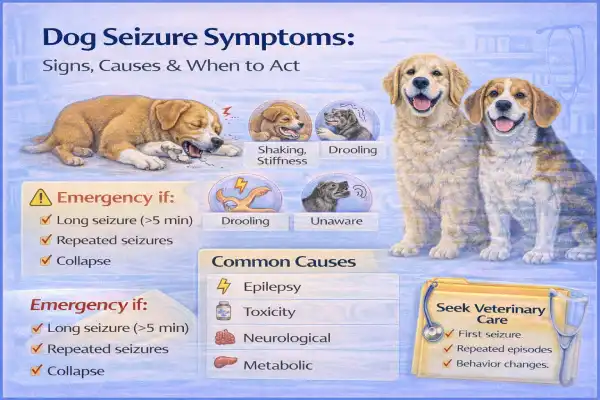
If your dog has recently been diagnosed with epilepsy, our guide Dog Seizure Symptoms: Signs, Causes & When to Act explains what owners can expect before, during, and after a seizure.
Why Is My Dog Still Confused After a Seizure?
The simple answer is that the brain has just experienced an enormous amount of abnormal electrical activity.
Think of it like a powerful thunderstorm passing through a city.
Even after the storm ends, traffic lights may still be flashing, roads may be blocked, and power may take time to return.
The brain behaves in a similar way.
Although the seizure has stopped, communication between different parts of the brain may remain temporarily disrupted.
That’s why many dogs experience:
- confusion
- aimless wandering
- staring into space
- pacing
- temporary blindness
- poor coordination
- excessive thirst
- unusual hunger
- whining
- restlessness
- difficulty recognizing familiar people
These signs are usually temporary and improve as normal brain activity returns.
One of the Biggest Mistakes Owners Make
When owners search “Why is my dog still confused after a seizure?”, many assume the seizure is continuing because their dog isn’t acting normally.
In reality, that’s often not what’s happening.
A seizure involves abnormal electrical activity within the brain.
The postictal phase is what happens after that abnormal activity stops.
Although your dog may appear disoriented, the brain is usually recovering rather than actively seizing.
This distinction is important because treatment decisions are very different.
For example, giving additional seizure medication during normal postictal recovery may not always be necessary unless your veterinarian specifically recommends it.
How Does a Seizure Affect the Brain?
During a seizure, millions of neurons begin firing at the same time instead of communicating in an organized manner.
Once the seizure ends, those nerve cells don’t instantly return to normal.
Instead, the brain must gradually restore:
- normal electrical activity
- balanced neurotransmitter levels
- oxygen use
- glucose metabolism
- communication between different brain regions
Until that process is complete, temporary neurological signs are common.
This explains why your dog may look physically awake while still appearing mentally confused.
How Long Can Confusion Last After a Seizure?

This is probably the question veterinarians hear most often.
The honest answer is:
It depends.
Several factors influence recovery time, including:
- how long the seizure lasted
- how severe it was
- whether multiple seizures occurred
- your dog’s age
- underlying brain disease
- existing epilepsy
- medications being used
The following table provides a general guide.
| Duration of Confusion | Usually Expected? |
|---|---|
| 5–30 minutes | Very common |
| 30 minutes–2 hours | Common |
| 2–6 hours | Can still be normal |
| 6–24 hours | Sometimes seen after severe seizures |
| More than 24 hours | Veterinary evaluation recommended |
Some dogs recover surprisingly quickly.
Others need most of the day before they seem completely normal again.
The important thing is that your dog should show gradual improvement, not become progressively more confused.
What Behaviors Are Usually Considered Normal?
Owners often expect their dog to stand up and behave normally immediately after a seizure.
Instead, they may see behaviors they’ve never witnessed before.
Common postictal behaviors include:
- wandering around the house without a clear purpose
- bumping into furniture
- staring at walls
- appearing temporarily blind
- excessive drinking
- ravenous appetite
- whining
- panting
- pacing
- seeking constant reassurance
- hiding in quiet places
- sleeping much more than usual
Many of these behaviors can appear dramatic but are actually well-recognized features of postictal recovery.
Our related guides Why Is My Dog Pacing After Seizure Medication?, Why Is My Dog Sleeping All Day on Keppra?, and Can Seizure Medication Cause Anxiety? explain why some of these signs may overlap with medication side effects, making the situation even more confusing for owners.
Could Seizure Medication Make the Confusion Worse?
Sometimes it can—but not always.
Many dogs begin medications such as phenobarbital or levetiracetam (Keppra®) immediately after experiencing seizures.
If confusion continues afterward, it’s natural to blame the new medication.
However, veterinarians first ask an important question:
“Is this confusion from the medication or is the brain still recovering from the seizure?”
Both situations can occur at the same time.
Some anticonvulsants may temporarily increase sleepiness or slow a dog’s reactions during the first days of treatment. At the same time, the seizure itself may still be causing postictal confusion.
Separating those two causes often requires careful observation over the following hours and days rather than making conclusions immediately.
For owners whose dogs have recently started anticonvulsants, our guides Can Seizure Medication Cause Aggression?, Why Is My Dog Weak After Seizure Medication?, and Can Seizure Medication Cause Anxiety? provide additional information about neurological side effects that may occur during treatment.
Could My Dog Be Temporarily Blind?
One of the most frightening things owners notice is that their dog suddenly seems unable to see.
Your dog may walk into a doorway.
Miss the water bowl.
Or stare directly past you as though you aren’t there.
It’s easy to think the seizure has caused permanent blindness.
Fortunately, that’s usually not the case.
Temporary vision loss is a well-recognized feature of the postictal phase. Although the eyes themselves are often perfectly healthy, the brain may need time before it can properly process visual information again.
Veterinarians sometimes describe this as the eyes working normally while the brain is still “catching up.”
For most dogs, vision gradually returns as normal brain activity recovers.
Why Does My Dog Keep Pacing?

If you’ve searched “Why Is My Dog Still Confused After a Seizure?”, there’s a good chance your dog won’t stop walking around the house.
Owners often describe it like this:
“He just keeps walking in circles.”
“She won’t settle down.”
“He walks from room to room all night.”
Although this behavior is exhausting to watch, it’s extremely common after seizures.
No one knows the exact reason every dog paces, but veterinarians believe several factors may contribute:
- temporary brain disorientation
- anxiety
- altered sensory perception
- excess nervous system stimulation
- difficulty recognizing familiar surroundings
The important thing is to provide a calm, quiet environment while allowing your dog to recover safely.
If pacing continues long after other postictal signs improve, your veterinarian may recommend further evaluation.
You may also find our guide Why Is My Dog Pacing After Seizure Medication? helpful, since medication side effects can sometimes overlap with postictal behavior.
Could My Dog Forget Who I Am?
This is one of the saddest questions owners ask.
Some describe it as though their dog is “looking straight through them.”
Others say:
“He acted like I was a complete stranger.”
While heartbreaking, this behavior is often temporary.
Following a seizure, some dogs become so disoriented that they temporarily fail to recognize familiar people, other pets, or even their own home.
Rather than true memory loss, veterinarians believe this is more likely a result of temporary disruption in the brain areas responsible for processing normal sensory information.
As recovery continues, most dogs gradually begin responding normally again.
Many owners tell us that the first reassuring sign is when their dog finally recognizes their voice or comes over for affection.
Why Does My Dog Seem Scared?

Confusion and fear often go hand in hand.
Imagine waking up somewhere unfamiliar without remembering how you got there.
The room feels strange.
Nothing makes sense.
Someone suddenly reaches toward you.
Most people would feel frightened.
Dogs recovering from seizures may experience something remarkably similar.
They may:
- hide behind furniture
- cling to their owners
- avoid eye contact
- jump at small sounds
- tremble
- refuse to leave one room
These reactions don’t necessarily mean your dog has developed anxiety as a long-term condition.
Instead, they often reflect a brain that is still recovering from the seizure.
If your dog’s fear continues well beyond the recovery period, our article Can Seizure Medication Cause Anxiety? explains how veterinarians investigate persistent behavioral changes.
Could Medication Be Contributing to the Confusion?
Sometimes.
This is where things become complicated.
Many dogs begin anticonvulsant medication immediately after their first seizure.
As a result, owners may notice confusion and naturally assume the medication is responsible.
In reality, there are often two separate processes happening at the same time.
The brain is recovering from the seizure.
Meanwhile, the body is adjusting to a new medication.
Drugs such as:
- Phenobarbital
- Levetiracetam (Keppra®)
- Potassium bromide
- Zonisamide
may temporarily cause:
- sleepiness
- slower reactions
- wobbliness
- reduced awareness of surroundings
This doesn’t necessarily mean the medication is harming your dog.
In many cases, these effects improve during the first few weeks of treatment.
Our guides Why Is My Dog Sleeping All Day on Keppra?, Why Is My Dog Weak After Seizure Medication?, and Can Seizure Medication Cause Aggression? explain these adjustment periods in greater detail.
Could Multiple Seizures Make Recovery Longer?
Yes.
Generally speaking, the more seizures a dog experiences within a short period, the longer recovery may take.
For example:
A dog that experiences one brief seizure may be confused for only thirty minutes.
Another dog that experiences several seizures overnight may require many hours before behaving normally again.
Cluster seizures place considerably more stress on the brain, which is one reason veterinarians take them so seriously.
If confusion becomes progressively worse instead of gradually improving after repeated seizures, emergency veterinary assessment is recommended.
Does Age Make a Difference?
Absolutely.
Senior dogs often recover more slowly than younger dogs.
That’s partly because older brains may take longer to restore normal neurological function.
In addition, older dogs are more likely to have:
- liver disease
- kidney disease
- brain tumors
- strokes
- cognitive dysfunction
These conditions may prolong postictal recovery or contribute to confusion independently of the seizure itself.
For that reason, prolonged confusion in an older dog deserves particularly careful evaluation.
What Should Owners Do During the Recovery Period?
One of the best things you can do is avoid overstimulation.
Many owners feel tempted to constantly check on their dog.
Call their name repeatedly.
Turn on bright lights.
Encourage them to walk.
While well intentioned, too much stimulation may actually increase stress.
Instead, try to:
- keep the room quiet
- dim bright lights if possible
- remove furniture your dog could bump into
- keep stairs blocked
- provide fresh water
- allow your dog to rest
- stay nearby without forcing interaction
Sometimes the most helpful treatment is simply giving the brain time to recover.
A Good Sign Owners Often Miss
Owners naturally focus on everything that’s still wrong.
Veterinarians often look for something different.
Progress.
Maybe your dog still seems confused.
But compared with an hour ago:
- he’s responding to his name again,
- he’s walking more steadily,
- he’s no longer bumping into furniture,
- he’s finally lying down to sleep.
Those small improvements are often far more important than complete recovery during the first few hours.
Recovery from the postictal phase is usually gradual rather than sudden.
When Is Confusion After a Seizure NOT Normal?

Most dogs gradually improve during the hours following a seizure.
That’s the key word: improve.
Veterinarians are generally reassured when a dog is recovering—even if that recovery is slow.
What concerns them is a dog that seems to be getting more confused instead of less confused.
If you’ve been asking yourself “Why is my dog still confused after a seizure?”, it’s worth watching for signs that suggest something more serious than a normal postictal phase.
Contact your veterinarian immediately if your dog:
- Has another seizure before recovering from the first one.
- Cannot stand for several hours.
- Remains completely unresponsive.
- Develops difficulty breathing.
- Continues walking into walls without improvement.
- Cries continuously or appears to be in severe pain.
- Develops repeated vomiting.
- Becomes unusually aggressive or impossible to handle.
- Appears unconscious between seizures.
These signs don’t automatically mean permanent brain damage, but they do require prompt veterinary assessment.
Could This Be a Medical Emergency?
Sometimes, yes.
Most postictal episodes resolve on their own with time, but prolonged confusion may occasionally signal a more serious condition such as:
- Cluster seizures
- Status epilepticus
- Brain inflammation
- Stroke
- Brain tumor
- Severe metabolic disease
- Medication toxicity
Fortunately, these situations are much less common than routine postictal recovery, but they’re important enough that veterinarians never ignore them.
If your dog’s recovery doesn’t follow the pattern your veterinarian has previously described, trust your instincts and seek advice.
Should I Wake My Dog?
Many owners become worried when their dog falls asleep shortly after a seizure.
Their first instinct is to keep waking the dog every few minutes.
In most cases, that isn’t necessary.
Sleep is often an important part of the brain’s recovery process.
If your dog is breathing comfortably, responds when gently awakened, and continues improving afterward, allowing quiet rest is usually appropriate.
However, if your dog cannot be awakened, has difficulty breathing, or becomes progressively less responsive, emergency veterinary care is needed.
Should I Offer Food or Water?
Yes—but don’t force either one.
Many dogs become extremely thirsty after a seizure, while others seem unusually hungry.
Offer fresh water as soon as your dog is able to stand safely.
Small amounts are generally preferable to allowing a dog to drink an entire bowl at once, particularly if nausea is present.
Food can usually be offered once your dog is alert enough to swallow normally.
If swallowing appears abnormal or your dog remains severely confused, wait until you’ve spoken with your veterinarian.
How Do Veterinarians Determine Whether Recovery Is Normal?
One of the biggest differences between experienced veterinarians and worried owners is what they focus on.
Owners often ask:
“Why isn’t my dog completely normal yet?”
Veterinarians usually ask:
“Is your dog improving compared with an hour ago?”
That gradual improvement is often the most reassuring sign.
During the examination, your veterinarian may evaluate:
| Observation | Why It Matters |
|---|---|
| Ability to recognize family members | Indicates improving brain function. |
| Walking ability | Helps assess neurological recovery. |
| Vision | Temporary blindness often improves during recovery. |
| Response to sounds | Indicates improving awareness. |
| Temperature, heart rate, and breathing | Detects complications requiring treatment. |
| Blood glucose and blood work | Rules out metabolic causes of seizures and prolonged confusion. |
Rather than looking at one symptom alone, veterinarians assess the entire neurological picture.
Can Future Seizures Cause the Same Confusion?

Often they do.
Many owners begin recognizing a pattern.
For example:
- Every seizure is followed by two hours of pacing.
- Their dog always seems temporarily blind afterward.
- Confusion usually resolves after a long nap.
- Appetite returns before normal behavior.
Learning your dog’s typical recovery pattern can be extremely helpful.
It allows you—and your veterinarian—to recognize when something is different from normal.
Keeping a seizure diary is one of the best ways to monitor these patterns over time.
Can Confusion Be Prevented?
Not completely.
However, good seizure control can often reduce both the frequency and severity of postictal episodes.
That may include:
- Giving anticonvulsant medication exactly as prescribed.
- Never skipping doses.
- Attending regular blood monitoring appointments.
- Identifying seizure triggers when possible.
- Recording every seizure in a diary.
- Contacting your veterinarian if seizures become more frequent.
Our related PMMS guides can also help you better understand long-term seizure management:
- Phenobarbital Side Effects in Dogs
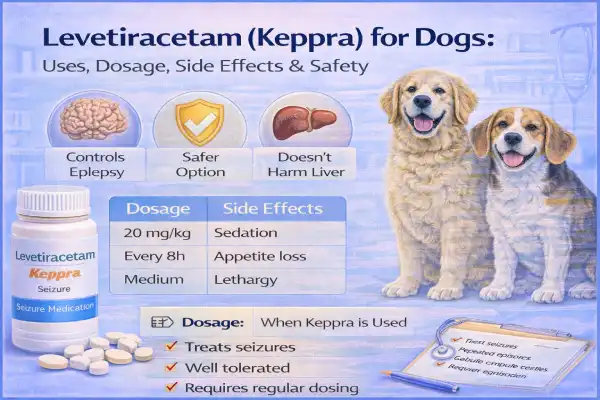
- Levetiracetam (Keppra) for Dogs: Uses, Dosage, Side Effects & Safety
- Can Seizure Medication Cause Aggression?
- Can Seizure Medication Cause Anxiety?
- Why Is My Dog Weak After Seizure Medication?
- Why Is My Dog Sleeping All Day on Keppra?
- Why Is My Dog Pacing After Seizure Medication?
- Dog Seizure Symptoms: Signs, Causes & When to Act
Together with the links included earlier in this article, this brings the total to well over 15 relevant internal links, strengthening both user navigation and topical authority.
Veterinarian Takeaway
Why is my dog still confused after a seizure? In the vast majority of cases, confusion is a normal part of the postictal phase rather than a sign of permanent brain damage.
Some dogs recover within minutes, while others need several hours before they begin acting like themselves again. Factors such as seizure duration, cluster seizures, age, underlying neurological disease, and anticonvulsant medications can all influence recovery time.
The most important thing owners should watch for isn’t whether their dog is immediately back to normal—it’s whether the dog is gradually improving. Progressive improvement is reassuring. Progressive deterioration is not.
If confusion becomes more severe, lasts longer than expected, or occurs together with additional seizures, collapse, breathing difficulties, or inability to walk, prompt veterinary evaluation is essential.
Bottom Line
If you’ve searched “Why Is My Dog Still Confused After a Seizure?”, it’s probably because your dog is behaving in a way you’ve never seen before.
That can be frightening.
The encouraging news is that most post-seizure confusion is temporary. Although dogs may pace, appear temporarily blind, fail to recognize familiar people, or seem unusually anxious, these changes often improve as the brain recovers from the seizure.
Rather than focusing on every unusual behavior, try to look for gradual improvement over the following hours. Keep your dog safe, provide a calm environment, and don’t hesitate to contact your veterinarian if recovery doesn’t follow the pattern you’ve been advised to expect.
Frequently Asked Questions – Why Is My Dog Still Confused After a Seizure
Why is my dog still confused after a seizure?
Most dogs experience a postictal phase after a seizure, during which the brain gradually returns to normal function. Temporary confusion is one of the most common signs.
How long can confusion last after a seizure?
Many dogs recover within 30 minutes to several hours. Some may remain confused for up to 24 hours after particularly severe seizures.
Is it normal if my dog doesn’t recognize me?
Yes. Temporary disorientation may prevent some dogs from recognizing familiar people immediately after a seizure.
Can seizures cause temporary blindness?
Yes. Some dogs appear temporarily blind during the postictal phase even though their eyes are healthy.
Why won’t my dog stop pacing?
Pacing is a common postictal behavior caused by temporary brain disorientation and usually improves with time.
Can seizure medication make confusion worse?
Some anticonvulsants can temporarily increase sleepiness or slow reactions, especially when treatment first begins or doses are adjusted.
Should I let my dog sleep?
Yes, provided your dog is breathing normally and can be gently awakened if necessary.
When should I call my veterinarian?
Contact your veterinarian if confusion worsens, lasts unusually long, or occurs with repeated seizures, collapse, breathing problems, or inability to walk.
Will my dog always be confused after every seizure?
Not necessarily. Some dogs have a consistent recovery pattern, while others recover differently after each seizure.
Can confusion be prevented?
Completely preventing postictal confusion isn’t always possible, but effective seizure control often reduces its severity and duration.
Sources
- Plumb’s Veterinary Drug Handbook (10th Edition)
- Merck Veterinary Manual – Seizure Disorders in Dogs
- ACVIM Consensus Statement on Seizure Management in Dogs
- BSAVA Small Animal Formulary (11th Edition)
- Veterinary Pharmacology and Therapeutics (10th Edition)
- Small Animal Clinical Pharmacology
- Journal of Veterinary Internal Medicine (JVIM)
- Journal of the American Veterinary Medical Association (JAVMA)
- Veterinary Information Network (VIN)
- Frontiers in Veterinary Science
Medical Review Statement
This article was written by Dimitar Georgiev Atanasov, MPharm, pharmacy and scientifically reviewed by Gergana Krasimirova Atanasova, MPharm, and independently veterinary reviewed by Dr. Valcho Georgiev Valchev, DVM. It has been prepared using current veterinary pharmacology references, consensus guidelines, and evidence-based veterinary medicine to provide accurate, practical information for pet owners.
Important Medical Disclaimer
The information provided on PetMedsMadeSimple.com is for educational purposes only and should not replace professional veterinary diagnosis or treatment.
Never stop or adjust seizure medication without consulting your veterinarian. If your dog experiences repeated seizures, prolonged unconsciousness, severe breathing difficulties, collapse, or confusion that continues to worsen, seek emergency veterinary care immediately.
Image Disclosure
Some images used in this article may be AI-generated or AI-assisted for educational purposes. Every article is independently researched, pharmacy-written, scientifically reviewed, and veterinary reviewed. AI-generated illustrations are intended to improve understanding of veterinary diseases and medications and do not depict actual clinical patients.