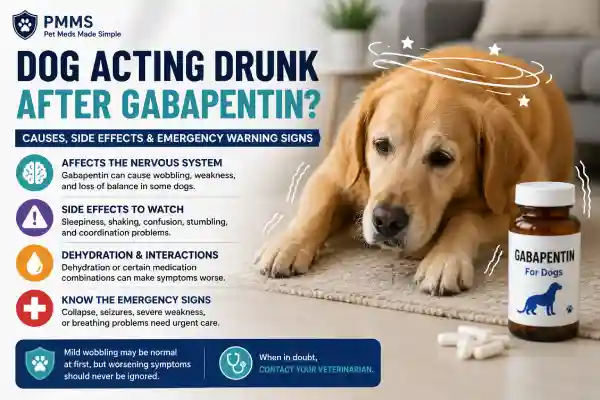
Quick Answer
Can Gabapentin Cause Eye Changes in Dogs? Yes, it can but true medication-related eye changes are relatively uncommon. Some dogs may temporarily develop changes associated with mild sedation or neurological effects, such as droopy eyelids, reduced blinking, slightly dilated pupils, or temporary unsteadiness that affects eye movements. However, sudden vision loss, severe redness, marked pupil changes, or persistent abnormal eye movements are not considered typical gabapentin side effects and require prompt veterinary evaluation because another medical condition may be responsible.
Why Owners Become Alarmed When They Notice Eye Changes
Dogs communicate a great deal through their eyes.
Owners quickly notice when something suddenly looks different.
Perhaps after starting gabapentin your dog develops:
- slightly droopy eyelids
- wider pupils
- sleepy-looking eyes
- slower blinking
- unusual eye movements
- difficulty focusing on objects
The first thought is often:
“Can Gabapentin Cause Eye Changes in Dogs?”
This concern is understandable.
Eye changes can sometimes be associated with medications, but they can also signal neurological disease, eye disorders, pain, vestibular disease, or completely unrelated medical conditions.
The challenge is determining whether gabapentin is actually responsible or whether another problem has appeared at the same time.
Throughout this guide, we’ll explain which eye changes may occasionally occur during gabapentin therapy, which findings are unlikely to be caused by the medication, and when owners should seek immediate veterinary attention.
You may also find these PMMS guides helpful:
- Gabapentin for Dogs: Vet Guidelines, Uses, Dosage & Safety
- Can Gabapentin Cause Balance Problems in Senior Dogs?
- Why Does Gabapentin Cause Sedation in Dogs?
- Can Dogs Stay Awake on Gabapentin?
- Can Dogs Exercise After Taking Gabapentin?
- Can Gabapentin Cause Muscle Tremors in Dogs?
- Does Gabapentin Build Up in a Dog’s System?
Can Gabapentin Cause Eye Changes in Dogs?
Why Gabapentin Usually Does Not Directly Affect the Eyes
One of the most important things owners should understand is that gabapentin is not considered an ophthalmic medication.
It is prescribed primarily to:
- manage neuropathic pain
- support seizure management
- reduce chronic pain
- decrease anxiety before stressful events
- improve postoperative comfort
Unlike medications designed to treat glaucoma or other eye diseases, gabapentin does not normally act directly on the structures of the eye.
Instead, when eye changes occur, they are usually related to the medication’s effects on the nervous system, coordination, or level of alertness rather than damage to the eyes themselves.
This distinction helps explain why most dogs receiving gabapentin never develop noticeable eye abnormalities.
Why Mild Sedation Can Make the Eyes Look Different
One of the most common reasons owners notice changes is simple sedation.
When a dog becomes sleepy, the eyes may naturally appear:
- partially closed
- relaxed
- less expressive
- slower to blink
- less focused on surrounding activity
These changes often resemble what owners see when a healthy dog is preparing to sleep.
Rather than indicating eye disease, they usually reflect temporary relaxation of the nervous system.
As the sedative effect wears off, normal facial expression typically returns.
Which Eye Changes May Occasionally Occur?
Although uncommon, some dogs receiving gabapentin may temporarily develop mild neurological changes that influence the appearance of the eyes.
Possible findings include:
- mildly droopy eyelids
- temporary pupil enlargement
- slower visual tracking
- reduced blink frequency
- brief difficulty focusing during periods of drowsiness
These findings are generally:
- mild
- temporary
- most noticeable shortly after dosing
- more likely after starting treatment or increasing the dose
Persistent or severe abnormalities should never be assumed to be normal medication effects.
Why Older Dogs May Show More Noticeable Eye Changes

Senior dogs often respond differently to medications.
Age-related changes involving the nervous system, muscles, and vision can make subtle medication effects easier to notice.
Older dogs may already have:
- reduced vision
- early cataracts
- retinal degeneration
- age-related neurological changes
- slower reflexes
When gabapentin causes even mild sedation, these existing conditions may make the eyes appear more abnormal than they actually are.
This is one reason veterinarians evaluate the entire patient instead of focusing only on the medication.
Can Eye Changes Simply Reflect Relaxation?
Surprisingly, yes.
Many owners interpret relaxed facial muscles as an eye problem.
For example, after pain decreases, a previously tense dog may suddenly appear:
- calmer
- more relaxed
- less anxious
- softer around the eyes
- more comfortable
This change is often positive.
Rather than indicating a new medical problem, it may simply reflect improved comfort following successful pain management.
Understanding this difference helps prevent unnecessary concern.
Why Eye Changes May Not Be Caused by Gabapentin at All
One of the biggest mistakes owners make is assuming:
“The eye changes started after gabapentin, so gabapentin must be the cause.”
Veterinarians use a much broader approach.
They ask:
“What other conditions commonly cause eye changes in dogs?”
Possible explanations include:
- glaucoma
- corneal ulcers
- uveitis
- retinal disease
- vestibular disease
- brain disorders
- high blood pressure
- trauma
- progressive neurological disease
These conditions often require completely different treatments than medication side effects.
This is why veterinarians avoid diagnosing medication reactions based solely on timing.
Could Vestibular Disease Affect the Eyes Instead?
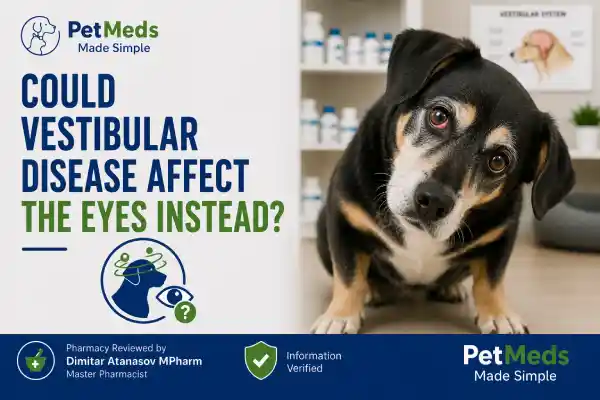
Absolutely.
Vestibular disease is especially common in older dogs.
Besides causing balance problems, it may also produce:
- rapid eye movements (nystagmus)
- head tilt
- loss of coordination
- circling
- difficulty standing
Owners sometimes mistake these neurological signs for medication side effects because both may appear shortly after treatment begins.
However, vestibular disease is an independent medical condition that requires its own veterinary assessment.
Our article Can Gabapentin Cause Balance Problems in Senior Dogs? explains why distinguishing medication side effects from vestibular disease is so important.
Why Every Dog Responds Differently
Some dogs receive gabapentin for years without any noticeable changes around the eyes.
Others may develop mild temporary drowsiness after the first few doses.
Factors influencing individual response include:
- age
- body weight
- kidney function
- underlying neurological disease
- concurrent medications
- dosage
- individual sensitivity
This variation explains why veterinarians never expect every dog to experience the same side effects.
Instead, treatment is adjusted according to the individual patient rather than a fixed expectation.
Can Gabapentin Affect Pupil Size?
One question owners frequently ask after noticing changes in their dog’s eyes is whether gabapentin can make the pupils appear larger or smaller.
The answer is:
Possibly but this is not considered one of the medication’s most common side effects.
Some dogs experiencing mild sedation or neurological effects may temporarily show subtle changes in pupil size.
However, veterinarians pay much closer attention to:
- whether both pupils are equal
- whether the pupils respond normally to light
- whether vision appears normal
- whether other neurological signs are present
A single observation of slightly larger pupils immediately after dosing is usually less concerning than persistent unequal pupils (anisocoria) or pupils that fail to respond normally to light.
Can Gabapentin Cause Abnormal Eye Movements?
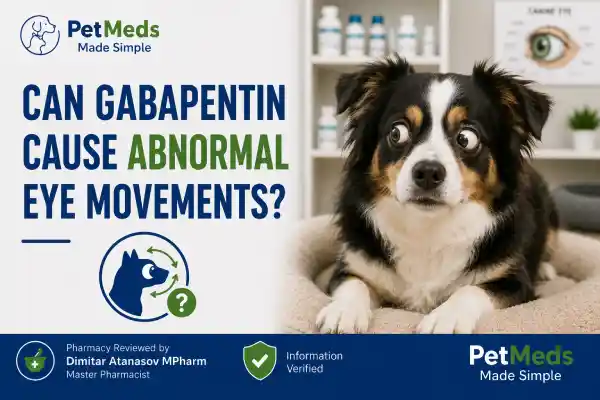
This question is especially important because owners sometimes notice their dog’s eyes moving differently after beginning treatment.
True abnormal eye movements known as nystagmus are not considered a common side effect of gabapentin in dogs.
If a dog develops:
- rapid side-to-side eye movements
- vertical eye movements
- continuous flickering of the eyes
- inability to focus
veterinarians usually investigate neurological disorders rather than assuming gabapentin is responsible.
Possible causes include:
- vestibular disease
- brain disorders
- inner ear disease
- stroke-like events
- severe neurological disease
These conditions require prompt evaluation because treatment depends on the underlying diagnosis.
Can Other Medications Cause Similar Eye Changes?
Yes.
Gabapentin is rarely the only medication senior dogs receive.
Many patients are also prescribed:
- trazodone
- tramadol
- phenobarbital
- levetiracetam
- NSAIDs
- muscle relaxants
When several medications influence the nervous system simultaneously, owners may notice:
- sleepier-looking eyes
- slower blinking
- reduced facial expression
- mild visual inattentiveness
These changes do not necessarily mean one medication is “bad.”
Instead, veterinarians assess the combined effect of the entire treatment plan before deciding whether adjustments are needed.
Why Underlying Neurological Disease May Be the Real Cause
Many dogs receiving gabapentin already have neurological conditions.
Examples include:
- intervertebral disc disease (IVDD)
- chronic neuropathic pain
- seizure disorders
- spinal cord disease
- vestibular disease
Some of these illnesses can independently affect:
- eye movements
- pupil responses
- facial symmetry
- visual behavior
As a result, the medication may receive the blame when the underlying disease is actually progressing.
Distinguishing between medication effects and disease progression is one of the most important parts of a neurological examination.
How Veterinarians Determine Whether Gabapentin Is Responsible
Veterinarians rarely diagnose a medication side effect based on appearance alone.
Instead, they carefully evaluate the timeline.
Common questions include:
- When were the eye changes first noticed?
- Did they begin immediately after starting gabapentin?
- Was the dose recently increased?
- Do the changes improve between doses?
- Are both eyes affected equally?
- Are neurological signs also present?
- Has another medication recently been added?
Answering these questions often provides more useful information than the eye changes themselves.
The goal is to identify whether gabapentin, another illness, or multiple factors are contributing simultaneously.
Which Eye Changes Require Immediate Veterinary Care?
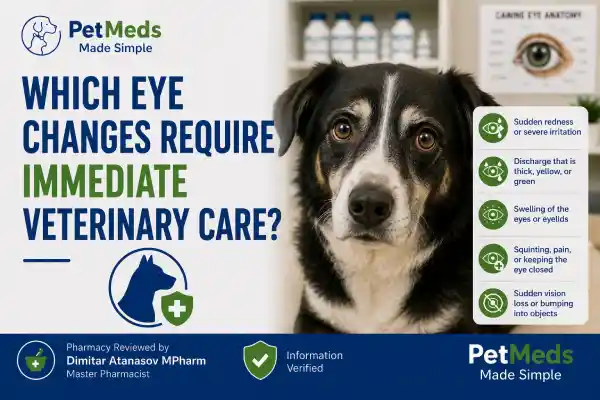
Although mild temporary changes may occur during treatment, certain findings should never be dismissed as normal medication effects.
Seek veterinary attention immediately if your dog develops:
- sudden blindness
- severe redness
- cloudy eyes
- severe squinting
- inability to open the eye
- persistent unequal pupils
- continuous abnormal eye movements
- significant eye pain
- swelling around the eye
- facial paralysis accompanied by eye abnormalities
These signs may indicate serious ophthalmic or neurological disease that requires prompt diagnosis.
Early treatment often provides the best chance of protecting vision.
Expected Eye Changes Versus Concerning Eye Changes
The comparison below illustrates why veterinarians evaluate both the severity and progression of symptoms rather than assuming every change is medication-related.
| Eye Changes Often Monitored | Eye Changes That Require Prompt Veterinary Evaluation |
|---|---|
| Mild sleepy-looking eyes | Sudden blindness |
| Slightly droopy eyelids | Persistent unequal pupils |
| Slower blinking | Continuous nystagmus |
| Temporary relaxed facial expression | Severe eye redness |
| Mild visual inattentiveness during drowsiness | Severe squinting with pain |
| Temporary pupil enlargement immediately after dosing | Cloudy eye with vision loss |
The majority of dogs taking gabapentin never develop serious eye complications, but this comparison helps owners recognize when professional evaluation is necessary.
Why Monitoring Changes Over Time Is So Important
One isolated observation is rarely enough to determine whether gabapentin is responsible.
Veterinarians often recommend monitoring:
- when the eye changes occur
- how long they last
- whether they worsen
- whether they improve as the medication wears off
- whether additional neurological signs develop
Keeping a simple diary of these observations can help identify patterns that may otherwise be overlooked.
This information is often extremely valuable during follow-up examinations.
Can Eye Changes Improve Without Stopping Gabapentin?
In many cases, yes.
If mild eye changes are related to temporary sedation, they often improve as the dog’s body adapts during the first several days of treatment.
Veterinarians may recommend:
- continued observation
- reassessment at follow-up
- evaluating concurrent medications
- checking for unrelated eye disease
- adjusting the dose only if clinically necessary
Owners should never stop gabapentin abruptly without veterinary guidance, especially when it is being used for seizure management or chronic neurological conditions.
Can Dogs Continue Taking Gabapentin If Mild Eye Changes Occur?
One of the first questions owners ask after noticing subtle eye changes is:
“Should I stop gabapentin immediately?”
In many cases, the answer is no.
If your dog develops only mild, temporary changes such as sleepy-looking eyes or slightly slower blinking—your veterinarian may recommend monitoring the situation rather than discontinuing treatment immediately.
The decision depends on several important factors, including:
- the severity of the eye changes
- whether vision appears normal
- your dog’s underlying medical condition
- the benefits gabapentin is providing
- whether symptoms are improving or worsening
- the presence of other neurological abnormalities
For many dogs, the benefits of effective pain control or seizure management outweigh mild, short-lived side effects.
Why Stopping Gabapentin Suddenly Can Be Risky
Owners are sometimes tempted to discontinue the medication as soon as they notice something unusual.
However, abrupt discontinuation is not recommended unless specifically instructed by your veterinarian.
Depending on why gabapentin was prescribed, suddenly stopping treatment may lead to:
- worsening chronic pain
- increased anxiety
- reduced mobility
- recurrence of neuropathic discomfort
- increased seizure risk in susceptible patients
Instead of stopping the medication independently, contact your veterinarian if eye changes appear concerning or continue to worsen.
Practical Ways to Monitor Your Dog’s Eyes at Home
Owners are often the first to notice subtle changes.
Simple daily observations can provide valuable information during veterinary examinations.
Monitor whether your dog:
- follows moving objects normally
- recognizes familiar people
- navigates around furniture confidently
- bumps into objects
- keeps both eyes equally open
- develops redness or discharge
- rubs or paws at the eyes
- squints in bright light
Recording these observations over several days often provides a much clearer picture than relying on memory alone.
How Veterinarians Examine Eye Changes
If eye abnormalities continue, your veterinarian may perform a complete ophthalmic and neurological examination.
This evaluation may include:
- pupil light reflex testing
- menace response evaluation
- tracking response assessment
- fluorescein staining if corneal injury is suspected
- intraocular pressure measurement when glaucoma is a concern
- neurological examination
- review of current medications
- blood testing when appropriate
These examinations help determine whether the eyes themselves are affected or whether the changes originate from another part of the nervous system.
Why Routine Monitoring Is Especially Important in Senior Dogs
Older dogs often develop more than one medical condition simultaneously.
For example, a senior dog taking gabapentin may also have:
- cataracts
- chronic kidney disease
- arthritis
- hypertension
- cognitive dysfunction
- retinal degeneration
Because these conditions can influence both vision and neurological function, regular veterinary recheck appointments become even more valuable during long-term treatment.
Monitoring allows small problems to be identified before they become more serious.
Can Healthy Eyes Still Look Different During Recovery?
Yes.
Many owners expect recovery to look exactly the same every day.
In reality, a dog recovering from surgery or chronic pain may appear:
- sleepier one day
- brighter the next
- calmer after medication
- more active as pain improves
These normal day-to-day variations can subtly affect facial expression and the appearance of the eyes without indicating eye disease.
Looking at overall progress is often more informative than focusing on one isolated observation.
Veterinarian Takeaway
Can Gabapentin Cause Eye Changes in Dogs?
Yes but true medication-related eye changes are relatively uncommon, and most are mild and temporary when they occur.
Gabapentin does not normally damage the eyes themselves.
Instead, temporary changes usually result from its effects on the nervous system, producing mild sedation or altered coordination rather than primary eye disease.
Veterinarians carefully distinguish expected medication effects from unrelated ophthalmic and neurological disorders because many serious eye diseases require immediate treatment.
When owners notice changes involving:
- vision
- pupil size
- eye movements
- redness
- pain
- facial symmetry
professional evaluation remains the safest approach.
Bottom Line
Can Gabapentin Cause Eye Changes in Dogs? Yes, but serious eye complications are uncommon. Most dogs taking gabapentin never develop noticeable eye abnormalities, and when mild changes occur, they are usually related to temporary sedation or neurological effects rather than damage to the eyes themselves.
The greatest challenge is distinguishing expected medication effects from unrelated eye or neurological diseases that may develop at the same time.
Monitoring your dog’s overall comfort, vision, and neurological function—and reporting persistent or severe changes promptly—helps ensure that both the medication and the underlying condition are managed safely.
With individualized dosing and regular veterinary follow-up, gabapentin continues to be an important and generally well-tolerated medication for many dogs.
Frequently Asked Questions – Can Gabapentin Cause Eye Changes in Dogs
Can gabapentin cause eye changes in dogs?
Yes. Mild temporary eye changes may occasionally occur, but significant eye disease is not considered a common side effect of gabapentin.
Can gabapentin make my dog’s eyes look sleepy?
Yes. Mild sedation may cause partially closed eyelids, slower blinking, and a relaxed facial expression in some dogs.
Can gabapentin affect my dog’s pupils?
Temporary subtle pupil changes may occasionally occur, but persistent unequal pupils or pupils that do not respond normally to light require prompt veterinary evaluation.
Can gabapentin cause blindness in dogs?
Blindness is not considered an expected side effect of gabapentin. Sudden vision loss should always be treated as a veterinary emergency.
Why are my dog’s eyes moving strangely after taking gabapentin?
Continuous abnormal eye movements are more likely to indicate an underlying neurological condition than a typical medication side effect and should be evaluated promptly.
Should I stop gabapentin if my dog’s eyes look different?
No. Never discontinue gabapentin without consulting your veterinarian. Mild temporary changes may not require stopping treatment.
How can I monitor my dog’s vision at home?
Observe whether your dog follows moving objects, avoids obstacles, recognizes familiar people, and shows any signs of redness, discharge, or squinting.
When should eye changes be considered an emergency?
Seek immediate veterinary care if your dog develops sudden blindness, severe eye pain, marked redness, persistent unequal pupils, continuous abnormal eye movements, or significant swelling around the eyes.
Sources
- Plumb DC. Plumb’s Veterinary Drug Handbook. Latest Edition.
- Papich MG. Saunders Handbook of Veterinary Drugs: Small and Large Animal.
- Gelatt KN. Veterinary Ophthalmology. Latest Edition.
- Merck Veterinary Manual – Gabapentin.
- Merck Veterinary Manual – Ocular Disorders in Dogs.
- American College of Veterinary Ophthalmologists (ACVO) Clinical Resources.
- BSAVA Small Animal Formulary.
- Veterinary Information Network (VIN).
- Frontiers in Veterinary Science – Neurological Disorders Affecting Vision in Dogs.
- WSAVA Global Pain Council Guidelines.
Medical Review Statement
This article was written by Dimitar Georgiev Atanasov, MPharm, scientifically reviewed by Gergana Krasimirova Atanasova, MPharm, and independently veterinary reviewed by Dr. Valcho Georgiev Valchev, DVM. It is intended for educational purposes only and should not replace individualized veterinary diagnosis, ophthalmic examination, neurological assessment, medication management, or professional treatment recommendations.
Image Disclosure
Image Disclosure: Some images used in this article may be AI-generated to illustrate veterinary ophthalmology, medication safety, neurological concepts, and canine health. They are intended for educational purposes only and should not replace professional veterinary advice.