Quick Answer
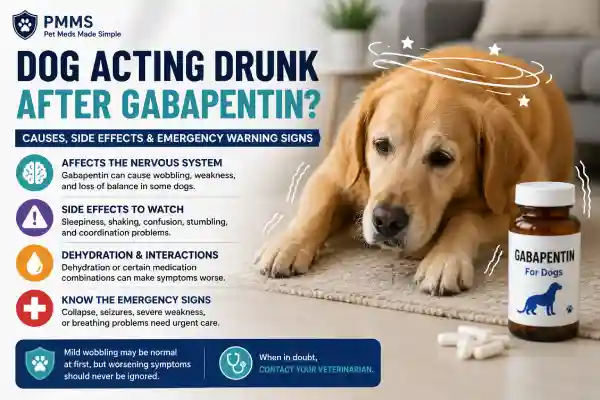
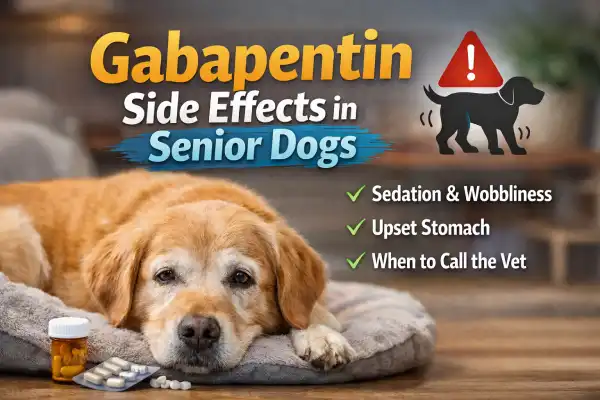
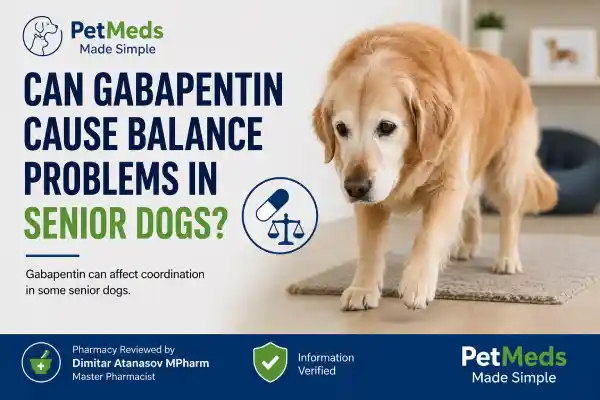
Can Gabapentin Cause Balance Problems in Senior Dogs? Yes, it can. Mild unsteadiness, wobbliness, or temporary balance problems are recognized side effects of gabapentin in some dogs, and senior dogs may be more susceptible because aging naturally affects muscle strength, coordination, vision, and neurological function. However, balance problems are not always caused by gabapentin alone, and underlying diseases such as arthritis, vestibular disease, or neurological disorders may also contribute.
Why Senior Dog Owners Become Concerned So Quickly
One of the most frightening moments for owners of older dogs happens when they notice their companion suddenly becoming unsteady.
Perhaps your senior dog:
- stumbles while walking
- slips on hardwood floors
- sways from side to side
- struggles to climb stairs
- appears weaker than usual
- has difficulty standing after resting
Then you remember something important:
“My dog recently started taking gabapentin.”
Naturally, the next question becomes:
“Can Gabapentin Cause Balance Problems in Senior Dogs?”
This is an excellent question because several different factors may be involved at the same time.
The medication may contribute to temporary unsteadiness, but aging itself also changes how dogs move, react, and recover from illness.
Understanding the difference can help owners respond appropriately without assuming that every balance problem is caused by the medication.
Throughout this guide, you may also find these PMMS articles helpful:
- Gabapentin for Dogs: Vet Guidelines, Uses, Dosage & Safety
- Can Dogs Exercise After Taking Gabapentin?
- Can Dogs Take Gabapentin for Arthritis Forever?
- Can Gabapentin Cause Muscle Tremors in Dogs?
- Can Dogs Take Gabapentin Every 8 Hours?
- Can Dogs Take Gabapentin Long-Term Safely?
- Does Gabapentin Build Up in a Dog’s System?
Can Gabapentin Cause Balance Problems in Senior Dogs?
Why Senior Dogs Are More Sensitive to Medication
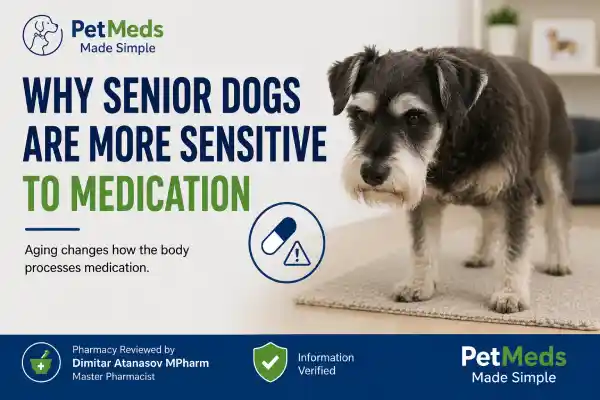
One reason veterinarians monitor older dogs more closely is that aging changes the way the body responds to medications.
Senior dogs often experience natural changes involving:
- muscle mass
- body composition
- kidney function
- liver function
- nervous system function
- balance and coordination
These age-related changes do not automatically mean gabapentin is unsafe.
However, they may increase the likelihood that a senior dog develops mild side effects such as temporary wobbliness or slower movement.
This is why veterinarians often individualize treatment more carefully in elderly patients than in younger adult dogs.
Why Aging Alone Can Affect Balance
Balance problems are surprisingly common in older dogs even without medication.
As dogs age, several body systems gradually change.
These include:
- reduced muscle strength
- slower reflexes
- decreased joint flexibility
- arthritis
- vision changes
- reduced proprioception (body position awareness)
Many owners first notice these changes when their dog:
- hesitates before climbing stairs
- slips more frequently
- struggles on smooth flooring
- walks more cautiously than before
Because these changes may develop gradually, it can sometimes be difficult to determine whether gabapentin is responsible or whether the medication simply made an existing problem more noticeable.
When Mild Wobbliness Is an Expected Side Effect
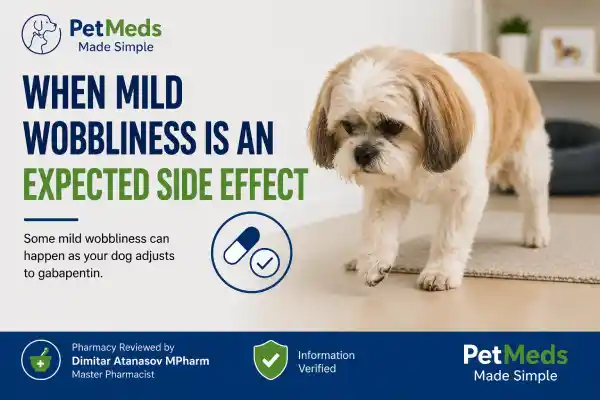
One of the best-known side effects of gabapentin is temporary mild ataxia, a veterinary term describing uncoordinated movement.
Owners may observe that their dog:
- walks with a wider stance
- sways slightly while turning
- appears mildly unstable
- hesitates before changing direction
- seems less coordinated than usual
For many dogs, these effects are:
- mild
- temporary
- dose-related
- most noticeable shortly after treatment begins or after a dose adjustment
As the body adapts, these symptoms often improve.
However, persistent or worsening balance problems should always be discussed with a veterinarian.
Why Balance Problems May Not Be Caused by Gabapentin Alone
One of the biggest mistakes owners make is assuming every symptom appearing after a new medication is automatically caused by that medication.
Veterinarians think differently.
Instead of asking:
“Is gabapentin causing this?”
they ask:
“What else could explain these signs?”
Possible causes of balance problems include:
- vestibular disease
- arthritis
- spinal disease
- degenerative neurological disorders
- ear disease
- muscle weakness
- stroke-like conditions
- vision loss
Gabapentin may sometimes contribute to mild unsteadiness, but it is only one piece of the overall clinical picture.
How Arthritis Can Make Balance Worse
Many senior dogs receiving gabapentin already suffer from arthritis.
Painful joints naturally reduce stability.
Owners may notice:
- shorter steps
- slower walking
- difficulty rising
- uneven weight distribution
- occasional stumbling
Once gabapentin reduces pain, some dogs actually become more active before their muscles have regained strength.
This combination may temporarily make balance problems appear more noticeable.
It is important to remember that improving comfort does not instantly restore muscle strength or joint stability.
How Kidney Function Can Influence Side Effects

Gabapentin is eliminated primarily through the kidneys.
Because kidney function may decline gradually with age, veterinarians often pay closer attention when prescribing gabapentin for senior dogs.
If medication is eliminated more slowly than expected, some older dogs may become more susceptible to side effects such as:
- increased sleepiness
- slower reactions
- reduced coordination
- temporary wobbliness
This is one reason regular veterinary examinations remain especially important throughout long-term treatment.
Owners should never adjust the dose on their own based solely on temporary balance changes.
Why Dose Adjustments Can Temporarily Affect Coordination
Many owners report that balance problems become most noticeable:
- during the first few days of treatment
- shortly after the veterinarian increases the dose
- when another sedating medication is added
These situations often involve the body adapting to changing medication levels.
Veterinarians may recommend continued observation, dose adjustments, or further evaluation depending on how severe the symptoms are and whether they continue to improve.
Monitoring these changes carefully helps distinguish expected medication effects from unrelated medical conditions.
Why Every Senior Dog Responds Differently
No two senior dogs age in exactly the same way.
For example:
Two twelve-year-old Labrador Retrievers may both receive gabapentin for arthritis.
One continues walking normally with no noticeable side effects.
The other develops mild wobbliness for several days before gradually adapting to the medication.
Both responses may be considered normal depending on the individual dog’s health, kidney function, muscle condition, and overall medical history.
This individual variation explains why veterinarians avoid predicting exactly how every senior dog will respond before treatment begins.
Could Another Medical Condition Be Responsible?
One of the most important questions veterinarians ask is not:
“Is gabapentin causing the balance problem?”
Instead, they ask:
“What else could be causing this?”
This broader approach is especially important in senior dogs because multiple age-related conditions often occur at the same time.
Possible causes include:
- vestibular disease
- severe arthritis
- degenerative joint disease
- intervertebral disc disease (IVDD)
- degenerative myelopathy
- cognitive dysfunction syndrome
- inner ear disease
- vision loss
- muscle weakness
- metabolic disorders
Gabapentin may contribute to temporary wobbliness, but it should never be assumed to be the only explanation until other possibilities have been considered.
Why Vestibular Disease Can Look Similar to Gabapentin Side Effects
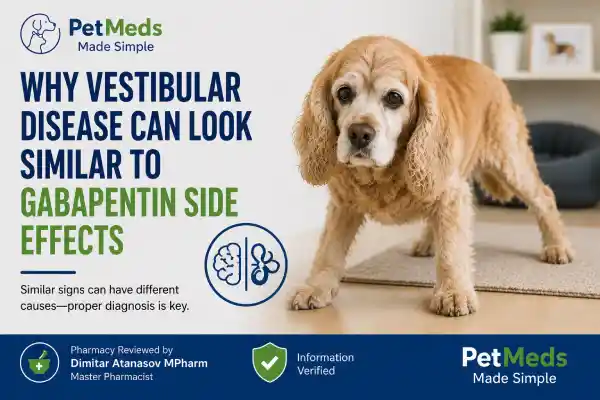
Vestibular disease is one of the most common neurological problems affecting senior dogs.
Owners may notice:
- sudden leaning to one side
- loss of balance
- falling
- rapid eye movements (nystagmus)
- head tilt
- difficulty walking in a straight line
At first glance, these signs may resemble medication-related wobbliness.
However, vestibular disease usually develops independently of gabapentin and often requires its own veterinary evaluation.
Recognizing the difference is important because vestibular disease may require additional diagnostic testing and supportive care.
How Veterinarians Determine Whether Gabapentin Is the Cause
Veterinarians rarely blame a medication based on timing alone.
Instead, they look for patterns.
Questions commonly include:
- When did the balance problem first appear?
- Was gabapentin recently started?
- Has the dose changed?
- Did symptoms worsen immediately after dosing?
- Are the signs improving between doses?
- Is another medication being given at the same time?
- Has your dog’s underlying disease progressed?
These answers often provide more useful information than the balance problem itself.
Looking at the complete timeline helps determine whether gabapentin is the likely explanation or whether another medical condition deserves further investigation.
When Loss of Balance Requires Immediate Veterinary Care
Although mild wobbliness can occur after starting gabapentin, some situations should never be attributed to medication without prompt veterinary evaluation.
Seek immediate veterinary care if your senior dog develops:
- repeated falls
- inability to stand
- collapse
- seizures
- loss of consciousness
- severe head tilt
- continuous rolling
- sudden paralysis
- difficulty breathing
- profound weakness
These signs may indicate a medical emergency that extends far beyond expected medication side effects.
Prompt assessment provides the best opportunity for accurate diagnosis and timely treatment.
How Other Medications May Increase Unsteadiness
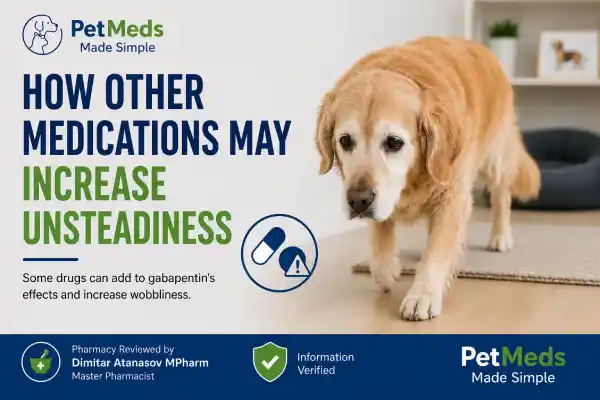
Many senior dogs receive more than one medication.
Examples include:
- trazodone
- tramadol
- NSAIDs
- phenobarbital
- muscle relaxants
- anxiety medications
Some combinations are intentionally prescribed because they improve pain control or quality of life.
However, when multiple medications affect the nervous system, temporary sedation or reduced coordination may become more noticeable.
This does not necessarily mean the medications should be stopped.
Instead, veterinarians evaluate:
- overall comfort
- mobility
- severity of side effects
- treatment goals
- individual risk factors
Owners should never discontinue prescribed medications without consulting their veterinarian.
Can Balance Problems Improve Over Time?
Fortunately, yes.
Many dogs experience the greatest degree of wobbliness:
- during the first few days of treatment
- shortly after a dose increase
- when another medication is introduced
As the body adapts, mild coordination changes often become much less noticeable.
This gradual improvement is one reason veterinarians sometimes recommend careful monitoring before making immediate medication changes.
However, worsening or persistent symptoms should always be reassessed.
Expected Changes Versus Signs That Need Veterinary Attention
The following table helps illustrate the difference between common temporary effects and symptoms that deserve prompt evaluation.
| Mild Changes Often Monitored | Signs That Require Veterinary Attention |
|---|---|
| Mild wobbliness | Repeated falling |
| Slightly slower walking | Inability to stand |
| Temporary sleepiness | Collapse |
| Mild hesitation on stairs | Severe disorientation |
| Slightly wider stance | Sudden paralysis |
| Mild coordination changes | Seizures or loss of consciousness |
Every dog is different, but this comparison highlights why the severity and progression of symptoms matter more than the presence of wobbliness alone.
Can Balance Problems Be Prevented?
Not every side effect can be prevented, but several practical steps may reduce the likelihood of falls and injuries in senior dogs receiving gabapentin.
Veterinarians commonly recommend:
- administering medication exactly as prescribed
- attending scheduled follow-up appointments
- reporting new symptoms promptly
- avoiding slippery flooring whenever possible
- using rugs or traction mats
- assisting dogs on stairs if needed
- maintaining a healthy body weight
- following rehabilitation recommendations when appropriate
These simple measures often improve safety while allowing dogs to continue benefiting from pain management.
Why Home Modifications Often Matter as Much as Medication
Sometimes the greatest improvement comes not from changing the prescription but from changing the environment.
Simple modifications may include:
- non-slip runners on hardwood floors
- orthopedic bedding
- ramps instead of stairs
- elevated food and water bowls when appropriate
- better lighting for dogs with reduced vision
Combined with appropriate medication management, these changes can significantly reduce fall risk and improve confidence during daily movement.
Owners whose dogs also have arthritis may find our guide Can Dogs Exercise After Taking Gabapentin? helpful for learning how safe activity can improve mobility while reducing unnecessary strain.
Can Senior Dogs Continue Taking Gabapentin Despite Mild Balance Problems?

Many owners assume that any wobbliness means gabapentin must be stopped immediately.
Fortunately, this is not always the case.
For some senior dogs, mild balance changes are temporary and improve as the body adapts to the medication.
Rather than stopping treatment immediately, veterinarians consider several important questions:
- Are the balance problems mild or severe?
- Are they improving each day?
- Is your dog’s pain significantly better?
- Are there other medical conditions contributing?
- Has the medication recently been started or increased?
- Is your dog otherwise alert and comfortable?
By evaluating the entire clinical picture, veterinarians can determine whether continuing treatment, adjusting the dose, or investigating another cause is the safest option.
How Veterinarians Balance Benefits and Risks
Every medication decision involves weighing potential benefits against possible side effects.
For many senior dogs, gabapentin provides meaningful improvements in:
- chronic pain control
- mobility
- quality of life
- sleep quality
- willingness to walk
- overall comfort
If the only side effect is mild temporary wobbliness, and the dog is otherwise doing well, the overall benefits may still outweigh the risks.
On the other hand, if balance problems become severe enough to increase the risk of injury, the treatment plan should be reassessed promptly.
This individualized approach is one of the reasons regular follow-up visits are so important in older patients.
Practical Ways to Reduce Fall Risk at Home
Simple environmental changes can make a remarkable difference for senior dogs experiencing mild balance problems.
Veterinarians commonly recommend:
- placing non-slip rugs on hardwood or tile floors
- avoiding polished or wet surfaces
- using ramps instead of stairs whenever possible
- providing orthopedic bedding
- keeping food and water bowls easily accessible
- trimming excessively long nails to improve traction
- assisting dogs when entering or leaving vehicles
These modifications often improve confidence while walking and reduce the likelihood of falls.
Can Rehabilitation Help Improve Balance?
For many senior dogs, yes.
Veterinary rehabilitation may improve:
- muscle strength
- coordination
- balance
- joint flexibility
- confidence during movement
- overall mobility
Depending on the diagnosis, rehabilitation programs may include:
- controlled leash walks
- balance exercises
- therapeutic strengthening
- underwater treadmill therapy
- proprioception training
- professionally supervised physical therapy
Medication and rehabilitation often complement one another rather than competing as treatment options.
Why Regular Recheck Examinations Matter Even More in Senior Dogs

Senior dogs change over time.
A treatment plan that worked perfectly six months ago may need adjustment as your dog ages.
During follow-up visits, veterinarians commonly assess:
- body weight
- muscle condition
- kidney function
- mobility
- neurological status
- response to gabapentin
- progression of the underlying disease
These evaluations help ensure that treatment continues providing more benefit than risk.
Owners often focus on the medication itself, while veterinarians evaluate the entire patient.
What Should Owners Record at Home?
Keeping a simple observation diary can provide valuable information during follow-up appointments.
Consider recording:
- medication administration times
- episodes of stumbling
- falls or near-falls
- appetite
- energy level
- willingness to exercise
- changes in mobility
- any new symptoms
Patterns observed over several days are often far more informative than a single isolated event.
Veterinarian Takeaway
Can Gabapentin Cause Balance Problems in Senior Dogs?
Yes but mild balance problems do not automatically mean gabapentin is unsafe.
Senior dogs naturally have a higher risk of wobbliness because aging affects muscle strength, joint health, vision, and neurological function.
Gabapentin may temporarily contribute to reduced coordination in some patients, particularly during the first days of treatment or after a dose adjustment.
However, balance problems should always be evaluated in the context of:
- your dog’s age
- underlying medical condition
- kidney function
- concurrent medications
- overall neurological health
Veterinarians consider all of these factors before deciding whether the medication, another disease, or a combination of both is responsible.
Bottom Line
Can Gabapentin Cause Balance Problems in Senior Dogs? Yes, mild wobbliness or temporary coordination changes can occur, particularly in older dogs that are naturally more sensitive to medications.
However, gabapentin is only one possible explanation.
Many senior dogs also develop arthritis, vestibular disease, muscle weakness, neurological disorders, or age-related mobility changes that can affect balance independently of medication.
The safest approach is not to stop gabapentin automatically, but to monitor your dog’s symptoms carefully, make simple home modifications to reduce fall risk, and work closely with your veterinarian to determine the true cause.
With individualized dosing, regular monitoring, and appropriate supportive care, many senior dogs continue to benefit from gabapentin while maintaining an excellent quality of life.
Frequently Asked Questions – Can Gabapentin Cause Balance Problems in Senior Dogs
Can gabapentin cause balance problems in senior dogs?
Yes. Temporary wobbliness or mild coordination changes are recognized side effects, and senior dogs may be more susceptible because of normal age-related changes.
Why are older dogs more likely to become unsteady on gabapentin?
Aging naturally affects muscle strength, joint stability, vision, reflexes, and kidney function, making some senior dogs more sensitive to medications.
Will balance problems improve after starting gabapentin?
Many dogs improve within several days as they adjust to treatment, although persistent or worsening symptoms should always be evaluated by a veterinarian.
Should I stop giving gabapentin if my senior dog is wobbling?
No. Do not discontinue prescribed medication without consulting your veterinarian, as balance problems may have several different causes.
Can arthritis make balance problems worse?
Yes. Pain, muscle weakness, and reduced joint stability associated with arthritis may contribute to unsteady walking independently of gabapentin.
How can I help prevent my senior dog from falling?
Non-slip flooring, orthopedic bedding, ramps, careful supervision on stairs, and regular veterinary follow-up can significantly reduce fall risk.
When should balance problems be considered an emergency?
Seek immediate veterinary care if your dog cannot stand, repeatedly falls, collapses, has seizures, develops sudden paralysis, or experiences difficulty breathing.
Can senior dogs safely take gabapentin long-term?
Many can. With individualized dosing, periodic re-evaluation, and appropriate monitoring, gabapentin is commonly used safely as part of long-term pain management in senior dogs.
Sources
- Plumb DC. Plumb’s Veterinary Drug Handbook. Latest Edition.
- Papich MG. Saunders Handbook of Veterinary Drugs: Small and Large Animal.
- 2022 AAHA Pain Management Guidelines for Dogs and Cats.
- AAHA Senior Care Guidelines for Dogs and Cats.
- Merck Veterinary Manual – Gabapentin.
- Merck Veterinary Manual – Geriatric Dogs.
- BSAVA Small Animal Formulary.
- Veterinary Information Network (VIN).
- WSAVA Global Pain Council Guidelines.
- Frontiers in Veterinary Science. Pain Management and Rehabilitation in Geriatric Dogs.
Medical Review Statement
This article was written by Dimitar Georgiev Atanasov, MPharm, scientifically reviewed by Gergana Krasimirova Atanasova, MPharm, and independently veterinary reviewed by Dr. Valcho Georgiev Valchev, DVM. It is intended for educational purposes only and should never replace individualized veterinary diagnosis, medication management, neurological assessment, or professional treatment recommendations.
Image Disclosure
Image Disclosure: Some images used in this article may be AI-generated to illustrate veterinary concepts, senior dog mobility, medication safety, and neurological conditions. They are intended for educational purposes only and should not replace professional veterinary advice.