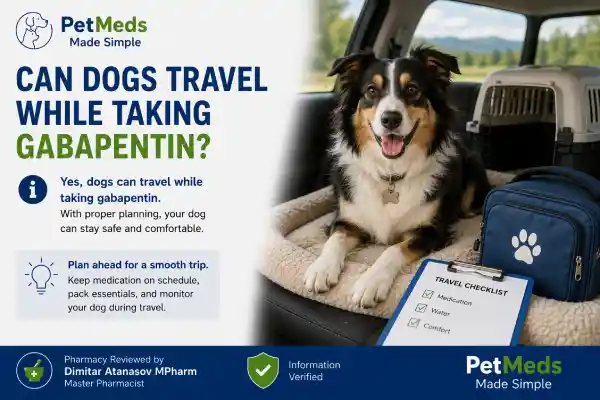
Quick Answer
Can Dogs Travel While Taking Gabapentin? Yes, most dogs can travel safely while taking gabapentin, provided the medication has been prescribed by a veterinarian and the dog is stable enough to travel. In fact, gabapentin is commonly used to reduce anxiety, improve comfort, and decrease stress during car rides and veterinary visits. However, owners should understand how the medication may affect balance, alertness, hydration, and coordination before beginning any journey.
One of the most common questions owners ask before a trip is:
Can dogs travel while taking gabapentin?
The answer is usually yes, but there are several important factors to consider before loading your dog into the car or boarding a flight.
Gabapentin is prescribed for many conditions, including:
- chronic pain
- arthritis
- nerve pain
- seizures
- anxiety
- stress before veterinary visits
- post-operative recovery
Because many of these dogs are already managing medical conditions, travel requires a little more planning than it would for a healthy pet.
Fortunately, with proper preparation, most dogs can travel safely while continuing their prescribed gabapentin treatment.
Can Dogs Travel While Taking Gabapentin?
Why Veterinarians Often Recommend Gabapentin Before Travel
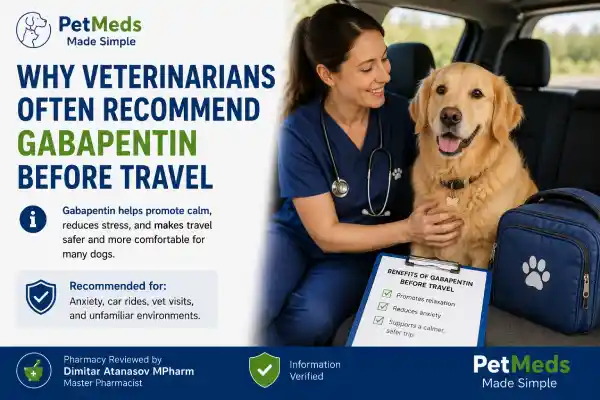
Many owners are surprised to learn that veterinarians sometimes prescribe gabapentin specifically for travel.
Long car rides and unfamiliar environments can cause significant stress in dogs.
Common travel-related anxiety includes:
- pacing
- whining
- panting
- trembling
- excessive drooling
- restlessness
- refusal to settle
Gabapentin helps reduce abnormal nerve stimulation and produces a calming effect in many dogs.
Rather than making dogs unconscious, the medication often helps them remain:
- calmer
- more comfortable
- less reactive
- easier to handle
- less fearful
This is especially helpful for dogs that become extremely anxious during long journeys.
Owners preparing for stressful trips may also find our article Why Is My Dog Acting Strange After Gabapentin? helpful, since behavioral changes are often related to the medication’s calming effects.
Can Dogs Travel While Taking Gabapentin by Car?
In most cases, yes.
Car travel is generally considered safe for dogs receiving gabapentin, provided:
- the medication was prescribed by a veterinarian
- the correct dose was given
- the dog is medically stable
- the owner understands the expected side effects
During car travel, gabapentin may actually improve the experience by reducing:
- motion-related anxiety
- nervousness
- excitement
- excessive movement around the vehicle
However, owners should remember that some dogs become sleepy after taking gabapentin.
If your dog appears unusually drowsy, read Can Dogs Stay Awake on Gabapentin?, which explains when sedation is expected and when it becomes excessive.
Can Dogs Travel While Taking Gabapentin on Long Road Trips?
Yes, but longer journeys require additional planning.
Before leaving home, consider:
- the total travel time
- scheduled rest breaks
- access to drinking water
- opportunities for bathroom breaks
- weather conditions
- medication schedule
Dogs receiving gabapentin every eight hours should continue following the prescribed dosing schedule whenever possible.
If your travel plans make dosing difficult, our article Can Dogs Take Gabapentin Every 8 Hours? explains why maintaining consistent timing is important for many patients.
Owners should avoid delaying doses simply because they are traveling.
Can Dogs Travel While Taking Gabapentin After Surgery?
This depends on the reason for travel.
Many dogs receive gabapentin after:
- orthopedic surgery
- spinal surgery
- soft tissue procedures
- neurological operations
If travel is necessary, veterinarians generally recommend:
- minimizing unnecessary movement
- using supportive bedding
- preventing jumping
- assisting the dog during bathroom breaks
- following all post-operative instructions
Dogs recovering from surgery may also receive additional medications that increase sedation.
Owners should therefore monitor their dog carefully throughout the journey.
Can Dogs Travel While Taking Gabapentin if They Have Arthritis?

Absolutely.
In fact, many arthritic dogs travel more comfortably because gabapentin reduces chronic pain.
Without adequate pain control, long journeys may become extremely uncomfortable.
Owners can make travel easier by:
- using orthopedic bedding
- helping dogs enter and exit the vehicle
- taking frequent walking breaks
- avoiding slippery surfaces
- limiting excessive climbing
Owners managing chronic arthritis should also review Can Dogs Take Gabapentin for Arthritis Forever?, which discusses long-term treatment strategies.
Can Dogs Travel While Taking Gabapentin if They Become Sleepy?
Yes.
Sleepiness is one of the most common side effects of gabapentin.
A mildly sleepy dog is often perfectly capable of traveling safely.
However, excessive sedation deserves attention.
Contact your veterinarian before traveling if your dog becomes:
- difficult to wake
- unable to stand
- extremely weak
- disoriented
- unusually unresponsive
These signs may indicate that the dosage should be reassessed before beginning a long trip.
Owners should also review:
These articles explain how normal sedation differs from excessive neurological depression.
Can Dogs Travel While Taking Gabapentin if They Experience Balance Problems?
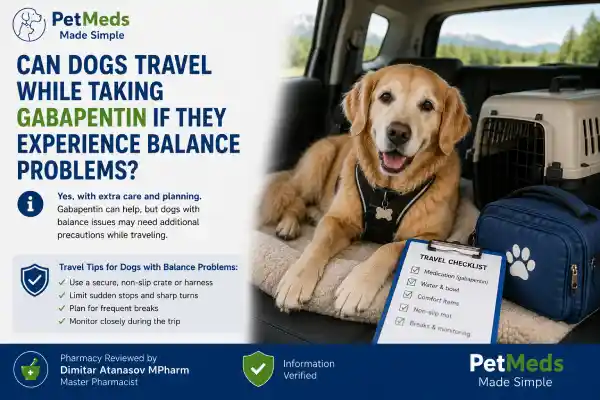
Sometimes but additional precautions are necessary.
Dogs experiencing wobbliness should not be allowed to:
- jump from vehicles
- climb steep stairs
- run through parking lots
- walk on slippery surfaces
Instead, owners should:
- use a leash at all times
- provide physical support when needed
- lift smaller dogs safely
- allow extra time for movement
If your dog has recently developed poor coordination, our guide Why Is My Dog Wobbly After Gabapentin? explains when this side effect is expected and when veterinary evaluation becomes necessary.
Why Good Planning Makes Travel Much Safer
Most travel-related problems are not caused by gabapentin itself.
Instead, they occur because owners forget to prepare for their dog’s medical needs.
Before leaving home, confirm that you have:
- enough medication for the entire trip
- extra doses in case of delays
- fresh drinking water
- food
- veterinary contact information
- copies of prescriptions if traveling long distances
- emergency clinic locations along your route
Simple preparation dramatically reduces the likelihood of unexpected problems during travel.
Can Dogs Travel While Taking Gabapentin by Air?
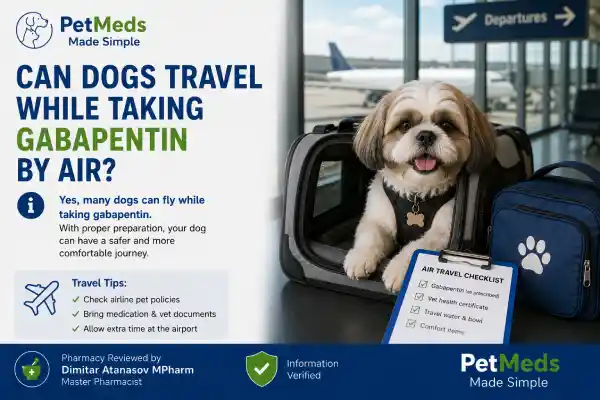
Yes, but flying requires additional preparation.
Air travel can be stressful for both dogs and owners.
Factors such as:
- unfamiliar surroundings
- loud noises
- temperature changes
- airport activity
- long waiting times
may increase anxiety even before the flight begins.
Gabapentin is sometimes prescribed to reduce travel-related stress, but owners should never give it solely for air travel without veterinary advice.
Some airlines also have specific policies regarding sedated animals, particularly those traveling in the cargo hold.
Before booking a flight, discuss your travel plans with your veterinarian to determine whether gabapentin is appropriate for your dog’s individual situation.
Can Dogs Travel While Taking Gabapentin Across Time Zones?
Usually, yes.
However, dogs receiving gabapentin on a strict schedule should continue taking the medication at approximately the prescribed intervals.
For example, dogs receiving gabapentin every eight hours should remain as close as possible to that schedule despite crossing time zones.
Owners planning international travel should calculate dosing times before departure.
If maintaining the schedule becomes difficult, speak with your veterinarian before the trip rather than adjusting doses on your own.
Our article Can Dogs Take Gabapentin Every 8 Hours? explains why consistent dosing is particularly important for dogs receiving gabapentin for seizure control or chronic nerve pain.
Can Dogs Miss a Dose While Traveling?
Travel increases the chance of forgotten medications.
Busy schedules, hotel check-ins, traffic delays, and unfamiliar routines make missed doses more common than owners realize.
If you discover that your dog has missed a dose:
- remain calm
- follow your veterinarian’s instructions
- never double the next dose unless specifically advised
- resume the normal schedule when appropriate
Owners should also review:
These guides explain how veterinarians usually manage timing errors.
Can Dogs Travel While Taking Gabapentin With Other Medications?
Yes.
Many dogs traveling with gabapentin also receive:
- NSAIDs
- trazodone
- seizure medications
- antibiotics
- joint supplements
- heart medications
Travel itself does not usually require changing these medications.
However, owners should:
- pack every medication separately
- bring enough doses for the entire trip
- carry extra medication in case of delays
- keep medications in their original labeled containers
If your dog receives multiple neurological medications, ask your veterinarian whether any special travel precautions are recommended.
Can Dehydration Become More Important Than Gabapentin During Travel?
Absolutely.
Long trips often involve:
- warmer temperatures
- increased panting
- delayed water breaks
- unfamiliar environments
These factors may contribute to dehydration.
Dehydration itself can cause:
- weakness
- faster heart rate
- lethargy
- dry gums
- reduced energy
Owners sometimes blame gabapentin when dehydration is actually responsible for the symptoms.
Offer fresh water regularly throughout the journey, especially during hot weather.
Can Dogs Exercise During Rest Stops While Taking Gabapentin?
Yes—but use common sense.
Rest stops provide an excellent opportunity for dogs to:
- stretch
- urinate
- drink water
- walk briefly
- relax outside the vehicle
However, dogs receiving gabapentin should not immediately participate in vigorous exercise if they appear:
- sleepy
- unsteady
- weak
- poorly coordinated
Short, controlled leash walks are usually much safer than allowing excited running immediately after leaving the vehicle.
Owners interested in exercise recommendations should also read Can Dogs Exercise After Taking Gabapentin?
Can Dogs Travel While Taking Gabapentin if They Develop Side Effects?
It depends on the severity.
Mild side effects such as:
- temporary sleepiness
- mild wobbliness
- reduced activity
- quieter behavior
can often be monitored while continuing the journey.
However, travel should be interrupted if your dog develops:
- collapse
- repeated vomiting
- seizures
- severe weakness
- inability to stand
- breathing difficulty
- extreme disorientation
These signs require immediate veterinary attention regardless of where you are traveling.
Owners concerned about accidental overdose should also review Can Dogs Overdose on Gabapentin?
How Veterinarians Recommend Preparing for Travel

Veterinarians often recommend creating a simple travel checklist.
Before leaving, confirm that you have:
✔ Enough gabapentin for the entire trip.
✔ Extra medication for unexpected delays.
✔ Written dosing instructions.
✔ Your veterinarian’s phone number.
✔ Contact information for emergency clinics near your destination.
✔ Food for the entire journey.
✔ Fresh drinking water.
✔ A secure harness or travel crate.
✔ Medical records if traveling internationally.
Planning ahead greatly reduces stress for both owners and dogs.
Why the Underlying Medical Condition Matters More Than the Trip
One of the biggest mistakes owners make is focusing only on the travel itself.
Veterinarians instead ask:
Why is the dog taking gabapentin?
A dog receiving gabapentin for:
- arthritis
- chronic pain
- nerve pain
may travel very differently from a dog receiving gabapentin for:
- seizure management
- neurological disease
- post-operative recovery
The underlying condition not simply the medication—often determines whether travel is appropriate.
For example, a comfortable dog with well-controlled arthritis may tolerate a six-hour road trip very well, while a dog recovering from spinal surgery may require postponing travel altogether.
This individualized approach is why veterinary advice remains so important before extended trips.
Can Dogs Travel While Taking Gabapentin During Hot Weather?
Yes, but extra precautions are necessary.
Warm temperatures increase the risk of:
- dehydration
- overheating
- excessive panting
- fatigue
- heat stress
Because gabapentin may make some dogs calmer or sleepier than usual, owners should never assume their dog will naturally avoid overheating.
During summer travel:
- provide fresh water frequently
- avoid leaving your dog inside a parked vehicle
- schedule walks during cooler parts of the day
- use shaded rest areas whenever possible
- monitor for excessive panting
Heatstroke is a medical emergency and should never be mistaken for a medication side effect.
Can Dogs Travel While Taking Gabapentin if They Have Seizures?
Many dogs receiving gabapentin for seizure management can travel safely, but planning becomes even more important.
Owners should:
- carry enough medication for the entire journey
- avoid missed doses
- know the location of emergency veterinary hospitals
- minimize unnecessary stress
- follow the prescribed dosing schedule carefully
Missing multiple doses during travel may increase the risk of breakthrough seizures in some patients.
If your dog receives gabapentin as part of seizure therapy, maintaining consistent dosing is far more important than adjusting the schedule for convenience.
Can Dogs Travel While Taking Gabapentin Overnight?
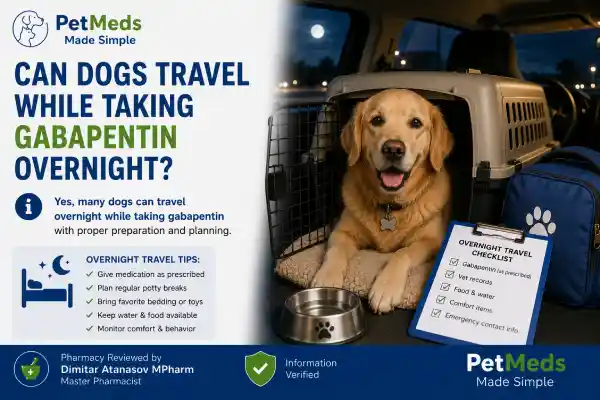
Yes.
Many owners worry about giving gabapentin while staying in hotels, visiting relatives, or camping.
Generally, overnight travel is not a problem provided that:
- medication schedules remain consistent
- the dog has a quiet sleeping area
- fresh water is always available
- normal feeding routines continue whenever possible
Dogs often settle more comfortably in unfamiliar environments when their daily routine changes as little as possible.
What Should Owners Pack Before Traveling With a Dog Taking Gabapentin?
Preparing a travel medical kit helps prevent unnecessary stress if unexpected delays occur.
Consider packing:
- gabapentin in its original prescription container
- written dosing instructions
- extra medication
- food for several additional meals
- bottled water
- collapsible food and water bowls
- leash and harness
- waste bags
- favorite blanket or bed
- emergency contact numbers
- copies of veterinary records
- vaccination records if required
Having these supplies readily available can make even long journeys significantly easier.
Can Dogs Travel While Taking Gabapentin if They Become Carsick?
Some dogs experience motion sickness regardless of whether they receive gabapentin.
Signs include:
- drooling
- lip licking
- yawning
- vomiting
- whining
- reluctance to enter the vehicle
Owners should not automatically assume gabapentin caused these symptoms.
Your veterinarian may recommend additional medications specifically designed to reduce motion sickness if travel frequently causes gastrointestinal upset.
How Can Owners Make Travel More Comfortable?
Small adjustments often make a significant difference.
Helpful recommendations include:
- feeding lighter meals before departure if advised by your veterinarian
- taking regular rest breaks every few hours
- allowing short leash walks during stops
- keeping the vehicle well ventilated
- avoiding loud music
- securing your dog with an approved travel harness or crate
- maintaining normal medication schedules
- offering praise and reassurance throughout the trip
Simple preparation usually reduces stress far more effectively than making last-minute changes to medication.
Frequently Asked Questions
Can dogs travel while taking gabapentin safely?
Yes. Most dogs can travel safely while taking gabapentin when the medication is prescribed appropriately and the underlying medical condition is stable.
Should I give gabapentin before a long car ride?
Only if your veterinarian has recommended doing so.
Many veterinarians intentionally prescribe gabapentin before travel to reduce anxiety and improve comfort, but dosing should always follow professional instructions.
Can dogs fly while taking gabapentin?
Some dogs can, but airline policies and your veterinarian’s recommendations should always be reviewed beforehand.
Traveling by air may require additional planning compared with car travel.
Can dogs travel while taking gabapentin for arthritis?
Yes.
Many arthritic dogs actually travel more comfortably because gabapentin reduces chronic pain and improves mobility during long journeys.
What my dog sleeps through most of the trip?
Mild sleepiness is one of the most common effects of gabapentin and is often expected.
However, if your dog becomes difficult to wake, cannot stand, or seems severely disoriented, contact a veterinarian immediately.
Should I change my dog’s gabapentin schedule while traveling?
Usually not.
Maintaining the prescribed dosing schedule is generally the safest approach unless your veterinarian provides different instructions.
Can dogs drink water normally while taking gabapentin?
Yes.
Fresh water should always be available, particularly during long trips and warm weather.
Good hydration helps support your dog’s overall health throughout the journey.
Can I stop gabapentin before traveling?
No.
Owners should never stop gabapentin simply because they plan to travel.
Abruptly discontinuing treatment may worsen the condition being treated and, in some cases, may increase the risk of complications.
When should I postpone travel?
Travel should be postponed if your dog develops:
severe weakness
collapse
repeated vomiting
breathing difficulty
uncontrolled seizures
inability to walk
severe neurological abnormalities
These situations require veterinary evaluation before travel continues.
When should I call my veterinarian?
act your veterinarian before or during travel if your dog develops:
persistent vomiting
severe wobbliness
collapse
breathing problems
extreme lethargy
uncontrolled pain
seizures
inability to eat or drink
Prompt medical advice is always safer than waiting for symptoms to improve.
Bottom Line
Can dogs travel while taking gabapentin? In most cases, yes. Gabapentin is commonly used to reduce anxiety, improve comfort, and help dogs tolerate travel more successfully. Most dogs can safely travel by car or even by air when their medication is prescribed appropriately, dosing schedules are maintained, and owners prepare carefully for the journey. Monitoring hydration, avoiding missed doses, planning regular rest breaks, and watching for excessive sedation help ensure that both the trip and the treatment remain safe.
Veterinarian Takeaway
Gabapentin is frequently prescribed not only for chronic pain and neurological disorders but also to reduce travel-related anxiety in dogs. Most patients tolerate travel well while receiving the medication, provided owners understand its expected effects and continue following the prescribed treatment plan. Rather than focusing solely on the medication, veterinarians evaluate the dog’s underlying medical condition, overall health, travel duration, and concurrent medications before determining whether travel is appropriate. Careful planning, consistent dosing, and close observation remain the keys to a safe and comfortable journey.
Sources
- Plumb DC. Plumb’s Veterinary Drug Handbook.
- Papich MG. Saunders Handbook of Veterinary Drugs.
- Merck Veterinary Manual. Travel and Transportation of Companion Animals.
- Merck Veterinary Manual. Analgesics and Adjunctive Pain Medications in Small Animals.
- AAHA Canine Life Stage Guidelines.
- AAHA Pain Management Guidelines for Dogs and Cats.
- WSAVA Global Pain Council Guidelines.
- Veterinary Information Network (VIN). Clinical discussions on gabapentin use for travel anxiety in dogs.
- Frontiers in Veterinary Science. Reviews on gabapentin use in companion animals.
Medical Review Statement
Medical Review Statement
This article was written by Dimitar Georgiev Atanasov, MPharm, Master Pharmacist and Medication Safety Educator (Bulgarian Pharmaceutical Union, UIN: 0210000586).
The content has been pharmacy and scientific reviewed by Gergana Krasimirova Atanasova, MPharm (Bulgarian Pharmaceutical Union, UIN: 0210000587).
The veterinary content has been reviewed by Dr. Valcho Georgiev Valchev, DVM (Bulgarian Veterinary Union Registration No. 28000115).
This article is intended for educational purposes only and should never replace individualized veterinary diagnosis or treatment recommendations.
Image Disclosure
Image Disclosure: Some images used in this article may be AI-generated for educational illustration purposes. They are intended to explain veterinary concepts more clearly and should not replace professional veterinary examination or diagnosis.