
Dimitar Georgiev Atanasov

I hold a Master's degree in Pharmacy and have worked as a pharmacist for over 10 years, helping people manage their health through safe and effective medication use. Four years ago, my own dog faced serious health challenges that changed everything. Watching him struggle sparked a deep personal interest in how drugs affect animals, and I began studying veterinary pharmacology, pharmacokinetics in pets, and animal-specific drug responses on my own. What started as research to help my furry companion grew into a passion for bridging human pharmacy knowledge with animal care. Today, I run this blog to share practical, evidence-based information with other pet owners and animal lovers. My goal is to help people better understand medications for their pets, make informed decisions alongside their veterinarians, and improve the quality of life for animals facing health issues—just like I did for my dog. Whether you're dealing with a chronic condition, curious about side effects, or looking for reliable advice, I'm here to provide clear, trustworthy insights drawn from my pharmacy expertise and real-world experience with pet health.

Keppra Side Effects in Dogs

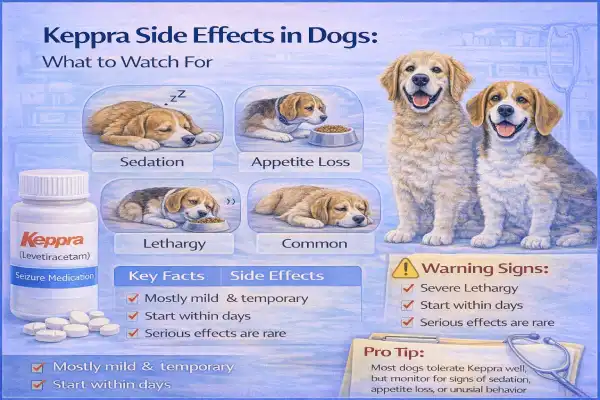
Keppra Side Effects in Dogs: What to Watch For (Vet-Backed Guide)

Keppra (levetiracetam) is a widely used seizure medication for dogs that is generally well tolerated, but it can still cause side effects such as sedation, loss of appetite, and mild lethargy. Most reactions are temporary, but recognizing early warning signs helps ensure safe and effective seizure management for your dog.

Keppra Side Effects in Dogs: What to Watch For (Vet-Backed Guide) Read More »
Scroll to Top