Quick Answer
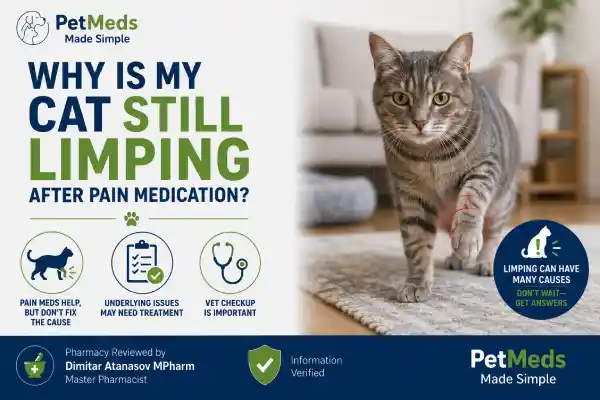
Why Is My Cat Still Limping After Pain Medication? If your cat is still limping after pain medication, it does not automatically mean the medication has failed. Pain medications help reduce discomfort, but they cannot instantly heal fractures, ligament injuries, arthritis, infections, or soft tissue damage. Some cats also continue protecting an injured leg even after their pain has improved. However, persistent or worsening limping always deserves veterinary reassessment, especially if your cat refuses to bear weight, develops swelling, or appears increasingly uncomfortable.
Why Is My Cat Still Limping After Pain Medication?
Seeing your cat continue to limp after starting pain medication can be frustrating and worrying. Many owners expect that once medication begins working, their cat should immediately start walking normally again.
In reality, recovery is rarely that simple.
Pain medication is designed to control pain not repair damaged tissues. While medications such as NSAIDs, gabapentin, or opioids can make a cat more comfortable, the underlying injury or disease still needs time to heal. Depending on the cause, improvement may take several days or even several weeks.
Cats are also masters at hiding pain. They often compensate remarkably well, making even small changes in their gait difficult to interpret. Some cats continue limping simply because they have developed a protective walking pattern after several days of discomfort.
Understanding why your cat is still limping helps determine whether continued monitoring is appropriate or whether another veterinary examination is needed.
Why Is My Cat Still Limping After Pain Medication?
Pain Medication Relieves Pain It Does Not Heal the Underlying Problem

One of the biggest misconceptions owners have is believing that pain medication fixes the injury itself.
Instead, pain medications work by reducing the body’s perception of pain or inflammation.
For example:
- NSAIDs decrease inflammation inside joints and injured tissues.
- Gabapentin helps reduce certain types of nerve-related pain.
- Opioids temporarily decrease pain perception.
None of these medications actually repair:
- broken bones
- torn ligaments
- damaged tendons
- arthritic cartilage
- joint instability
Healing still depends on your cat’s natural recovery process.
Think of pain medication as turning down the “volume” of pain not removing the reason the pain exists.
Read Complete Guide: Pain medications for cats
Some Injuries Naturally Take Longer to Improve
Not every cause of limping improves within a day or two.
Recovery varies enormously depending on the diagnosis.
Examples include:
Minor muscle strains
These often improve within several days with rest and appropriate medication.
Soft tissue injuries
Ligaments and tendons heal much more slowly than muscles and may require weeks before normal movement returns.
Arthritis
Cats with osteoarthritis usually improve gradually rather than overnight. Pain medications often reduce stiffness first before completely improving mobility.
Fractures
Even when pain is well controlled, a broken bone still requires weeks of healing before a cat can comfortably bear full weight.
Because different conditions recover at different speeds, persistent limping during the first few days of treatment is not always unexpected.
Your Cat May Still Be Protecting the Injured Leg
Cats quickly learn to avoid movements that previously caused pain.
Even after inflammation begins improving, they may continue favoring the affected limb because the brain has associated certain movements with discomfort.
Veterinarians sometimes refer to this as a protective gait.
Your cat may:
- touch the foot lightly
- hesitate before jumping
- take shorter steps
- avoid placing full weight on one leg
This behavior may continue briefly even as healing progresses.
As comfort gradually returns, most cats slowly regain normal movement.
Arthritis Rarely Improves Overnight
If your cat has arthritis, expectations are especially important.
Many owners hope that after giving medication for one or two days their cat will suddenly:
- stop limping
- jump normally
- run through the house again
Unfortunately, arthritis does not behave this way.
Arthritic joints contain chronic structural changes that develop over months or years.
Pain medications help reduce inflammation and discomfort, but they cannot reverse cartilage loss or permanently repair damaged joints.
Many arthritic cats improve gradually over:
- several days
- one to two weeks
- longer for severe disease
This slow improvement is completely normal.
Could the Original Diagnosis Be More Serious?
Persistent limping sometimes indicates that the original problem is more significant than initially suspected.
Examples include:
- fractures that were not immediately obvious
- ligament injuries
- joint dislocations
- severe sprains
- infections
- abscesses
- spinal disorders
- neurological disease
Pain medication may temporarily reduce discomfort while the underlying condition continues progressing.
This is one reason veterinarians recommend follow-up examinations when limping fails to improve as expected.
Cats Often Hide Pain Better Than Owners Realize
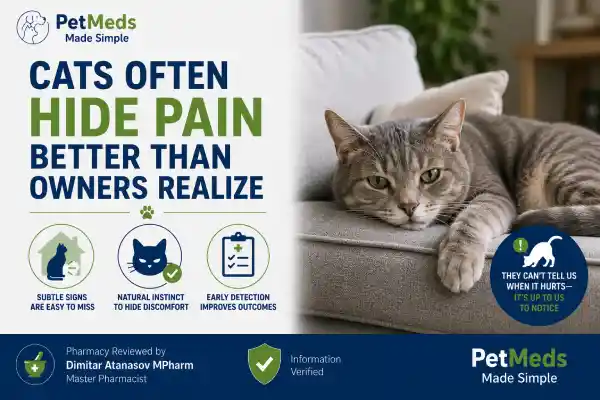
Cats evolved to conceal signs of weakness.
Unlike many dogs, they often remain quiet even when significant pain is present.
Instead of crying or whining, they may simply:
- limp
- sleep more
- jump less often
- avoid climbing
- become withdrawn
- hide under furniture
Because cats mask discomfort so effectively, owners sometimes underestimate how painful an injury actually is.
A cat that is “only limping a little” may still have significant orthopedic pain requiring further evaluation.
When Improvement Is Slower Than Expected
Some owners become discouraged after only two or three doses of medication.
However, improvement often follows a gradual pattern.
Many cats show:
- slightly improved weight bearing first
- increased willingness to walk
- better activity indoors
- improved appetite
- more grooming
- more interest in interacting with family
Normal walking may return later.
Monitoring these smaller improvements often provides a more accurate picture of recovery than focusing only on whether the limp has completely disappeared.
What Owners Should Monitor at Home
Rather than watching only for limping, monitor your cat’s overall progress.
Helpful observations include:
- Is the limp improving, staying the same, or worsening?
- Is your cat willing to place more weight on the leg?
- Has swelling increased?
- Is your cat eating normally?
- Is grooming returning?
- Is jumping becoming easier?
- Does your cat seem brighter overall?
These details provide valuable information for your veterinarian if another examination becomes necessary.
When Does Persistent Limping Mean the Pain Medication Is Not Working?
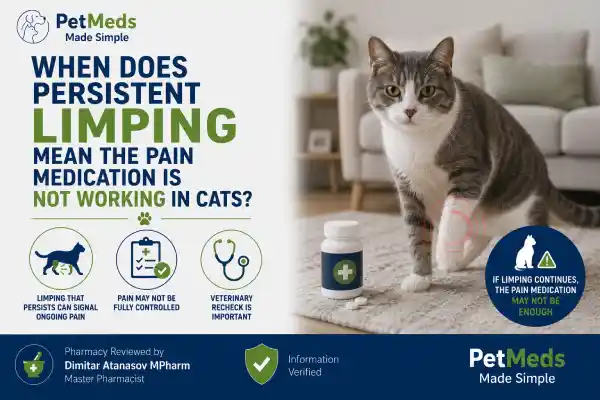
Although pain medications are highly effective, they do not work equally well for every cat or every condition.
Sometimes persistent limping means the medication simply needs more time. In other cases, it may indicate that the current treatment plan is not providing enough pain relief.
Veterinarians evaluate several factors before deciding whether a medication is truly ineffective, including:
- the original diagnosis
- the severity of the injury
- how long treatment has been ongoing
- whether your cat is resting appropriately
- any new symptoms that have appeared
Owners should never increase the dose or add another pain medication without veterinary guidance, even if the limp has not improved.
Some Cats Need More Than One Type of Pain Medication
Pain is complex.
Different medications target different pain pathways.
For example:
- NSAIDs primarily reduce inflammation.
- Gabapentin targets certain nerve-related pain.
- Opioids reduce pain perception within the central nervous system.
Cats recovering from surgery or severe orthopedic injuries may benefit from multimodal pain management, where two or more medications work together under veterinary supervision.
This does not mean the first medication “failed.” Instead, it reflects the fact that complex pain often requires a combination of therapies.
Rest Is Just as Important as Medication
One of the most overlooked reasons cats continue limping is excessive activity.
Many cats begin feeling slightly better after receiving pain medication.
Because discomfort decreases, they may suddenly:
- jump onto furniture
- climb cat trees
- run through the house
- chase toys
- wrestle with another cat
While these activities may seem encouraging, they can easily aggravate an injury before healing is complete.
Pain medication allows movement it does not strengthen healing tissues.
Following your veterinarian’s activity recommendations is often just as important as giving the medication itself.
Soft Tissue Injuries Can Take Weeks to Heal
Not every limp involves a broken bone.
Many cats suffer injuries involving:
- muscles
- tendons
- ligaments
- joint capsules
These tissues generally heal more slowly than many owners expect.
Even when inflammation begins improving, the injured structures remain fragile.
A cat may appear comfortable while resting but continue limping during walking or jumping because the tissue has not fully recovered.
This gradual improvement is common and does not necessarily indicate treatment failure.
Could Another Condition Be Causing the Limp?
Sometimes pain medication appears ineffective because the original diagnosis was incomplete.
Conditions that may resemble simple orthopedic pain include:
- nail injuries
- torn paw pads
- foreign objects between the toes
- infected bite wounds
- abscesses
- neurological disorders
- spinal disease
- bone infections
- certain tumors affecting the limbs
Each requires a different treatment approach.
If your cat continues limping despite appropriate medication, your veterinarian may recommend additional testing to identify the true cause.
Follow-Up Examinations Are an Important Part of Treatment
Owners sometimes worry that needing another veterinary visit means something has gone wrong.
In reality, follow-up examinations are a normal part of managing orthopedic pain.
During a recheck, your veterinarian may assess:
- whether swelling has decreased
- joint stability
- muscle soreness
- range of motion
- neurological function
- weight bearing
- response to the current medication
These findings help determine whether recovery is progressing normally or whether the treatment plan should be adjusted.
Diagnostic Tests May Be Needed
If limping persists longer than expected, your veterinarian may recommend additional diagnostics.
Depending on your cat’s history, these may include:
Orthopedic examination
A detailed hands-on evaluation can identify subtle joint instability, ligament injuries, or localized pain.
X-rays (Radiographs)
Radiographs help detect:
- fractures
- arthritis
- joint disease
- bone abnormalities
Some fractures are difficult to identify immediately after an injury and become more obvious on repeat imaging several days later.
Advanced imaging
For complicated cases, referral imaging such as CT or MRI may occasionally be recommended to evaluate soft tissues, nerves, or spinal structures.
Warning Signs That Require Immediate Veterinary Attention
While mild improvement can take time, certain signs should never be ignored.
Contact your veterinarian promptly if your cat:
- completely refuses to bear weight on the leg
- cries when the limb is touched
- develops severe swelling
- has an open wound
- develops bleeding
- has a limb hanging abnormally
- develops fever or lethargy
- stops eating
- appears suddenly much worse
These signs may indicate a serious injury or complication requiring immediate treatment.
What Should Owners Avoid Doing?
When owners see persistent limping, it is understandable to want to “help.”
Unfortunately, some common actions can make recovery more difficult.
Avoid:
- increasing the medication dose yourself
- giving human pain medications
- combining medications without veterinary approval
- forcing your cat to exercise
- allowing unrestricted jumping
- stopping prescribed medication early because improvement seems slow
Following the prescribed treatment plan gives your cat the best opportunity for a safe recovery.
Can Cats Continue Limping Even After the Pain Is Gone?
Yes.
This often surprises owners.
Some cats develop a temporary habit of protecting the affected limb after several days of pain.
Even after discomfort has largely resolved, they may continue:
- walking cautiously
- taking shorter steps
- hesitating before jumping
- favoring one leg
As confidence returns and healing progresses, normal movement usually follows.
However, if limping persists for an extended period or worsens, another veterinary examination is always the safest course of action.
Bottom Line
If your cat is still limping after pain medication, try not to assume that the medication has failed. Pain medications are designed to reduce discomfort, but they cannot instantly heal fractures, ligament injuries, arthritis, or soft tissue damage. Many cats improve gradually over days or even weeks, depending on the underlying condition.
However, persistent limping should never be ignored. If your cat is not showing steady improvement, develops new symptoms, refuses to bear weight, or appears increasingly painful, a follow-up veterinary examination is essential. Additional diagnostics or adjustments to the treatment plan may be necessary to ensure your cat receives the most appropriate care.
Veterinarian Takeaway
Persistent limping after pain medication is a common reason for veterinary rechecks, and in many cases it reflects the normal healing process rather than medication failure. As veterinarians, we assess not only whether a cat is still limping, but also whether the limp is improving, whether inflammation is decreasing, and whether the original diagnosis remains accurate. Never increase the medication dose or switch medications without veterinary advice. Careful monitoring and timely reassessment give the best chance for a full recovery.
Frequently Asked Questions
How long should my cat limp after starting pain medication?
The answer depends on the underlying cause. Minor soft tissue injuries may improve within several days, while arthritis, fractures, or more severe orthopedic injuries may require weeks before normal movement returns.
Is it normal for my cat to limp after taking Onsior?
Yes. Onsior helps reduce pain and inflammation, but it does not immediately heal the underlying injury. Some limping during recovery can be expected, although worsening symptoms should always be evaluated by a veterinarian.
Why is my cat still limping even though the medication seems to be working?
Pain relief and healing are not the same thing. Your cat may feel more comfortable while the injured tissues are still recovering, or they may continue protecting the affected leg out of habit.
Should I give my cat more pain medication if the limp continues?
No. Never increase the dose or add another pain medication unless your veterinarian specifically instructs you to do so.
Can arthritis cause ongoing limping despite medication?
Yes. Arthritis is a chronic condition. Pain medications improve comfort but cannot reverse joint damage, so some cats continue to have mild limping even with appropriate treatment.
Could my cat have a fracture even if pain medication helps?
Yes. Pain medication can reduce discomfort while a fracture is still present. Persistent limping may require X-rays or repeat imaging.
When should I call my veterinarian?
Contact your veterinarian if your cat stops bearing weight on the leg, develops swelling, cries when touched, stops eating, becomes lethargic, or if the limp worsens instead of gradually improving.
Can cats continue limping after they are no longer in pain?
Yes. Some cats temporarily continue protecting the affected limb even after pain has improved. This usually resolves gradually as confidence and normal movement return.
What tests might my veterinarian recommend?
Depending on the situation, your veterinarian may recommend an orthopedic examination, radiographs (X-rays), or, in more complicated cases, advanced imaging such as CT or MRI.
Will my cat always recover completely?
Many cats recover very well, especially when the underlying condition is diagnosed early and treated appropriately. Recovery time varies depending on the cause of the limp and your cat’s overall health.
Sources
- Plumb DC. Plumb’s Veterinary Drug Handbook. Latest edition.
- Merck Veterinary Manual. Lameness in Cats.
- Merck Veterinary Manual. Feline Osteoarthritis.
- International Society of Feline Medicine (ISFM). Consensus Guidelines on the Diagnosis and Management of Feline Osteoarthritis.
- American Association of Feline Practitioners (AAFP). Feline Pain Management Guidelines.
- Mathews K, et al. Guidelines for Recognition, Assessment and Treatment of Pain. Journal of Feline Medicine and Surgery.
- Grimm KA, Lamont LA, Tranquilli WJ, Greene SA, Robertson SA. Veterinary Anesthesia and Analgesia.
- Papich MG. Saunders Handbook of Veterinary Drugs.
- Fossum TW. Small Animal Surgery.
- BSAVA Manual of Canine and Feline Musculoskeletal Disorders.
Medical Review Statement
Medical Review: This article was pharmacy-reviewed by Dimitar Georgiev Atanasov, MPharm, and veterinary-reviewed by Dr. Valcho Georgiev Valchev, DVM. The information is intended for educational purposes only and should never replace individualized veterinary advice, diagnosis, or treatment. If your cat continues limping despite pain medication or develops worsening symptoms, consult your veterinarian promptly.
Image Disclosure
Image Disclosure: Some images used in this article may be AI-generated or digitally enhanced for educational and illustrative purposes. They are designed to help explain veterinary concepts and should not be used as a substitute for professional diagnosis or clinical examination.