Antibiotics for Dogs

Antibiotics are essential medications used by veterinarians to treat bacterial infections in dogs, such as skin infections (hot spots, wounds), urinary tract infections (UTIs), respiratory issues, ear infections, dental problems, or post-surgery prevention.

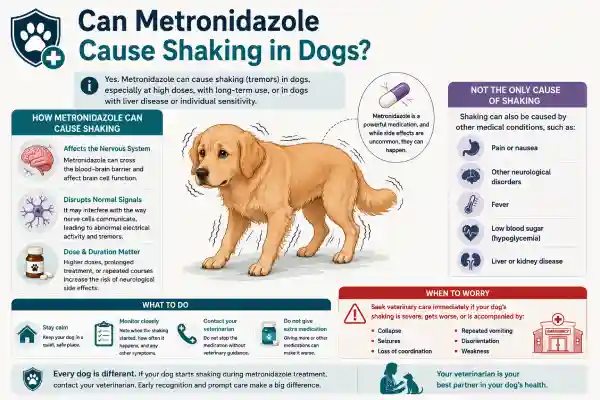
Can Antibiotics Cause Neurological Problems in Dogs? Warning Signs Owners Should Never Ignore (Vet-Backed Guide)

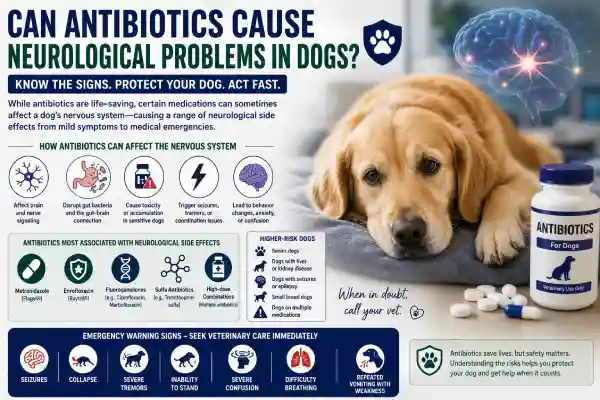
Can Antibiotics Cause Neurological Problems in Dogs?

Can antibiotics cause neurological problems in dogs? Learn the warning signs of antibiotic-related tremors, seizures, wobbling, confusion, anxiety, and neurological toxicity in dogs. This vet-backed guide explains which antibiotics carry the highest neurological risks, emergency symptoms owners should never ignore, and when to seek immediate veterinary care.

Can Antibiotics Cause Neurological Problems in Dogs? Warning Signs Owners Should Never Ignore (Vet-Backed Guide) Read More »

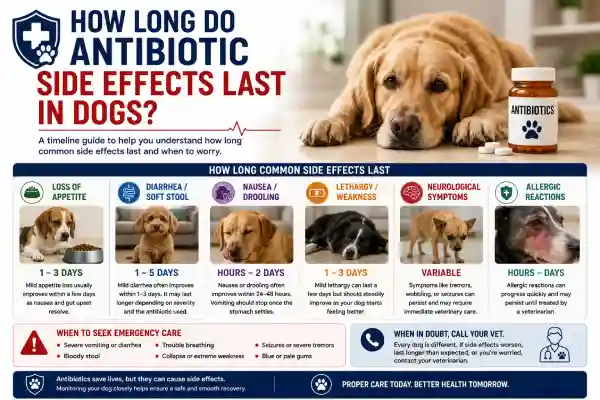
Why Does My Dog Sleep All Day After Antibiotics? Causes, Side Effects & Warning Signs

Why Does My Dog Sleep All Day After Antibiotics?

Why does my dog sleep all day after antibiotics? Learn the most common causes of lethargy, fatigue, weakness, dehydration, and excessive sleeping during antibiotic treatment — including warning signs of neurological reactions and when to contact your veterinarian immediately.

Why Does My Dog Sleep All Day After Antibiotics? Causes, Side Effects & Warning Signs Read More »

Can Antibiotics Affect Dog Behavior? Strange Behavioral Changes Owners Should Watch For

Can Antibiotics Affect Dog Behavior?

Can antibiotics affect dog behavior? Learn why some dogs become anxious, restless, aggressive, hyperactive, clingy, confused, or unusually tired during antibiotic treatment — including warning signs of neurological toxicity and when to contact your veterinarian immediately.

Can Antibiotics Affect Dog Behavior? Strange Behavioral Changes Owners Should Watch For Read More »

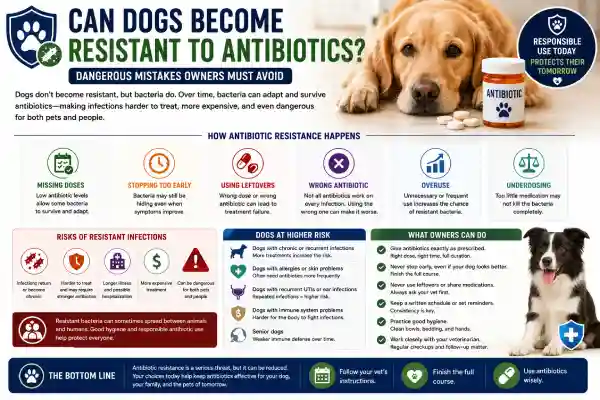
Can Dogs Become Resistant to Antibiotics? Dangerous Mistakes Owners Must Avoid

Can Dogs Become Resistant to Antibiotics

Can dogs become resistant to antibiotics? Learn how antibiotic resistance develops in dogs, including dangerous medication mistakes owners should avoid, warning signs of resistant infections, culture testing, treatment failure risks, and how veterinarians help prevent antibiotic-resistant bacteria.

Can Dogs Become Resistant to Antibiotics? Dangerous Mistakes Owners Must Avoid Read More »

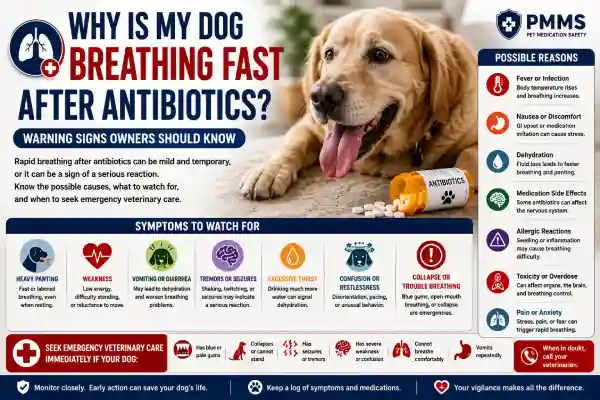
Why Is My Dog Breathing Fast After Antibiotics? Warning Signs Owners Should Know

Why Is My Dog Breathing Fast After Antibiotics?

Why is my dog breathing fast after antibiotics? Learn the most common causes of rapid breathing in dogs after antibiotics, including fever, dehydration, allergic reactions, toxicity, pain, neurological complications, and emergency warning signs that may require immediate veterinary care.

Why Is My Dog Breathing Fast After Antibiotics? Warning Signs Owners Should Know Read More »