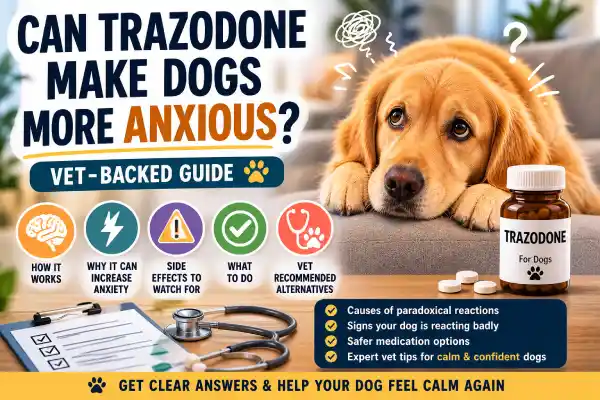
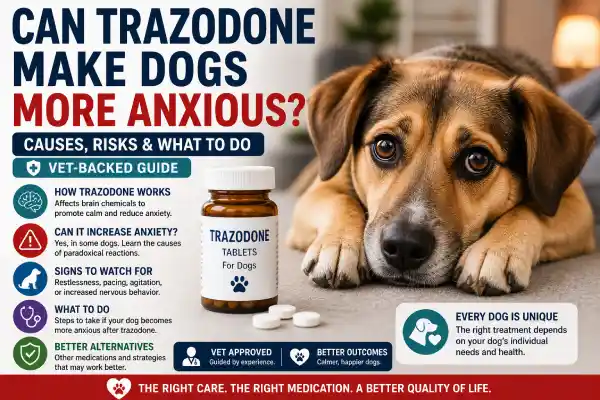
Can trazodone make dogs more anxious?
Yes—although trazodone is designed to reduce anxiety, some dogs may experience the opposite effect, becoming more restless, agitated, or even more anxious. This is known as a paradoxical reaction and usually depends on the dog’s sensitivity, dosage, and underlying condition.
Trazodone is widely used for:
- Vet visits
- Travel anxiety
- Separation anxiety
👉 But in rare cases, it can increase nervous behavior instead of calming it.
Quick Answer
✔ Trazodone is designed to reduce anxiety
❗ In some dogs, it can cause paradoxical reactions, making them appear more anxious
👉 This is usually due to:
- Individual sensitivity
- Incorrect dosage
- Underlying anxiety type
- Interaction with other medications
➡️ Learn how trazodone works:
Trazodone for Dogs: Uses, Dosage & Safety (Vet-Backed Guide)
Can Trazodone Make Dogs More Anxious?
What Is Trazodone and How Does It Work?
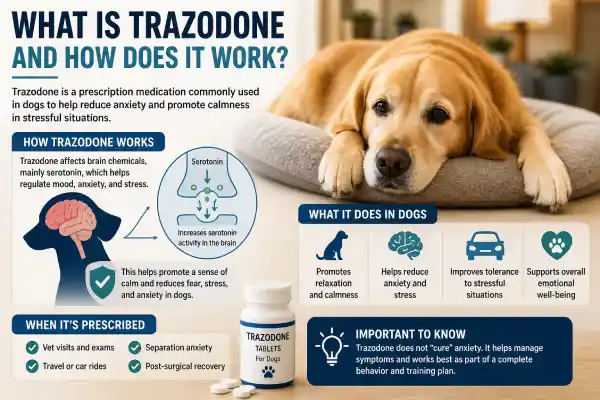
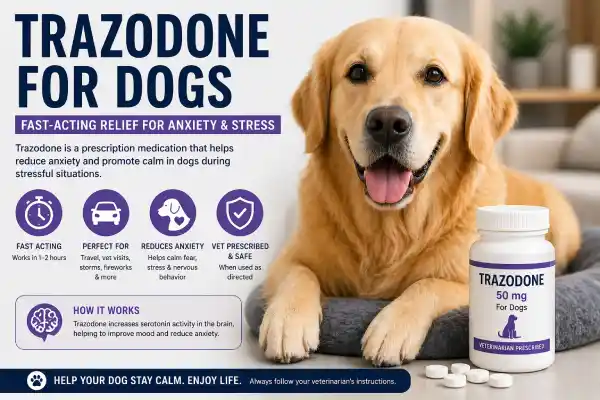
Trazodone is a serotonin antagonist and reuptake inhibitor (SARI). It affects brain chemistry by increasing serotonin levels—similar to antidepressants used in humans.
What It Does in Dogs
- Promotes calmness
- Reduces anxiety
- Improves tolerance to stressful situations
When It’s Prescribed
- Vet visits
- Travel anxiety
- Separation anxiety
- Post-surgical recovery
➡️ Internal links:
- Trazodone Dosage for Dogs: Vet-Approved Chart & Safety Guide
- Trazodone Side Effects in Dogs: Sedation, Risks & Safety
Can Trazodone Make Dogs More Anxious?
Short Answer: Yes — but it’s uncommon
Most dogs respond well to trazodone.
However, a small percentage may experience the opposite effect:
👉 Increased agitation
👉 Restlessness
👉 Hyperactivity
👉 Vocalization
This is known as a paradoxical reaction.
What Is a Paradoxical Reaction?
A paradoxical reaction occurs when a medication produces the opposite of its intended effect.
Instead of calming the dog, trazodone may:
- Increase nervous energy
- Cause pacing
- Trigger agitation
👉 This is not unique to trazodone—it can happen with many CNS-active drugs.
Why Trazodone Can Sometimes Increase Anxiety
1. Individual Brain Chemistry
Every dog processes medications differently.
Some dogs are more sensitive to serotonin changes, leading to:
- Overstimulation
- Restlessness
- Behavioral changes
2. Incorrect Dosage
Dosage plays a major role in how trazodone affects your dog.
- Too low → no calming effect
- Too high → excessive sedation OR agitation
➡️ Internal link:
Trazodone Dosage for Dogs
3. Wrong Anxiety Type
Trazodone works best for situational anxiety, not always for chronic conditions.
If your dog has:
- Severe separation anxiety
- Generalized anxiety disorder
👉 Trazodone alone may not be enough
➡️ Internal links:
- Best Anxiety Medication for Dogs with Separation Anxiety
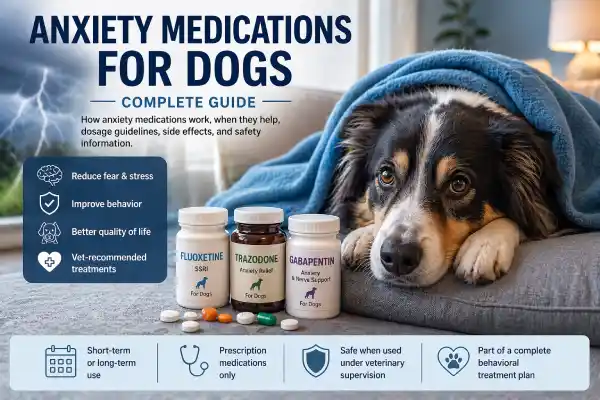
- Anxiety Medications for Dogs: Complete Guide
4. Drug Interactions
Trazodone is often used with other medications like:
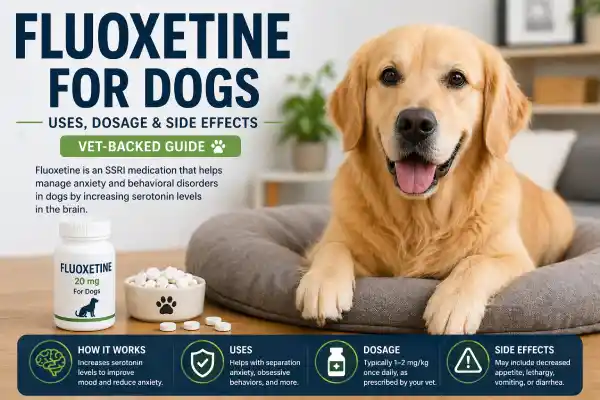
- SSRIs (Fluoxetine, Sertraline)
- Gabapentin
In some cases, interactions may:
- Increase stimulation
- Alter behavior
➡️ Internal link:
Trazodone vs Gabapentin for Dogs: Anxiety or Pain Relief?
5. Underlying Medical Issues
Sometimes, what looks like anxiety is actually:
- Pain
- Neurological issues
- Hormonal imbalance
➡️ Internal link:
What Can I Give My Dog for Pain? (Vet Comparison Guide)
Signs Your Dog Is Reacting Badly to Trazodone
Behavioral Signs
- Increased pacing
- Whining or barking
- Aggression
- Hyperactivity
Physical Signs
- Tremors
- Dilated pupils
- Restlessness
👉 If these occur, do not ignore them.
Normal vs Abnormal Response (Comparison Table)
| Response | Normal | Concerning |
|---|---|---|
| Calmness | ✔ | ❌ |
| Mild sedation | ✔ | ❌ |
| Relaxed behavior | ✔ | ❌ |
| Agitation | ❌ | ✔ |
| Hyperactivity | ❌ | ✔ |
How Long Do Side Effects Last?
Trazodone typically:
- Starts working in 30–60 minutes
- Lasts 6–12 hours
👉 If side effects occur, they usually fade as the drug wears off
What To Do If Trazodone Makes Your Dog More Anxious
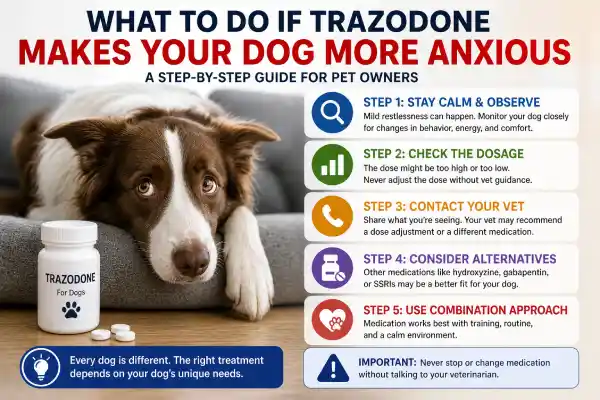
Step 1: Stay Calm and Observe
Do not panic. Mild reactions may pass.
Step 2: Adjust Dose (Vet Guidance)
Sometimes a small dose change solves the issue.
Step 3: Switch Medication
Better alternatives may include:
- Hydroxyzine (mild anxiety)
- SSRIs (long-term anxiety)
➡️ Internal links:
Step 4: Use Combination Therapy
👉 Most effective approach
- Trazodone + SSRI
- Trazodone + training
Better Alternatives to Trazodone
Hydroxyzine
✔ Mild anxiety
✔ Fast acting
✔ Fewer behavioral surprises
SSRIs (Fluoxetine, Sertraline)
✔ Long-term anxiety control
✔ Stable effect
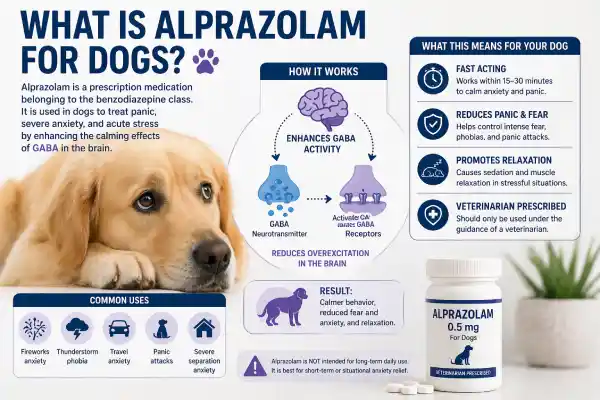
Benzodiazepines (Alprazolam, Diazepam)
✔ Immediate relief
✔ Best for panic situations
➡️ Internal links:
When Trazodone Works Best
Trazodone is highly effective when:
✔ Anxiety is situational
✔ Used short-term
✔ Combined with training
Common Mistakes
❌ Using trazodone for wrong anxiety type
❌ Expecting instant perfection
❌ Ignoring dose adjustment
❌ Not combining with behavior training
Pro Tips for Best Results
✔ Start with lowest effective dose
✔ Monitor behavior carefully
✔ Combine with routine and training
✔ Use consistently when needed
Can Trazodone Cause Aggression?
Yes, in rare cases.
This is part of paradoxical reactions.
👉 Dogs may:
- Become irritable
- Show unusual aggression
FAQ – Can Trazodone Make Dogs More Anxious?
Can trazodone make anxiety worse in dogs?
Yes, in rare cases due to paradoxical reactions.
Why is my dog restless after trazodone?
Likely due to dose or sensitivity.
Is trazodone safe for dogs?
Yes, when used correctly.
How long do side effects last?
Usually a few hours.
Should I stop trazodone immediately?
Consult your vet first.
What is better than trazodone?
Depends on anxiety type—SSRIs for chronic, hydroxyzine for mild.
Can trazodone be combined with other meds?
Yes, often used in combination therapy
Conclusion
Trazodone is generally safe and effective—but not perfect for every dog.
✔ Works best for situational anxiety
✔ May cause paradoxical reactions in rare cases
✔ Often needs combination therapy
👉 The key is individualized treatment
Medical Disclaimer
This content is for informational purposes only and does not replace professional veterinary advice.
Sources
American Veterinary Medical Association
Merck Veterinary Manual
VCA Animal Hospitals
Veterinary Partner (VIN)