
Quick Answer
Can Dogs Take Glucosamine With NSAIDs? Yes, in most cases, dogs can take glucosamine with NSAIDs when their veterinarian recommends the combination. In fact, veterinarians commonly prescribe NSAIDs for pain relief while also recommending glucosamine as part of a long-term joint support plan. Glucosamine does not replace NSAIDs, but it may help support cartilage health and overall joint function over time. Before starting any supplement, owners should consult their veterinarian to ensure it is appropriate for their dog’s condition, medications, and overall health.
Key Takeaways
| Question | Short Answer |
|---|---|
| Can Dogs Take Glucosamine With NSAIDs? | Yes, most dogs can safely take glucosamine with NSAIDs under veterinary guidance. |
| Does glucosamine replace NSAIDs? | No. It is a supportive joint supplement rather than a pain medication. |
| Does glucosamine work immediately? | No. Benefits usually develop gradually over several weeks. |
| Can glucosamine reduce arthritis symptoms? | It may help support joint health, but results vary between dogs. |
| Should owners start glucosamine without asking a veterinarian? | No. The treatment plan should always be individualized. |
When Owners Commonly Ask This
Many owners search “Can Dogs Take Glucosamine With NSAIDs” shortly after their dog is diagnosed with arthritis.
Their veterinarian may prescribe an NSAID such as carprofen, meloxicam, deracoxib, firocoxib, or another anti-inflammatory medication to relieve pain and improve mobility.
At the same appointment, the veterinarian may also recommend a glucosamine supplement.
This naturally leads owners to wonder:
- Can Dogs Take Glucosamine With NSAIDs every day?
- Is glucosamine safe together with arthritis medication?
- Will glucosamine interfere with NSAIDs?
- Can glucosamine eventually replace prescription pain medication?
- Is glucosamine really necessary if the NSAID is already helping?
These are excellent questions because glucosamine and NSAIDs serve completely different roles in the management of osteoarthritis.
Can Dogs Take Glucosamine With NSAIDs?
Why Veterinarians Frequently Recommend Glucosamine Together With NSAIDs
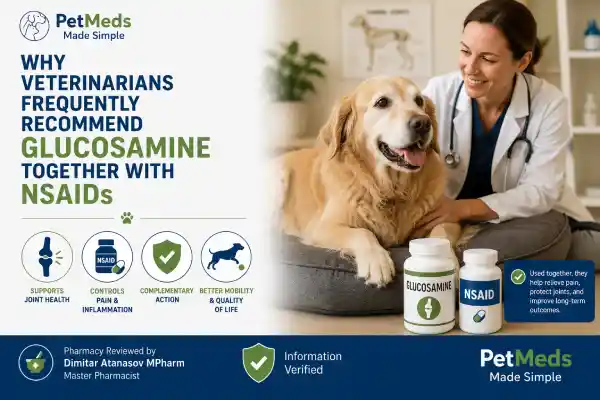
One of the biggest misconceptions surrounding Can Dogs Take Glucosamine With NSAIDs is the belief that owners must choose between supplements and prescription medications.
Modern veterinary medicine rarely approaches arthritis this way.
Instead, veterinarians often build a multimodal treatment plan, combining several therapies that work through different mechanisms.
When owners ask Can Dogs Take Glucosamine With NSAIDs, the answer is commonly yes because the two therapies complement one another rather than compete.
For example:
- NSAIDs reduce inflammation and relieve pain.
- Glucosamine supports normal cartilage metabolism and joint tissues.
- Weight management decreases stress on damaged joints.
- Controlled exercise helps preserve muscle mass.
- Physical rehabilitation improves mobility and flexibility.
Rather than expecting one treatment to solve every problem, veterinarians frequently combine these approaches to help dogs remain comfortable for as long as possible.
Related reading: Can Dogs Safely Take Joint Supplements With NSAIDs?
What Is Glucosamine?
To fully understand Can Dogs Take Glucosamine With NSAIDs, owners first need to understand what glucosamine actually is.
Glucosamine is a naturally occurring compound that serves as one of the building blocks involved in maintaining healthy cartilage.
Healthy cartilage acts like a cushion between bones, allowing joints to move smoothly.
As dogs age or develop osteoarthritis, cartilage gradually deteriorates.
Although glucosamine cannot reverse severe arthritis or rebuild damaged joints, it may help support normal cartilage metabolism as part of a comprehensive arthritis management plan.
Unlike NSAIDs, glucosamine is not classified as a pain medication.
Instead, it is considered a nutritional joint supplement.
This distinction is important because it explains why veterinarians commonly answer “Can Dogs Take Glucosamine With NSAIDs?” with yes.
How Does Glucosamine Work?
Glucosamine works much more slowly than prescription pain medications.
NSAIDs rapidly reduce inflammatory chemicals responsible for pain.
Glucosamine does not directly block pain signals.
Instead, it supports normal joint metabolism over time.
For this reason, owners should never expect glucosamine to provide immediate pain relief.
Most dogs require several weeks of consistent supplementation before any noticeable improvement may occur.
This gradual effect is one reason veterinarians frequently recommend using glucosamine alongside NSAIDs rather than instead of them.
Can Dogs Take Glucosamine With NSAIDs Every Day?

One of the most common follow-up questions is whether Can Dogs Take Glucosamine With NSAIDs applies to long-term daily treatment.
For many dogs, the answer is yes.
Dogs with chronic osteoarthritis often receive NSAIDs every day while also taking glucosamine as part of their long-term joint care program.
However, every treatment plan should be individualized.
Veterinarians consider factors such as:
- body weight,
- age,
- severity of arthritis,
- current medications,
- kidney function,
- liver health,
- mobility,
- lifestyle,
- overall quality of life.
Because every dog is different, owners should never assume that another dog’s glucosamine dosage is appropriate for their own pet.
Which NSAIDs Are Commonly Combined With Glucosamine?
Another reason owners search Can Dogs Take Glucosamine With NSAIDs is uncertainty about specific medications.
Fortunately, glucosamine is commonly used together with many veterinary NSAIDs, including:
- Carprofen
- Meloxicam
- Deracoxib
- Firocoxib
- Grapiprant (although technically not a traditional NSAID, it is often discussed alongside them in arthritis management)
Since every dog’s medical history is unique, the safest approach is always to discuss supplements with the prescribing veterinarian before adding them to the treatment plan.
Related reading: Can Dogs Stay on NSAIDs for Life?
Related reading: Can Dogs Take Pain Medication Every Day?
Why Glucosamine Does Not Replace NSAIDs
Perhaps the biggest misunderstanding behind Can Dogs Take Glucosamine With NSAIDs is the idea that glucosamine can completely replace prescription medication.
Unfortunately, this is rarely true.
NSAIDs directly reduce inflammation and pain.
Glucosamine primarily supports joint tissues.
These are two very different therapeutic goals.
A dog that appears much more comfortable after starting an NSAID still benefits from long-term strategies that support joint health.
Likewise, a dog taking glucosamine alone may continue experiencing significant pain if arthritis has progressed.
For this reason, veterinarians often recommend combining therapies rather than relying on only one treatment.
Can Glucosamine Reduce the Amount of NSAIDs a Dog Needs?

One of the main reasons owners search Can Dogs Take Glucosamine With NSAIDs is the hope that glucosamine will eventually allow their dog to take less prescription medication.
The answer is possibly but only under veterinary supervision.
Some dogs receiving comprehensive arthritis management may experience improved mobility over time after glucosamine has been added to their treatment plan. However, this improvement is rarely due to glucosamine alone.
Instead, it usually reflects the combined benefits of:
- appropriate NSAID therapy,
- glucosamine supplementation,
- weight management,
- controlled exercise,
- physical rehabilitation,
- environmental modifications,
- regular veterinary monitoring.
If a dog remains comfortable for an extended period, a veterinarian may occasionally decide that medication adjustments are appropriate.
Owners should never reduce NSAID doses simply because they started glucosamine.
Even if a dog appears happier or more active, arthritis is still a progressive disease that requires ongoing management.
Related reading: Can Joint Supplements Reduce the Amount of NSAIDs a Dog Needs?
Scientific Evidence Behind Glucosamine for Dogs
When owners ask Can Dogs Take Glucosamine With NSAIDs, many also want to know whether glucosamine actually works.
Research has produced mixed results.
Some studies suggest that glucosamine may provide modest improvements in joint comfort and mobility, particularly when combined with other supportive therapies.
Other studies have found less dramatic benefits than many owners expect.
This is one reason veterinarians rarely recommend glucosamine as the only treatment for arthritis.
Instead, glucosamine is viewed as one component of a broader treatment strategy.
Current veterinary guidelines generally support multimodal pain management rather than relying on a single supplement or medication.
Why Glucosamine Often Works Better With Chondroitin
Many veterinary joint supplements contain both glucosamine and chondroitin sulfate.
These ingredients are frequently combined because they support different aspects of joint health.
While glucosamine contributes to normal cartilage metabolism, chondroitin helps support cartilage structure and water retention within the joint.
Although neither ingredient provides immediate pain relief, together they may offer greater long-term support than glucosamine alone in some dogs.
This is another reason veterinarians often answer Can Dogs Take Glucosamine With NSAIDs with yes, while also recommending combination joint supplements rather than glucosamine by itself.
How Long Does Glucosamine Take to Work?

Owners frequently become discouraged after only a few days.
Unlike NSAIDs, glucosamine works slowly.
Most veterinarians recommend evaluating improvement only after several weeks of consistent supplementation.
Some dogs may require one to three months before owners notice gradual improvements in:
- willingness to exercise,
- ease of standing,
- climbing stairs,
- jumping into the car,
- overall daily comfort.
Because glucosamine acts gradually, stopping NSAIDs after only a few weeks is generally not appropriate unless specifically recommended by the veterinarian.
Are There Any Side Effects?
For most dogs, glucosamine is well tolerated.
However, no supplement is completely free of potential side effects.
Possible reactions include:
- mild stomach upset,
- vomiting,
- loose stools,
- decreased appetite,
- temporary digestive discomfort.
These side effects are usually mild and often improve after the body adjusts or when the supplement is given with food.
If severe vomiting, persistent diarrhea, or unusual symptoms develop, owners should contact their veterinarian.
Can Dogs With Kidney Disease Take Glucosamine With NSAIDs?
This is an important question because kidney disease often changes arthritis treatment plans.
Glucosamine itself is not generally considered harmful to healthy kidneys.
However, dogs with kidney disease require individualized treatment.
The answer to Can Dogs Take Glucosamine With NSAIDs depends on several factors, including:
- the stage of kidney disease,
- blood test results,
- blood pressure,
- hydration,
- current medications,
- overall health status.
The veterinarian may recommend different pain management strategies depending on the severity of kidney disease.
Related reading: Do Pain Medications Affect Kidney Values in Dogs?
What About Dogs With Liver Disease?
Owners also worry whether supplements are safe for dogs with liver problems.
Glucosamine is not generally considered directly toxic to the liver.
Nevertheless, dogs with liver disease often receive multiple medications, making veterinary supervision especially important.
Before adding any supplement, the veterinarian should review the dog’s complete medication list and recent laboratory results.
Can Glucosamine Interact With Other Medications?

One reason owners search Can Dogs Take Glucosamine With NSAIDs is concern about drug interactions.
Fortunately, glucosamine is generally considered compatible with many medications commonly prescribed for arthritis.
However, veterinarians should always be informed if a dog is receiving:
- NSAIDs,
- gabapentin,
- amantadine,
- corticosteroids,
- anticoagulants,
- prescription joint therapies,
- additional nutritional supplements.
Reviewing every medication together helps avoid unnecessary duplication or unexpected problems.
Common Mistakes Owners Make
Even with the best intentions, owners sometimes make mistakes that reduce the effectiveness of treatment.
Common examples include:
- stopping NSAIDs after only a few days of glucosamine,
- expecting immediate improvement,
- purchasing low-quality supplements with unknown ingredient concentrations,
- giving human glucosamine products without veterinary advice,
- changing doses without consulting the veterinarian,
- forgetting daily administration,
- assuming glucosamine can reverse advanced arthritis.
Avoiding these mistakes helps dogs receive the greatest possible benefit from their treatment plan.
Veterinarian Takeaway
So, Can Dogs Take Glucosamine With NSAIDs?
For most dogs, yes.
Veterinarians frequently recommend glucosamine together with NSAIDs because the two therapies perform different roles.
NSAIDs provide effective pain relief by reducing inflammation.
Glucosamine supports long-term joint health and cartilage metabolism but should not be viewed as a replacement for prescription medication.
The best results usually occur when glucosamine is included as part of a comprehensive arthritis management plan that also includes weight control, appropriate exercise, rehabilitation when indicated, and regular veterinary monitoring.
Bottom Line
Can Dogs Take Glucosamine With NSAIDs? In most cases, yes, and this combination is commonly recommended by veterinarians treating canine osteoarthritis and chronic joint pain.
Glucosamine is a supportive nutritional supplement rather than a pain medication. It works gradually and is intended to complement—not replace—NSAIDs. When combined with appropriate prescription medication, healthy body weight, regular low-impact exercise, and routine veterinary follow-up, glucosamine may help support joint function and improve long-term quality of life for many dogs.
Owners should always consult their veterinarian before adding glucosamine, particularly if their dog has kidney disease, liver disease, diabetes, or is receiving multiple medications.
Frequently Asked Questions – Can Dogs Take Glucosamine With NSAIDs?
Can dogs take glucosamine with NSAIDs every day?
Yes. Many dogs receive glucosamine together with NSAIDs every day under veterinary supervision.
Can glucosamine replace NSAIDs?
No. Glucosamine is not a pain medication and should not replace NSAIDs unless your veterinarian specifically changes the treatment plan.
How long does glucosamine take to work?
Most dogs require several weeks, and sometimes up to three months, before gradual improvements may become noticeable.
Is glucosamine safe for senior dogs?
Yes, glucosamine is commonly recommended for senior dogs with arthritis, although dosing should always be determined by a veterinarian.
Should glucosamine be given with food?
Giving glucosamine with food may help reduce mild stomach upset in some dogs.
Can glucosamine cause diarrhea?
Some dogs may develop mild digestive side effects, including loose stools or temporary diarrhea, especially when first starting supplementation.
Can glucosamine be combined with gabapentin?
Yes. Glucosamine and gabapentin work differently and are commonly used together as part of multimodal pain management when recommended by a veterinarian.
Is glucosamine enough to treat severe arthritis?
No. Dogs with moderate to severe osteoarthritis usually require a comprehensive treatment plan that may include NSAIDs, rehabilitation, weight management, and other therapies in addition to glucosamine.
Sources
- Plumb’s Veterinary Drug Handbook.
- Merck Veterinary Manual. Osteoarthritis in Dogs.
- 2022 AAHA Canine Osteoarthritis Guidelines.
- WSAVA Global Nutrition Guidelines.
- Veterinary Pharmacology and Therapeutics.
- Small Animal Clinical Pharmacology.
- McCarthy G, et al. Randomized double-blind clinical trial evaluating glucosamine and chondroitin sulfate in dogs with osteoarthritis.
- JAVMA publications on canine osteoarthritis and multimodal pain management.
Medical Review Statement: This article was pharmacy-reviewed by Dimitar Georgiev Atanasov, MPharm, scientifically reviewed by Gergana Krasimirova Atanasova, MPharm, and veterinary reviewed by Dr. Valcho Georgiev Valchev, DVM. It is intended for educational purposes only and should not replace individualized veterinary advice.
Image Disclosure: Some images used in this article may be AI-generated or AI-assisted for educational and illustrative purposes. They are intended to support understanding and do not replace professional veterinary examination or diagnosis.