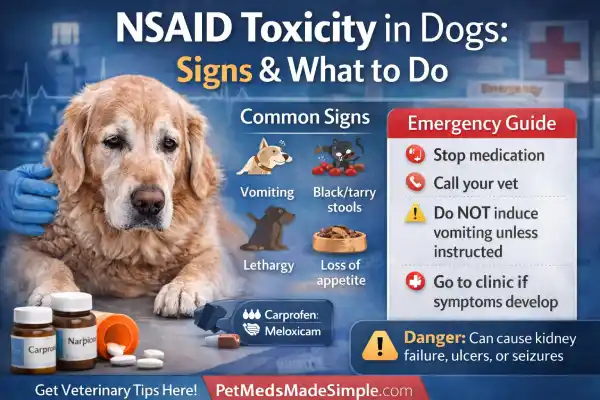

Quick Answer
Can dogs take pain medication with antibiotics? Yes many dogs safely receive pain medication and antibiotics together, and veterinarians commonly prescribe both after surgery, bite wounds, dental procedures, orthopedic injuries, skin infections, and many other medical conditions. However, not every medication combination is appropriate. Some drugs may increase the risk of stomach irritation, kidney stress, liver problems, or other side effects. For this reason, owners should never combine medications without veterinary guidance, even if each drug is considered safe when used alone.
When Owners Commonly Ask This Question
Owners usually search “Can dogs take pain medication with antibiotics?” after situations such as:
- Their dog has surgery and receives two prescriptions.
- Their dog develops an infected wound that is also painful.
- Their veterinarian prescribes an NSAID and an antibiotic together.
- Their dog is already taking pain medication when an infection develops.
- They worry that giving both medications at the same time could be dangerous.
- They accidentally missed one medication and are unsure whether both can be given together.
In most cases, veterinarians intentionally prescribe these medications together because they treat different aspects of the same problem.
Can Dogs Take Pain Medication With Antibiotics?
Why Would a Dog Need Both Pain Medication and Antibiotics?
Many illnesses involve both pain and infection.
Antibiotics eliminate or control bacterial infections, while pain medications help improve comfort, reduce inflammation, and support recovery.
Neither medication replaces the other.
For example, antibiotics do not relieve pain, and pain medications do not kill bacteria.
Veterinarians frequently prescribe both medications for conditions including:
- Bite wounds
- Surgical procedures
- Dental infections
- Abscesses
- Orthopedic surgery
- Skin infections
- Ear infections with severe inflammation
- Bone infections
- Deep lacerations
- Infected orthopedic injuries
Treating both infection and pain often allows dogs to recover faster and remain more comfortable throughout the healing process.
Do Pain Medications and Antibiotics Work in Different Ways?
Yes.
Although they are often prescribed together, they perform completely different functions inside the body.
| Medication Type | Primary Purpose | Examples |
|---|---|---|
| NSAIDs | Reduce pain and inflammation | Carprofen, Meloxicam, Deracoxib, Firocoxib |
| Neuropathic pain medications | Reduce nerve pain | Gabapentin |
| Opioid pain medications | Control moderate to severe pain | Tramadol, Codeine |
| Antibiotics | Kill or inhibit bacteria | Amoxicillin, Cephalexin, Clavamox, Doxycycline |
Because these medications act through different mechanisms, combining them is often both logical and beneficial when prescribed appropriately.
Is It Common for Veterinarians to Prescribe Both Together?
Very common.
In fact, some of the most routine veterinary treatment plans include both an antibiotic and a pain medication.
Examples include:
| Medical Condition | Typical Treatment |
|---|---|
| Dental extraction | Antibiotic + NSAID |
| Bite wound | Antibiotic + pain medication |
| Orthopedic surgery | Antibiotic + NSAID ± Gabapentin |
| Skin abscess | Antibiotic + pain relief |
| Deep laceration | Antibiotic + anti-inflammatory medication |
| Bone surgery | Multiple pain medications + antibiotic |
Seeing two medications prescribed together is usually not a sign that something is wrong—it often reflects standard veterinary care.
Can All Pain Medications Be Combined With Antibiotics?
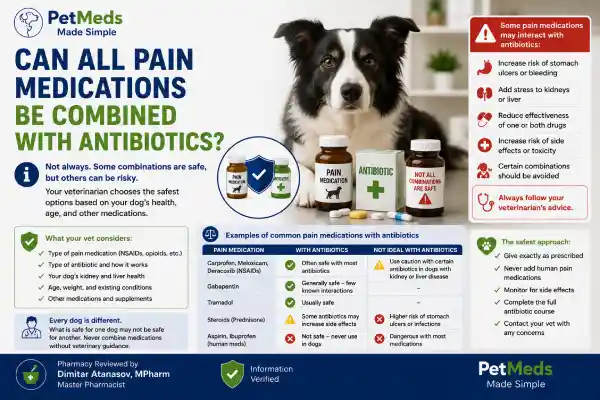
Not automatically.
Although many combinations are perfectly safe, veterinarians first consider several important factors:
- Your dog’s age.
- Kidney function.
- Liver health.
- Current medications.
- Type of infection.
- Severity of pain.
- Underlying diseases.
- Previous medication reactions.
This individualized approach helps reduce the risk of avoidable drug interactions or side effects.
Which Pain Medications Are Most Commonly Used?
Several different classes of pain medications are available in veterinary medicine.
Each works differently and may be selected depending on the type of pain.
| Medication | Common Uses |
|---|---|
| Carprofen | Arthritis, orthopedic pain, surgery |
| Meloxicam | Musculoskeletal pain, inflammation |
| Deracoxib | Orthopedic surgery, osteoarthritis |
| Firocoxib | Chronic arthritis pain |
| Galliprant | Osteoarthritis in senior dogs |
| Gabapentin | Nerve pain, chronic pain, multimodal pain control |
| Tramadol | Selected chronic pain cases |
Many of these medications are frequently prescribed alongside antibiotics without problems when appropriate monitoring is performed.
Which Antibiotics Are Most Frequently Combined With Pain Medication?
Veterinarians commonly prescribe:
- Amoxicillin
- Clavamox®
- Cephalexin
- Doxycycline
- Metronidazole
- Enrofloxacin
- Clindamycin
These antibiotics treat different types of bacterial infections.
The choice depends on:
- Infection location
- Suspected bacteria
- Culture results
- Previous antibiotic exposure
- Overall health of the patient
Pain medications are then selected independently to provide adequate comfort during recovery.
Is It Safe to Give Both Medications at the Same Time?
In many cases, yes.
Owners often wonder whether one medication should be given several hours apart from the other.
For most commonly prescribed veterinary medications, this separation is not required, although some drugs are best given with food to reduce stomach irritation.
Your veterinarian’s dosing instructions should always take priority.
Never change the schedule simply because medications appear similar or are both prescribed on the same day.
Why Your Veterinarian Reviews the Entire Medication List
One of the most important parts of prescribing multiple medications is checking the complete medication history.
Veterinarians evaluate:
- Prescription medications.
- Over-the-counter products.
- Supplements.
- Joint products.
- CBD products.
- Herbal remedies.
- Previous allergic reactions.
This review helps identify combinations that may require dose adjustments or additional monitoring.
For example, owners sometimes forget to mention supplements or human medications given at home, which may unexpectedly increase the risk of side effects.
Should Owners Ever Add Human Pain Medication?
Absolutely not.
This is one of the most dangerous mistakes seen in veterinary medicine.
Owners may assume that because their dog is already receiving antibiotics, adding a human pain reliever is harmless.
Unfortunately, medications such as ibuprofen, naproxen, and diclofenac can be highly toxic to dogs.
Our article Can Dogs Take Ibuprofen Accidentally? explains why even relatively small amounts may become a medical emergency.
Why Veterinary Monitoring Matters
Although most dogs tolerate properly prescribed medication combinations very well, veterinarians still recommend monitoring throughout treatment.
Owners should watch for:
- Appetite changes
- Vomiting
- Diarrhea
- Excessive sleepiness
- Increased thirst
- Changes in urination
- Weakness
- Behavioral changes
Early recognition of side effects allows treatment plans to be adjusted before more serious problems develop.
Can NSAIDs Be Given With Antibiotics?
Yes.
Non-steroidal anti-inflammatory drugs (NSAIDs) are among the most commonly prescribed pain medications used together with antibiotics in veterinary medicine.
This combination is routinely used after:
- Orthopedic surgery
- Dental procedures
- Bite wounds
- Skin infections
- Soft tissue injuries
- Abscess treatment
NSAIDs reduce pain and inflammation while antibiotics target the bacterial infection.
Because they work through completely different mechanisms, they often complement one another rather than interfere.
Common veterinary NSAIDs include:
- Carprofen
- Meloxicam
- Deracoxib
- Firocoxib
- Galliprant®
Our comparison guide Deracoxib vs Carprofen: Which Is Better for Dogs? explains how veterinarians decide which NSAID is most appropriate for different conditions.
Can Gabapentin Be Taken With Antibiotics?

In most cases, yes.
Gabapentin is frequently prescribed alongside antibiotics because it treats nerve pain, not bacterial infections.
Veterinarians commonly combine gabapentin with antibiotics after:
- Spinal surgery
- Orthopedic procedures
- Severe wounds
- Chronic pain conditions
- Neurological injuries
Unlike NSAIDs, gabapentin has very few clinically significant interactions with commonly prescribed veterinary antibiotics.
However, owners should still monitor for expected side effects such as:
- Sleepiness
- Mild wobbliness
- Reduced activity
- Temporary sedation
Our article Can Dogs Take Gabapentin and NSAIDs Together? explains how gabapentin is often included as part of multimodal pain management.
What About Tramadol?
Tramadol may also be prescribed together with antibiotics.
Although tramadol is used less frequently than in previous years for canine pain management, some veterinarians still prescribe it in selected situations.
Examples include:
- Cancer-related pain
- Chronic pain
- Post-operative recovery
- Patients unable to receive NSAIDs
Most commonly prescribed antibiotics do not directly interfere with tramadol.
Nevertheless, veterinarians still evaluate:
- Other medications being taken
- Liver function
- Kidney function
- Neurological disease
- History of seizures
These factors help determine whether tramadol remains an appropriate option.
Are Certain Antibiotics More Likely to Cause Problems?
Most commonly prescribed veterinary antibiotics combine well with pain medications.
However, every antibiotic has its own safety profile.
For example:
| Antibiotic | Important Considerations |
|---|---|
| Amoxicillin | Usually very well tolerated |
| Clavamox® | May occasionally cause stomach upset |
| Cephalexin | Gastrointestinal side effects possible |
| Doxycycline | Best given with adequate water and food when appropriate |
| Metronidazole | High doses may affect the nervous system |
| Enrofloxacin | Used cautiously in growing puppies and certain neurological patients |
The antibiotic itself is often not the problem.
Instead, veterinarians evaluate whether the individual dog has health conditions that could increase the likelihood of side effects.
Can Combining Medications Increase Side Effects?
Sometimes.
Even when medications do not directly interact, giving several medications together may increase the overall chance of experiencing side effects.
Owners should monitor for:
- Vomiting
- Diarrhea
- Poor appetite
- Excessive drooling
- Lethargy
- Weakness
- Restlessness
- Changes in drinking or urination
Most side effects are mild and temporary.
However, persistent or worsening symptoms should always be discussed with your veterinarian.
Our article Can Pain Medication Affect Appetite? explains why appetite changes sometimes occur during pain treatment and how veterinarians determine whether medication or illness is responsible.
Should Both Medications Be Given With Food?
That depends on the medications prescribed.
Many NSAIDs are recommended with food because this may reduce stomach irritation.
Certain antibiotics are also better tolerated when given with meals, although others have more specific administration recommendations.
Rather than following general internet advice, owners should always use the instructions provided by their veterinarian or pharmacist.
If directions differ between medications, ask whether both can still be administered together.
Never change the schedule on your own.
Could Stomach Upset Be Caused by Either Medication?
Yes.
This is one of the most common questions owners ask.
If vomiting develops after starting both medications simultaneously, it may be difficult to determine which drug is responsible.
Possible causes include:
- Antibiotic-related gastrointestinal irritation
- NSAID-related stomach irritation
- Stress from illness
- Pain itself
- Recovery after anesthesia
- The underlying infection
Veterinarians often evaluate the timing of symptoms to identify the most likely cause.
Our guide Why Is My Dog Not Eating After Antibiotics? discusses how gastrointestinal side effects can develop during antibiotic treatment and when they require veterinary attention.
Could Liver or Kidney Disease Change the Treatment Plan?
Absolutely.
Dogs with existing liver or kidney disease require additional caution.
Both pain medications and certain antibiotics may require:
- Dose adjustments
- Different medication choices
- Blood work
- More frequent recheck examinations
This does not necessarily mean the medications cannot be used together.
Instead, veterinarians tailor treatment to the individual patient.
Older dogs and dogs with chronic medical conditions often benefit from closer monitoring throughout therapy.
Should Dogs Have Routine Blood Tests?
Sometimes.
Blood work is not required for every dog receiving pain medication and antibiotics.
However, veterinarians often recommend baseline laboratory testing for:
- Senior dogs
- Dogs receiving long-term NSAIDs
- Patients with kidney disease
- Patients with liver disease
- Dogs taking multiple medications
- Dogs with chronic illnesses
These tests help identify problems before obvious clinical signs develop.
Our article Should Dogs Taking NSAIDs Have Routine Blood Tests? explains why periodic monitoring is an important part of long-term pain management.
Can Owners Accidentally Give Too Much Medication?
Unfortunately, yes.
One of the most common medication errors occurs when owners confuse dosing schedules.
Examples include:
- Giving the pain medication twice.
- Giving two different NSAIDs together.
- Restarting an old prescription without veterinary approval.
- Forgetting that another family member already administered the medication.
- Using leftover medication from a previous illness.
To reduce mistakes:
| Safety Tip | Why It Helps |
|---|---|
| Keep a medication log | Prevents double dosing |
| Use labeled containers | Reduces confusion |
| Follow one written schedule | Improves consistency |
| Never mix old prescriptions | Prevents accidental overdoses |
| Ask questions if unsure | Avoids medication errors |
Proper medication management is one of the simplest ways owners can improve treatment safety.
Are There Any Dangerous Drug Interactions?
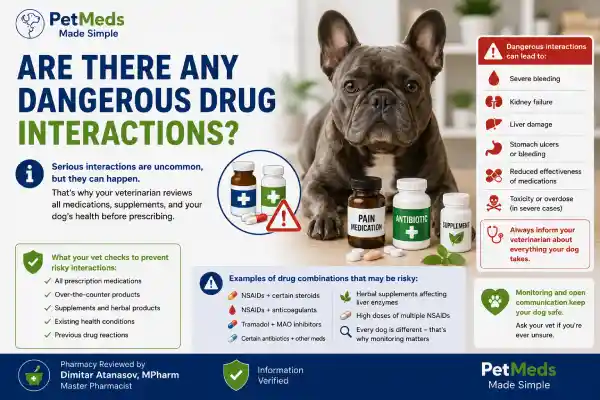
Serious drug interactions between commonly prescribed veterinary pain medications and antibiotics are uncommon, but they are possible in certain situations.
This is one reason veterinarians review:
- Your dog’s medical history.
- Current medications.
- Previous drug reactions.
- Liver and kidney function.
- Age.
- Breed.
- Existing diseases.
The goal is not simply to treat pain or infection—it is to treat the entire patient safely.
Owners should never assume that because two medications were safe for one dog, they will automatically be safe for another.
Which Dogs Need Extra Monitoring?
Some patients require closer observation while receiving both antibiotics and pain medication.
These include:
- Senior dogs
- Puppies
- Dogs with kidney disease
- Dogs with liver disease
- Dogs with diabetes
- Dogs with Cushing’s disease
- Dogs with heart disease
- Dogs taking several medications
These dogs often tolerate treatment well, but veterinarians may recommend:
- Follow-up examinations
- Blood testing
- Dose adjustments
- More frequent communication during recovery
Monitoring allows small problems to be identified before they become serious.
What Signs Should Owners Watch For?
Most dogs complete treatment without complications.
However, owners should contact their veterinarian if they notice:
| Symptom | Why It Matters |
|---|---|
| Persistent vomiting | Possible stomach irritation or medication intolerance |
| Severe diarrhea | Risk of dehydration |
| Refusing food for more than 24 hours | May indicate pain, nausea, or medication side effects |
| Extreme lethargy | Could indicate excessive medication effects or worsening illness |
| Collapse | Medical emergency |
| Difficulty breathing | Requires immediate veterinary care |
| Black or bloody stool | Possible gastrointestinal bleeding |
| Yellow gums or eyes | Possible liver disease |
| Increased drinking or urination | May require further evaluation |
Recognizing these warning signs early greatly improves the chances of successful treatment.
Could the Infection Be Causing the Problem Instead of the Medication?
Absolutely.
One of the biggest misconceptions is assuming every new symptom is caused by medication.
In reality, the infection itself may be responsible.
Dogs with bacterial infections often become:
- tired,
- less active,
- reluctant to eat,
- quieter than normal,
- less interested in exercise.
As a result, owners sometimes blame the medication when the illness is actually progressing.
Veterinarians always evaluate:
- Is the infection improving?
- Is the pain improving?
- Are new symptoms appearing?
- Is the medication appropriate?
Looking at the entire clinical picture prevents unnecessary medication changes.
Can Pain Medication Slow Healing?
This is a common concern.
The answer depends on the medication involved.
Modern veterinary pain management aims to improve recovery—not delay it.
When pain is adequately controlled, dogs often:
- Walk sooner.
- Sleep better.
- Eat more normally.
- Experience less stress.
- Heal more comfortably.
Untreated pain may actually delay recovery because stressed dogs often eat less, move less, and experience increased inflammation.
Our article Can Dogs Build Tolerance to Pain Medication? explains why maintaining effective pain control is an important part of long-term recovery.
What If My Dog Is Already Taking Long-Term Pain Medication?
Many dogs with arthritis or chronic orthopedic disease receive daily pain medication for months or even years.
If these dogs later develop an infection, veterinarians often prescribe antibiotics without stopping the existing pain medication.
Instead, they assess:
- Whether the current medication remains appropriate.
- Whether dose adjustments are needed.
- Whether blood work should be repeated.
- Whether additional monitoring is recommended.
Our guide Can Dogs Take Pain Medication Long-Term?Can Dogs Take Pain Medication Long-Term? explains how veterinarians safely monitor dogs receiving extended pain management.
Can Owners Use Leftover Antibiotics or Pain Medication?
No.
This is strongly discouraged.
Using leftover medications creates several risks:
- Wrong medication
- Incorrect dose
- Expired product
- Inappropriate treatment
- Masking a more serious illness
- Increased risk of antibiotic resistance
Pain medications should never be shared between pets, and antibiotics should always be used exactly as prescribed for the current illness.
Leftover prescriptions should never replace a veterinary examination.
Can Supplements Affect Medication Safety?

Yes.
Many owners forget to mention supplements because they assume they are completely harmless.
However, veterinarians should know about everything your dog receives, including:
- Joint supplements
- CBD products
- Fish oil
- Herbal supplements
- Probiotics
- Vitamins
Although many supplements are safe, they may influence treatment decisions or monitoring recommendations.
Always provide your veterinarian with a complete list of products your dog receives.
How Can Owners Give Medications Safely at Home?
Following a simple routine greatly reduces medication errors.
| Best Practice | Benefit |
|---|---|
| Give medications at the same time each day | Improves consistency |
| Follow the prescribed schedule | Reduces missed doses |
| Keep medications in original containers | Prevents confusion |
| Use reminders or phone alarms | Helps maintain regular dosing |
| Observe your dog after each dose | Detects early side effects |
| Contact your veterinarian with concerns | Prevents unnecessary complications |
Consistency is one of the most important factors in successful treatment.
Can Dogs Usually Recover Well While Taking Both Medications?
Yes.
For the vast majority of dogs, receiving both an antibiotic and a pain medication is a routine part of veterinary care.
When medications are:
- correctly prescribed,
- appropriately dosed,
- properly monitored,
most dogs recover without significant complications.
Owners should focus on monitoring their dog’s:
- comfort,
- appetite,
- energy level,
- mobility,
- hydration,
- overall behavior,
rather than worrying simply because two medications are being used together.
The combination itself is often exactly what allows a dog to recover comfortably and safely.
Should Owners Space Out the Medications?
This is one of the most common questions veterinarians receive.
Many owners assume that pain medication and antibiotics must be given several hours apart to avoid interactions.
For most commonly prescribed veterinary medications, this is not necessary.
Instead, veterinarians usually recommend following the schedule that best:
- Maintains consistent drug levels.
- Improves owner compliance.
- Reduces missed doses.
- Minimizes stomach upset.
Some medications are better given with food, while others may have specific instructions regarding meals.
Always follow your veterinarian’s directions rather than changing the schedule yourself.
What Happens If My Dog Misses One Dose?
Missing a single dose is usually not an emergency, but what you should do depends on which medication was missed.
If the antibiotic was missed
Missing occasional doses can reduce treatment effectiveness if it happens repeatedly.
Owners should generally:
- Give the missed dose if remembered soon after.
- Skip it if the next scheduled dose is very close.
- Never double the next dose unless instructed by their veterinarian.
Our article What Happens If My Dog Misses an Antibiotic Dose? explains how veterinarians handle missed antibiotic doses safely.
If the pain medication was missed
The dog may become:
- less comfortable,
- stiffer,
- reluctant to move,
- less interested in activity.
Owners should not double the next pain medication dose unless specifically instructed to do so.
Could Giving Two Medications Together Cause Sleepiness?
Sometimes.
However, the antibiotic is usually not responsible.
Instead, sleepiness is more commonly caused by:
- Gabapentin
- Tramadol
- Trazodone
- Opioids
- Recovery from illness
- Recovery after surgery
Many owners mistakenly assume the antibiotic caused the drowsiness simply because both medications were started on the same day.
Our article How Long Does Gabapentin Sedation Last in Dogs? explain why temporary sleepiness is expected with certain pain medications.
Could Vomiting Mean the Medications Are Incompatible?
Not necessarily.
Vomiting has many possible causes.
For example:
- The antibiotic may irritate the stomach.
- The NSAID may contribute to gastrointestinal upset.
- The infection itself may cause nausea.
- Pain can reduce appetite and increase stomach acid.
- Anesthesia from recent surgery may still be affecting the digestive system.
Veterinarians evaluate:
- When vomiting started.
- Which medication was given most recently.
- Whether vomiting occurs after every dose.
- Whether other symptoms are present.
Can Antibiotics Reduce the Effectiveness of Pain Medication?
For most commonly prescribed veterinary medications, no.
Antibiotics and pain medications generally perform different jobs inside the body.
Antibiotics fight bacteria.
Pain medications reduce pain or inflammation.
One does not usually make the other “stop working.”
If your dog still appears uncomfortable despite receiving both medications, veterinarians are more likely to suspect:
- progression of the underlying disease,
- severe inflammation,
- nerve pain,
- incorrect diagnosis,
- or the need for a different pain management strategy.
Our article Why Does Pain Medication Stop Working? explains why worsening pain is often unrelated to antibiotic therapy.
Can Dogs Receive Multiple Pain Medications Along With Antibiotics?
Yes.
Modern veterinary medicine often uses multimodal pain management.
Instead of relying on one medication alone, veterinarians combine medications that work through different mechanisms.
For example, a dog recovering from orthopedic surgery may receive:
| Medication | Purpose |
|---|---|
| Carprofen | Reduces inflammation |
| Gabapentin | Controls nerve pain |
| Amantadine | Reduces chronic pain sensitization |
| Antibiotic | Treats or prevents bacterial infection |
Using several medications appropriately often provides better pain control with fewer side effects than dramatically increasing the dose of one medication.
Our guide Dog Pain Medications Explained: Safety, Dosage & Side Effects discusses how veterinarians safely combine different pain management strategies.
Can Puppies Take Pain Medication With Antibiotics?
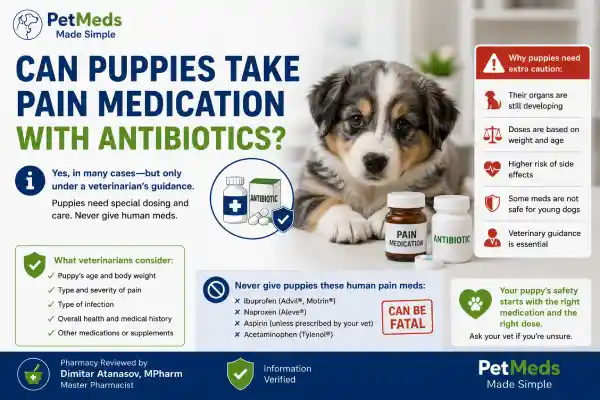
Yes but puppies require additional care.
Young dogs process medications differently than adults.
Veterinarians consider:
- Age
- Body weight
- Breed
- Growth stage
- Liver development
- Kidney development
Some medications that are appropriate for adult dogs may require different dosing—or may not be recommended—in very young puppies.
Because of these differences, owners should never use leftover medications from another dog, even if the illness appears similar.
Are Senior Dogs at Higher Risk?
Yes.
Senior dogs often receive:
- arthritis medication,
- heart medication,
- kidney supplements,
- joint supplements,
- prescription diets,
- and occasionally antibiotics for infections.
This makes medication review especially important.
Older dogs may also have reduced kidney or liver function, meaning medications remain in the body longer.
Our articles Can Dogs Take Pain Medication Long-Term? and Gabapentin Side Effects in Senior Dogs: What Pet Owners Need to Know explain why regular veterinary monitoring becomes increasingly important as dogs age.
Can Owners Give Over-the-Counter Medications Too?
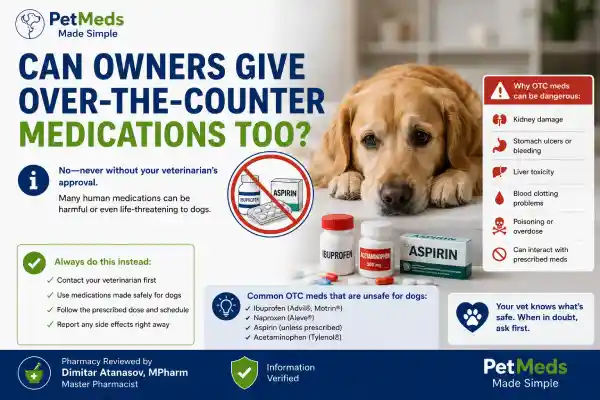
Owners should never add over-the-counter human medications unless their veterinarian specifically approves them.
Common human medications may:
- Increase stomach bleeding.
- Damage the kidneys.
- Interact with prescription medications.
- Mask worsening disease.
- Increase the risk of overdose.
This includes medications such as:
- Ibuprofen
- Naproxen
- Aspirin (unless specifically prescribed)
- Acetaminophen
Many of these products can become life-threatening in dogs.
Home Medication Checklist
Following a simple checklist can make treatment much safer.
| Daily Checklist | ✓ |
|---|---|
| Give medications exactly as prescribed | ✔ |
| Do not skip antibiotic doses | ✔ |
| Never double missed doses | ✔ |
| Monitor appetite | ✔ |
| Watch for vomiting or diarrhea | ✔ |
| Ensure fresh water is always available | ✔ |
| Complete the full antibiotic course | ✔ |
| Contact your veterinarian if symptoms worsen | ✔ |
Simple routines dramatically reduce medication errors at home.
When Should Owners Contact Their Veterinarian?
Although most dogs tolerate pain medication and antibiotics very well together, contact your veterinarian if your dog:
- Stops eating for more than 24 hours.
- Develops repeated vomiting.
- Has severe diarrhea.
- Appears increasingly painful.
- Becomes weak or collapses.
- Has difficulty breathing.
- Develops swelling of the face.
- Shows signs of an allergic reaction.
- Refuses all medications.
- Appears significantly worse instead of better.
Prompt communication allows treatment to be adjusted before serious complications develop.
Emergency Warning Signs
Seek immediate veterinary care if your dog develops any of the following while taking pain medication and antibiotics:
- Difficulty breathing
- Collapse or loss of consciousness
- Seizures
- Persistent vomiting that prevents medication from staying down
- Vomiting blood or material that resembles coffee grounds
- Black, tarry stools
- Pale or white gums
- Severe weakness or inability to stand
- Facial swelling or hives after starting a medication
- Suspected medication overdose
These signs are not considered normal medication side effects and should never be monitored at home without contacting a veterinarian.Can Dogs Take Pain Medication With Antibiotics?
Veterinarian Takeaway
Most dogs can safely take pain medication with antibiotics when both medications are prescribed by a veterinarian. In fact, this combination is part of standard veterinary treatment for many conditions, including surgery, infected wounds, dental disease, orthopedic injuries, and skin infections.
The important point is that the medications should be selected specifically for your dog’s individual health status.
Age, body weight, kidney function, liver function, existing medical conditions, and other medications all influence which drug combinations are safest.
Owners should never substitute human pain medications, restart old prescriptions, or change doses without veterinary guidance.
Careful monitoring, following dosing instructions exactly, and completing the entire antibiotic course provide the best chance for a smooth recovery.Can Dogs Take Pain Medication With Antibiotics?
Bottom Line
Can dogs take pain medication with antibiotics? Yes most dogs can, and veterinarians prescribe these medications together every day.
Pain medications control discomfort and inflammation, while antibiotics treat bacterial infections. Because they perform different jobs, they often complement one another rather than conflict. Can Dogs Take Pain Medication With Antibiotics?
However, not every medication combination is appropriate for every patient.
Dogs with kidney disease, liver disease, chronic illness, or those taking multiple medications may require:
- Different medication choices
- Dose adjustments
- Blood work
- More frequent monitoring
The safest approach is always to:
- Give medications exactly as prescribed.
- Never add human pain medications.
- Finish the entire antibiotic course.
- Watch for vomiting, diarrhea, appetite loss, or unusual behavior.
- Contact your veterinarian if your dog’s condition worsens.
With appropriate veterinary supervision, most dogs recover comfortably while receiving both pain medication and antibiotics. Can Dogs Take Pain Medication With Antibiotics?
Frequently Asked Questions – Can Dogs Take Pain Medication With Antibiotics?
Can dogs take pain medication with antibiotics?
Yes. Most veterinary pain medications can safely be prescribed together with antibiotics when your veterinarian determines the combination is appropriate for your dog’s condition.
Can I give carprofen and amoxicillin together?
In many cases, yes. Carprofen and amoxicillin are commonly prescribed together after surgery, dental procedures, bite wounds, and orthopedic injuries. Always follow your veterinarian’s instructions.
Can gabapentin be given with antibiotics?
Yes. Gabapentin is frequently combined with antibiotics because it treats nerve pain rather than bacterial infections. Most commonly used veterinary antibiotics have no significant interaction with gabapentin.
Should pain medication and antibiotics be given at different times?
Usually not. Most veterinary medication combinations do not require separation. Follow your veterinarian’s dosing schedule unless you are specifically instructed otherwise.
Can antibiotics make pain medication less effective?
Generally, no. Antibiotics and pain medications work through different mechanisms, so antibiotics rarely reduce the effectiveness of pain control.
What side effects should I watch for?
Monitor for:
Vomiting
Diarrhea
Poor appetite
Excessive sleepiness
Weakness
Increased thirst
Difficulty walking
Allergic reactions
Contact your veterinarian if these symptoms become severe or persistent.
Can antibiotics make pain medication less effective?
Generally, no. Antibiotics and pain medications work through different mechanisms, so antibiotics rarely reduce the effectiveness of pain control.
Can I stop the pain medication once my dog seems comfortable?
No. Continue giving medications exactly as prescribed unless your veterinarian instructs otherwise. Stopping treatment too early may delay recovery or allow pain to return.
Can I use leftover antibiotics or pain medication?
No. Leftover medications may be the wrong drug, the wrong dose, or inappropriate for your dog’s current condition. Every illness should be evaluated individually.
Can puppies safely receive both medications?
Yes, but medication selection and dosing are based on the puppy’s age, weight, and overall health. Never give medications intended for an adult dog to a puppy without veterinary guidance.
When should I seek emergency veterinary care?
Seek immediate veterinary attention if your dog develops collapse, difficulty breathing, seizures, vomiting blood, black stools, facial swelling, severe weakness, or signs of an overdose.
Sources
- Plumb’s Veterinary Drug Handbook
- Merck Veterinary Manual
- BSAVA Small Animal Formulary
- Veterinary Pharmacology and Therapeutics
- Small Animal Clinical Pharmacology
- AAHA Pain Management Guidelines for Dogs and Cats
- WSAVA Global Pain Council Guidelines
- American Veterinary Medical Association (AVMA)
- Journal of the American Veterinary Medical Association (JAVMA)
- Veterinary Information Network (VIN)
Medical Review Statement
This article was pharmacy-reviewed by Dimitar Georgiev Atanasov, MPharm (Bulgarian Pharmaceutical Union, UIN: 0210000586) and independently veterinary-reviewed by Dr. Valcho Georgiev Valchev, DVM (Bulgarian Veterinary Union, Registration No. 28000115) to ensure medical accuracy, medication safety, and consistency with current veterinary standards.Can Dogs Take Pain Medication With Antibiotics?
Important Medical Disclaimer
The information on PetMedsMadeSimple.com is provided for educational purposes only and does not replace professional veterinary advice, diagnosis, or treatment.
Every dog is unique, and medication decisions should always be made by a licensed veterinarian who has examined your pet.
Never start, stop, increase, decrease, or combine medications without veterinary guidance.
For more information about how we create and review our content, please read our Editorial Policy, Medical Review Process, and About Us pages.
Image Disclosure – Can Dogs Take Pain Medication With Antibiotics?
Some images used in this article may be AI-generated or AI-assisted for educational purposes. Every article is independently researched, pharmacy-reviewed by Dimitar Georgiev Atanasov, MPharm, and veterinary-reviewed by Dr. Valcho Georgiev Valchev, DVM. AI-generated illustrations are intended to improve understanding of veterinary concepts and do not depict actual clinical patients. Can Dogs Take Pain Medication With Antibiotics?