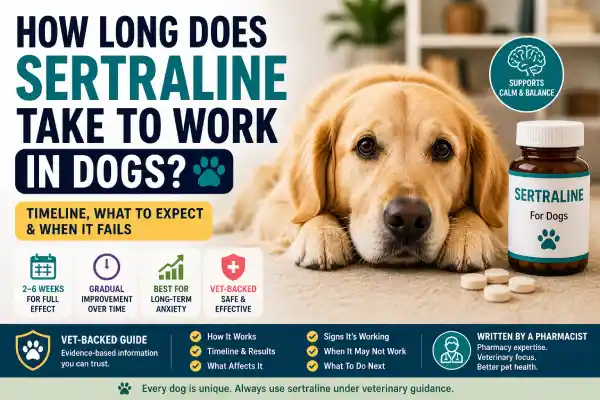
How long does sertraline take to work in dogs?
Sertraline usually takes 2 to 6 weeks to show noticeable improvement in anxiety symptoms, although some mild effects may appear within the first 1–2 weeks. Full behavioral stabilization often requires consistent daily use and proper dose adjustment under veterinary supervision.
Sertraline is not a fast-acting medication. It works gradually by changing brain chemistry over time, which means patience and correct expectations are critical.
As a pharmacist, I can tell you this clearly:
👉 The biggest mistake pet owners make is expecting immediate results from a medication designed for long-term regulation
➡️ Learn how it compares:
Sertraline vs Fluoxetine for Dogs: Which Is Better Long-Term? (Vet-Backed Comparison)
What Is Sertraline and How Does It Work in Dogs?
Sertraline is a selective serotonin reuptake inhibitor (SSRI) used to treat anxiety and behavioral disorders in dogs. It works by increasing serotonin levels in the brain—a neurotransmitter responsible for mood stability and emotional regulation.
Unlike fast-acting medications such as benzodiazepines, sertraline does not sedate the dog immediately. Instead, it gradually rebalances brain signaling, making the dog less reactive to stress triggers over time.
When Veterinarians Prescribe Sertraline
Sertraline is typically used for:
- Separation anxiety
- Generalized anxiety
- Compulsive behaviors
- Chronic stress conditions
➡️ Internal links:
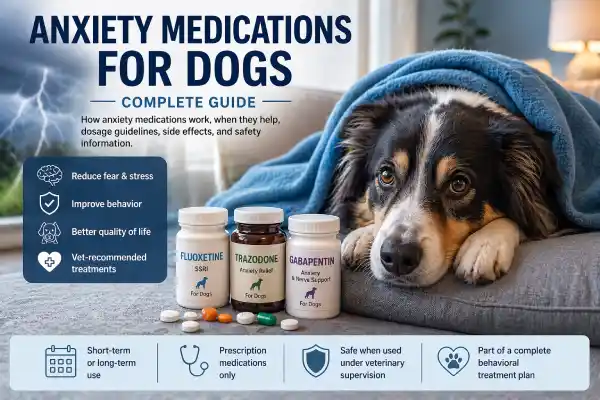
- Anxiety Medications for Dogs: Complete Guide (Uses, Dosage, Side Effects & Safety)
- Best Anxiety Medication for Dogs with Separation Anxiety (Comparison Guide – Vet-Backed)
How Long Does Sertraline Take to Work in Dogs?
Sertraline Timeline: When Will You See Results?
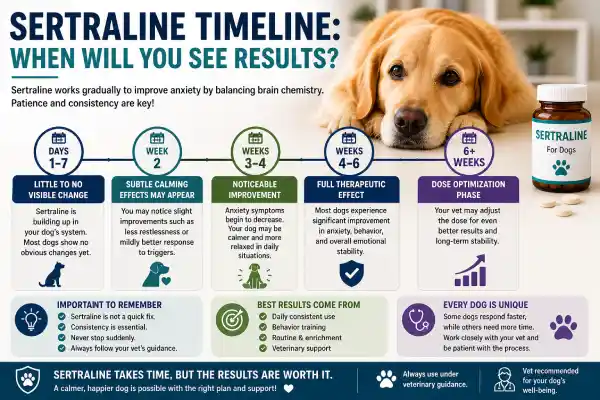
Understanding the timeline is essential for proper use.
Table: Sertraline Effect Timeline in Dogs
| Time Period | What Happens |
|---|---|
| Days 1–7 | Little to no visible change |
| Week 2 | Subtle calming effects may appear |
| Weeks 3–4 | Noticeable behavioral improvement |
| Weeks 4–6 | Full therapeutic effect |
| 6+ Weeks | Dose optimization phase |
Why Sertraline Takes Time
Sertraline does not act directly like a sedative. Instead, it:
- Gradually increases serotonin availability
- Alters receptor sensitivity
- Stabilizes emotional response over time
👉 This biological adaptation process takes weeks, not hours.
What You Might Notice in the First Weeks
Many owners become concerned because they expect fast results.
Week 1–2: Adjustment Phase
- Slight lethargy or mild sedation
- No major anxiety improvement yet
- Possible minor side effects
Week 3–4: Early Improvement
- Reduced reactivity
- Less pacing or vocalization
- Improved tolerance to triggers
Week 4–6: Full Effect
- Stable behavior
- Reduced anxiety episodes
- Better overall mood
Why Some Dogs Take Longer to Respond
Not all dogs respond at the same speed. Several factors influence effectiveness:
1. Severity of Anxiety
Dogs with severe anxiety may require:
- Higher doses
- Longer adjustment periods
- Combination therapy
2. Incorrect Dosage
Too low → no effect
Too high → side effects
➡️ Internal link:
Sertraline Dosage for Dogs: Weight Chart & Safety Guide (Vet-Backed)
3. Lack of Combination Therapy
Sertraline works best when combined with:
- Behavioral training
- Environmental management
- Sometimes additional medications
➡️ Internal links:
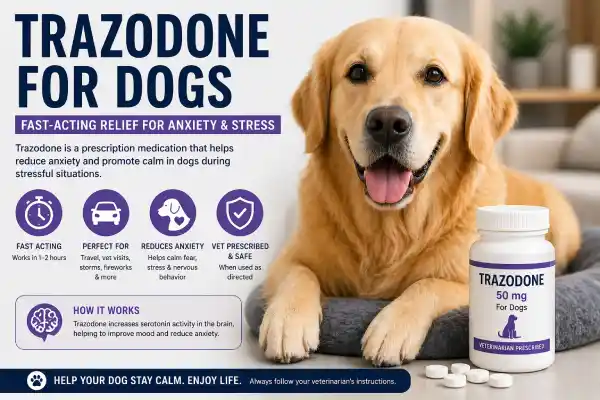
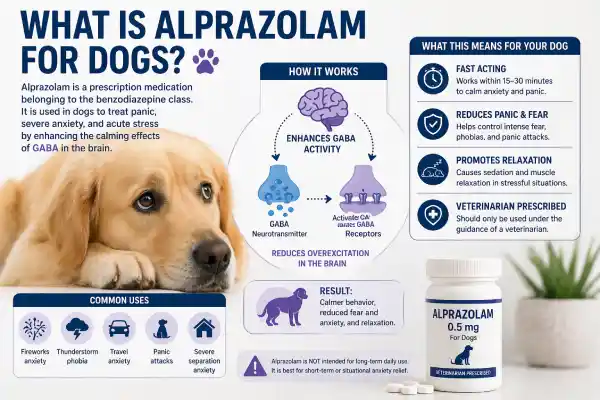
- Trazodone vs Alprazolam for Dogs: Which Works Faster?
- Hydroxyzine vs Trazodone for Dogs: Mild vs Strong Anxiety Relief
4. Individual Brain Chemistry
Just like humans, dogs respond differently to SSRIs.
Some dogs:
- Respond quickly
- Respond slowly
- Need alternative medication
➡️ Internal link:
Paroxetine vs Sertraline for Dogs: Key Differences Explained (Vet-Backed)
How to Tell If Sertraline Is Working
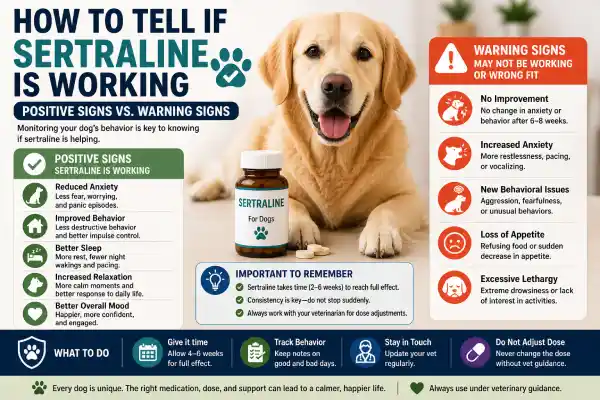
Positive Signs
- Reduced anxiety triggers
- Improved calmness
- Less destructive behavior
- Better sleep patterns
Negative Signs (Not Working or Wrong Fit)
- No improvement after 6–8 weeks
- Increased agitation
- New behavioral issues
➡️ Internal link:
Sertraline Side Effects in Dogs: What to Watch For (Vet-Backed Guide)
What If Sertraline Is Not Working?
If no improvement is seen after 6–8 weeks, your vet may:
- Adjust the dose
- Switch medications
- Add a second medication
Table: Alternative Options if Sertraline Fails
| Alternative | Best For | Speed |
|---|---|---|
| Fluoxetine | Long-term anxiety | Slow |
| Trazodone | Situational anxiety | Fast |
| Alprazolam | Panic episodes | Very fast |
| Buspirone | Mild anxiety | Moderate |
➡️ Internal links:
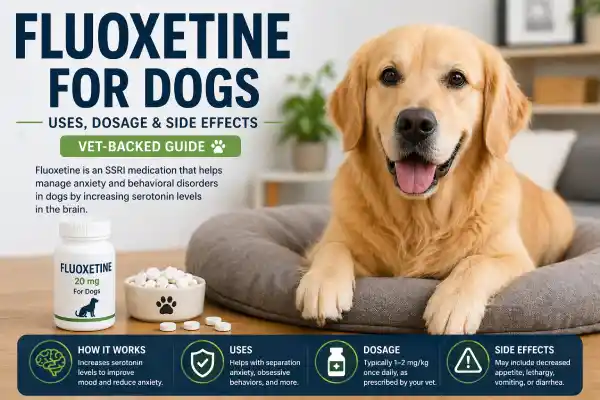
- Fluoxetine for Dogs: Uses, Dosage & Side Effects (Vet-Backed Guide)
- Buspirone for Dogs: Anxiety Treatment Explained (Vet-Backed Guide)
Combination Therapy (Most Effective Strategy)
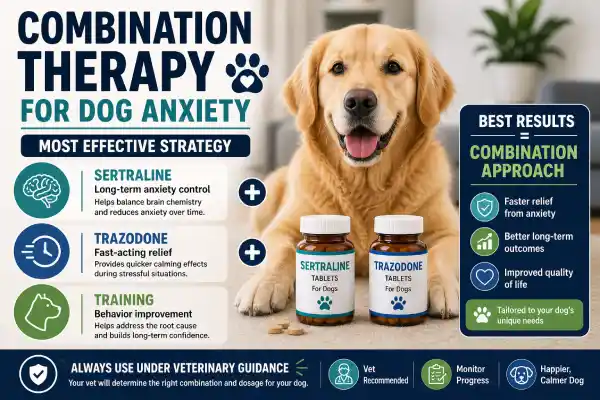
Sertraline is rarely used alone in moderate to severe cases.
Veterinarians often combine:
- Sertraline (long-term stability)
- Trazodone (short-term control)
👉 This approach provides:
- Faster results
- Better long-term stability
- Reduced relapse
Common Mistakes Pet Owners Make
- Expecting immediate results
- Stopping medication too early
- Not following dosage instructions
- Ignoring behavioral training
Pro Tips for Faster Results
- Give medication at the same time daily
- Combine with training
- Avoid sudden dose changes
- Monitor behavior weekly
FAQ
How long does sertraline take to calm a dog?
Most dogs show improvement within 3–4 weeks, with full effect at 4–6 weeks.
Does sertraline work immediately?
No, it requires consistent use over time.
Can sertraline make anxiety worse at first?
In rare cases, yes—during the adjustment phase.
What is better, sertraline or trazodone?
Sertraline is better for long-term anxiety; trazodone works faster.
Can I stop sertraline suddenly?
No—this can cause withdrawal symptoms.
Conclusion
Sertraline is not a quick fix—but it is one of the most effective long-term anxiety treatments for dogs.
✔ 2–6 weeks for full effect
✔ Best for chronic anxiety
✔ Works best with combination therapy
👉 The key is consistency, patience, and proper dosing.
Medical Disclaimer
This content is for informational purposes only and does not replace professional veterinary advice. Always consult a licensed veterinarian before starting or changing any treatment.
Sources
American Veterinary Medical Association
Merck Veterinary Manual
VCA Animal Hospitals
Veterinary Information Network (VIN)