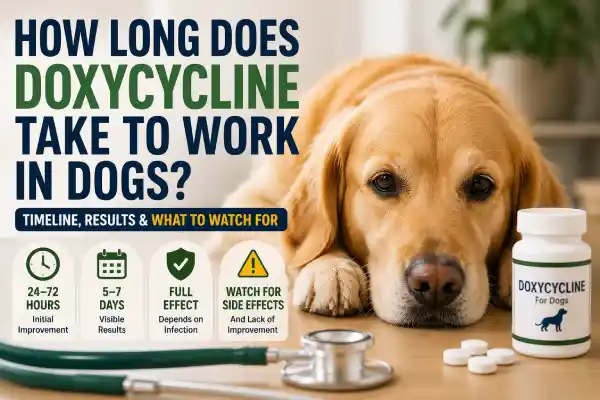
How Long Does Doxycycline Take to Work in Dogs? In most cases, dogs begin to improve within 24–72 hours, but full recovery can take 5–10 days or longer, depending on the infection and the dog’s overall health.
Quick Answer
Doxycycline typically starts working within 1 to 3 days, but visible improvement varies. Mild infections improve quickly, while serious conditions like tick-borne diseases may take longer.
Why This Question Matters More Than You Think
Many owners expect fast results.
👉 “I gave the antibiotic — why isn’t my dog better yet?”
But antibiotics don’t work like pain meds.
Unlike fast-acting drugs explained in Tramadol for dogs: uses and effects, doxycycline works gradually by stopping bacterial growth, not instantly removing symptoms.
How Long Does Doxycycline Take to Work in Dogs
How Doxycycline Works in Dogs
Doxycycline is a bacteriostatic antibiotic, meaning it:
- stops bacteria from multiplying
- gives the immune system time to respond
- gradually clears infection
What Happens in the Body
- Drug enters bloodstream
- Reaches infected tissue
- Blocks bacterial protein synthesis
- Stops infection spread
- Immune system eliminates bacteria
👉 This is why you don’t see instant results.
Real Timeline: What to Expect Day by Day
First 24 Hours
- drug absorbed
- begins action
- no visible change yet
24–72 Hours
- infection stops progressing
- mild improvement begins
3–5 Days
- noticeable symptom relief
- better energy levels
5–10 Days
- strong recovery phase
- symptoms significantly reduced
Timeline by Condition
| Condition | Time to Improve |
|---|---|
| Skin infections | 2–4 days |
| Respiratory infections | 2–5 days |
| Lyme disease | 5–10 days |
| Ehrlichiosis | 5–14 days |
👉 Tick-borne diseases always take longer.
Signs Doxycycline Is Working
Early Signs
- improved appetite
- increased energy
- reduced fever
Later Signs
- normal behavior returns
- infection symptoms disappear
👉 Appetite improvement is a key signal — especially if your dog had reduced eating, similar to what we discussed in Can Pain Medication Cause Loss of Appetite in Dogs?
Signs Doxycycline Is NOT Working
Red Flags
- no improvement after 3–5 days
- symptoms worsening
- new symptoms appear
- persistent lethargy
👉 This may indicate:
- incorrect diagnosis
- antibiotic resistance
- wrong medication choice
If symptoms persist, compare with cases discussed in Lyme disease in dogs, where longer response times are expected.
Why Some Dogs Respond Faster Than Others
1. Type of Infection
Simple infections:
✔ fast response
Systemic infections:
❌ slower recovery
2. Immune System Strength
Healthy dogs recover faster.
Dogs with chronic illness recover slower.
3. Correct Diagnosis
If diagnosis is wrong:
👉 antibiotic won’t work
4. Medication Absorption
Doxycycline must be:
- absorbed properly
- given correctly
👉 Improper use delays results.
Conditions Commonly Treated with Doxycycline
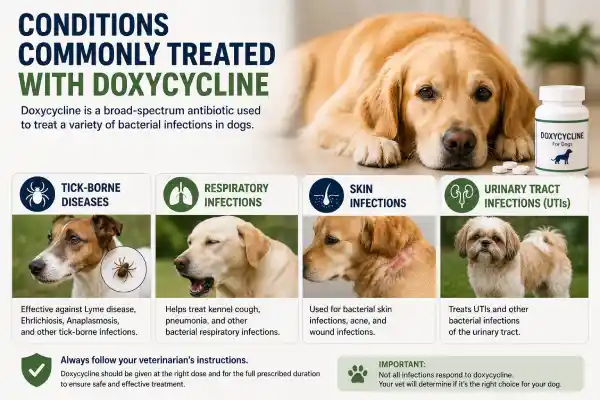
- tick-borne diseases
- respiratory infections
- skin infections
- urinary infections
👉 Especially important for diseases like Ehrlichiosis, where early treatment is critical.
Biggest Mistake Owners Make
❌ Stopping Too Early
Dog feels better → owner stops medication.
Result:
- infection returns
- becomes harder to treat
- resistance develops
👉 Always complete the full course.
Why Symptoms Improve Before Infection Is Gone
Because:
- inflammation decreases first
- bacteria remain
👉 This is similar to how pain may improve before underlying issues resolve, as explained in Best Pain Medication for Dogs with Arthritis (Comparison Guide).
Antibiotic Resistance: A Real Risk
If doxycycline doesn’t work:
👉 bacteria may be resistant
Causes:
- incomplete treatment
- incorrect dosage
- repeated antibiotic use
👉 This is why proper use is critical.
Case Example
Dog A
- mild infection
- improves in 2 days
Dog B
- tick disease
- improves in 7 days
👉 Same drug, different timeline.
How to Make Doxycycline Work Better
1. Consistent Dosing
Give at the same time daily.
2. Proper Administration
Follow vet instructions exactly.
3. Hydration
Helps drug distribution.
4. Monitor Progress
Track symptoms daily.
👉 Similar monitoring approach is used with other medications like Gabapentin for dogs, where timing and consistency affect results.
Side Effects That Can Slow Progress
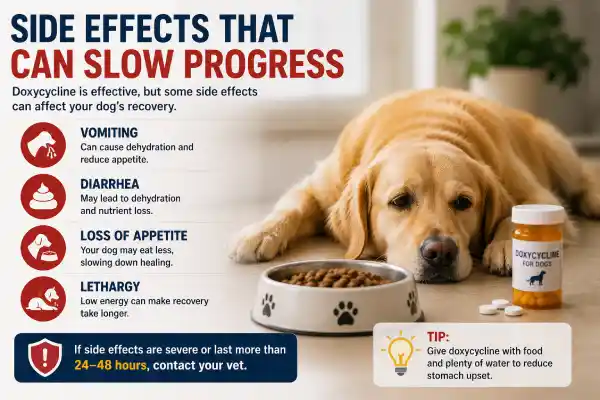
Common Side Effects
- vomiting
- diarrhea
- appetite loss
👉 Appetite loss is especially important — it may indicate irritation or intolerance, not just infection.
What If It’s Not Working?
Step-by-Step
- wait at least 72 hours
- evaluate symptoms
- contact vet
- adjust treatment
Possible Solutions
- switch antibiotic
- adjust dose
- run tests
👉 Similar approach is used when evaluating treatment failure in culture and sensitivity test.
When to Call the Vet Immediately
- no improvement after 5 days
- worsening symptoms
- severe lethargy
- persistent vomiting
👉 Don’t delay intervention.
Vet Perspective
Veterinarians don’t expect instant results.
They evaluate:
- progression trend
- symptom improvement
- response over time
👉 Patience + monitoring = success.
Summary Table
| Situation | Meaning |
|---|---|
| better in 2–3 days | normal |
| better in 5–7 days | slower response |
| no improvement | problem |
| worse symptoms | urgent |
FAQ How Long Does Doxycycline Take to Work in Dogs
How fast does doxycycline work in dogs?
Usually within 1–3 days.
Why is my dog not improving?
Possible resistance or wrong diagnosis.
Can I stop early?
No — always complete treatment.
Is slow improvement normal?
Yes, especially for serious infections.
Conclusion
Doxycycline is effective, but not instant. Understanding its timeline helps you avoid mistakes, recognize warning signs early, and ensure your dog receives the best possible treatment.
The key is consistency, patience, and proper monitoring.
Medical Disclaimer
This article is for educational purposes only and does not replace veterinary advice.
Sources
- Plumb’s Veterinary Drug Handbook
- VCA Animal Hospitals
- Veterinary Partner (VIN)