Quick Answer
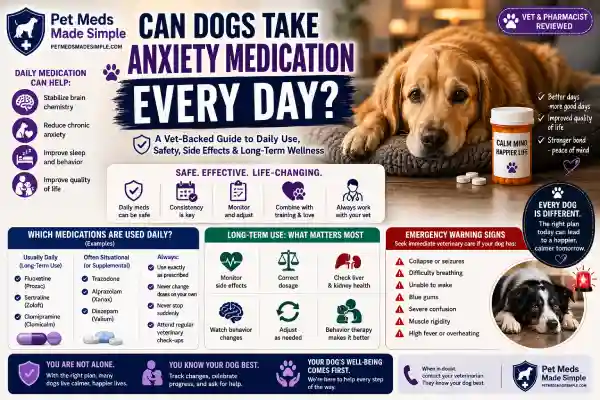
Can dogs take anxiety medication every day? Yes, some dogs may safely take anxiety medication every day under veterinary supervision, especially for chronic anxiety, separation anxiety, compulsive behaviors, or long-term behavioral disorders. Daily treatment may require dose adjustments, monitoring, behavioral support, and regular veterinary evaluations to reduce risks of side effects, withdrawal problems, emotional blunting, or medication interactions.
Many dog owners become worried when they hear:
- “your dog may need anxiety medication daily”
- “this medication works best long term”
- “the medication should be given every day”
- “your dog may need lifelong treatment”
And honestly?
This is one of the BIGGEST emotional concerns dog owners experience.
Because owners immediately fear:
“Will this harm my dog long-term?”
Many people worry about:
- dependency
- personality changes
- addiction
- emotional blunting
- liver damage
- sedation
- withdrawal
- long-term neurological effects
But in many cases:
daily anxiety medication may significantly improve quality of life
for both:
- dogs
- owners
This guide explains:
- which anxiety medications dogs may take daily
- long-term safety concerns
- daily vs situational medications
- withdrawal and dependency concerns
- behavioral monitoring
- side effects and emergency symptoms
- how veterinarians safely manage long-term anxiety treatment
Can Dogs Take Anxiety Medication Every Day?
Why Do Some Dogs Need Daily Anxiety Medication?
Some dogs experience:
- chronic anxiety
- separation anxiety
- noise phobias
- generalized anxiety
- compulsive behaviors
- severe fear responses
These problems may occur:
- every day
- repeatedly
- throughout the dog’s life
In these situations:
daily medication may help stabilize brain chemistry and reduce suffering
Common Conditions Treated With Daily Anxiety Medication
| Condition | Why Daily Treatment May Help |
|---|---|
| Separation anxiety | Reduce constant panic |
| Generalized anxiety | Improve emotional stability |
| Compulsive licking or chewing | Reduce repetitive stress behaviors |
| Chronic fear | Lower persistent anxiety |
| Senior dog anxiety | Improve comfort and sleep |
This strongly connects with:
- Why Does My Dog Cry at Night Even With Medication?
- Can Anxiety Medication Cause Personality Changes?
- What to Do If Dog Medication Is Not Working
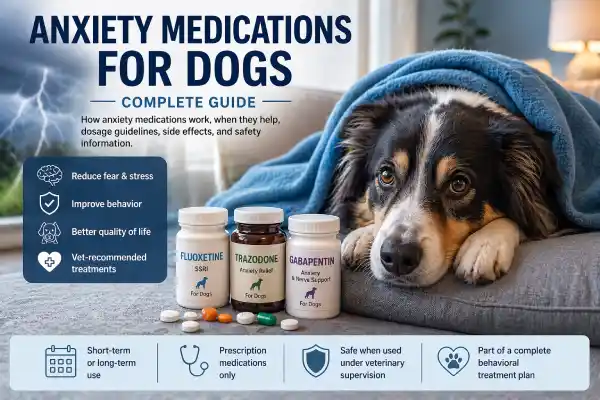
Which Anxiety Medications Are Used Daily?
This is VERY important.
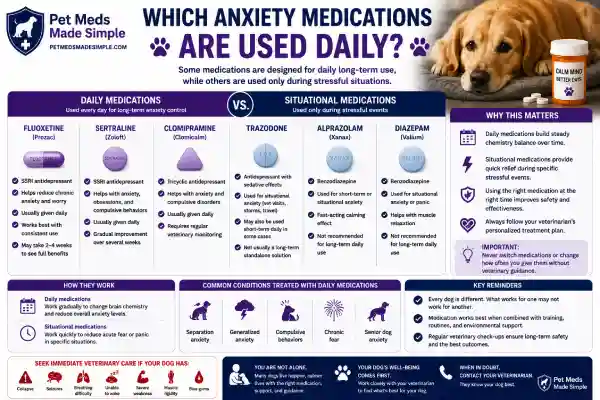
Some medications are designed for:
long-term daily use
while others are used:
only during stressful situations
Daily vs Situational Anxiety Medications
| Medication | Daily Use or Situational Use? |
|---|---|
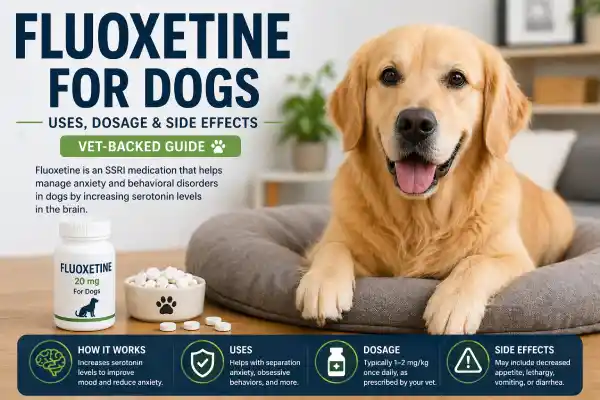
| Fluoxetine (Prozac) | Usually daily |
| Sertraline | Usually daily |
| Clomipramine | Usually daily |
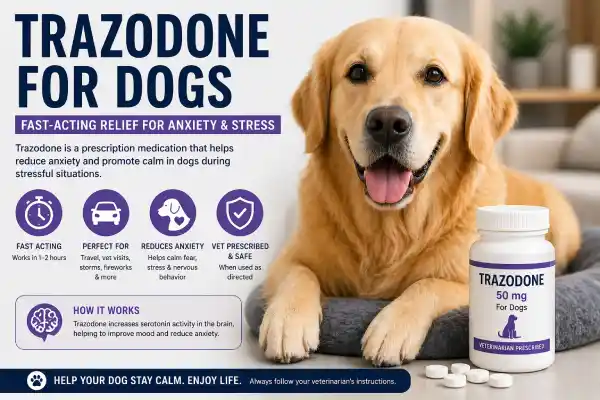
| Trazodone | Often situational or supplemental |
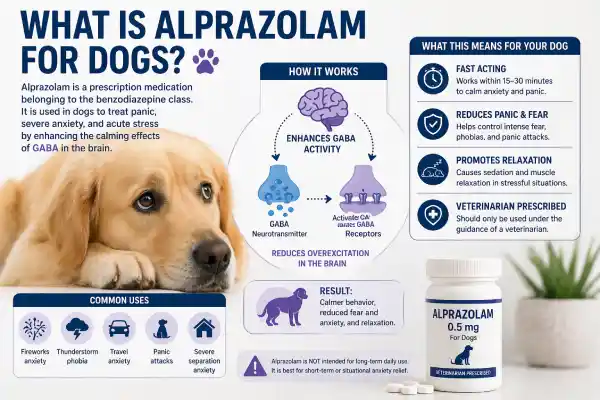
| Alprazolam | Usually situational |
| Diazepam | Usually situational |
Why This Matters
Daily medications often:
- work gradually
- stabilize anxiety over time
- require consistent dosing
Situational medications are commonly used:
- during storms
- travel
- fireworks
- vet visits
- temporary stress events
This naturally links with:
- Trazodone for Dogs: Uses, Dosage & Safety
- Fluoxetine for Dogs: Uses, Dosage & Safety
- Diazepam for Dogs with Anxiety: When to Use It & Safe Dosage Guide
Is Daily Anxiety Medication Safe for Dogs?
For MANY dogs:
yes — when properly monitored
Veterinarians commonly prescribe daily behavioral medications for:
- months
- years
- sometimes lifelong management
especially when untreated anxiety severely affects:
- quality of life
- sleep
- appetite
- behavior
- emotional stability
Long-Term Monitoring Is VERY Important
| Monitoring Area | Why It Matters |
|---|---|
| Side effects | Detect medication problems |
| Appetite and weight | Monitor health changes |
| Behavior changes | Evaluate emotional response |
| Liver and kidney health | Improve medication safety |
| Medication interactions | Reduce complications |
This strongly connects with:
Can Dogs Become Addicted to Anxiety Medication?
This is one of the MOST misunderstood concerns.
In most cases:
dogs do NOT become “addicted” in the human sense
However:
some medications may cause:
- physical dependence
- withdrawal symptoms
- rebound anxiety
especially if stopped suddenly.
Medications More Associated With Dependence Risk
| Medication | Dependence Concern |
|---|---|
| Alprazolam | Higher |
| Diazepam | Higher |
| Trazodone | Lower |
| Fluoxetine | Usually lower |
This strongly connects with:
- Can Anxiety Medication Actually Make Dogs Hyper?
- Why Is My Dog Hiding After Taking Anxiety Medication?
- Can Anxiety Medication Make Dogs Aggressive?
Can Dogs Have Withdrawal Symptoms?
Yes — sometimes.
Stopping some medications suddenly may cause:
- rebound anxiety
- pacing
- restlessness
- trembling
- crying
- behavioral worsening
Possible Withdrawal Symptoms
| Symptom | Severity |
|---|---|
| Restlessness | Mild to moderate |
| Increased anxiety | Moderate |
| Trembling | Moderate |
| Agitation | Serious |
| Panic behaviors | Serious |
| Seizures (rare severe cases) | EMERGENCY |
This is why:
medications should NEVER be stopped abruptly without veterinary guidance
This naturally links with:
- Why Is My Dog More Hyper After Anxiety Medication?
- Why Is My Dog Shaking Even After Anxiety Medication?
- Can Dogs Develop Fear of Medication?
Can Daily Anxiety Medication Change a Dog’s Personality?
Sometimes dogs may appear:
- calmer
- quieter
- less reactive
- more tired
But this does NOT always mean:
personality damage
In many cases:
- anxiety is finally controlled
- the dog feels safer
- hypervigilance decreases
However:
excessive sedation or emotional blunting may sometimes occur.
Possible Behavior Changes
| Behavior | Possible Cause |
|---|---|
| Sleeping more | Sedation |
| Less reactivity | Reduced anxiety |
| Withdrawal | Emotional blunting |
| Hiding | Sedation or dysphoria |
| Hyperactivity | Paradoxical reaction |
This strongly connects with:
- Can Anxiety Medication Cause Personality Changes?
- Why Is My Dog Hiding After Taking Anxiety Medication?
Can Anxiety Medication Stop Working Over Time?
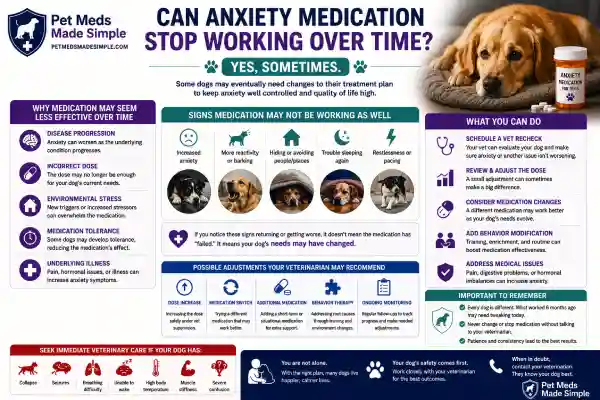
Sometimes.
Some dogs may eventually need:
- dose adjustments
- medication changes
- behavioral therapy support
- additional situational medications
Possible Reasons Medication Seems Less Effective
| Cause | Possible Result |
|---|---|
| Disease progression | Increased anxiety |
| Incorrect dose | Poor symptom control |
| Environmental stress | Breakthrough anxiety |
| Medication tolerance | Reduced effect |
| Underlying illness | Behavioral worsening |
This naturally links with:
Are Senior Dogs More Vulnerable?
Absolutely.
Older dogs may:
- metabolize medications more slowly
- become sedated more easily
- develop confusion
- experience stronger neurological effects
Senior dogs may require:
- lower doses
- closer monitoring
- more frequent evaluations
Senior Dog Concerns
| Symptom | Possible Concern |
|---|---|
| Excess sleepiness | Sedation |
| Confusion | Neurological sensitivity |
| Wandering | Cognitive dysfunction |
| Hiding | Emotional blunting or anxiety |
This strongly connects with:
What Symptoms Are Emergencies?
This is the MOST important section.
Seek immediate veterinary care if your dog develops:
- collapse
- seizures
- inability to wake
- blue gums
- breathing difficulty
- severe confusion
- muscle rigidity
- overheating
- severe weakness
- unresponsiveness
Emergency Warning Signs
| Symptom | Emergency Level |
|---|---|
| Collapse | EMERGENCY |
| Seizures | EMERGENCY |
| Unable to wake | EMERGENCY |
| Breathing difficulty | EMERGENCY |
| Blue gums | EMERGENCY |
| Muscle rigidity | EMERGENCY |
| Severe confusion | Serious |
| Overheating | EMERGENCY |
This strongly connects with:
- What Happens If Dogs Take Too Much Trazodone?
- Signs of Medication Overdose in Dogs
- Can Dog Medications Cause Behavior Changes?
What Should Owners Do If Their Dog Takes Anxiety Medication Daily?
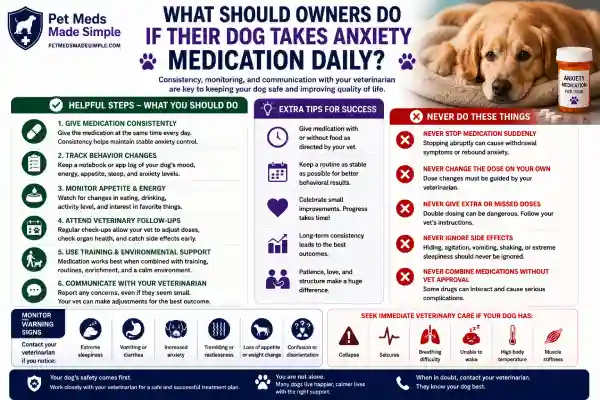
Helpful Steps
| Step | Why It Helps |
|---|---|
| Give medication consistently | Improve stability |
| Track behavior changes | Detect side effects |
| Keep routines predictable | Reduce anxiety |
| Monitor appetite and energy | Evaluate health |
| Attend veterinary follow-ups | Improve long-term safety |
| Combine medication with training | Improve outcomes |
NEVER:
- suddenly stop medication
- change doses independently
- combine medications without guidance
- ignore neurological symptoms
- assume worsening anxiety is “normal”
How Veterinarians Monitor Long-Term Anxiety Medication Use
Veterinarians may evaluate:
- symptom improvement
- emotional stability
- sedation levels
- behavior changes
- appetite and weight
- neurological status
- medication interactions
- liver and kidney health
Possible monitoring may include:
- physical examinations
- bloodwork
- medication reviews
- behavioral assessments
- dose adjustments
FAQ — Can Dogs Take Anxiety Medication Every Day?
Can dogs safely take Prozac every day?
Many dogs may safely take fluoxetine daily under veterinary supervision for chronic anxiety disorders.
Is trazodone safe every day?
Some dogs may take trazodone daily short-term or alongside other medications, depending on veterinary guidance.
Will my dog become addicted?
Most dogs do not become addicted like humans, but some medications may cause physical dependence if stopped suddenly.
Can daily medication change personality?
Some dogs may appear calmer or sleepier, but true permanent personality changes are uncommon.
Can dogs stay on anxiety medication for years?
Yes. Some dogs may benefit from long-term treatment for chronic anxiety conditions.
What symptoms are emergencies?
Collapse, seizures, inability to wake, breathing difficulty, overheating, or severe neurological symptoms require immediate veterinary care.
Should owners stop anxiety medication suddenly?
Never stop prescription anxiety medication abruptly without veterinary guidance.
Medical Disclaimer
This article is for educational purposes only and does not replace professional veterinary advice, diagnosis, or treatment. The content is written and pharmacist-reviewed to improve medication safety awareness and help dog owners better understand long-term anxiety medication use, withdrawal risks, emotional blunting, sedation, dependency concerns, neurological symptoms, and emergency warning signs in dogs. Always contact your veterinarian if your dog develops severe weakness, collapse, seizures, breathing difficulty, or sudden neurological symptoms.Can Dogs Take Anxiety Medication Every Day?
Reviewed by
Written by Pet Meds Made Simple Editorial Team
Pharmacy Reviewed by Dimitar Atanasov MPharm
Master Pharmacist | Medication Safety Educator
Last Updated: May 2026
Editorial Policy
At PetMedsMadeSimple.com, all articles are written for educational purposes and reviewed through our pharmacist-led editorial process to improve medication safety awareness for dog owners. Our content is evidence-based, regularly updated, and designed to help readers better understand veterinary medications, side effects, interactions, warning signs, and recovery concerns.Can Dogs Take Anxiety Medication Every Day?
Every article is reviewed for clarity, safety-focused language, and responsible medical communication before publication.
Read our full Editorial Policy here:
👉 Pet Meds Made Simple Editorial Policy
Sources & Scientific References
- PetMD – Anxiety Medications for Dogs
- Collie Consultant – Anti Anxiety Meds for Dogs
- Reddit Dogtraining Discussion
- Merck Veterinary Manual
- American Veterinary Medical Association (AVMA)
- Plumb’s Veterinary Drug Handbook
Images created with AI – Can Dogs Take Anxiety Medication Every Day?