Quick Answer
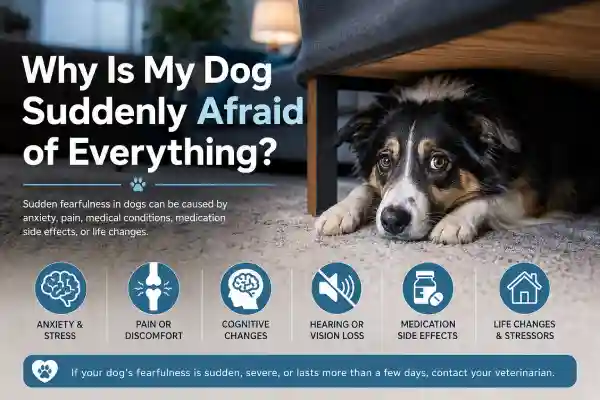
Why is my dog suddenly afraid of everything? A dog that suddenly becomes fearful may be experiencing anxiety, pain, illness, cognitive dysfunction, medication side effects, hearing loss, vision changes, or a recent stressful event. While occasional fear can happen after a frightening experience, a dog that suddenly seems scared of everything often has an underlying cause that deserves attention.
Many owners become worried when a previously confident dog suddenly starts hiding, trembling, avoiding people, refusing walks, or acting nervous around familiar situations. If you’re asking “Why is my dog suddenly afraid of everything?”, you’re not alone. Sudden behavior changes can be confusing and sometimes alarming, particularly when they seem to appear overnight.
Fortunately, identifying the cause is often the first step toward helping your dog feel comfortable again.
When Owners Commonly Ask This
Many dog owners begin searching for answers after noticing changes such as:
- My dog suddenly seems scared all the time.
- My dog is afraid of noises that never bothered him before.
- My dog suddenly hides under furniture.
- My dog seems nervous around family members.
- My dog is suddenly scared to go outside.
- My dog startles easily.
- My senior dog suddenly acts fearful.
- My dog became scared after starting medication.
These changes can happen gradually or appear very suddenly.
Either way, they often indicate that something has changed physically, emotionally, or medically.
Why Is My Dog Suddenly Afraid of Everything?
The most important thing to understand is that fear is a symptom, not a diagnosis.
Dogs do not usually become afraid of everything without a reason.
Something is often driving the change.
In some cases, the explanation is relatively simple, such as a recent stressful event or a loud noise. In others, fearfulness may be linked to pain, illness, cognitive decline, or medication effects.
Because fear can have many causes, looking at the bigger picture is important.
Questions to consider include:
- Did the behavior begin suddenly?
- Is your dog a senior?
- Has medication recently changed?
- Did a stressful event occur?
- Are there any physical symptoms?
The answers can provide important clues.
Why Is My Dog Suddenly Afraid of Everything?
8 Common Reasons Dogs Suddenly Become Fearful
Anxiety Disorders
Anxiety is one of the most common causes of sudden fearfulness.
Dogs with anxiety may become fearful of:
- Noises
- New environments
- Visitors
- Being alone
- Everyday situations
Signs often include:
- Trembling
- Panting
- Hiding
- Clinginess
- Restlessness
Related articles:
What Is the Safest Anxiety Medication for Dogs?
Best Anxiety Medication for Dogs: Comparison Guide
Pain or Physical Discomfort
Pain is frequently overlooked.
A dog experiencing discomfort may suddenly become fearful because movement, touch, or activity causes pain.
Common causes include:
- Arthritis
- Back pain
- Hip problems
- Dental disease
- Injuries
Pain can make dogs appear anxious even when the underlying problem is physical rather than emotional.
This is especially common in older dogs.
Cognitive Dysfunction Syndrome
Cognitive dysfunction syndrome is often compared to dementia in humans.
Affected dogs may become:
- Confused
- Disoriented
- Anxious
- Fearful
- Restless
They may suddenly seem frightened by familiar surroundings.
Many owners first notice symptoms at night.
Related article:
Why Does My Dog Panic at Night?
Hearing Loss
Dogs rely heavily on hearing to understand their environment.
When hearing begins to decline, they may become startled more easily.
A dog that cannot accurately identify sounds may become fearful because the world suddenly feels less predictable.
This is particularly common in senior dogs.
Vision Changes
Changes in eyesight can also increase fear.
Dogs with declining vision may:
- Hesitate to enter dark rooms
- Avoid stairs
- Startle more easily
- Appear nervous outdoors
Environmental uncertainty often increases anxiety.
Medication Side Effects
Certain medications can occasionally affect behavior.
Although anxiety medications are designed to reduce fear, some dogs may experience temporary behavioral changes while adjusting to treatment.
Owners sometimes report:
- Confusion
- Increased sensitivity
- Restlessness
- Unusual fearfulness
Related articles:
Can Anxiety Medication Cause Confusion in Dogs?
Can Anxiety Medication Cause Weakness in Dogs?
Can Anxiety Medication Cause Vomiting?
Stressful Life Changes
Dogs can be surprisingly sensitive to routine changes.
Potential triggers include:
- Moving to a new home
- New pets
- New family members
- Boarding
- Changes in work schedules
- Loss of a companion animal
Even positive changes can create temporary anxiety.
Underlying Medical Conditions
Some illnesses can affect behavior.
Potential examples include:
- Hormonal disorders
- Neurological disease
- Heart disease
- Chronic pain conditions
- Internal illness
This is one reason sudden fearfulness should never be dismissed automatically as “just anxiety.”
What Does Sudden Fearfulness Look Like?
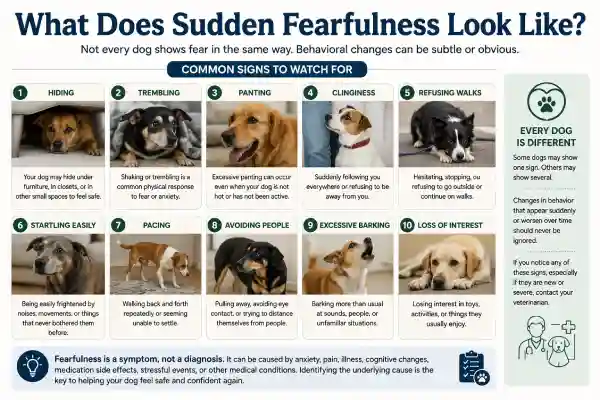
Not every dog shows fear in the same way.
Common signs include:
| Behavior | Common? |
|---|---|
| Hiding | Yes |
| Trembling | Yes |
| Panting | Yes |
| Clinginess | Yes |
| Refusing Walks | Yes |
| Startling Easily | Yes |
| Pacing | Yes |
| Avoiding People | Sometimes |
| Excessive Barking | Sometimes |
Some dogs become withdrawn.
Others become unusually attached to their owners.
Still others alternate between both behaviors.
Is This More Common in Senior Dogs?
Yes.
Sudden fearfulness is significantly more common in older dogs.
Age-related changes may include:
Cognitive Dysfunction
Confusion often contributes to anxiety.
Reduced Vision
Poor vision can make familiar environments seem unfamiliar.
Hearing Loss
Unexpected sounds may become frightening.
Chronic Pain
Conditions such as arthritis frequently contribute to behavioral changes.
Because multiple age-related factors can occur simultaneously, senior dogs often require a thorough evaluation.
Related article:
Can Senior Dogs Safely Take Anxiety Medication?
Can Anxiety Medication Cause Sudden Fear?
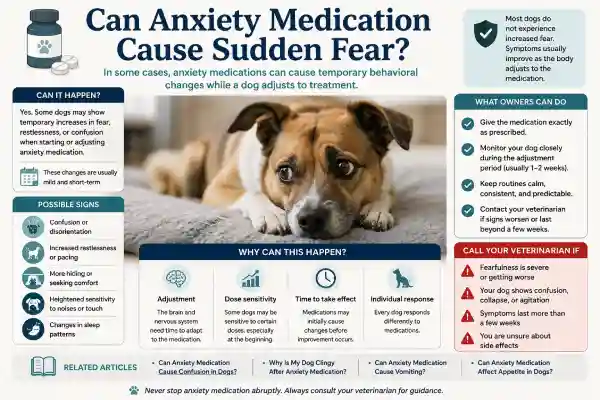
Sometimes.
Although uncommon, behavioral changes can occur while a dog is adjusting to medication.
Potential signs include:
- Confusion
- Restlessness
- Clinginess
- Sleep changes
- Temporary increases in anxiety
Owners should never stop medication abruptly without veterinary guidance.
Related articles:
Why Is My Dog Clingy After Anxiety Medication?
Can Anxiety Medication Cause Confusion in Dogs?
Can Anxiety Medication Affect Appetite in Dogs?
Related Symptoms Owners Often Notice
Dogs that suddenly become fearful often show additional symptoms.
Clinginess
Many dogs seek reassurance from their owners.
Related article:
Why Is My Dog Clingy After Anxiety Medication?
Hiding
Hiding is one of the most common responses to fear.
Trembling
Fearful dogs frequently shake or tremble.
Nighttime Panic
Many owners notice symptoms worsening at night.
Related article:
Why Does My Dog Panic at Night?
Appetite Changes
Stress and anxiety can affect eating habits.
Related article:
Can Anxiety Medication Affect Appetite in Dogs?
Sleep Changes
Some dogs become unusually sleepy while others struggle to rest.
Related article:
Why Does My Dog Sleep All Day After Trazodone?
What Owners Can Do at Home
Stay Calm
Dogs often look to their owners for reassurance.
Avoid Punishment
Punishment can increase fear and damage trust.
Maintain Consistent Routines
Predictability often helps anxious dogs feel safer.
Identify Triggers
Keeping notes may reveal patterns.
Provide Safe Spaces
A quiet area where your dog can retreat may reduce stress.
Schedule a Veterinary Visit
Sudden fearfulness should always be discussed with a veterinarian if it persists.
When Fearfulness May Be an Emergency
Most cases of sudden fearfulness are not emergencies, but there are situations where immediate veterinary attention is needed.
Seek urgent veterinary care if your dog develops:
- Seizures
- Collapse
- Difficulty breathing
- Sudden inability to walk
- Severe disorientation
- Loss of consciousness
- Extreme pain
- Head pressing
- Repeated vomiting
- Sudden blindness
These symptoms may indicate a serious medical or neurological condition rather than simple anxiety.
A useful rule is:
Fearfulness alone is concerning. Fearfulness combined with significant physical symptoms can be an emergency.
When Owners Should Contact Their Veterinarian
Schedule a veterinary visit if:
- Fearfulness lasts more than a few days
- Symptoms are worsening
- Your dog suddenly changes personality
- Appetite decreases significantly
- Sleep patterns change dramatically
- Hiding becomes excessive
- Your dog avoids normal activities
- New symptoms develop
- Your dog is a senior pet
A veterinarian can help determine whether the problem is behavioral, medical, neurological, or medication-related.
Can Sudden Fearfulness Improve?
Yes.
Many dogs improve significantly once the underlying cause is identified and addressed.
Improvement may occur through:
Treatment of Pain
Dogs experiencing arthritis, dental disease, or other painful conditions often become more comfortable once pain is controlled.
Anxiety Management
Dogs with anxiety frequently improve through:
- Behavior modification
- Environmental changes
- Training
- Veterinary-approved medication
Related articles:
What Is the Safest Anxiety Medication for Dogs?
Best Anxiety Medication for Dogs: Comparison Guide
Medication Adjustments
If medication side effects are contributing to the problem, your veterinarian may adjust treatment.
Environmental Changes
Providing structure, predictability, and safe spaces can make a major difference for fearful dogs.
The earlier the cause is identified, the easier it often becomes to help the dog regain confidence.
How Veterinarians Diagnose Sudden Fearfulness
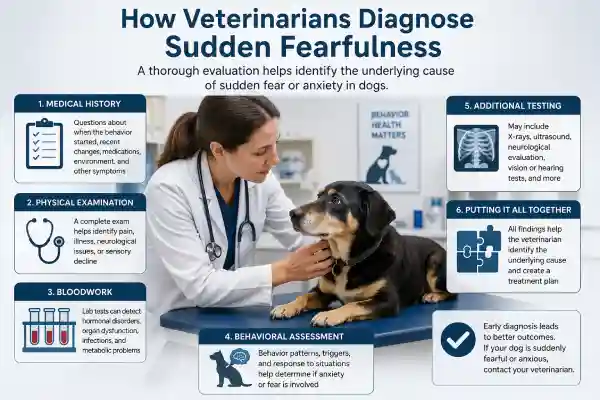
Veterinarians do much more than simply determine whether a dog is anxious.
A thorough evaluation may include:
Medical History
Questions often include:
- When did the behavior start?
- Was the change sudden or gradual?
- Have medications changed recently?
- Are there any additional symptoms?
Physical Examination
A complete examination helps identify:
- Pain
- Illness
- Neurological abnormalities
- Sensory decline
Bloodwork
Laboratory testing may identify:
- Hormonal disorders
- Organ dysfunction
- Metabolic problems
Behavioral Assessment
Behavior patterns often provide important clues regarding anxiety-related conditions.
Additional Testing
Depending on findings, veterinarians may recommend:
- X-rays
- Ultrasound
- Neurological evaluation
- Vision testing
- Hearing assessment
Veterinarian Takeaway
Why is my dog suddenly afraid of everything? Sudden fearfulness is often a sign that something has changed physically, emotionally, or medically. Common causes include anxiety, pain, cognitive dysfunction, hearing loss, vision decline, medication effects, stressful life changes, and underlying medical conditions. Because fearfulness is a symptom rather than a diagnosis, identifying the underlying cause is the most important step toward helping your dog feel safe and comfortable again.
Bottom Line
Why is my dog suddenly afraid of everything? Dogs rarely become fearful without a reason. While anxiety is a common explanation, pain, illness, cognitive dysfunction, sensory decline, medication side effects, and stressful life events can all contribute to sudden behavioral changes.
If the fearfulness persists, worsens, or is accompanied by other symptoms, a veterinary evaluation is the safest approach. Many dogs improve significantly once the underlying cause is identified and treated. Why Is My Dog Suddenly Afraid of Everything?
Frequently Asked Questions – Why Is My Dog Suddenly Afraid of Everything?
Why is my dog suddenly scared of things that never bothered him before?
Changes in anxiety levels, pain, illness, hearing loss, vision changes, or cognitive dysfunction may make previously normal situations seem frightening.
Can anxiety cause a dog to be afraid of everything?
Yes. Dogs with anxiety disorders may become increasingly sensitive to everyday sights, sounds, and experiences.
Is sudden fearfulness common in senior dogs?
Yes. Cognitive dysfunction, arthritis, hearing loss, and vision decline can all contribute to fearfulness in older dogs.
Can pain make a dog act scared?
Absolutely. Dogs experiencing pain often appear anxious, withdrawn, or fearful.
Can medication cause sudden fearfulness?
In some cases, medications may contribute to temporary behavioral changes while a dog adjusts to treatment.
Why does my dog suddenly hide all the time?
Hiding is a common response to fear, pain, illness, anxiety, or stress.
Why is my dog suddenly afraid at night?
Nighttime fearfulness may be associated with anxiety, cognitive dysfunction, pain, or sensory decline.
Related article:
Why Does My Dog Panic at Night?
Should I comfort my fearful dog?
Yes. Calm reassurance and a predictable environment can help many dogs feel more secure.
Can sudden fearfulness go away on its own?
Sometimes, particularly if it is related to a temporary stressor. Persistent fearfulness should be evaluated.
When should I call my veterinarian?
Contact your veterinarian whenever sudden fearfulness persists, worsens, or occurs alongside other physical symptoms.
Reviewed By
Pharmacy Reviewed By
Dimitar Atanasov, MPharm
Master Pharmacist | Medication Safety Educator
Dimitar Atanasov is a licensed Master Pharmacist with experience in pharmacology, medication safety, toxicology, and patient education. He reviews educational content to help pet owners better understand medication effects, behavioral changes, and canine health concerns.Why Is My Dog Suddenly Afraid of Everything?
Editorial Policy
Pet Meds Made Simple publishes evidence-based educational content developed from veterinary references, pharmacology resources, behavioral medicine guidelines, and peer-reviewed research.
Our mission is to provide accurate, practical information that helps pet owners make informed decisions while supporting—not replacing—the veterinarian-client relationship.
Learn more about our editorial standards and review process:
Sources
- American Veterinary Medical Association (AVMA)
- American Animal Hospital Association (AAHA)
- Merck Veterinary Manual
- American College of Veterinary Behaviorists (ACVB)
- Veterinary Behavioral Medicine Guidelines
- FDA Center for Veterinary Medicine
- Small Animal Internal Medicine
- Clinical References on Cognitive Dysfunction Syndrome
- Veterinary Neurology References
- Peer-Reviewed Canine Anxiety Research
Medical Disclaimer
This article is for educational purposes only and does not replace professional veterinary advice. Always consult your veterinarian regarding sudden behavioral changes, anxiety symptoms, medication concerns, or health problems affecting your dog. Why Is My Dog Suddenly Afraid of Everything?
image created with AI – Why Is My Dog Suddenly Afraid of Everything?