Quick Answer
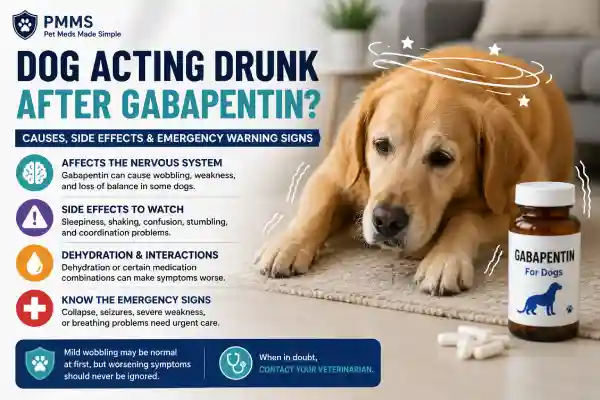
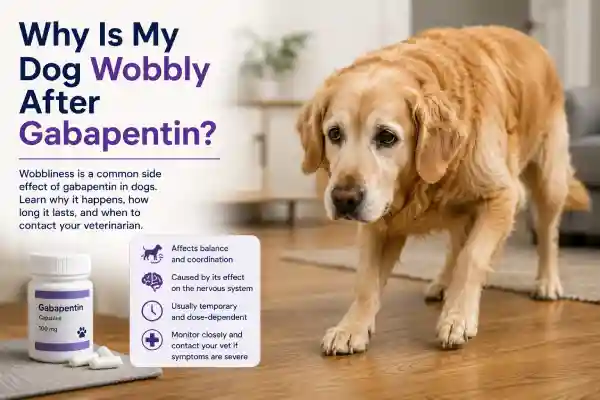
Why is my dog wobbly after gabapentin? Wobbliness is one of the most common side effects of gabapentin in dogs. The medication can temporarily affect balance, coordination, and awareness of body position, making some dogs appear unsteady or “drunk.” Mild wobbliness is often expected, especially when treatment first begins or after a dosage increase. However, severe weakness, inability to stand, or worsening symptoms should be evaluated by a veterinarian.
Few things worry owners more than watching their dog suddenly struggle to walk normally.
One moment your dog seems fine.
A few hours after taking gabapentin, they may appear:
- Unsteady
- Clumsy
- Slow-moving
- Off balance
- Weak in the legs
Many owners immediately wonder:
“Did the medication cause this?”
If you’ve recently started gabapentin and are asking “Why is my dog wobbly after gabapentin?”, you’re not alone.
This is one of the most common questions veterinarians hear from owners whose dogs have recently started the medication.
The good news is that mild wobbliness is often temporary and improves as the medication wears off or as the dog’s body adjusts.
When Owners Commonly Ask This
Most owners become concerned after noticing:
- My dog looks drunk after gabapentin.
- My dog keeps stumbling.
- My dog can’t walk straight.
- My dog is slipping on the floor.
- My dog seems weak after medication.
- My senior dog is wobbling after gabapentin.
- My dog is losing balance.
Sometimes the symptoms appear after the very first dose.
Other times they develop after a dosage increase.
Why Is My Dog Wobbly After Gabapentin?
Gabapentin works by affecting how signals travel through the nervous system.
Veterinarians commonly prescribe it for:
- Nerve pain
- Arthritis support
- Chronic pain
- Anxiety
- Seizure management
Because the medication affects the nervous system, it can also temporarily affect balance and coordination.
As a result, some dogs may appear less steady on their feet while the medication is active.
For many dogs, this effect is mild.
For others, especially seniors, it may be more noticeable.
Why Is My Dog Wobbly After Gabapentin?
7 Common Reasons Dogs Become Wobbly After Gabapentin
The Body Is Adjusting to the Medication
One of the most common explanations is simply adjustment.
When a dog first starts gabapentin, the nervous system needs time to adapt.
Many dogs show the most side effects during the first few days.
As treatment continues, wobbliness often becomes less noticeable.
Gabapentin Causes Mild Sedation
Gabapentin commonly causes drowsiness.
A sleepy dog often appears:
- Less coordinated
- Slower
- Less steady
Owners sometimes mistake sedation for a more serious problem.
Related article:
Why Does My Dog Sleep All Day After Trazodone?
Temporary Coordination Changes
Gabapentin may affect how the brain processes movement and balance.
This can lead to:
- Stumbling
- Swaying
- Misplaced steps
- Difficulty turning
Many owners describe this as a “drunk walk.”
Higher Doses May Increase Side Effects
Dogs receiving larger doses may be more likely to experience:
- Wobbliness
- Sleepiness
- Weakness
Not every dog responds the same way, but dosage often influences severity.
Combination With Other Medications
Some dogs receive gabapentin together with:
- Trazodone
- Benadryl
- Pain medications
- Anti-anxiety medications
These combinations may increase sedation and balance-related side effects.
Related article:
Is Trazodone or Gabapentin Better for Anxiety in Dogs?
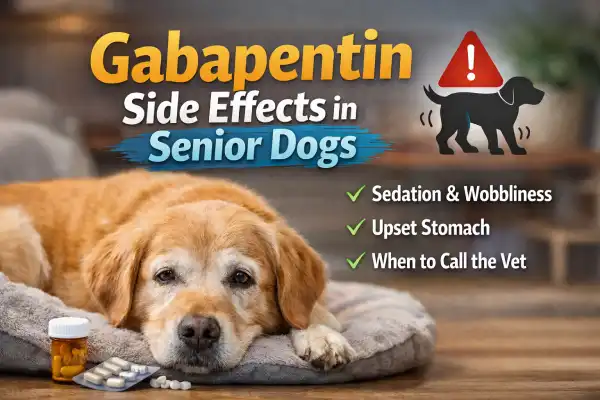
Senior Dogs Are Often More Sensitive
Older dogs frequently have:
- Arthritis
- Muscle loss
- Existing mobility problems
Because of this, even mild medication effects may become more obvious.
Related article:
Can Senior Dogs Safely Take Anxiety Medication?
Underlying Health Conditions
Occasionally, wobbliness may not be entirely caused by gabapentin.
Conditions involving:
- Neurological disease
- Vestibular disease
- Severe arthritis
- Muscle weakness
may contribute to balance problems.
What Does Gabapentin Wobbliness Look Like?
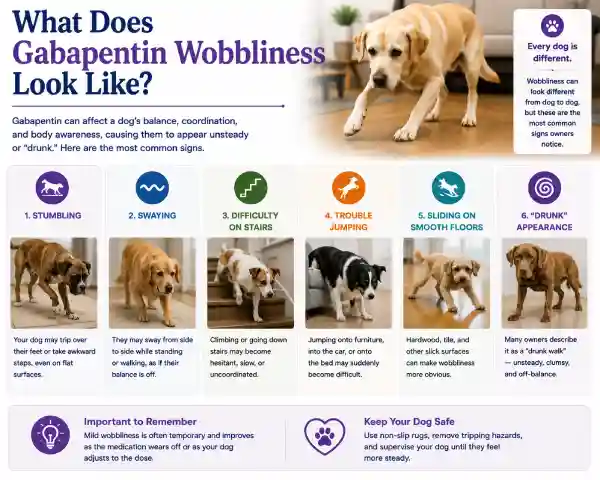
The symptoms can vary.
Common signs include:
Stumbling
Dogs may occasionally trip or misplace their feet.
Swaying
Walking may appear less steady than usual.
Difficulty on Stairs
Many owners first notice problems when their dog uses stairs.
Trouble Jumping
Jumping onto furniture or into vehicles may become more difficult.
Sliding on Smooth Floors
Hard surfaces often make balance issues more obvious.
Looking “Drunk”
This is the description many owners use most often.
Some dogs appear as though they have suddenly forgotten how to walk normally.
Is Wobbliness More Common in Senior Dogs?

Yes.
Senior dogs are significantly more likely to experience wobbliness after gabapentin.
Several factors contribute:
Slower Medication Processing
Older dogs often metabolize medications differently.
Existing Arthritis
Pain and stiffness may make balance more difficult.
Reduced Muscle Strength
Muscle loss can increase instability.
Other Medical Conditions
Senior dogs frequently have multiple health concerns that may contribute to wobbliness.
Related Symptoms Owners Often Notice
Wobbliness often occurs alongside:
Sleepiness
One of the most common gabapentin side effects.
Related article:
Why Does My Dog Sleep All Day After Trazodone?
Weakness
Some dogs appear both weak and unsteady.
Related article:
Can Gabapentin Cause Weakness in Dogs?
Reduced Activity
Many dogs spend more time resting.
Confusion
Some owners report temporary disorientation.
Increased Sleeping
Dogs may sleep significantly more than usual.
Is Wobbliness Always Caused by Gabapentin?
Not necessarily.
Although gabapentin is a very common cause of temporary wobbliness, it is not always the entire explanation.
Some dogs already have underlying conditions that affect balance and coordination.
Examples include:
- Arthritis
- Vestibular disease
- Neurological disorders
- Muscle weakness
- Spinal problems
In these situations, gabapentin may make existing mobility problems more noticeable.
This is one reason veterinarians evaluate the whole dog rather than automatically blaming the medication.
How Long Does Gabapentin Wobbliness Last?
For many dogs, wobbliness improves as the medication wears off.
The exact duration depends on:
- Dosage
- Age
- Overall health
- Individual sensitivity
- Other medications being used
Many owners notice improvement within several hours.
Dogs that have recently started treatment often become less wobbly after a few days as their bodies adjust.
If wobbliness continues worsening rather than improving, veterinary guidance is recommended.
What Owners Can Do If Their Dog Is Wobbly
Seeing your dog struggle with balance can be alarming.
Fortunately, there are several things owners can do to help keep their dog safe.
Prevent Falls
Limit access to:
- Stairs
- Slippery floors
- High furniture
- Swimming pools
Reducing fall risk is especially important for senior dogs.
Use Non-Slip Surfaces
Many dogs become noticeably steadier on:
- Rugs
- Carpets
- Non-slip mats
Smooth flooring often makes wobbliness appear worse.
Assist With Mobility
Some dogs benefit from:
- Slow walks
- Harness support
- Extra assistance on stairs
Temporary support can help prevent injuries.
Monitor Symptoms
Keep track of:
- Balance
- Appetite
- Energy level
- Sleep patterns
- Behavior changes
These observations can be very helpful if veterinary advice is needed.
Continue Medication Only as Directed
Owners should never adjust medication dosages on their own.
Even if wobbliness develops, dosage changes should always be discussed with a veterinarian first.
When Wobbliness Becomes Concerning
Mild wobbliness is often expected.
However, certain situations deserve immediate attention.
Inability to Stand
A dog that cannot get up or remain standing should be evaluated promptly.
Repeated Falls
Frequent falling increases injury risk and may indicate a more serious problem.
Severe Weakness
Extreme weakness is not considered a typical mild side effect.
Related article:
Can Gabapentin Cause Weakness in Dogs?
Significant Confusion
Disorientation combined with wobbliness should be discussed with a veterinarian.
Rapidly Worsening Symptoms
Side effects should generally improve, not become progressively worse.
How Veterinarians Evaluate Gabapentin Side Effects
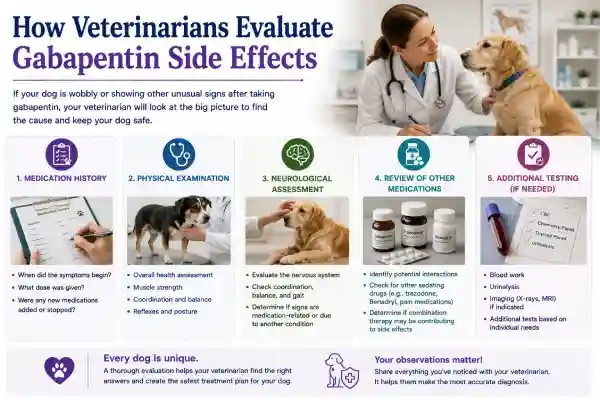
If wobbliness becomes concerning, veterinarians will often investigate several factors.
Medication History
Questions commonly include:
- When did the symptoms begin?
- What dose was given?
- Were any new medications added?
Physical Examination
Veterinarians evaluate:
- Strength
- Coordination
- Reflexes
- Mobility
Neurological Assessment
This helps determine whether symptoms are medication-related or caused by another condition.
Review of Other Medications
Combination therapy sometimes contributes to balance problems.
Related article:
Is Trazodone or Gabapentin Better for Anxiety in Dogs?
Related Symptoms Owners Often Notice
Dogs that become wobbly after gabapentin often show additional signs.
Sleepiness
Perhaps the most common accompanying symptom.
Related article:
Why Does My Dog Sleep All Day After Trazodone?
Weakness
Some dogs appear both weak and unsteady.
Related article:
Can Gabapentin Cause Weakness in Dogs?
Reduced Activity
Many dogs choose to rest more while the medication is active.
Increased Sleeping
Dogs may spend much of the day sleeping after a dose.
Mild Confusion
Temporary disorientation occasionally occurs.
When Owners Should Contact Their Veterinarian
Contact your veterinarian if:
- Wobbliness appears severe
- Your dog cannot stand
- Symptoms worsen over time
- Repeated falls occur
- Weakness develops
- Confusion develops
- Appetite changes significantly
- New symptoms appear
Most mild side effects improve naturally, but severe or worsening symptoms should never be ignored.
Veterinarian Takeaway
Why is my dog wobbly after gabapentin? Gabapentin commonly affects balance and coordination, making some dogs appear unsteady, clumsy, or “drunk.” Mild wobbliness is one of the most frequently reported side effects, especially when treatment begins or doses increase. Most cases improve as the medication wears off or as the dog adjusts. However, severe weakness, inability to stand, repeated falls, or worsening symptoms should be evaluated by a veterinarian.
Bottom Line
Why is my dog wobbly after gabapentin? In many cases, wobbliness is a temporary side effect caused by the medication’s effects on the nervous system. Dogs may appear less coordinated, slower, or unsteady while the medication is active.
The good news is that most cases are mild and improve with time.
Owners should focus on safety, monitor symptoms carefully, and contact their veterinarian if wobbliness becomes severe or is accompanied by weakness, confusion, or repeated falls.
Frequently Asked Questions – Why Is My Dog Wobbly After Gabapentin
Why does my dog look drunk after gabapentin?
Gabapentin can temporarily affect balance and coordination, causing a “drunk” appearance in some dogs.
Is wobbliness a common side effect of gabapentin?
Yes. Wobbliness is one of the most commonly reported side effects.
How long does gabapentin wobbliness last?
Many dogs improve within several hours as the medication wears off.
Can gabapentin make senior dogs more unsteady?
Yes. Older dogs are often more sensitive to balance-related side effects.
Can gabapentin cause weakness and wobbliness together?
Yes. Some dogs experience both symptoms simultaneously.
Should I stop gabapentin if my dog becomes wobbly?
No. Never stop or adjust medication without veterinary guidance.
Why is my dog slipping on the floor after gabapentin?
Reduced coordination and balance may make smooth surfaces more challenging.
Can gabapentin cause falls?
In some dogs, especially seniors, wobbliness may increase the risk of falling.
Is wobbliness worse when starting gabapentin?
Often yes. Many dogs experience the most noticeable side effects during the first few days.
When should I call my veterinarian?
Contact your veterinarian if wobbliness is severe, worsening, causes falls, or is accompanied by weakness or confusion.
Reviewed By
Pharmacy Reviewed By
Dimitar Atanasov, MPharm
Master Pharmacist | Medication Safety Educator
Editorial Policy
Sources
- American Veterinary Medical Association (AVMA)
- American Animal Hospital Association (AAHA)
- Merck Veterinary Manual
- Plumb’s Veterinary Drug Handbook
- FDA Center for Veterinary Medicine
- Veterinary Pharmacology and Therapeutics
- Small Animal Internal Medicine
- Veterinary Neurology References
- Veterinary Pain Management Guidelines
- Peer-Reviewed Research on Gabapentin Use in Dogs
Images created with AI – Why Is My Dog Wobbly After Gabapentin