
Quick Answer
Why is my dog crying despite gabapentin? Dogs may continue crying while taking gabapentin for several reasons. The medication may not be fully controlling pain, the dose may not be adequate, the underlying condition may be worsening, or the crying may be caused by anxiety, confusion, discomfort, or another medical problem unrelated to the medication. Persistent crying should always be discussed with a veterinarian, especially if it is new or worsening.
Many owners feel worried when gabapentin doesn’t seem to be helping as much as expected.
After all, the medication is often prescribed to improve comfort.
So when a dog continues:
- Crying
- Whining
- Vocalizing
- Appearing uncomfortable
owners naturally begin asking:
“Why is my dog still crying if he’s taking gabapentin?”
The answer is not always simple.
Crying can have many causes, and pain is only one of them.
When Owners Commonly Ask This
Owners often search for this question after noticing:
- My dog is whining despite gabapentin.
- Gabapentin isn’t helping my dog’s pain.
- My dog cries after taking gabapentin.
- My dog still seems uncomfortable.
- My dog cries at night despite medication.
- My dog is vocalizing more than usual.
- My dog seems restless even with gabapentin.
These concerns are especially common in:
- Senior dogs
- Dogs with arthritis
- Dogs recovering from surgery
- Dogs with nerve pain
- Dogs receiving multiple medications
Why Is My Dog Crying Despite Gabapentin?
What Does Crying Usually Mean in Dogs?
Crying is a form of communication.
Dogs cry or whine for many reasons.
Possible causes include:
- Pain
- Anxiety
- Fear
- Frustration
- Confusion
- Attention-seeking
- Discomfort
- Cognitive changes
This is why veterinarians rarely assume that crying automatically means pain.
The full picture matters.
Can Dogs Still Feel Pain While Taking Gabapentin?
Yes.
This is one of the most common explanations.
Gabapentin helps many dogs, but it is not a cure for every painful condition.
Some dogs may continue experiencing:
- Arthritis pain
- Joint inflammation
- Back pain
- Nerve pain
- Post-surgical discomfort
If pain is not fully controlled, crying may continue.
7 Common Reasons Dogs Cry Despite Taking Gabapentin
Pain Is Not Fully Controlled
Gabapentin may help reduce discomfort without eliminating it entirely.
This is particularly common in dogs with:
- Severe arthritis
- Advanced orthopedic disease
- Chronic pain conditions
The Medication Has Not Reached Full Effect
Some owners expect immediate results.
Depending on the situation, improvement may take time.
A dog may continue crying while treatment is being adjusted.
Anxiety Is Contributing
Not all crying is pain-related.
Anxious dogs often cry because they feel:
- Nervous
- Insecure
- Overstimulated
Related article:
Can Gabapentin Cause Anxiety in Dogs?
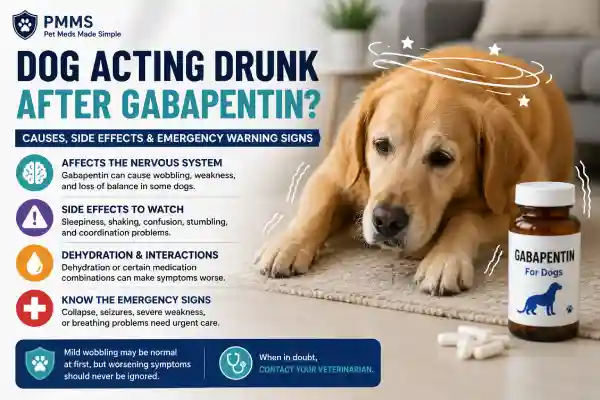
The Dog Feels Wobbly or Strange
Some dogs become unsettled by medication side effects.
A dog that feels off balance may cry for reassurance.
Related article:
Why Is My Dog Wobbly After Gabapentin?
Cognitive Changes in Senior Dogs
Older dogs sometimes cry because of:
- Confusion
- Disorientation
- Cognitive dysfunction
These symptoms may occur even when pain is reasonably controlled.
Another Medical Condition Is Present
Crying can sometimes indicate:
- Gastrointestinal discomfort
- Urinary problems
- Neurological disease
- Vision loss
- Hearing loss
Not every problem is related to gabapentin.
The Condition Is Progressing
Sometimes the underlying disease becomes worse.
Examples include:
- Severe arthritis
- Cancer-related pain
- Progressive neurological disorders
This may require treatment adjustments.
What Does Concerning Crying Look Like?
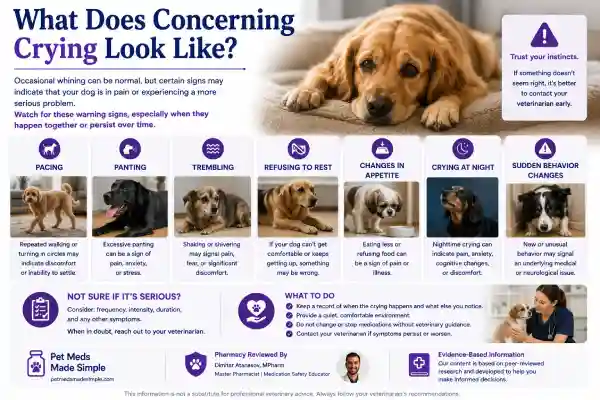
Owners should pay attention if crying is accompanied by:
Pacing
Continuous movement often indicates discomfort.
Panting
Pain and anxiety can both cause excessive panting.
Trembling
Shaking may indicate pain or distress.
Refusing to Rest
Dogs that cannot get comfortable deserve attention.
Changes in Appetite
Reduced eating often signals a more significant problem.
Is Crying More Common in Senior Dogs?
Yes.
Senior dogs are more likely to cry despite medication because they often have:
- Multiple health conditions
- Chronic pain
- Cognitive decline
- Reduced mobility
For these dogs, crying may have more than one cause.
Related Symptoms Owners Often Notice
Dogs that continue crying may also show:
Restlessness
Difficulty settling down is common.
Weakness
Some painful conditions affect mobility.
Wobbliness
Related article:
Why Is My Dog Wobbly After Gabapentin?
Anxiety
Related article:
Can Gabapentin Cause Anxiety in Dogs?
Increased Sleeping
Some dogs alternate between crying and sleeping more than usual.
Is Crying Always a Sign That Gabapentin Is Not Working?
No.
This is one of the biggest misconceptions owners have.
A dog may continue crying even when gabapentin is helping.
For example, gabapentin may successfully reduce:
- Nerve pain
- Joint discomfort
- Post-surgical pain
while the dog is still vocalizing because of:
- Anxiety
- Confusion
- Habitual behavior
- Cognitive dysfunction
- Another medical issue
This is why veterinarians evaluate the whole dog rather than focusing on a single symptom.
How Long Should Owners Wait Before Becoming Concerned?
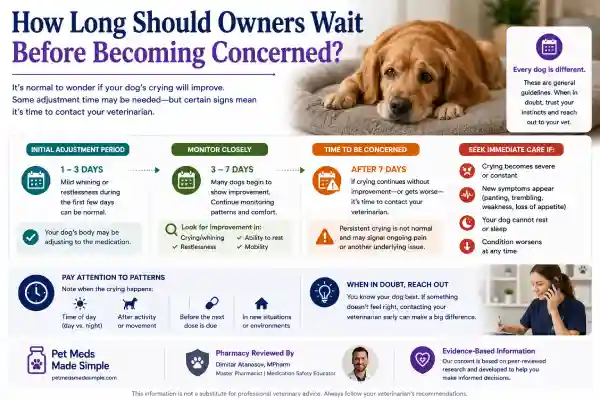
The answer depends on the situation.
A dog that occasionally whines during the first few days of treatment may simply be adjusting.
However, owners should pay closer attention if:
- Crying becomes more frequent
- Symptoms become more intense
- New symptoms appear
- The dog seems increasingly uncomfortable
Persistent crying deserves veterinary attention, especially if there is no obvious improvement.
What Owners Can Do If Their Dog Keeps Crying
Watching a dog cry despite medication can be frustrating and heartbreaking.
Fortunately, there are several things owners can do while monitoring the situation.
Observe Patterns
Try to determine:
- When does the crying occur?
- Does it happen after activity?
- Does it happen at night?
- Does it occur shortly before the next dose?
Patterns often provide valuable clues.
Monitor Mobility
Pay attention to:
- Difficulty standing
- Trouble climbing stairs
- Reluctance to walk
- Changes in posture
Mobility changes can suggest ongoing pain.
Create a Comfortable Environment
Small changes may help improve comfort.
Examples include:
- Soft bedding
- Warm resting areas
- Easy access to food and water
- Reduced stair use
These adjustments are particularly helpful for senior dogs.
Record Symptoms
Keeping notes can help veterinarians identify the cause.
Useful information includes:
- Medication times
- Crying episodes
- Appetite changes
- Activity levels
- Sleep patterns
Avoid Changing Medication Without Guidance
Owners should never:
- Increase doses
- Skip doses
- Stop gabapentin abruptly
unless specifically instructed by their veterinarian.
When Crying Becomes Concerning
Some situations deserve prompt veterinary attention.
Crying Combined With Severe Pain
Signs may include:
- Trembling
- Panting
- Guarding a body part
- Reluctance to move
Crying That Continues Day and Night
Persistent vocalization may indicate significant discomfort or another medical issue.
Sudden Behavioral Changes
New or unusual behavior should always be taken seriously.
Inability to Rest
Dogs that cannot become comfortable often need reassessment.
Worsening Symptoms
Pain and discomfort should generally improve with treatment, not continue getting worse.
How Veterinarians Evaluate Persistent Crying

Veterinarians typically investigate several possibilities.
Pain Assessment
The first question is often:
Is the dog still painful?
Veterinarians assess:
- Movement
- Posture
- Joint function
- Signs of discomfort
Medication Review
Questions often include:
- What dose is being given?
- How often is it given?
- Has anything changed recently?
Evaluation of Other Conditions
Crying can result from many medical problems.
Veterinarians may investigate:
- Arthritis progression
- Neurological disease
- Cognitive dysfunction
- Gastrointestinal problems
- Urinary tract issues
Behavioral Assessment
Not all crying is physical.
Some dogs vocalize because of:
- Anxiety
- Stress
- Confusion
- Environmental changes
Understanding behavior is often an important part of diagnosis.
Related Symptoms Owners Often Notice
Dogs that continue crying despite gabapentin may also show:
Restlessness
Many dogs have difficulty settling comfortably.
Panting
This may occur with pain, anxiety, or discomfort.
Wobbliness
Related article:
Why Is My Dog Wobbly After Gabapentin?
Anxiety
Related article:
Can Gabapentin Cause Anxiety in Dogs?
Weakness
Changes in mobility may suggest ongoing discomfort.
When Owners Should Contact Their Veterinarian
Contact your veterinarian if:
- Crying persists despite treatment
- Symptoms become worse
- Your dog appears painful
- Appetite decreases
- Sleeping becomes difficult
- Mobility declines
- New symptoms appear
- Quality of life seems affected
Early evaluation often makes treatment adjustments easier.
Veterinarian Takeaway
Why is my dog crying despite gabapentin? Dogs may continue crying for many reasons, including ongoing pain, anxiety, confusion, cognitive changes, or another medical condition. While gabapentin helps many dogs feel more comfortable, it may not completely eliminate every source of discomfort. Persistent, worsening, or severe crying should always be evaluated by a veterinarian. Why Is My Dog Crying Despite Gabapentin?
Bottom Line
Why is my dog crying despite gabapentin? The most common explanation is that the underlying problem has not been fully resolved.
While pain is often the first concern, crying can also be linked to:
- Anxiety
- Confusion
- Cognitive decline
- Illness progression
- Other medical conditions
Owners should focus on observing patterns, monitoring comfort, and communicating changes to their veterinarian.
If crying continues or worsens, a reassessment of the treatment plan may be needed. Why Is My Dog Crying Despite Gabapentin?
Frequently Asked Questions – Why Is My Dog Crying Despite Gabapentin?
Why is my dog still crying while taking gabapentin?
Pain may not be fully controlled, or another issue such as anxiety or confusion may be contributing.
Does crying mean gabapentin is not working?
Not necessarily. Gabapentin may still be helping even if some symptoms remain.
Can anxiety cause crying despite gabapentin?
Yes. Anxiety can cause whining, vocalization, and restlessness.
Is crying a side effect of gabapentin?
Crying is not considered a common direct side effect, but some dogs may vocalize if they feel unsettled.
Can senior dogs cry despite pain medication?
Yes. Senior dogs often have multiple conditions that may contribute to vocalization.
Why does my dog cry more at night?
Nighttime crying may be related to pain, anxiety, cognitive dysfunction, or discomfort.
Can gabapentin stop working?
Treatment effectiveness can vary, and some conditions may progress over time.
Should I increase the dose myself?
No. Never adjust medication without veterinary guidance.
What symptoms should I watch for?
Panting, restlessness, weakness, appetite changes, and mobility problems are important to monitor.
When should I call my veterinarian?
If crying is persistent, worsening, severe, or affecting your dog’s quality of life.
Sources
- American Veterinary Medical Association (AVMA)
- American Animal Hospital Association (AAHA)
- Merck Veterinary Manual
- Plumb’s Veterinary Drug Handbook
- FDA Center for Veterinary Medicine
- Veterinary Pain Management Guidelines
- Small Animal Internal Medicine
- Veterinary Neurology References
- Veterinary Behavioral Medicine References
- Peer-Reviewed Research on Gabapentin Use in Dogs
images created with AI – Why Is My Dog Crying Despite Gabapentin?