
Quick Answer
Why is my dog hiding after pain medication? Dogs may hide after pain medication because of sedation, dizziness, nausea, anxiety, discomfort, or behavioral changes caused by the medication itself. Some pain medications can make dogs feel sleepy, disoriented, or less interested in social interaction. While temporary hiding is often not dangerous, persistent hiding, severe lethargy, weakness, or other concerning symptoms should be evaluated by a veterinarian.
Why is my dog hiding after pain medication?
Dogs may hide after pain medication because the medication can cause sleepiness, dizziness, nausea, or temporary behavioral changes. Some dogs seek quiet places to rest while their body adjusts to the medication. If hiding is severe, prolonged, or accompanied by weakness, vomiting, collapse, or loss of appetite, veterinary evaluation is recommended.
When Owners Commonly Ask This
Many owners become worried when their normally social dog suddenly disappears after receiving medication.
Common situations include:
- Hiding under a bed
- Staying in a closet
- Avoiding family members
- Sleeping in unusual locations
- Refusing normal interaction
Because hiding is often associated with illness or fear, owners naturally wonder whether the medication is causing a problem.
Why Is My Dog Hiding After Pain Medication?
What Does Hiding Mean in Dogs?
Hiding is a natural behavior.
Dogs often seek isolation when they:
- Feel unwell
- Feel anxious
- Experience pain
- Feel tired
- Want a quiet place to recover
Pain medication may trigger some of these responses directly or indirectly.
Common Reasons Dogs Hide
| Reason | Possible? |
|---|---|
| Sleepiness | Yes |
| Nausea | Yes |
| Anxiety | Yes |
| Pain | Yes |
| Medication side effect | Yes |
| Illness progression | Yes |
Which Pain Medications May Cause Hiding?

Several medications commonly prescribed to dogs can potentially contribute to hiding behavior.
Common Pain Medications
| Medication | May Cause Hiding? |
|---|---|
| Gabapentin | Yes |
| Tramadol | Yes |
| Carprofen | Sometimes |
| Meloxicam | Sometimes |
| Amantadine | Sometimes |
| Combination therapy | More likely |
Dogs react differently to medications, which is why some dogs may hide while others show no behavioral changes.
Could Sleepiness Cause My Dog to Hide?
Yes.
Sleepiness is one of the most common reasons dogs hide after medication.
Many dogs simply want a quiet place to rest.
Signs Sleepiness Is the Cause
| Observation | Common With Sedation? |
|---|---|
| Sleeping more | Yes |
| Less interest in play | Yes |
| Quiet behavior | Yes |
| Choosing isolated areas | Yes |
| Slow movements | Yes |
In many cases, hiding improves as the medication wears off.
Could My Dog Be Feeling Dizzy?
Sometimes.
Certain pain medications can temporarily affect balance and coordination.
Possible Signs of Dizziness
- Walking slowly
- Hesitation when moving
- Looking uncertain
- Avoiding stairs
- Seeking safe spaces
Dogs experiencing dizziness may choose to hide until they feel normal again.
Related reading:
Could Nausea Cause Hiding?
Absolutely.
Some pain medications may cause stomach upset.
Dogs experiencing nausea often seek isolation.
Signs of Nausea
| Symptom | Common? |
|---|---|
| Lip licking | Yes |
| Drooling | Yes |
| Hiding | Yes |
| Reduced appetite | Yes |
| Vomiting | Sometimes |
Nausea-related hiding often occurs before other digestive symptoms appear.
Could My Dog Still Be in Pain?
Yes.
One of the most overlooked explanations is that the underlying pain may still be present.
Pain Can Cause Hiding
Dogs experiencing discomfort often:
- Withdraw socially
- Sleep more
- Avoid interaction
- Hide in quiet locations
Signs Pain May Still Be Present
| Sign | Suggests Ongoing Pain? |
|---|---|
| Limping | Yes |
| Reluctance to move | Yes |
| Whining | Yes |
| Hiding | Possible |
| Reduced appetite | Possible |
Pain medication does not always eliminate pain completely.
Can Anxiety Cause Hiding After Pain Medication?
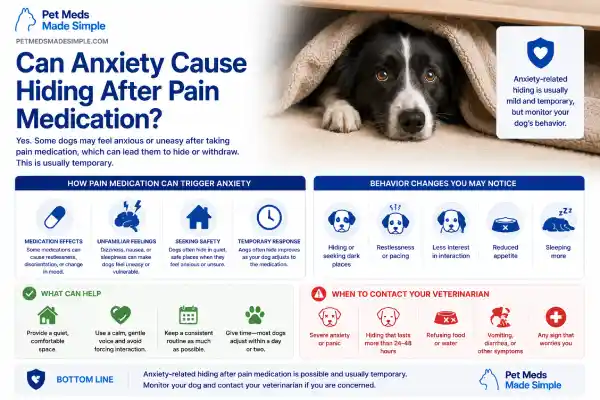
Sometimes.
Certain medications may cause temporary behavioral changes.
Behavioral Changes Owners May Notice
- Increased clinginess
- Restlessness
- Confusion
- Withdrawal
- Hiding
Although uncommon, some dogs react differently than expected.
Are Some Dogs More Sensitive Than Others?
Yes.
Individual response varies significantly.
Dogs More Likely to Develop Side Effects
| Dog Type | Higher Sensitivity? |
|---|---|
| Senior dogs | Yes |
| Small dogs | Sometimes |
| Dogs with kidney disease | Yes |
| Dogs taking multiple medications | Yes |
| Healthy adults | Usually less |
This explains why one dog may hide after medication while another behaves normally.
Could Surgery Recovery Cause Hiding?
Very commonly.
Dogs recovering from surgery frequently seek quiet places.
Reasons Include
- Fatigue
- Pain
- Stress
- Medication effects
- Recovery needs
Recovery-Related Causes
| Factor | May Cause Hiding? |
|---|---|
| Surgery stress | Yes |
| Anesthesia recovery | Yes |
| Pain medication | Yes |
| Post-operative discomfort | Yes |
Not all hiding behavior is directly caused by the medication itself.
Could Hiding Be a Sign of an Adverse Reaction?
Sometimes.
While mild hiding is often harmless, severe behavioral changes deserve attention.
Warning Signs
- Severe lethargy
- Collapse
- Difficulty breathing
- Persistent vomiting
- Severe weakness
- Refusal to drink water
These symptoms warrant veterinary evaluation.
Could Pain Medication Cause Depression-Like Behavior?
Sometimes.
Owners occasionally describe their dogs as:
- Withdrawn
- Quiet
- Less interested in family activities
- Less excited about food or toys
In many cases, this is not true depression but rather a temporary medication effect.
Behavioral Changes Owners May Notice
| Behavior | Possible After Pain Medication? |
|---|---|
| Hiding | Yes |
| Sleeping more | Yes |
| Less playful | Yes |
| Reduced interaction | Yes |
| Lower energy | Yes |
Most dogs return to their normal personality once the medication effect decreases.
Could an Overdose Cause Hiding?
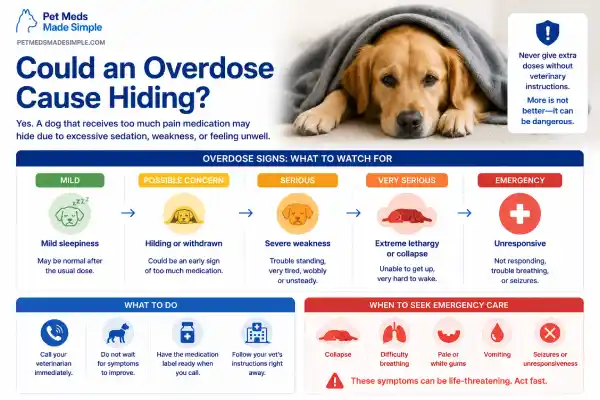
Yes.
A dog experiencing excessive medication effects may isolate itself.
Possible Overdose Signs
| Symptom | Severity |
|---|---|
| Mild sleepiness | Usually expected |
| Hiding | Possible |
| Severe weakness | Serious |
| Extreme lethargy | Serious |
| Collapse | Emergency |
| Unresponsiveness | Emergency |
If hiding is accompanied by severe weakness or neurological symptoms, immediate veterinary care is needed.
Related reading:
What Happens If Dogs Overdose on Pain Medication?
Could Long-Term Pain Medication Change Behavior?
Usually not permanently.
However, some dogs receiving long-term pain medication may experience periods of:
- Fatigue
- Reduced activity
- Temporary withdrawal
- Increased sleeping
Long-Term Monitoring Matters
| Monitoring Area | Why Important |
|---|---|
| Energy level | Detect side effects |
| Appetite | Identify problems early |
| Mobility | Evaluate pain control |
| Behavior | Monitor quality of life |
Related reading:
Can Dogs Take Pain Medication Long-Term?
How Veterinarians Evaluate Hiding Behavior
When a dog starts hiding after pain medication, veterinarians try to determine whether the behavior is caused by:
- The medication
- Ongoing pain
- Illness progression
- Anxiety
- Another medical problem
Common Veterinary Questions
- When did the hiding start?
- Which medication was given?
- Has the dog received it before?
- Are other symptoms present?
- Has appetite changed?
Veterinary Evaluation
| Assessment | Purpose |
|---|---|
| Physical exam | Assess overall health |
| Medication review | Identify side effects |
| Pain assessment | Evaluate pain control |
| Bloodwork | Detect underlying issues |
| Neurological exam | Assess nervous system |
Could Hiding Mean the Medication Is Working?
Sometimes.
This may sound surprising.
A dog that finally experiences pain relief after prolonged discomfort may simply choose to rest.
Normal Recovery Behaviors
| Behavior | Can Be Normal? |
|---|---|
| Sleeping more | Yes |
| Resting quietly | Yes |
| Seeking calm areas | Yes |
| Reduced activity for a day | Yes |
The key is distinguishing normal recovery from concerning side effects.
How Long Does Hiding Usually Last?
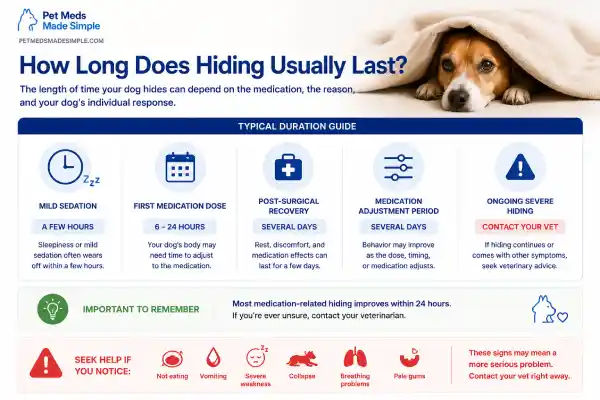
The answer depends on the medication involved.
Typical Duration
| Situation | Possible Duration |
|---|---|
| Mild sedation | Several hours |
| First medication dose | 6–24 hours |
| Post-surgical recovery | Several days |
| Medication adjustment period | Several days |
| Ongoing severe hiding | Veterinary evaluation needed |
Most medication-related hiding improves within a day.
When Should Owners Contact Their Veterinarian?
Owners should contact their veterinarian if the dog:
- Continues hiding for more than expected
- Refuses food
- Refuses water
- Develops vomiting
- Appears weak
- Shows worsening symptoms
Contact Your Veterinarian If
| Symptom | Call Vet? |
|---|---|
| Mild hiding | Monitor |
| Sleeping more | Monitor |
| Reduced appetite | Yes |
| Persistent hiding | Yes |
| Severe weakness | Yes |
| Vomiting | Yes |
When Does Hiding Become an Emergency?
Hiding itself is usually not an emergency.
However, hiding combined with other symptoms can indicate a serious problem.
Emergency Warning Signs
- Collapse
- Difficulty breathing
- Pale gums
- Severe weakness
- Vomiting blood
- Black stools
- Unresponsiveness
Emergency Symptoms Table
| Symptom | Emergency? |
|---|---|
| Hiding alone | No |
| Sleeping more | Usually No |
| Hiding and not eating | Contact Vet |
| Hiding and weakness | Yes |
| Hiding and collapse | Emergency |
| Hiding and breathing difficulty | Emergency |
Related Symptoms Owners Often Search For
Owners searching “Why Is My Dog Hiding After Pain Medication” often also search for:
- Why Is My Dog Weak After Pain Medication?
- Can Pain Medication Cause Aggression in Dogs?
- Why Does Pain Medication Stop Working?
- Can Pain Medication Cause Stomach Bleeding in Dogs?
- Can Dogs Take Pain Medication Long-Term?
- Can Dogs Take Pain Medication Long-Term?
These symptoms can sometimes occur together and may help identify whether a medication side effect or the underlying condition is responsible.
Bottom Line
Why is my dog hiding after pain medication? Dogs may hide after pain medication because of sleepiness, dizziness, nausea, behavioral changes, ongoing pain, or recovery from surgery. In many cases, temporary hiding is a normal response to medication or healing. However, persistent hiding, loss of appetite, weakness, vomiting, or collapse should prompt veterinary evaluation.
Veterinarian Takeaway
Hiding behavior after pain medication is often related to sedation, recovery, or temporary medication effects rather than a serious emergency. However, dogs cannot tell us how they feel, so behavioral changes deserve attention. Owners should monitor appetite, mobility, energy level, and overall behavior while looking for warning signs that may indicate a more serious problem.
Frequently Asked Questions – Why Is My Dog Hiding After Pain Medication
Why is my dog hiding after pain medication?
Dogs may hide because of sleepiness, dizziness, nausea, anxiety, or ongoing discomfort.
Is hiding a normal side effect of pain medication?
It can be. Many dogs seek quiet places to rest after receiving medication.
Can gabapentin cause hiding in dogs?
Yes. Gabapentin commonly causes sleepiness and behavioral changes that may lead to hiding.
Can tramadol make dogs hide?
Yes. Some dogs become sleepy, withdrawn, or less interactive after tramadol.
Should I worry if my dog hides after medication?
Mild temporary hiding is often normal. Severe or persistent symptoms should be evaluated.
Can pain itself cause hiding?
Yes. Dogs experiencing pain often withdraw from social interaction.
How long does hiding usually last?
Many cases improve within several hours to a day.
Can surgery recovery cause hiding?
Absolutely. Many dogs seek quiet locations while recovering.
When should I call my veterinarian?
If hiding is prolonged or accompanied by weakness, vomiting, loss of appetite, or worsening symptoms.
When is hiding an emergency?
If hiding occurs alongside collapse, breathing difficulty, severe weakness, pale gums, or unresponsiveness.
When is hiding an emergency?
If hiding occurs alongside collapse, breathing difficulty, severe weakness, pale gums, or unresponsiveness.
Reviewed By
Pharmacy Reviewed By
Dimitar Atanasov, MPharm
Master Pharmacist | Medication Safety Educator
Editorial Policy
At Pet Meds Made Simple, we are committed to providing accurate, evidence-based information about pet medications, veterinary treatments, medication safety, and common health concerns affecting dogs and cats.
For more information, see our Editorial Policy:
Sources
- Plumb’s Veterinary Drug Handbook
- Merck Veterinary Manual
- American Animal Hospital Association (AAHA)
- Veterinary Information Network (VIN)
- Small Animal Clinical Pharmacology
- Veterinary Pharmacology and Therapeutics
- JAVMA
- Frontiers in Veterinary Science
- Veterinary Anaesthesia and Analgesia
- Clinical Veterinary Advisor: Dogs and Cats
Medical Review Statement
This article was pharmacy-reviewed by Dimitar Atanasov, MPharm, Master Pharmacist, using current veterinary pharmacology references, canine pain-management guidelines, veterinary behavioral medicine references, and published veterinary literature available at the time of review.
images created with AI – Why Is My Dog Hiding After Pain Medication