Quick Answer
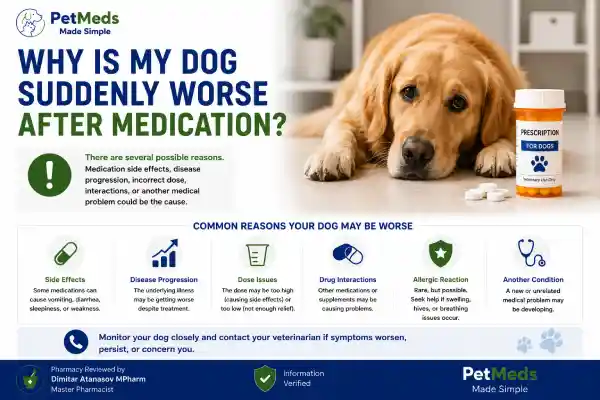
Why Is My Dog Suddenly Worse After Medication? A dog may suddenly seem worse after starting medication for several reasons. Some medications can cause temporary side effects such as sleepiness, weakness, vomiting, diarrhea, or confusion. In other cases, the underlying illness may be progressing, the medication may not be working as expected, the dosage may need adjustment, or an uncommon adverse reaction may be developing. If your dog suddenly becomes much worse, especially if they collapse, have difficulty breathing, develop repeated vomiting, severe weakness, seizures, or become unresponsive, contact a veterinarian immediately.
When Owners Commonly Ask This Question
Many owners expect their dog to improve after starting medication.
Instead, they notice something alarming.
Their dog may suddenly:
- Sleep all day
- Cry more than before
- Stop eating
- Limp worse
- Vomit
- Become confused
- Seem weak
- Refuse to walk
Naturally, many owners wonder:
“Did the medication make my dog worse?”
Although this can happen, the medication is not always the cause.
Why Is My Dog Suddenly Worse After Medication?
Can Medication Really Make a Dog Worse?
Yes.
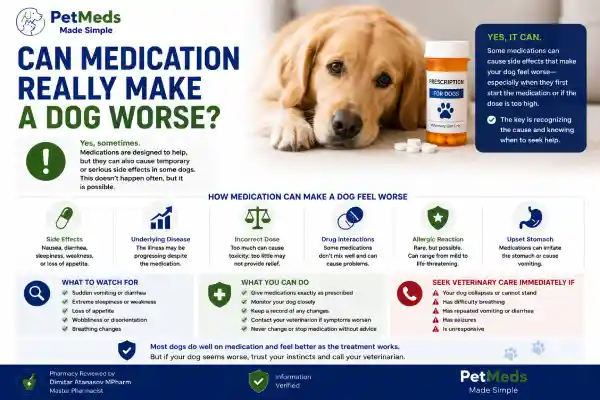
Some medications may temporarily cause side effects that make dogs appear worse before improvement occurs.
Examples include:
- Sleepiness
- Reduced energy
- Mild stomach upset
- Temporary wobbliness
- Behavioral changes
These effects are often expected and improve over time.
Could the Medication Be Causing Side Effects?
Absolutely.
Every medication carries the possibility of side effects.
Common Medication Side Effects
| Symptom | Possible? |
|---|---|
| Sleepiness | Yes |
| Vomiting | Yes |
| Diarrhea | Yes |
| Weakness | Yes |
| Reduced appetite | Yes |
| Wobbliness | Yes |
| Confusion | Sometimes |
Many of these effects are mild, but severe reactions require veterinary attention.
Could the Underlying Disease Be Getting Worse?
This is one of the most important possibilities.
Sometimes owners blame the medication when the illness itself is progressing.
Examples include:
- Arthritis becoming more painful
- Cancer progression
- Spinal disease worsening
- Neurological disorders
- Severe infections
In these cases, the medication may actually be helping, but the disease is advancing faster than expected.
Could the Medication Need More Time to Work?
Yes.
Not every medication works immediately.
Approximate Onset of Action
| Medication Type | Time to Full Effect |
|---|---|
| Gabapentin | Hours to several days |
| NSAIDs | 1–3 days |
| Antibiotics | Several days |
| Chronic medications | Days to weeks |
Improvement may not occur after the first dose.
Could the Dose Be Too High?
Possibly.
Some dogs are much more sensitive to medications.
Signs the Dose May Be Excessive
- Extreme sleepiness
- Severe weakness
- Difficulty walking
- Confusion
- Poor coordination
- Excessive drooling
Veterinarians may adjust the dosage if necessary.
Could the Dose Be Too Low?
Yes.
Sometimes dogs appear worse because pain is not adequately controlled.
Possible signs include:
- Continued limping
- Crying
- Restlessness
- Panting
- Difficulty getting comfortable
Related PMMS guides:
Could My Dog Be Having an Allergic Reaction?
Although uncommon, allergic reactions can occur with almost any medication.
Possible Signs
| Symptom | Serious? |
|---|---|
| Facial swelling | Yes |
| Hives | Yes |
| Difficulty breathing | Emergency |
| Collapse | Emergency |
| Severe vomiting | Yes |
These situations require immediate veterinary care.
Could Two Medications Be Interacting?
Yes.
Drug interactions sometimes increase the risk of side effects.
Higher-risk situations include:
- Multiple pain medications
- Pain medication plus anxiety medication
- Pain medication plus seizure medication
- Several medications started at the same time
Veterinarians carefully consider these interactions before prescribing combination therapy.
Related PMMS guide:
Could My Dog Be Experiencing an Overdose?
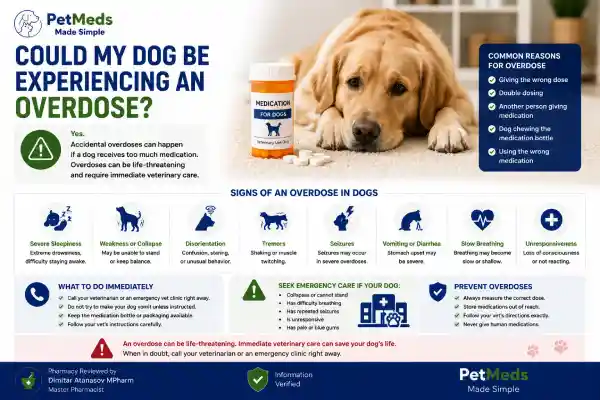
Accidental overdoses can happen.
Common reasons include:
- Double dosing
- Another family member giving medication
- Dogs chewing into medication bottles
Possible overdose signs include:
- Severe sedation
- Collapse
- Tremors
- Seizures
- Unresponsiveness
Immediate veterinary treatment is essential.
Could Vomiting or Diarrhea Make Things Worse?
Absolutely.
Dogs that develop gastrointestinal side effects may quickly become:
- Dehydrated
- Weak
- Less interested in food
- Less responsive
Related PMMS guides:
Could Pain Actually Be Increasing?
Yes.
Pain may worsen because:
- The disease progresses
- The medication is ineffective
- Activity increases too quickly
- Another injury develops
The medication is not always responsible.
Are Senior Dogs More Likely to Become Worse?
Yes.
Older dogs often:
- Process medications more slowly
- Have chronic diseases
- Take multiple medications
- Experience stronger side effects
Veterinarians usually monitor senior dogs more closely during treatment.
Related Symptoms Owners Often Search For
Owners researching worsening symptoms after medication often also search:
- Why Is My Dog Acting Confused After Medication?
- Why Does My Dog Sleep All Day After Pain Medication?
- Why Is My Dog Weak After Pain Medication?
- Can Pain Medication Cause Depression in Dogs?
- Can Pain Medication Cause Diarrhea?
- Can Dogs Take Tramadol and Gabapentin Together?
- Can Dogs Take Pain Medication Long-Term?
- Why Does Pain Medication Stop Working?
- Why Is My Dog Still Limping After Medication?
- Can Pain Medication Cause Personality Changes in Dogs?
When Does Getting Worse Become an Emergency?
Some medication side effects are mild and improve as your dog adjusts to treatment.
Others require immediate veterinary care.
Seek Emergency Care Immediately If Your Dog Develops
| Symptom | Emergency? |
|---|---|
| Difficulty breathing | Yes |
| Collapse | Yes |
| Repeated seizures | Yes |
| Unresponsiveness | Yes |
| Severe weakness | Yes |
| Pale or blue gums | Yes |
| Repeated vomiting with inability to keep water down | Yes |
These signs should never be monitored at home.
Could My Dog Need a Different Medication?
Possibly.
Not every dog responds the same way to a medication.
If side effects outweigh the benefits, your veterinarian may recommend:
- Lowering the dose
- Switching medications
- Adding supportive treatment
- Using a multimodal pain-management plan
- Investigating another underlying problem
Changing medications should always be done under veterinary supervision.
Could Blood Work Be Necessary?
Yes.
Blood tests are often recommended when a dog suddenly worsens after starting medication.
Blood Work May Help Evaluate
| Test | Why It’s Important |
|---|---|
| Liver values | Medication metabolism |
| Kidney values | Medication elimination |
| Electrolytes | Hydration and organ function |
| Complete blood count | Infection or inflammation |
| Glucose | Rule out metabolic disease |
Senior dogs and dogs receiving long-term medications often benefit from routine monitoring.
Could Liver or Kidney Disease Make Side Effects Worse?
Absolutely.
Many medications depend on healthy liver and kidney function.
Dogs with impaired organs may:
- Eliminate medications more slowly
- Develop stronger side effects
- Experience prolonged sedation
- Show increased weakness
- Become confused more easily
Related PMMS guide:
Could My Dog Be Dehydrated?
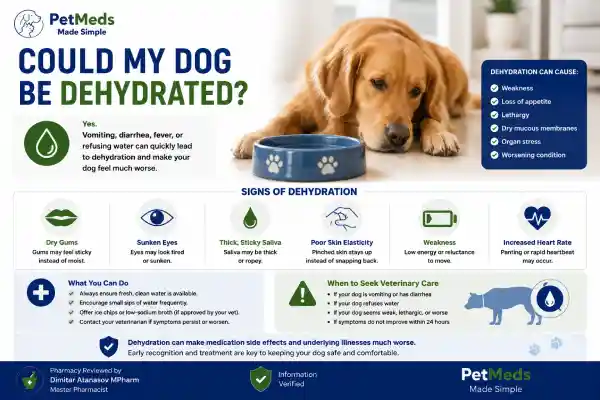
Yes.
Vomiting, diarrhea, fever, or refusing water can quickly lead to dehydration.
Signs of Dehydration
- Dry gums
- Sunken eyes
- Sticky saliva
- Reduced skin elasticity
- Weakness
- Increased heart rate
Dehydration can make medication side effects appear much worse.
Could My Dog Have Developed a New Medical Problem?
Yes.
Sometimes the worsening symptoms are unrelated to the medication.
Examples include:
- New injury
- Pancreatitis
- Gastrointestinal disease
- Heart disease
- Kidney disease
- Neurological disorders
This is one reason veterinarians perform a complete examination rather than assuming the medication is responsible.
What Should Owners Monitor at Home?
Careful observation can help determine whether your dog is improving or deteriorating.
Monitor Every Day
| Symptom | Monitor? |
|---|---|
| Appetite | Yes |
| Water intake | Yes |
| Energy level | Yes |
| Walking ability | Yes |
| Pain level | Yes |
| Vomiting or diarrhea | Yes |
| Breathing | Yes |
| Behavior | Yes |
Keeping a written record of changes can be extremely helpful during follow-up appointments.
Should Owners Stop the Medication?
Usually, no.
Many medications should not be stopped abruptly without veterinary advice.
For example:
- Gabapentin often requires gradual tapering after long-term use.
- Certain pain medications should be adjusted rather than suddenly discontinued.
If you believe the medication is making your dog worse:
- Contact your veterinarian promptly.
- Describe the symptoms and when they started.
- Follow the veterinarian’s instructions regarding future doses.
Never increase, decrease, or discontinue medication on your own unless specifically instructed.
How Do Veterinarians Determine the Cause?
Veterinarians consider several factors before deciding whether the medication is responsible.
They Typically Evaluate
| Factor | Important? |
|---|---|
| Timing of symptoms | Yes |
| Medication dose | Yes |
| Other medications | Yes |
| Underlying disease | Yes |
| Recent laboratory results | Yes |
| Physical examination | Yes |
| Previous medication history | Yes |
The goal is to determine whether your dog is experiencing:
- An expected side effect
- An adverse drug reaction
- Disease progression
- A medication interaction
- An unrelated illness
Can Most Dogs Recover?
Yes.
The outlook depends on the underlying cause.
Prognosis
| Cause | Outlook |
|---|---|
| Mild medication side effects | Excellent |
| Temporary stomach upset | Excellent |
| Dose adjustment required | Excellent |
| Medication interaction | Usually Good |
| Disease progression | Variable |
| Serious adverse reaction | Depends on early treatment |
Prompt veterinary evaluation greatly improves outcomes in dogs with significant reactions.
When Should Owners Contact Their Veterinarian?
Contact your veterinarian if your dog:
- Seems significantly worse than before treatment
- Refuses food for more than one meal
- Continues vomiting or has severe diarrhea
- Becomes increasingly weak
- Has difficulty walking
- Shows worsening pain despite medication
- Develops new or unusual symptoms
It is always safer to ask than to wait when a dog’s condition changes unexpectedly.
Bottom Line
Why is my dog suddenly worse after medication? The answer is not always straightforward. Some dogs experience temporary medication side effects such as sleepiness, weakness, vomiting, or diarrhea, while others may have worsening of the underlying disease, medication interactions, incorrect dosing, or an unrelated medical condition. Most mild side effects improve with time, but severe weakness, breathing difficulty, collapse, seizures, repeated vomiting, or unresponsiveness require immediate veterinary attention.Why Is My Dog Suddenly Worse After Medication?
Veterinarian Takeaway
A dog becoming worse after starting medication does not automatically mean the medication is harmful. Veterinarians consider the timing of symptoms, the specific drug, the dosage, the underlying disease, and the dog’s overall health before determining the cause. Early communication with your veterinarian is the safest approach whenever your dog’s condition changes unexpectedly.Why Is My Dog Suddenly Worse After Medication?
Frequently Asked Questions – Is My Dog Suddenly Worse After Medication
Can medication make my dog seem worse before it gets better?
Yes. Some medications cause temporary side effects while the body adjusts.
Is it normal for my dog to sleep more after medication?
Yes. Increased sleepiness is common with medications such as gabapentin, tramadol, and some post-surgical pain medications.
Could the illness itself be getting worse?
Absolutely. Disease progression is one of the most common reasons dogs worsen despite treatment.
Can the dose be too high?
Yes. Excessive doses may cause severe sleepiness, weakness, confusion, or poor coordination.
Could my dog be having an allergic reaction?
Yes. Swelling, hives, difficulty breathing, or collapse require emergency veterinary care.
Should I stop the medication immediately?
No. Contact your veterinarian before making medication changes unless instructed otherwise.
Can two medications interact?
Yes. Drug interactions may increase the risk of side effects or reduce treatment effectiveness.
When should blood work be performed?
Blood tests may be recommended if symptoms are severe, persistent, or if your dog has liver, kidney, or other chronic health conditions.
When should I call my veterinarian?
Any time your dog’s condition worsens unexpectedly after starting medication, especially if new symptoms appear.
When is it an emergency?
Seek immediate veterinary care if your dog collapses, has trouble breathing, becomes unresponsive, has repeated seizures, or develops severe weakness.
Reviewed By
Dimitar Atanasov, MPharm
Master Pharmacist | Medication Safety Educator
Dr. Valcho, DVM
Veterinary Consultant | 30+ Years of Clinical Experience
Editorial Policy
This article follows the PetMedsMadeSimple editorial standards for evidence-based veterinary medication education, medication safety, and responsible pet-owner guidance.Why Is My Dog Suddenly Worse After Medication?
Sources
- Plumb’s Veterinary Drug Handbook, 10th Edition.
- Merck Veterinary Manual – Adverse Drug Reactions and Pain Management in Dogs.
- American Animal Hospital Association (AAHA) Pain Management Guidelines.
- American Veterinary Medical Association (AVMA) Client Education Resources.
- Veterinary Pharmacology and Therapeutics, 11th Edition.
- Small Animal Clinical Pharmacology and Therapeutics.
- Veterinary Information Network (VIN).
- Journal of Veterinary Internal Medicine.
- Frontiers in Veterinary Science.
- Veterinary Anaesthesia and Analgesia.
Medical Review Statement – Why Is My Dog Suddenly Worse After Medication?
This article was pharmacy-reviewed by Dimitar Atanasov, MPharm, and veterinary-reviewed by Dr. Valcho, DVM, using current veterinary pharmacology references, canine pain-management guidelines, adverse drug reaction resources, and published veterinary literature available at the time of review.
images created with AI – Is My Dog Suddenly Worse After Medication