Quick Answer
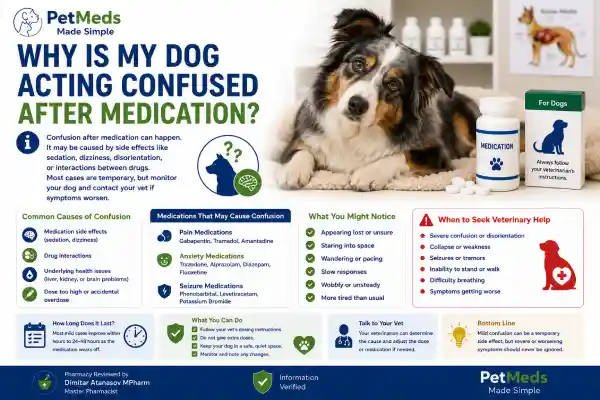
Why Is My Dog Acting Confused After Medication? If your dog is acting confused after medication, the most common causes include sedation, dizziness, temporary disorientation, low blood pressure, medication side effects, drug interactions, or underlying illness. Some medications intentionally affect the brain and nervous system, making dogs appear confused, lost, unusually quiet, or unaware of their surroundings. While mild confusion may be temporary, severe disorientation, collapse, seizures, or difficulty walking require immediate veterinary attention.
When Owners Commonly Ask This Question
This situation often happens unexpectedly.
A dog starts a medication and then suddenly seems different.
Owners may notice:
- Wandering aimlessly
- Staring at walls
- Getting stuck in corners
- Appearing “lost”
- Forgetting normal routines
- Acting unusually quiet
- Looking confused when called
Many owners immediately wonder:
“Did the medication cause this?”
In some cases, yes.
Certain medications can affect the nervous system and temporarily change behavior.
Why Is My Dog Acting Confused After Medication?
What Does “Confused” Mean in Dogs?
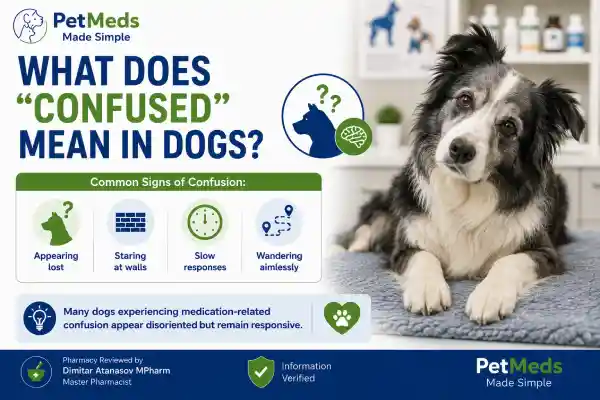
Confusion can look different from dog to dog.
Common Signs
| Sign | Common? |
|---|---|
| Staring into space | Yes |
| Wandering aimlessly | Yes |
| Appearing lost | Yes |
| Slow responses | Yes |
| Getting stuck in corners | Yes |
| Forgetting routines | Sometimes |
| Reduced awareness | Sometimes |
Many owners describe their dog as:
“Not acting like themselves.”
Can Medication Cause Confusion in Dogs?
Yes.
Many medications can temporarily affect:
- Brain activity
- Alertness
- Coordination
- Balance
- Awareness
The result may appear as confusion or disorientation.
Fortunately, most medication-related confusion is temporary.
Which Medications Are Most Likely to Cause Confusion?
Several commonly prescribed canine medications can potentially cause confusion.
Pain Medications
| Medication | Confusion Possible? |
|---|---|
| Gabapentin | Yes |
| Tramadol | Yes |
| Amantadine | Occasionally |
Anxiety Medications
| Medication | Confusion Possible? |
|---|---|
| Trazodone | Yes |
| Alprazolam (Xanax) | Yes |
| Diazepam | Yes |
| Fluoxetine | Occasionally |
Seizure Medications
| Medication | Confusion Possible? |
|---|---|
| Phenobarbital | Yes |
| Levetiracetam | Occasionally |
| Potassium Bromide | Yes |
Dogs may appear temporarily confused while adjusting to these medications.
Why Does Medication Cause Confusion?
Many medications affect the central nervous system.
Possible Mechanisms
- Reduced alertness
- Sedation
- Dizziness
- Altered balance
- Reduced reaction speed
- Temporary cognitive changes
This does not necessarily mean something is wrong.
Often, the medication is working exactly as expected.
Could My Dog Simply Be Sleepy?
Absolutely.
One of the most common reasons owners mistake confusion for a serious problem is sedation.
A sleepy dog may:
- React slowly
- Look distant
- Ignore commands
- Sleep more than usual
This is especially common with:
- Gabapentin
- Trazodone
- Phenobarbital
Related PMMS guides:
Can Dizziness Make a Dog Look Confused?
Yes.
Dizziness often accompanies medication side effects.
A dizzy dog may:
- Walk slowly
- Hesitate before moving
- Look uncertain
- Stand still for long periods
Owners sometimes interpret this as mental confusion when the dog is actually struggling with balance.
How Soon Can Confusion Start?
The timing varies.
Common Timeline
| Time After Dose | Possible? |
|---|---|
| Within 1 hour | Yes |
| 1–4 hours | Very Common |
| Same day | Common |
| Several days later | Possible |
The timing often depends on:
- The medication
- The dose
- The dog’s sensitivity
- Other medications being used
Is Confusion More Common in Senior Dogs?
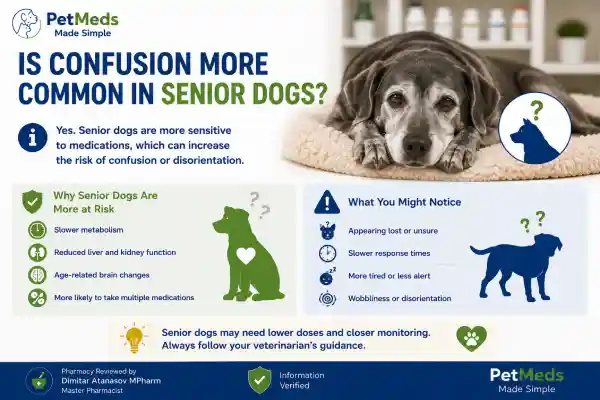
Yes.
Senior dogs are often more sensitive to medications.
Reasons Include
- Slower metabolism
- Reduced organ function
- Multiple medications
- Pre-existing cognitive decline
Older dogs may experience stronger side effects than younger dogs.
Could Cognitive Dysfunction Be Mistaken for Medication Side Effects?
Absolutely.
Senior dogs may already have:
- Cognitive dysfunction syndrome (CDS)
- Vision loss
- Hearing loss
- Neurological disease
Medication may simply make existing confusion more noticeable.
Can Medication Interactions Cause Confusion?
Yes.
This is an important but often overlooked cause.
Higher Risk Situations
| Situation | Increased Risk? |
|---|---|
| Multiple medications | Yes |
| Pain + anxiety medications | Yes |
| Seizure medications combined | Yes |
| Senior dogs on several drugs | Yes |
Drug interactions may amplify sedation and confusion.
What Does Normal Temporary Confusion Look Like?
Most mild medication-related confusion has several reassuring characteristics.
Reassuring Signs
| Sign | Reassuring? |
|---|---|
| Responds when called | Yes |
| Eating normally | Yes |
| Drinking normally | Yes |
| Improving gradually | Yes |
| Walking independently | Yes |
These signs often indicate a temporary medication effect rather than an emergency.
Could the Medication Dose Be Too High?
Possibly.
Some dogs are more sensitive than others.
Even a normal veterinary dose can occasionally produce stronger effects.
Signs a Dose May Be Too Strong
- Excessive sleepiness
- Severe confusion
- Marked wobbliness
- Difficulty standing
- Loss of coordination
Veterinarians may adjust the dose if symptoms are excessive.
Related Symptoms Owners Often Search For
Owners researching confusion after medication frequently also search for:
- Can Pain Medication Cause Personality Changes in Dogs?
- Why Is My Dog Acting Strange After Antibiotics?
- Can Anxiety Medication Cause Confusion in Dogs?
- Why Is My Dog Wobbly After Gabapentin?
- Can Gabapentin Cause Neurological Side Effects?
- Why Is My Dog Weak After Pain Medication?
- Why Is My Dog Panting After Pain Medication?
- Can Dogs Become Dependent on Pain Medication?
- Why Does Pain Medication Stop Working?
When Does Confusion Become Dangerous?
Most cases of medication-related confusion are mild and temporary.
However, some symptoms suggest a more serious problem.
Warning Signs
| Symptom | Concern Level |
|---|---|
| Mild confusion | Low |
| Temporary sleepiness | Low |
| Slow responses | Moderate |
| Severe disorientation | High |
| Inability to stand | High |
| Collapse | Emergency |
| Seizures | Emergency |
The key question is:
“Is my dog simply acting a little unusual, or is my dog becoming progressively worse?”
Could Confusion Indicate an Overdose?
Yes.
Accidental overdoses can sometimes occur when:
- A second dose is given by mistake
- A family member gives an extra dose
- A dog accesses medication
- The wrong strength is administered
Possible Overdose Signs
| Sign | Possible? |
|---|---|
| Extreme sedation | Yes |
| Severe confusion | Yes |
| Loss of coordination | Yes |
| Collapse | Yes |
| Tremors | Sometimes |
| Seizures | Rare but serious |
If overdose is suspected, contact a veterinarian immediately.
Can Medication Cause Temporary Personality Changes?
Absolutely.
Some owners describe their dog as:
- “Not acting like themselves”
- “More withdrawn”
- “Less interested in family”
- “Less playful”
These changes are often temporary.
Related PMMS guide:
What Should Owners Do If Their Dog Seems Confused?
The first step is observation.
Monitor Your Dog For
- Responsiveness
- Appetite
- Water intake
- Walking ability
- Breathing
- Energy level
Avoid giving extra medication unless instructed by your veterinarian.
Should Owners Continue the Medication?
Do not stop prescribed medication without veterinary guidance.
This is especially important for:
Medications That Should Not Be Stopped Abruptly
| Medication | Sudden Stop Risk |
|---|---|
| Gabapentin | Yes |
| Phenobarbital | Yes |
| Potassium Bromide | Yes |
| Some anxiety medications | Yes |
Abrupt discontinuation may create additional problems.
Related guides:
How Long Does Medication-Related Confusion Usually Last?
The answer depends on the medication involved.
General Recovery Timeline
| Duration | Common? |
|---|---|
| A few hours | Very Common |
| 12–24 hours | Common |
| 24–48 hours | Sometimes |
| Several days | Possible with some medications |
Most dogs gradually improve as the medication is metabolized.
Are Some Dogs More Sensitive Than Others?
Yes.
Several factors can increase sensitivity.
Higher-Risk Dogs
| Risk Factor | Increased Risk? |
|---|---|
| Senior age | Yes |
| Liver disease | Yes |
| Kidney disease | Yes |
| Multiple medications | Yes |
| Neurological disorders | Yes |
These dogs may require closer monitoring.
Could Liver or Kidney Problems Make Confusion Worse?
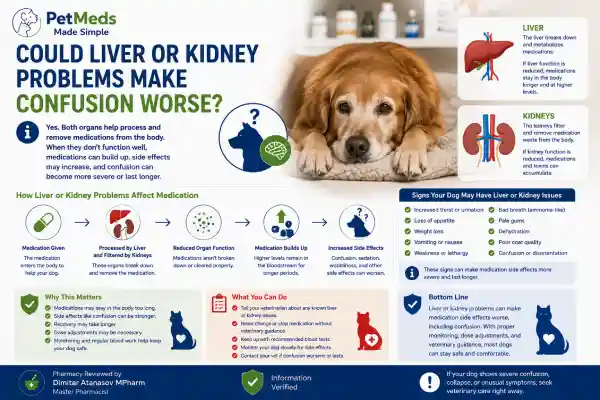
Absolutely.
Both organs help process medications.
When function is reduced:
- Medication may remain in the body longer
- Side effects may become stronger
- Recovery may take longer
This is one reason veterinarians sometimes recommend monitoring blood work in long-term patients.
How Do Veterinarians Evaluate Medication-Related Confusion?
Veterinarians often begin with a detailed history.
Common Questions
- What medication was given?
- What dose was administered?
- When did symptoms begin?
- Has the dog received this medication before?
- Are other medications involved?
Additional testing may include:
- Physical examination
- Neurological examination
- Blood work
- Blood pressure evaluation
- Imaging in severe cases
Can Confusion Be a Sign the Medication Is Working?
Sometimes.
Certain medications intentionally produce:
- Sedation
- Reduced anxiety
- Calmer behavior
For example:
Anxiety Medication Goals
| Desired Effect | Expected? |
|---|---|
| Calmer behavior | Yes |
| Reduced fear | Yes |
| Mild sedation | Often |
| Complete disorientation | No |
There is an important difference between expected calming and excessive confusion.
When Should Owners Contact Their Veterinarian?
Contact your veterinarian if:
- Confusion worsens
- Symptoms last longer than expected
- Your dog stops eating
- Your dog cannot walk normally
- New symptoms appear
Veterinary Attention Recommended
| Symptom | Contact Vet? |
|---|---|
| Mild temporary confusion | Monitor |
| Persistent confusion | Yes |
| Severe wobbliness | Yes |
| Refusing food | Yes |
| Vomiting | Yes |
| Behavioral deterioration | Yes |
Early communication can prevent complications.
What Symptoms Require Emergency Care?
Seek immediate veterinary attention if your dog develops:
| Emergency Sign | Serious? |
|---|---|
| Collapse | Yes |
| Seizures | Yes |
| Unresponsiveness | Yes |
| Difficulty breathing | Yes |
| Severe weakness | Yes |
| Inability to stand | Yes |
| Suspected overdose | Yes |
These symptoms should never be ignored.
Related Symptoms Owners Often Search For
Owners researching confusion after medication frequently also search for:
- Can Pain Medication Cause Personality Changes in Dogs?
- Why Is My Dog Acting Strange After Antibiotics?
- Can Anxiety Medication Cause Confusion in Dogs?
- Why Is My Dog Wobbly After Gabapentin?
- Can Gabapentin Cause Neurological Side Effects?
- Why Is My Dog Weak After Pain Medication?
- Why Is My Dog Panting After Pain Medication?
- Why Does My Dog Sleep All Day After Antibiotics?
- Why Is My Cat Hiding After Gabapentin?
Bottom Line
Why is my dog acting confused after medication? In many cases, temporary confusion results from expected medication effects such as sedation, dizziness, or reduced alertness. Common causes include gabapentin, trazodone, seizure medications, and certain pain medications. Most mild cases improve as the medication wears off. However, severe disorientation, inability to walk, collapse, seizures, or breathing difficulties require immediate veterinary attention.
Veterinarian Takeaway
Mild confusion after medication is not uncommon and is often related to expected nervous system effects. The most important factors are whether your dog remains responsive, can walk independently, continues eating and drinking, and gradually improves over time. Any worsening symptoms or severe neurological signs should be evaluated promptly by a veterinarian.
Frequently Asked Questions – Why Is My Dog Acting Confused After Medication
Can medication make dogs confused?
Yes. Many medications can temporarily affect alertness, coordination, and awareness.
Which medications commonly cause confusion in dogs?
Gabapentin, trazodone, phenobarbital, tramadol, diazepam, and other nervous system medications may contribute.
Is confusion after medication normal?
Mild temporary confusion can be normal depending on the medication.
How long does confusion usually last?
Many dogs improve within several hours to 24 hours, although some medications may last longer.
Can gabapentin cause confusion in dogs?
Yes. Gabapentin can occasionally cause sedation, wobbliness, and temporary disorientation.
Can anxiety medication cause confusion?
Yes. Some anti-anxiety medications can affect awareness and behavior.
Should I stop my dog’s medication?
Not without veterinary guidance.
Can confusion indicate an overdose?
Yes. Severe confusion may occur with accidental overdoses.
When should I call my veterinarian?
If confusion worsens, persists, or is accompanied by other concerning symptoms.
When is confusion an emergency?
Seek immediate veterinary care for collapse, seizures, breathing difficulties, severe weakness, inability to stand, or unresponsiveness.
Reviewed By
Dimitar Atanasov, MPharm
Master Pharmacist | Medication Safety Educator
Dr. Valcho, DVM
Veterinary Consultant | 30+ Years of Clinical Experience
Editorial Policy
This article follows the PetMedsMadeSimple editorial standards for evidence-based veterinary medication education, medication safety, and responsible pet-owner guidance.
Sources
- Plumb’s Veterinary Drug Handbook, 10th Edition.
- Merck Veterinary Manual – Adverse Drug Effects in Dogs.
- American Animal Hospital Association (AAHA) Pain Management Guidelines.
- American Veterinary Medical Association (AVMA) Client Education Resources.
- Veterinary Pharmacology and Therapeutics, 11th Edition.
- Small Animal Clinical Pharmacology and Therapeutics.
- Veterinary Information Network (VIN).
- Journal of the American Veterinary Medical Association (JAVMA).
- Frontiers in Veterinary Science.
- Veterinary Anaesthesia and Analgesia.
Medical Review Statement
This article was pharmacy-reviewed by Dimitar Atanasov, MPharm, and veterinary-reviewed by Dr. Valcho, DVM, using current veterinary pharmacology references, canine medication-safety guidelines, and published veterinary literature available at the time of review.
Images created with AI – Why Is My Dog Acting Confused After Medication