Quick Answer
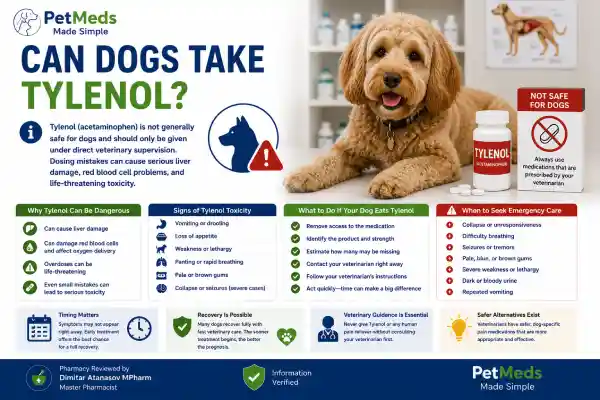
Can dogs take Tylenol? Sometimes, but only under direct veterinary supervision. Tylenol (acetaminophen) is not considered one of the safest pain medications for dogs, and dosing mistakes can lead to serious liver damage, red blood cell abnormalities, and potentially life-threatening toxicity. Owners should never give Tylenol to a dog unless specifically instructed by a veterinarian.
When Owners Commonly Ask This Question
This question usually appears in one of three situations.
Situation #1
A dog seems painful.
The owner has Tylenol at home and wonders:
“Can I give my dog Tylenol instead of going to the veterinarian?”
Situation #2
The owner already gave Tylenol.
Now they’re searching:
“Did I hurt my dog?”
Situation #3
A dog accidentally ate Tylenol.
The owner immediately searches:
“What happens if a dog eats Tylenol?”
All three situations are common veterinary emergencies.
Can Dogs Take Tylenol?
What Is Tylenol?
Tylenol is the brand name for acetaminophen.
It is one of the most commonly used human pain relievers.
Human Uses Include
- Headaches
- Fever reduction
- Arthritis pain
- Muscle aches
- Cold and flu symptoms
Millions of people use acetaminophen safely every day.
Dogs are different.
Their bodies process medications differently than humans.
Is Tylenol Safe for Dogs?
The answer is:
Not Usually.
Veterinarians occasionally prescribe acetaminophen in specific situations.
However, it is not considered a first-line pain medication for most dogs.
Why?
Because safer veterinary medications exist.
Examples include:
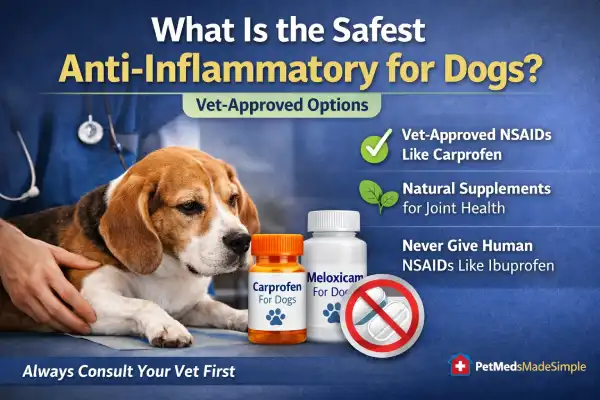
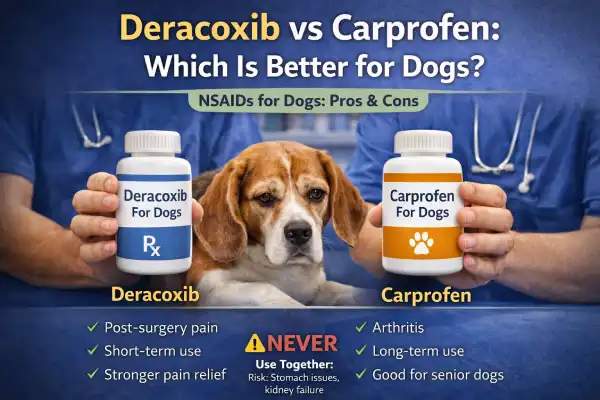
- Carprofen
- Meloxicam
- Deracoxib
- Galliprant
- Gabapentin
Related PMMS guides:
- Can Dogs Take Pain Medication Long-Term?
- Why Does Pain Medication Stop Working?
- Best Pain Medication for Dogs with Arthritis
Why Is Tylenol Riskier Than Many Veterinary Pain Medications?
Dogs have a limited ability to safely metabolize acetaminophen.
When too much is administered, toxic byproducts may accumulate.
Potential Consequences
| Problem | Possible? |
|---|---|
| Liver damage | Yes |
| Red blood cell damage | Yes |
| Oxygen transport problems | Yes |
| Organ failure | Severe cases |
| Death | Severe untreated cases |
This is why veterinarians are very careful when using acetaminophen.
Can Veterinarians Ever Prescribe Tylenol?
Yes.
Although uncommon, veterinarians sometimes use acetaminophen in carefully selected patients.
Situations May Include
- Specific pain conditions
- Certain surgical cases
- Combination pain management plans
However:
Veterinary Use ≠ Safe Home Use
The fact that a veterinarian may occasionally prescribe Tylenol does not mean owners should administer it independently.
Why Do Owners Accidentally Poison Dogs With Tylenol?
Most accidental poisonings happen because owners assume:
“If it’s safe for me, it must be safe for my dog.”
Unfortunately, that is not always true.
Common Mistakes
| Mistake | Common? |
|---|---|
| Guessing the dose | Yes |
| Giving children’s Tylenol | Yes |
| Giving extra doses | Yes |
| Using human dosing guidelines | Yes |
| Mixing medications | Sometimes |
Even small mistakes can become serious.
What Happens After a Dog Eats Tylenol?
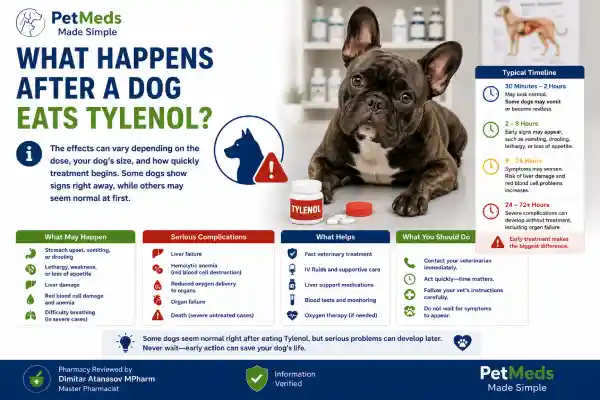
The answer depends on:
- Dog size
- Dose consumed
- Formulation
- Time since ingestion
- Overall health
Some dogs initially appear normal.
This can create a false sense of security.
Early Signs of Tylenol Toxicity
Symptoms may develop within hours.
Common Early Signs
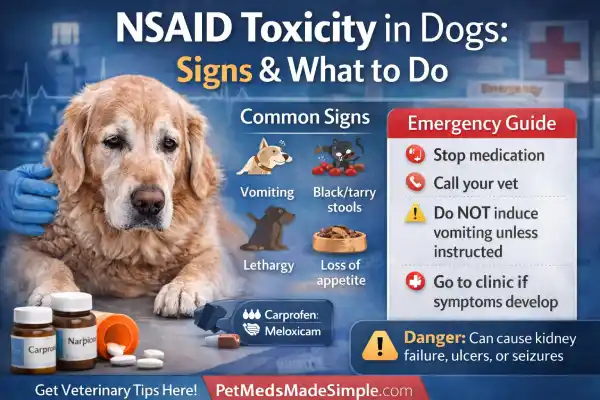
- Vomiting
- Drooling
- Loss of appetite
- Lethargy
- Weakness
- Panting
Many owners initially mistake these symptoms for a mild stomach upset.
Can Tylenol Cause Liver Damage in Dogs?
Yes.
This is one of the biggest concerns.
The liver helps process acetaminophen.
When toxic levels are reached:
- Liver cells become damaged
- Inflammation develops
- Liver failure may occur
Related PMMS guides:
How Do Veterinarians Diagnose Tylenol Toxicity?
Veterinarians often combine:
History
- What product was eaten?
- How much was eaten?
- When was it eaten?
Examination
- Physical exam
- Gum color evaluation
- Neurological assessment
Testing
- Blood work
- Liver values
- Red blood cell evaluation
- Oxygenation assessment
Early diagnosis significantly improves outcomes.
Are Some Dogs More Vulnerable Than Others?
Yes.
Certain dogs may face greater risks.
Higher-Risk Dogs
| Group | Higher Risk? |
|---|---|
| Small dogs | Yes |
| Senior dogs | Yes |
| Dogs with liver disease | Yes |
| Dogs taking multiple medications | Yes |
| Dogs with chronic illness | Yes |
Veterinarians often adjust treatment strategies for these patients.
Can Tylenol Affect Red Blood Cells?
Yes.
This is one of the unique dangers of acetaminophen toxicity.
Red blood cells carry oxygen throughout the body.
Severe toxicity can impair this process.
Possible Consequences
- Weakness
- Breathing difficulties
- Exercise intolerance
- Collapse
This is one reason acetaminophen poisoning is considered a medical emergency.
How Much Tylenol Is Dangerous for Dogs?
There is no universally safe at-home dose.
Toxicity depends on:
- Body weight
- Medical history
- Formulation
- Concurrent medications
Because of these variables, owners should never attempt to calculate their own Tylenol dose.
Related Searches Owners Often Make
Many owners researching Tylenol also search:
- Can Dogs Take Ibuprofen Accidentally?
- What Happens If Dogs Overdose on Pain Medication?
- Can NSAIDs Cause Liver Damage in Dogs?
- Why Is My Dog Weak After Pain Medication?
- Why Is My Dog Acting Confused After Medication?
- Can Pain Medication Cause Diarrhea?
- Why Is My Dog Drinking Excess Water on Pain Medication?
- Can Pain Medication Cause Aggression in Dogs?
- Can Dogs Become Dependent on Pain Medication?
- Safest Pain Medication for Dogs
What Should Owners Do If Their Dog Eats Tylenol?
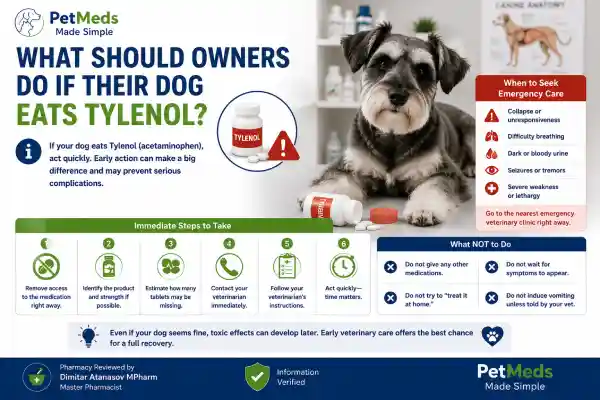
If your dog has eaten Tylenol, time matters.
Do not wait for symptoms to appear.
Many dogs look normal during the early stages of toxicity.
Immediate Steps
- Remove access to the medication.
- Determine the product strength if possible.
- Estimate how many tablets may have been consumed.
- Contact your veterinarian immediately.
- Follow veterinary instructions carefully.
Avoid
❌ Giving additional medications
❌ Waiting until symptoms appear
❌ Assuming a small amount is safe
❌ Inducing vomiting without veterinary guidance
Early intervention often makes a major difference.
Is Tylenol Poisoning an Emergency?
In many cases, yes.
The risk depends on:
- Dog size
- Amount consumed
- Underlying health conditions
- Time since ingestion
Because acetaminophen can damage both the liver and red blood cells, veterinarians generally treat suspected overdoses seriously.
Emergency Risk Factors
| Situation | Concern Level |
|---|---|
| Unknown amount consumed | High |
| Multiple tablets missing | High |
| Small dog ingestion | High |
| Symptoms already present | High |
| Known liver disease | High |
What Symptoms Require Immediate Veterinary Care?
Seek emergency care immediately if your dog develops:
Emergency Signs
| Symptom | Serious? |
|---|---|
| Difficulty breathing | Yes |
| Collapse | Yes |
| Severe weakness | Yes |
| Blue or brown gums | Yes |
| Seizures | Yes |
| Severe lethargy | Yes |
| Unresponsiveness | Yes |
These signs may indicate significant toxicity.
How Do Veterinarians Treat Tylenol Poisoning?
Treatment depends on:
- Amount ingested
- Time since ingestion
- Severity of symptoms
Possible Treatments
| Treatment | Purpose |
|---|---|
| Induced vomiting | Remove medication |
| Activated charcoal | Reduce absorption |
| IV fluids | Support circulation |
| Oxygen therapy | Support breathing |
| Liver-support medications | Protect liver function |
| Hospital monitoring | Monitor complications |
The earlier treatment begins, the better the prognosis tends to be.
Can Dogs Recover From Tylenol Poisoning?
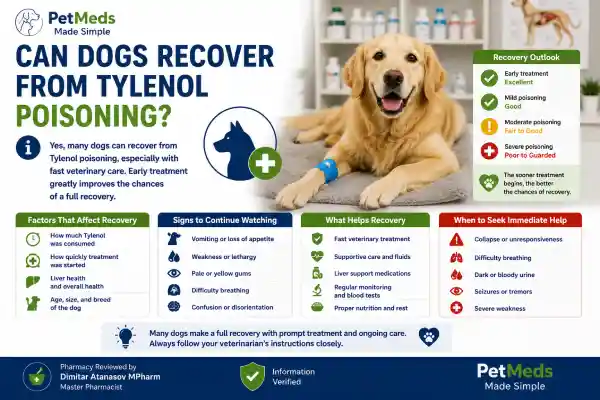
Yes.
Many dogs recover fully when treatment starts quickly.
Factors Affecting Recovery
- How much Tylenol was consumed
- How quickly treatment begins
- Presence of liver disease
- Overall health status
- Severity of symptoms
Recovery Outlook
| Situation | Prognosis |
|---|---|
| Early treatment | Excellent |
| Mild exposure | Good |
| Moderate toxicity | Fair to Good |
| Severe untreated toxicity | Poor |
| Liver failure present | Variable |
How Long Does Recovery Take?
Recovery varies significantly.
General Timeline
| Stage | Typical Time |
|---|---|
| Initial treatment | First 24 hours |
| Stabilization | 1–3 days |
| Liver monitoring | Several days |
| Full recovery | Days to weeks |
Some dogs recover rapidly while others require extended monitoring.
Can Tylenol Cause Long-Term Liver Damage?
Unfortunately, yes.
Severe acetaminophen toxicity may permanently damage liver tissue.
Possible Long-Term Effects
- Chronic liver disease
- Reduced liver function
- Increased medication sensitivity
- Ongoing monitoring requirements
Fortunately, prompt treatment greatly reduces this risk.
Can Tylenol Cause Confusion or Neurological Symptoms?
Yes.
Dogs experiencing toxicity may develop:
- Disorientation
- Confusion
- Weakness
- Abnormal behavior
Related PMMS guides:
- Why Is My Dog Acting Confused After Medication?
- Can Pain Medication Cause Personality Changes in Dogs?
- Can Gabapentin Cause Neurological Side Effects?
Could Tylenol Be Hidden in Other Products?
Absolutely.
Many owners don’t realize acetaminophen is found in numerous products.
Products That May Contain Acetaminophen
| Product Type | Possible? |
|---|---|
| Tylenol | Yes |
| Cold medicines | Yes |
| Flu medicines | Yes |
| Combination pain relievers | Yes |
| Prescription medications | Yes |
Always check labels carefully.
Are Human Pain Relievers Generally Safe for Dogs?
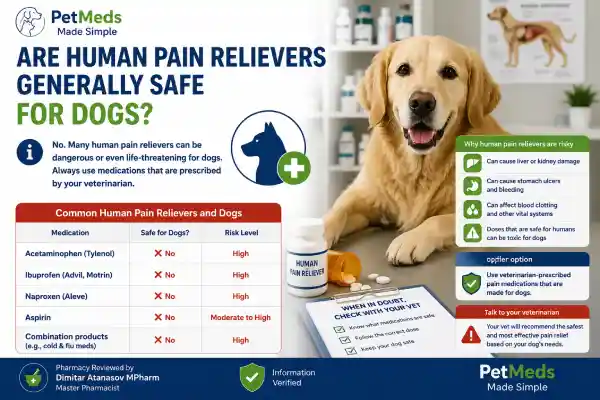
Usually not.
Several common human pain relievers can be dangerous.
Human Pain Medication Safety
| Medication | Safe Without Vet Guidance? |
|---|---|
| Tylenol (Acetaminophen) | No |
| Ibuprofen | No |
| Naproxen | No |
| Aspirin | No |
| Combination products | No |
Owners should never assume human medications are safe for pets.
What Are Safer Alternatives to Tylenol?
Veterinarians have access to medications specifically designed for dogs.
Common Veterinary Pain Options
| Medication | Common Veterinary Use |
|---|---|
| Carprofen | Arthritis and pain |
| Galliprant | Osteoarthritis |
| Meloxicam | Pain and inflammation |
| Deracoxib | Orthopedic pain |
| Gabapentin | Chronic and nerve pain |
Related PMMS guides:
- Safest Pain Medication for Dogs
- Best Pain Medication for Dogs with Arthritis
- Can Dogs Take Pain Medication Long-Term?
- Why Does Pain Medication Stop Working?
Should Owners Ever Give Tylenol Without Calling a Veterinarian?
No.
Even though veterinarians occasionally prescribe acetaminophen, owners should never independently decide to use Tylenol.
Why?
Because:
- Dosing errors can be serious
- Toxicity can develop rapidly
- Safer options often exist
- Individual risk factors matter
Veterinary guidance is essential.
Bottom Line
Can dogs take Tylenol? Sometimes, but only under direct veterinary supervision. Acetaminophen is not considered one of the safest pain medications for dogs because dosing mistakes can lead to serious liver damage, red blood cell abnormalities, and potentially life-threatening toxicity. If your dog accidentally eats Tylenol or receives an unapproved dose, contact your veterinarian immediately rather than waiting for symptoms to appear. Can Dogs Take Tylenol?
Veterinarian Takeaway
Tylenol is one of the most misunderstood human medications in veterinary medicine. While veterinarians occasionally prescribe acetaminophen in carefully controlled situations, it should never be viewed as a routine at-home pain reliever for dogs. When safer veterinary alternatives exist, they are generally preferred. Any suspected Tylenol ingestion should be treated as a potential medical emergency.Can Dogs Take Tylenol?
Frequently Asked Questions – Can Dogs Take Tylenol?
Can dogs take Tylenol for pain?
Only if specifically prescribed by a veterinarian.
Is Tylenol toxic to dogs?
It can be. Toxicity depends on the dose and individual dog.
What happens if a dog eats Tylenol?
Potential consequences include liver damage, red blood cell abnormalities, weakness, vomiting, and serious illness.
How quickly do symptoms appear?
Symptoms may develop within hours of ingestion.
Is one Tylenol tablet dangerous?
It can be, especially for small dogs.
Can Tylenol cause liver damage?
Yes. Liver toxicity is one of the primary concerns.
Can Tylenol affect red blood cells?
Yes. Severe toxicity can impair oxygen transport.
Should I induce vomiting?
Only under veterinary guidance.
Are there safer pain medications for dogs?
Yes. Veterinarians commonly prescribe medications designed specifically for canine patients.
When should I seek emergency care?
Immediately if ingestion is suspected or if symptoms such as weakness, collapse, breathing difficulties, or severe lethargy occur.
Reviewed By
Dimitar Atanasov, MPharm
Master Pharmacist | Medication Safety Educator
Dr. Valcho, DVM
Veterinary Consultant | 30+ Years of Clinical Experience
Editorial Policy
This article follows the PetMedsMadeSimple editorial standards for evidence-based veterinary medication education, medication safety, and responsible pet-owner guidance.
Sources
- Plumb’s Veterinary Drug Handbook, 10th Edition.
- Merck Veterinary Manual – Acetaminophen Toxicity in Dogs.
- American Animal Hospital Association (AAHA) Pain Management Guidelines.
- American Veterinary Medical Association (AVMA) Pet Poison Prevention Resources.
- Veterinary Pharmacology and Therapeutics, 11th Edition.
- Small Animal Clinical Pharmacology and Therapeutics.
- Veterinary Information Network (VIN).
- Journal of Veterinary Emergency and Critical Care.
- Frontiers in Veterinary Science.
- Pet Poison Helpline Toxicology Resources.
Medical Review Statement
This article was pharmacy-reviewed by Dimitar Atanasov, MPharm, and veterinary-reviewed by Dr. Valcho, DVM, using current veterinary toxicology references, canine pain-management guidelines, and published veterinary literature available at the time of review.
Images created with AI – Can Dogs Take Tylenol?