Quick Answer
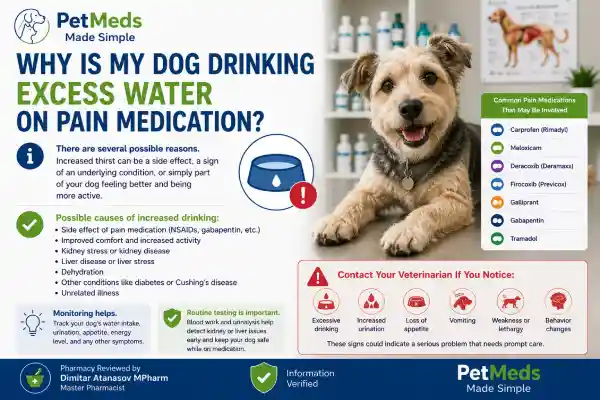
Why Is My Dog Drinking Excess Water on Pain Medication? If your dog is drinking excess water on pain medication, the cause may be a medication side effect, dehydration, underlying disease, kidney stress, liver problems, or a condition unrelated to the medication itself. Some pain medications can indirectly increase thirst, while others may reveal previously unnoticed health issues. Excessive drinking should never be ignored, especially if it occurs alongside vomiting, weakness, increased urination, appetite loss, or behavioral changes.
When Owners Commonly Ask This Question
Many owners notice the same pattern.
Their dog starts taking a pain medication and within days or weeks they begin asking:
“Why is my dog suddenly drinking so much water?”
Others notice:
- Constant trips to the water bowl
- Increased urination
- Drinking during the night
- Empty water bowls more frequently
- Accidents in the house
Because excessive thirst can sometimes be linked to serious medical problems, owners naturally become concerned.
The good news is that increased water consumption is not always an emergency.
The important step is determining why it is happening.
Why Is My Dog Drinking Excess Water on Pain Medication?
Can Pain Medication Cause Increased Thirst in Dogs?
Yes.
Some dogs drink noticeably more water while taking pain medication.
However, the medication itself is not always directly responsible.
Sometimes the increase occurs because:
- The medication changes normal body functions
- The dog becomes less painful and more active
- The underlying disease progresses
- Another side effect develops
Common Causes
| Possible Cause | Common? |
|---|---|
| Medication side effect | Yes |
| Increased comfort and activity | Yes |
| Kidney stress | Possible |
| Liver disease | Possible |
| Dehydration | Possible |
| Unrelated illness | Possible |
This is why veterinarians evaluate the entire situation rather than focusing only on the medication.
What Counts as Excessive Drinking?
Owners often struggle to determine whether water intake is truly abnormal.
A dog that drinks slightly more water during hot weather is not necessarily experiencing excessive thirst.
Possible Signs of Excessive Water Consumption
- Emptying the water bowl repeatedly
- Constantly seeking water
- Drinking during the night
- Increased urination
- Requesting more bathroom breaks
- Urinating larger volumes
Common Comparison
| Behavior | Typical Concern Level |
|---|---|
| Slight increase | Usually low |
| Moderate increase for several days | Monitor |
| Dramatic increase | Veterinary evaluation recommended |
| Excessive drinking with illness signs | Contact veterinarian promptly |
Which Pain Medications Are Most Commonly Associated With Increased Thirst?
Not all pain medications affect dogs the same way.
NSAIDs
Common examples include:
- Carprofen (Rimadyl)
- Meloxicam
- Deracoxib (Deramaxx)
- Firocoxib (Previcox)
- Galliprant
These medications do not usually cause severe thirst directly, but complications affecting the kidneys or liver may contribute.
Other Pain Medications
Examples include:
- Gabapentin
- Tramadol
- Amantadine
Some dogs may experience behavioral or physiologic changes that alter drinking habits.
Medication Comparison
| Medication | Increased Thirst Possible? |
|---|---|
| Carprofen | Possible |
| Meloxicam | Possible |
| Deracoxib | Possible |
| Firocoxib | Possible |
| Galliprant | Possible |
| Gabapentin | Occasionally |
| Tramadol | Occasionally |
Could My Dog Simply Feel Better?
Surprisingly, yes.
Many dogs start pain medication because:
- Arthritis hurts
- Mobility is limited
- Movement is uncomfortable
After treatment begins:
- Activity increases
- Walking increases
- Exercise increases
A more active dog may naturally drink more water.
Signs This May Be the Cause
| Finding | Reassuring? |
|---|---|
| Better mobility | Yes |
| Better appetite | Yes |
| Normal urination | Yes |
| Improved energy | Yes |
In these situations, increased water intake may simply reflect improved quality of life.
Could Kidney Problems Be Responsible?
This is one of the biggest owner concerns.
And for good reason.
The kidneys play an important role in fluid balance.
Certain pain medications particularly NSAIDs can affect kidney function in susceptible dogs.
Kidney-Related Symptoms
| Symptom | Common? |
|---|---|
| Increased thirst | Yes |
| Increased urination | Yes |
| Appetite loss | Sometimes |
| Vomiting | Sometimes |
| Weakness | Sometimes |
Related PMMS articles include:
- Can NSAIDs Cause Liver Damage in Dogs?
- Why Is My Dog Weak After Pain Medication?
- What Happens If Dogs Overdose on Pain Medication?
How Do NSAIDs Affect the Kidneys?
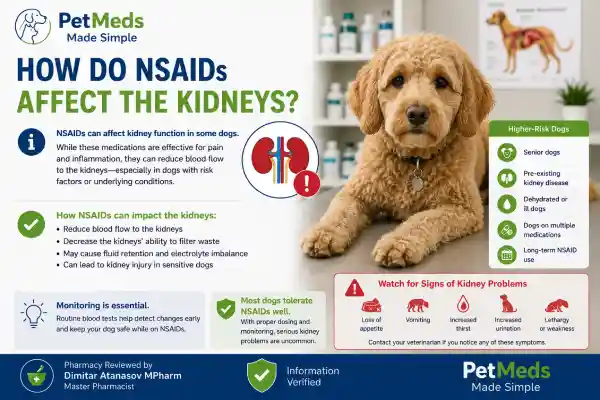
NSAIDs work by affecting inflammatory pathways.
While highly effective for pain management, they may reduce blood flow to the kidneys in certain situations.
Risk increases when:
- Dogs are dehydrated
- Dogs have existing kidney disease
- Multiple medications are involved
- Serious illness is present
Higher-Risk Groups
| Risk Factor | Increased Risk? |
|---|---|
| Senior dogs | Yes |
| Kidney disease | Yes |
| Dehydration | Yes |
| Long-term NSAID use | Yes |
| Multiple medications | Yes |
Most healthy dogs tolerate NSAIDs well, but monitoring remains important.
Could Liver Problems Cause Excessive Drinking?
Yes.
Although less common, liver disease may contribute to:
- Increased thirst
- Increased urination
- Appetite changes
- Weight loss
Owners sometimes discover liver abnormalities while investigating excessive water consumption.
This is why veterinarians often evaluate both kidney and liver function during diagnostic testing.
Can Pain Medication Unmask an Underlying Disease?
Absolutely.
This is an often-overlooked possibility.
Sometimes the medication is not causing the problem.
Instead, the increased veterinary attention reveals a condition that already existed.
Examples
- Kidney disease
- Diabetes mellitus
- Cushing’s disease
- Liver disease
- Urinary tract disease
The timing may make the medication appear responsible when another condition is actually involved.
Is Increased Urination Important?
Very.
Increased thirst and increased urination often occur together.
Important Questions
- Is your dog drinking more?
- Is your dog urinating more?
- Are accidents occurring indoors?
- Are nighttime bathroom trips increasing?
These details help veterinarians narrow down potential causes.
Can Excessive Drinking Be an Emergency?
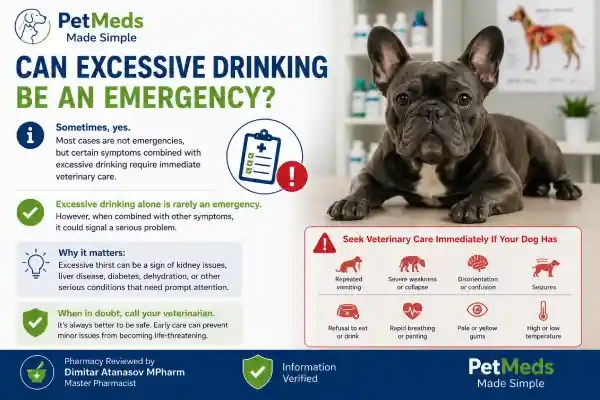
Sometimes.
Most cases are not emergencies.
However, some situations require prompt evaluation.
Seek Veterinary Care Immediately If Your Dog Develops
| Symptom | Emergency? |
|---|---|
| Collapse | Yes |
| Severe weakness | Yes |
| Repeated vomiting | Yes |
| Refusal to eat | Yes |
| Difficulty standing | Yes |
| Seizures | Yes |
These symptoms suggest something more serious may be occurring.
How Do Veterinarians Diagnose Excessive Drinking in Dogs?
When a dog develops excessive thirst while taking pain medication, veterinarians rarely assume the medication is automatically responsible.
Instead, they investigate several possibilities.
The Diagnostic Process
| Step | Purpose |
|---|---|
| Medical history | Review medications and symptoms |
| Physical examination | Assess overall health |
| Blood work | Evaluate organ function |
| Urinalysis | Assess kidney and urinary health |
| Blood pressure testing | Evaluate circulation |
| Additional testing if needed | Rule out underlying diseases |
The goal is determining whether the problem is:
- Medication-related
- Disease-related
- Behavioral
- Temporary
What Blood Tests Are Commonly Performed?
Blood work is often the most important diagnostic tool.
Common Tests
| Test | Why It Matters |
|---|---|
| BUN | Evaluates kidney function |
| Creatinine | Evaluates kidney function |
| SDMA | Early kidney marker |
| ALT | Liver health |
| ALP | Liver and bile flow |
| Glucose | Diabetes screening |
| Electrolytes | Hydration assessment |
| Complete Blood Count (CBC) | Overall health evaluation |
Many of these tests are also recommended for dogs receiving long-term NSAID therapy.
Related reading:
Why Is a Urinalysis Important?
Many owners focus on blood tests.
However, urine testing often provides equally important information.
Urinalysis Helps Evaluate
- Kidney concentrating ability
- Urinary tract infections
- Glucose loss
- Hydration status
- Protein loss
Common Findings
| Finding | Possible Meaning |
|---|---|
| Dilute urine | Increased water intake |
| Glucose present | Diabetes possible |
| Protein present | Kidney disease possible |
| Infection markers | Urinary tract disease |
Combining blood and urine testing often provides the clearest picture.
Could Diabetes Cause Excessive Drinking?
Absolutely.
This is one of the most important diseases veterinarians want to rule out.
Classic Diabetes Symptoms
| Symptom | Common? |
|---|---|
| Increased thirst | Yes |
| Increased urination | Yes |
| Increased appetite | Often |
| Weight loss | Often |
Sometimes owners blame the medication when diabetes is actually developing.
Could Cushing’s Disease Cause Increased Thirst?
Yes.
Cushing’s disease is another common cause of excessive drinking in dogs.
Common Symptoms
- Increased thirst
- Increased urination
- Increased appetite
- Panting
- Thin skin
- Pot-bellied appearance
Because many affected dogs are seniors, the condition may appear around the same time pain medications are prescribed.
Could My Dog Be Dehydrated?
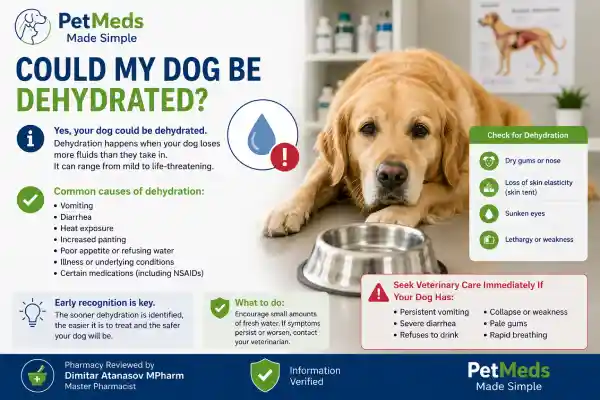
Surprisingly, yes.
Some dogs drink excessively because they are trying to compensate for dehydration.
Causes of Dehydration
| Cause | Possible? |
|---|---|
| Vomiting | Yes |
| Diarrhea | Yes |
| Heat exposure | Yes |
| Underlying illness | Yes |
| Reduced water access | Yes |
In these situations, increased drinking is the body’s attempt to restore normal fluid balance.
What Treatments May Be Needed?
Treatment depends entirely on the underlying cause.
If the Medication Is Contributing
The veterinarian may recommend:
- Dose adjustment
- Medication change
- Additional monitoring
- Alternative pain-control strategies
If Kidney Problems Are Present
Possible treatments include:
- Fluid therapy
- Kidney-supportive diets
- Medication adjustments
- Ongoing monitoring
If Liver Disease Is Identified
Possible management strategies include:
- Liver-supportive medications
- Dietary changes
- Additional diagnostics
- Medication review
If Another Disease Is Found
Treatment will focus on the underlying condition.
Examples include:
- Diabetes management
- Cushing’s disease treatment
- Urinary tract infection treatment
Should Owners Stop the Medication?
Usually not without veterinary guidance.
Many owners become frightened when they notice increased drinking.
However, abruptly stopping pain medication can create additional problems.
Risks of Stopping Medication Suddenly
| Risk | Possible? |
|---|---|
| Return of pain | Yes |
| Reduced mobility | Yes |
| Increased inflammation | Yes |
| Worsened quality of life | Yes |
Always discuss medication changes with your veterinarian first.
How Can Owners Monitor Their Dog at Home?
Monitoring can provide valuable information.
Things to Track
- Water consumption
- Urination frequency
- Appetite
- Energy level
- Mobility
- Vomiting episodes
Example Monitoring Log
| Day | Water Intake | Appetite | Urination |
|---|---|---|---|
| Monday | Normal | Normal | Normal |
| Tuesday | Increased | Normal | Increased |
| Wednesday | Increased | Slightly Reduced | Increased |
Patterns often help veterinarians identify the cause more quickly.
When Should Owners Contact Their Veterinarian?
Contact your veterinarian if:
- Drinking continues increasing
- Urination increases significantly
- Appetite decreases
- Vomiting develops
- Weakness develops
- New symptoms appear
Veterinary Evaluation Recommended
| Symptom | Contact Vet? |
|---|---|
| Mild increase in drinking | Monitor |
| Several days of excessive thirst | Yes |
| Increased thirst and vomiting | Yes |
| Increased thirst and weakness | Yes |
| Increased thirst and appetite loss | Yes |
Early evaluation often prevents more serious complications.
Related Symptoms Owners Often Search For
Owners researching excessive drinking frequently also search for:
- Why Is My Dog Weak After Pain Medication?
- Why Is My Dog Panting After Pain Medication?
- Can NSAIDs Cause Liver Damage in Dogs?
- Can Anxiety Medication Cause Confusion in Dogs?
- Can Pain Medication Cause Personality Changes in Dogs?
- Why Does Pain Medication Stop Working?
- What Happens If Dogs Overdose on Pain Medication?
- Can Dogs Become Dependent on Pain Medication?
- Why Is My Dog Still Limping After Medication?
- Can Dogs Take Pain Medication Long-Term?
These symptoms are often interconnected because many medical conditions affect multiple body systems simultaneously.
Bottom Line
If your dog is drinking excess water on pain medication, the medication may be involved, but it is not always the cause. Increased thirst can occur because of improved activity, medication side effects, kidney stress, liver disease, dehydration, diabetes, Cushing’s disease, or another underlying condition. Persistent excessive drinking should be discussed with a veterinarian, particularly if it occurs alongside increased urination, vomiting, weakness, or appetite loss.
Veterinarian Takeaway
Excessive drinking in a dog receiving pain medication should never be automatically dismissed as a harmless side effect. While some dogs simply become more active and drink more water, others may be developing kidney, liver, hormonal, or metabolic disorders that require medical attention. Monitoring symptoms and performing appropriate diagnostic testing allows veterinarians to identify the cause and keep pain management both effective and safe.
Frequently Asked Questions – Why Is My Dog Drinking Excess Water on Pain Medication?
Can pain medication make dogs drink more water?
Yes. Some dogs may drink more water while taking pain medication, although the medication is not always directly responsible.
Which pain medications are most commonly associated with increased thirst?
NSAIDs such as carprofen, meloxicam, deracoxib, firocoxib, and Galliprant are commonly discussed when owners notice increased drinking.
Is increased thirst always dangerous?
No. Some dogs simply become more active and naturally drink more water.
Can kidney problems cause excessive drinking?
Yes. Increased thirst is one of the most common signs of kidney dysfunction.
Can liver disease cause excessive drinking?
Yes. Certain liver disorders may contribute to increased thirst and urination.
Could diabetes be responsible?
Absolutely. Diabetes is one of the most important diseases veterinarians evaluate when excessive drinking occurs.
Should I stop my dog’s pain medication?
Not without veterinary guidance.
How much water is too much?
The answer varies by dog, but a sudden or dramatic increase deserves attention.
Should my dog have blood work?
Many dogs with persistent excessive drinking benefit from blood testing and urinalysis.
When should I seek emergency care?
Seek immediate veterinary care if excessive drinking is accompanied by collapse, seizures, severe weakness, repeated vomiting, or inability to stand.
Reviewed By
Dimitar Atanasov, MPharm
Master Pharmacist | Medication Safety Educator
Dr. Valcho, DVM
Veterinary Consultant | 30+ Years of Clinical Experience
Editorial Policy
This article follows the PetMedsMadeSimple editorial standards for evidence-based veterinary medication education, medication safety, and responsible pet-owner guidance.
Sources
- Plumb’s Veterinary Drug Handbook, 10th Edition.
- Merck Veterinary Manual – Polyuria and Polydipsia in Dogs.
- American Animal Hospital Association (AAHA) Pain Management Guidelines.
- American Veterinary Medical Association (AVMA) Client Education Resources.
- Veterinary Pharmacology and Therapeutics, 11th Edition.
- Small Animal Clinical Pharmacology and Therapeutics.
- Veterinary Information Network (VIN).
- Journal of the American Veterinary Medical Association (JAVMA).
- Frontiers in Veterinary Science.
- Veterinary Anaesthesia and Analgesia.
Medical Review Statement
This article was pharmacy-reviewed by Dimitar Atanasov, MPharm, and veterinary-reviewed by Dr. Valcho, DVM, using current veterinary pharmacology references, canine pain-management guidelines, and published veterinary literature available at the time of review.
Images created with AI – Why Is My Dog Drinking Excess Water on Pain Medication?