Quick Answer
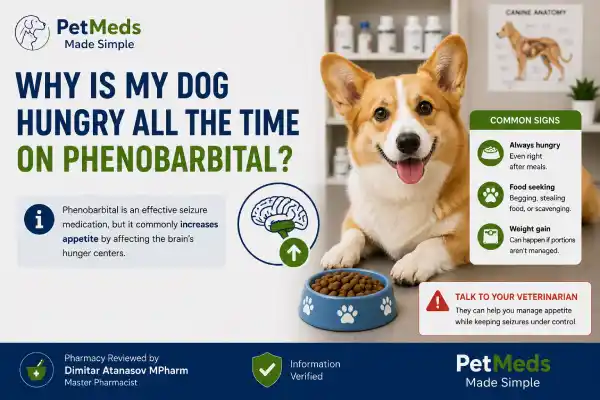
Why is my dog hungry all the time on phenobarbital? Increased appetite is one of the most common side effects of phenobarbital in dogs. The medication affects brain pathways involved in appetite regulation while helping control seizures, causing many dogs to seem constantly hungry. Although this is usually expected, excessive eating can lead to weight gain if portions are not carefully managed. Your veterinarian can help balance seizure control with healthy nutrition.
Table of Contents
Why Is My Dog Hungry All the Time on Phenobarbital?
If you’ve recently started asking “Why Is My Dog Hungry All the Time on Phenobarbital?”, you’re certainly not alone.
One of the most common phone calls veterinary clinics receive after a dog starts phenobarbital is from worried owners saying things like:
“My dog acts like he hasn’t eaten in days.”
or
“She finishes dinner and immediately starts begging for more.”
Fortunately, this behavior is usually a well-recognized side effect of phenobarbital rather than a sign that the medication is failing or harming your dog.
Phenobarbital has been one of the most widely prescribed anticonvulsant medications in veterinary medicine for decades because it is highly effective at reducing seizure frequency in many dogs. However, like every medication, it also produces side effects, and increased appetite ranks among the most common.
Many owners also notice increased thirst, sleepiness, and more frequent urination shortly after treatment begins. If your dog has recently started seizure medication, you may also find our guides on Can Dogs Miss a Dose of Seizure Medication?, Can Seizure Medication Damage the Liver?, and Why Is My Dog Crying After a Seizure? helpful while learning what to expect during treatment.
The reassuring news is that, for most dogs, increased hunger can be managed successfully without compromising seizure control.
Why Is Phenobarbital Used in Dogs?
Before understanding why is my dog hungry all the time on phenobarbital, it helps to understand why veterinarians prescribe this medication in the first place.
Phenobarbital is considered a first-line anticonvulsant for many dogs with epilepsy because it has a long history of effectiveness, predictable dosing, and extensive veterinary research.
Veterinarians commonly prescribe phenobarbital for:
- Idiopathic epilepsy
- Recurrent seizures
- Cluster seizures
- Long-term seizure prevention
- Certain structural brain disorders
- Dogs recovering from status epilepticus
Its primary goal is simple:
Reduce the frequency and severity of seizures while allowing dogs to enjoy a normal quality of life.
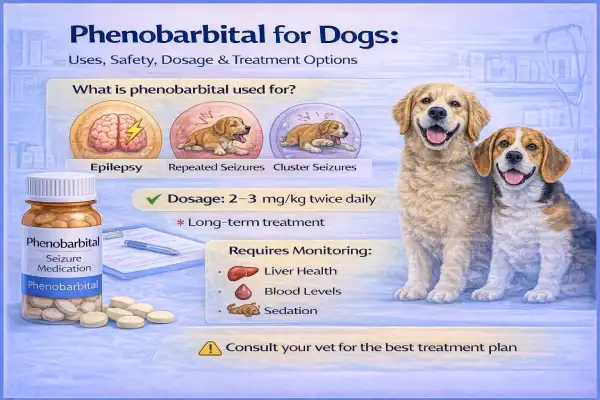
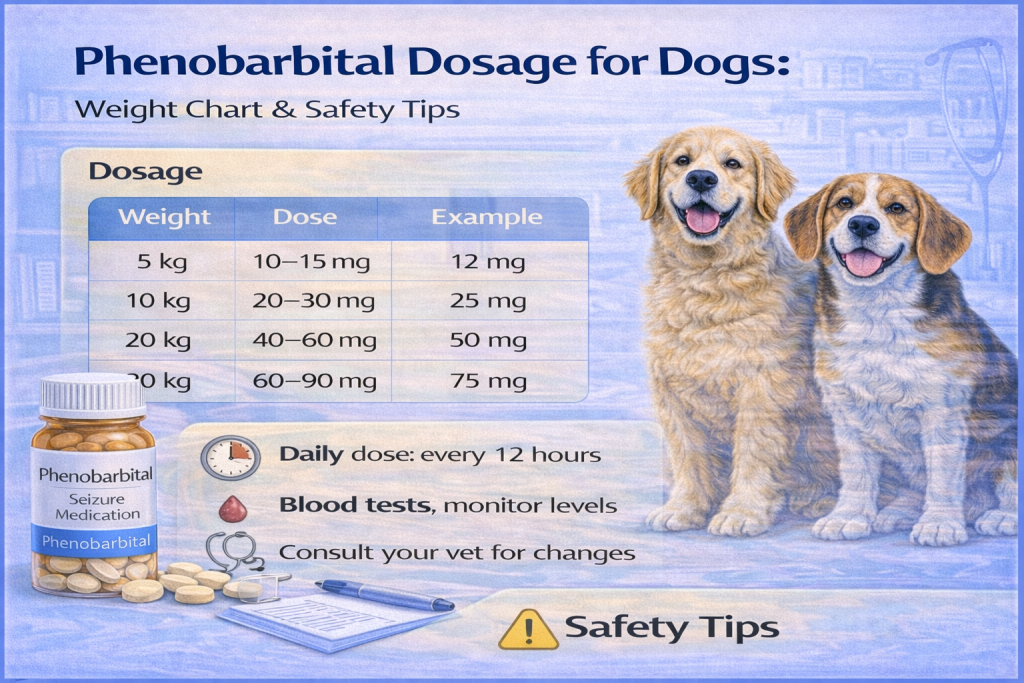
Many owners first learn about this medication after reading our complete guide to Phenobarbital for Dogs: Uses, Dosage, Side Effects & Safety, which explains how the drug is prescribed, monitored, and adjusted over time.
How Does Phenobarbital Work?
Phenobarbital belongs to a class of medications known as barbiturates.
Its anticonvulsant effect comes from increasing the activity of gamma-aminobutyric acid (GABA), the brain’s primary inhibitory neurotransmitter.
When GABA activity increases:
- Brain cells become less excitable.
- Abnormal electrical discharges are reduced.
- The seizure threshold increases.
- Future seizures become less likely.
This is why phenobarbital remains one of the most effective long-term seizure medications available for dogs.
However, these same neurological effects also influence several other brain functions, including:
- Appetite regulation
- Sleep
- Coordination
- Behavior
- Thirst
- Hormonal signaling
This overlap explains why some dogs experience multiple side effects at the same time.
Why Does Phenobarbital Increase Appetite?
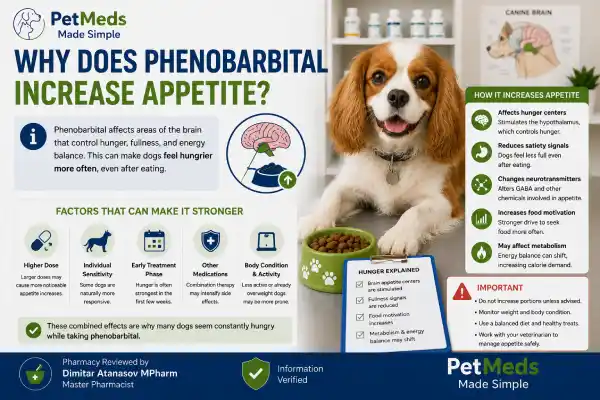
Researchers believe increased appetite develops because phenobarbital affects the parts of the brain responsible for balancing hunger and fullness.
Normally, after your dog finishes eating, hormones and nerve signals tell the brain:
“I’ve eaten enough.”
Phenobarbital may reduce the strength of those signals, making dogs feel hungry even when they have already consumed an appropriate amount of food.
Several mechanisms are thought to contribute.
| Possible Mechanism | How It May Increase Appetite |
|---|---|
| Altered hypothalamic signaling | Hunger signals become stronger. |
| Reduced satiety response | Dogs feel less satisfied after meals. |
| Changes in neurotransmitter activity | Appetite regulation becomes less efficient. |
| Increased food-seeking behavior | Dogs become more motivated to search for food. |
| Metabolic adaptation | Energy balance may change during treatment. |
Although researchers continue studying the exact mechanism, increased appetite has been consistently reported in veterinary patients receiving phenobarbital.
Is Constant Hunger Normal?
Yes.
For most dogs, why is my dog hungry all the time on phenobarbital has a reassuring answer.
Increased appetite is considered one of the medication’s expected side effects.
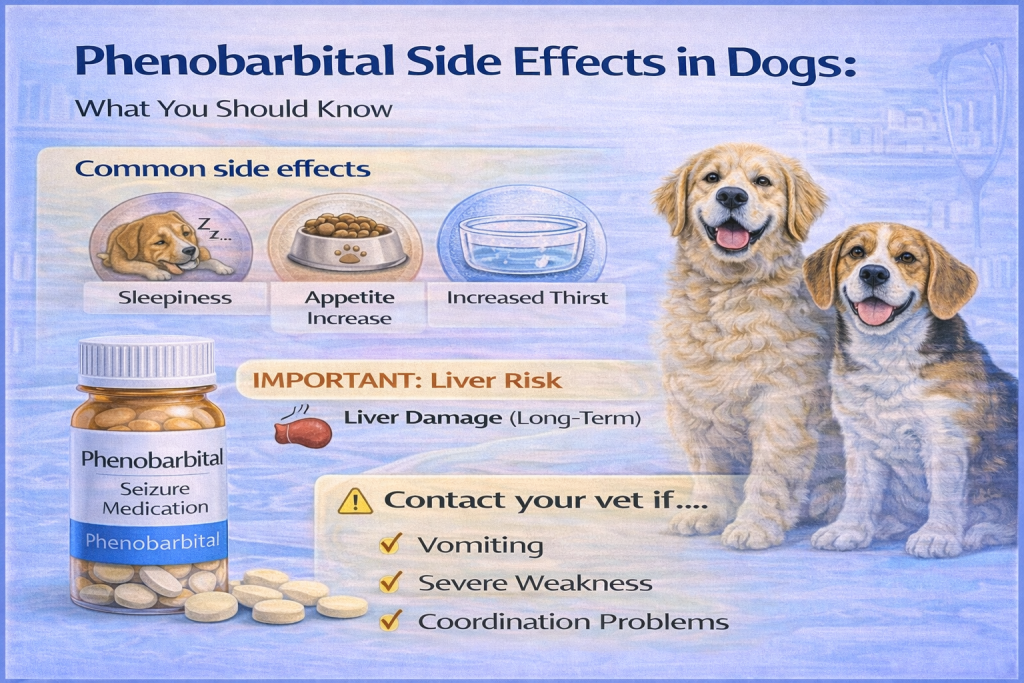
Other commonly reported side effects include:
- Increased thirst
- Increased urination
- Sleepiness
- Temporary wobbliness
- Mild weakness
- Increased food-seeking behavior
Many of these effects improve as the body adapts during the first several weeks of therapy.
Owners who notice excessive sleepiness may also benefit from reading our article Why Is My Dog Sleeping All Day on Keppra?
When Does the Increased Appetite Usually Begin?
The timing varies from dog to dog, but most owners notice changes surprisingly quickly.
| Time After Starting Phenobarbital | Typical Appetite Changes |
|---|---|
| First 24–48 hours | Mild increase in appetite may begin. |
| Days 3–7 | Hunger becomes much more noticeable. |
| Weeks 2–4 | Appetite often reaches its peak. |
| Months 2–3 | Many dogs gradually stabilize. |
| Long-term therapy | Some remain hungrier than before treatment. |
Not every dog follows this exact timeline.
Some show only subtle changes, while others seem interested in food almost constantly.
Does Every Dog Become Hungrier?
No.
Just as seizure frequency differs between dogs, so does the response to phenobarbital.
Several factors influence whether appetite increases significantly.
These include:
- Individual sensitivity
- Dose of phenobarbital
- Body weight
- Age
- Breed
- Other medications
- Overall health
- Existing metabolic conditions
Dogs receiving combination anticonvulsant therapy may experience different side effects than dogs receiving phenobarbital alone.
For example, owners whose dogs also receive gabapentin may want to read Gabapentin for Dogs: Uses, Dosage, Side Effects & Safety to understand how multiple neurological medications interact.
Why Does My Dog Act Starving Right After Eating?
This is perhaps the question veterinarians hear most often.
Your dog may:
- Finish dinner in seconds.
- Immediately begin begging.
- Search the kitchen floor.
- Follow family members hoping for food.
- Steal treats whenever possible.
This behavior does not necessarily mean your dog needs more calories.
Instead, phenobarbital changes how the brain interprets signals of fullness.
As a result, many dogs genuinely behave as though they are still hungry despite eating an appropriate meal.
Understanding this distinction helps prevent one of the biggest mistakes owners make feeding significantly larger portions simply because their dog appears hungry.
Does Increased Appetite Mean the Medication Is Working?
No.
This is an important misconception.
The effectiveness of phenobarbital is evaluated based on:
- Seizure frequency
- Seizure severity
- Blood phenobarbital concentrations
- Overall quality of life
- Side effects
A dog with a normal appetite may have excellent seizure control.
Likewise, a dog with tremendous appetite may still require medication adjustments.
Appetite alone is never used to determine whether phenobarbital is working correctly.
Instead, your veterinarian will evaluate the complete clinical picture through regular examinations and blood monitoring.
Why Does Phenobarbital Affect the Brain’s Hunger Centers?
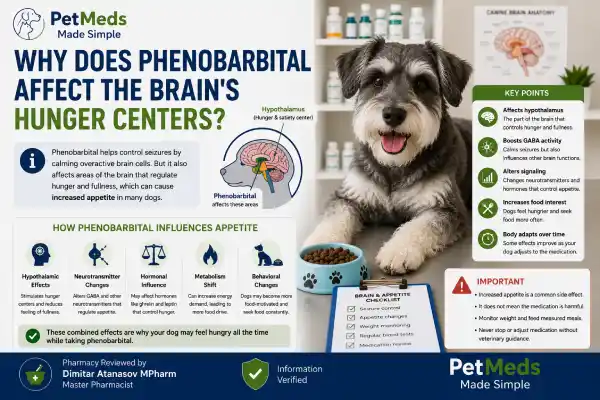
To fully understand why is my dog hungry all the time on phenobarbital, it helps to look at what the medication is doing inside the brain.
Phenobarbital is one of the oldest and most effective anticonvulsants used in veterinary medicine. Its primary job is to reduce excessive electrical activity that causes seizures.
It achieves this by enhancing the effects of gamma-aminobutyric acid (GABA), the brain’s main inhibitory neurotransmitter.
When GABA activity increases:
- Nerve cells become less excitable.
- Abnormal electrical discharges are suppressed.
- The seizure threshold increases.
- Seizures become less frequent or less severe.
However, the areas of the brain involved in seizure control are closely connected with regions that regulate:
- Appetite
- Satiety
- Sleep
- Thirst
- Behavior
- Hormone release
Because of this overlap, phenobarbital can unintentionally stimulate appetite while controlling seizures.
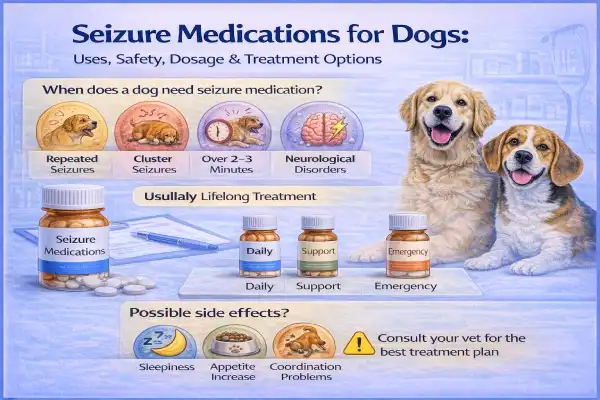
Owners interested in how seizure medications work overall may also find our guide on Seizure Medications for Dogs: Uses, Side Effects & Safety helpful.
Is Increased Hunger Actually a Good Sign?
Many owners worry that increased appetite means something is wrong.
Fortunately, in most cases, the answer is no.
In fact, veterinarians often consider increased appetite to be one of the expected side effects of phenobarbital.
That does not mean owners should ignore it.
Instead, it should be managed appropriately while monitoring:
- Body weight
- Body condition score
- Muscle mass
- Activity level
- Overall seizure control
As long as these remain stable, increased appetite alone is rarely considered dangerous.
Does Every Dog Become Hungrier?
No.
Every dog responds differently to phenobarbital.
Some owners notice almost no change in appetite.
Others report dramatic behavioral changes within days.
Several factors influence how strongly appetite increases.
| Factor | Possible Effect on Appetite |
|---|---|
| Dose of phenobarbital | Higher doses may increase appetite more noticeably. |
| Individual sensitivity | Some dogs are naturally more responsive. |
| Age | Senior dogs may respond differently than younger dogs. |
| Breed | Food-motivated breeds often appear hungrier. |
| Other medications | Combination therapy may influence appetite. |
| Existing body condition | Overweight dogs may appear even more food-focused. |
Because every patient is unique, veterinarians assess the whole clinical picture rather than appetite alone.
Can Other Seizure Medications Also Increase Appetite?
Phenobarbital is one of the medications most commonly associated with increased hunger, but it is not the only anticonvulsant used in dogs.
Other medications affect appetite differently.
| Medication | Typical Effect on Appetite |
|---|---|
| Phenobarbital | Increased appetite is common. |
| Levetiracetam (Keppra) | Usually little effect on appetite. |
| Potassium Bromide | Appetite changes are less predictable. |
| Zonisamide | Appetite may decrease or remain unchanged. |
| Gabapentin | Some dogs become hungrier, while others do not show significant changes. |
This explains why owners switching medications sometimes notice completely different eating behaviors.
Why Is My Dog Hungry All the Time on Phenobarbital but Still Losing Weight?
Although uncommon, this situation deserves veterinary attention.
A dog that remains extremely hungry and continues losing weight may have another underlying medical condition in addition to taking phenobarbital.
Possible causes include:
- Poor intestinal absorption
- Diabetes mellitus
- Intestinal parasites
- Exocrine pancreatic insufficiency
- Chronic gastrointestinal disease
- Hyperthyroidism (rare in dogs)
- Certain cancers
Phenobarbital itself usually causes weight gain, not unexplained weight loss.
If appetite is increasing while body weight is falling, schedule a veterinary examination rather than assuming the medication is responsible.
Can Phenobarbital Cause Food Obsession?
Some owners describe behavior that goes beyond simple hunger.
Examples include:
- Constantly staring at the food cupboard.
- Following family members into the kitchen.
- Stealing food from tables or countertops.
- Raiding trash cans.
- Begging during every meal.
- Eating non-food objects that smell like food.
This behavior is often referred to as food-seeking behavior.
Although frustrating, it usually reflects the medication’s effect on appetite regulation rather than poor training or disobedience.
Providing mental enrichment, scheduled meals, puzzle feeders, and appropriate exercise can often reduce food-related frustration.
Should You Change Your Dog’s Diet?

Many owners immediately wonder whether they should switch foods.
In many cases, the answer is possibly but not immediately.
Before making dietary changes, consider:
- Is your dog’s weight increasing?
- Is body condition still ideal?
- Are seizures well controlled?
- Has your veterinarian recommended a therapeutic diet?
If your dog is maintaining a healthy weight, simply feeding measured portions may be enough.
If weight gain becomes a problem, your veterinarian may recommend:
- A higher-fiber diet
- Lower-calorie food
- Prescription weight-management diets
- Dividing the daily ration into smaller meals
- Using healthy low-calorie treats
The goal is to satisfy your dog’s appetite without encouraging excessive calorie intake.
Can Feeding More Frequently Help?
Sometimes.
Instead of increasing the total amount of food, many veterinarians recommend dividing the same daily calories into several smaller meals.
For example:
| Feeding Schedule | Potential Benefit |
|---|---|
| 2 meals daily | Standard approach for many dogs. |
| 3 meals daily | May reduce begging between meals. |
| 4 small meals | Helpful for highly food-motivated dogs. |
| Puzzle feeders | Slow eating and provide mental stimulation. |
| Food-dispensing toys | Extend mealtime without increasing calories. |
These strategies often make dogs feel more satisfied while maintaining appropriate calorie intake.
Does the Increased Appetite Ever Go Away?
For many dogs, yes.
The first few weeks after starting phenobarbital are often when appetite changes are most noticeable.
As the body adjusts to treatment:
- Hunger may gradually decrease.
- Begging often becomes less intense.
- Owners learn effective feeding routines.
- Dogs adapt to their medication schedule.
However, some dogs remain noticeably hungrier throughout long-term therapy.
Fortunately, this side effect can usually be managed successfully with careful feeding, regular weight monitoring, and periodic veterinary evaluations.
Can Increased Hunger Become Dangerous?
Most of the time, why is my dog hungry all the time on phenobarbital has a reassuring answer. Increased appetite is expected and usually manageable.
However, excessive hunger should never become an excuse for unlimited feeding.
If owners continually increase meal sizes because their dog always seems hungry, several problems may develop over time.
Possible complications include:
- Obesity
- Joint disease
- Reduced mobility
- Diabetes mellitus
- Increased cardiovascular strain
- Reduced quality of life
- Difficulty controlling seizures if obesity develops
For this reason, veterinarians recommend monitoring your dog’s body condition score (BCS) instead of appetite alone.
How Can You Help Your Dog Feel Fuller?
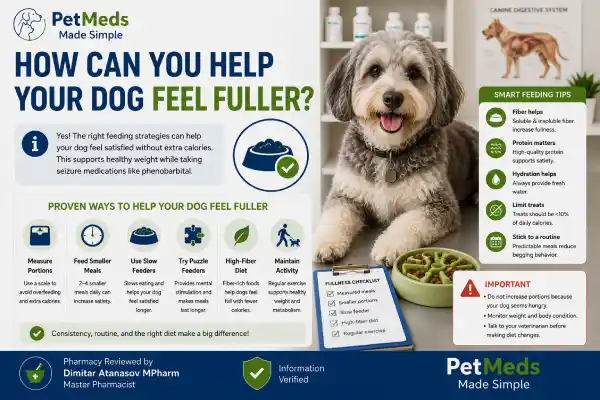
Fortunately, there are several safe ways to manage hunger without increasing daily calories.
Many veterinary nutritionists recommend focusing on satiety rather than simply adding more food.
Helpful strategies include:
- Feeding measured portions using a kitchen scale
- Dividing meals into three or four smaller feedings
- Using slow-feeder bowls
- Offering puzzle feeders
- Increasing safe physical activity if approved by your veterinarian
- Replacing high-calorie treats with low-calorie alternatives
- Avoiding table scraps
These simple changes often reduce begging behavior while helping maintain a healthy body weight.
Best Low-Calorie Treats for Dogs Taking Phenobarbital
Owners often want to reward their dog without contributing to weight gain.
Healthier options include:
| Better Treat Choice | Why It’s Helpful |
|---|---|
| Green beans | Low in calories and high in fiber |
| Carrot slices | Crunchy and filling |
| Cucumber | Excellent for hydration and very low in calories |
| Small apple pieces (without seeds) | Naturally sweet in moderation |
| Prescription low-calorie treats | Useful for dogs already overweight |
Treats should generally make up less than 10% of total daily calorie intake.
Should You Restrict Water Too?
Absolutely not.
Phenobarbital commonly causes:
- Increased thirst (polydipsia)
- Increased urination (polyuria)
Your dog should always have access to fresh drinking water.
Never limit water simply because your dog is drinking more than usual.
Could Increased Hunger Mean Liver Problems?
Usually, no.
One of the most common misconceptions is that increased appetite means phenobarbital is damaging the liver.
In reality, increased appetite is typically a direct medication effect rather than a sign of liver disease.
However, dogs receiving long-term phenobarbital therapy should still undergo routine blood monitoring because the medication can affect liver function over time.
Regular monitoring often includes:
- Liver enzymes
- Bile acid testing (when indicated)
- Complete blood count
- Serum biochemistry profile
- Phenobarbital blood concentration
Routine blood work allows veterinarians to detect problems before clinical signs appear.
You can learn more in our article Can Seizure Medication Damage the Liver?
Can Phenobarbital Affect Metabolism?
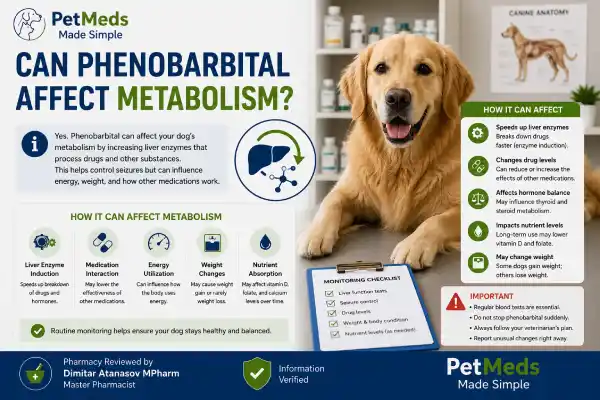
Yes.
Phenobarbital is well known for inducing liver enzymes.
This process changes how the body metabolizes many medications and may also influence energy metabolism.
Although researchers continue studying the exact relationship, enzyme induction may contribute to changes in:
- Appetite
- Energy use
- Nutrient metabolism
- Drug clearance
This is another reason why regular veterinary monitoring is recommended during long-term treatment.
Should You Ever Reduce the Dose Yourself?
No.
Owners sometimes consider lowering the dose because their dog seems excessively hungry.
This should never be done without veterinary guidance.
Reducing phenobarbital suddenly may:
- Increase seizure frequency
- Trigger breakthrough seizures
- Cause cluster seizures
- Increase the risk of status epilepticus
If appetite becomes difficult to manage, speak with your veterinarian first.
Depending on seizure control, your veterinarian may recommend:
- Dose adjustments
- Blood phenobarbital testing
- Dietary modifications
- Additional weight-management strategies
- Considering alternative anticonvulsants in selected patients
The priority is always maintaining seizure control while minimizing side effects.
Related Symptoms Owners Often Notice
Owners searching “Why Is My Dog Hungry All the Time on Phenobarbital?” frequently notice other changes as well.
Common accompanying side effects include:
- Increased thirst
- Increased urination
- Sleepiness
- Wobbliness
- Mild weakness
- Increased drinking at night
- Faster eating
- Begging between meals
- Weight gain
- Reduced coordination during the first weeks of treatment
These signs often improve as dogs adapt to therapy, although increased appetite may persist in some patients.
When Owners Commonly Ask This
Veterinary clinics frequently receive questions such as:
- “My dog just ate—why is he begging again?”
- “Is it normal for phenobarbital to make dogs hungry?”
- “Should I feed my dog more?”
- “Will the hunger ever go away?”
- “Can phenobarbital make my dog gain weight?”
- “Can I switch to a diet food?”
- “Should I give more treats?”
- “Does increased appetite mean the medication is working?”
- “Is my dog’s liver being damaged?”
- “Should I lower the dose because my dog won’t stop eating?”
These are all common concerns, and most can be managed successfully with guidance from your veterinarian.
Veterinarian Takeaway
If you’re wondering “Why Is My Dog Hungry All the Time on Phenobarbital?”, remember that increased appetite is one of the most common and well-recognized side effects of this medication. Although it can be frustrating, it usually does not indicate that something is wrong.
Rather than increasing meal sizes, focus on maintaining a healthy body weight through measured feeding, appropriate exercise, and regular veterinary monitoring. If your dog’s appetite changes suddenly after being stable for months—or if it is accompanied by vomiting, weight loss, or other unusual signs—schedule a veterinary examination.
Bottom Line
Why Is My Dog Hungry All the Time on Phenobarbital?
In most dogs, the answer is simple: phenobarbital affects the brain’s appetite-regulating centers and commonly increases hunger.
While this side effect is usually expected, it should be managed carefully to prevent excessive weight gain and obesity. Consistent portion control, healthy feeding strategies, and regular veterinary check-ups allow most dogs to remain comfortable while continuing the seizure medication they need.
Never reduce or stop phenobarbital because of increased appetite without first consulting your veterinarian.
Frequently Asked Questions – Why Is My Dog Hungry All the Time on Phenobarbital
Is increased appetite a normal side effect of phenobarbital?
Yes. Increased appetite is one of the most common side effects seen in dogs taking phenobarbital.
Why does phenobarbital make dogs so hungry?
Phenobarbital affects areas of the brain involved in regulating hunger and satiety, making many dogs feel hungry more often than usual.
Will my dog’s appetite eventually return to normal?
Many dogs improve after the first few weeks or months, although some remain hungrier throughout treatment.
Should I give my dog more food?
Usually not. Most dogs need the same number of calories even though they appear much hungrier.
Can phenobarbital cause obesity?
Indirectly, yes. Increased appetite may lead to overeating and weight gain if portions are not carefully controlled.
Can I use low-calorie treats?
Yes. Low-calorie vegetables and veterinarian-approved treats are often excellent choices.
Does increased appetite mean the medication is working?
Not necessarily. Appetite changes are a side effect and are not used to determine whether seizures are being controlled.
Can liver disease cause increased appetite?
In most cases, no. Increased appetite is typically a medication effect rather than a sign of liver damage.
Should I stop phenobarbital if my dog won’t stop eating?
No. Never stop or reduce seizure medication without veterinary guidance.
When should I call my veterinarian?
Contact your veterinarian if increased appetite is accompanied by unexplained weight loss, persistent vomiting, severe lethargy, worsening seizures, or any other concerning symptoms.
Sources
- Plumb’s Veterinary Drug Handbook
- Merck Veterinary Manual
- BSAVA Small Animal Formulary
- Veterinary Pharmacology and Therapeutics (Riviere & Papich)
- Small Animal Clinical Pharmacology (Maddison, Page & Church)
- ACVIM Consensus Statement on Seizure Management in Dogs
- International Veterinary Epilepsy Task Force (IVETF) Guidelines
- Veterinary Information Network (VIN)
- Journal of Veterinary Internal Medicine (JVIM)
- Frontiers in Veterinary Science
- PubMed (peer-reviewed studies on canine epilepsy, phenobarbital pharmacology, and adverse effects)
Medical Review Statement
This article was written by Dimitar Georgiev Atanasov, MPharm, pharmacy and scientifically reviewed by Gergana Krasimirova Atanasova, MPharm, and independently veterinary reviewed by Dr. Valcho Georgiev Valchev, DVM. It is based on current veterinary pharmacology references, peer-reviewed scientific literature, canine epilepsy guidelines, and evidence-based veterinary recommendations to ensure accurate, practical, and trustworthy information for dog owners.
Important Medical Disclaimer
The information provided on PetMedsMadeSimple.com is intended for educational purposes only and should not replace professional veterinary diagnosis or treatment.
Never start, stop, or adjust your dog’s seizure medication without consulting your veterinarian. If your dog develops prolonged seizures, repeated seizures without recovery, collapse, severe breathing difficulties, or becomes unresponsive, seek emergency veterinary care immediately.
Image Disclosure
Some images used in this article may be AI-generated or AI-assisted for educational purposes. Every PMMS article is independently researched, pharmacy-written, scientifically reviewed, and veterinary-reviewed. AI-generated illustrations are used solely to improve understanding of veterinary medications and should not be interpreted as photographs of actual clinical patients.