Quick Answer
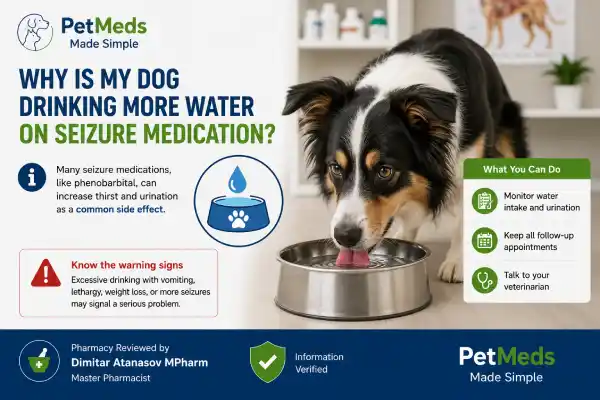
Why Is My Dog Drinking More Water on Seizure Medication? If your dog is drinking more water after starting seizure medication, the medication itself may be responsible—but increased thirst can also signal an underlying medical problem that deserves veterinary attention. Several commonly prescribed anticonvulsants, including phenobarbital, potassium bromide, and corticosteroids used alongside seizure treatment, can increase thirst (polydipsia). In some cases, excessive water consumption may also indicate liver disease, kidney disease, diabetes, hormonal disorders, overheating, or dehydration.
The good news is that mild increases in thirst are often expected when certain seizure medications are started. However, drinking dramatically more water than usual, emptying the water bowl repeatedly, urinating excessively, vomiting, weakness, or changes in behavior should never be ignored. Monitoring how much your dog drinks and discussing changes with your veterinarian can help distinguish a harmless medication side effect from a more serious complication.
Why Can Seizure Medications Make Dogs Drink More Water?
One of the most common concerns owners notice after beginning anticonvulsant therapy is that their dog suddenly seems obsessed with water.
Some dogs that previously drank only occasionally begin visiting the water bowl every hour. Others wake up during the night to drink or start asking to go outside much more frequently because they’re producing more urine.
While this change can be alarming, it often has a simple explanation.
Certain seizure medications influence:
- Hormones that regulate thirst
- Brain centers controlling water balance
- Kidney function
- Appetite and metabolism
- Salt and fluid regulation
As a result, increased thirst is considered an expected side effect of several commonly prescribed anticonvulsants.
The key question isn’t simply:
“Is my dog drinking more?”
Instead, veterinarians ask:
- How much more?
- When did it begin?
- Which medication was started?
- Is urination also increasing?
- Are there any other symptoms?
These answers help determine whether the thirst is medication-related or caused by another illness.
Why Is My Dog Drinking More Water on Seizure Medication?
Which Seizure Medications Commonly Cause Increased Thirst?
Not every anticonvulsant affects water intake equally.
Some medications are well known for causing polydipsia, while others rarely produce this side effect.
| Medication | Increased Thirst? | Notes |
|---|---|---|
| Phenobarbital | Very common | One of the most frequent side effects |
| Potassium bromide | Common | Often causes increased drinking and urination |
| Levetiracetam (Keppra) | Uncommon | Usually causes little change |
| Zonisamide | Occasionally | Usually mild if present |
| Gabapentin | Rare | Sedation is more common than thirst |
| Pregabalin | Rare | Mild cases reported occasionally |
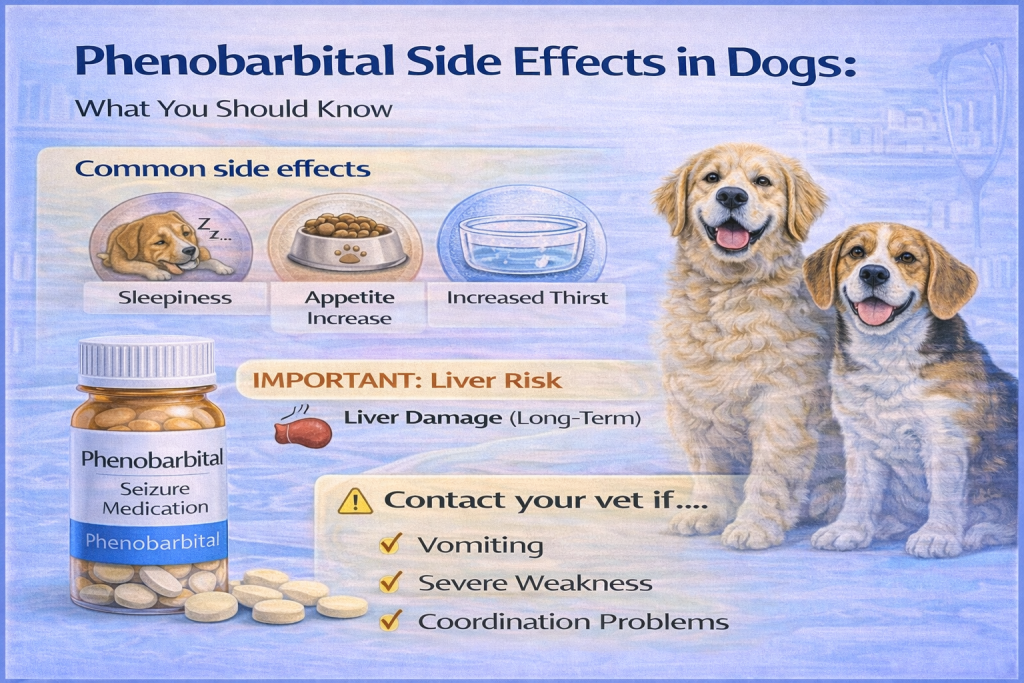
Owners whose dogs take phenobarbital often notice thirst within the first few weeks of treatment.
This medication changes hormone signaling and metabolism, making many dogs feel thirstier than usual.
Similarly, dogs receiving potassium bromide frequently develop both increased drinking and increased urination because bromide influences the body’s electrolyte balance.
If your dog is taking more than one anticonvulsant, the effects may be more noticeable.
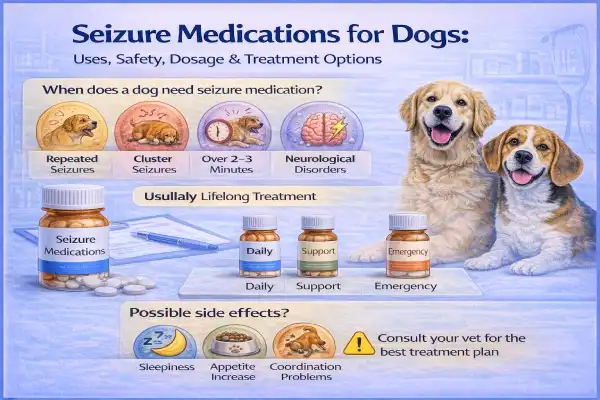
If you’re unfamiliar with how these medications work, our complete guide to Seizure Medications for Dogs explains the most commonly prescribed anticonvulsants, while Can Dogs Stay on Seizure Medication for Life? discusses long-term treatment expectations.
Is Increased Water Drinking Dangerous?
Usually, no.
Mild to moderate increases in thirst are expected with several seizure medications.
Many dogs remain perfectly healthy despite drinking considerably more water.
However, problems develop when:
- water intake becomes extreme
- dehydration occurs despite drinking
- vomiting prevents normal hydration
- liver disease develops
- kidney disease develops
- diabetes is present
- electrolyte disturbances occur
Veterinarians generally become more concerned when excessive thirst is accompanied by additional clinical signs rather than thirst alone.
How Much Water Should a Dog Normally Drink?
Healthy dogs typically consume approximately:
50–70 mL of water per kilogram of body weight each day.
For example:
| Dog Weight | Normal Daily Water Intake |
|---|---|
| 5 kg (11 lb) | 250–350 mL |
| 10 kg (22 lb) | 500–700 mL |
| 20 kg (44 lb) | 1–1.4 liters |
| 30 kg (66 lb) | 1.5–2.1 liters |
| 40 kg (88 lb) | 2–2.8 liters |
Dogs taking phenobarbital or potassium bromide may exceed these values while remaining clinically normal.
Instead of guessing, veterinarians often recommend measuring water intake over several consecutive days.
A simple measuring jug can provide surprisingly valuable information during follow-up appointments.
Why Does Increased Thirst Usually Lead to More Urination?
Owners often worry that something is seriously wrong because their dog suddenly asks to go outside every couple of hours.
In reality, this is exactly what veterinarians expect.
More drinking naturally leads to:
- larger urine volumes
- more frequent urination
- occasional nighttime accidents
- increased urgency
- more dilute urine
Because of this relationship, excessive urination often accompanies increased thirst.
Our article Why Is My Dog Peeing More on Seizure Medication? explains this connection in greater detail.
Could the Medication Be Affecting the Liver?
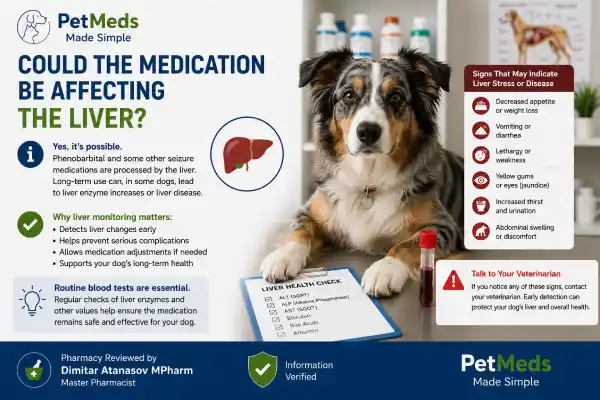
This is one reason veterinarians recommend routine blood testing for dogs receiving long-term anticonvulsants.
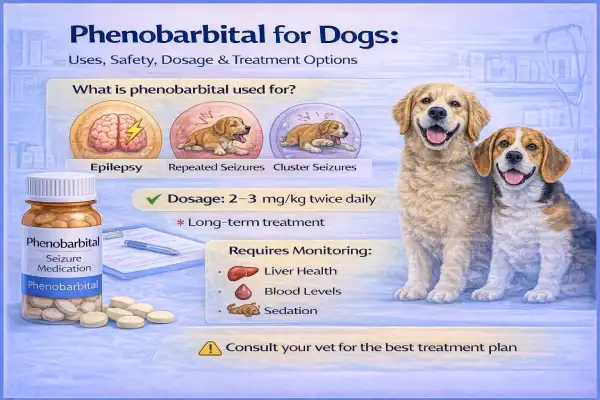
Phenobarbital, while extremely effective for seizure control, is metabolized by the liver.
Most dogs tolerate it well, but prolonged treatment may lead to:
- elevated liver enzymes
- liver enlargement
- altered liver function
- reduced ability to process medications
When liver disease develops, dogs may begin showing:
- increased thirst
- increased urination
- poor appetite
- vomiting
- lethargy
- weight loss
- jaundice in advanced cases
Fortunately, routine monitoring often detects liver changes before dogs become seriously ill.
Regular blood work is therefore one of the most important parts of managing chronic seizure disorders.
Our guides Can Seizure Medication Affect a Dog’s Liver? and Do Dogs Need Blood Tests While Taking Seizure Medication? explain why ongoing monitoring is so important.
Could Drinking More Water Mean the Medication Dose Is Too High?
Not necessarily.
Many dogs experience increased thirst even when their blood drug concentration remains perfectly therapeutic.
However, if excessive thirst occurs alongside:
- severe sleepiness
- stumbling
- weakness
- poor coordination
- loss of appetite
- persistent vomiting
your veterinarian may recommend:
- blood level testing
- liver function tests
- medication adjustment
- additional diagnostics
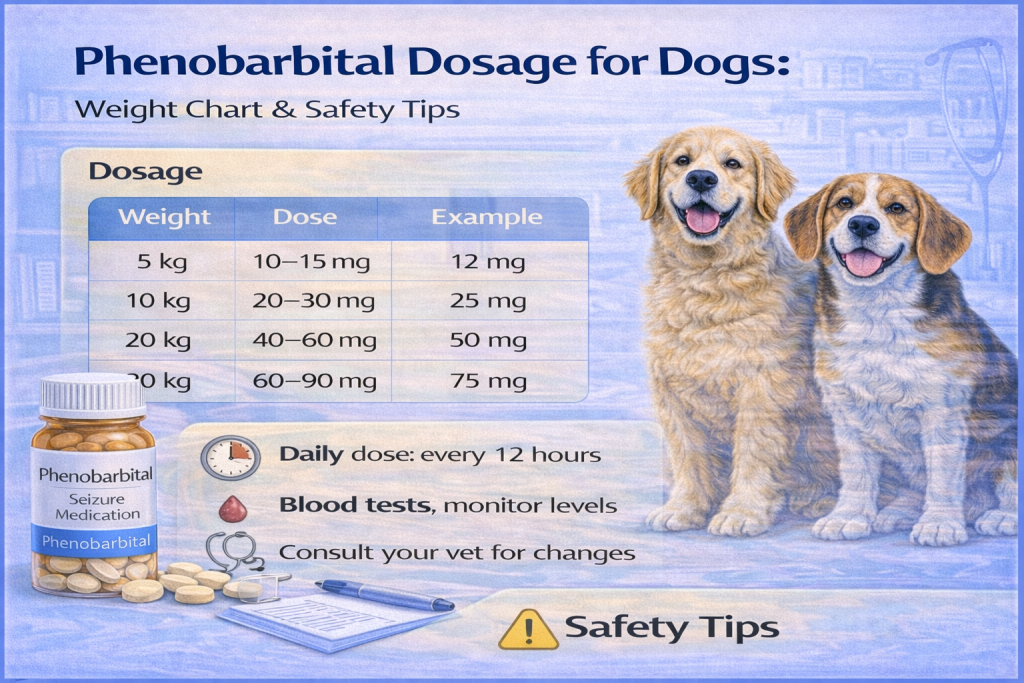
Never reduce seizure medication on your own, even if side effects appear significant.
Abrupt dose changes can actually trigger breakthrough seizures or life-threatening seizure clusters.
This is especially important if you’ve already noticed changes such as Why Is My Dog Sleepier on Seizure Medication? or Why Is My Dog Wobbly After Starting Seizure Medication?, as these symptoms may need evaluation alongside increased thirst.
Can Certain Dogs Be More Sensitive Than Others?
Absolutely.
Not every dog responds identically to anticonvulsant therapy.
Several factors influence how strongly side effects develop, including:
- Age
- Breed
- Body weight
- Liver health
- Kidney function
- Hydration status
- Other medications
- Existing medical conditions
Senior dogs often require closer monitoring because their organs may process medications more slowly than younger adults.
Likewise, dogs with chronic kidney disease or liver disease may experience more noticeable changes in thirst and urination after beginning seizure treatment.
Could Increased Thirst Be a Sign of Another Medical Condition?
Yes.
Although many owners immediately assume that seizure medication is responsible, veterinarians always consider other possible causes before concluding that the medication is the only explanation.
Several diseases can cause excessive thirst (polydipsia), and some may develop independently of epilepsy treatment.
Common conditions include:
- Diabetes mellitus
- Chronic kidney disease
- Liver disease
- Cushing’s disease (hyperadrenocorticism)
- Urinary tract infections
- Pyometra (in unspayed females)
- Hypercalcemia
- Dehydration
- Fever
- Certain cancers
This is why your veterinarian may recommend blood work even if increased drinking appears shortly after starting seizure medication.
The goal is to make sure nothing more serious is developing.
Medication Side Effect or Another Disease?
One of the most important steps during diagnosis is distinguishing between expected medication effects and an unrelated illness.
| Finding | More Likely Medication Side Effect | More Likely Another Disease |
|---|---|---|
| Increased thirst only | ✓ | Possible |
| Increased thirst + increased appetite | ✓ Especially phenobarbital | Sometimes |
| Increased thirst + increased urination | ✓ Common | Also possible |
| Vomiting | Less common | More concerning |
| Weight loss | Uncommon | Common with diabetes or kidney disease |
| Jaundice | Rare | Suggests liver disease |
| Blood in urine | Uncommon | Suggests urinary disease |
| Fever | No | More consistent with infection |
| Progressive weakness | Sometimes | Requires investigation |
This comparison helps explain why laboratory testing is often recommended rather than assuming the medication is responsible.
Why Does Phenobarbital Cause Increased Thirst?
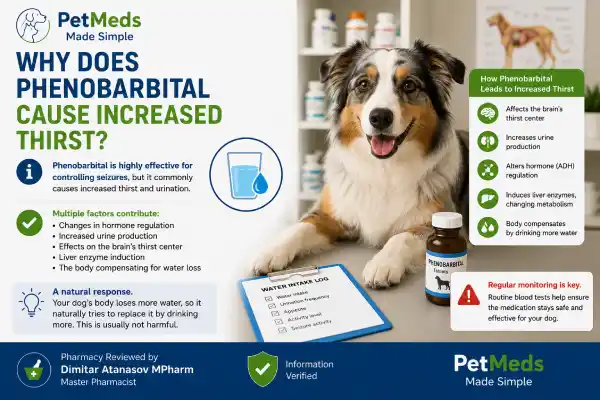
Phenobarbital is one of the oldest and most effective anticonvulsants used in dogs.
It also has one of the most recognizable side-effect profiles.
Researchers believe several mechanisms contribute to increased thirst.
These include:
- Increased urine production
- Changes in antidiuretic hormone regulation
- Increased metabolic activity
- Altered brain signaling within the hypothalamus
- Increased water loss through the kidneys
Because dogs lose more water, they naturally compensate by drinking more.
This is generally considered a normal physiological response rather than evidence that the medication is harming the body.
Interestingly, many owners notice three side effects appearing together:
- Increased thirst
- Increased appetite
- Increased urination
If you’ve already noticed your dog constantly looking for food, our article Why Is My Dog Hungry All the Time on Phenobarbital? explains why these side effects often occur together.
Does Potassium Bromide Cause the Same Problem?
Yes, although usually to a lesser extent.
Potassium bromide may increase thirst by altering electrolyte balance and changing the body’s handling of fluids.
Dogs receiving both phenobarbital and potassium bromide frequently experience more noticeable increases in:
- Water consumption
- Urination
- Appetite
- Mild lethargy
Combination therapy often provides better seizure control but can also make side effects more obvious.
Our guide Can Dogs Take Multiple Seizure Medications? explains why some dogs require combination therapy and how veterinarians balance seizure control with quality of life.
Can Keppra (Levetiracetam) Cause Excessive Drinking?
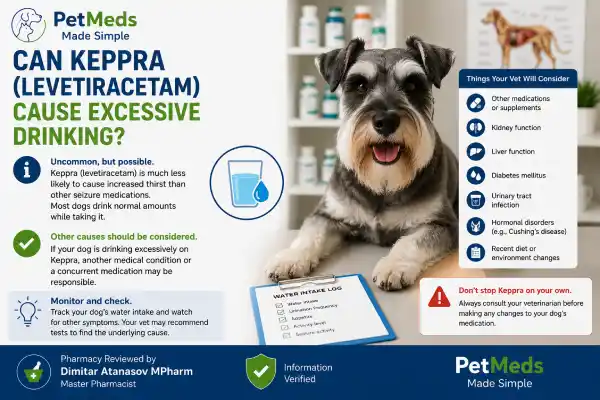
Compared with phenobarbital, levetiracetam (Keppra) is much less likely to increase thirst.
Most dogs taking Keppra alone continue drinking normal amounts of water.
If excessive thirst develops shortly after starting Keppra, veterinarians often investigate:
- Concurrent medications
- Kidney function
- Liver function
- Diabetes
- Urinary disease
- Recent dietary changes
Although medication remains a possibility, another cause may be more likely.
Should I Restrict My Dog’s Water?
No.
This is one of the most common mistakes owners make.
Seeing a dog empty the water bowl repeatedly naturally leads some people to think:
“If I give less water, my dog will stop urinating so much.”
Unfortunately, restricting water can be dangerous.
Dogs experiencing medication-induced thirst are drinking because their bodies require additional fluids.
Limiting access may lead to:
- Dehydration
- Electrolyte imbalances
- Increased body temperature
- Reduced kidney perfusion
- Greater physical stress
Instead of restricting water:
- Always provide fresh drinking water.
- Place multiple bowls around the house if necessary.
- Increase bathroom breaks.
- Monitor approximately how much your dog drinks each day.
- Discuss sudden changes with your veterinarian.
Water should never be withheld unless specifically instructed by a veterinarian for a particular medical reason.
Could Drinking More Water Mean the Medication Is Working?
Interestingly, no.
Increased thirst is considered a side effect, not evidence that seizure control is improving.
Some dogs achieve excellent seizure control without drinking any additional water.
Others develop significant thirst even though seizures are only partially controlled.
The success of anticonvulsant therapy is measured by:
- Reduced seizure frequency
- Reduced seizure severity
- Shorter seizure duration
- Better quality of life
- Fewer emergency visits
Side effects should always be balanced against seizure control rather than used as an indicator that treatment is effective.
How Do Veterinarians Investigate Excessive Thirst?
If your dog begins drinking unusually large amounts of water, your veterinarian may recommend several diagnostic tests.
Common investigations include:
| Test | Why It’s Performed |
|---|---|
| Complete Blood Count (CBC) | Detects infection, inflammation, anemia |
| Serum Biochemistry | Evaluates liver and kidney function |
| Electrolytes | Assesses sodium, potassium, and chloride balance |
| Blood Glucose | Screens for diabetes mellitus |
| Urinalysis | Evaluates urine concentration and infection |
| Urine Culture | Detects bacterial urinary tract infections |
| Phenobarbital Blood Level | Confirms therapeutic drug concentration |
| Bile Acid Test (when indicated) | Evaluates liver function more thoroughly |
These tests allow veterinarians to distinguish between an expected medication effect and a developing medical problem.
Could Liver Monitoring Help Prevent Problems?
Absolutely.
Long-term seizure management involves much more than simply giving medication every day.
Routine monitoring allows veterinarians to identify complications before dogs become seriously ill.
Most dogs receiving long-term phenobarbital benefit from periodic evaluation of:
- Liver enzymes
- Kidney values
- Complete blood count
- Serum biochemistry
- Therapeutic drug concentrations
Regular monitoring is one of the reasons many dogs remain safely on seizure medication for years.
Could Excessive Drinking Improve Over Time?
Fortunately, yes.
For many dogs, increased thirst is most noticeable during the first several weeks after starting medication.
As the body gradually adapts, owners often observe:
- Less frequent drinking
- More predictable bathroom habits
- Fewer nighttime accidents
- Improved daily routine
Some dogs continue drinking slightly more water throughout treatment, while others eventually return close to their previous normal intake.
Every patient is different, which is why ongoing communication with your veterinarian remains essential.
How Can You Monitor Your Dog’s Water Intake at Home?
One of the most helpful things owners can do is measure approximately how much water their dog drinks each day.
You do not need to record every single sip.
Instead, try measuring the total amount of water you place in the bowl over a 24-hour period, then subtract the amount left at the end of the day.
Keeping a simple notebook or using your phone to record daily observations can help your veterinarian determine whether your dog’s thirst is:
- Stable
- Improving
- Gradually increasing
- Suddenly worsening
This information is often far more useful than trying to estimate water intake from memory during a veterinary appointment.
Home Monitoring Checklist
| Monitor Daily | Why It Matters |
|---|---|
| Water intake | Detects worsening polydipsia |
| Urination frequency | Helps identify polyuria |
| Appetite | May indicate medication effects or another illness |
| Body weight | Detects dehydration or weight loss |
| Activity level | Helps evaluate medication tolerance |
| Seizure frequency | Determines whether treatment is effective |
| Vomiting or diarrhea | May suggest another medical problem |
| Medication times | Ensures consistent dosing |
Which Dogs Are Most Likely to Develop Increased Thirst?
Although any dog taking seizure medication can develop increased thirst, some patients appear more sensitive than others.
Higher-risk groups include:
- Senior dogs
- Dogs taking phenobarbital
- Dogs receiving phenobarbital plus potassium bromide
- Dogs with liver disease
- Dogs with kidney disease
- Dogs receiving multiple medications
- Dogs with endocrine disorders
- Dogs that already drink near the upper end of the normal range
These dogs often benefit from closer monitoring during the first few months of treatment.
When Should Increased Thirst Become a Cause for Concern?
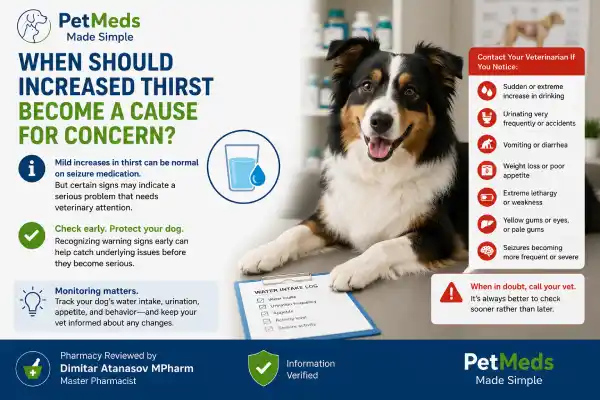
Most dogs experiencing medication-related thirst remain bright, comfortable, and otherwise healthy.
However, increased drinking should never be ignored if it is accompanied by other concerning signs.
Contact Your Veterinarian Promptly If Your Dog Has:
- Drinking that suddenly becomes excessive
- Urinating every hour or having frequent accidents
- Persistent vomiting
- Diarrhea
- Refusing food
- Weight loss
- Extreme lethargy
- Weakness
- Yellow gums or yellow eyes (jaundice)
- Collapse
- A sudden increase in seizure frequency
These signs may indicate that something more than a simple medication side effect is occurring.
When Is It an Emergency?
Seek emergency veterinary care immediately if your dog:
- Cannot keep water down because of repeated vomiting.
- Appears severely dehydrated.
- Has repeated seizures or develops status epilepticus.
- Becomes difficult to wake.
- Collapses.
- Shows severe weakness.
- Has difficulty breathing.
- Stops producing urine.
- Develops severe neurological changes.
Although increased thirst itself is rarely an emergency, the conditions causing it sometimes are.
Common Mistakes Owners Make
After starting seizure medication, many owners unintentionally make decisions that can complicate treatment.
Avoid these common mistakes:
| Mistake | Why It Can Be Harmful |
|---|---|
| Restricting water | Can cause dehydration |
| Skipping medication because of side effects | May trigger breakthrough seizures |
| Reducing the dose without veterinary advice | Can cause rebound seizures |
| Assuming every symptom is caused by medication | Another disease may be present |
| Waiting weeks before reporting major changes | Delays diagnosis |
| Forgetting follow-up blood tests | Important complications may be missed |
Fortunately, most of these problems are easily avoided through regular communication with your veterinarian.
Can Increased Thirst Improve After a Dose Adjustment?
Sometimes.
If increased thirst is significantly affecting your dog’s quality of life, your veterinarian may consider:
- Adjusting the dose
- Changing the dosing schedule
- Measuring blood drug concentrations
- Switching medications when appropriate
- Adding another anticonvulsant while lowering one medication
The goal is always the same:
Excellent seizure control with the fewest possible side effects.
Medication changes should always be made gradually and under veterinary supervision.
Does Increased Drinking Mean My Dog Will Need to Stay on Medication Forever?
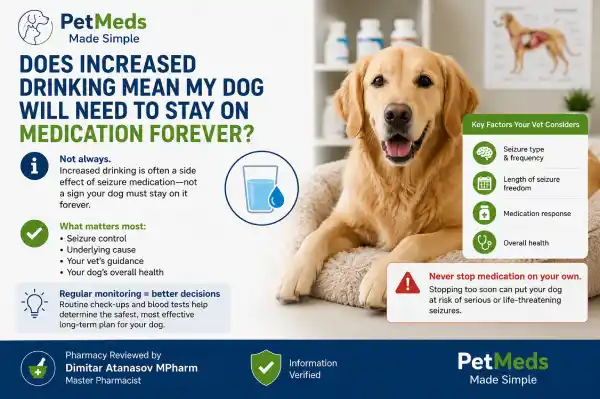
Not necessarily.
Some dogs require lifelong anticonvulsant therapy because their epilepsy cannot be safely controlled without medication.
Others may eventually undergo carefully supervised treatment adjustments depending on:
- The cause of the seizures
- Seizure frequency
- Response to treatment
- Overall health
- Risk of recurrence
Never stop seizure medication simply because your dog is drinking more water.
The risks associated with uncontrolled seizures are usually far greater than the inconvenience of increased thirst.
Related Symptoms Owners Often Notice
Owners searching “Why Is My Dog Drinking More Water on Seizure Medication?” often notice several other changes at the same time.
Common accompanying symptoms include:
- Increased urination
- Increased appetite
- Panting
- Sleepiness
- Mild wobbliness
- Weight gain
- Occasional nighttime accidents
- Increased hunger
- Temporary weakness
Many of these symptoms are discussed in our related PMMS guides, including:
- Phenobarbital for Dogs: Uses, Dosage, Side Effects & Safety
- Levetiracetam (Keppra) for Dogs
- Potassium Bromide for Dogs
- Why Is My Dog Hungry All the Time on Phenobarbital?
- Can Seizure Medication Cause Depression in Dogs?
- Can Dogs Miss a Dose of Seizure Medication?
- Why Is My Dog Crying After a Seizure?
- Can Seizure Medication Damage the Liver?
- Why Is My Dog Wobbly on Seizure Medication?
- Can Dogs Stay on Seizure Medication for Life?
Veterinarian Takeaway
A noticeable increase in thirst is one of the most common and expected side effects of certain seizure medications—especially phenobarbital and potassium bromide. In many dogs, this change is mild, temporary, and simply reflects the body’s adaptation to treatment.
However, excessive drinking should never be dismissed automatically. Because liver disease, kidney disease, diabetes, urinary tract infections, and other medical conditions can produce similar signs, persistent or worsening thirst deserves veterinary evaluation. Routine blood tests and careful monitoring remain the safest way to ensure your dog’s medication continues to control seizures without causing unnecessary complications.
Bottom Line
Why is my dog drinking more water on seizure medication?
In most cases, the answer is reassuring. Common anticonvulsants such as phenobarbital and potassium bromide frequently increase thirst and urination as expected side effects. Many dogs continue to live happy, active lives while simply needing to drink more water.
The safest approach is never to restrict water, continue giving medication exactly as prescribed, monitor your dog’s drinking habits, and attend all recommended follow-up examinations and blood tests.
If increased thirst becomes severe or is accompanied by vomiting, weight loss, weakness, jaundice, repeated seizures, or other concerning symptoms, contact your veterinarian promptly for further evaluation.
Frequently Asked Questions – Why Is My Dog Drinking More Water on Seizure Medication?
Is it normal for dogs to drink more water on seizure medication?
Yes. Increased thirst is a common side effect of medications such as phenobarbital and potassium bromide.
Which seizure medication causes the most thirst?
Phenobarbital is generally the medication most commonly associated with increased thirst and urination.
Should I limit my dog’s water?
No. Dogs experiencing medication-related thirst should always have free access to clean, fresh water.
Why is my dog urinating so much too?
Drinking more water naturally results in producing more urine. This is called polyuria and often accompanies polydipsia.
Could increased thirst mean liver disease?
Possibly. While medication is a common cause, liver disease should also be considered, particularly in dogs receiving long-term phenobarbital.
Does Keppra usually make dogs thirsty?
Not commonly. Levetiracetam (Keppra) is much less likely to increase thirst than phenobarbital.
Can blood tests determine whether the medication is causing problems?
Yes. Blood chemistry, liver function tests, urinalysis, and therapeutic drug monitoring are valuable diagnostic tools.
Will my dog always drink this much?
Not necessarily. Many dogs improve after several weeks as their bodies adjust to medication.
When should I call my veterinarian?
Contact your veterinarian if increased thirst is severe, suddenly worsens, or occurs with vomiting, weight loss, weakness, jaundice, or more frequent seizures.
Is increased thirst a reason to stop seizure medication?
No. Never stop anticonvulsant medication without veterinary guidance because sudden withdrawal may trigger life-threatening seizures.
Sources
- Plumb’s Veterinary Drug Handbook
- Merck Veterinary Manual
- BSAVA Small Animal Formulary
- Veterinary Pharmacology and Therapeutics (Papich & Riviere)
- Small Animal Clinical Pharmacology
- American College of Veterinary Internal Medicine (ACVIM) Consensus Statement on Epilepsy
- International Veterinary Epilepsy Task Force (IVETF) Guidelines
- Journal of Veterinary Internal Medicine (JVIM)
- Frontiers in Veterinary Science
- Journal of the American Veterinary Medical Association (JAVMA)
- Veterinary Anaesthesia and Analgesia
- PubMed
Medical Review Statement
This article was written by Dimitar Georgiev Atanasov, MPharm, pharmacy and scientifically reviewed by Gergana Krasimirova Atanasova, MPharm, and independently veterinary reviewed by Dr. Valcho Georgiev Valchev, DVM. It is based on current veterinary pharmacology references, peer-reviewed scientific literature, canine epilepsy guidelines, and evidence-based veterinary recommendations to ensure accurate, practical, and trustworthy information for dog owners.
Important Medical Disclaimer
The information provided on PetMedsMadeSimple.com is intended for educational purposes only and should not replace professional veterinary diagnosis or treatment.
Never start, stop, or adjust your dog’s seizure medication without consulting your veterinarian. If your dog develops repeated seizures, collapse, severe weakness, difficulty breathing, persistent vomiting, or becomes difficult to wake, seek emergency veterinary care immediately.
Image Disclosure – Why Is My Dog Drinking More Water on Seizure Medication?
Some images used in this article may be AI-generated or AI-assisted for educational purposes. Every PMMS article is independently researched, pharmacy-written, scientifically reviewed, and veterinary-reviewed. AI-generated illustrations are used solely to improve understanding of veterinary medications and should not be interpreted as photographs of actual clinical patients.