Quick Answer
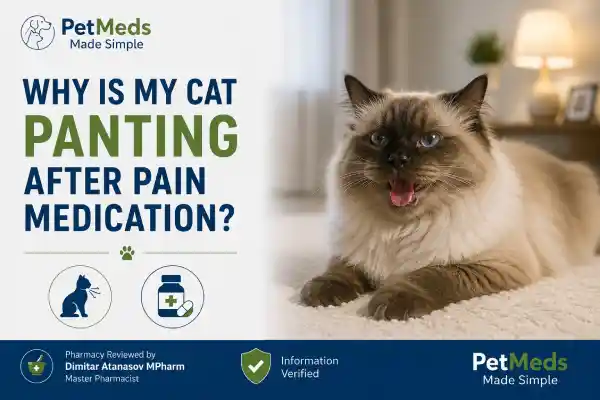
Why Is My Cat Panting After Pain Medication? Unlike dogs, cats rarely pant under normal circumstances. If your cat starts panting after receiving pain medication, the symptom should never be ignored. While some medications or the stress associated with hospitalization, surgery, or painful conditions may contribute to panting, open-mouth breathing in cats is considered abnormal and should always be evaluated carefully. In many cases, the underlying painful condition, postoperative discomfort, respiratory disease, heart disease, or stress may be more likely explanations than the medication itself.
Key Takeaways
| Question | Short Answer |
|---|---|
| Why is my cat panting after pain medication? | The medication may contribute, but pain, stress, or another medical condition are often more likely causes. |
| Is panting normal in cats? | No. Unlike dogs, healthy cats rarely pant unless they have exercised intensely or are experiencing significant stress. |
| Should I stop the medication? | No. Never discontinue prescribed pain medication without speaking to your veterinarian. |
| Can surgery cause panting? | Yes. Pain, stress, and recovery from anesthesia may contribute. |
| When is it an emergency? | Panting with open-mouth breathing, blue gums, collapse, or severe breathing difficulty requires immediate veterinary care. |
Why This Question Deserves Immediate Attention
Owners often search “Why Is My Cat Panting After Pain Medication?” because the situation feels frightening.
Cats simply do not pant the way dogs do.
Most cat owners go months—or even years—without ever seeing their cat breathe with an open mouth.
Then, after surgery or after starting pain medication, they suddenly notice their cat breathing faster, holding its mouth open, or appearing restless.
Naturally, the medication becomes the first suspect.
However, veterinarians approach the situation differently.
Instead of asking only “Did the medication cause the panting?”, they first ask:
- Is your cat still painful?
- Has your cat recently undergone surgery?
- Could stress be responsible?
- Is there evidence of respiratory disease?
- Could heart disease be contributing?
- Is your cat actually panting, or simply breathing faster than normal?
These questions are important because panting in cats is far less common than in dogs, making every episode worthy of careful evaluation.
Why Is My Cat Panting After Pain Medication?
Why Cats Are Different From Dogs
This is one of the biggest differences owners should understand.
Dogs rely on panting as their primary cooling mechanism.
Cats do not.
Healthy cats regulate body temperature much more efficiently through grooming, behavioral changes, and limited evaporative cooling.
Because of this, a cat that begins panting should never be dismissed as “probably normal.”
Although brief panting may occur after intense exercise or extreme stress, persistent panting is considered abnormal.
This is why veterinarians take feline panting much more seriously than canine panting.
Can Pain Medication Actually Cause Panting?
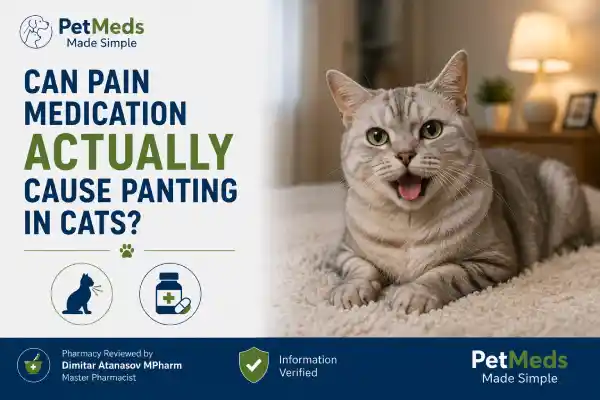
The answer is:
Sometimes but much less often than owners expect.
Some medications may contribute indirectly by causing:
- temporary excitement,
- stress during recovery,
- nausea,
- mild gastrointestinal discomfort,
- changes in behavior,
- inadequate pain control if the medication begins wearing off.
However, veterinarians often discover that the painful condition itself is responsible.
For example, a cat recovering from orthopedic surgery may become more uncomfortable several hours after returning home.
Instead of vocalizing, many cats respond by:
- breathing faster,
- hiding,
- becoming restless,
- refusing to settle,
- panting.
The medication is blamed, when in reality the cat may simply require reassessment of its pain management plan.
Common Reasons Cats Pant After Receiving Pain Medication
| Possible Cause | How Common? | Veterinary Assessment Needed? |
|---|---|---|
| Pain not fully controlled | Very Common | Yes |
| Stress after veterinary visit | Very Common | Yes |
| Recovery after anesthesia | Common | Yes |
| Medication-related effect | Occasionally | Yes |
| Respiratory disease | Less Common | Yes |
| Heart disease | Less Common | Yes |
| Heat stress | Uncommon | Yes |
| Emergency illness | Rare | Immediate care |
Notice that pain itself is listed before medication.
That reflects what veterinarians commonly encounter in clinical practice.
Pain Can Cause Panting Even When Medication Has Been Given
One of the biggest misunderstandings surrounding Why Is My Cat Panting After Pain Medication? is believing that giving medication guarantees complete pain relief.
Unfortunately, that is not always true.
Some painful conditions require multimodal pain management.
Examples include:
- orthopedic surgery,
- fractures,
- severe arthritis,
- dental extractions,
- spinal injuries,
- abdominal surgery.
If the prescribed medication is not providing sufficient pain relief, your cat may still:
- breathe faster,
- hide,
- remain tense,
- refuse to move,
- become unusually quiet,
- pant intermittently.
If your cat also continues limping despite treatment, our article Why Is My Cat Still Limping After Pain Medication? explains why persistent pain does not necessarily mean the medication has failed.
Which Pain Medications Are Commonly Used in Cats?
Several medications are commonly prescribed depending on the underlying condition.
| Medication | Common Use |
|---|---|
| Robenacoxib (Onsior®) | Postoperative pain and inflammation |
| Meloxicam | Selected inflammatory conditions |
| Buprenorphine | Moderate to severe pain |
| Gabapentin | Neuropathic pain, chronic pain, stress reduction before veterinary visits |
Each medication has a different safety profile.
This is one reason veterinarians avoid assuming that every episode of panting has the same cause.
Cats receiving gabapentin may also benefit from reading How Long Does Gabapentin Last in Cats?, particularly if the panting develops several hours after the medication was given, when breakthrough pain may become more likely.
Why Medication Timing Matters
The timing of the panting often provides one of the biggest diagnostic clues.
For example:
| Timing | Possible Interpretation |
|---|---|
| Within one hour after medication | Medication-related excitement or stress may be considered. |
| Several hours later | Pain, recovery, or another illness becomes more likely. |
| Shortly before the next dose | Breakthrough pain should be considered. |
| Every night regardless of dosing | Another medical condition should be investigated. |
This is why veterinarians ask owners to describe exactly when the panting started rather than simply asking which medication the cat received.
Related PMMS Articles
To better understand your cat’s symptoms, you may also find these guides helpful:
- Pain Medications for Cats: Types, Uses, Side Effects & Safety Guide
- Why Is My Cat Still Limping After Pain Medication?
- How Long Does Gabapentin Last in Cats?
- Can Gabapentin Cause Breathing Changes in Cats?
- Why Is My Cat Shaking After Gabapentin?
- Can Cats Take Gabapentin Before Vet Visits?
- Can Cats Miss a Dose of Gabapentin?
These articles explain related situations that frequently occur alongside feline pain management and help owners better understand when symptoms are expected and when they warrant veterinary attention.
Could Pain Medication Simply Be Making Your Cat Stressed?
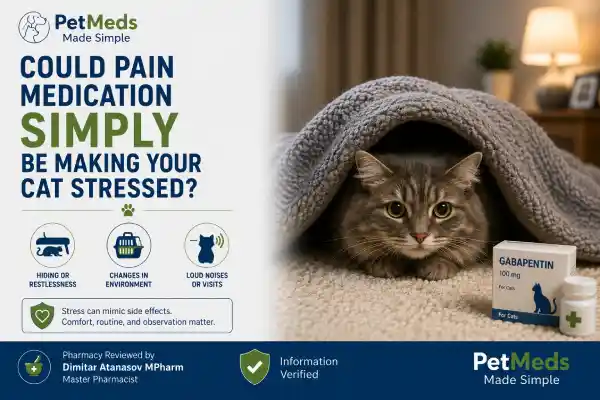
One of the biggest misconceptions behind Why Is My Cat Panting After Pain Medication? is that the medication itself is always responsible.
In reality, many cats begin panting because of the stressful events surrounding the medication, not because of the medication’s pharmacological effects.
Cats are extremely sensitive to changes in their environment.
A veterinary visit, transportation, hospitalization, unfamiliar smells, restraint, surgery, and returning home can all elevate stress hormones for several hours.
This physiological stress response may include:
- rapid breathing,
- open-mouth breathing,
- dilated pupils,
- hiding,
- trembling,
- vocalization,
- reluctance to move.
If these signs gradually improve as your cat relaxes, stress becomes a much more likely explanation than a serious medication reaction.
Why Cats Hide Pain Better Than Dogs
One of the reasons Why Is My Cat Panting After Pain Medication? can be difficult to answer is that cats naturally conceal pain.
This behavior developed as a survival strategy.
Wild cats that appeared weak were more vulnerable to predators.
Domestic cats still retain much of this instinct.
Instead of crying or limping dramatically, painful cats often become:
- unusually quiet,
- withdrawn,
- less interested in food,
- reluctant to jump,
- unwilling to groom,
- hidden under furniture.
Panting may be one of the few obvious signs owners notice.
Because cats hide discomfort so effectively, veterinarians never assume that pain medication has completely eliminated pain simply because the cat appears calm.
Is Your Cat Actually Panting or Simply Breathing Faster?
Owners frequently use the word panting to describe any rapid breathing.
From a veterinary perspective, these are not always the same thing.
Understanding the Difference
| Observation | Rapid Breathing | True Panting |
|---|---|---|
| Mouth closed | Usually | Rare |
| Mouth open | Rare | Yes |
| Tongue extended | No | Often |
| Usually associated with stress or heat | Sometimes | Frequently |
| Requires veterinary evaluation | Yes | Yes |
Both abnormal breathing and true panting deserve attention in cats because neither is considered normal under ordinary circumstances.
Can Gabapentin Cause Panting in Cats?
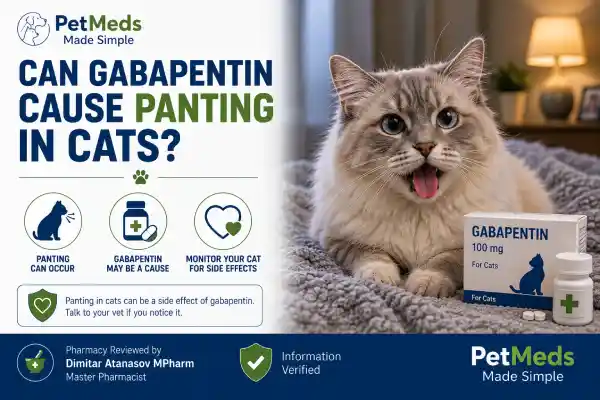
Gabapentin deserves special attention because it is one of the most frequently prescribed medications for cats.
Veterinarians commonly use gabapentin for:
- chronic pain,
- neuropathic pain,
- arthritis,
- reducing stress before veterinary visits,
- improving handling during examinations.
Most cats become:
- calmer,
- sleepier,
- easier to handle.
However, every cat responds differently.
A small percentage may appear:
- unusually restless,
- disoriented,
- more vocal,
- temporarily anxious.
These behavioral changes occasionally make owners believe the medication is causing panting.
Fortunately, true panting caused directly by gabapentin appears to be uncommon.
If your cat recently received gabapentin, our guide Can Gabapentin Cause Breathing Changes in Cats? explains how veterinarians distinguish expected sedation from abnormal respiratory signs.
Could the Gabapentin Be Wearing Off?
Another possibility is breakthrough pain.
Imagine a cat recovering from orthopedic surgery.
Gabapentin provides good pain relief during the afternoon.
Several hours later, however, the medication gradually begins wearing off.
The painful condition—not the medication itself—becomes more noticeable.
Instead of crying, the cat may:
- breathe faster,
- become restless,
- pant,
- refuse to settle comfortably,
- repeatedly change sleeping positions.
Owners naturally conclude:
“The medication caused this.”
Veterinarians often reach a different conclusion.
The medication may actually be losing effectiveness before the next scheduled dose.
Medication timing is therefore one of the most valuable diagnostic clues.
If you’re unsure how long gabapentin normally remains active, our article How Long Does Gabapentin Last in Cats? explains what owners can generally expect after each dose.
Why Surgery Changes the Situation
Many owners search Why Is My Cat Panting After Pain Medication? after bringing their cat home from surgery.
Examples include:
- orthopedic procedures,
- dental extractions,
- abdominal surgery,
- wound repair,
- fracture treatment.
These cats have several reasons to pant besides medication:
- postoperative pain,
- residual anesthetic effects,
- unfamiliar surroundings,
- stress,
- altered body temperature,
- anxiety associated with the Elizabethan collar.
Veterinarians evaluate the entire recovery process, not simply the medication list.
Cats Recover Differently From Dogs
Unlike many dogs, cats often recover quietly.
Instead of seeking attention, they may:
- hide,
- refuse food,
- avoid interaction,
- remain motionless,
- breathe faster.
Owners sometimes interpret these changes as medication side effects.
However, they may simply represent the normal feline response to pain and hospitalization.
Could Another Medical Problem Be Responsible?
One reason veterinarians never assume medication is responsible is that several serious diseases may first become obvious shortly after treatment begins.
Examples include:
| Condition | Can It Cause Panting? | Veterinary Evaluation Needed? |
|---|---|---|
| Heart disease | Yes | Yes |
| Asthma | Yes | Yes |
| Pneumonia | Yes | Yes |
| Pleural effusion | Yes | Immediate |
| Fever | Yes | Yes |
| Severe pain | Yes | Yes |
| Stress | Yes | Yes |
Medication may simply be coincidental rather than the true cause.
What If Your Cat Is Also Limping?
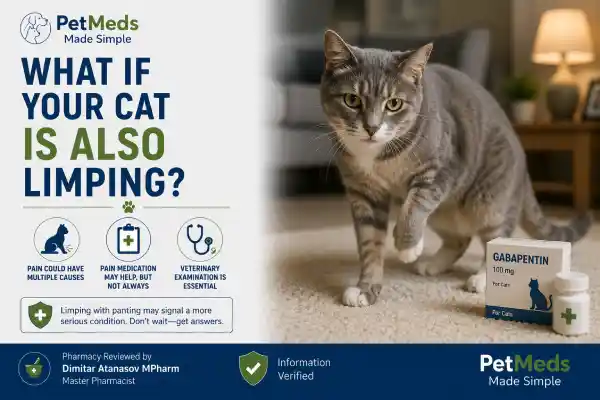
Panting together with limping deserves particular attention.
Persistent limping may indicate that pain control is not yet adequate.
Cats recovering from orthopedic injuries often require several days before mobility begins improving.
If your cat continues limping despite treatment, you may also find Why Is My Cat Still Limping After Pain Medication? helpful, as it explains why persistent lameness does not automatically mean the prescribed medication has failed.
Signs That Suggest the Pain Medication May Not Be Working Well Enough
Veterinarians often look for combinations of signs rather than one symptom alone.
Possible Signs of Inadequate Pain Control
| Clinical Sign | May Suggest Persistent Pain |
|---|---|
| Panting | ✓ |
| Hiding continuously | ✓ |
| Refusing to jump | ✓ |
| Decreased appetite | ✓ |
| Hunched posture | ✓ |
| Reluctance to move | ✓ |
| Growling when touched | ✓ |
| Limping | ✓ |
When several of these signs occur together, reassessment of the pain management plan becomes more likely than discontinuation of medication.
Related PMMS Articles
Owners whose cats develop additional symptoms during pain treatment may also benefit from these guides:
- Pain Medications for Cats: Types, Uses, Side Effects & Safety Guide
- Why Is My Cat Still Limping After Pain Medication?
- Can Gabapentin Cause Breathing Changes in Cats?
- How Long Does Gabapentin Last in Cats?
- Why Is My Cat Shaking After Gabapentin?
- Can Cats Miss a Dose of Gabapentin?
- Can Cats Take Gabapentin Before Vet Visits?
Together, these articles cover many of the situations that occur before, during, and after feline pain management and provide a more complete understanding of how medications, pain, and recovery interact.
How Veterinarians Determine Whether Pain Medication Is Responsible
When a cat begins panting after receiving pain medication, veterinarians rarely reach an immediate conclusion.
Instead, they systematically eliminate the most serious possibilities before considering whether the medication itself is responsible.
The goal is to answer three important questions:
- Is the cat stable?
- Could this be caused by the underlying condition instead of the medication?
- Does the cat require emergency treatment?
Because cats naturally hide illness, this methodical approach is much safer than assuming the medication caused the problem.
The Veterinary Assessment Process
| Step | What the Veterinarian Evaluates | Why It Matters |
|---|---|---|
| History | Medication, timing, surgery, underlying disease | Identifies possible triggers |
| Physical examination | Heart, lungs, temperature, hydration | Detects serious illness |
| Orthopedic examination | Pain level and mobility | Determines whether pain is adequately controlled |
| Respiratory evaluation | Breathing pattern and effort | Differentiates panting from respiratory distress |
| Additional diagnostics | Blood work or imaging if needed | Investigates underlying disease |
Does the Timing of Panting Matter?
Absolutely.
Veterinarians often learn more from when the panting occurs than from the medication itself.
Timing Guide
| Timing | Possible Interpretation |
|---|---|
| Immediately after arriving home | Stress from transportation or hospitalization |
| Within one hour after medication | Medication-related effect may be considered |
| Four to eight hours later | Pain or another illness becomes more likely |
| Shortly before the next scheduled dose | Breakthrough pain should be considered |
| Every evening regardless of dosing | Another medical condition may be contributing |
This is why owners should always note the exact time the medication was given and when the panting first started.
Should You Stop the Medication?
In most situations, no.
Stopping prescribed pain medication without veterinary advice may:
- increase pain,
- delay recovery,
- reduce mobility,
- increase stress,
- make panting even worse if the true cause is uncontrolled pain.
Instead, contact your veterinarian and describe:
- when the panting began,
- how long it lasted,
- whether the mouth was open,
- whether your cat remained responsive,
- whether other symptoms developed.
When Should You Contact Your Veterinarian?
Although brief stress-related panting may resolve on its own, certain situations should never be ignored.
Contact Your Veterinarian Promptly If:
- panting lasts longer than several minutes after your cat has calmed down,
- panting returns repeatedly,
- appetite decreases,
- vomiting develops,
- your cat refuses to move,
- breathing appears faster than normal even while resting,
- your cat seems significantly more painful than before.
These findings suggest that your cat’s recovery or pain management plan should be reassessed.
When Is It an Emergency?
Unlike dogs, persistent open-mouth breathing in cats is always considered potentially serious.
Immediate veterinary attention is recommended if panting occurs together with:
| Emergency Sign | Why Immediate Care Is Needed |
|---|---|
| Blue or gray gums | Poor oxygen delivery |
| Severe breathing effort | Respiratory emergency |
| Collapse | Circulatory emergency |
| Continuous open-mouth breathing | May indicate serious respiratory or cardiovascular disease |
| Seizures | Medical emergency |
| Loss of consciousness | Critical illness |
Owners should never wait until the next morning if these signs are present.
Could Heart Disease Be Responsible?
Heart disease is one of the most important conditions veterinarians rule out.
Cats with cardiac disease may develop:
- rapid breathing,
- open-mouth breathing,
- exercise intolerance,
- weakness,
- collapse in advanced cases.
Because these signs sometimes appear around the same time pain medication is started, owners may incorrectly assume the medication is responsible.
A physical examination, and sometimes chest radiographs or echocardiography, may be necessary to determine the true cause.
Could Respiratory Disease Be the Problem?
Cats suffering from respiratory disease may also pant or breathe with an open mouth.
Possible causes include:
- feline asthma,
- pneumonia,
- pleural effusion,
- pulmonary edema,
- upper airway obstruction.
These conditions require veterinary assessment and should never be dismissed as simple medication side effects.
Home Monitoring Checklist
While waiting to speak with your veterinarian, record the following information.
| Observation | Record |
|---|---|
| Medication name | ______ |
| Dose | ______ |
| Time administered | ______ |
| Time panting began | ______ |
| Duration of panting | ______ |
| Appetite | Normal / Reduced |
| Activity level | Normal / Reduced |
| Other symptoms | __________________ |
This information often helps veterinarians identify patterns that owners may otherwise forget.
Common Owner Mistakes
Mistake #1: Assuming Every Episode Is Caused by Medication
Pain, stress, heart disease, respiratory disease, and postoperative recovery are often more likely explanations.
Mistake #2: Waiting Too Long
Because cats frequently hide illness, delaying veterinary assessment may allow serious disease to progress unnoticed.
Mistake #3: Giving Human Medication
Human pain medications such as ibuprofen, naproxen, or diclofenac should never be given unless specifically prescribed by a veterinarian.
Many are highly toxic to cats.
Mistake #4: Assuming Recovery Should Be Immediate
Pain medication improves comfort, but it does not instantly heal fractures, arthritis, dental disease, or surgical wounds.
Some cats require several days before noticeable improvement occurs.
Related PMMS Articles
If your cat is experiencing other symptoms during recovery, these articles may also help:
- Pain Medications for Cats: Types, Uses, Side Effects & Safety Guide
- Why Is My Cat Still Limping After Pain Medication?
- Can Gabapentin Cause Breathing Changes in Cats?
- Why Is My Cat Shaking After Gabapentin?
These resources provide additional information about feline pain management and related medication effects.
What Should You Do If Your Cat Starts Panting After Pain Medication?
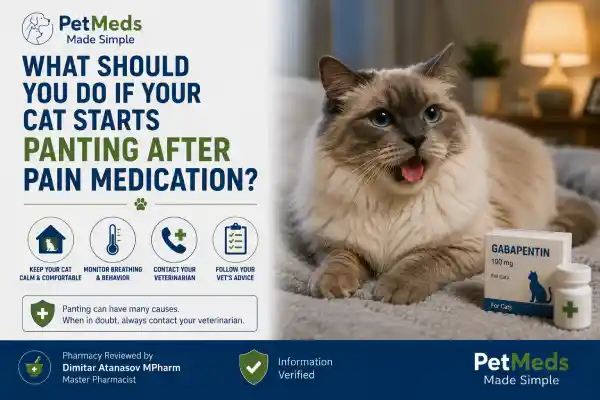
After searching “Why Is My Cat Panting After Pain Medication?”, most owners want one answer:
“What should I do right now?”
The answer depends on your cat’s overall condition, not just the panting itself.
A cat that pants for a minute after an extremely stressful car ride is evaluated very differently from a cat that develops persistent open-mouth breathing while resting quietly at home.
Because cats naturally hide illness, it is safer to assume that new panting deserves attention until proven otherwise.
Step 1: Stay Calm and Observe Your Cat
Cats are extremely sensitive to their owner’s emotions.
If you panic, chase your cat around the house, or repeatedly pick it up, the stress response may become even stronger.
Instead:
- remain calm,
- allow your cat to stay in a quiet room,
- avoid unnecessary handling,
- observe breathing from a short distance,
- note exactly when the panting started.
Many veterinarians find that the owner’s observations are just as valuable as the physical examination.
Perform a Quick Home Assessment
| Observation | Normal Finding | Concerning Finding |
|---|---|---|
| Mouth | Closed after calming down | Continues open-mouth breathing |
| Gum color | Pink | Pale, blue or gray |
| Breathing effort | Comfortable | Labored breathing or abdominal effort |
| Alertness | Responsive | Weak, collapsed or difficult to wake |
| Walking | Normal | Unable to walk or collapsing |
| Appetite | Interested in food | Refuses food completely |
If several concerning findings occur together, emergency veterinary care is recommended.
Should You Skip the Next Dose?
One of the most common owner reactions is:
“I’ll just stop the medication until tomorrow.”
In many situations, this is not the best decision.
Stopping prescribed pain medication without veterinary advice may:
- increase postoperative pain,
- delay recovery,
- reduce mobility,
- increase stress,
- make breathing appear even faster because pain has returned.
Instead, contact your veterinarian before making changes whenever possible.
Never Increase or Double the Dose
The opposite mistake can be equally dangerous.
Some owners believe:
“If my cat is panting because it’s painful, another dose will help.”
Never:
- double the prescribed dose,
- shorten the dosing interval,
- combine medications without veterinary approval,
- give leftover medication from another pet.
Cats metabolize many medications differently from dogs, making accidental overdoses especially dangerous.
Never Give Human Pain Medication
Human pain medications should never be substituted for veterinary prescriptions.
Medications such as:
- ibuprofen,
- naproxen,
- diclofenac,
- aspirin (unless specifically prescribed),
may cause:
- stomach ulceration,
- kidney injury,
- liver damage,
- gastrointestinal bleeding,
- life-threatening toxicity.
This warning is particularly important for cats because they are much less able than dogs to metabolize many human drugs safely.
Should You Count Your Cat’s Resting Respiratory Rate?
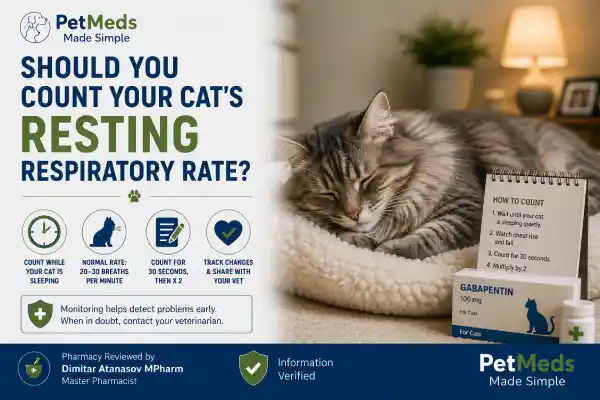
Yes.
One of the most useful things owners can do at home is measure the resting respiratory rate while the cat is asleep.
How to Measure It
- Wait until your cat is sleeping.
- Watch the chest rise and fall.
- Count one rise and one fall as one breath.
- Count for 30 seconds.
- Multiply by two.
Recording this number over several days provides valuable information for your veterinarian.
It is often more useful than simply saying:
“My cat seemed to be breathing fast.”
Does Medication Timing Matter?
Absolutely.
Veterinarians nearly always ask:
“How long after the medication did the panting begin?”
Timing Can Provide Important Clues
| Timing | Possible Explanation |
|---|---|
| Immediately after arriving home | Stress from transportation or hospitalization |
| Within one hour after medication | Medication-related effect may be considered |
| Several hours later | Pain or another illness becomes more likely |
| Shortly before the next scheduled dose | Breakthrough pain becomes more likely |
| Random throughout the day | Another medical condition should also be investigated |
This is one reason owners should write down medication times instead of relying on memory.
Keep a Medication Diary
A simple diary often helps veterinarians identify patterns much more quickly.
Suggested Home Record
| Information | Record |
|---|---|
| Medication name | __________ |
| Dose | __________ |
| Time given | __________ |
| Time panting began | __________ |
| Duration | __________ |
| Appetite | Normal / Reduced |
| Water intake | Normal / Increased |
| Activity level | Normal / Reduced |
| Other symptoms | __________________ |
When Should You Contact Your Veterinarian?
Even if your cat appears stable, you should contact your veterinarian if:
- panting lasts more than a few minutes after the stressful event has ended,
- panting occurs repeatedly,
- breathing appears faster than normal while resting,
- appetite decreases,
- vomiting develops,
- your cat becomes unusually quiet,
- your cat refuses to move,
- your cat appears more painful than before treatment.
These situations often require reassessment of the pain management plan.
When Should You Go to an Emergency Clinic?
Unlike dogs, persistent panting in cats is never considered a normal finding.
Seek immediate veterinary care if your cat develops:
| Emergency Sign | Why It Requires Immediate Attention |
|---|---|
| Continuous open-mouth breathing | May indicate severe respiratory distress |
| Blue, gray, or white gums | Poor oxygen delivery |
| Collapse | Possible cardiovascular emergency |
| Severe breathing effort | Respiratory emergency |
| Seizures | Neurological emergency |
| Loss of consciousness | Critical illness |
| Severe weakness | Requires immediate assessment |
Waiting until the next morning in these situations can be dangerous.
Common Owner Mistakes
Mistake #1: Assuming Every Episode Is Caused by the Medication
Many cats pant because of:
- pain,
- stress,
- hospitalization,
- respiratory disease,
- heart disease,
- postoperative recovery.
Medication is only one possible explanation.
Mistake #2: Ignoring Other Symptoms
Panting should always be evaluated together with:
- appetite,
- mobility,
- breathing effort,
- gum color,
- behavior,
- activity level.
Looking at the entire patient provides a much clearer picture than focusing on one symptom.
Mistake #3: Delaying Veterinary Care
Cats often hide serious illness remarkably well.
By the time obvious panting develops, some conditions have already progressed significantly.
Prompt assessment is always safer than waiting several days.
Mistake #4: Assuming Recovery Should Be Immediate
Pain medication reduces discomfort.
It does not instantly heal:
- fractures,
- orthopedic injuries,
- arthritis,
- surgical wounds,
- dental extractions.
Recovery still requires time.
If your cat recently underwent orthopedic treatment and continues to show signs of discomfort, our guide Why Is My Cat Still Limping After Pain Medication? explains why improvement is sometimes gradual despite appropriate pain management.
Long-Term Monitoring During Pain Treatment
Cats receiving pain medication for several weeks benefit from regular monitoring.
Home Monitoring Checklist
| Parameter | Why It Matters |
|---|---|
| Appetite | Detects medication intolerance or illness |
| Body weight | Weight changes affect recovery |
| Mobility | Evaluates pain control |
| Breathing pattern | Detects respiratory or cardiac disease |
| Sleeping behavior | May reveal persistent discomfort |
| Water intake | Helps identify systemic illness |
| Follow-up examinations | Ensure medication remains safe and effective |
Regular veterinary rechecks are particularly important for older cats and those receiving long-term NSAID therapy.
Together, these guides explain many of the situations that commonly occur during feline pain management and help owners better understand when symptoms are expected, when they suggest inadequate pain control, and when they require immediate veterinary attention.
Veterinarian Takeaway
When owners ask “Why Is My Cat Panting After Pain Medication?”, they are usually worried that the medication itself has harmed their cat.
While some pain medications may occasionally contribute to behavioral changes or mild restlessness, persistent panting in cats should never automatically be blamed on the medication.
Unlike dogs, cats do not normally rely on panting to regulate body temperature. Because of this important physiological difference, veterinarians consider open-mouth breathing or persistent panting in cats a symptom that deserves careful evaluation.
In everyday practice, veterinarians more commonly discover that panting is associated with:
- postoperative pain,
- stress from transportation or hospitalization,
- inadequate pain control,
- respiratory disease,
- cardiovascular disease,
- or another underlying medical condition.
Rather than stopping pain medication immediately, your veterinarian will evaluate the entire clinical picture, including your cat’s medical history, medication schedule, physical examination findings, and any additional symptoms.
This systematic approach helps ensure that potentially serious diseases are not overlooked while allowing your cat to continue receiving appropriate pain relief whenever possible.
Bottom Line
Why Is My Cat Panting After Pain Medication?
The answer is not always straightforward.
Some medications may contribute to panting in individual cats, but pain medication is often not the primary cause.
Cats frequently pant because they are:
- still experiencing pain,
- recovering from surgery,
- under significant stress,
- developing respiratory disease,
- experiencing cardiovascular problems,
- or suffering from another medical condition that requires veterinary attention.
Because panting is uncommon in healthy cats, owners should monitor the situation carefully and contact their veterinarian whenever the symptom is new, persistent, worsening, or accompanied by other abnormalities.
Early assessment allows veterinarians to identify the true cause and ensure your cat receives the safest and most effective treatment possible.
Clinical Pearls
| Clinical Pearl | Why It Matters |
|---|---|
| Cats rarely pant under normal circumstances. | Any new episode deserves attention. |
| Medication timing provides valuable diagnostic information. | It helps distinguish medication effects from breakthrough pain. |
| Pain can cause panting even after medication has been administered. | Pain relief may not always be complete. |
| Open-mouth breathing is more concerning in cats than in dogs. | Cats should be evaluated sooner. |
| Never stop prescription pain medication without veterinary guidance. | Abrupt discontinuation may worsen pain and delay recovery. |
| Smartphone videos can help your veterinarian assess intermittent episodes. | Symptoms often resolve before the appointment. |
Frequently Asked Questions – Why Is My Cat Panting After Pain Medication?
Why is my cat panting after pain medication?
Your cat may be panting because of postoperative pain, stress, the underlying painful condition, or—less commonly—a medication-related effect. Because panting is unusual in cats, veterinary assessment is recommended if the symptom persists.
Is panting normal after surgery in cats?
Brief panting immediately after transportation or recovery from anesthesia may occur in some cats. However, persistent open-mouth breathing or worsening respiratory effort should always be evaluated by a veterinarian.
Can gabapentin cause panting in cats?
Most cats become calmer after gabapentin, but individual responses vary. Persistent panting is uncommon and should prompt veterinary evaluation, particularly if other symptoms are present.
Can Onsior® cause panting?
Panting is not considered one of the most common adverse effects of robenacoxib (Onsior®). If panting develops after treatment, veterinarians will also investigate pain, stress, respiratory disease, and other medical conditions.
Can meloxicam cause panting in cats?
Meloxicam is not commonly associated with panting. If a cat begins panting while receiving meloxicam, additional causes should be considered rather than assuming the medication is responsible.
Why is my cat breathing with an open mouth?
Open-mouth breathing is considered abnormal in cats and may indicate pain, severe stress, respiratory disease, heart disease, or another serious condition. Prompt veterinary assessment is recommended.
Should I stop giving my cat pain medication?
No. Never discontinue prescribed pain medication without first speaking to your veterinarian. Stopping treatment prematurely may increase pain and delay recovery.
Can stress make my cat pant?
Yes. Transportation, hospitalization, unfamiliar environments, and veterinary visits may all cause temporary stress-related panting in some cats.
What if my cat is panting and still limping?
Persistent limping together with panting may suggest that pain is not yet adequately controlled or that recovery is progressing more slowly than expected. Your veterinarian should reassess your cat’s condition.
Is panting an emergency in cats?
Persistent panting, especially when accompanied by open-mouth breathing, blue gums, collapse, severe weakness, or obvious breathing difficulty, should be treated as an emergency.
How can I monitor my cat at home?
wners should monitor:
breathing pattern,
appetite,
mobility,
activity level,
medication timing,
and any new symptoms.
Keeping a written record often helps veterinarians identify important patterns.
Can heart disease cause panting after pain medication?
Yes. Heart disease may become noticeable around the same time a cat starts pain medication, even though the medication itself is not responsible. This is one reason veterinarians evaluate the entire patient instead of assuming every episode is a medication reaction.
Sources
- Plumb DC. Plumb’s Veterinary Drug Handbook. Latest edition.
- Merck Veterinary Manual. Pain Management in Cats.
- Merck Veterinary Manual. Respiratory Disorders of Cats.
- Merck Veterinary Manual. Cardiovascular Disorders in Cats.
- 2022 AAHA Pain Management Guidelines for Dogs and Cats.
- ISFM (International Society of Feline Medicine) Consensus Guidelines on Feline Pain Management.
- Robertson SA, Taylor PM. Pain management in cats – recent advances and future directions.
- Papich MG. Saunders Handbook of Veterinary Drugs.
- Grimm KA, Lamont LA, Tranquilli WJ, Greene SA, Robertson SA. Veterinary Anesthesia and Analgesia.
- WSAVA Global Pain Council educational resources.
Medical Review Statement
This article was written by Dimitar Georgiev Atanasov, MPharm, pharmacy and scientific reviewed by Gergana Krasimirova Atanasova, MPharm, and veterinary reviewed by Dr. Valcho Georgiev Valchev, DVM. The information provided is intended for educational purposes only and should never replace an examination, diagnosis, or treatment plan provided by a licensed veterinarian.
Image Disclosure
Image Disclosure: Some images used in this article may be AI-generated or AI-assisted for educational and illustrative purposes. They are intended to improve understanding of veterinary topics and should not replace professional veterinary advice.