

Quick Answer
Can Dogs Build Tolerance to NSAIDs? In most cases, no. Current veterinary evidence suggests that dogs do not typically develop true pharmacological tolerance to veterinary NSAIDs such as carprofen, meloxicam, deracoxib, or firocoxib. When owners feel that an NSAID has “stopped working,” the explanation is far more often progression of osteoarthritis, a new orthopedic problem, increased body weight, loss of muscle mass, or the need for a broader pain-management plan rather than the medication losing its biological effect.
That distinction is extremely important because increasing the NSAID dose without veterinary supervision rarely solves the problem and may significantly increase the risk of stomach ulcers, kidney injury, or liver complications.
Why Owners Suddenly Start Asking “Can Dogs Build Tolerance to NSAIDs?”
For many owners, everything seems to be going perfectly at first.
Their dog begins taking an NSAID, and within days or weeks the difference is remarkable.
The dog that previously struggled to stand after a nap now jumps up to greet family members at the door. Walks become longer. Climbing the stairs looks easier. The dog starts carrying toys around the house again, sleeps peacefully through the night, and appears happier overall.
For a while, it feels as though the problem has finally been solved.
Then, several months later, something changes.
Perhaps the dog hesitates before getting into the car.
Morning stiffness slowly returns.
Instead of happily completing a thirty-minute walk, the dog wants to turn around after ten minutes.
Some owners notice that their dog begins limping again after exercise, while others simply recognize that the enthusiasm they saw during the first months of treatment has gradually faded.
That is usually the moment when the internet search begins:
Can Dogs Build Tolerance to NSAIDs?
It is a completely logical question.
If the medication worked so well before, why does it seem less effective now?
Has the body become “used to” it?
Has the dog become resistant?
Does the veterinarian simply need to prescribe a higher dose?
These are exactly the questions veterinarians hear every day from owners managing dogs with chronic arthritis.
The reassuring news is that, in most cases, the answer is not what owners fear.
Can Dogs Build Tolerance to NSAIDs?
Why This Question Is More Complicated Than It Looks
When owners ask whether Can Dogs Build Tolerance to NSAIDs, they are often using the word “tolerance” to describe something much broader.
They simply mean:
“The medication doesn’t seem to help as much as it used to.”
Veterinarians, however, use the word tolerance much more precisely.
True pharmacological tolerance means that the body adapts to a medication so that the same dose produces a smaller biological response than it did previously.
That process occurs with some classes of medications.
However, when veterinarians investigate whether Can Dogs Build Tolerance to NSAIDs, they usually discover that something else has changed instead.
In fact, before blaming the medication itself, experienced veterinarians will often ask a completely different set of questions.
Has the arthritis become more severe?
Has the dog gained weight?
Has another painful condition developed?
Has muscle mass declined over the last year?
Is the medication still being given exactly as prescribed?
Those questions usually lead much closer to the real answer.
Understanding Why an NSAID May Seem Less Effective

One of the biggest misconceptions in long-term arthritis treatment is believing that every reduction in comfort means the medication has failed.
Imagine two dogs.
Both started carprofen six months ago.
Both improved dramatically.
Today, however, one dog remains active while the other struggles to complete the same walks it enjoyed only a few months earlier.
Did one dog suddenly develop NSAID tolerance while the other did not?
Probably not.
Dogs age differently.
Their joints deteriorate at different speeds.
Their muscle condition changes differently.
Their daily activity varies.
Even body weight alone can dramatically change how comfortable an arthritic dog feels.
That is why veterinarians rarely jump directly to the conclusion that Can Dogs Build Tolerance to NSAIDs is the correct explanation.
Instead, they evaluate the entire patient.
Common Reasons an NSAID May Seem Less Effective
| Possible explanation | How common is it? |
|---|---|
| Progressive osteoarthritis | Very common |
| Increased body weight | Common |
| Loss of muscle mass | Common |
| New orthopedic injury | Common |
| Reduced daily exercise | Common |
| Missed or inconsistent doses | Common |
| True pharmacological tolerance | Considered uncommon |
Notice that true tolerance appears at the bottom of the list rather than the top.
That is not accidental.
It reflects how veterinarians actually approach chronic pain management in clinical practice.
Osteoarthritis Never Completely Stops Progressing
Perhaps the most important concept owners should understand is that NSAIDs relieve pain.
They do not cure arthritis.
This distinction explains why so many people believe Can Dogs Build Tolerance to NSAIDs when the real explanation is disease progression.
Inside an arthritic joint, several processes continue over time.
Cartilage gradually becomes thinner.
The smooth joint surface becomes rougher.
Inflammation may fluctuate.
The bone beneath the cartilage slowly changes.
The joint capsule often thickens.
Nearby muscles gradually weaken if activity decreases.
Even when an NSAID successfully reduces inflammation, these structural changes may continue developing.
Eventually, the same joint simply becomes more difficult to keep comfortable than it was a year earlier.
That does not mean the medication has stopped working.
It means the disease has continued evolving.
Owners who want to better understand why arthritis changes over time should also read Why Arthritis Is Usually a Lifelong Condition, where we explain why chronic joint disease almost always requires long-term management rather than a single permanent solution.
Why Returning Limping Does Not Automatically Mean NSAID Tolerance
One of the biggest mistakes owners make is assuming that every new limp is caused by the arthritis becoming resistant to treatment.
In reality, dogs receiving NSAIDs remain capable of developing completely unrelated injuries.
For example, an older Labrador receiving carprofen for hip arthritis may later develop:
- a cruciate ligament injury,
- elbow arthritis,
- a strained shoulder muscle,
- a paw injury,
- spinal pain,
- or another orthopedic condition.
The NSAID may still be helping the hips exactly as before.
The new source of pain simply creates the impression that the medication has become ineffective.
This is why veterinarians investigate the location and nature of the pain rather than assuming the drug itself has changed.
If your dog appears less comfortable despite treatment, Why Does Pain Medication Stop Working? explains several additional reasons why improvement sometimes plateaus even when medication continues to provide benefit.
Questions Veterinarians Usually Ask Before Blaming the NSAID
| Question | Why it matters |
|---|---|
| Has the limping become worse gradually or suddenly? | Sudden changes often suggest a new injury. |
| Does the dog limp after exercise or all day? | Helps distinguish fatigue from constant pain. |
| Has body weight changed recently? | Extra weight increases joint loading. |
| Has the dog become less active? | Reduced exercise contributes to muscle loss. |
| Are the doses given every day? | Missed doses commonly reduce pain control. |
| Has anything else changed? | Other diseases often develop alongside arthritis. |
These questions often reveal far more than simply asking whether the medication is “working.”
Why Veterinarians Usually Do Not Diagnose NSAID Tolerance First
Once owners begin asking “Can Dogs Build Tolerance to NSAIDs?”, many expect the next veterinary appointment to end with a higher prescription dose or a completely different medication.
In reality, experienced veterinarians rarely reach that conclusion immediately.
Instead, they approach the situation like detectives.
Rather than asking,
“Has this NSAID stopped working?”
they usually ask,
“What has changed since the last visit?”
That single question often reveals far more than simply focusing on the medication itself.
For example, consider a ten-year-old Labrador Retriever with hip arthritis.
Six months ago, the dog weighed 32 kg (70 lb), comfortably walked for thirty minutes twice a day, and showed only mild stiffness after sleeping.
Today the same dog weighs 36 kg (79 lb), spends much less time exercising because of hot weather, has visibly lost muscle over the hindquarters, and now struggles to stand after long periods of rest.
Many owners immediately conclude:
“My dog has built tolerance to NSAIDs.”
From a veterinary perspective, however, the explanation is much more likely to involve changes in the dog’s body than changes in how the NSAID works.
Why Osteoarthritis Never Stays the Same

One of the biggest misunderstandings surrounding the question “Can Dogs Build Tolerance to NSAIDs?” is assuming that arthritis remains unchanged over time.
Unfortunately, it does not.
Osteoarthritis is a lifelong, progressive disease.
Even when inflammation is successfully reduced, the joint itself continues changing.
Cartilage gradually wears away.
The normally smooth joint surfaces become increasingly irregular.
Bone begins remodeling in response to chronic stress.
Joint capsules become thicker and less flexible.
Surrounding muscles weaken if activity declines.
As these changes accumulate, maintaining the same level of comfort naturally becomes more challenging.
This is exactly why veterinarians encourage owners to think of arthritis management as a long-term strategy rather than expecting one medication to solve the problem forever.
Owners interested in understanding this process in greater depth should also read Why Arthritis Is Usually a Lifelong Condition, which explains why arthritis treatment usually evolves over time rather than remaining unchanged for years.
How Arthritis Progression Changes Pain
| Early Osteoarthritis | Advanced Osteoarthritis |
|---|---|
| Mild cartilage damage | Extensive cartilage loss |
| Mild inflammation | Chronic inflammation with structural changes |
| Minimal muscle loss | Significant muscle atrophy may develop |
| Occasional stiffness | Daily stiffness is more common |
| Comfortable after short rest | Difficulty standing after resting |
| NSAID alone may control symptoms | Additional therapies are often required |
Notice that none of these changes requires the NSAID to become ineffective.
Instead, the disease itself has become more demanding.
Why Body Weight Can Completely Change Pain Control
Body weight is one of the most underestimated factors in chronic arthritis management.
Owners often focus entirely on medication while overlooking gradual weight gain that occurred over months or years.
Even a few extra kilograms significantly increase the force placed on:
- hips,
- elbows,
- knees,
- shoulders,
- and the lower spine.
Every step places additional mechanical stress on already damaged joints.
As a result, a dog may appear more painful despite receiving exactly the same NSAID at exactly the same dose.
The medication has not changed.
The physical workload placed upon the joints has.
Veterinarians frequently see dramatic improvements after successful weight reduction, even when the NSAID prescription remains completely unchanged.
Muscle Loss Often Explains More Than Owners Realize
Another reason owners begin asking “Can Dogs Build Tolerance to NSAIDs?” is that muscle loss develops slowly.
Unlike weight gain, which owners usually notice, declining muscle mass often occurs so gradually that it is easy to miss.
Healthy muscles act like natural shock absorbers.
They stabilize joints.
They reduce unnecessary movement.
They distribute forces more evenly across the skeleton.
As arthritis progresses, many dogs naturally become less active.
Reduced activity leads to weaker muscles.
Weaker muscles provide less support.
Less support results in more discomfort during everyday movement.
Owners often blame the medication.
Veterinarians frequently recognize muscle loss as a major contributor instead.
Why Muscle Condition Matters
| Healthy Muscle Mass | Reduced Muscle Mass |
|---|---|
| Better joint stability | Less joint support |
| More efficient movement | Earlier fatigue |
| Better balance | Increased instability |
| Reduced mechanical stress | Greater pressure on damaged joints |
| Longer comfortable walks | Shorter exercise tolerance |
Maintaining muscle strength is therefore considered an important part of long-term arthritis management rather than simply encouraging exercise for general fitness.
Why One Bad Week Does Not Mean the NSAID Has Failed
Another common mistake occurs after temporary flare-ups.
Imagine that an arthritic dog spends an entire weekend hiking with the family after feeling much better for several months.
The following Monday, the dog appears much stiffer than usual.
Many owners immediately wonder:
“Can Dogs Build Tolerance to NSAIDs?”
The more likely explanation is that the joints were simply asked to do much more than they had become accustomed to doing.
Inflammation temporarily increases.
Muscles become sore.
The dog needs additional recovery time.
Within several days, comfort often improves again without changing the medication.
This illustrates why veterinarians evaluate the entire history surrounding worsening symptoms rather than reacting to a single difficult day.
Could Owners Mistake Normal Disease Progression for Medication Failure?
Yes—and this happens surprisingly often.
When dogs improve dramatically after beginning NSAID therapy, owners naturally compare every future day with that initial improvement.
However, arthritis rarely follows a perfectly straight line.
Many dogs experience:
- good weeks,
- bad weeks,
- seasonal fluctuations,
- increased stiffness after heavy exercise,
- slower recovery as they age.
These variations do not necessarily indicate that the medication has stopped working.
Instead, they reflect the reality of managing a chronic orthopedic disease.
For owners wondering why improvement sometimes seems to plateau, Why Does Pain Medication Stop Working? explains how disease progression, expectations, and changing physical demands often create the impression that medication has failed even when it continues providing meaningful benefit.
Why Veterinarians Reassess the Whole Dog Instead of the Medication Alone
One of the greatest differences between owners and veterinarians is where they focus their attention.
Owners understandably focus on the prescription.
Veterinarians focus on the patient.
During a reassessment, they often evaluate:
- gait;
- posture;
- body condition score;
- muscle symmetry;
- joint flexibility;
- pain during examination;
- neurological function;
- medication schedule;
- appetite;
- activity level at home.
Only after considering all of these factors do they decide whether the NSAID should remain unchanged, whether another therapy should be added, or whether a completely different diagnosis should be investigated.
Questions Your Veterinarian May Ask
| Question | Why It Helps |
|---|---|
| Has the stiffness returned gradually or suddenly? | Helps distinguish progression from acute injury. |
| Has your dog gained weight recently? | Increased body weight affects joint loading. |
| Is your dog still exercising regularly? | Reduced activity contributes to muscle loss. |
| Does discomfort appear before or after walks? | Helps identify activity-related pain. |
| Has anything else changed at home? | Lifestyle changes often influence mobility. |
| Are doses ever missed? | Inconsistent treatment may reduce pain control. |
These questions often provide far more useful information than simply asking whether the medication “still works.”
The Most Important Message From Part 1B
When owners ask “Can Dogs Build Tolerance to NSAIDs?”, the answer is usually much more reassuring than expected.
Most of the time, veterinarians discover that the medication has not suddenly stopped working.
Instead, they find that the dog has changed.
Arthritis has progressed.
Body weight has increased.
Muscle support has declined.
Daily activity has changed.
Or an entirely new orthopedic condition has developed.
Understanding these possibilities prevents unnecessary dose increases and helps dogs receive more appropriate long-term care.
Can One NSAID Work Better Than Another?

After owners ask “Can Dogs Build Tolerance to NSAIDs?”, another question almost always follows:
“Would switching to a different NSAID help?”
The answer is:
Sometimes but not necessarily because the first NSAID stopped working.
This is an important distinction.
Veterinarians occasionally change from one NSAID to another because every dog is an individual. Even though veterinary NSAIDs work through similar biological pathways, individual dogs may tolerate one medication better than another or appear to achieve better clinical improvement with a different product.
That does not automatically mean the dog developed tolerance.
Instead, it reflects one of the most important principles of modern veterinary medicine:
Individual response matters.
Two dogs with nearly identical X-rays may respond differently to exactly the same treatment plan.
Why Every Dog Responds Differently
One of the reasons owners become convinced that Can Dogs Build Tolerance to NSAIDs must have a positive answer is because they compare their dog with another.
Perhaps a neighbor’s Labrador has taken carprofen for four years with excellent results.
Meanwhile, their own Golden Retriever seems less comfortable after only eight months.
The immediate conclusion becomes:
“My dog must have developed tolerance.”
In reality, no two arthritis patients are identical.
Veterinarians know that pain is influenced by dozens of variables, including:
- which joints are affected;
- how advanced the arthritis has become;
- body condition score;
- muscle strength;
- daily activity;
- genetics;
- concurrent diseases;
- previous orthopedic injuries.
Because of these differences, one NSAID may appear more successful in one dog than another even though both medications remain pharmacologically effective.
Factors That Influence NSAID Response
| Factor | Why It Matters |
|---|---|
| Severity of arthritis | Advanced disease often requires broader treatment. |
| Number of affected joints | Multiple painful joints create a greater pain burden. |
| Body weight | Heavier dogs place greater stress on damaged joints. |
| Muscle condition | Strong muscles improve joint stability. |
| Activity level | Both inactivity and overexertion influence comfort. |
| Concurrent disease | Other illnesses may change mobility or treatment choices. |
These variables explain why veterinarians evaluate the entire patient rather than judging a medication by one symptom alone.
Does Switching NSAIDs Mean the First One Failed?
Not necessarily.
Changing medications is a normal part of individualized pain management.
For example, a veterinarian may recommend switching because:
- another NSAID may be better tolerated;
- dosing once daily may improve owner compliance;
- gastrointestinal side effects have developed;
- laboratory monitoring suggests a different treatment plan would be safer;
- the overall pain-management strategy is changing.
Notice what is missing from that list.
Veterinarians rarely switch medications simply because they believe the body has become resistant.
That is one reason the question “Can Dogs Build Tolerance to NSAIDs?” often leads to a much broader discussion about the dog’s overall health.
Why One Good Day and One Bad Day Can Be Misleading
Owners naturally judge treatment by what they see every day.
If Monday is excellent and Tuesday is terrible, it is tempting to assume the medication stopped working overnight.
Chronic arthritis rarely behaves that way.
Joint pain often fluctuates because of:
- weather changes;
- unusual physical activity;
- slippery flooring;
- muscle fatigue;
- prolonged rest;
- excitement during play.
These natural fluctuations may create the illusion that the NSAID has suddenly become less effective when, in reality, the disease itself is behaving differently.
Why Pain Fluctuates
| Situation | Possible Effect on Comfort |
|---|---|
| Longer-than-usual walk | Temporary increase in soreness |
| Cold, damp weather | Increased stiffness in some dogs |
| Several inactive days | Reduced flexibility |
| Playing with younger dogs | Temporary muscle soreness |
| Weight gain | Greater stress on arthritic joints |
| Gradual disease progression | Slowly increasing discomfort |
None of these situations proves that the dog has developed NSAID tolerance.
Why Veterinarians Often Add Treatment Instead of Replacing Treatment
One of the biggest changes in veterinary pain management during the past decade has been the move toward multimodal therapy.
Instead of relying on a single medication forever, veterinarians increasingly combine treatments that address different aspects of chronic pain.
For many dogs, an NSAID continues providing valuable anti-inflammatory effects while another therapy addresses a different source of discomfort.
For example, if nerve-related pain becomes more important as arthritis progresses, your veterinarian may discuss medications that work differently from NSAIDs. We explain one commonly used combination in Can Dogs Take Gabapentin and NSAIDs Together?
Likewise, nutritional support may become part of the long-term plan. Owners frequently ask whether supplements are worthwhile, which is why we created separate guides on Can Dogs Take Fish Oil With Pain Medication? and Can Dogs Take Glucosamine With NSAIDs?
Adding another therapy should not be viewed as failure.
Instead, it reflects the reality that chronic arthritis becomes more complex over time.
Why Multimodal Pain Management Usually Produces Better Results
Imagine trying to support a collapsing building using only one pillar.
Eventually that single pillar carries too much weight.
Adding additional support makes the entire structure stronger.
The same principle applies to chronic arthritis.
NSAIDs reduce inflammation.
Exercise helps preserve muscle.
Weight management reduces joint loading.
Rehabilitation improves movement.
Supplements may support long-term joint health.
Each therapy contributes differently.
Together they often provide better comfort than simply increasing one medication.
Components of Modern Arthritis Management
| Treatment | Primary Goal |
|---|---|
| NSAID | Reduce inflammation and pain |
| Weight management | Lower joint stress |
| Controlled exercise | Preserve mobility and muscle |
| Rehabilitation | Improve function and strength |
| Fish oil | Support long-term joint health |
| Joint supplements | Complement overall management |
| Home modifications | Reduce everyday strain |
This comprehensive approach explains why veterinarians rarely answer “Can Dogs Build Tolerance to NSAIDs?” with a simple yes or no.
The medication is only one part of a much larger treatment plan.
Why Regular Rechecks Matter More Than Changing Medication
Many owners expect veterinary rechecks to focus only on renewing prescriptions.
In reality, these appointments are designed to answer much more important questions.
Has the dog lost muscle?
Has body weight changed?
Has arthritis spread to another joint?
Has the quality of life improved or declined?
Is the current treatment still achieving its goals?
These discussions often identify small problems long before owners notice obvious deterioration.
For dogs receiving long-term therapy, regular reassessment is usually far more valuable than repeatedly changing medications without understanding why the symptoms changed.
Owners who wonder whether long-term treatment remains appropriate may also find Can Dogs Take Pain Medication Every Day for Years? helpful, as it discusses how veterinarians monitor dogs receiving chronic pain therapy.
Why Increasing the NSAID Dose Is Rarely the Best Solution

One of the first thoughts many owners have after asking “Can Dogs Build Tolerance to NSAIDs?” is surprisingly simple:
“Maybe my dog just needs a higher dose.”
It sounds logical.
If the medication helped six months ago but the dog now seems stiffer, perhaps giving a little more will restore the same improvement.
Unfortunately, chronic pain management is rarely that straightforward.
Veterinarians almost never increase an NSAID dose simply because a dog appears more uncomfortable. Instead, they first try to understand why the dog has become less comfortable.
This approach protects the dog from unnecessary risks while identifying the true cause of the changing symptoms.
Why More Medication Does Not Always Mean Better Pain Relief
Veterinary NSAIDs are carefully dosed to balance effectiveness with safety.
Unlike some medications, increasing the dose above the recommended range does not usually produce dramatically better pain control.
Instead, it primarily increases the likelihood of adverse effects.
That is why veterinarians generally prefer improving the overall treatment plan rather than simply prescribing more NSAID.
Owners often expect a larger dose to solve the problem because they believe Can Dogs Build Tolerance to NSAIDs has a simple answer.
In reality, increasing the dose may expose the dog to greater risk while doing very little to improve mobility if the real problem is advancing arthritis or another painful condition.
Why Increasing the Dose Can Become Dangerous
| Possible consequence | Why it matters |
|---|---|
| Stomach irritation | NSAIDs reduce protective prostaglandins in the gastrointestinal tract. |
| Gastric ulceration | Higher doses increase ulcer risk. |
| Vomiting and diarrhea | Common early signs of gastrointestinal irritation. |
| Kidney injury | Blood flow to the kidneys may be affected in susceptible dogs. |
| Liver abnormalities | Some dogs require closer monitoring during long-term treatment. |
| No meaningful improvement in comfort | A higher dose cannot reverse structural joint damage. |
This is why veterinarians usually investigate the patient before changing the prescription.
Why Blood Work Becomes More Important During Long-Term Therapy
Many owners are surprised when a veterinarian recommends blood tests instead of increasing the NSAID.
At first glance, these two decisions seem unrelated.
However, blood work answers an extremely important question:
Is the medication still appropriate for this individual dog?
As dogs grow older, changes may occur that influence long-term treatment decisions.
For example:
- kidney function may change;
- liver enzyme values may increase;
- dehydration may become more likely;
- new medications may be added;
- endocrine disease may develop.
None of these automatically means the NSAID must be discontinued.
However, they may influence how safely long-term treatment can continue.
Owners who would like to understand this subject in greater depth should also read Can NSAIDs Cause Kidney Problems in Dogs?, where we discuss why kidney monitoring sometimes becomes part of long-term arthritis management.
Blood Work Does Not Mean Something Is Wrong
One of the biggest misconceptions is believing that laboratory testing is only performed when a veterinarian suspects severe disease.
In reality, routine monitoring is often performed because the dog appears to be doing well.
Veterinarians prefer identifying small changes early rather than waiting until obvious illness develops.
Routine blood work allows them to:
- establish trends over time;
- compare current results with previous visits;
- evaluate kidney and liver function;
- decide whether the current treatment remains appropriate;
- detect unrelated medical conditions.
Monitoring is therefore part of good preventive care rather than evidence that the NSAID has become dangerous.
Why Veterinarians Recommend Periodic Monitoring
| Reason for monitoring | Benefit |
|---|---|
| Evaluate kidney values | Helps guide safe long-term treatment |
| Assess liver enzymes | Identifies changes that may require further evaluation |
| Compare previous results | Detects gradual trends |
| Review hydration status | Important for older dogs |
| Evaluate overall health | Chronic pain patients often develop unrelated conditions as they age |
Regular monitoring provides information that cannot be obtained by watching the dog’s gait alone.
Could Kidney Disease Make an NSAID Seem Less Effective?
Sometimes.
Not because kidney disease causes the NSAID to lose its pharmacological activity, but because dogs with declining kidney function often become less active for several reasons at the same time.
They may experience:
- reduced appetite;
- decreased energy;
- muscle loss;
- dehydration;
- general weakness.
Owners naturally notice that their dog moves less comfortably and may assume:
“The NSAID isn’t working anymore.”
The real explanation may be much more complex.
This is another reason veterinarians investigate the whole patient rather than focusing only on the medication.
What About Liver Disease?
The same principle applies to liver disease.
Dogs with abnormal liver function do not necessarily develop NSAID tolerance.
Instead, veterinarians consider whether:
- the liver changes are unrelated;
- another illness is contributing to reduced activity;
- the current medication remains the safest option;
- additional monitoring is appropriate.
The conversation therefore becomes much broader than simply asking whether Can Dogs Build Tolerance to NSAIDs.
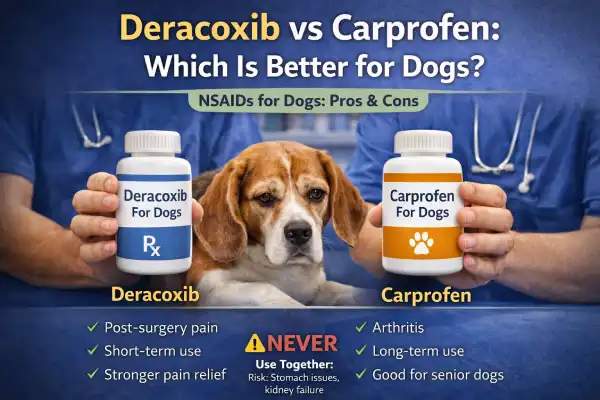
Why Owners Should Never Combine NSAIDs
Occasionally, owners become frustrated when one NSAID appears less effective.
Without veterinary advice they may consider:
- adding aspirin;
- giving ibuprofen;
- combining two veterinary NSAIDs;
- alternating different NSAIDs at home.
These strategies are potentially dangerous.
Combining NSAIDs greatly increases the risk of serious gastrointestinal and kidney complications without providing predictable improvements in pain control.
Instead, veterinarians usually modify the overall treatment plan rather than stacking anti-inflammatory medications.
Never Do These Without Veterinary Guidance
| Action | Why it should be avoided |
|---|---|
| Combine two NSAIDs | Increased risk of gastrointestinal bleeding and kidney injury |
| Add human ibuprofen | Highly toxic to dogs |
| Give aspirin with another NSAID | Increased adverse-effect risk |
| Increase the prescribed dose | May increase toxicity without improving comfort |
| Restart an old prescription | The dog’s condition may have changed significantly |
Why Veterinarians Often Recommend Additional Therapies Instead
When owners ask “Can Dogs Build Tolerance to NSAIDs?”, they often expect the conversation to remain focused on medication.
Veterinarians think differently.
They often ask:
“How can we improve this dog’s overall comfort?”
That broader approach may include:
- improving body condition;
- increasing muscle strength;
- modifying exercise;
- improving traction inside the home;
- adding rehabilitation;
- considering nutritional support;
- reassessing the diagnosis.
For example, many owners successfully combine medication with nutritional strategies. Our articles Can Dogs Take Fish Oil With Pain Medication? and Can Dogs Take Joint Supplements With NSAIDs? explain why supportive therapies are often introduced as arthritis progresses rather than simply increasing NSAID exposure.
Why Small Improvements Often Produce the Biggest Results
Many owners search for one dramatic change.
Veterinarians usually create several smaller improvements.
A dog may become noticeably more comfortable through:
- losing excess body weight;
- walking shorter distances more frequently;
- strengthening weakened muscles;
- sleeping on orthopedic bedding;
- avoiding slippery floors;
- continuing appropriate NSAID therapy.
No single intervention completely transforms arthritis.
Together, however, these changes frequently produce substantial improvements in quality of life.
Common Owner Mistakes That Make It Seem Like an NSAID Has Stopped Working
After months of successful treatment, it is understandable for owners to become frustrated if their dog’s arthritis begins interfering with daily life again.
Many immediately return to the same question:
“Can Dogs Build Tolerance to NSAIDs?”
However, by the time a veterinarian finishes the consultation, the answer is often very different from what the owner expected.
Instead of finding true NSAID tolerance, they frequently identify one or more small problems that have gradually reduced the dog’s comfort.
Interestingly, these problems often have nothing to do with the medication itself.
Recognizing them early can prevent unnecessary medication changes and help maintain a dog’s quality of life for years.
Missing Doses Is More Common Than Most Owners Realize
One of the simplest explanations is also one of the most common.
Long-term treatment routines are difficult.
After several months it becomes surprisingly easy to:
- forget a morning tablet;
- give today’s dose several hours late;
- accidentally skip a day while traveling;
- run out of medication before requesting a refill;
- stop treatment temporarily because the dog “looked much better.”
Owners often underestimate how much these interruptions affect chronic pain control.
Unlike treating a headache, arthritis management depends on consistent long-term control of inflammation.
When medication schedules become inconsistent, discomfort gradually returns.
That discomfort is then mistaken for evidence that dogs build tolerance to NSAIDs, when the medication simply has not been administered consistently.
Small Changes in Routine Can Produce Big Changes in Comfort
| Change in routine | Possible result |
|---|---|
| Missed dose | Temporary increase in joint discomfort |
| Medication given late | Greater stiffness before the next dose |
| Several skipped days | Return of inflammation |
| Irregular schedule | Fluctuating mobility from day to day |
| Running out of medication | Gradual decline in comfort |
This is why veterinarians nearly always ask owners to describe their dosing routine before assuming the treatment has become ineffective.
Why Owners Sometimes Expect Too Much From One Medication
Another reason people ask “Can Dogs Build Tolerance to NSAIDs?” is because the first few weeks of treatment are often dramatic.
A dog that could barely climb stairs may suddenly become playful again.
That dramatic improvement creates a new expectation.
Owners naturally hope their dog will continue feeling exactly the same for years.
Unfortunately, chronic arthritis rarely behaves that way.
Even excellent treatment cannot permanently stop aging or reverse severe joint damage.
As time passes, most dogs require adjustments to their overall management plan.
That does not mean the original NSAID failed.
It means the disease has continued to change.
Why Comparing Today With the “Best Week Ever” Can Be Misleading
Many owners unknowingly compare every future day with the single best week their dog experienced after beginning treatment.
Veterinarians, however, evaluate long-term trends instead.
For example:
If a dog improved from walking only five minutes to comfortably walking thirty minutes every day, but one year later comfortably walks twenty-five minutes, that is still excellent progress.
The medication may continue providing substantial benefit.
The expectation simply changed.
This difference between perception and reality explains why the question “Can Dogs Build Tolerance to NSAIDs?” arises so frequently during long-term arthritis care.
How Owners Can Monitor Treatment at Home
One of the most valuable things owners can do is keep simple written observations.
A notebook or smartphone note often provides far more useful information than memory alone.
Rather than writing:
“My dog seems worse.”
Try recording specific observations.
For example:
- How long was today’s walk?
- Was there morning stiffness?
- Did the dog hesitate on stairs?
- Was limping worse before or after exercise?
- Has appetite changed?
- Was medication given at the usual time?
Patterns become much easier to recognize when information is recorded consistently.
Home Monitoring Checklist
| Observation | Why it helps |
|---|---|
| Morning stiffness | Tracks progression over time |
| Walking distance | Measures practical mobility |
| Ability to climb stairs | Reflects joint comfort |
| Appetite | Helps identify medication-related concerns |
| Water intake | May indicate other medical conditions |
| Body weight | Influences joint loading |
| Medication time | Confirms dosing consistency |
| Activity level | Helps evaluate overall quality of life |
Veterinarians often find these observations more valuable than a simple statement that the medication “doesn’t work anymore.”
When Should Owners Contact Their Veterinarian?

Not every bad day requires an emergency appointment.
However, some changes should never be ignored.
Veterinary assessment is recommended if your dog develops:
- rapidly worsening lameness;
- persistent vomiting;
- black or bloody stools;
- complete refusal to eat;
- marked weakness;
- collapse;
- severe lethargy;
- obvious abdominal pain;
- sudden inability to stand.
These signs may indicate something much more serious than progression of arthritis.
They require professional evaluation rather than medication adjustments at home.
Signs That Deserve Prompt Veterinary Attention
| Symptom | Why it is important |
|---|---|
| Black stools | Possible gastrointestinal bleeding |
| Repeated vomiting | Possible NSAID adverse effect |
| Refusal to eat | May indicate illness requiring evaluation |
| Collapse | Medical emergency |
| Severe weakness | Requires prompt examination |
| Sudden non-weight-bearing lameness | Possible orthopedic injury |
| Dramatic behavior change | May indicate pain or systemic disease |
Prompt treatment often prevents minor problems from becoming major complications.
Why Veterinarians Focus on Quality of Life
The goal of arthritis treatment is not simply reducing pain scores.
It is improving the dog’s daily life.
Veterinarians therefore ask questions such as:
Can the dog still enjoy walks?
Does the dog greet family members?
Can it rise comfortably after sleeping?
Does it still enjoy eating?
Is it interested in playing?
Can it participate in normal family activities?
These questions often reveal treatment success more accurately than X-rays or laboratory results alone.
Owners who are thinking about the future often ask whether chronic arthritis inevitably leads to poor quality of life.
Why Long-Term Success Depends on More Than Medication
The most successful arthritis patients usually have something in common.
Their owners understand that medication is only one part of treatment.
Successful long-term management often combines:
- appropriate NSAID therapy;
- maintaining a healthy body weight;
- preserving muscle strength;
- controlled daily exercise;
- home modifications;
- regular veterinary reassessments;
- supportive nutritional strategies when appropriate.
Each component contributes a small improvement.
Together, those improvements often produce remarkable long-term results.
That is why veterinarians think far beyond the question:
“Can Dogs Build Tolerance to NSAIDs?”
They focus instead on keeping the entire dog as healthy, active, and comfortable as possible.
Can Dogs Build Tolerance to NSAIDs? The Practical Answer
After everything discussed throughout this guide, one conclusion becomes clear.
Current veterinary evidence does not support true NSAID tolerance as the most common reason dogs become less comfortable during long-term treatment.
Far more frequently, veterinarians identify:
- progression of osteoarthritis;
- reduced muscle mass;
- weight gain;
- inconsistent medication administration;
- changing activity levels;
- new orthopedic disease;
- or another medical condition affecting mobility.
Understanding these possibilities allows treatment to evolve safely instead of simply increasing medication doses.
In the final analysis, asking “Can Dogs Build Tolerance to NSAIDs?” is the right question but it often leads to a much more valuable conversation about the dog’s overall health rather than the medication alone.
Veterinarian Takeaway
By now, one message should be clear: when owners ask “Can Dogs Build Tolerance to NSAIDs?”, the answer is usually far more reassuring than expected.
Veterinary NSAIDs do not commonly stop working because the body becomes resistant to them. Instead, veterinarians are much more likely to identify progression of osteoarthritis, reduced muscle mass, weight gain, a new orthopedic injury, or the need for a more comprehensive pain management plan.
The goal of long-term treatment is not simply to continue prescribing the same medication forever. It is to keep the dog comfortable, mobile, and able to enjoy a good quality of life while minimizing the risk of adverse effects.
That is why regular veterinary reassessments remain one of the most valuable parts of successful arthritis management.
Bottom Line
So, can dogs build tolerance to NSAIDs?
For the overwhelming majority of dogs, true pharmacological tolerance is not considered the most likely explanation when an NSAID appears less effective.
Instead, veterinarians are far more likely to find that:
- osteoarthritis has progressed;
- another painful condition has developed;
- body weight has increased;
- muscle support has declined;
- medication has not been administered consistently;
- or the treatment plan needs to evolve.
Owners should resist the temptation to increase the NSAID dose on their own.
A veterinary examination is almost always safer and more informative than changing the medication without professional guidance.
Clinical Pearls
| Clinical Pearl | Why It Matters |
|---|---|
| True NSAID tolerance is uncommon. | Most dogs do not become resistant to veterinary NSAIDs. |
| Osteoarthritis continues progressing. | Disease progression is a much more common explanation for returning pain. |
| Body weight influences pain control. | Even moderate weight gain increases stress on arthritic joints. |
| Muscle strength protects joints. | Preserving muscle mass improves long-term mobility. |
| Multimodal therapy is often more effective than increasing the NSAID dose. | Combining therapies addresses pain through multiple mechanisms. |
| Regular rechecks improve long-term outcomes. | Small changes can be identified before they become major problems. |
| Never adjust NSAID doses without veterinary advice. | Higher doses increase the risk of adverse effects without guaranteeing better pain control. |
Frequently Asked Questions – Can Dogs Build Tolerance to NSAIDs
Can dogs build tolerance to NSAIDs over time?
Current veterinary evidence suggests that true pharmacological tolerance to veterinary NSAIDs is uncommon. Most dogs that appear less comfortable are experiencing progression of arthritis or another medical change rather than medication tolerance.
Why does my dog’s NSAID seem less effective than it did six months ago?
The most common reasons include worsening osteoarthritis, muscle loss, weight gain, reduced activity, a new orthopedic injury, or the need for additional pain-management strategies.
Should I increase my dog’s NSAID dose if the medication seems to stop working?
No.
Never increase the dose without speaking to your veterinarian. Higher doses increase the risk of stomach ulcers, kidney injury, and other complications while not necessarily improving pain control.
Can switching to another NSAID help?
Sometimes.
Individual dogs may respond differently to different NSAIDs. However, changing medications does not necessarily mean your dog developed NSAID tolerance
Can arthritis become worse even if the NSAID is still working?
Yes.
NSAIDs reduce inflammation and improve comfort, but they cannot stop every structural change occurring inside an arthritic joint.
Can dogs remain on the same NSAID for years?
Many dogs can safely remain on long-term NSAID therapy when regular veterinary monitoring confirms that the medication continues providing meaningful benefits and remains appropriate for the individual patient.
Does body weight affect how well NSAIDs work?
Absolutely.
Extra body weight places greater mechanical stress on painful joints, making arthritis appear worse even when the NSAID continues reducing inflammation.
Can rehabilitation help if my dog’s NSAID seems less effective?
Yes.
Controlled exercise, rehabilitation, weight management, and muscle strengthening often improve mobility without increasing NSAID exposure.
Should I stop the NSAID if my dog starts limping again?
No.
Returning lameness does not automatically mean the medication has failed. Your veterinarian should determine whether arthritis has progressed or whether another orthopedic condition has developed.
What symptoms require immediate veterinary attention?
Seek veterinary care promptly if your dog develops:
repeated vomiting;
black or bloody stools;
collapse;
severe weakness;
refusal to eat;
sudden inability to stand;
severe abdominal pain;
dramatic behavioral changes.
These symptoms may indicate a serious medical problem rather than simple arthritis progression
Final Thoughts
When owners first search “Can Dogs Build Tolerance to NSAIDs?”, they are usually hoping for a simple answer.
The reality is more encouraging.
Most dogs do not suddenly become resistant to NSAIDs.
Instead, chronic arthritis changes gradually over months and years, and successful treatment must change with it.
Veterinarians think beyond the medication itself.
They evaluate the dog as a whole—its mobility, muscle condition, body weight, lifestyle, concurrent diseases, laboratory results, and overall quality of life.
This individualized approach explains why many dogs continue enjoying active, comfortable lives for years despite chronic arthritis.
Rather than asking whether the medication has stopped working, the more useful question is:
“What has changed in my dog’s health since the last examination?”
That question almost always leads to a better treatment plan.
Sources
- Epstein ME, Rodan I, Griffenhagen G, et al. 2022 AAHA Pain Management Guidelines for Dogs and Cats. Journal of the American Animal Hospital Association.
- Plumb DC. Plumb’s Veterinary Drug Handbook. Latest edition.
- Merck Veterinary Manual. Osteoarthritis in Dogs.
- Merck Veterinary Manual. Pain Management in Small Animals.
- Grimm KA, Lamont LA, Tranquilli WJ, Greene SA, Robertson SA. Veterinary Anesthesia and Analgesia.
- Papich MG. Saunders Handbook of Veterinary Drugs.
- Riviere JE, Papich MG. Veterinary Pharmacology and Therapeutics.
- Maddison JE, Page SW, Church DB. Small Animal Clinical Pharmacology.
- WSAVA Global Pain Council Resources.
- AVMA Pain Management Resources.
Medical Review Statement
This article was written by Dimitar Georgiev Atanasov, MPharm, pharmacy and scientific reviewed by Gergana Krasimirova Atanasova, MPharm, and veterinary reviewed by Dr. Valcho Georgiev Valchev, DVM.
The information provided is intended for educational purposes only and should never replace professional veterinary diagnosis or treatment. If your dog develops worsening pain, vomiting, black stools, severe weakness, or any other concerning symptoms while receiving NSAID therapy, contact your veterinarian promptly.
Image Disclosure
Image Disclosure: Some images used in this article may be AI-generated or AI-assisted for educational and illustrative purposes. They are designed to simplify complex veterinary concepts and should not replace professional veterinary advice.





So,I like it