
Why Is My Dog in Pain? – Dogs may be in pain because of injury, inflammation, infection, digestive upset, arthritis, medication side effects, or an underlying medical condition. Common signs include limping, whining, hiding, reduced appetite, stiffness, restlessness, and behavior changes. If the pain is severe, sudden, or lasts more than 24–48 hours, your dog should be evaluated by a veterinarian.
How Do You Know If Your Dog Is in Pain?
Dogs often hide pain, which makes early symptoms easy to miss. Some dogs cry or limp, but others become quiet, withdrawn, or less interested in food, play, and movement.
Common signs of pain in dogs include:
- Limping or moving more slowly
- Whining, crying, or unusual vocalization
- Hiding or avoiding contact
- Reduced appetite
- Excessive licking of one body area
- Stiffness or trouble getting up
- Restlessness or inability to settle
- Irritability or aggression
👉 Pain does not always look dramatic. In many dogs, the first clue is simply a change in normal behavior. – Why Is My Dog in Pain?
Why Is My Dog in Pain?
Table 1: Mild vs Moderate vs Severe Pain Signs in Dogs
| Severity | Signs | What It May Mean |
|---|---|---|
| Mild | Slight stiffness, lower activity, less playfulness | Early discomfort or minor strain |
| Moderate | Limping, whining, appetite loss, avoiding movement | Pain that should be checked soon |
| Severe | Crying out, collapse, inability to walk, persistent distress | Possible emergency |
Behavioral Changes That May Mean Your Dog Is in Pain
Pain is not always physical in appearance. Many dogs show pain through behavior before obvious physical symptoms appear.
Watch for changes such as:
- Sleeping more than usual
- Not greeting you normally
- Avoiding stairs or jumping
- Becoming clingy or unusually distant
- Snapping when touched
- Losing interest in walks
These changes are especially important in dogs with chronic pain conditions. In those cases, owners often end up researching treatment options such as Dog Pain Medications Explained: Safety, Dosage & Side Effects or What Pain Medications Can Dogs Take? (Beginner Guide) as they try to understand what safe relief may look like.

Common Causes of Pain in Dogs
Pain in dogs can come from many different sources, and identifying the pattern helps narrow down the likely cause.
1. Joint, Muscle, and Back Problems
One of the most common causes of pain in dogs is musculoskeletal discomfort. This includes:
- Arthritis
- Joint inflammation
- Soft tissue injuries
- Back pain
- Hip problems
Dogs with this type of pain may move stiffly, hesitate before standing, or stop doing things they usually enjoy. Owners comparing treatment options for these cases often move from symptom-based searches into medication guides such as Carprofen for Dogs: Uses, Dosage & Side Effects, Rimadyl for Dogs: Uses, Dosage & Side Effects, or Is meloxicam safe for dogs?
For readers looking for non-drug support, this is also a natural place to explore Natural Pain Relief for Dogs: What Works & What Doesn’t (Vet-Backed Guide).
2. Injury or Trauma
Sudden pain is often caused by:
- Sprains
- Falls
- Cuts
- Torn nails
- Bite wounds
- Fractures
In these cases, signs are often more obvious. A dog may limp suddenly, yelp, refuse to put weight on a leg, or guard a certain part of the body.
If your dog cannot bear weight, cries when touched, or seems distressed after an accident, that should not be ignored.
3. Digestive Pain
Abdominal pain is one of the most overlooked causes of discomfort in dogs. A dog with stomach or intestinal pain may not limp, but may still be clearly uncomfortable.Why Is My Dog in Pain?
Common signs of digestive pain include:
- Hunched posture
- Restlessness
- Vomiting
- Diarrhea
- Loss of appetite
- Looking at the belly
- Repeated stretching
This kind of pain may happen with infection, inflammation, parasites, or medication side effects. If digestive symptoms start during antibiotic treatment, readers may need to look at Antibiotic Diarrhea in Dogs: Causes, Treatment & Prevention (Full Guide), especially if the issue began after drugs like Amoxicillin for Dogs: Uses, Dosage & Side Effects (Vet-Approved Guide) or Cephalexin for Dogs: Uses, Dosage, Side Effects & Safety (Vet-Backed Guide).
Dogs with intestinal infections or severe diarrhea may also be treated with Metronidazole for Dogs: Uses, Dosage, Side Effects & Safety (Vet-Backed Guide), which is why digestive pain deserves its own careful attention.Why Is My Dog in Pain?
Table 2: Pain Location and What Owners Often Notice
| Pain Location | Common Signs |
|---|---|
| Legs or joints | Limping, stiffness, slower walking |
| Back or neck | Reluctance to jump, posture changes, pain when lifted |
| Abdomen | Hunched back, vomiting, diarrhea, restlessness |
| Mouth or teeth | Drooling, chewing difficulty, reduced appetite |
| Ears | Head shaking, scratching, sensitivity to touch |
4. Infections and Inflammation
Pain is often caused by inflammation from infection. Common examples include:
- Ear infections
- Skin infections
- Dental infections
- Urinary tract infections
- GI infections
A dog with an infection may show pain because tissues are swollen, irritated, and inflamed. Depending on the diagnosis, treatment may involve antibiotics, and that is where readers may naturally continue into Antibiotics for Dogs: Uses, Types, Dosage, Side Effects & Safety Guide before learning about specific drugs like Doxycycline for Dogs: Uses, Dosage, Side Effects & Safety (Vet-Backed Guide) or Amoxicillin Side Effects in Dogs: What to Watch For (Vet-Backed Guide).
5. Medication Side Effects
Sometimes the pain or discomfort is not from the original illness, but from the treatment itself.
Certain medications may cause:
- Stomach irritation
- Vomiting
- Diarrhea
- Weakness
- Neurological symptoms
For example, dogs taking doxycycline may develop nausea or irritation, which is why Doxycycline Side Effects in Dogs: What to Watch For (Vet-Backed Guide) and Doxycycline and Vomiting in Dogs: Causes, Treatment & When to Worry are important follow-up resources. Likewise, digestive upset after cephalexin may lead owners to Cephalexin Side Effects in Dogs: What to Watch For (Vet-Backed Guide) or Cephalexin Cause Diarrhea in Dogs? (Causes, Treatment & When to Worry).
Hidden Pain: When Dogs Don’t Make It Obvious
Some dogs are very expressive when they hurt. Others become quieter and harder to read. Hidden pain is especially common in:
- Older dogs
- Stoic breeds
- Dogs with chronic disease
- Dogs with nerve-related pain
Subtle signs may include:
- Less excitement around meals
- Sleeping in unusual places
- Avoiding stairs
- Slower movement in the morning
- Less interest in family interaction
This is one reason chronic pain conditions often go unrecognized until owners begin researching long-term treatment articles such as Complete Guide to Gabapentin for Dogs: Uses, Dosage, Side Effects & Safety, Gabapentin Dosage for Dogs: Vet Guidelines, Weight Chart & Safety Tips, or Is Tramadol Safe for Dogs? Uses, Dosage & Risks.
When Should You Go to the Vet? – Why Is My Dog in Pain?
You should seek veterinary care right away if:
- Your dog cannot stand or walk
- Your dog cries out repeatedly
- Pain appears suddenly and severely
- There is visible trauma or swelling
- Vomiting or diarrhea is severe
- Your dog collapses
- Your dog seems disoriented or neurologically abnormal
These signs may point to serious injury, toxicity, obstruction, or advanced illness.
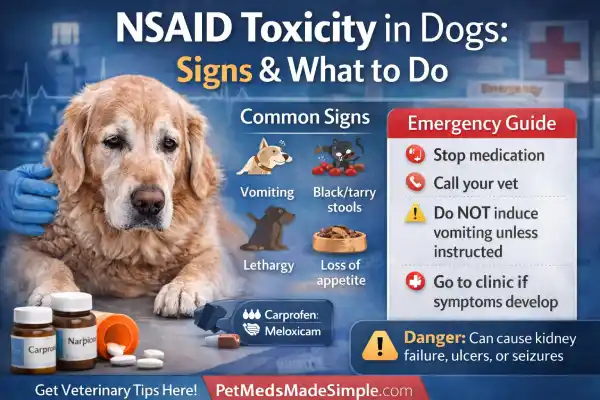
If medication exposure is possible, this is also where emergency-focused content like NSAID Toxicity in Dogs: Signs & What to Do, How Much Ibuprofen Is Toxic to Dogs?, and Can I Give My Dog Ibuprofen or Aspirin? becomes extremely relevant.
How to Help a Dog in Pain at Home
For mild discomfort, supportive care may help while you arrange further evaluation.
Safe steps may include:
- Rest
- A calm environment
- Easy access to water
- Limiting jumping and rough activity
- Monitoring appetite, stool, and behavior
What owners should not do is give random human pain medicine. Human drugs can be dangerous, and sometimes life-threatening, for dogs.
For readers who are trying to support recovery after GI side effects, Probiotics for Dogs: Do They Help with Antibiotic Side Effects? (Vet-Backed Guide) is a strong next step, especially when antibiotics are part of the picture.Why Is My Dog in Pain?
Why Early Detection Matters
Pain is often the first visible sign that something is wrong. A dog with a mild limp may have a joint problem that worsens without treatment. A dog with abdominal pain may be heading toward dehydration. A dog acting strangely after medication may be developing a side effect that becomes more serious if ignored.
Early attention matters because it can:
- Reduce suffering
- Prevent complications
- Improve recovery
- Make treatment more effective
That is exactly why this page works as a symptom hub. It helps readers move from “my dog seems uncomfortable” into the right treatment or medication category based on the likely cause.Why Is My Dog in Pain?
FAQ – Why Is My Dog in Pain?
How can I tell if my dog is in pain?
Look for limping, whining, posture changes, lower appetite, reduced activity, or behavior changes.
Do dogs hide pain?
Yes. Many dogs instinctively hide pain, especially early on.
Can stomach problems cause pain in dogs?
Yes. Digestive problems are a very common cause of discomfort and abdominal pain.
When is dog pain an emergency?
Pain is an emergency when your dog cannot move, cries out repeatedly, collapses, or has severe vomiting or diarrhea.
Can medication side effects make dogs look painful?
Yes. Some medications can cause nausea, stomach irritation, diarrhea, vomiting, or neurological symptoms.
Should I give my dog human pain medication?
No. Many human pain medications are dangerous for dogs.
Medical Disclaimer
This article is for informational purposes only and does not replace professional veterinary advice, diagnosis, or treatment. Always consult a licensed veterinarian if your dog appears to be in pain or develops new or worsening symptoms.Why Is My Dog in Pain?
Sources & References
- American Veterinary Medical Association
- Merck Veterinary Manual
- American Animal Hospital Association
- Plumb’s Veterinary Drug Handbook
Images from Pixabay and AI – Why Is My Dog in Pain?