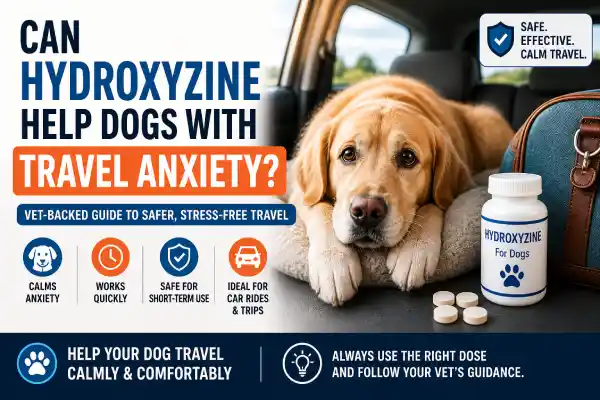
Can hydroxyzine help dogs with travel anxiety?
Yes, hydroxyzine can help dogs with travel anxiety by reducing mild to moderate stress, calming the nervous system, and decreasing allergic-type reactions associated with anxiety. However, it is best suited for mild cases or as part of combination therapy, not severe panic situations.
Travel anxiety is one of the most common problems dog owners face—whether it’s car rides, long trips, or even short vet visits. The right medication can make a huge difference—but choosing the right one is key.
As a pharmacist, I’ll say this clearly:
👉 Hydroxyzine is safe and useful—but not always strong enough alone
➡️ Learn more:
Hydroxyzine for Dogs: Uses, Dosage & Safety (Vet-Backed Guide)
What Is Hydroxyzine and How Does It Work in Dogs?
Hydroxyzine is an antihistamine with sedative properties. Unlike SSRIs or benzodiazepines, it does not directly target serotonin or GABA in the same way, but it still produces a calming effect by:
- Blocking histamine receptors
- Reducing central nervous system stimulation
- Causing mild sedation
This makes it especially useful in situations where anxiety is mild and situational, rather than chronic or severe.
Can Hydroxyzine Help Dogs with Travel Anxiety?
Why Hydroxyzine Is Often Used for Travel
Travel anxiety often includes:
- Nervous excitement
- Motion sensitivity
- Mild stress reactions
Hydroxyzine works well because it:
✔ Calms without heavy sedation
✔ Has relatively low risk
✔ Can be used short-term
➡️ Internal links:
- Best Anxiety Medication for Dogs with Separation Anxiety (Comparison Guide – Vet-Backed)
- What Can I Give My Dog for Anxiety? (Full Comparison Guide)
How Effective Is Hydroxyzine for Travel Anxiety?
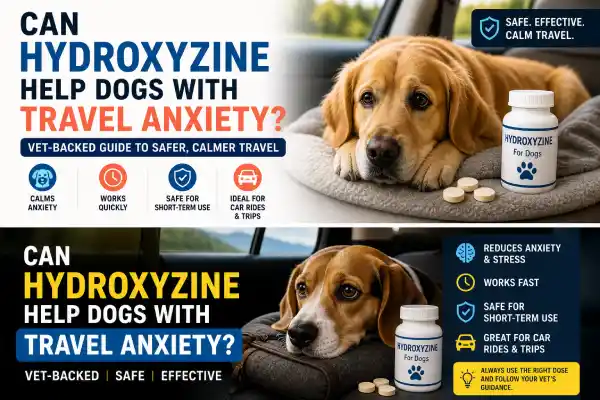
Hydroxyzine is generally considered moderately effective for travel anxiety, particularly in dogs that show mild to moderate stress rather than full panic responses. Its calming effect is subtle compared to stronger medications like alprazolam or trazodone, but this can actually be an advantage in many cases.
For example, dogs that become restless, pant excessively, or show signs of nervous anticipation before travel often respond well to hydroxyzine. It helps “take the edge off” without causing deep sedation or altering personality too drastically. This makes it a good option for owners who want their dog to remain alert and functional during travel.
However, in dogs with severe travel anxiety, hydroxyzine alone may not be sufficient. Dogs that experience intense fear, vocalization, attempts to escape, or panic-level stress often require stronger medications or combination therapy.
Another important factor is predictability. Hydroxyzine works best when given before a known trigger. Unlike SSRIs, which require weeks to build effect, hydroxyzine works relatively quickly and can be used as needed.
👉 In practice, it is often used as:
- A first-line mild option
- A “trial medication” before stronger drugs
- A supportive medication in combination therapy
➡️ Internal link:
Trazodone vs Alprazolam for Dogs: Which Works Faster? (Vet-Backed Comparison)
When Hydroxyzine Works Best
Hydroxyzine is most effective in specific types of dogs and anxiety patterns. It tends to work best when the anxiety is not deeply rooted or neurologically intense, but rather situational and predictable.
Best Scenarios for Use
✔ Short car rides
✔ First-time travel stress
✔ Mild nervous behavior
✔ Dogs that respond well to sedation
In these cases, hydroxyzine can significantly reduce stress without the need for stronger medications.
Dogs That Benefit Most
- Young dogs with mild anxiety
- Dogs without a history of panic attacks
- Dogs with allergy-related stress (itching + anxiety combo)
Hydroxyzine is particularly useful in dogs where anxiety is linked to sensory overload or environmental change, rather than deep fear-based conditioning.
Limitations
Hydroxyzine may not work well in:
❌ Severe panic disorders
❌ Dogs with extreme fear responses
❌ Long-term anxiety conditions
👉 In these cases, stronger medications or combination therapy are required.
Table: Hydroxyzine vs Other Travel Anxiety Medications
| Medication | Strength | Speed | Best Use |
|---|---|---|---|
| Hydroxyzine | Mild | Fast | Mild anxiety |
| Trazodone | Moderate | Moderate | Travel + stress |
| Alprazolam | Strong | Fast | Panic attacks |
| Fluoxetine | Long-term | Slow | Chronic anxiety |
How to Use Hydroxyzine for Travel
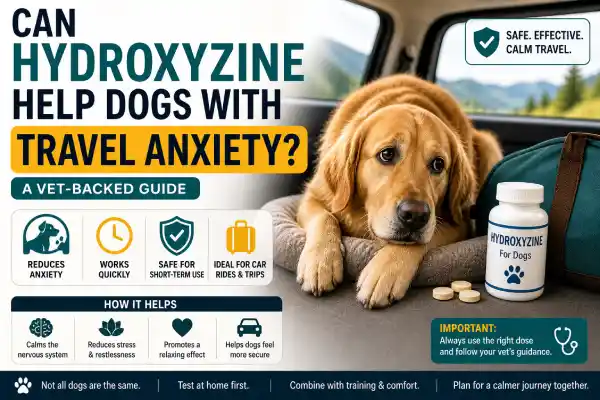
Using hydroxyzine correctly is critical for achieving the best results. Timing, dosage, and observation all play a role in effectiveness.
Timing Is Key
Hydroxyzine should be given:
👉 30–90 minutes before travel
This allows the medication to:
- Reach peak levels
- Start calming the dog before stress begins
Dosing Considerations
- Always follow veterinary guidance
- Dose depends on weight and sensitivity
- Start low and adjust if needed
Test Before Travel
One of the most important tips:
👉 Always test the medication at home first
This allows you to:
- Observe side effects
- Adjust dosage safely
- Avoid surprises during travel
Monitoring During Use
Watch for:
- Sedation level
- Behavioral response
- Coordination
Side Effects of Hydroxyzine
Hydroxyzine is generally well tolerated, but like any medication, it can cause side effects.
Common Side Effects
- Mild sedation
- Dry mouth
- Slight coordination changes
Less Common
- Gastrointestinal upset
- Increased lethargy
Rare but Important
- Excessive sedation
- Paradoxical excitement
👉 If these occur, dose adjustment is needed.
➡️ Internal link:
Hydroxyzine Side Effects in Dogs: What to Watch For (Vet-Backed Guide)
Combination Therapy (Best Strategy for Travel Anxiety)
Hydroxyzine is often most effective when used as part of a broader strategy rather than alone. Combination therapy allows veterinarians to balance safety with effectiveness by using lower doses of multiple medications instead of high doses of a single drug.
A common approach includes:
- Hydroxyzine → baseline calming
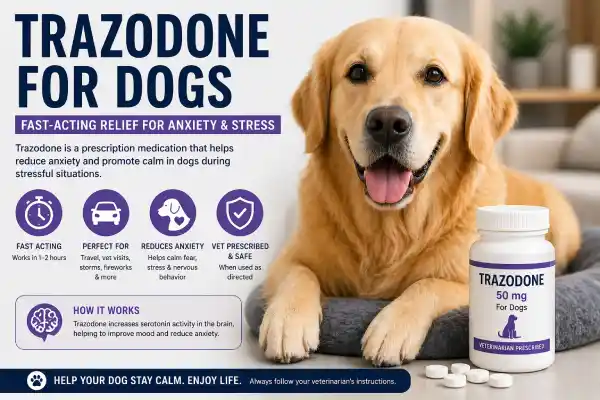
- Trazodone → moderate stress control
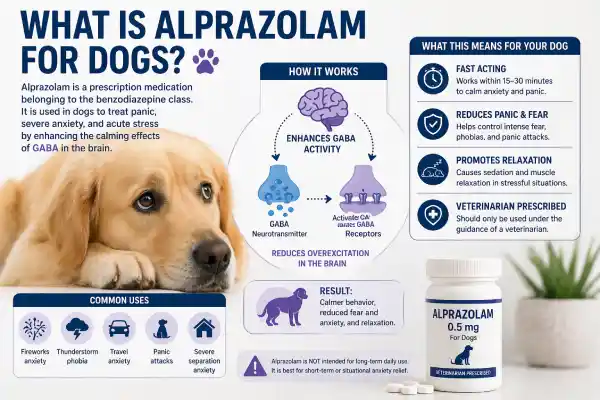
- Alprazolam → emergency panic situations
This layered strategy provides flexibility and allows owners to respond to different levels of anxiety.
Combination therapy is especially useful for:
- Long trips
- Dogs with unpredictable reactions
- Dogs with mixed anxiety triggers
👉 The goal is control without over-sedation
Common Mistakes
❌ Giving medication too late
❌ Expecting strong sedation
❌ Using hydroxyzine for severe anxiety
❌ Not testing beforehand
Timing is one of the biggest mistakes. Giving hydroxyzine after anxiety has already started significantly reduces its effectiveness. Another issue is expecting it to work like stronger drugs—it is meant to calm, not sedate deeply.
Using it in severe cases often leads to disappointment and unnecessary dose increases, which can increase side effects without improving results.
Pro Tips for Best Results
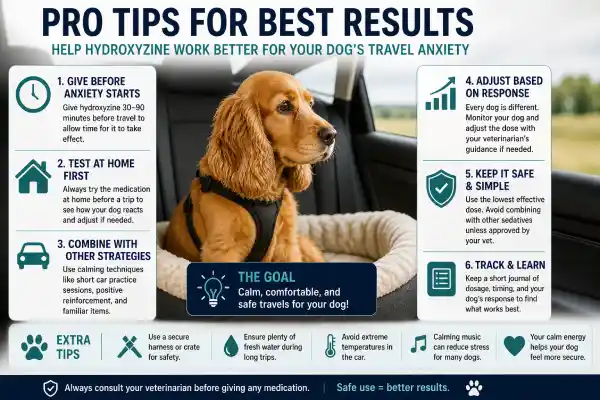
✔ Give before anxiety starts
✔ Combine with behavioral strategies
✔ Use trial runs at home
✔ Adjust based on response
For best results, combine hydroxyzine with:
- Positive reinforcement
- Familiar items during travel
- Calm environment
Small changes in routine can significantly improve outcomes when combined with medication.
FAQ Can Hydroxyzine Help Dogs with Travel Anxiety?
Can hydroxyzine calm a dog for car rides?
Yes, especially for mild to moderate anxiety.
Is hydroxyzine strong enough for travel anxiety?
For mild cases, yes. Severe cases may need stronger meds.
How long before travel should I give it?
30–90 minutes before.
Can it be combined with other medications?
Yes, under veterinary supervision.
Is it safe for long trips?
Generally yes, if properly dosed.
Conclusion
Hydroxyzine is a safe and useful option for travel anxiety—but it has limits.
✔ Best for mild anxiety
✔ Works quickly
✔ Safe for short-term use
👉 The best results come from proper timing + correct expectations
Medical Disclaimer
This content is for informational purposes only and does not replace professional veterinary advice.
Sources
American Veterinary Medical Association
Merck Veterinary Manual
VCA Animal Hospitals
Veterinary Information Network (VIN)