Quick Answer
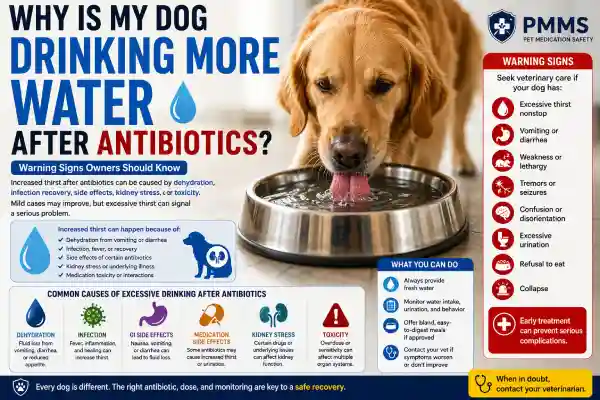
Why is my dog drinking more water after antibiotics? Dogs may drink more water after antibiotics because of dehydration, nausea, diarrhea, fever, infection recovery, medication side effects, or increased thirst caused by certain drugs. Mild temporary thirst may happen during recovery, but excessive drinking combined with vomiting, weakness, tremors, confusion, or increased urination may indicate a serious medication reaction or underlying illness requiring veterinary attention.
Many dog owners become worried when they suddenly notice their dog:
- Drinking bowl after bowl of water
- Visiting the water dish constantly
- Waking up thirsty at night
- Urinating more than normal
- Acting unusually thirsty after antibiotics
And honestly?
Increased thirst after antibiotics is a very common concern.
Sometimes the explanation is relatively mild:
- Recovery from infection
- Mild dehydration
- Temporary GI upset
- Medication-related thirst
But in other cases, excessive drinking may signal:
- Severe dehydration
- Diarrhea-related fluid loss
- Kidney stress
- Medication toxicity
- Drug interactions
- Worsening illness
- Neurological complications
The difficult part is that owners often do not know:
“Is this normal recovery… or something dangerous?”
This guide explains:
- Why antibiotics may increase thirst
- Which medications are most commonly linked to excessive drinking
- When increased thirst is considered normal
- Which symptoms may signal danger
- How veterinarians diagnose abnormal thirst
- What treatments may help
Related articles:
- Can Antibiotics Cause Loss of Appetite in Dogs?
- Can Antibiotics Cause Weakness in Dogs?
- Can Antibiotics Cause Diarrhea in Dogs?
- What Does Antibiotic Toxicity Look Like in Dogs?
- Why Is My Dog Restless at Night After Antibiotics?
For broader guidance:
- Antibiotics for Dogs: Uses, Types, Dosage, Side Effects & Safety Guide
- Safest Antibiotics for Dogs: Vet Comparison Guide
Why Is My Dog Drinking More Water After Antibiotics?
Can Antibiotics Make Dogs Thirsty?
Yes — some antibiotics may indirectly increase thirst in dogs.
This can happen because antibiotics may:
- Upset the stomach
- Cause diarrhea
- Trigger vomiting
- Lead to mild dehydration
- Affect electrolyte balance
- Increase urination
- Stress the kidneys in sensitive dogs
Some dogs simply drink more because their body is trying to recover.
Why Do Dogs Drink More Water During Infections?
Sometimes the infection itself is the real cause.
Dogs fighting infections may experience:
- Fever
- Inflammation
- Dehydration
- Reduced appetite
- Increased metabolic demand
This often increases thirst naturally.
Common Infection-Related Causes of Increased Thirst
| Cause | Common? | Serious? |
|---|---|---|
| Fever | Common | Usually mild |
| Dehydration | Common | Moderate |
| Reduced appetite | Common | Mild to moderate |
| Vomiting or diarrhea | Common | Potentially serious |
| Kidney involvement | Less common | Serious |
Can Dehydration Cause Increased Thirst?
Absolutely.
Even mild dehydration may cause dogs to:
- Drink excessively
- Seek water constantly
- Wake up thirsty
- Pant more
- Become restless
Dehydration may occur from:
- Vomiting
- Diarrhea
- Fever
- Reduced food intake
- GI side effects
Related:
Which Antibiotics Most Commonly Cause Increased Thirst?
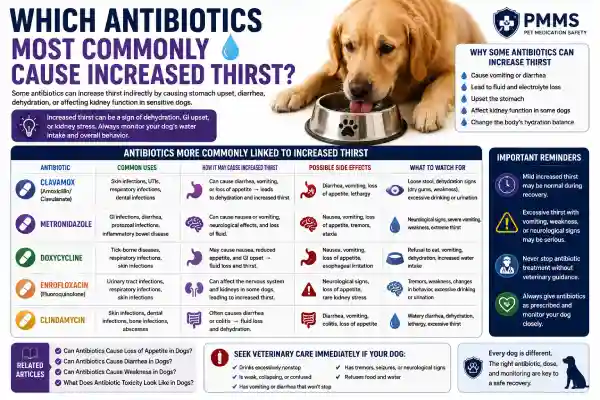
Certain antibiotics are more likely to contribute to GI upset or dehydration.
Antibiotics More Commonly Linked to Increased Thirst
| Antibiotic | Possible Reason |
|---|---|
| Clavamox | Diarrhea or stomach upset |
| Metronidazole | GI and neurological effects |
| Doxycycline | Nausea and reduced appetite |
| Enrofloxacin | Nervous system effects |
| Clindamycin | GI irritation |
Related:
- Metronidazole Side Effects in Dogs
- Doxycycline Side Effects in Dogs
- Enrofloxacin Side Effects in Dogs
- Clindamycin Side Effects in Dogs
Can Diarrhea or Vomiting Increase Water Intake?
Definitely.
Dogs lose fluids quickly through:
- Vomiting
- Diarrhea
- Excessive drooling
- Fever
- Reduced appetite
The body then tries to compensate by increasing thirst.
Signs of Fluid Loss
| Symptom | Why It Matters |
|---|---|
| Dry gums | Dehydration sign |
| Panting | Fluid imbalance |
| Weakness | Reduced circulation |
| Sunken eyes | More serious dehydration |
| Lethargy | Possible worsening illness |
Related:
Can Increased Thirst Be a Sign of Toxicity?
Sometimes yes — and this is extremely important.
Medication toxicity may affect:
- The kidneys
- Electrolytes
- Hydration balance
- Neurological function
- Liver metabolism
Dogs with toxicity may show:
- Extreme thirst
- Excessive urination
- Tremors
- Weakness
- Vomiting
- Confusion
- Collapse
Related:
Can Antibiotics Affect the Kidneys?
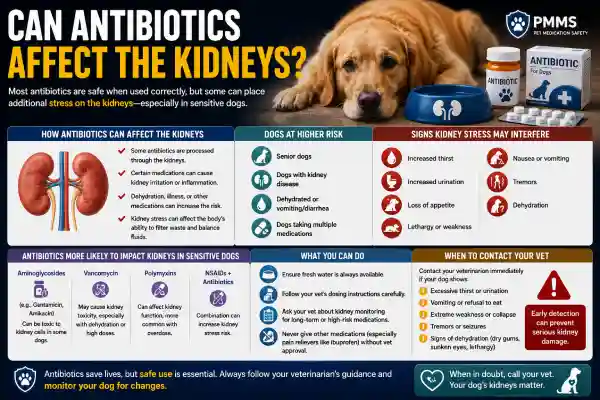
Most antibiotics are safe when used correctly.
However, some medications may place additional stress on the kidneys in:
- Senior dogs
- Dehydrated dogs
- Dogs with kidney disease
- Dogs taking multiple medications
Kidney stress may contribute to:
- Increased thirst
- Increased urination
- Weakness
- Reduced appetite
Is Mild Increased Thirst Normal?
Sometimes yes.
Mild temporary thirst may occur:
- During infection recovery
- During mild dehydration
- After diarrhea
- During fever
- With temporary GI upset
If your dog:
- Still behaves normally
- Eats reasonably well
- Improves gradually
- Drinks without obsessively consuming water
the situation may not be dangerous.
But extreme thirst should never be ignored.
When Is Excessive Drinking Dangerous?
Increased thirst becomes more concerning when combined with:
- Weakness
- Tremors
- Vomiting
- Collapse
- Severe lethargy
- Confusion
- Excessive urination
- Loss of appetite
- Neurological symptoms
Warning Signs Owners Should Watch For
| Symptom | Serious? |
|---|---|
| Drinking nonstop | Yes |
| Vomiting repeatedly | Serious |
| Severe weakness | Serious |
| Collapse | Emergency |
| Tremors | Serious |
| Confusion | Serious |
| Seizures | Emergency |
What Symptoms Should Owners Watch For?
Important Symptoms to Monitor
| Symptom | Possible Meaning |
|---|---|
| Increased urination | Fluid imbalance |
| Weakness | Dehydration or toxicity |
| Tremors | Neurological reaction |
| Refusal to eat | GI irritation |
| Severe panting | Stress or dehydration |
| Restlessness | Discomfort or nausea |
Related:
How Veterinarians Diagnose Excessive Thirst
Veterinarians evaluate:
- Water intake changes
- Urination frequency
- Medication timing
- GI symptoms
- Kidney function
- Neurological symptoms
- Existing medical conditions
Possible testing may include:
- Bloodwork
- Kidney values
- Electrolyte testing
- Urinalysis
- Hydration assessment
- Medication review
How Is Increased Thirst Treated?
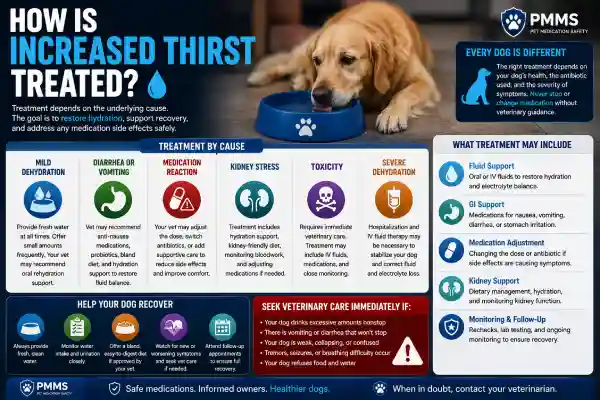
Treatment depends on the underlying cause.
Possible Treatments
| Cause | Possible Treatment |
|---|---|
| Mild dehydration | Increased fluids |
| Diarrhea or vomiting | GI treatment |
| Medication reaction | Medication adjustment |
| Kidney stress | Monitoring and fluids |
| Toxicity | Hospitalization |
| Severe dehydration | IV fluids |
How to Help Your Dog Safely
Helpful Tips
| Tip | Why It Helps |
|---|---|
| Keep fresh water available | Prevent dehydration |
| Monitor water intake | Detect worsening symptoms |
| Watch urination closely | Evaluate hydration balance |
| Offer bland meals if approved | Reduce GI stress |
| Monitor neurological symptoms | Detect toxicity early |
| Contact your veterinarian if symptoms worsen | Improve safety |
When Should You Call the Vet Immediately?
Seek veterinary care immediately if your dog:
- Drinks excessively nonstop
- Cannot keep water down
- Develops tremors
- Becomes weak or collapses
- Shows confusion
- Has seizures
- Stops eating completely
- Has severe vomiting or diarrhea
- Develops difficulty breathing
These symptoms may indicate:
- Severe dehydration
- Kidney complications
- Toxicity
- Dangerous medication reactions
- Worsening infection
FAQ – Why Is My Dog Drinking More Water After Antibiotics?
Can antibiotics make a dog extra thirsty?
Yes antibiotics may increase thirst indirectly through dehydration, GI upset, diarrhea, or medication side effects.
Do dogs drink more water when they have an infection?
Absolutely. Fever, inflammation, and dehydration during infection recovery commonly increase thirst.
How long does it take for dogs to recover from antibiotics?
Many dogs improve within a few days, but recovery depends on the infection, medication, and overall health.
Why is my dog suddenly drinking so much more water?
Excessive thirst may be caused by infection recovery, dehydration, GI side effects, kidney stress, or medication reactions.
Can increased thirst be a sign of toxicity?
Yes especially if thirst occurs with weakness, tremors, vomiting, confusion, or collapse.
Medical Disclaimer
This article is for educational purposes only and does not replace professional veterinary advice, diagnosis, or treatment. The content is written and pharmacist-reviewed to improve medication safety awareness and help dog owners better understand antibiotic side effects, hydration changes, kidney complications, toxicity risks, neurological reactions, and veterinary medication safety considerations. Always consult your veterinarian before starting, stopping, or changing any medication for your dog.Why Is My Dog Drinking More Water After Antibiotics?
Sources
- Merck Veterinary Manual
- VIN Veterinary Partner
- American Veterinary Medical Association (AVMA)
- FDA Center for Veterinary Medicine
- PetMD Veterinary Health Articles
- WSAVA Global Veterinary Guidelines