Quick Answer
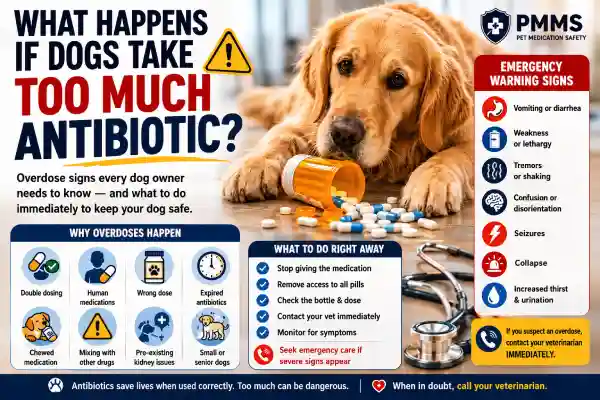
What happens if dogs take too much antibiotic? Dogs that take too much antibiotic may develop vomiting, diarrhea, weakness, tremors, excessive drooling, loss of appetite, neurological symptoms, dehydration, or serious toxicity depending on the medication and dose. Mild overdoses may cause temporary stomach upset, but severe overdoses can lead to seizures, collapse, kidney complications, or life-threatening reactions requiring immediate veterinary care.
Many dog owners panic after realizing:
- They accidentally gave a double dose
- Another family member already gave the medication
- Their dog chewed into the antibiotic bottle
- The wrong dose was administered
- Their dog received human antibiotics
And honestly?
That fear is justified.
Some antibiotic overdoses cause only mild digestive upset.
But others may trigger:
- Severe neurological reactions
- Kidney stress
- Liver complications
- Dangerous dehydration
- Seizures
- Collapse
- Toxicity emergencies
The risk depends on:
- Which antibiotic was involved
- How much was taken
- The dog’s size
- Existing medical conditions
- Other medications being used
This guide explains:
- What happens during antibiotic overdose
- Which antibiotics are most dangerous
- What symptoms owners should watch for
- What to do immediately after an accidental overdose
- How veterinarians treat antibiotic toxicity
- Which warning signs should NEVER be ignored
Related articles:
- What Does Antibiotic Toxicity Look Like in Dogs?
- Can Antibiotics Cause Weakness in Dogs?
- Can Antibiotics Interact With Anxiety or Pain Medications?
- Why Is My Dog Drinking More Water After Antibiotics?
For broader guidance:
- Antibiotics for Dogs: Uses, Types, Dosage, Side Effects & Safety Guide
- Safest Antibiotics for Dogs: Vet Comparison Guide
What Happens If Dogs Take Too Much Antibiotic?
Can Too Much Antibiotic Hurt a Dog?
Yes — absolutely.
Even commonly prescribed antibiotics may become dangerous when:
- Large overdoses occur
- Dogs are very small
- Multiple medications are involved
- Kidney or liver disease exists
- Sensitive breeds are affected
Some overdoses mainly cause:
- Vomiting
- Diarrhea
- Stomach irritation
Others may affect:
- The nervous system
- Kidneys
- Liver
- Electrolytes
- Hydration balance
What Are the Signs of Antibiotic Overdose?
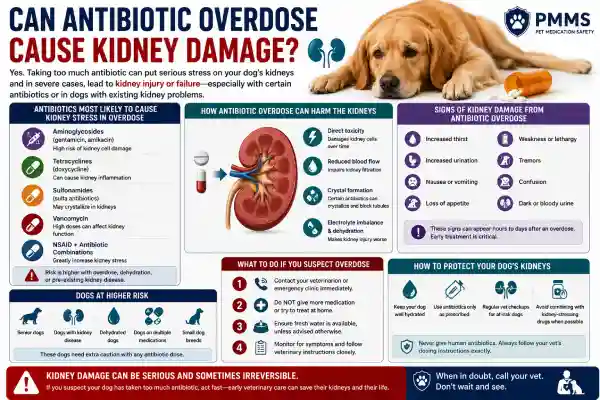
Symptoms vary depending on the medication involved.
Common Signs of Antibiotic Overdose
| Symptom | Common? | Serious? |
|---|---|---|
| Vomiting | Very common | Mild to moderate |
| Diarrhea | Common | Mild to serious |
| Excessive drooling | Common | Mild |
| Loss of appetite | Common | Moderate |
| Weakness | Sometimes | Serious |
| Tremors | Less common | Serious |
| Confusion | Less common | Serious |
| Seizures | Rare | Emergency |
| Collapse | Rare | Emergency |
Related:
Which Antibiotics Are Most Dangerous in Overdose?
Some antibiotics carry higher overdose risks than others.
Antibiotics More Commonly Linked to Toxicity
| Antibiotic | Possible Overdose Risk |
|---|---|
| Metronidazole | Neurological toxicity |
| Enrofloxacin | CNS complications |
| Gentamicin | Kidney damage |
| Amikacin | Kidney and hearing damage |
| Clindamycin | Severe GI irritation |
| Doxycycline | Esophageal and GI injury |
Related:
- Metronidazole Side Effects in Dogs
- Enrofloxacin Side Effects in Dogs
- Doxycycline Side Effects in Dogs
Can Antibiotic Overdose Cause Neurological Symptoms?
Absolutely — and this is one of the most dangerous complications.
Neurological toxicity may cause:
- Tremors
- Disorientation
- Hyperactivity
- Restlessness
- Weakness
- Loss of coordination
- Seizures
Metronidazole overdoses are especially known for causing neurological side effects in dogs.
Neurological Warning Signs
| Symptom | Emergency? |
|---|---|
| Tremors | Serious |
| Walking strangely | Serious |
| Confusion | Serious |
| Seizures | Emergency |
| Collapse | Emergency |
Related:
Can Antibiotic Overdose Cause Kidney Damage?
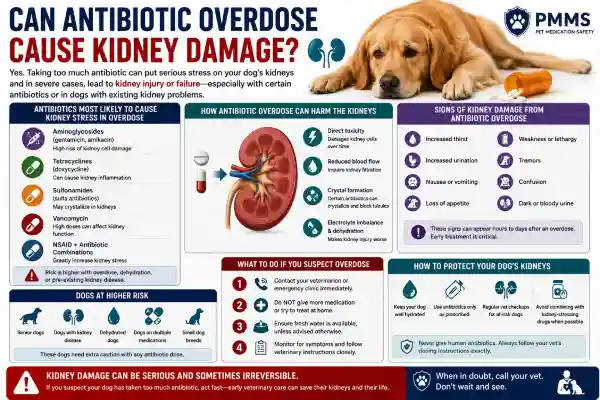
Yes — particularly with certain antibiotics.
Some medications may place additional stress on:
- Kidney filtration
- Hydration balance
- Electrolytes
This becomes more dangerous in:
- Senior dogs
- Dehydrated dogs
- Dogs with kidney disease
- Dogs taking NSAIDs or multiple medications
Possible Kidney Stress Signs
| Symptom | Why It Matters |
|---|---|
| Increased thirst | Possible kidney involvement |
| Increased urination | Fluid imbalance |
| Weakness | Electrolyte problems |
| Vomiting | Toxicity or dehydration |
| Loss of appetite | Systemic illness |
Related:
What If I Accidentally Double-Dosed My Dog?
This is one of the most common medication mistakes.
Do NOT panic immediately.
A single accidental double dose may only cause mild side effects in some cases.
However, owners should:
- Contact their veterinarian immediately
- Call an emergency veterinary clinic
- Monitor symptoms closely
- Watch for vomiting, tremors, weakness, or neurological changes
The safest action depends on:
- Which antibiotic was given
- How much was taken
- The dog’s size and health
Never induce vomiting unless instructed by a veterinarian.
Can Dogs Overdose on Amoxicillin?
Yes — although mild overdoses often cause GI upset rather than severe toxicity.
Possible symptoms include:
- Vomiting
- Diarrhea
- Drooling
- Reduced appetite
- Stomach discomfort
Large overdoses or combinations with other medications may increase risks significantly.
Human formulations may also contain:
- Dangerous inactive ingredients
- Incorrect concentrations
- Unsafe additives
Can Human Antibiotics Be Dangerous for Dogs?
Absolutely.
Owners should NEVER give:
- Leftover human antibiotics
- Expired antibiotics
- Unprescribed medications
- Human combination products
Some human medications may contain:
- Toxic ingredients
- Dangerous concentrations
- Xylitol or additives
- Incorrect dosing strength
Related:
What Symptoms Should Owners Never Ignore?
Emergency Warning Signs
| Symptom | Emergency? |
|---|---|
| Seizures | YES |
| Collapse | YES |
| Severe weakness | YES |
| Trouble breathing | YES |
| Continuous vomiting | Serious |
| Severe tremors | Serious |
| Confusion | Serious |
| Loss of coordination | Serious |
These symptoms may indicate:
- Severe toxicity
- Neurological overdose
- Dangerous medication reactions
- Kidney complications
- Electrolyte imbalance
What Should Owners Do Immediately?
Important First Steps
| Step | Why It Matters |
|---|---|
| Stay calm | Prevent mistakes |
| Remove access to medication | Prevent additional overdose |
| Check the medication bottle | Confirm dose and drug |
| Contact your veterinarian | Get immediate guidance |
| Monitor symptoms closely | Detect worsening toxicity |
| Keep water available | Support hydration |
Do NOT:
- Give additional medications
- Induce vomiting without instruction
- Wait for severe symptoms to appear
How Veterinarians Diagnose Antibiotic Overdose
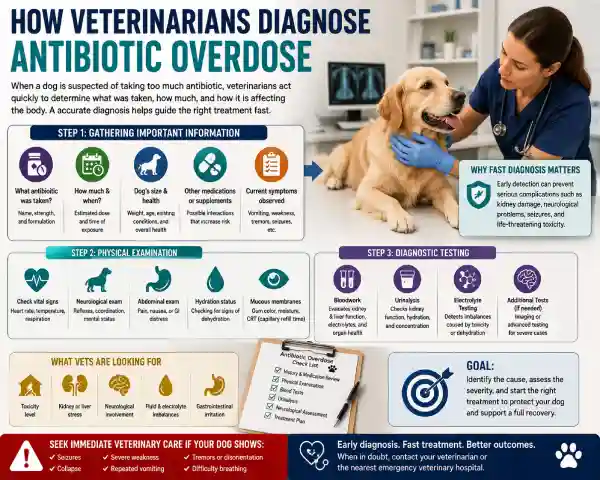
Veterinarians evaluate:
- Which antibiotic was taken
- Estimated overdose amount
- Timing of exposure
- Neurological symptoms
- GI symptoms
- Kidney and liver function
- Existing medical conditions
Possible testing may include:
- Bloodwork
- Kidney values
- Liver enzymes
- Electrolyte testing
- Neurological examination
- Hydration assessment
How Veterinarians Treat Antibiotic Overdose
Treatment depends on:
- The medication involved
- Severity of symptoms
- Time since overdose
- Underlying health conditions
Possible Treatments
| Problem | Possible Treatment |
|---|---|
| Mild GI upset | Supportive care |
| Dehydration | IV fluids |
| Neurological symptoms | Hospitalization |
| Seizures | Emergency medication |
| Kidney stress | Monitoring and fluids |
| Severe toxicity | Intensive care |
What Is the Prognosis After Antibiotic Overdose?
Many dogs recover fully with rapid veterinary treatment.
Recovery depends on:
- How quickly treatment begins
- The medication involved
- Dose size
- Kidney/liver health
- Neurological involvement
Early treatment greatly improves outcomes.
When Should You Go to the Emergency Vet Immediately?
Seek emergency veterinary care immediately if your dog:
- Has seizures
- Collapses
- Cannot stand
- Develops severe tremors
- Shows confusion
- Has trouble breathing
- Vomits repeatedly
- Cannot keep water down
- Becomes severely weak
These symptoms may become life-threatening quickly.
FAQ – What Happens If Dogs Take Too Much Antibiotic
Can too much antibiotics hurt a dog?
Yes overdoses may cause GI upset, dehydration, neurological symptoms, kidney complications, or serious toxicity.
What are the signs of antibiotic overdose?
Common signs include vomiting, diarrhea, weakness, drooling, tremors, confusion, and seizures.
What if I accidentally gave my dog too much medication?
Contact your veterinarian immediately and monitor your dog closely for symptoms.
Can a dog overdose on amoxicillin?
Yes especially with large overdoses or improper human formulations.
Should I induce vomiting after antibiotic overdose?
Never induce vomiting unless specifically instructed by a veterinarian.
Medical Disclaimer
This article is for educational purposes only and does not replace professional veterinary advice, diagnosis, or treatment. The content is written and pharmacist-reviewed to improve medication safety awareness and help dog owners better understand antibiotic overdose risks, toxicity symptoms, neurological complications, kidney stress, and emergency veterinary treatment considerations. Always consult your veterinarian immediately if you suspect your dog has received too much medication.What Happens If Dogs Take Too Much Antibiotic?