Quick Answer
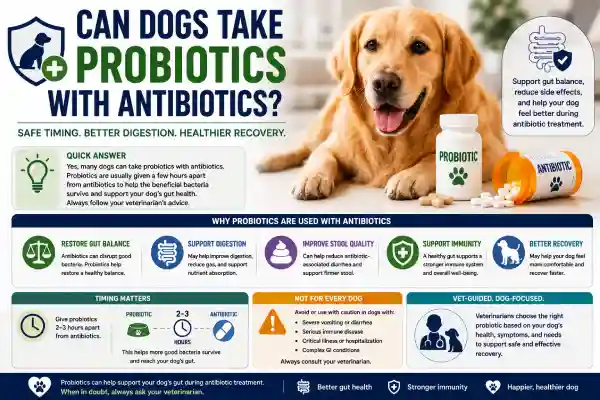
Can dogs take probiotics with antibiotics? Yes many dogs can take probiotics with antibiotics, but they are usually given a few hours apart so the antibiotic does not immediately reduce the probiotic bacteria. Probiotics may help support gut balance, stool quality, and digestion during or after antibiotic treatment, but dogs with serious illness, immune problems, severe vomiting, or complex GI disease should only use probiotics under veterinary guidance.
Many dog owners become concerned when antibiotics suddenly cause:
- Diarrhea
- Soft stool
- Gas
- Loss of appetite
- Nausea
- Stomach upset
- Changes in digestion
And honestly?
This happens very often.
Antibiotics are designed to kill harmful bacteria — but they may also disrupt:
- Healthy gut bacteria
- Digestion
- Stool consistency
- GI balance
That is why many veterinarians recommend probiotics during or after antibiotic treatment.
But owners often ask:
- Can probiotics be given at the same time?
- Will antibiotics kill the probiotics?
- Are probiotics always safe?
- Which dogs benefit the most?
- Can probiotics reduce antibiotic side effects?
This guide explains:
- How probiotics work with antibiotics
- The safest timing strategy
- Which dogs may benefit most
- When probiotics may not be appropriate
- What symptoms owners should watch for
- How veterinarians choose probiotics for dogs
Related articles:
- Can Antibiotics Cause Diarrhea in Dogs?
- Can Antibiotics Cause Loss of Appetite in Dogs?
- Can Dogs Take Antibiotics on an Empty Stomach?
- Why Does My Dog Drool After Antibiotics?
- Antibiotics for Dogs: Uses, Types, Dosage, Side Effects & Safety Guide
Can Dogs Take Probiotics With Antibiotics?
Can Dogs Take Probiotics and Antibiotics at the Same Time?
Yes but timing matters.
Antibiotics may reduce or destroy some probiotic bacteria if given too closely together.
That is why many veterinarians recommend:
- Giving probiotics a few hours before or after antibiotics
- Keeping the schedule consistent
- Continuing probiotics for several days after antibiotics end
General Timing Strategy
| Medication | Suggested Timing |
|---|---|
| Antibiotic | As prescribed |
| Probiotic | Usually 2–3 hours apart |
This may help probiotics survive more effectively in the digestive system.
Why Are Probiotics Used With Antibiotics?
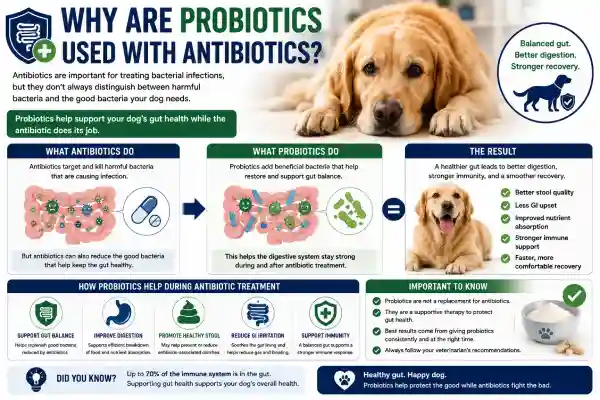
Antibiotics may disrupt the natural balance of bacteria inside the gut.
This disruption may contribute to:
- Diarrhea
- Gas
- Loose stool
- Nausea
- Reduced appetite
- GI discomfort
Probiotics may help:
- Support gut bacteria balance
- Improve stool quality
- Support digestion
- Reduce GI irritation
- Improve recovery
Can Probiotics Help Antibiotic Diarrhea?
Sometimes yes.
Antibiotic-associated diarrhea is very common in dogs.
Dogs may develop:
- Loose stool
- Frequent bowel movements
- Mild cramping
- Gas
- Stomach upset
Some probiotics may help support:
- Healthier digestion
- Stool consistency
- GI recovery
Common Digestive Problems During Antibiotic Use
| Symptom | Common? |
|---|---|
| Soft stool | Very common |
| Diarrhea | Common |
| Gas | Common |
| Reduced appetite | Common |
| Nausea | Common |
Related:
Should Probiotics Be Given During or After Antibiotics?
In many cases, probiotics may be used:
- During treatment
- After treatment
- Or both
Some veterinarians recommend continuing probiotics for:
- Several days
- Or even weeks
after antibiotics end.
This may help the gut recover more gradually.
Which Dogs Benefit Most From Probiotics?
Some dogs are more likely to develop digestive side effects during antibiotic treatment.
Dogs That May Benefit More
| Dog Type | Why |
|---|---|
| Dogs with sensitive stomachs | More GI irritation |
| Dogs with diarrhea history | Higher GI sensitivity |
| Senior dogs | Slower recovery |
| Dogs taking long antibiotic courses | Greater gut disruption |
| Dogs with stress-related GI issues | More digestive imbalance |
Can Antibiotics Completely Kill Probiotics?
Not always — but they may reduce their effectiveness if given together.
That is why spacing doses apart is commonly recommended.
However:
- Some probiotic strains survive better
- Some veterinary probiotics are specially designed for dogs
- Timing may improve effectiveness
When Not to Give Probiotics to Dogs
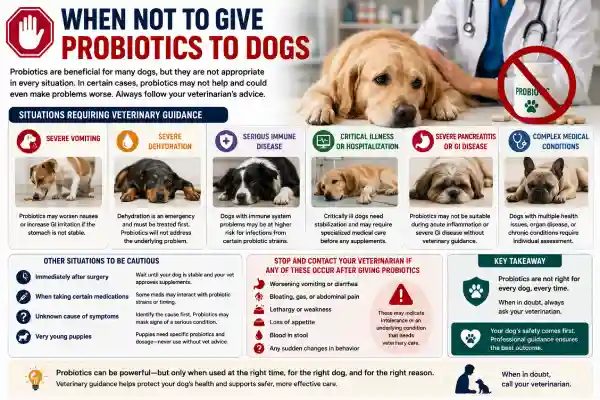
Although probiotics are often considered safe, they may not be ideal in every situation.
Situations Requiring Veterinary Guidance
| Situation | Why Caution Matters |
|---|---|
| Severe vomiting | May worsen GI stress |
| Severe dehydration | Requires medical care first |
| Serious immune disease | Infection risk concerns |
| Critical illness | Complex medical management |
| Severe pancreatitis | Specialized diet/treatment needed |
Dogs with severe illness should always be evaluated by a veterinarian before adding supplements.
Can Probiotics Cause Side Effects?
Sometimes yes — especially when first introduced.
Possible mild side effects may include:
- Temporary gas
- Mild bloating
- Soft stool
- Increased bowel sounds
These symptoms are often temporary.
However, worsening GI symptoms should always be discussed with a veterinarian.
Which Probiotics Are Commonly Used for Dogs?
Veterinarians often recommend products specifically designed for dogs.
Common Veterinary Probiotic Features
| Feature | Why It Matters |
|---|---|
| Dog-specific strains | Better canine GI support |
| Stable bacteria strains | Improved survival |
| Veterinary formulation | Better safety control |
| GI-targeted support | Improved digestive balance |
Avoid randomly using human supplements without veterinary guidance.
Can Probiotics Help Dogs Recover Faster?
Possibly.
A healthier gut may help support:
- Digestion
- Nutrient absorption
- Appetite
- Stool quality
- Overall recovery comfort
But probiotics are not a replacement for:
- Proper antibiotics
- Veterinary treatment
- Hydration
- Correct diagnosis
What Symptoms Should Owners Watch For?
Important Symptoms to Monitor
| Symptom | Possible Meaning |
|---|---|
| Severe diarrhea | GI irritation |
| Vomiting | Medication intolerance |
| Weakness | Dehydration or illness |
| Loss of appetite | GI discomfort |
| Blood in stool | Serious complication |
| Severe lethargy | Veterinary concern |
Related:
How Veterinarians Choose a Probiotic

Veterinarians may consider:
- Antibiotic type
- GI symptoms
- Stool quality
- Medical history
- Severity of illness
- Age
- Diet
- Existing GI disease
Not all probiotics are equally effective.
Different dogs may respond differently.
How to Give Probiotics Safely
Helpful Tips
| Tip | Why It Helps |
|---|---|
| Separate doses from antibiotics | Improve probiotic survival |
| Follow veterinary guidance | Improve safety |
| Keep dosing consistent | Support gut balance |
| Monitor stool quality | Track improvement |
| Ensure hydration | Support recovery |
When Should You Contact the Vet?
Contact your veterinarian if your dog develops:
- Severe diarrhea
- Blood in stool
- Persistent vomiting
- Refusal to eat
- Severe lethargy
- Tremors
- Collapse
- Worsening GI symptoms
These may indicate:
- Antibiotic intolerance
- Severe GI complications
- Dehydration
- Toxicity
- Worsening illness
FAQ – Can Dogs Take Probiotics With Antibiotics?
Can my dog take probiotics and antibiotics at the same time?
Yes but many veterinarians recommend spacing them a few hours apart.
Can probiotics and antibiotics be used together?
Absolutely. Probiotics are often used to support digestion during antibiotic treatment.
When should you not give probiotics to dogs?
Dogs with severe illness, immune problems, severe vomiting, or complex GI disease may require veterinary supervision before using probiotics.
Which probiotic is best for SIBO?
The best probiotic depends on the dog’s condition, symptoms, and veterinary recommendations.
Do probiotics stop antibiotic diarrhea in dogs?
They may help support stool quality and digestion, but results vary between dogs.
Medical Disclaimer
This article is for educational purposes only and does not replace professional veterinary advice, diagnosis, or treatment. The content is written and pharmacist-reviewed to improve medication safety awareness and help dog owners better understand probiotics, antibiotic-related digestive changes, GI side effects, hydration concerns, and veterinary medication safety considerations. Always consult your veterinarian before adding supplements or changing your dog’s treatment plan.Can Dogs Take Probiotics With Antibiotics?
Sources
- PetMD
- Veterinary Specialists Fact Sheet
- Merck Veterinary Manual
- American Veterinary Medical Association (AVMA)
Images mae with AI – Can Dogs Take Probiotics With Antibiotics?