Quick Answer
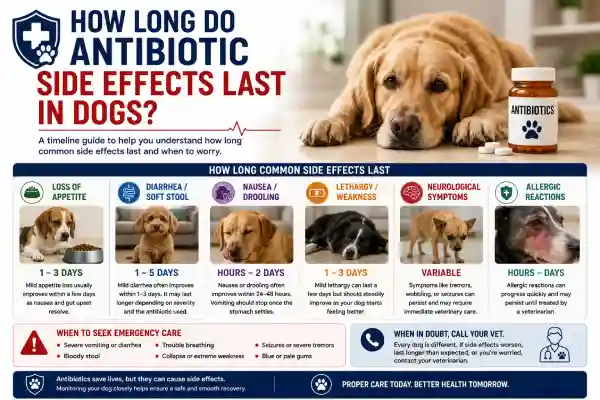
How long do antibiotic side effects last in dogs? Mild antibiotic side effects in dogs — such as nausea, soft stool, drooling, or decreased appetite — often improve within 24 to 72 hours after the medication is stopped or adjusted. More serious reactions, including neurological symptoms, severe vomiting, persistent diarrhea, weakness, or allergic reactions, may last longer and require immediate veterinary care.
Many dog owners become worried when side effects continue after starting antibiotics.
Common questions include:
- “How long will my dog feel sick?”
- “Should side effects stop immediately?”
- “Is this reaction normal?”
- “Why is my dog still weak?”
- “When should I call the vet?”
And honestly?
Those concerns are very understandable.
Some antibiotic side effects are:
- Mild
- Temporary
- Expected during treatment
Others may signal:
- Medication intolerance
- Toxicity
- Severe GI upset
- Allergic reactions
- Neurological complications
- Worsening infection
The difficult part is that owners often do not know:
“Is this temporary… or dangerous?”
This guide explains:
- How long common antibiotic side effects may last
- Which symptoms usually improve quickly
- Which reactions can persist longer
- When side effects become emergencies
- How veterinarians manage ongoing reactions
- What recovery timelines owners should expect
Related articles:
- Can Antibiotics Cause Loss of Appetite in Dogs?
- Can Antibiotics Cause Diarrhea in Dogs?
- What Does Antibiotic Toxicity Look Like in Dogs?
- Can Dogs Take Probiotics With Antibiotics?
- Why Is My Dog Breathing Fast After Antibiotics?
For broader guidance:
- Antibiotics for Dogs: Uses, Types, Dosage, Side Effects & Safety Guide
- Safest Antibiotics for Dogs: Vet Comparison Guide
How Long Do Antibiotic Side Effects Last in Dogs?
Why Do Antibiotic Side Effects Happen?
Antibiotics target bacteria causing infection — but they may also affect:
- Healthy gut bacteria
- Digestion
- Nervous system balance
- Appetite
- Hydration
- GI lining
Some side effects happen because:
- The medication irritates the stomach
- Gut bacteria become disrupted
- The body reacts to the medication
- The infection itself stresses the body
Certain antibiotics are also more likely to cause:
- Neurological symptoms
- Nausea
- Diarrhea
- Restlessness
- Weakness
How Long Do Mild Antibiotic Side Effects Usually Last?
Many mild side effects improve relatively quickly.
Typical Mild Side Effect Recovery Timeline
| Side Effect | Common Duration | Usually Serious? |
|---|---|---|
| Mild nausea | 1–3 days | Usually mild |
| Soft stool | 1–5 days | Usually mild |
| Mild diarrhea | 1–5 days | Sometimes |
| Reduced appetite | 1–3 days | Sometimes |
| Drooling | Hours to 2 days | Usually mild |
| Mild lethargy | 1–3 days | Sometimes |
Many dogs improve:
- During treatment adjustment
- After the antibiotic is stopped
- After probiotics or supportive care
Related:
How Long Does Diarrhea Last After Antibiotics?
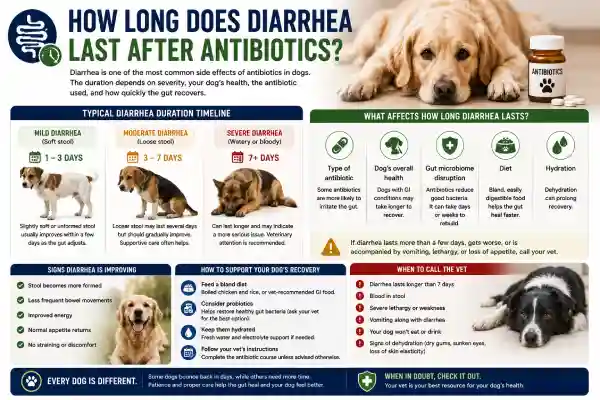
Diarrhea is one of the most common antibiotic side effects in dogs.
Mild diarrhea may improve within:
- 24–72 hours
- Several days after stopping treatment
However:
persistent diarrhea should NEVER be ignored.
Why Antibiotics Cause Diarrhea
Antibiotics may:
- Disrupt healthy gut bacteria
- Irritate the GI tract
- Alter stool consistency
- Increase intestinal inflammation
Diarrhea Recovery Timeline
| Severity | Typical Duration |
|---|---|
| Mild soft stool | 1–3 days |
| Moderate diarrhea | Several days |
| Severe diarrhea | Veterinary care needed |
Related:
How Long Does Loss of Appetite Last?
Reduced appetite often improves relatively quickly after:
- Medication adjustment
- GI recovery
- Hydration improvement
However:
ongoing refusal to eat can become dangerous.
Appetite Loss Timeline
| Severity | Typical Duration |
|---|---|
| Mild appetite reduction | 1–3 days |
| Moderate nausea | Several days |
| Complete refusal to eat | Veterinary concern |
Dogs that stop eating may become:
- Weak
- Dehydrated
- More vulnerable to worsening illness
Related:
How Long Does Nausea Last After Antibiotics?
Nausea may occur because antibiotics irritate:
- The stomach lining
- GI motility
- Gut bacteria balance
Dogs may show:
- Lip licking
- Drooling
- Grass eating
- Swallowing repeatedly
- Refusing food
- Vomiting
Nausea Timeline
| Symptom | Common Duration |
|---|---|
| Mild nausea | Hours to 2 days |
| Moderate nausea | Several days |
| Persistent vomiting | Emergency concern |
Related:
How Long Can Neurological Side Effects Last?
Neurological side effects are MUCH more serious.
Some antibiotics — especially:
- Metronidazole
- Fluoroquinolones
may affect the nervous system.
Symptoms may include:
- Tremors
- Weakness
- Confusion
- Wobbling
- Hyperactivity
- Seizures
Neurological Recovery Timeline
| Symptom Severity | Possible Duration |
|---|---|
| Mild wobbliness | Several days |
| Tremors | Variable |
| Severe toxicity | Hospitalization may be needed |
Neurological symptoms should NEVER be ignored.
Related:
Can Gut Bacteria Take Longer to Recover?
Absolutely.
Antibiotics may alter the gut microbiome for:
- Days
- Weeks
- Sometimes longer
Some dogs may continue having:
- Sensitive digestion
- Gas
- Stool changes
- Mild appetite fluctuations
This is one reason veterinarians sometimes recommend:
- Probiotics
- Bland diets
- Gradual recovery support
Signs Gut Recovery Is Still Happening
| Symptom | Possible Meaning |
|---|---|
| Mild stool changes | Gut flora adjustment |
| Temporary gas | Microbiome recovery |
| Mild appetite fluctuations | GI healing |
| Mild sensitivity | Ongoing gut stabilization |
Related:
Which Side Effects Should Improve Quickly?
Some symptoms usually improve relatively fast after stopping or adjusting antibiotics.
Symptoms Often Improving Within Days
| Symptom | Expected Improvement |
|---|---|
| Mild drooling | Usually fast |
| Mild nausea | Usually fast |
| Mild lethargy | Often improves quickly |
| Mild appetite loss | Often improves quickly |
| Mild soft stool | Often improves gradually |
Which Side Effects Are Emergencies?
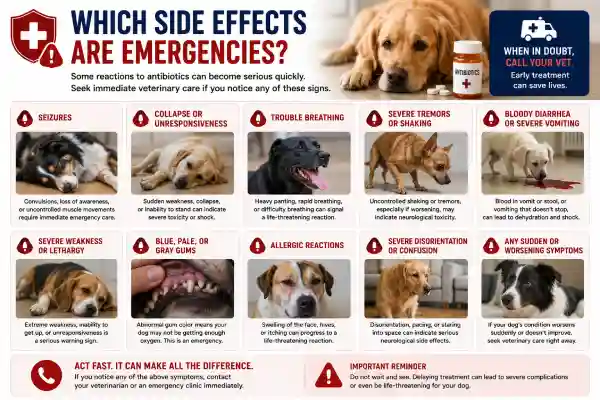
Some reactions are NOT normal and may indicate:
- Toxicity
- Severe allergic reaction
- Dangerous dehydration
- Organ stress
- Neurological complications
Emergency Warning Signs
| Symptom | Emergency? |
|---|---|
| Seizures | YES |
| Collapse | YES |
| Trouble breathing | YES |
| Severe tremors | YES |
| Bloody diarrhea | Serious |
| Severe weakness | Serious |
| Blue gums | Emergency |
| Continuous vomiting | Serious |
Related:
Why Do Some Dogs Recover Faster Than Others?
Recovery speed depends on:
- The antibiotic used
- Dose size
- Treatment duration
- Age
- Hydration
- Overall health
- Severity of infection
- Existing GI disease
Dogs That May Recover More Slowly
| Dog Type | Why |
|---|---|
| Senior dogs | Slower metabolism |
| Dogs with GI disease | More sensitive digestion |
| Puppies | Developing systems |
| Dogs with chronic illness | Reduced resilience |
| Dogs with dehydration | Slower recovery |
How Veterinarians Treat Persistent Side Effects
Veterinarians may recommend:
- Medication changes
- Stopping the antibiotic
- Anti-nausea medication
- Probiotics
- IV fluids
- Bloodwork
- Neurological evaluation
- Bland diet support
Possible Veterinary Treatments
| Problem | Possible Treatment |
|---|---|
| Mild nausea | GI support |
| Dehydration | IV fluids |
| Severe diarrhea | Supportive care |
| Neurological symptoms | Hospitalization |
| Allergic reactions | Emergency medications |
What Symptoms Should Owners Monitor Closely?
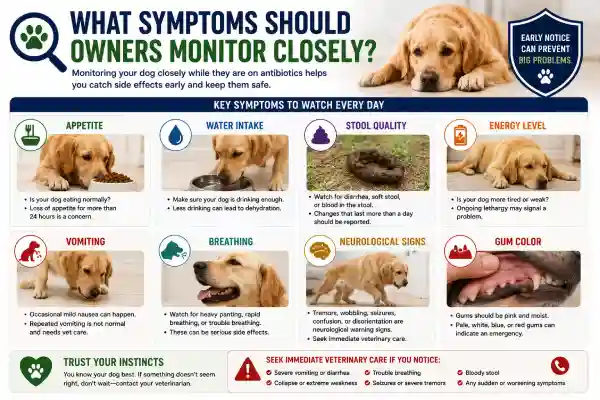
Owners should carefully monitor:
- Appetite
- Water intake
- Stool quality
- Energy level
- Vomiting
- Tremors
- Breathing
- Gum color
Important Symptoms to Watch
| Symptom | Why It Matters |
|---|---|
| Weakness | Possible worsening illness |
| Refusing food | GI or systemic problem |
| Heavy panting | Stress or toxicity |
| Tremors | Neurological concern |
| Bloody stool | GI emergency |
| Collapse | Emergency |
When Should Owners Call the Vet?
Contact your veterinarian if:
- Side effects worsen
- Symptoms last several days
- Your dog stops eating
- Vomiting continues
- Severe diarrhea develops
- Tremors appear
- Your dog becomes weak
- Breathing changes occur
- Neurological symptoms appear
Early treatment often prevents:
- Severe dehydration
- Toxicity
- Emergency hospitalization
What Should Owners Never Do?
Owners should NEVER:
- Double antibiotic doses
- Restart medications without guidance
- Give human medications randomly
- Ignore worsening neurological symptoms
- Force-feed severely nauseated dogs
- Delay emergency care
These mistakes may worsen:
- Toxicity
- Dehydration
- GI injury
- Neurological complications
FAQ – How Long Do Antibiotic Side Effects Last in Dogs?
How long do antibiotic side effects last in dogs?
Many mild side effects improve within 24–72 hours, though some digestive changes may last longer.
Can diarrhea continue after antibiotics stop?
Yes — gut bacteria may need time to recover after treatment ends.
How long does appetite loss last after antibiotics?
Yes — gut bacteria may need time to recover after treatment ends.
Are neurological side effects dangerous?
Absolutely. Tremors, seizures, wobbling, confusion, or collapse may indicate serious toxicity.
Can probiotics help recovery?
In some cases, probiotics may help support gut balance and digestion during recovery.
Medical Disclaimer
This article is for educational purposes only and does not replace professional veterinary advice, diagnosis, or treatment. The content is written and pharmacist-reviewed to improve medication safety awareness and help dog owners better understand antibiotic side effects, GI recovery, neurological complications, dehydration risks, microbiome disruption, and veterinary medication safety considerations. Always contact your veterinarian if your dog develops persistent or worsening symptoms during antibiotic treatment.How Long Do Antibiotic Side Effects Last in Dogs?