
Quick Answer
If your dog is crying even after taking pain medication, it does not automatically mean the medication is failing. Some pain medications take time to work, while others may not fully control severe pain. Dogs may also cry because of anxiety, fear, nerve pain, medication wearing off, underlying disease progression, or complications unrelated to pain. Persistent crying should always be discussed with your veterinarian.
Why is my dog crying even after pain medication?
A dog may continue crying after pain medication because the medication has not reached full effectiveness, the pain is severe, the underlying condition has worsened, or another issue such as anxiety, nerve pain, or medication breakthrough pain is occurring. Persistent crying, worsening symptoms, or signs of distress should be evaluated by a veterinarian.
When Owners Commonly Ask This
This is one of the most emotionally stressful situations a dog owner can face.
The scenario is usually similar:
- The dog is injured, recovering from surgery, or suffering from arthritis.
- A veterinarian prescribes pain medication.
- The owner gives the medication exactly as instructed.
- The dog still cries, whines, or vocalizes.
Naturally, panic follows.
Many owners immediately think:
“The medication isn’t working.”
While that is possible, it is far from the only explanation.
Understanding why dogs may continue crying despite treatment can help owners know what is normal, what is not, and when veterinary care is needed.
Why Is My Dog Crying Even After Pain Medication?
Does Crying Always Mean Pain Medication Is Failing?
No.
This is probably the biggest misconception.
Dogs can vocalize for many reasons.
Pain is certainly one possibility, but it is not the only one.
Common Reasons Dogs Cry Despite Medication
| Possible Cause | Common? |
|---|---|
| Pain not fully controlled | Yes |
| Medication not working yet | Yes |
| Anxiety | Yes |
| Fear or stress | Yes |
| Nerve pain | Yes |
| Medication wearing off | Possible |
| Disease progression | Possible |
| Post-surgical discomfort | Common |
The goal is figuring out which explanation is most likely.
Could the Medication Need More Time to Work?
Absolutely.
Some medications begin working quickly.
Others require more time before maximum effects occur.
Examples
| Medication Type | Typical Onset |
|---|---|
| NSAIDs | Several hours |
| Gabapentin | 1–3 hours |
| Tramadol | Variable |
| Joint medications | Days to weeks |
A dog may still cry during the early treatment period simply because the medication has not reached its full effect yet.
This is especially common after surgery or acute injury.
Could My Dog Still Be in Pain?
Yes.
Pain medication reduces pain.
It does not always eliminate it completely.
This is especially true for:
- Severe arthritis
- IVDD
- Cancer pain
- Orthopedic injuries
- Major surgery recovery
Signs Pain May Still Be Present
- Crying when moving
- Refusing to walk
- Limping
- Trembling
- Restlessness
- Panting
Owners noticing ongoing mobility problems may also find our article Why Is My Dog Still Limping After Gabapentin? helpful.
Could Anxiety Be Causing the Crying?
Very often.
Many owners assume all vocalization equals pain.
In reality, anxiety frequently causes:
- Whining
- Crying
- Pacing
- Panting
- Restlessness
This is particularly common after:
- Surgery
- Veterinary visits
- Hospitalization
- Injury
- Changes in routine
Anxiety-Related Signs
| Sign | Common? |
|---|---|
| Pacing | Yes |
| Panting | Yes |
| Clinginess | Yes |
| Whining | Yes |
| Difficulty settling | Yes |
Dogs recovering from stressful experiences may cry even when pain is reasonably controlled.
Could Nerve Pain Be Different From Regular Pain?
Yes.
Nerve pain can be much harder to control.
This is one reason veterinarians frequently prescribe medications such as gabapentin alongside traditional pain medications.
Conditions Associated With Nerve Pain
- IVDD
- Spinal injuries
- Neurological disease
- Chronic nerve damage
Dogs experiencing nerve pain may continue vocalizing despite treatment with standard anti-inflammatory medications.
Owners exploring this topic may also read:
- Can Dogs Take Gabapentin and NSAIDs Together?
- Can Gabapentin Cause Neurological Side Effects?
- Why Is My Dog Breathing Fast on Gabapentin?
Could the Medication Be Wearing Off Too Soon?
Sometimes.
Owners often notice a pattern.
For example:
- Dog seems comfortable after medication.
- Several hours later crying returns.
- Next dose improves symptoms again.
This pattern may suggest breakthrough pain.
Possible Signs of Breakthrough Pain
| Sign | Possible? |
|---|---|
| Crying before next dose | Yes |
| Restlessness | Yes |
| Increased limping | Yes |
| Panting | Yes |
| Difficulty sleeping | Yes |
Veterinarians may adjust treatment plans if breakthrough pain is suspected.
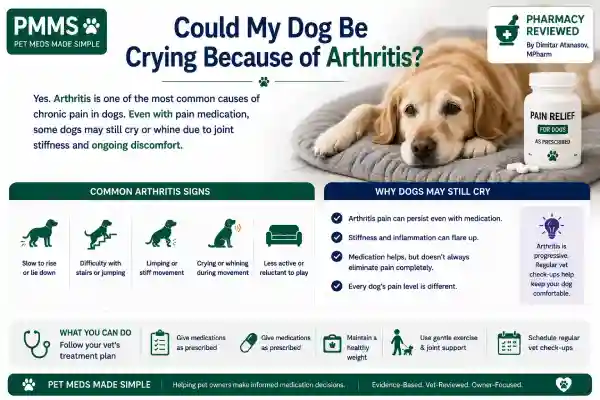
Could My Dog Be Crying Because of Arthritis?
Absolutely.
Arthritis is one of the most common causes of chronic discomfort in dogs.
Even with medication, some dogs continue experiencing:
- Joint stiffness
- Mobility limitations
- Mild pain
Common Arthritis Symptoms
- Slow rising
- Limping
- Reluctance to jump
- Crying during movement
- Difficulty climbing stairs
Owners comparing treatment options often read:
- Best Pain Medication for Dogs with Arthritis
- Safest Pain Medication for Dogs
- Dog Pain Medications Explained
Could Surgery Recovery Cause Crying?
Very commonly.
After surgery, discomfort may persist even when medications are working appropriately.
Post-Surgical Factors
- Tissue healing
- Inflammation
- Restricted movement
- Temporary discomfort
Not all post-surgical vocalization means something is wrong.
However, persistent or worsening symptoms should always be discussed with your veterinarian.
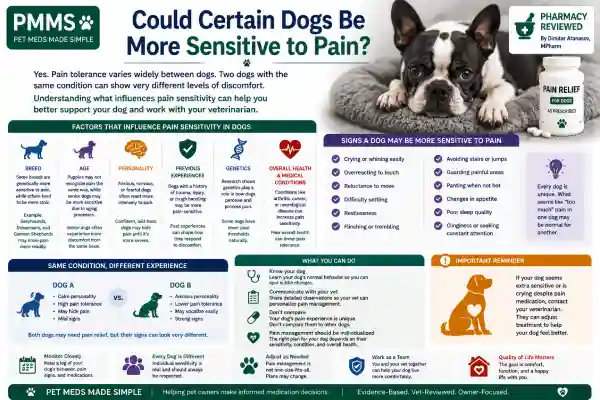
Could Certain Dogs Be More Sensitive to Pain?
Yes.
Pain tolerance varies dramatically.
Some dogs remain quiet despite significant discomfort.
Others vocalize even with mild discomfort.
Factors That Influence Pain Response
- Breed
- Age
- Personality
- Previous experiences
- Anxiety level
- Underlying disease
This explains why two dogs with similar injuries may behave very differently.
Could My Dog Be Crying for a Reason Other Than Pain?
Yes.
This is something many owners overlook.
While pain is often the first concern, dogs may vocalize for several other reasons.
Common Non-Pain Causes of Crying
| Cause | Possible? |
|---|---|
| Anxiety | Yes |
| Fear | Yes |
| Confusion | Yes |
| Separation stress | Yes |
| Cognitive dysfunction | Yes |
| Medication side effects | Possible |
| Attention-seeking behavior | Possible |
For example, senior dogs sometimes cry because they feel confused or disoriented rather than painful.
Likewise, anxious dogs recovering from surgery may whine simply because they feel vulnerable.
This is one reason veterinarians evaluate the whole dog—not just the pain score.
Could the Underlying Condition Be Getting Worse?
Unfortunately, yes.
Sometimes crying despite medication signals progression of the original condition.
Examples include:
- Worsening arthritis
- Advancing cancer
- IVDD progression
- Joint instability
- Surgical complications
Warning Signs the Condition May Be Progressing
- Increased crying
- More limping
- Reduced mobility
- Refusing walks
- Loss of appetite
- Increased sleeping
- Difficulty standing
Owners who notice worsening mobility often continue reading articles such as:
- Why Is My Dog Still Limping After Gabapentin?
- What to Do If Dog Medication Is Not Working
- Best Pain Medication for Dogs with Arthritis
Could Pain Medication Stop Working?
Sometimes.
This is especially true with chronic conditions.
Over time:
- Disease may progress.
- Pain may become more severe.
- Additional therapies may become necessary.
Signs Pain Control May No Longer Be Adequate
| Sign | Common? |
|---|---|
| Crying returns | Yes |
| Reduced activity | Yes |
| Increased limping | Yes |
| Restlessness | Yes |
| Difficulty sleeping | Yes |
Veterinarians may respond by:
- Adjusting the dose
- Adding another medication
- Recommending physical therapy
- Re-evaluating the diagnosis
How Veterinarians Evaluate Persistent Crying
When a dog continues crying despite pain medication, veterinarians investigate several possibilities.
Questions Often Asked
- When did the crying begin?
- Does it happen at specific times?
- Is the dog eating normally?
- Is the medication being given correctly?
- Are there mobility changes?
- Are there neurological symptoms?
Physical Examination
The veterinarian may assess:
- Pain levels
- Joint function
- Neurological status
- Mobility
- Surgical sites
- Overall health
Additional Testing
Depending on the situation:
| Test | Purpose |
|---|---|
| X-rays | Evaluate bones and joints |
| Bloodwork | Assess overall health |
| Neurological exam | Check nerve function |
| Ultrasound | Investigate internal disease |
| Advanced imaging | Evaluate complex conditions |
The goal is identifying why the dog remains uncomfortable.
When Should Owners Contact Their Veterinarian?
Owners should contact their veterinarian if:
- Crying persists despite medication
- Symptoms worsen
- New symptoms appear
- The dog refuses food
- Mobility suddenly declines
- Sleeping patterns change dramatically
Early communication often prevents small problems from becoming major ones.
When Does Crying Become an Emergency?
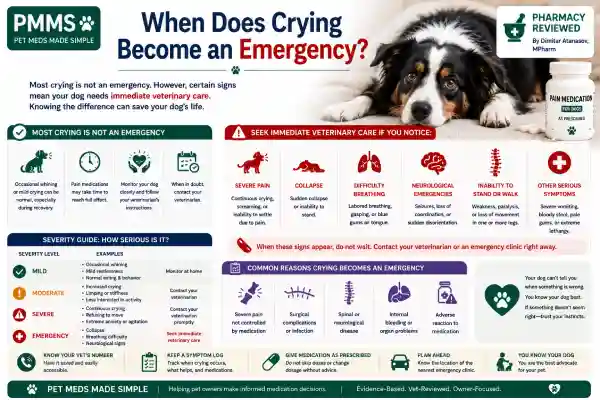
Most crying is not an emergency.
However, some situations require immediate veterinary care.
Severe Pain
Signs may include:
- Continuous vocalization
- Inability to settle
- Aggressive reactions when touched
Difficulty Breathing
Breathing problems should never be ignored.
Owners concerned about respiratory changes may also find Why Is My Dog Breathing Fast on Gabapentin? useful.
Collapse
Any collapse warrants immediate veterinary attention.
Neurological Symptoms
Examples include:
- Severe weakness
- Loss of coordination
- Falling over
- Inability to stand
Emergency Warning Signs
| Symptom | Emergency? |
|---|---|
| Occasional whining | Usually No |
| Mild crying | Usually No |
| Persistent crying | Contact Vet |
| Severe pain | Yes |
| Collapse | Yes |
| Difficulty breathing | Yes |
| Inability to stand | Yes |
| Seizures | Yes |
Related Symptoms Owners Often Search For
Owners searching Why Is My Dog Crying Even After Pain Medication? frequently search for related concerns.
Limping
Many owners notice:
- Crying
- Reduced mobility
- Persistent limping
and continue reading about ongoing pain management.
Panting
Pain and anxiety commonly cause:
- Heavy breathing
- Panting
- Restlessness
Shaking
Dogs experiencing discomfort may:
- Tremble
- Shake
- Appear nervous
Sleep Changes
Owners may notice:
- Increased sleeping
- Difficulty sleeping
- Nighttime restlessness
Mobility Problems
Common concerns include:
- Difficulty standing
- Stiffness
- Reluctance to exercise
These symptoms often help veterinarians determine whether pain control remains adequate.
What Questions Should Owners Ask Their Veterinarian?
Helpful questions include:
- Is my dog’s pain medication working properly?
- Could my dog still be in pain?
- Is another medication needed?
- Could anxiety be contributing?
- Are additional tests recommended?
- Is the condition worsening?
- What symptoms should I monitor at home?
- When should I seek emergency care?
These discussions often provide valuable guidance and reassurance.
Bottom Line
If your dog is crying even after pain medication, it does not automatically mean treatment has failed. Pain medications reduce discomfort, but they do not always eliminate it completely. Crying may result from ongoing pain, anxiety, stress, nerve pain, disease progression, breakthrough pain, or factors unrelated to pain altogether.Why Is My Dog Crying Even After Pain Medication?
Persistent crying should never be ignored, especially if it is worsening or accompanied by other symptoms. When in doubt, contact your veterinarian for guidance.
Veterinarian Takeaway
Dogs may continue crying despite pain medication for several reasons. Ongoing pain is one possibility, but anxiety, nerve pain, disease progression, breakthrough pain, and individual sensitivity can also contribute. Veterinarians evaluate the entire clinical picture to determine whether medication adjustments, additional therapies, or further diagnostic testing are needed.Why Is My Dog Crying Even After Pain Medication?
Frequently Asked Questions – Why Is My Dog Crying Even After Pain Medication?
Why is my dog still crying after taking pain medication?
Pain medication may not have reached full effectiveness, pain may remain partially uncontrolled, or another issue may be causing the crying.
Does crying always mean my dog is in pain?
No. Anxiety, fear, confusion, and other factors may also cause vocalization.
How long should pain medication take to work?
This depends on the medication. Some work within hours, while others require longer.
Can arthritis cause crying despite medication?
Yes. Arthritis can continue causing discomfort even when treatment is helping.
Can nerve pain be harder to treat?
Absolutely. Nerve pain often requires different treatment strategies than inflammatory pain.
Could anxiety cause my dog to cry?
Yes. Anxiety is one of the most common non-pain causes of whining and crying.
Should I increase the dose myself?
No. Never adjust medication without veterinary guidance.
When should I call my veterinarian?
If crying persists, worsens, or is accompanied by other concerning symptoms.
When is crying an emergency?
Seek immediate veterinary care for severe pain, collapse, breathing difficulty, seizures, or inability to stand.
Can pain medication stop working over time?
Sometimes. Disease progression may require treatment adjustments.
Reviewed By
Pharmacy Reviewed By
Dimitar Atanasov, MPharm
Master Pharmacist | Medication Safety Educator
Editorial Policy
At Pet Meds Made Simple, we are committed to providing accurate, evidence-based information about pet medications, veterinary treatments, medication safety, and common health concerns affecting dogs and cats.Why Is My Dog Crying Even After Pain Medication?
For more information, see our Editorial Policy:
Sources
- Plumb’s Veterinary Drug Handbook
- American Animal Hospital Association (AAHA)
- American Veterinary Medical Association (AVMA)
- Merck Veterinary Manual
- Veterinary Pharmacology and Therapeutics
- Small Animal Clinical Pharmacology
- Journal of the American Veterinary Medical Association (JAVMA)
- Frontiers in Veterinary Science
- Veterinary Anaesthesia and Analgesia
- Veterinary Information Network (VIN)
Medical Review Statement
This article was pharmacy-reviewed by Dimitar Atanasov, MPharm, Master Pharmacist, using current veterinary pharmacology references, canine pain-management guidelines, and published veterinary literature available at the time of review.Why Is My Dog Crying Even After Pain Medication?
Images created with AI – Why Is My Dog Crying Even After Pain Medication?