Quick Answer
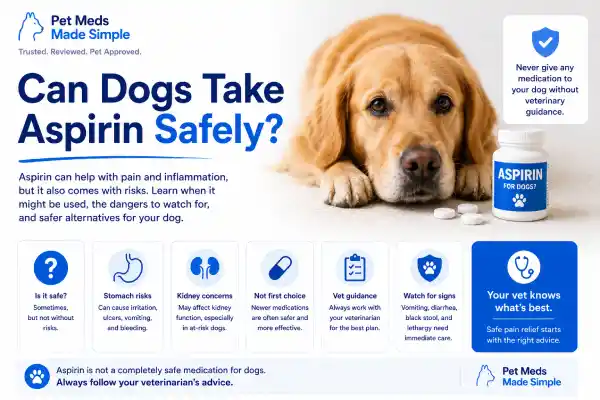
Can dogs take aspirin safely? Sometimes, but only under veterinary guidance. Aspirin is not considered one of the safest pain medications for dogs because it can cause stomach ulcers, gastrointestinal bleeding, kidney damage, and dangerous drug interactions. Modern veterinary medications such as carprofen, meloxicam, Galliprant, and other prescription NSAIDs are generally preferred because they were specifically developed for canine use.
Can dogs take aspirin safely?
Dogs can sometimes take aspirin under veterinary supervision, but aspirin is not risk-free. It can cause stomach irritation, ulcers, bleeding, vomiting, and other serious side effects. Most veterinarians prefer newer canine-specific pain medications because they are generally safer and more predictable when used appropriately.
When Owners Commonly Ask This
Many dog owners search for this question after noticing:
- Limping
- Arthritis pain
- Joint stiffness
- Minor injuries
- Post-exercise soreness
The situation often occurs late at night or on weekends when owners discover aspirin in their medicine cabinet and wonder whether it is safe to give their dog.
Can Dogs Take Aspirin Safely?
What Is Aspirin?
Aspirin belongs to a group of medications called NSAIDs (nonsteroidal anti-inflammatory drugs).
It works by reducing:
- Pain
- Inflammation
- Fever
Aspirin has been used in veterinary medicine for decades, but newer medications have largely replaced it for many situations.
What Aspirin Does
| Effect | Benefit |
|---|---|
| Reduces inflammation | Helps discomfort |
| Reduces pain | Improves mobility |
| Reduces fever | Lowers body temperature |
| Affects blood clotting | May increase bleeding risk |
Is Aspirin Approved for Dogs?
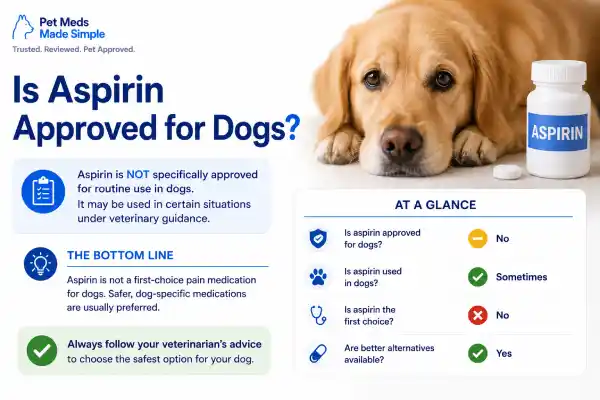
This is where confusion often begins.
Many people assume aspirin is approved for routine canine pain management.
Reality
| Question | Answer |
|---|---|
| Is aspirin used in dogs? | Sometimes |
| Is aspirin completely safe? | No |
| Is aspirin usually the first choice? | No |
| Are better alternatives available? | Yes |
Modern veterinary NSAIDs are generally preferred.
Why Are Veterinarians More Careful With Aspirin Today?
Years ago, aspirin was used much more frequently.
Today veterinarians have access to medications specifically developed for dogs.
Common Veterinary Alternatives
| Medication | Designed for Dogs? |
|---|---|
| Carprofen | Yes |
| Meloxicam | Yes |
| Deramaxx | Yes |
| Previcox | Yes |
| Galliprant | Yes |
| Aspirin | No |
These medications often provide better pain control with more predictable safety profiles.
What Conditions Has Aspirin Been Used For?
Veterinarians may occasionally use aspirin in specific situations.
Potential Uses
- Arthritis
- Joint inflammation
- Mild musculoskeletal pain
- Certain clotting-related conditions
However, treatment decisions should always be individualized.
What Are the Most Common Aspirin Side Effects?
Side effects are the primary reason veterinarians use caution.
Common Side Effects
| Side Effect | Frequency |
|---|---|
| Vomiting | Common |
| Reduced appetite | Common |
| Stomach irritation | Common |
| Diarrhea | Sometimes |
| Lethargy | Sometimes |
| Ulcers | Less Common |
| Bleeding | Serious Risk |
Even a properly administered dose can occasionally cause problems.
Can Aspirin Cause Stomach Ulcers?
Yes.
This is one of the biggest concerns.
Aspirin reduces protective prostaglandins that help defend the stomach lining.
What Can Happen?
| Stage | Possible Outcome |
|---|---|
| Stomach irritation | Mild symptoms |
| Gastritis | Moderate symptoms |
| Ulcer formation | Serious |
| Bleeding ulcer | Emergency |
Related reading:
Can Pain Medication Cause Stomach Bleeding in Dogs?
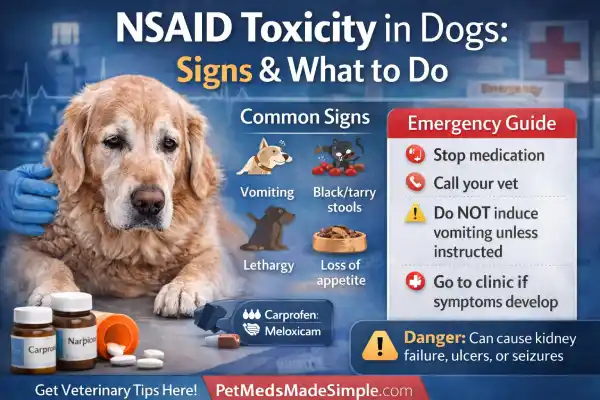
What Are Signs of Aspirin Toxicity?
Toxicity can occur if too much aspirin is given or if a dog is unusually sensitive.
Warning Signs
- Vomiting
- Diarrhea
- Black stools
- Weakness
- Pale gums
- Loss of appetite
- Rapid breathing
- Collapse
Toxicity Symptoms Table
| Symptom | Severity |
|---|---|
| Mild nausea | Mild |
| Vomiting | Moderate |
| Black stool | Serious |
| Weakness | Serious |
| Collapse | Emergency |
Can Aspirin Cause Stomach Bleeding?
Unfortunately, yes.
Aspirin is one of the medications most commonly associated with gastrointestinal ulceration and bleeding.
Signs of Possible Bleeding
| Symptom | Possible Bleeding? |
|---|---|
| Black stool | Yes |
| Vomiting blood | Yes |
| Pale gums | Yes |
| Weakness | Yes |
| Collapse | Yes |
These symptoms require immediate veterinary attention.
Is Baby Aspirin Safer for Dogs?
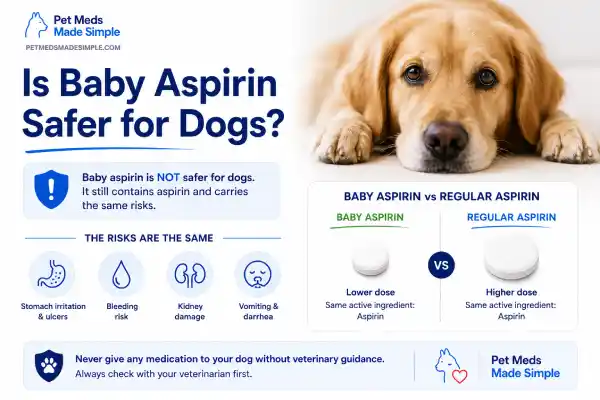
Many owners believe baby aspirin is inherently safer.
This is not necessarily true.
Baby Aspirin vs Regular Aspirin
| Type | Contains Aspirin? |
|---|---|
| Baby aspirin | Yes |
| Regular aspirin | Yes |
The primary difference is the amount of aspirin per tablet.
The same risks still exist.
Can Dogs Take Aspirin With Other Pain Medications?
This is where things become dangerous.
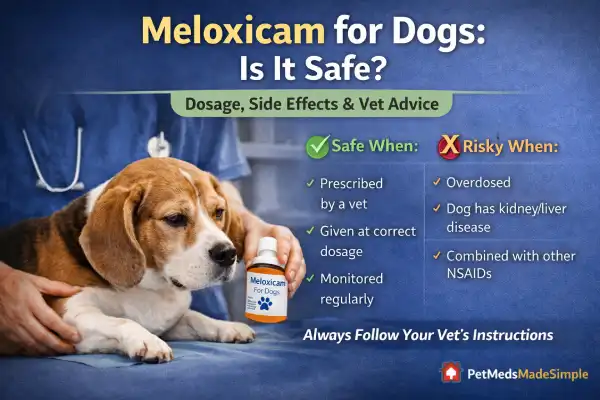
Combining aspirin with other NSAIDs or steroids can dramatically increase the risk of ulcers and bleeding.
Potentially Dangerous Combinations
| Combination | Risk Level |
|---|---|
| Aspirin + Carprofen | High |
| Aspirin + Meloxicam | High |
| Aspirin + Deramaxx | High |
| Aspirin + Prednisone | Very High |
Owners should never combine medications without veterinary instructions.
Is Aspirin Safe for Senior Dogs?
Senior dogs are often at greater risk of complications.
Why Older Dogs Are More Vulnerable
- Kidney disease
- Liver disease
- Dehydration
- Multiple medications
- Slower recovery from side effects
Risk Comparison
| Dog Type | Risk Level |
|---|---|
| Young healthy dog | Lower |
| Adult dog | Moderate |
| Senior dog | Higher |
| Kidney disease patient | Higher |
Is Aspirin Safer Than Ibuprofen?
Generally, yes.
However, that does not mean aspirin is completely safe.
Veterinarians occasionally use aspirin in specific situations, whereas ibuprofen is considered dangerous for dogs and should never be given without veterinary direction.
Comparison
| Medication | Safety in Dogs |
|---|---|
| Aspirin | Sometimes used under veterinary guidance |
| Carprofen | Preferred |
| Meloxicam | Preferred |
| Galliprant | Preferred |
| Ibuprofen | Not recommended |
| Naproxen | Not recommended |
Related reading:
Can Dogs Take Ibuprofen Accidentally?
Can Dogs Take Aspirin Long-Term?
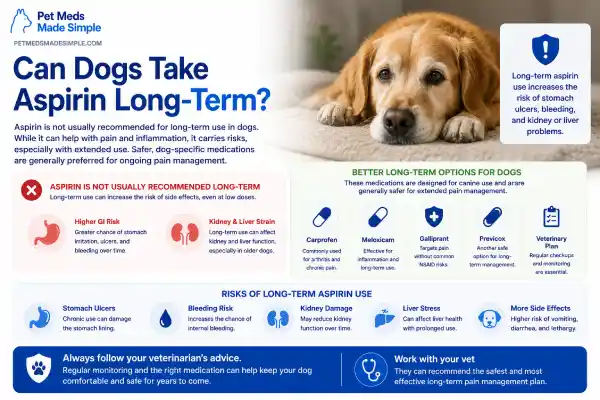
Usually, veterinarians prefer other options for long-term pain management.
Why Long-Term Aspirin Is Less Common
- Higher ulcer risk
- Gastrointestinal irritation
- Bleeding concerns
- Better alternatives available
Long-Term Pain Management Comparison
| Medication | Long-Term Use |
|---|---|
| Aspirin | Less commonly preferred |
| Carprofen | Common |
| Galliprant | Common |
| Meloxicam | Common |
| Previcox | Common |
Related reading:
Can Dogs Take Pain Medication Long-Term?
How Do Veterinarians Decide Whether Aspirin Is Appropriate?
Every patient is different.
Veterinarians evaluate several factors before recommending aspirin.
Common Considerations
- Age
- Weight
- Kidney function
- Liver function
- Current medications
- History of stomach ulcers
- Underlying medical conditions
Veterinary Assessment
| Factor | Why It Matters |
|---|---|
| Age | Older dogs may be higher risk |
| Kidney health | Affects medication safety |
| Liver health | Influences metabolism |
| Current medications | Prevents interactions |
| GI history | Identifies ulcer risk |
This is why owners should never assume aspirin is safe simply because it is available without a prescription.
What Happens If a Dog Accidentally Receives Aspirin?
One accidental dose is not always an emergency, but it should never be ignored.
Recommended Actions
- Contact your veterinarian.
- Determine the amount given.
- Check the tablet strength.
- Monitor for symptoms.
- Follow veterinary instructions.
Information to Have Ready
| Information | Helpful? |
|---|---|
| Dog’s weight | Yes |
| Tablet strength | Yes |
| Time given | Yes |
| Number of tablets | Yes |
| Symptoms present | Yes |
Early intervention often prevents complications.
Could Aspirin Cause Kidney Damage?
Yes.
Like other NSAIDs, aspirin can affect blood flow to the kidneys.
Dogs at Higher Risk
- Senior dogs
- Dehydrated dogs
- Dogs with kidney disease
- Dogs taking multiple medications
Kidney Risk Table
| Situation | Increased Risk? |
|---|---|
| Healthy dog | Lower |
| Dehydration | Yes |
| Kidney disease | Yes |
| Overdose | Yes |
| Long-term use | Yes |
Could Aspirin Interact With Other Medications?
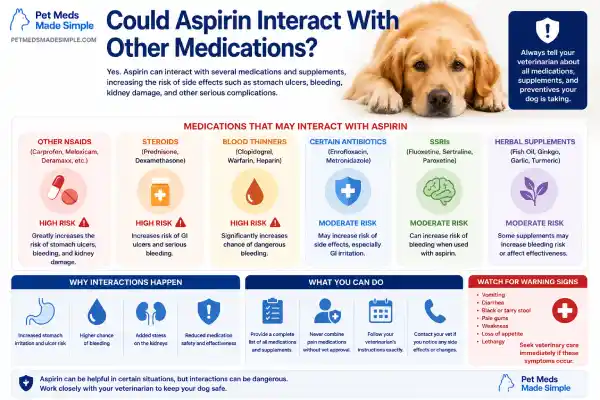
Absolutely.
Drug interactions are one of the biggest concerns with aspirin use.
Medications That May Increase Risk
| Medication Type | Concern |
|---|---|
| NSAIDs | Increased ulcer risk |
| Steroids | Increased bleeding risk |
| Blood thinners | Increased bleeding risk |
| Certain supplements | Potential interactions |
Always provide your veterinarian with a complete medication list.
How Veterinarians Monitor Dogs Taking Aspirin
Dogs receiving aspirin therapy may require monitoring, especially if treatment continues for an extended period.
Monitoring May Include
- Physical examinations
- Bloodwork
- Kidney function testing
- Liver function testing
- Evaluation of stool quality
- Monitoring appetite
Monitoring Goals
| Area | Purpose |
|---|---|
| Kidney function | Detect complications |
| Liver function | Ensure safe metabolism |
| Appetite | Identify side effects |
| Stool appearance | Detect bleeding |
| Energy level | Monitor overall health |
When Should Owners Contact Their Veterinarian?
Owners should contact their veterinarian if a dog taking aspirin develops:
- Vomiting
- Diarrhea
- Loss of appetite
- Black stools
- Weakness
- Pale gums
- Lethargy
Contact Your Veterinarian If
| Symptom | Call Vet? |
|---|---|
| Mild nausea | Yes |
| Vomiting | Yes |
| Loss of appetite | Yes |
| Black stool | Immediately |
| Pale gums | Immediately |
| Weakness | Immediately |
When Does Aspirin Become an Emergency?
Some symptoms require immediate emergency care.
Emergency Warning Signs
- Vomiting blood
- Black tarry stool
- Collapse
- Difficulty breathing
- Pale or white gums
- Severe weakness
- Unresponsiveness
Emergency Symptoms Table
| Symptom | Emergency? |
|---|---|
| Mild stomach upset | No |
| Vomiting | Contact Vet |
| Black stool | Yes |
| Vomiting blood | Yes |
| Pale gums | Yes |
| Collapse | Yes |
| Unresponsiveness | Yes |
Related Symptoms Owners Often Search For
Owners searching “Can Dogs Take Aspirin Safely?” frequently also search for:
- Can Dogs Take Ibuprofen Accidentally?
- Can Pain Medication Cause Stomach Bleeding in Dogs?
- What Happens If Dogs Overdose on Pain Medication?
- Safest Pain Medication for Dogs
- Best Pain Medication for Dogs with Arthritis
- Can Dogs Take Pain Medication Long-Term?
- Why Is My Dog Weak After Pain Medication?
These topics often overlap because many owners are trying to find a safe way to manage pain at home.
Bottom Line
Can dogs take aspirin safely? Sometimes, but only under veterinary guidance. Aspirin can help reduce pain and inflammation, but it also carries significant risks including stomach ulcers, gastrointestinal bleeding, kidney damage, and dangerous drug interactions. Modern veterinary NSAIDs such as carprofen, meloxicam, Galliprant, and Previcox are generally preferred because they were developed specifically for canine patients.
Veterinarian Takeaway
Aspirin has an important place in veterinary medicine, but it is no longer considered the first choice for most canine pain-management situations. While some dogs may safely receive aspirin under veterinary supervision, owners should never assume that over-the-counter medications are harmless. Monitoring for digestive upset, bleeding, appetite changes, and behavioral changes is essential whenever aspirin is used.
Frequently Asked Questions – Can Dogs Take Aspirin Safely
Can dogs take aspirin safely?
Sometimes. Aspirin should only be given under veterinary guidance because side effects can occur.
Is baby aspirin safe for dogs?
Baby aspirin still contains aspirin and carries the same risks as regular aspirin.
Can aspirin cause stomach bleeding in dogs?
Yes. Aspirin can contribute to ulcers and gastrointestinal bleeding.
Is aspirin safer than ibuprofen?
Generally yes, but aspirin still has important risks.
Can aspirin cause kidney damage?
Yes. NSAIDs can affect kidney blood flow, particularly in vulnerable dogs.
Can dogs take aspirin every day?
Only if specifically directed and monitored by a veterinarian.
What should I do if my dog accidentally gets aspirin?
Contact your veterinarian and provide details about the amount and timing.
Can aspirin be combined with carprofen?
No. Combining NSAIDs can significantly increase ulcer and bleeding risks.
Are senior dogs more sensitive to aspirin?
Yes. Older dogs often have a higher risk of complications.
What are the signs of aspirin toxicity?
Vomiting, black stools, weakness, pale gums, lethargy, collapse, and gastrointestinal bleeding.
Reviewed By
Pharmacy Reviewed By
Dimitar Atanasov, MPharm
Master Pharmacist | Medication Safety Educator
Editorial Policy
At Pet Meds Made Simple, we are committed to providing accurate, evidence-based information about pet medications, veterinary treatments, medication safety, and common health concerns affecting dogs and cats.
For more information, see our Editorial Policy:
Sources
- Plumb’s Veterinary Drug Handbook
- Merck Veterinary Manual
- American Animal Hospital Association (AAHA)
- Veterinary Information Network (VIN)
- Small Animal Clinical Pharmacology
- Veterinary Pharmacology and Therapeutics
- JAVMA
- Frontiers in Veterinary Science
- Veterinary Anaesthesia and Analgesia
- Clinical Veterinary Advisor: Dogs and Cats
Medical Review Statement
This article was pharmacy-reviewed by Dimitar Atanasov, MPharm, Master Pharmacist, using current veterinary pharmacology references, canine pain-management guidelines, NSAID safety literature, and published veterinary research available at the time of review.
Images created with AI – Can Dogs Take Aspirin Safely