Quick Answer
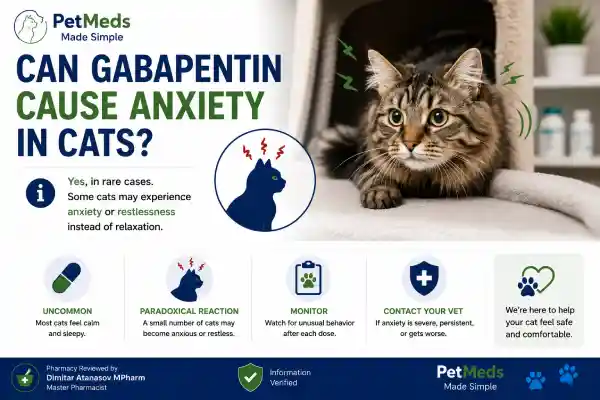
Can Gabapentin Cause Anxiety in Cats? Yes, gabapentin can occasionally cause anxiety, restlessness, agitation, or unusual behavioral changes in some cats, although these reactions are uncommon. Most cats become calmer and sleepier after receiving gabapentin, especially before veterinary visits or stressful events. When anxiety appears instead of relaxation, it may represent a paradoxical reaction, medication sensitivity, fear, pain, or another underlying medical condition. Persistent or severe behavioral changes should always be discussed with your veterinarian.
When Owners Commonly Ask This Question
Gabapentin is commonly prescribed to help reduce stress in cats.
So owners are often surprised when their cat seems more anxious instead of calmer.
They may notice their cat:
- Pacing around the house
- Meowing more than usual
- Hiding and then suddenly running around
- Acting restless
- Looking frightened
- Refusing to settle down
Many owners immediately ask:
“Can gabapentin actually cause anxiety?”
Although uncommon, the answer is yes.
Can Gabapentin Cause Anxiety in Cats?
What Is Gabapentin?
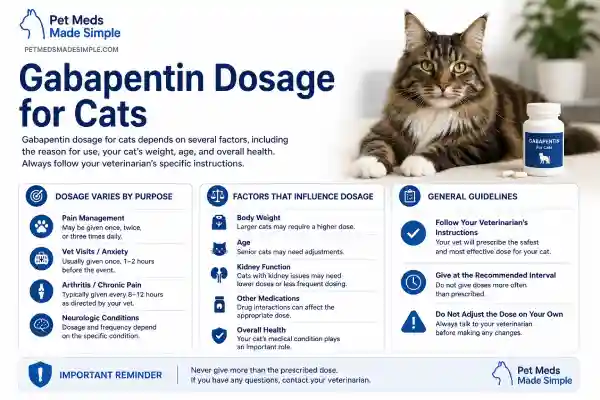
Gabapentin is a medication frequently prescribed for cats to help manage:
- Anxiety before veterinary visits
- Chronic pain
- Nerve pain
- Postoperative discomfort
- Certain neurological disorders
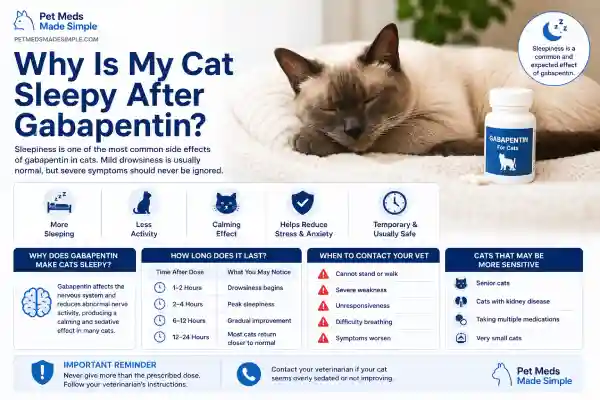
Most cats experience:
- Relaxation
- Sleepiness
- Reduced stress
- Less fear during handling
However, every cat responds differently.
Can Gabapentin Really Cause Anxiety?
Yes, but it is uncommon.
Instead of becoming sleepy or relaxed, a small number of cats may experience:
- Restlessness
- Agitation
- Nervousness
- Hyperactivity
- Increased vocalization
- Anxiety-like behavior
Veterinarians refer to these unusual responses as paradoxical reactions.
What Is a Paradoxical Reaction?
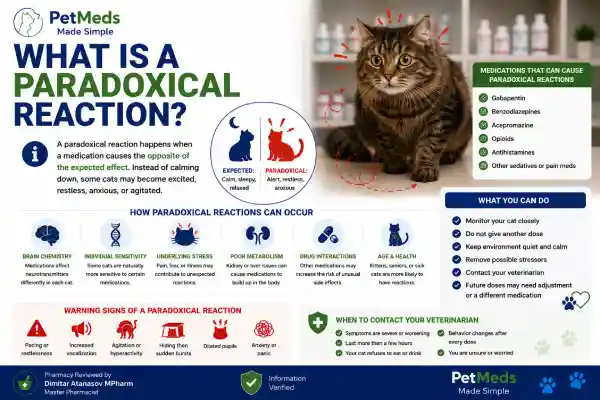
A paradoxical reaction occurs when a medication produces the opposite effect of what is expected.
Instead of:
- Calmness
- Relaxation
- Sedation
Some cats may experience:
- Excitement
- Agitation
- Anxiety
- Increased activity
Although uncommon, paradoxical reactions are recognized in veterinary medicine.
Why Would a Calming Medication Increase Anxiety?
Several explanations are possible.
Sometimes the medication itself is responsible.
In other situations, anxiety may result from:
- Pain
- Fear
- Confusion
- Underlying illness
- Medication sensitivity
The medication may simply reveal or fail to control an existing problem rather than directly causing anxiety.
Could Fear Look Like Anxiety?
Absolutely.
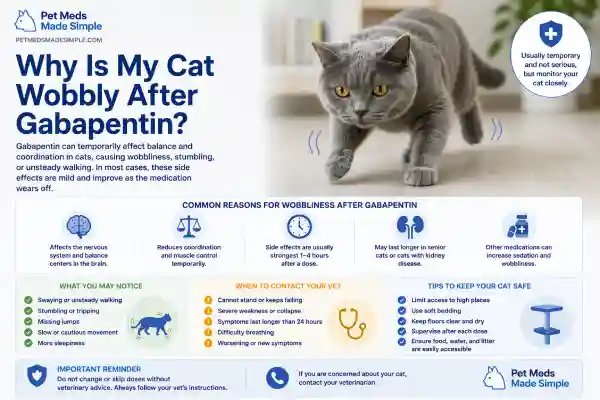
Cats that feel:
- Wobbly
- Sleepy
- Confused
- Less coordinated
may become frightened.
Fear can appear as:
- Pacing
- Hiding
- Vocalization
- Escape attempts
- Restlessness
Owners often interpret these behaviors as anxiety.
Related PMMS guides:
Could Confusion Cause Restlessness?
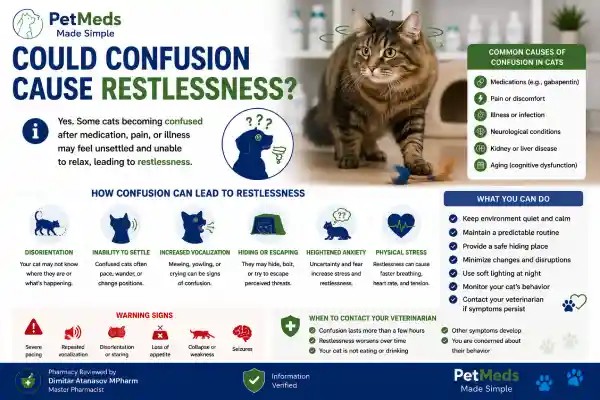
Yes.
Some cats become temporarily disoriented after taking gabapentin.
They may:
- Wander aimlessly
- Appear unsure where to go
- Walk continuously
- Seem unable to settle
This confusion can resemble anxiety.
Could Pain Be the Real Cause?
Absolutely.
Gabapentin is commonly prescribed for painful conditions.
If pain is not completely controlled, cats may continue to:
- Pace
- Hide
- Vocalize
- Avoid handling
- Appear anxious
Sometimes the underlying disease—not the medication—is responsible.
Could the Dose Be Too High?
Possibly.
An excessive dose may increase neurological side effects.
Some sensitive cats may develop:
| Symptom | Possible? |
|---|---|
| Excessive sleepiness | Yes |
| Wobbliness | Yes |
| Confusion | Yes |
| Restlessness | Sometimes |
| Agitation | Sometimes |
Dose adjustments often resolve these problems.
Are Some Cats More Sensitive Than Others?
Yes.
Individual sensitivity varies considerably.
Cats that may respond more strongly include:
- Senior cats
- Very anxious cats
- Cats with chronic illness
- Cats with kidney disease
- Cats taking multiple medications
These cats often require closer monitoring.
Could Kidney Disease Make Anxiety Worse?
Yes.
Gabapentin is eliminated primarily through the kidneys.
Cats with reduced kidney function may:
- Process the medication more slowly
- Experience stronger neurological effects
- Develop prolonged sedation
- Become more confused or restless
Veterinarians often prescribe lower doses for these patients.
Can Anxiety Develop After the First Dose?
Yes.
Some owners notice behavioral changes after the very first administration.
Others may only notice symptoms after:
- Several doses
- Dose increases
- Long-term treatment
Every cat metabolizes medications differently.
Related Symptoms Owners Often Search For
Owners researching anxiety after gabapentin also commonly search:
- Why Is My Cat Sleepy After Gabapentin?
- Why Is My Cat Wobbly After Gabapentin?
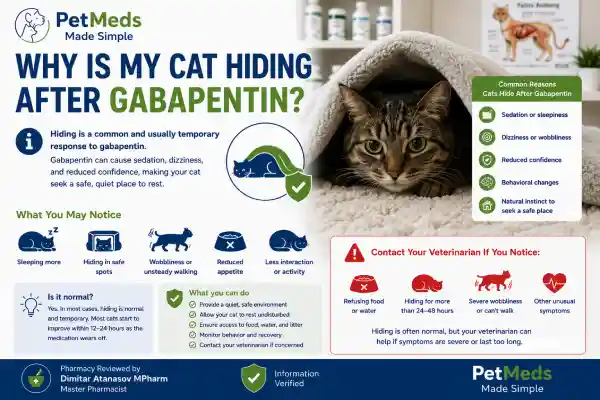
- Why Is My Cat Hiding After Gabapentin?
- Can Gabapentin Cause Aggression in Cats?
- Can Gabapentin Cause Vomiting in Cats?
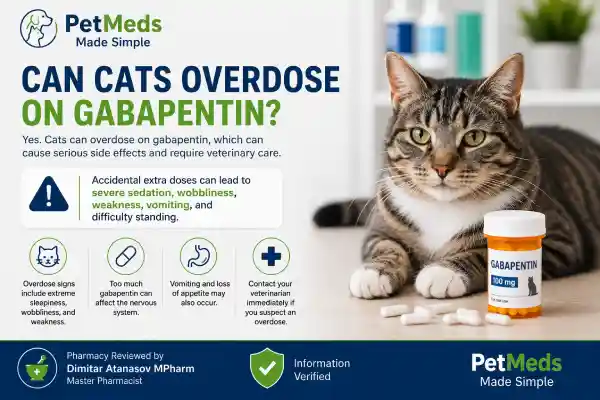
- Can Cats Overdose on Gabapentin?
- Can Cats Take Gabapentin Long-Term?
- Is Human Gabapentin Safe for Cats?
- Gabapentin for Cats
When Does Anxiety Become Concerning?
Mild restlessness for a short period after taking gabapentin may not indicate a serious problem.
However, anxiety that is severe, persistent, or accompanied by other neurological symptoms should always be evaluated.
Contact Your Veterinarian If Your Cat
| Symptom | Concern Level |
|---|---|
| Mild restlessness | Low |
| Increased vocalization | Moderate |
| Pacing for several hours | Moderate |
| Repeated hiding with panic | High |
| Aggression with anxiety | High |
| Sudden personality change | High |
Behavior that becomes progressively worse deserves prompt veterinary attention.
Can Anxiety Become Worse With Future Doses?
Possibly.
If your cat is experiencing a true paradoxical reaction, future doses may:
- Produce similar anxiety
- Cause stronger reactions
- Produce no reaction at all
Every cat responds differently.
For this reason, unusual behavioral changes should always be discussed with your veterinarian before continuing treatment.
Should Owners Give Another Dose?
Do not change your cat’s medication schedule without veterinary guidance.
Your veterinarian may recommend:
- Continuing the current dose
- Reducing the dose
- Adjusting the dosing schedule
- Switching to another medication
- Investigating another medical condition
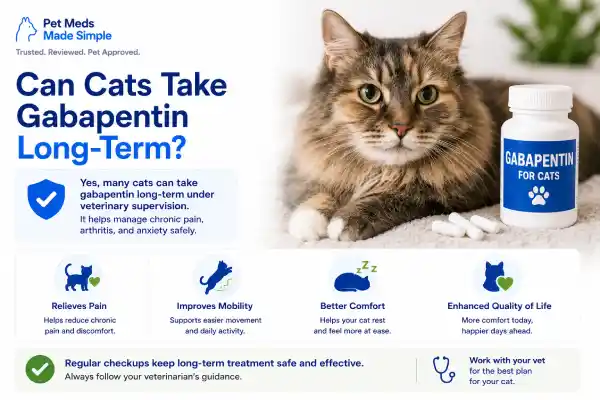
Never increase or discontinue gabapentin on your own unless specifically instructed.
Could Another Medication Be Responsible?
Absolutely.
Many cats taking gabapentin are also receiving:
- Pain medications
- Antibiotics
- Anti-inflammatory medications
- Sedatives
- Other neurological medications
Sometimes the combination—not gabapentin alone—may contribute to behavioral changes.
A complete medication review is often necessary.
Could Stress From the Veterinary Visit Be the Cause?
Yes.
Many owners give gabapentin before:
- Veterinary appointments
- Grooming visits
- Travel
- Hospitalization
Even with medication, these stressful events may still cause anxiety.
In some cases, the stressful situation—not the medication—is responsible for the behavior.
Could Overstimulation Make Anxiety Worse?
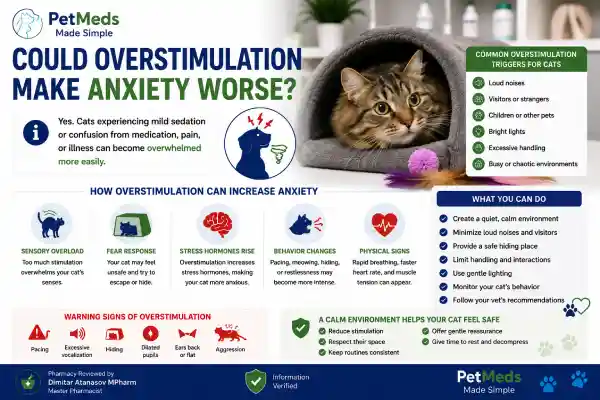
Yes.
Cats experiencing mild sedation or confusion may become overwhelmed more easily.
Common triggers include:
- Loud noises
- Visitors
- Children
- Other pets
- Bright lights
- Excessive handling
Providing a calm, quiet environment often helps reduce stress during recovery.
What Should Owners Monitor?
Careful observation helps determine whether your cat is improving.
Monitor
| Symptom | Monitor? |
|---|---|
| Appetite | Yes |
| Water intake | Yes |
| Activity level | Yes |
| Vocalization | Yes |
| Hiding | Yes |
| Walking ability | Yes |
| Anxiety episodes | Yes |
Recording when symptoms begin and how long they last can help your veterinarian identify patterns.
How Do Veterinarians Evaluate Anxiety After Gabapentin?
Veterinarians usually consider several factors before deciding whether gabapentin is responsible.
Common Evaluation
| Factor | Important? |
|---|---|
| Timing after the dose | Yes |
| Dose administered | Yes |
| Other medications | Yes |
| Kidney function | Yes |
| Underlying illness | Yes |
| Previous reactions | Yes |
| Physical examination | Yes |
This evaluation helps determine whether the anxiety is medication-related or caused by another medical condition.
Could Blood Work Be Needed?
Sometimes.
Blood testing may be recommended if:
- Symptoms are severe
- Behavioral changes continue
- Your cat is a senior
- Kidney disease is suspected
- Multiple medications are being used
Laboratory testing can help identify conditions that increase medication sensitivity.
Can Most Cats Recover Completely?
Yes.
Fortunately, the outlook is excellent for most cats.
Recovery Outlook
| Situation | Prognosis |
|---|---|
| Mild paradoxical reaction | Excellent |
| Temporary anxiety | Excellent |
| Dose adjustment required | Excellent |
| Fear-related behavior | Excellent |
| Underlying illness present | Variable |
Most behavioral changes improve after the medication wears off or the treatment plan is adjusted.
When Should Owners Contact Their Veterinarian?
Contact your veterinarian if your cat:
- Remains anxious for several hours
- Cannot settle or rest
- Develops aggressive behavior
- Stops eating
- Becomes increasingly confused
- Shows repeated or worsening episodes after each dose
Early communication often prevents more serious problems.
What Symptoms Require Emergency Care?
Seek immediate veterinary attention if your cat develops:
Emergency Signs
| Symptom | Emergency? |
|---|---|
| Collapse | Yes |
| Difficulty breathing | Yes |
| Seizures | Yes |
| Unresponsiveness | Yes |
| Severe weakness | Yes |
| Suspected overdose | Yes |
These symptoms require urgent veterinary care regardless of the medication being used.
Bottom Line
Can gabapentin cause anxiety in cats? Yes, although it is uncommon. Most cats become calmer after receiving gabapentin, but a small number may experience anxiety, agitation, restlessness, or other paradoxical behavioral reactions. In many cases, fear, pain, confusion, or another underlying condition may contribute to the behavior rather than the medication itself. If anxiety is severe, persistent, or worsens with future doses, your veterinarian should reassess your cat before treatment continues.
Veterinarian Takeaway
Gabapentin is widely used because it is generally safe and effective for reducing stress and treating pain in cats. While anxiety is an uncommon side effect, individual cats can respond differently. Monitoring your cat’s behavior, appetite, coordination, and overall comfort after each dose helps identify unusual reactions early and allows your veterinarian to make appropriate adjustments if needed.
Frequently Asked Questions – Can Gabapentin Cause Anxiety in Cats
Can gabapentin make cats anxious?
Yes. Although uncommon, some cats may develop restlessness, agitation, or anxiety instead of becoming calm.
Is anxiety a common side effect?
No. Most cats become sleepy or relaxed after taking gabapentin.
What is a paradoxical reaction?
A paradoxical reaction occurs when a medication produces the opposite of its expected effect, such as anxiety instead of relaxation.
Could fear look like anxiety?
Absolutely. Cats that feel confused or wobbly often appear anxious because they feel vulnerable.
Can kidney disease increase the risk?
Yes. Reduced kidney function can slow gabapentin elimination and increase side effects.
Can anxiety occur after the first dose?
Yes. Some cats show unusual behavioral changes after their very first dose.
Should I give another dose if my cat becomes anxious?
Contact your veterinarian before administering another dose if anxiety develops.
Could another medication be responsible?
Yes. Drug interactions or multiple medications may contribute to behavioral changes.
Can most cats recover?
Yes. The vast majority recover completely once the medication wears off or the treatment plan is adjusted.
When is emergency care needed?
Seek immediate veterinary care for collapse, seizures, severe weakness, breathing difficulty, unresponsiveness, or suspected overdose.
Reviewed By
Dimitar Atanasov, MPharm
Master Pharmacist | Medication Safety Educator
Dr. Valcho, DVM
Veterinary Consultant | 30+ Years of Clinical Experience
Editorial Policy
This article follows the PetMedsMadeSimple editorial standards for evidence-based veterinary medication education, medication safety, and responsible pet-owner guidance.
Sources
- Plumb’s Veterinary Drug Handbook, 10th Edition.
- Merck Veterinary Manual – Gabapentin Use in Cats.
- American Association of Feline Practitioners (AAFP) Feline Practice Guidelines.
- American Veterinary Medical Association (AVMA) Client Education Resources.
- Veterinary Pharmacology and Therapeutics, 11th Edition.
- Small Animal Clinical Pharmacology and Therapeutics.
- Veterinary Information Network (VIN).
- Journal of Feline Medicine and Surgery.
- Frontiers in Veterinary Science.
- JAVMA – Feline Pain Management and Behavioral Medicine Literature.
Medical Review Statement
This article was pharmacy-reviewed by Dimitar Atanasov, MPharm, and veterinary-reviewed by Dr. Valcho, DVM, using current veterinary pharmacology references, feline medication safety guidelines, and published veterinary literature available at the time of review.
Image created with AI – Can Gabapentin Cause Anxiety in Cats