Quick Answer
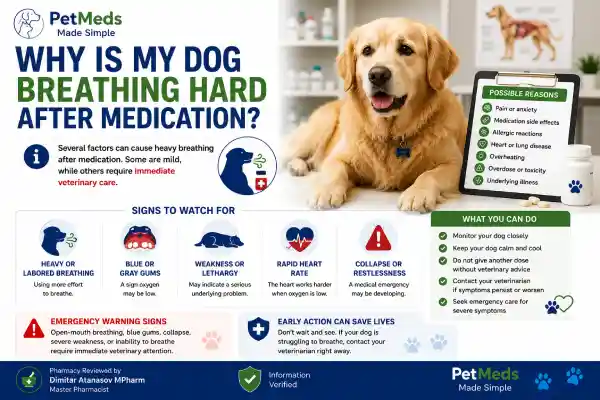
Why Is My Dog Breathing Hard After Medication? A dog may breathe hard after medication for several reasons, including pain, anxiety, medication side effects, overheating, allergic reactions, or progression of the underlying illness. Mild heavy breathing may be temporary, especially after surgery or certain medications, but labored breathing, blue gums, collapse, severe weakness, or difficulty getting enough air require immediate veterinary attention.
When Owners Commonly Ask This Question
Giving medication should help your dog feel better.
Instead, many owners become alarmed when their dog suddenly begins:
- Breathing harder than usual
- Taking deep breaths
- Panting excessively
- Breathing rapidly
- Looking uncomfortable
- Acting restless
Many immediately wonder:
“Did the medication cause this?”
Sometimes the answer is yes.
Other times, the medication simply coincides with another medical problem.
Table of Contents
Can Medication Really Cause Heavy Breathing?
Yes.
Some medications can contribute to changes in breathing, although this is not one of the most common side effects.
Heavy breathing may occur because the medication:
- Causes mild sedation
- Changes activity levels
- Affects pain perception
- Triggers nausea
- Causes an uncommon adverse reaction
The exact cause depends on both the medication and your dog’s overall health.
Is Heavy Breathing Different From Panting?
Yes.
Although owners often use these terms interchangeably, they are not always the same.
Panting
Usually involves:
- Open-mouth breathing
- Tongue hanging out
- Cooling the body
- Mild excitement
Heavy Breathing
May involve:
- Deep breaths
- Increased effort
- Faster chest movement
- Closed-mouth breathing
- Signs of respiratory distress
Heavy breathing deserves closer attention, especially if it develops suddenly.
Could Pain Be Causing Heavy Breathing?
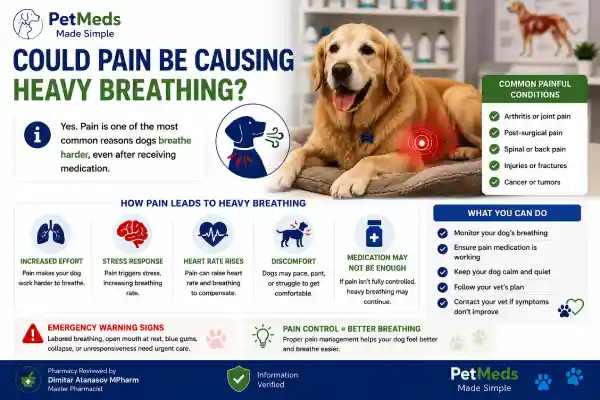
Absolutely.
Pain is one of the most common reasons dogs breathe harder after receiving medication.
Examples include:
- Surgical pain
- Arthritis flare-ups
- Spinal disease
- Orthopedic injuries
- Cancer pain
If pain is not fully controlled, heavy breathing may continue despite medication.
Related PMMS guides:
Can Pain Medication Cause Heavy Breathing?
Sometimes.
Although pain medications are designed to improve comfort, some may contribute to:
- Panting
- Mild respiratory changes
- Restlessness
- Anxiety-like behavior
These reactions vary between medications and individual dogs.
Could Anxiety Cause Heavy Breathing?
Yes.
Dogs experiencing stress or anxiety may develop:
- Rapid breathing
- Panting
- Restlessness
- Pacing
- Trembling
Medication does not always eliminate anxiety immediately.
Some dogs remain anxious because of:
- Veterinary visits
- Pain
- Hospitalization
- Loud noises
- Separation from their owners
Could an Allergic Reaction Be Responsible?
Although uncommon, allergic reactions can affect breathing.
Possible Signs
| Symptom | Serious? |
|---|---|
| Facial swelling | Yes |
| Hives | Yes |
| Difficulty breathing | Emergency |
| Collapse | Emergency |
| Blue gums | Emergency |
Allergic reactions require immediate veterinary care.
Could My Dog Be Overheating?
Yes.
Some medications cause:
- Sleepiness
- Reduced coordination
- Increased panting
If your dog is also:
- Exercising
- In hot weather
- Recovering from surgery
heavy breathing may become more noticeable.
Move your dog to a cool, quiet environment and monitor closely.
Could an Overdose Cause Heavy Breathing?
Yes.
Accidental overdoses may affect multiple body systems.
Possible overdose signs include:
- Heavy breathing
- Severe panting
- Extreme weakness
- Collapse
- Tremors
- Seizures
Immediate veterinary treatment is essential.
Could Heart Disease Make Breathing Worse?
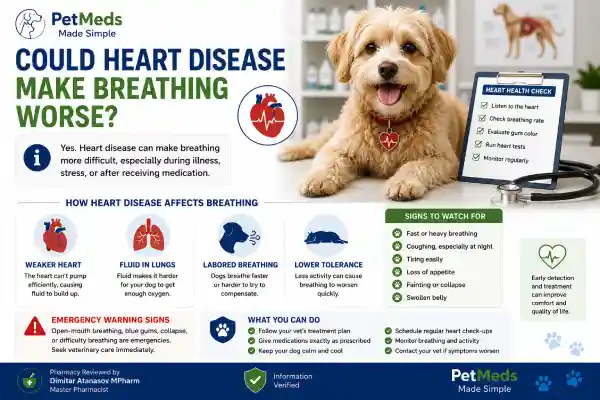
Absolutely.
Dogs with heart disease may develop:
- Heavy breathing
- Coughing
- Exercise intolerance
- Rapid breathing while resting
Sometimes the medication is unrelated, and an underlying heart condition is responsible.
Could Lung Disease Be the Cause?
Yes.
Respiratory diseases may cause:
- Labored breathing
- Fast breathing
- Coughing
- Wheezing
- Reduced activity
Medication is not always the explanation.
Your veterinarian will consider all possible causes.
Are Senior Dogs More Sensitive?
Yes.
Older dogs are more likely to have:
- Heart disease
- Kidney disease
- Lung disease
- Arthritis
- Multiple medications
These factors increase the likelihood of breathing changes after treatment.
Related Symptoms Owners Often Search For
Owners researching heavy breathing after medication also commonly search:
- Why Is My Dog Panting After Pain Medication?
- Why Is My Dog Suddenly Worse After Medication?
- Why Is My Dog Weak After Pain Medication?
- Why Is My Dog Acting Confused After Medication?
- Can Dogs Take Tramadol and Gabapentin Together?
- Can NSAIDs Cause Kidney Problems in Dogs?
- Can NSAIDs Cause Liver Damage in Dogs?
- Why Does My Dog Sleep All Day After Pain Medication?
- Can Dogs Take Pain Medication Long-Term?
- Why Does Pain Medication Stop Working?
Could Breathing Problems Be an Emergency?
Yes.
While mild panting or slightly heavier breathing can occur in some dogs after medication, true breathing difficulty should never be ignored.
Emergency Warning Signs
| Symptom | Emergency? |
|---|---|
| Open-mouth breathing at rest | Yes |
| Blue or gray gums | Yes |
| Collapse | Yes |
| Unable to catch breath | Yes |
| Severe weakness | Yes |
| Unresponsiveness | Yes |
If your dog appears to be struggling for air, seek emergency veterinary care immediately.
Could Low Oxygen Cause Heavy Breathing?
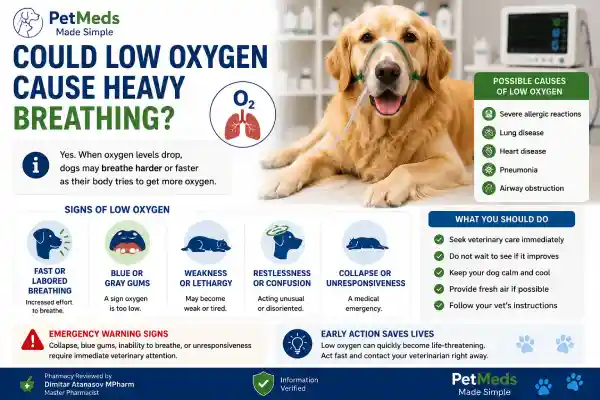
Absolutely.
When oxygen levels fall, dogs naturally try to compensate by breathing faster or harder.
Possible causes include:
- Severe allergic reactions
- Lung disease
- Heart disease
- Pneumonia
- Airway obstruction
Low oxygen is a medical emergency.
Could My Dog Simply Be Adjusting to the Medication?
Sometimes.
Some medications may temporarily affect:
- Activity level
- Comfort
- Stress response
- Awareness of pain
Mild breathing changes that improve within a few hours may simply reflect your dog’s adjustment to treatment.
However, worsening breathing should always be evaluated.
Could Other Medications Be Contributing?
Yes.
Many dogs receive more than one medication.
Examples include:
- NSAIDs
- Gabapentin
- Tramadol
- Trazodone
- Antibiotics
- Sedatives
Medication combinations may increase the likelihood of side effects or alter how your dog responds to treatment.
Always inform your veterinarian about every medication and supplement your dog receives.
What Will the Veterinarian Check?
Your veterinarian will try to determine whether the medication is responsible or whether another illness is developing.
Common Evaluation
| Assessment | Purpose |
|---|---|
| Physical examination | Evaluate overall condition |
| Breathing rate | Detect respiratory distress |
| Heart rate | Assess circulation |
| Gum color | Evaluate oxygenation |
| Lung auscultation | Listen for abnormal lung sounds |
| Medication history | Identify possible side effects |
Depending on the findings, additional testing may be recommended.
Could Blood Tests Be Needed?
Sometimes.
Blood work may help evaluate:
- Kidney function
- Liver function
- Infection
- Electrolyte balance
- Overall organ health
Routine laboratory testing is especially valuable in:
- Senior dogs
- Dogs receiving long-term medications
- Dogs with chronic diseases
- Dogs taking several medications
Could Chest X-Rays Be Recommended?
Yes.
If breathing remains abnormal, chest radiographs may help identify:
- Pneumonia
- Fluid in the lungs
- Heart enlargement
- Lung masses
- Airway disease
Imaging allows veterinarians to determine whether the breathing problem is related to medication or another medical condition.
What Should Owners Monitor at Home?
Observe your dog carefully during the hours after giving medication.
Monitor
| Symptom | Monitor? |
|---|---|
| Breathing rate | Yes |
| Breathing effort | Yes |
| Gum color | Yes |
| Appetite | Yes |
| Water intake | Yes |
| Activity level | Yes |
| Coughing | Yes |
| Sleeping position | Yes |
Keeping notes or short videos can help your veterinarian assess changes over time.
Should Owners Give the Next Dose?
Usually, do not make changes without veterinary advice.
If your dog develops:
- Mild heavy breathing
- Persistent panting
- New respiratory symptoms
- Worsening condition
contact your veterinarian before administering another dose.
The safest decision depends on:
- The medication used
- The severity of symptoms
- Your dog’s medical history
- The underlying condition being treated
Can Most Dogs Recover?
Yes.
Fortunately, most dogs experiencing mild medication-related breathing changes recover completely once the underlying cause is addressed.
Prognosis
| Cause | Outlook |
|---|---|
| Mild medication side effect | Excellent |
| Temporary anxiety | Excellent |
| Pain-related breathing | Excellent |
| Dose adjustment required | Excellent |
| Allergic reaction | Variable |
| Heart or lung disease | Depends on diagnosis |
Prompt veterinary care significantly improves outcomes when breathing problems are recognized early.
When Should Owners Contact Their Veterinarian?
Call your veterinarian if your dog:
- Continues breathing harder than normal
- Pants excessively at rest
- Develops coughing
- Refuses food
- Appears weak
- Seems anxious or uncomfortable
- Shows worsening symptoms after medication
It is always appropriate to contact your veterinarian if breathing changes concern you.
Bottom Line
Why is my dog breathing hard after medication? Heavy breathing after medication can result from pain, anxiety, medication side effects, overheating, allergic reactions, or progression of an underlying disease. While mild breathing changes may resolve as your dog adjusts to treatment, persistent or worsening respiratory effort should never be ignored. Difficulty breathing, blue gums, collapse, or severe weakness are emergencies that require immediate veterinary attention.
Veterinarian Takeaway
Heavy breathing after medication is not always caused by the medication itself. Veterinarians evaluate the timing of symptoms, the drug being used, the underlying medical condition, and your dog’s overall health before determining the cause. Careful monitoring at home and prompt veterinary evaluation of persistent or severe breathing changes are the safest ways to protect your dog’s health.
Frequently Asked Questions – Why Is My Dog Breathing Hard After Medication
Can medication cause heavy breathing in dogs?
Yes. Some medications may contribute to heavy breathing or panting, although the underlying illness may also be responsible.
Is heavy breathing different from panting?
Yes. Panting is often a normal cooling mechanism, while heavy or labored breathing may indicate a medical problem.
Can pain make my dog breathe hard?
Absolutely. Pain is one of the most common causes of heavy breathing after surgery or injury.
Could anxiety cause heavy breathing?
Yes. Stress and anxiety frequently increase a dog’s breathing rate and effort.
Is heavy breathing after medication an emergency?
Not always. However, difficulty breathing, blue gums, collapse, or unresponsiveness require immediate veterinary care.
Could an overdose affect breathing?
Yes. Medication overdoses can interfere with normal breathing and require emergency treatment.
Will my veterinarian recommend blood tests?
Sometimes, especially if your dog is older, has chronic illness, or receives long-term medication.
Should I give the next dose if my dog is breathing hard?
Contact your veterinarian before giving another dose if your dog develops new or persistent breathing changes.
Can heart disease cause heavy breathing after medication?
Yes. An underlying heart condition may become more noticeable during illness or treatment.
Can most dogs recover?
Yes. Most dogs recover well once the underlying cause of the breathing changes is identified and treated.
Reviewed By
Dimitar Atanasov, MPharm
Master Pharmacist | Medication Safety Educator
Dr. Valcho, DVM
Veterinary Consultant | 30+ Years of Clinical Experience
Editorial Policy
This article follows the PetMedsMadeSimple editorial standards for evidence-based veterinary medication education, medication safety, and responsible pet-owner guidance.
Sources
- Plumb’s Veterinary Drug Handbook, 10th Edition.
- Merck Veterinary Manual – Respiratory Disorders in Dogs.
- American Animal Hospital Association (AAHA) Pain Management Guidelines.
- American Veterinary Medical Association (AVMA) Client Education Resources.
- Veterinary Pharmacology and Therapeutics, 11th Edition.
- Small Animal Clinical Pharmacology and Therapeutics.
- Veterinary Information Network (VIN).
- Journal of Veterinary Internal Medicine.
- Frontiers in Veterinary Science.
- Veterinary Anaesthesia and Analgesia.
Medical Review Statement
This article was pharmacy-reviewed by Dimitar Atanasov, MPharm, and veterinary-reviewed by Dr. Valcho, DVM, using current veterinary pharmacology references, canine respiratory medicine resources, pain-management guidelines, and published veterinary literature available at the time of review.Why Is My Dog Breathing Hard After Medication?
image created with AI – Why Is My Dog Breathing Hard After Medication